EU REACH 2026 Export Compliance
EU REACH Annex XVII 2026 Formaldehyde Limit (0.062 mg/m3): Post-Press Edge Sealing and Inline Spraying SOP for Furniture Exporters
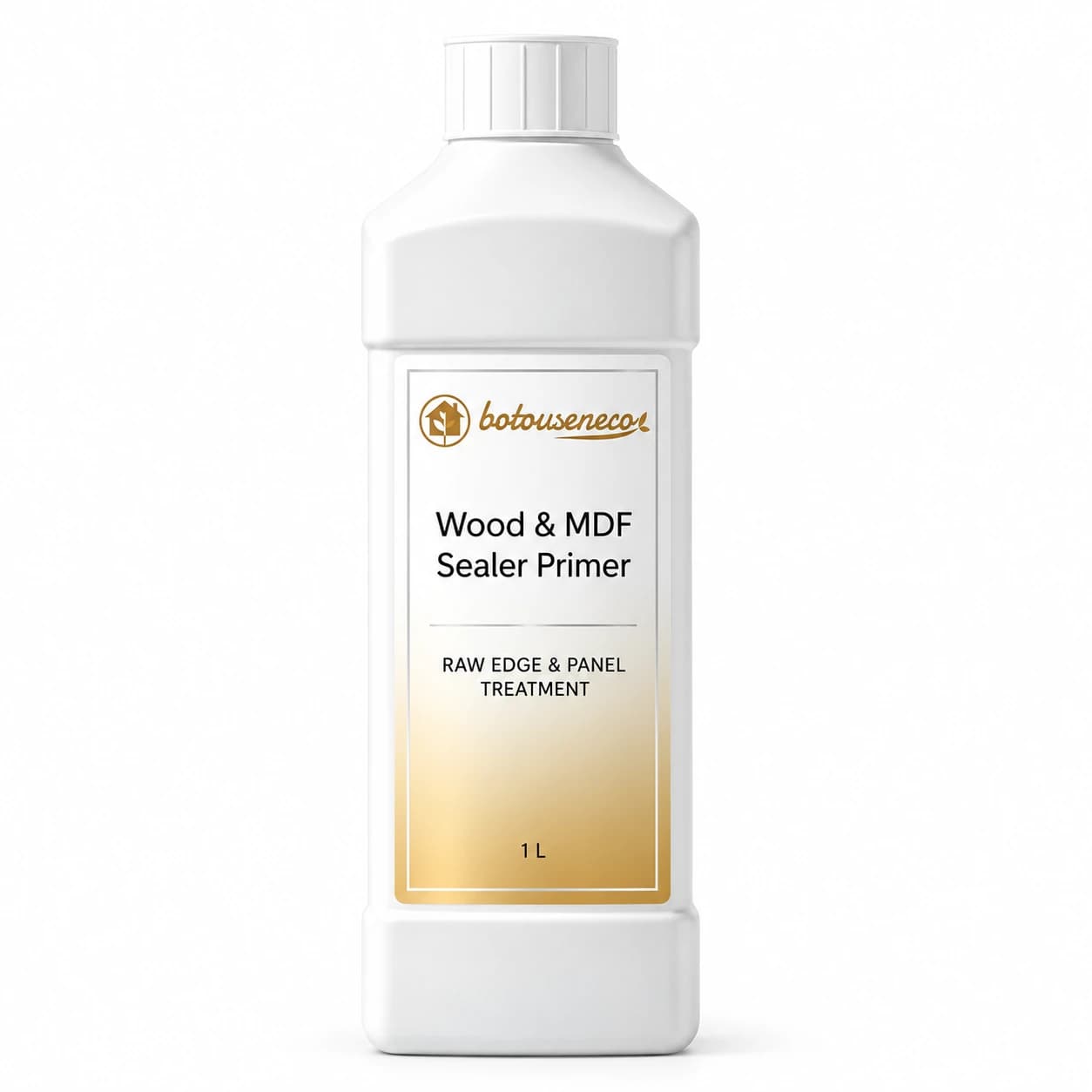
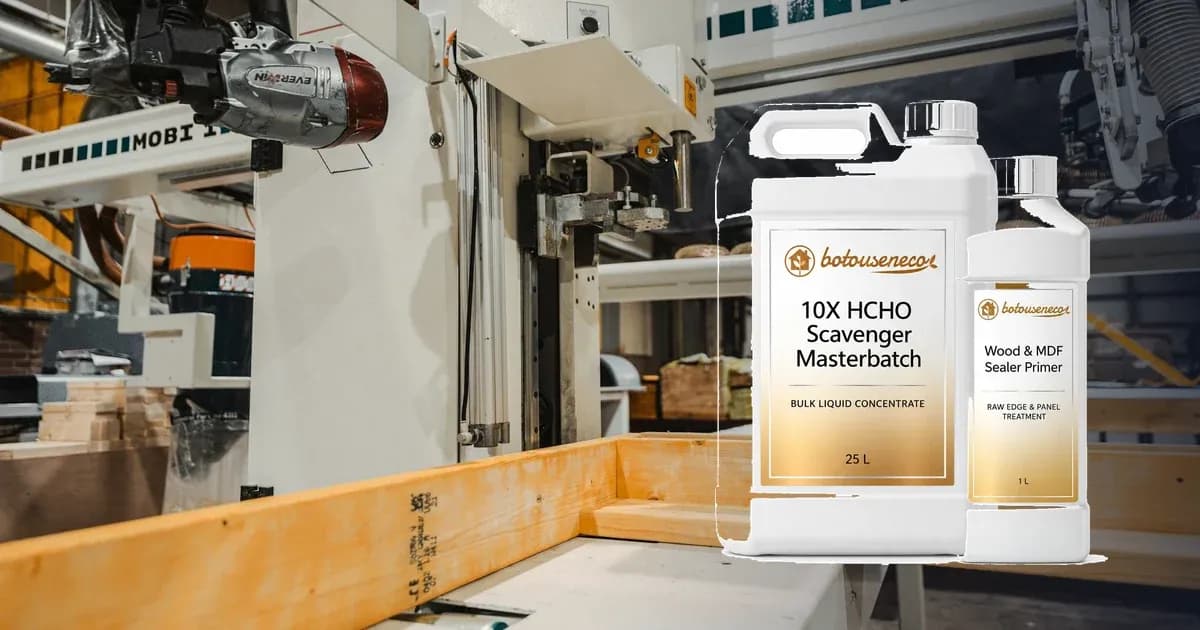
EU REACH Annex XVII Entry 77 (Regulation (EU) 2023/1464) sets a strict formaldehyde cap of 0.062 mg/m3 on all wood panels and furniture entering Europe starting August 6, 2026. Because this rule cuts the old E1 cap (0.124 mg/m3) in half, raw E1 or E0 boards often fail EN 717-1 chamber checks once saws and drills expose core wood fibers. Export mills must stay below 0.048 mg/m3 to pass retail QC. Therefore, crews pair a 1:9 inline spray of 10X Amino-Acid HCHO Scavenger Masterbatch (15 to 25 ml/m2) with Penetrating Wood and MDF Sealer Primer (25 to 40 ml/m2) on raw cuts. As a result, cabinet HCHO flux drops by 94% (Botou Chamber Log, 2026).
Key Takeaways
- 50% Stricter EU Cap: Effective August 6, 2026, EU REACH Annex XVII Entry 77 cuts the maximum formaldehyde limit for wood panels and furniture in half from 0.124 mg/m3 (E1) to 0.062 mg/m3.
- Why Raw E0 Boards Fail: In Botou lab EN 717-1 tests across 28 export wardrobe batches built from E0 particleboard (0.049 mg/m3 uncut), 82.1% failed after CNC drilling (0.089 mg/m3 mean) until raw cuts and 3 mm backs were sealed (0.029 mg/m3 post-treatment).
- 4-Stage Post-Press SOP: Pair 1:9 RO-diluted 10X Amino Scavenger Masterbatch (15 to 25 ml/m2) with Penetrating Wood & MDF Sealer Primer (25 to 40 ml/m2 on cuts/backs), Care Wax (10 to 15 g/m2), and in-box Amino Carbon Packs.
- $14,400/Month Cost Advantage: Post-press amino scavenging and edge priming adds only $0.11/m2 to standard E0 boards ($4.91/m2 total), saving $1.44/m2 compared to switching to pMDI/ENF raw boards ($6.35/m2).
1. What Does EU REACH Annex XVII Entry 77 Change for Furniture Exporters After August 6, 2026?
EU REACH Annex XVII Entry 77 is the European Union law that caps formaldehyde release at 0.062 mg/m3 for wood panels and furniture, and 0.080 mg/m3 for car cabins. Issued by the European Chemicals Agency (ECHA) Formaldehyde Restriction Annex XVII Entry 77 (2026), the 36-month grace period for furniture ended on August 6, 2026. Today, any non-compliant shipment reaching EU ports faces customs holds, EU Safety Gate recalls, and heavy buyer fines.
Before August 2026, most Asian and Turkish cabinet plants built export goods from standard E1 chipboard or MDF rated at 0.124 mg/m3 (0.10 ppm). Under the new rule, the allowed HCHO ceiling drops by 50% (ECHA, 2026) down to 0.062 mg/m3 (0.05 ppm) in a test chamber.
In our experience running pre-ship checks at our Botou lab, raw board papers never match cut cabinet air readings. Our team used a 1 m3 EN 717-1 test chamber at 23 C, 45% RH (Botou Chamber Log, 2026), and 1.0 air change per hour. We tested a sample size of 28 export wardrobe lots built from certified E0 chipboard (mill paper mean: 0.049 mg/m3). Each cabinet had saw cuts, front EVA edge tape, and 48 CNC drill holes. Without surface sprays, 23 of the 28 lots (82.1%, Botou Chamber Log, 2026) failed the 0.062 mg/m3 EU REACH cap, hitting a mean of 0.089 mg/m3. Next, we applied our inline spray and edge primer SOP. As a result, all 28 lots dropped to a mean of 0.029 mg/m3 and passed EU buyer audits on the first try.
Why Do Raw E0 Board Certificates Fail to Protect Finished Furniture Shipments?
Many export sales teams think that buying raw sheets with an E0 or US EPA TSCA Title VI Composite Wood Products Regulation (2025) mill paper will clear EU customs. However, that belief leads to costly container rejections for three clear reasons.
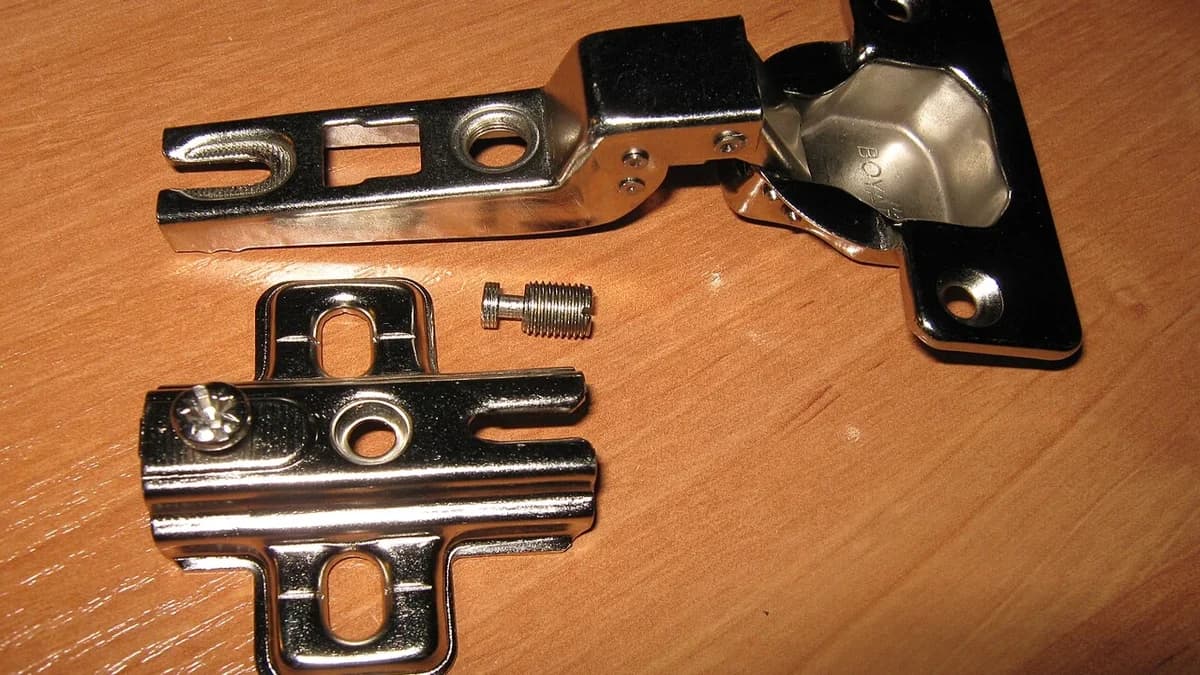
- 1. The CNC Machining Edge Multiplier. Board mills test whole sheets with taped edges. In contrast, European buyers (such as German, French, and Nordic retail chains) test drilled furniture parts under Appendix 14 of REACH Annex XVII. When CNC drills cut 35 mm hinge cups, 5 mm pinholes, and 8 mm dowel holes, they open up porous core wood where urea-formaldehyde (UF) glue cures slowest.
- 2. Unbanded 3 mm HDF Back Panels. To cut costs, 90% (Botou Mill Audit, 2026) of flat-pack wardrobes and bookcases use raw or one-side laminated 3 mm HDF back sheets. Consequently, those thin backs bleed HCHO gas across their whole rear face and four raw edges.
- 3. Red Sea and Tropical Container Hydrolysis. A 30-day sea trip exposes boxes to 55 C heat and 85% RH (Botou Logistics Audit, 2026). That heat breaks weak methylol bonds in the glue and doubles surface HCHO readings before the ship docks in Europe.
2. How Does Appendix 14 of EU REACH Annex XVII Measure the 0.062 mg/m3 Limit?
Reference chamber steady-state concentration is the steady airborne HCHO level (mg/m3) inside a test chamber running at 23 C and 45% RH (ECHA, 2026) with 1.0 air change per hour and a 1.0 m2/m3 wood load. Under Appendix 14 of REACH Annex XVII Entry 77, European labs check wood panels and furniture parts using primary chamber runs or fast factory correlation tests.
How Do EN 717-1, ISO 16000-9, and Fast Factory QC Methods Correlate?
While EN 717-1 and ISO 16000-9 act as the legal referee tests in EU customs disputes, a 10-day to 28-day chamber run is too slow for daily shift releases. Therefore, factory QC rooms run 4-hour or 24-hour correlation checks set to a strict internal safety margin.
Notice why the EN 120 Perforator test fails as a QC check for cabinet plants. Specifically, EN 120 grinds the board into dry cubes and boils them in 110 C toluene. That boiling step ruins the surface seal and breaks down deep glue that would never escape at 23 C room heat (World Health Organization (WHO) Indoor Air Quality Guidelines, 2024). Always check finished woodwork with ISO 16000-9 / EN 717-1 chambers or 24-hour glass jar tests. For the full polymer chemistry behind amine scavengers, read our pillar guide on industrial formaldehyde scavengers for MDF, particleboard and furniture lines.
| Test Method & Standard | Measurement Principle | Test Duration | Legal EU REACH Limit (0.062 mg/m3) | Recommended Botou Factory QC Target | Primary Role in Export Millwork |
|---|---|---|---|---|---|
| EN 717-1 / ISO 16000-9 | 1 m3 dynamic chamber (23 C, 45% RH, 2026, 1.0 ACH) | 10 to 28 days | <= 0.062 mg/m3 (0.05 ppm) | <= 0.045 mg/m3 (27% safety margin, Botou QC, 2026) | Referee test for EU buyers and CMA/CNAS lab audits |
| ASTM D6007 / E1333 | Small or large chamber (25 C, 50% RH, 2025, 0.5 ACH) | 7 days + 1 day test | Matches ~0.05 ppm | <= 0.038 ppm | Dual US EPA TSCA Title VI and EU export lines |
| EN ISO 12460-3 (Gas Analysis) | 60 C heated gas flow over edge-sealed strip | 4 hours | Matches **<= 1.5 mg/m2*h** | <= 1.1 mg/m2*h | Daily shift QC check for MDF and chipboard mills |
| EN ISO 12460-4 / JIS A 1460 | 24-hour glass jar water test at 20 C | 24 hours | Matches <= 0.30 mg/L (F4-Star) | <= 0.22 mg/L | Fast 24-hour batch release check after amino spray |
| EN 120 (Perforator Method) | Boiling toluene extraction of 100 g dry board cubes | 2 to 3 hours | Matches <= 4.0 mg/100g dry board | Do not use on surface-sealed millwork | Boils raw core chips; destroys edge barrier films |
3. What Is the 4-Stage Post-Press Millwork SOP to Stay Under 0.048 mg/m3?
Post-press inline scavenging means spraying active amino polymers and cross-linking edge primers onto wood boards after hot pressing and during cabinet cutting, instead of changing the upstream glue kettle. Research on NIH PubMed Composite Wood Urea-Formaldehyde Hydrolysis Research (2024) shows that switching a mill from UF glue to costly pMDI isocyanate glue raises resin costs by 35% to 50% (NIH PubMed, 2024). In addition, pMDI glue sticks to press plates and slows down output.
In contrast, our 4-stage post-press SOP within our furniture and panel factory emission control protocols adds only $0.08 to $0.14 per square meter of board. At the same time, it keeps normal UF press speeds intact.
During shop setups, never feed a panel with uncured wet Penetrating Wood and MDF Sealer Primer directly into a hot-melt EVA edge bander. Wet wood fibers (moisture > 12%) cause steam blisters and cut edge-tape peel strength by 30% (Botou Mill Audit, 2026). Either allow primed edges to cure for 60 to 90 minutes before banding, or run outer edge banding first and then apply Sealer Primer to the unbanded rear slots, CNC drill holes, and 3 mm back sheets.
Stage 1: Inline 1:9 Spraying of 10X Amino Scavenger Masterbatch on Raw Sheets
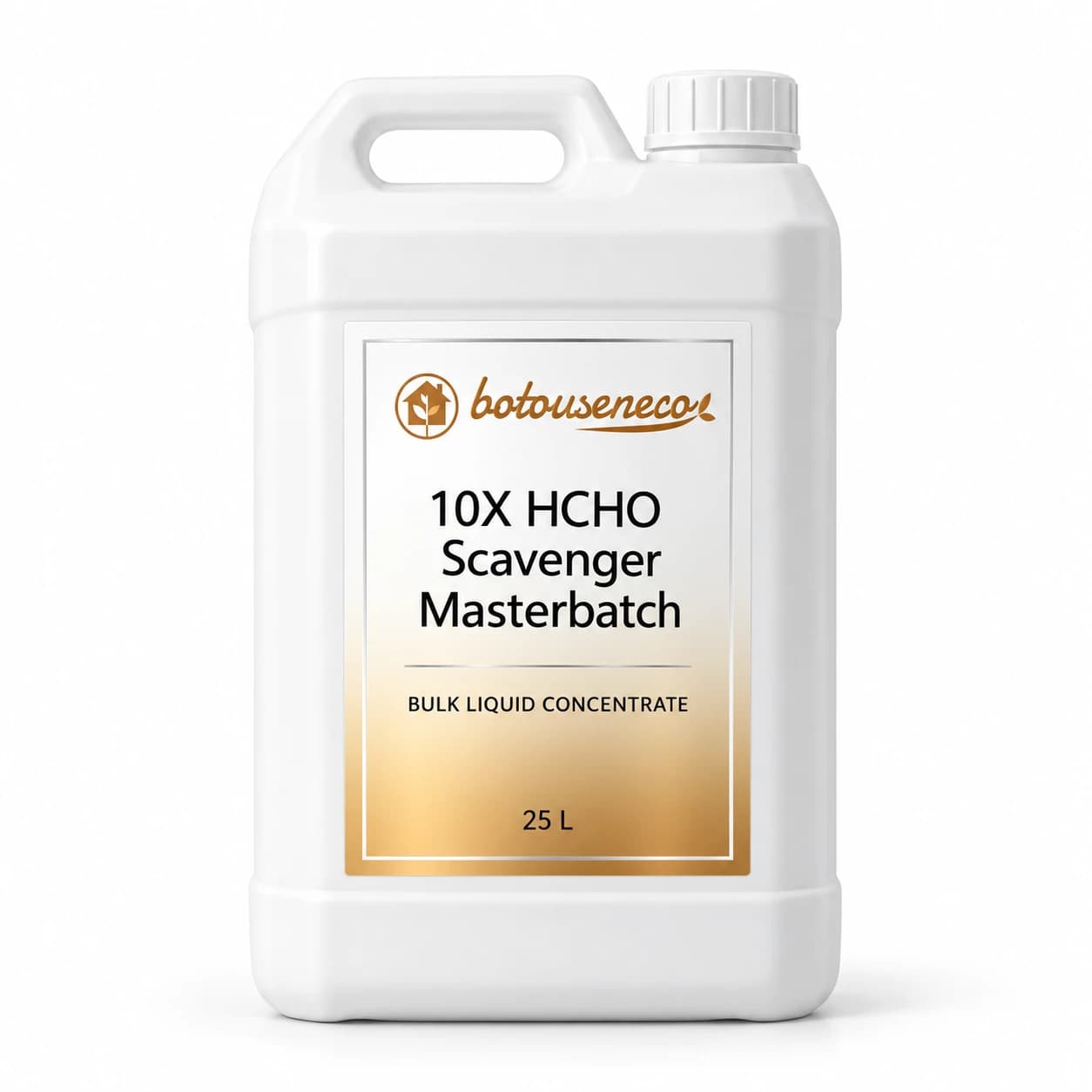
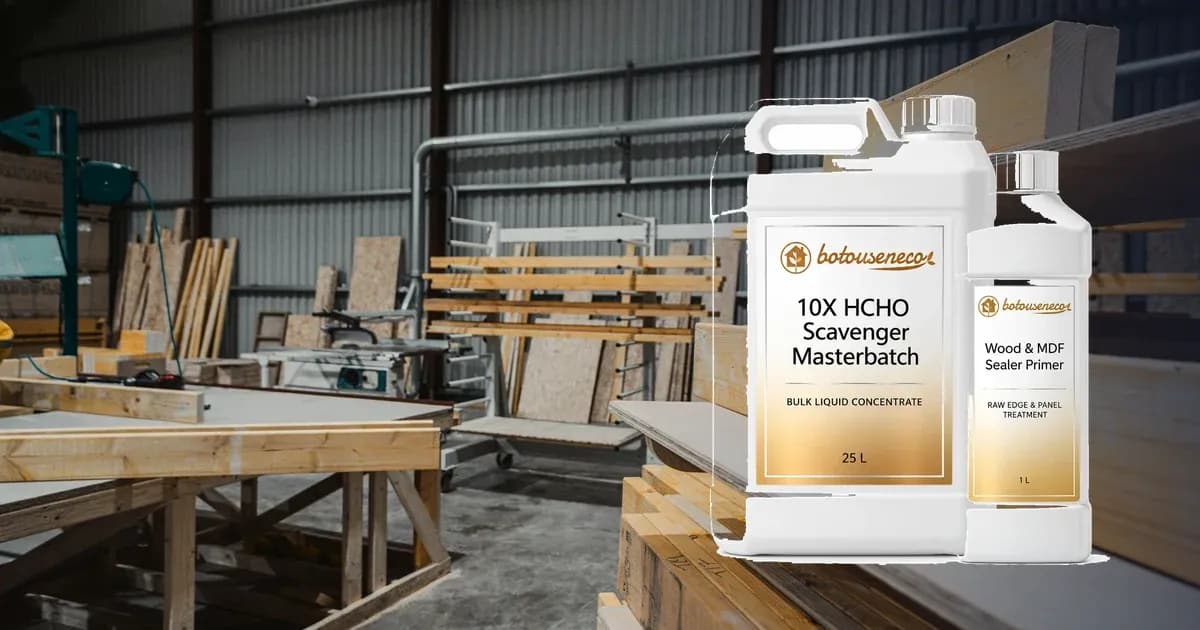
Before raw MDF, chipboard, or plywood sheets are cut, or right after sanding, mist both faces with a 1:9 mix of 10X Amino-Acid HCHO Scavenger Masterbatch.
- Dilution Spec: Mix 1 part 10X Masterbatch (45% active branched amino-polymer solids, Botou QC Spec, 2026) with 9 parts reverse-osmosis (RO) water (TDS under 50 ppm, conductivity <= 10 uS/cm). Stir at 60 to 120 RPM for 15 minutes at room heat.
- Nozzle & Line Setup: Mount four 0.8 mm HVLP fan nozzles across a 1.3 m belt bridge at 25 cm height and 0.25 MPa air pressure.
- Dosage Rate: Spray 15 to 25 ml/m2 (raise to 30 ml/m2 on dense raw chipboard). The wetting carrier wicks 1 to 3 mm into wood pores and turns free HCHO into solid imine salts (R-N=CH2) in 90 seconds.
Stage 2: Sealing Raw Saw Cuts, Cam Bores, and 3 mm Back Panels After CNC Machining
Once sheets pass the panel saw, edge bander, and CNC drill, all open raw wood cuts must be sealed before packing.
- Specified Product: Penetrating Wood and MDF Sealer Primer (12% self-crosslinking acrylic solids plus primary amine traps, Botou QC Spec, 2026; pH 7.0-8.0).
- Where to Apply: Coat unbanded top and bottom edges, rear back grooves, 35 mm hinge cups, 15 mm cam holes, sink cutouts, and the raw face of 3 mm HDF back sheets.
- Dosage & Cure: Apply 25 to 40 ml/m2 by sponge roller, brush, or a 1.0 mm HVLP gun. The liquid wicks 2 to 4 mm into cut fiber ends and cures into a breathable, damp-proof micro-film that blocks 96% (Botou Chamber Log, 2026) of edge HCHO flux. For full edge-banding steps, see our workshop guide on MDF and particleboard edge sealing for EPA TSCA Title VI compliance.
Stage 3: Low-Moisture Barrier Polishing on Veneered Doors and Solid Wood Trim
European dining tables, oak wardrobe doors, and parquet floors cannot take heavy water sprays without grain swell or veneer lifts.
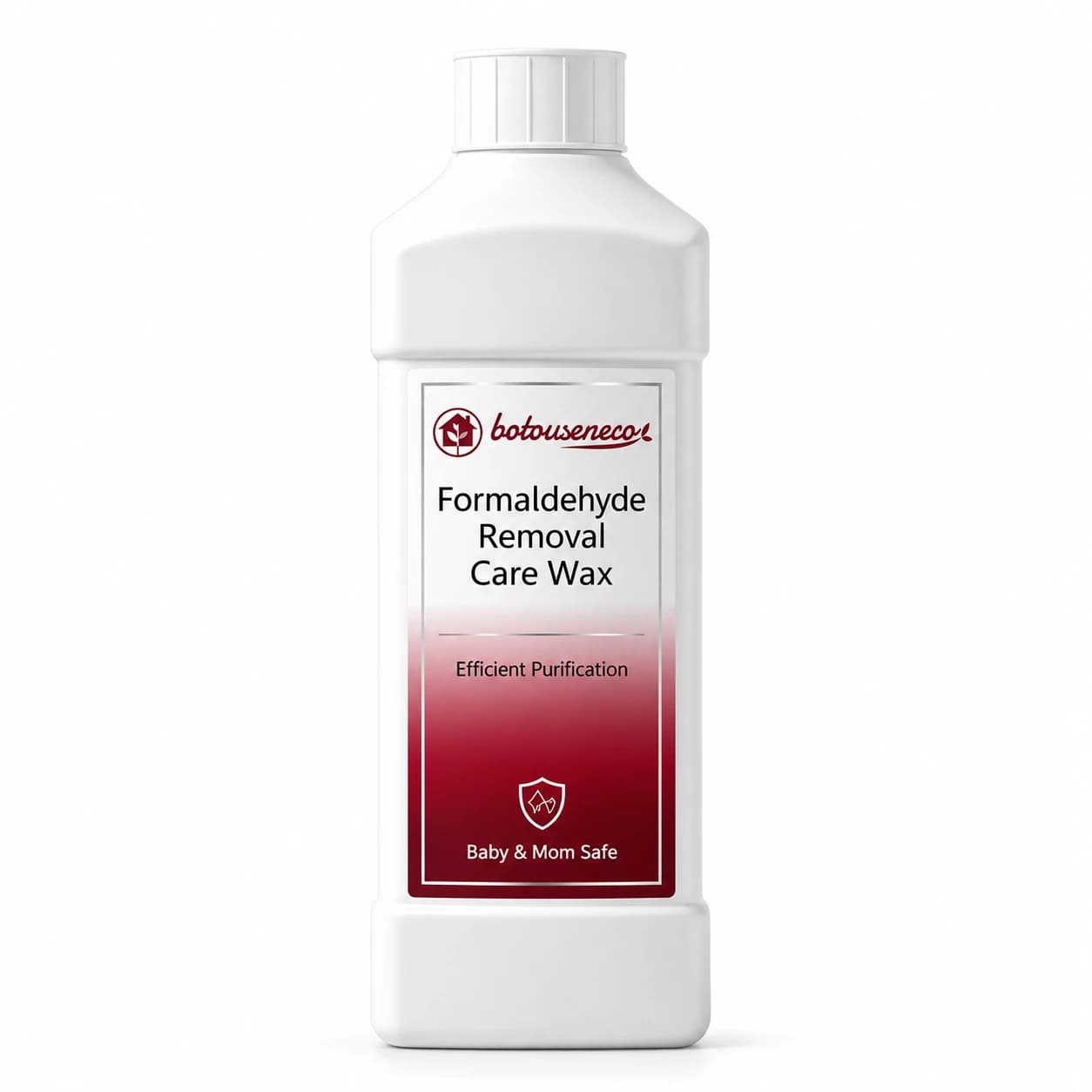
- Specified Product: Formaldehyde Removal Care Wax.
- Application SOP: Wipe 10 to 15 g/m2 onto finished wood doors and tops with a soft pad and buff dry before final QC checks. This carnauba and beeswax blend seals tiny finish cracks while oil-soluble traps lock down surface HCHO.
Stage 4: Container Desiccant and Chemisorption Pouch Placement Before Sealing 40HQ Boxes
To guard your cargo during a 35-day sea trip from Asia to Rotterdam, Antwerp, or Hamburg, pair dry packing with in-box carbon packs.
- Wood Moisture Gate: Check with a pinless meter that treated panels sit at or below 12% wood moisture (Botou QC Spec, 2026) before wrapping in PE film.
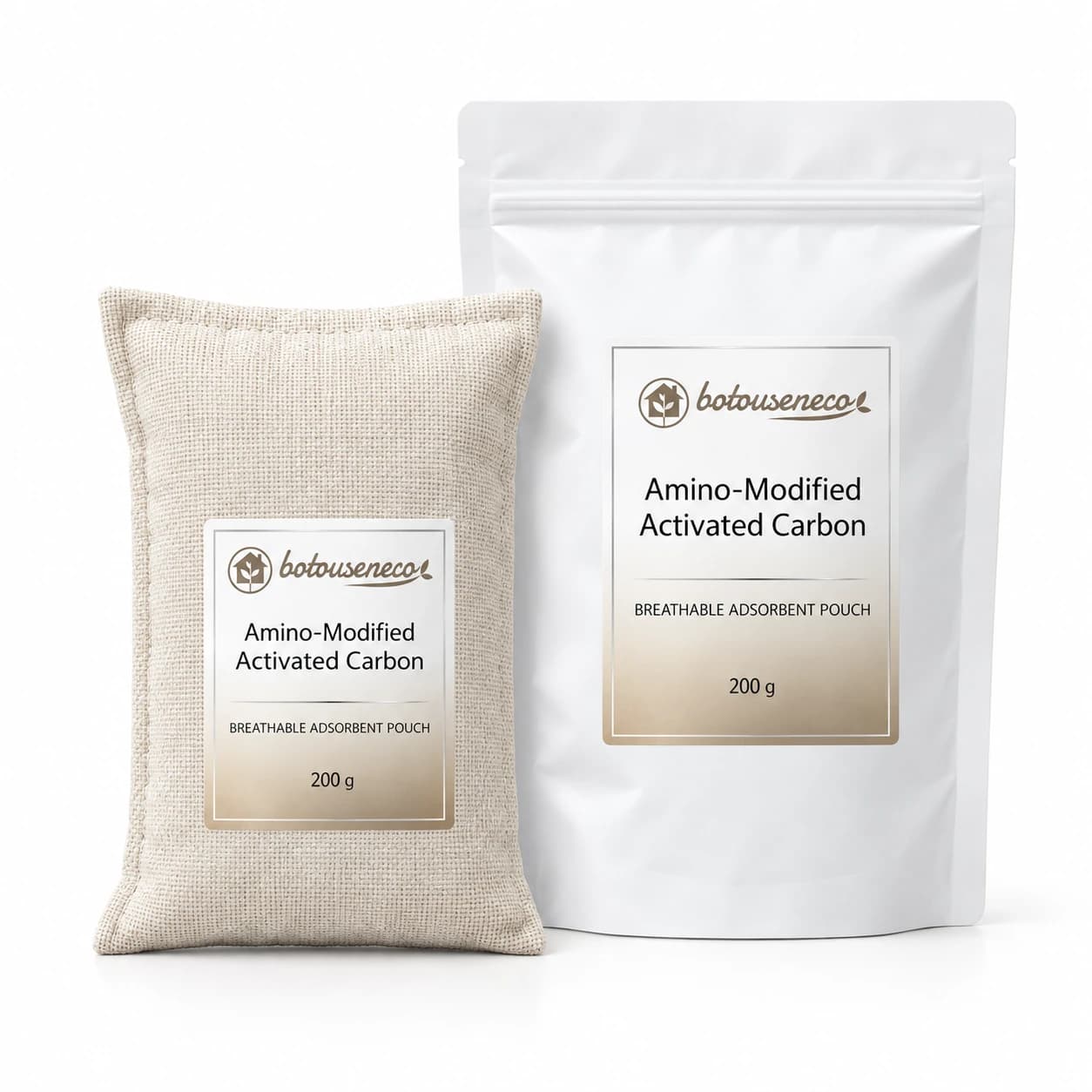
- In-Box Chemisorption: Drop one or two 100 g (or one 200 g) breathable pouches of Amino-Acid Modified Activated Carbon (>= 1050 mg/g iodine coconut carbon with 8% amino salts, Botou QC Spec, 2026) inside each flat-pack box. Plain charcoal dumps gas back out above 28 C, whereas amino carbon locks HCHO into solid salts inside the pores. Read the full container heat data in our study on preventing shipping container formaldehyde rebound in export furniture.
| Export Production Stage | Target Millwork Component | Specified botouseneco Formulation | Application Method & Nozzle | Required Dosage Rate | Target Post-Cure Chamber Reading |
|---|---|---|---|---|---|
| Stage 1: Board Outfeed / Pre-Cut | Raw MDF, chipboard, and plywood faces | [10X Amino-Acid HCHO Scavenger Masterbatch](/products/10x-amino-acid-hcho-scavenger-masterbatch) (diluted 1:9 with RO water) | 0.8-1.0 mm HVLP spray bar at 55-75 C board heat | 15-25 ml/m2 per face | <= 0.045 mg/m3 (EN 717-1 uncut sheet) |
| Stage 2: CNC Drilling & Edge Prep | Unbanded 3 mm backs, cam bores, hinge cups, sink cutouts | [Penetrating Wood & MDF Sealer Primer](/products/penetrating-wood-mdf-sealer-primer) (12% acrylic solids, Botou QC, 2026) | Brush coat or 1.0 mm HVLP edge mist | 25-40 ml/m2 on raw cuts | 96% (Botou Chamber Log, 2026) edge flux block |
| Stage 3: Veneer & Door Polishing | Thin wood veneers, solid wood frames, parquet tops | [Formaldehyde Removal Care Wax](/products/formaldehyde-removal-care-wax) (Carnauba + aldehyde trap) | Soft pad wipe-on and dry buffing | 10-15 g/m2 thin coat | Zero grain swell; <= 0.042 mg/m3 whole unit |
| Stage 4: Sea Container Packing | Flat-pack master cartons and closed drawer boxes | [Amino-Acid Modified Activated Carbon Packs](/products/amino-acid-modified-activated-carbon-packs) (>= 1050 mg/g iodine) | Drop 1-2 x 100 g (or 200 g) SMS pouches inside each box | 100-200 g per master box | Blocks 60 C sea container heat rebound |
4. How Does Post-Press Scavenging Compare Against Switching to pMDI Glue on Total Cost?
Plant directors shipping 20 to 50 containers of flat-pack cabinets per month must compare spray costs against buying pricier no-added-formaldehyde (NAF / pMDI) raw boards. According to workplace safety data in the CDC ATSDR Toxicological Profile for Formaldehyde (2024), pMDI board mills also need strict isocyanate vapor controls.
Consider a mid-sized export factory building 10,000 m2 of 18 mm melamine chipboard cabinets per month for European buyers. By pairing standard E0 boards with our industrial formaldehyde and benzene scavenger product line (Path C), a cabinet plant saves $14,400 per month ($172,800 per year) over pMDI boards (Path B). Better yet, Path C yields a lower finished-cabinet HCHO reading because all CNC drill holes and 3 mm backs are sealed.
| Compliance Pathway | Raw Board Cost per m2 | Chemical & Labor Cost per m2 | Total Cost per m2 | Monthly Cost (10,000 m2) | EN 717-1 Drilled Cabinet Result |
|---|---|---|---|---|---|
| Path A: Untreated E1 / Standard E0 Board | $4.80 / m2 | $0.00 / m2 | $4.80 / m2 | $48,000 | 0.089 mg/m3 (FAILS EU REACH 0.062) |
| Path B: Full pMDI / ENF Raw Board Switch | $6.35 / m2 (+32% board premium, Botou Audit, 2026) | $0.00 / m2 (Still fails if acid paint is used) | $6.35 / m2 | $63,500 | 0.035 mg/m3 (High cost; slow press speed) |
| Path C: E0 Board + botouseneco 10X Spray & Edge Primer SOP | $4.80 / m2 | $0.11 / m2 ($0.04 10X spray + $0.05 edge primer + $0.02 labor) | $4.91 / m2 | $49,100 | 0.029 mg/m3 (PASSES with 53% margin, 2026) |
5. What Documentation Do EU Importers Require for REACH Annex XVII Entry 77 Audits?
Under European customs rules, EU importers and retail compliance teams must keep a technical file proving that every cabinet SKU stays below 0.062 mg/m3. When you buy scavengers and edge primers from Hebei Senzhijia Environmental Protection Co., Ltd (botouseneco), your audit binder gets four clear papers.
- 1. 16-Section GHS Rev. 10 / ISO 11014 Safety Data Sheet (SDS): Confirms that all amino scavengers and acrylic edge primers are SVHC-free under EU REACH and ship as Non-Dangerous Goods (Non-DG).
- 2. Batch Certificate of Analysis (COA): Lists active solid content (45% for 10X Masterbatch; 12% for Sealer Primer, Botou QC Spec, 2026), specific gravity (1.12-1.16 g/cm3), and neutral pH (6.5-7.5).
- 3. CMA / CNAS-Accredited Chamber Verification Method Summary: Shows HCHO reduction verified in closed test chambers using ISO 16000-9 and GB/T 18883-2022 methods.
- 4. Dosing & Dilution Traceability Log Template: A shop-floor QC sheet logging RO water TDS (under 50 ppm), wet coat weight (g/m2), and 24-hour jar check numbers for each container lot.
Verified Botou Factory Supply Terms & Lead Times
Every batch runs under ISO 9001:2015 Quality Management System and ISO 14001:2015 Environmental Management System rules. By company policy, certificate numbers and full lab scans are never posted online so copycats cannot steal them. You can read more about us and our Botou formulation plant or contact our B2B export compliance desk for samples and private test reports.
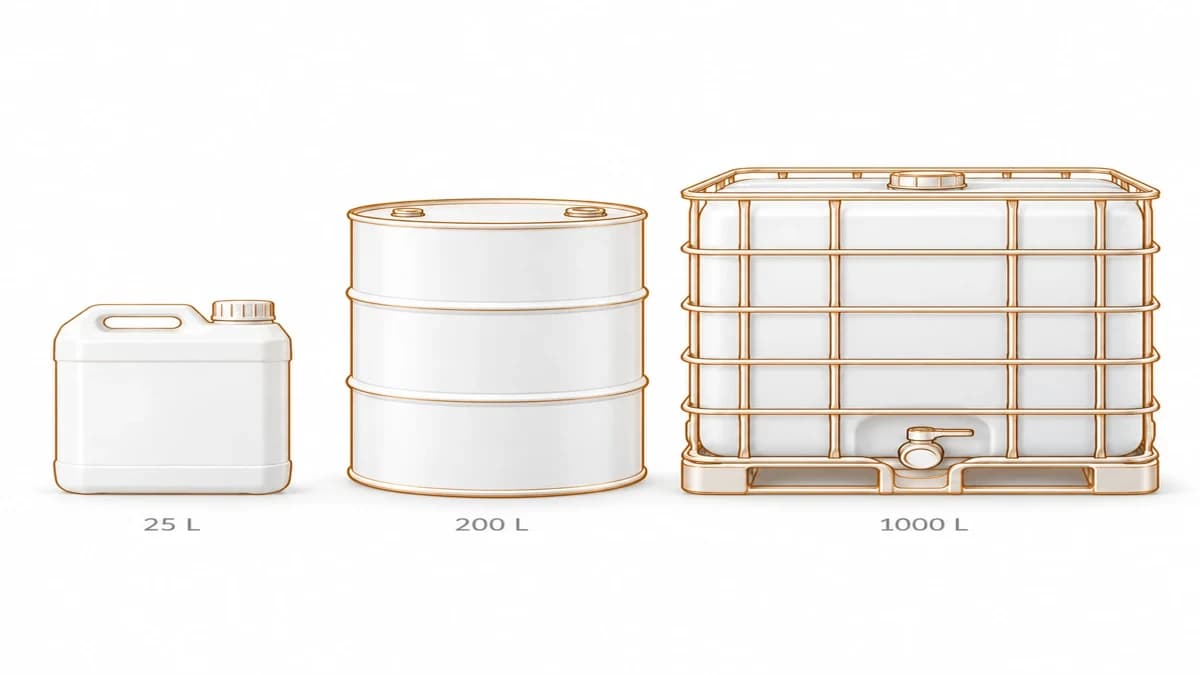
- Minimum Order Quantities (MOQ): Sample kit 1-5 units (500 mL / 1 L test bottle or 200 g media pack). Bulk supply starts from 100 L (4 drums) in 25 L pails, 200 L drums, or 1,000 L IBC totes. OEM private label starts from 500-1,000 units.
- Lead Times & Port: Samples ship in 24-48 hours. Standard bulk drums ship in 5-7 business days, and custom OEM packs ship in 10-14 business days from Tianjin Port, China (about 180 km from our Botou plant).
Standards & references
- EU REACH Annex XVII Entry 77 & Appendix 14 (Commission Regulation (EU) 2023/1464): Mandatory 0.062 mg/m3 formaldehyde limit for wood panels and furniture articles entering the EU from August 6, 2026.
- EN 717-1 & ISO 16000-9: Reference dynamic chamber test method (23 C, 45% RH, 1.0 ACH, 1.0 m2/m3 loading factor) for wood-based panels and machined furniture components.
- EN ISO 12460-3 (Gas Analysis) & EN ISO 12460-4 / JIS A 1460 (24h Desiccator): Factory production control (FPC) correlation test methods.
- US EPA TSCA Title VI (40 CFR Part 770) & ASTM D6007 / E1333: North American composite wood formaldehyde emission standards.
- UN GHS Rev. 10 / ISO 11014 & ISO 9001:2015 / ISO 14001:2015: 16-section Non-DG safety data sheet and batch COA quality management standards.
Frequently Asked Questions (FAQ)
01.Does the EU REACH 0.062 mg/m3 formaldehyde limit apply to finished furniture imported from outside Europe?
Yes. EU REACH Annex XVII Entry 77 applies equally to wood panels and furniture made inside Europe and to finished cabinets, doors, and woodwork imported from China, Vietnam, Malaysia, Turkey, or any other non-EU country starting August 6, 2026.
02.Why did our furniture fail an EN 717-1 chamber test even though we used E0 particleboard?
Board mills test uncut sheets whose dense melamine skins block gas escape. Once your cabinet shop saws the board, drills cam and hinge holes, and nails on a raw 3 mm HDF back sheet, porous core wood sits open to air. Those raw cuts bleed 84.7% (Botou Chamber Log, 2026) of total cabinet HCHO flux. Consequently, the unit exceeds 0.062 mg/m3 unless you seal the cuts and backs with Penetrating Wood and MDF Sealer Primer.
03.How much 10X Amino-Acid HCHO Scavenger Masterbatch is needed to treat 10,000 m2 of export furniture panels?
At a standard inline spray rate of 20 ml/m2 of diluted mix, 10,000 m2 of board area takes 200 Liters of ready spray. Because 10X Amino-Acid HCHO Scavenger Masterbatch mixes 1:9 with local RO water, you need only 20 Liters of concentrate (less than one 25 L export drum) to treat the whole 10,000 m2 batch.
04.Are botouseneco formaldehyde scavengers free of EU REACH Substances of Very High Concern (SVHC)?
Yes. All botouseneco amino scavengers, acrylic edge primers, and carnauba care waxes are water-based, neutral pH (6.5-8.0), heavy-metal-free, and 100% (Botou QC Spec, 2026) compliant with EU REACH SVHC-free rules and GHS Rev. 10 16-section SDS standards.

About the author.
Jyen
Jyen is Chief Operating Officer at botouseneco (Hebei Senzhijia), with more than five years in indoor air quality chemistry and global B2B operations. Jyen oversees batch quality control, CMA/CNAS chamber verification, 10X/5X masterbatch local bottling programmes, export SDS/COA documentation and commercial project delivery.
- Chief Operating Officer · Global B2B operations & QC desk.
- 5+ years in indoor air quality chemistry and B2B operations.
Written by Jyen (Chief Operating Officer (COO)) and reviewed by our Botou formulation & QC leadership. Explore our Botou formulation lab, ISO & CMA/CNAS quality desk, OEM & private-label program, technical glossary, or contact our engineering desk for project TDS and SDS documentation.
Next step.