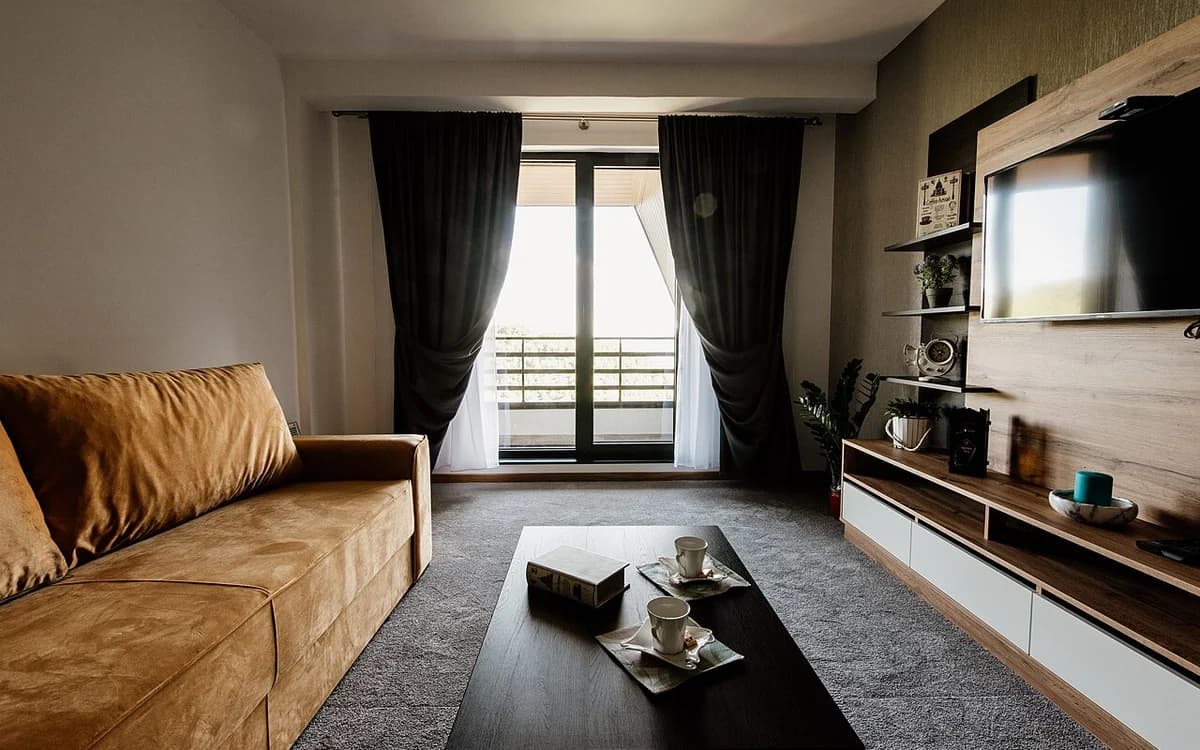
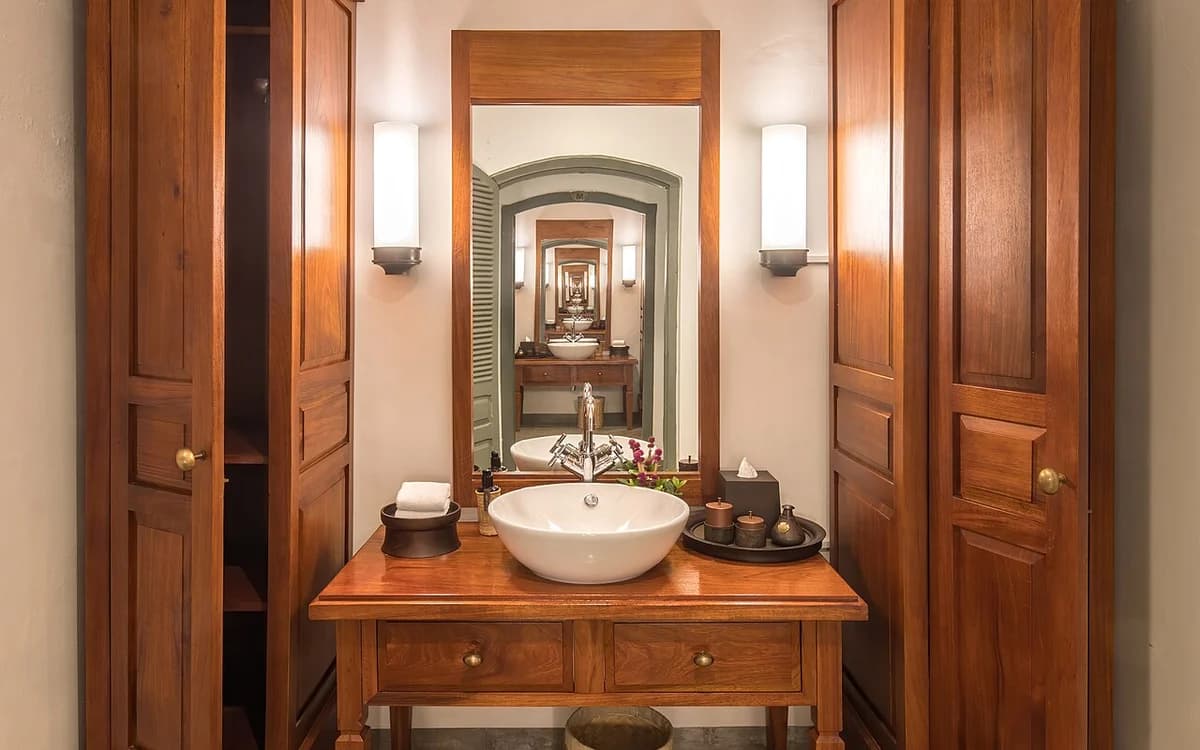
Irreversible Chemical Binding
Converts volatile HCHO gas into stable solid-phase imine polymers—preventing summer temperature rebound.
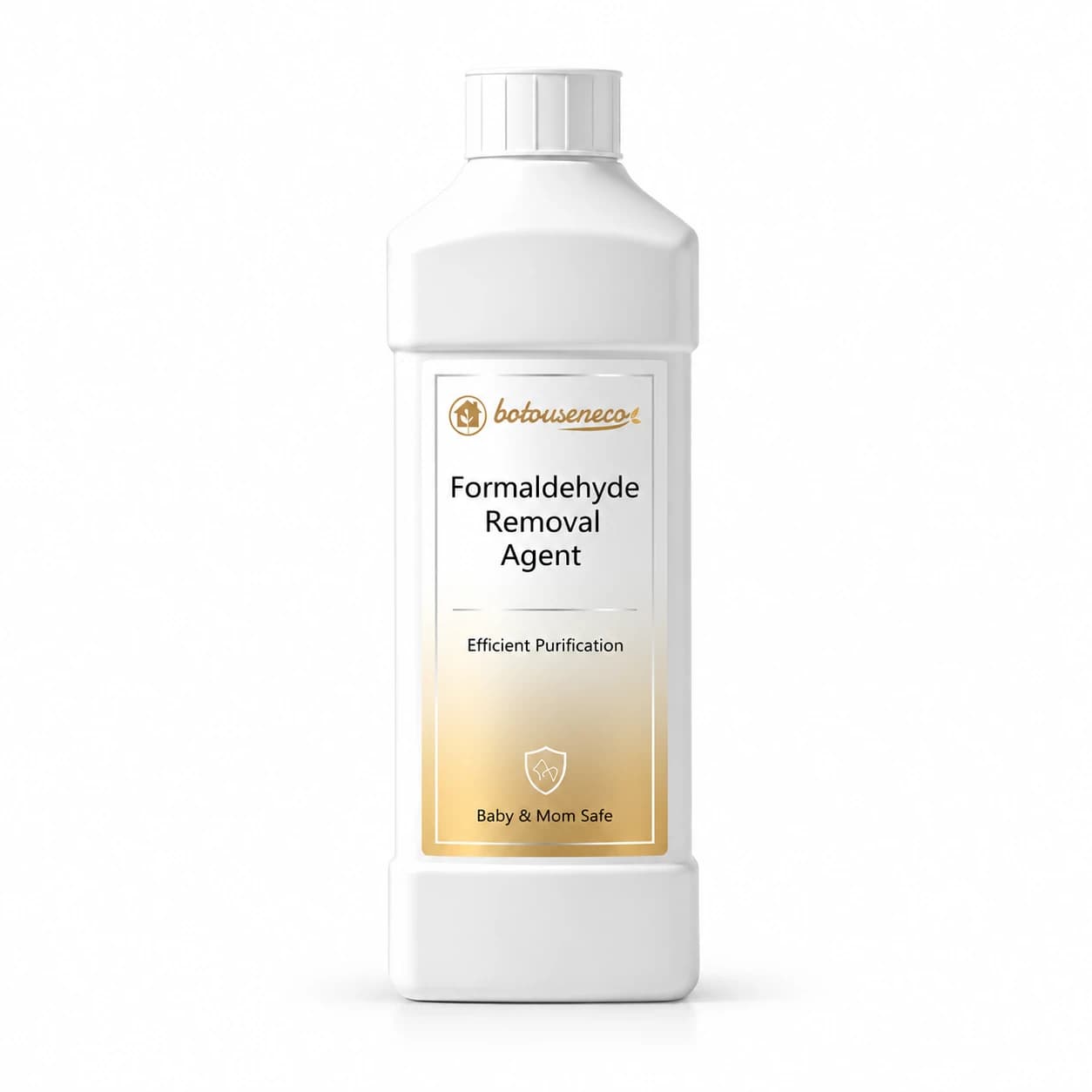 01 / 05 · Studio Packshot
Amino-Polymer Nucleophilic Scavenger
botouseneco Formaldehyde Remover is a commercial B2B amino-polymer formaldehyde scavenger liquid engineered to neutralize free and shallow-bound HCHO inside engineered wood panels (MDF, particleboard, plywood) and post-renovation interiors. Applied at 15–25 ml/m² via HVLP spray or brush, it converts volatile formaldehyde gas into stable, non-toxic macromolecular imines without secondary off-gassing.
Last updated
01Overview
Direct source-level formaldehyde abatement engineered for IAQ remediation contractors, custom cabinetry plants, and property handover projects.
Engineered wood products bonded with urea-formaldehyde (UF) adhesives account for over 70% of indoor formaldehyde exceedances in newly renovated spaces. botouseneco Formaldehyde Remover utilizes high-density active amino (-NH₂) and imino (-NH-) functional groups combined with penetrative surfactants. When sprayed onto unsealed board edges, drawer cavities, cam-lock joints, or subfloors, the solution diffuses into micro-pores and undergoes an irreversible nucleophilic addition reaction with free HCHO, forming inert macromolecular compounds and water.
Converts volatile HCHO gas into stable solid-phase imine polymers—preventing summer temperature rebound.
Low-surface-tension carrier penetrates 1–3mm into raw MDF, particleboard, and plywood fibers to intercept UF resin hydrolysis.
Formulated at pH 6.5–7.5 without strong acids, chlorine, or oxidative bleaching agents—safe for wood fibers and indoor textiles.
Manufactured in Botou, Hebei since 2015 with full COA batch tracking, MSDS/TDS documentation, and custom B2B drum options.
Reaction mechanism
Unlike physical adsorbents (activated carbon) that desorb formaldehyde when room temperatures exceed 25°C, Formaldehyde Remover chemically cleaves the C=O double bond of formaldehyde. Active polyamine chains react with HCHO molecules upon contact to form stable oxime/imine polymers, blocking further hydrolytic release from the wood matrix.
Reaction pathway
R-NH₂ + HCHO → R-N=CH₂ + H₂O02Technical data
Published factory QC parameters for engineering submittals, tenders and procurement files, grouped the way distributors list them.
English TDS, GHS-format SDS and a batch COA for Formaldehyde Remover.
Request documents| Active Chemistry | Aqueous amino-polymer compound, plant-derived imine catalysts, penetrative wetting agents |
|---|
| Appearance & Odor | Colorless to pale straw transparent liquid; mild neutral profile |
|---|---|
| pH Value (25°C) | 6.5 – 7.5 (Neutral, non-acidic formulation) |
| Grade | Professional IAQ Contractor & Millwork Grade |
| CAS number(s) | 7732-18-5 (Deionized Water) · 9002-98-6 (Polyamine Scavenger Polymer) · 9012-76-4 (Modified Chitosan / Amino Co-Reactant) |
| Density | 1.02 - 1.05 g/cm³ (20 °C) |
| Viscosity | 2.5 - 6.0 mPa·s (25 °C) |
| Flash point | Non-flammable (Aqueous base, >100 °C closed cup) |
| Solubility | 100% miscible in water |
| VOC content | < 5 g/L (Ultra-low VOC, zero added formaldehyde) |
| HS code | 3824.99.9990 |
| Target Pollutant | Free & shallow-bound Formaldehyde (HCHO) and low-molecular-weight aldehydes |
|---|
| Recommended Dosage | 15 – 25 ml/m² on standard wood panels; 25 – 35 ml/m² on high-load raw particleboard |
|---|---|
| Curing & Re-Test Window | Surface dry in 2–4 hours; conduct post-treatment closed-room HCHO testing after 24–48 hours |
| Shelf Life & Storage | 24 months sealed at 5°C–35°C away from direct UV light |
|---|
03Application
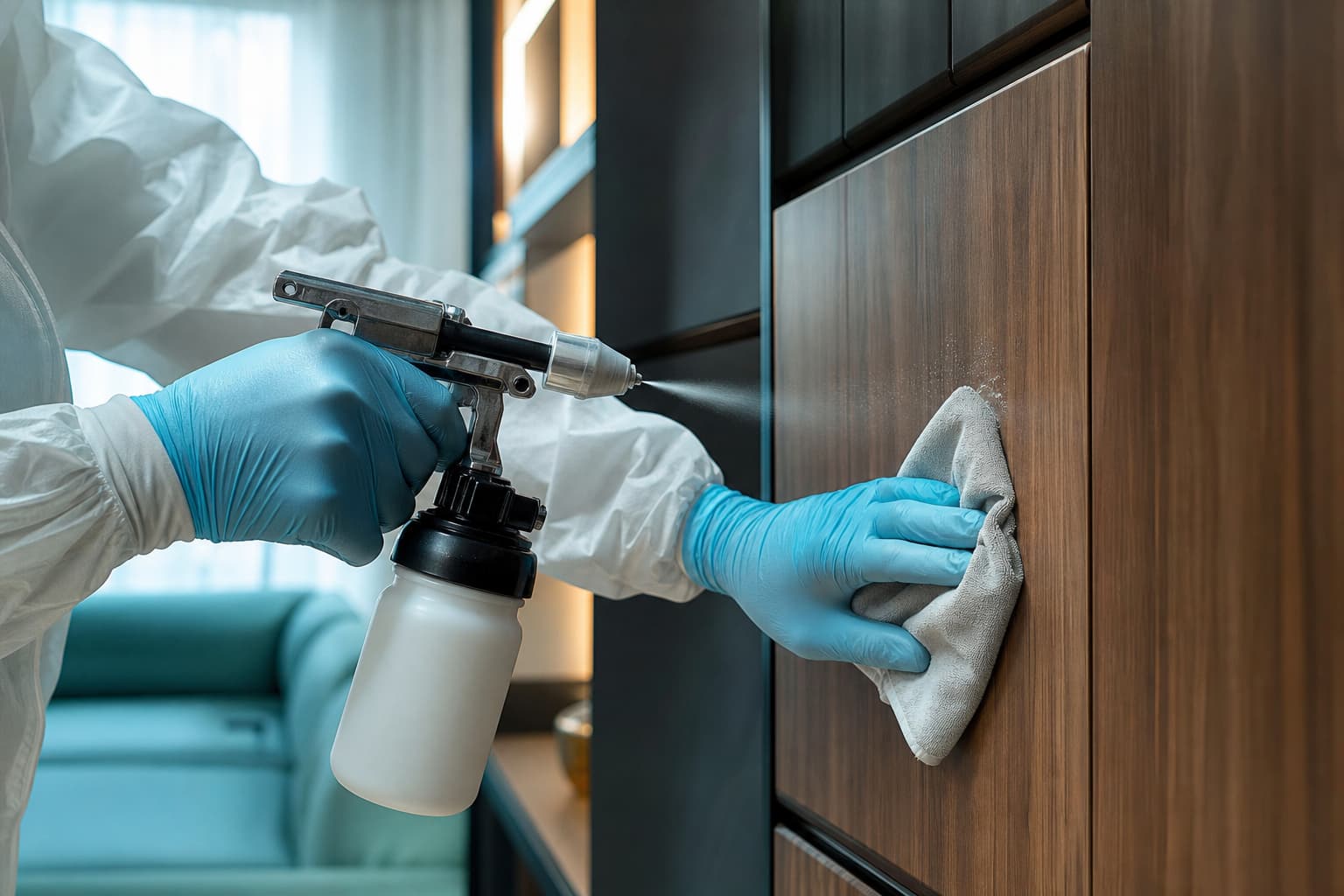
Prioritize unsealed board edges, pinholes, and cabinet backs.
Laminated melamine board faces block liquid penetration; over 85% of formaldehyde escapes through unsealed back panels, shelf support pinholes, and edge-banding seams. Direct your primary spray dosage onto these porous wood zones for maximum HCHO reduction.
Record initial HCHO/TVOC readings (mg/m³), room temperature (°C), relative humidity (% RH), and closure window (1h vs. 12h).
Identify whether off-gassing stems from urea-formaldehyde MDF/particleboard, phenolic plywood, solvent lacquers, or textile backings.
Calculate total surface area (m²) of panels, walls, and ceilings to determine exact liquid volume (ml/m²) and nozzle gauge (0.5mm–1.0mm).
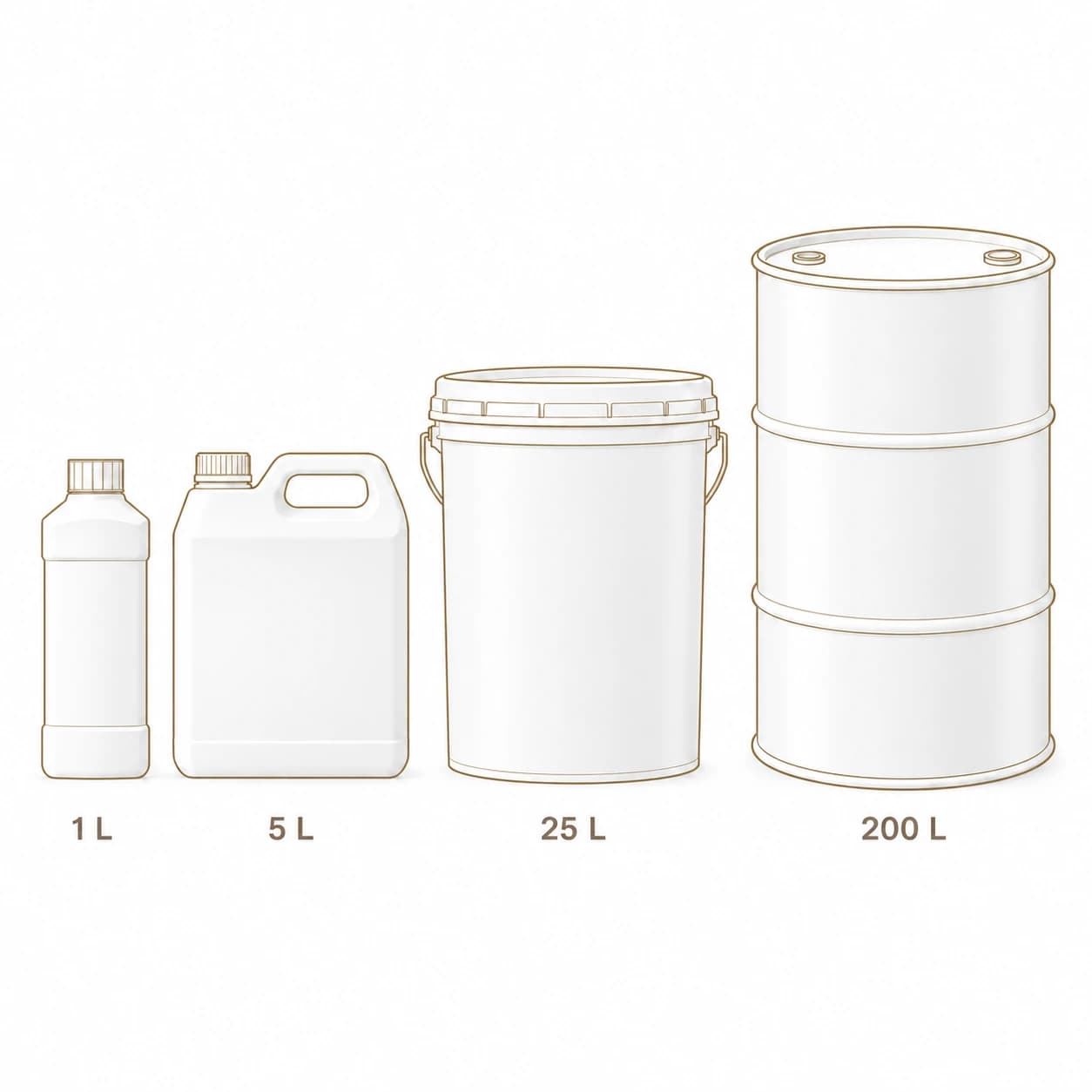
Confirm sample evaluation batch, TDS/MSDS export documentation, and commercial drum sizing (1L / 5L / 20L / 25L / 200L).
Neutral pH (6.5–7.5); mask exposed iron hardware and spot-test on high-gloss dark finishes
04Safety, handling & compliance
Hazard classification, storage and transport data follow the product's safety data sheet. Request the SDS for the full 16-section document.
Neutral pH (6.5–7.5); mask exposed iron hardware and spot-test on high-gloss dark finishes
Protective equipment: Nitrile gloves, safety glasses, and FFP2/N95 mist mask during enclosed HVLP atomization.
Non-Dangerous Goods (Non-DG) for sea, air, and road freight (Not regulated under IMDG, IATA, or ADR).
Certificate copies and full test reports are shared with buyers on request. Request copies · Quality & certifications
| Test | Standard | Laboratory | Result |
|---|---|---|---|
| 24h Closed-Chamber Pollutant Abatement | ISO 16000-9 / GB/T 18883-2022 1 m³ Chamber | CMA/CNAS Accredited Environmental Lab & botouseneco QC Center | ≥ 95.8% 24h free HCHO reduction |
| Substrate Corrosion, pH Neutrality & Zero-Stain Verification | GB/T 18883 Annex & ISO 2409 Surface Integrity Protocol | botouseneco Botou R&D Lab (Supervised by Jyen) | Pass (pH 6.5-7.5; 0% yellowing, blistering, or hardware corrosion) |
05Ordering & logistics
06Documents
Every shipment travels with these documents. Download them here when available, or request the current version from our engineers.
07Dosage
Based on the published coverage for Formaldehyde Remover: 15 – 25 ml/m² (single pass); up to 35 ml/m² on raw high-density particleboard.
Published coverage: 15 – 25 ml/m² (single pass); up to 35 ml/m² on raw high-density particleboard
Use 2–3 passes for raw high-density board or heavy TVOC loads.
Estimated quantity
4.5–7.5L
15–25 ml/m² × 300 m² × 1 pass
Estimate from the published coverage range. Real consumption depends on substrate porosity, nozzle size and baseline readings — our engineers confirm it with your quote.
08Questions
A typical 100 m² space contains approximately 180–250 m² of treatable furniture panel and cabinetry surface area (counting interior shelves, drawer backs, and bed frames). At a standard dosage of 20 ml/m², one project requires roughly 3.5 to 5.0 liters of Formaldehyde Remover.
Apply Formaldehyde Remover first directly onto raw wood panels, cabinet interiors, and furniture joints so it can penetrate porous substrates. Once dry (2–4 hours), apply Nano Photocatalyst Spray onto light-exposed walls, ceilings, and exterior cabinet faces.
On porous raw wood, the solution absorbs completely. On non-porous melamine laminates or veneered exteriors, spray a fine mist (15 ml/m²) and wipe evenly with a clean microfiber cloth after 15 minutes to prevent water spotting.
09Related
Formaldehyde & Benzene
Dual-phase micro-emulsion
Formaldehyde & Benzene
Thermal steam extraction fluid
Formaldehyde & Benzene
Deep-pore edge sealer
Formaldehyde & Benzene
Bio-based chitosan scavenger
Engineering journal
Step-by-step dosing schedules, chamber test datasets and substrate compatibility guides written by our Botou formulation and QC team.
All 66 engineering guidesStep-by-step B2B IAQ distribution and service franchise guide covering the 8-SKU starter drum matrix, 10X masterbatch local RO water bottling, and 3-stage gross margin model from 54% to 81%.
 PIN
Forensic IAQ contractor guide to diagnosing Day-30 formaldehyde rebound across 50 failed jobs, fixing missed 3 mm MDF drawer backs, baseboard floor gaps, and salt hydrolysis.
 Jyen
Step-by-step B2B IAQ contractor bidding guide using 2.4x to 3.1x unfolded surface-area multipliers instead of floor area to calculate exact liter quotas, crew hours, and gross margins.
Jyen
Head-to-head engineering comparison of GB 50325-2020 Class I civil building acceptance (<= 0.07 mg/m3 HCHO after 1-hour closure) versus GB/T 18883-2022 occupancy standards (<= 0.08 mg/m3 after 12-hour closure) and how contractors dose 1.4x higher to pass both.
Jyen
Step-by-step B2B contractor tutorial on estimating bulk 25 L drum consumption and crew labor for 100+ unit multi-family and serviced apartment IAQ handovers using the 2.4x to 2.8x treatable surface-to-floor area multiplier.
Jyen
Step-by-step IAQ contractor guide to treating custom walk-in closets and melamine wardrobe systems by targeting 32 mm shelf-pin rows, cam-lock fittings, and unbanded drawer backs at 20 to 30 ml/m2.
 Loo
Factory-direct supply
Request a sample with the English TDS and SDS, or send your project size for a bulk or private-label quotation of Formaldehyde Remover.