Formaldehyde & Benzene
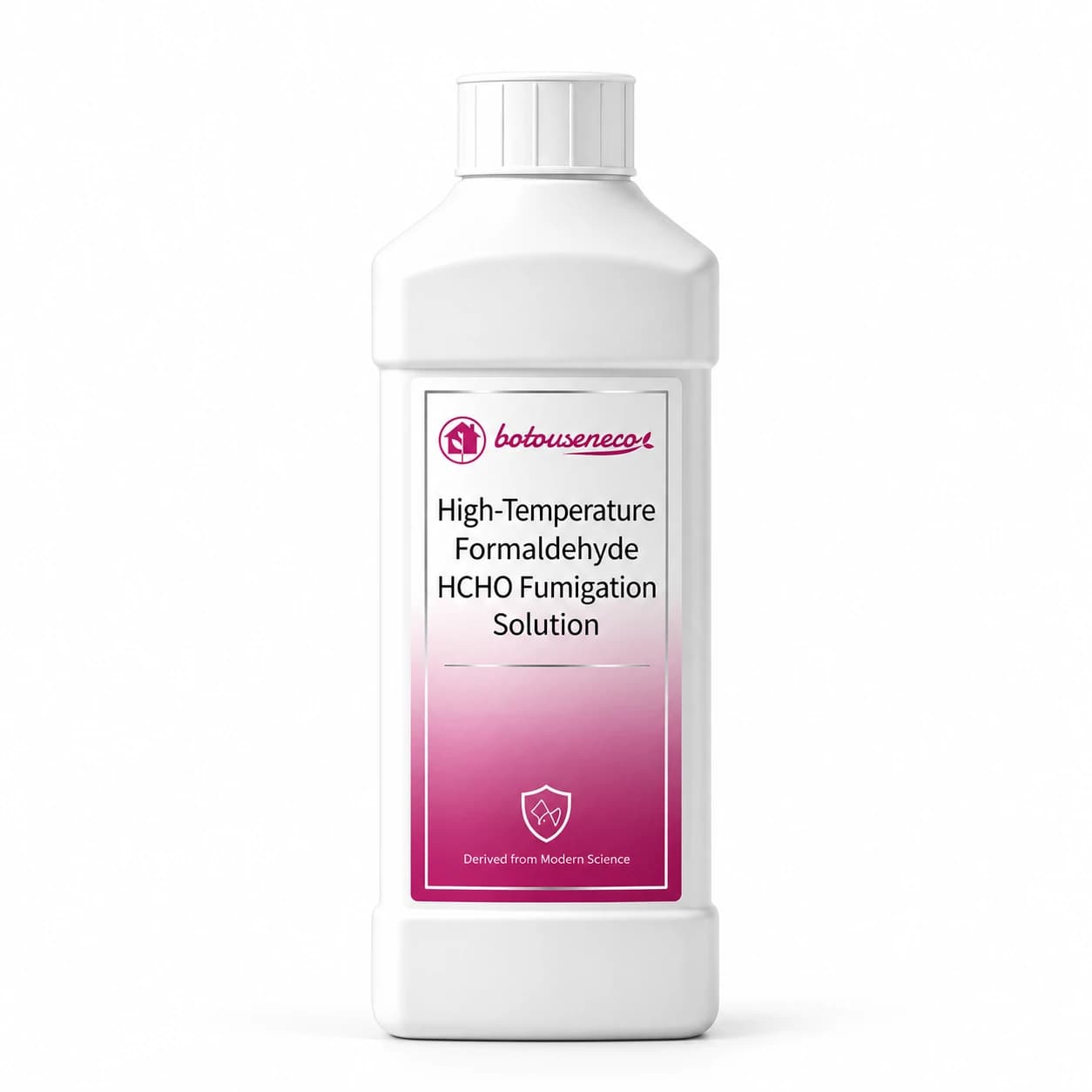
High-Temperature HCHO Fumigation Solution
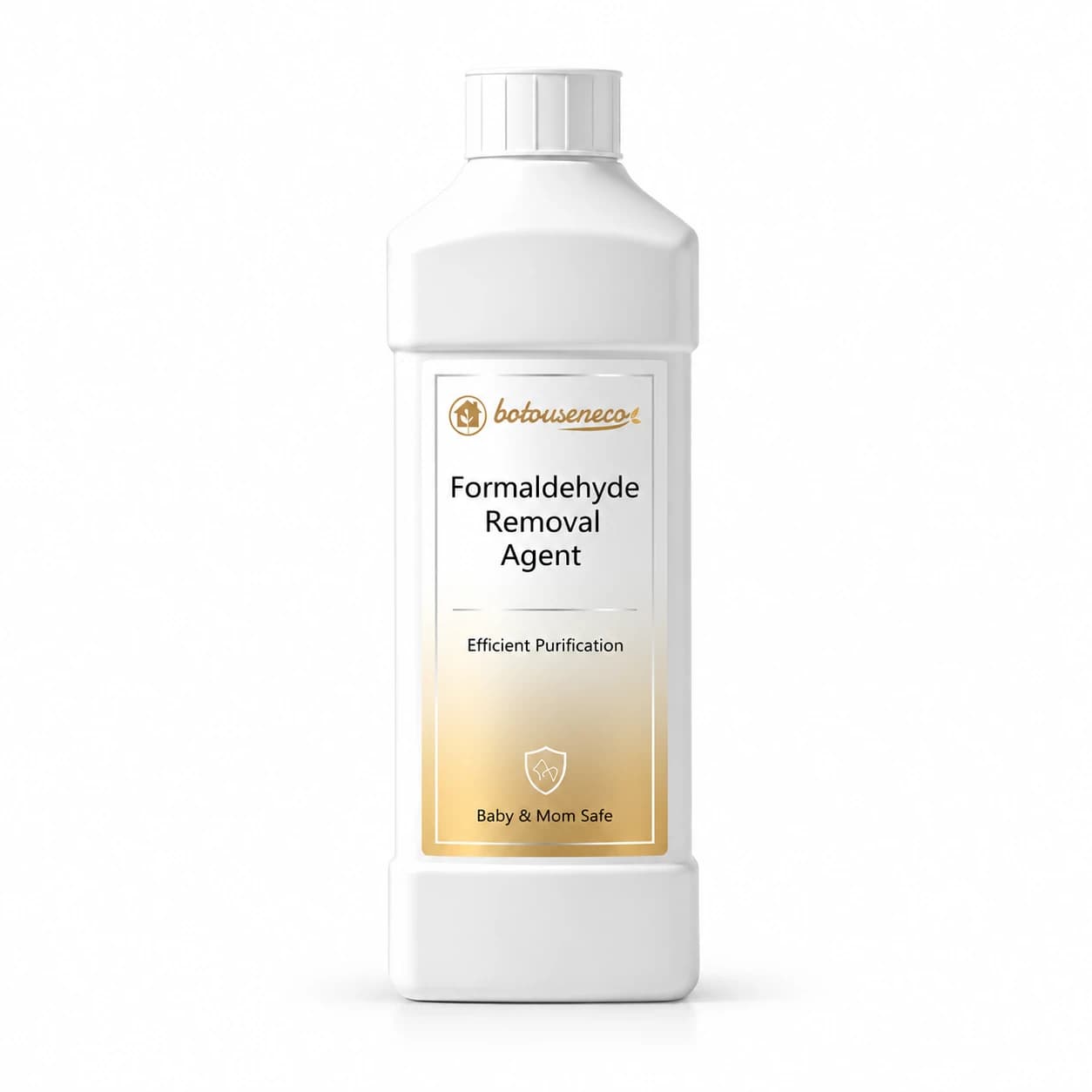
Thermal steam extraction fluid
- Dosage
- 20–30 ml/m²
- Packs
- 1 L – 200 L
Applications · IAQ & renovation contractors
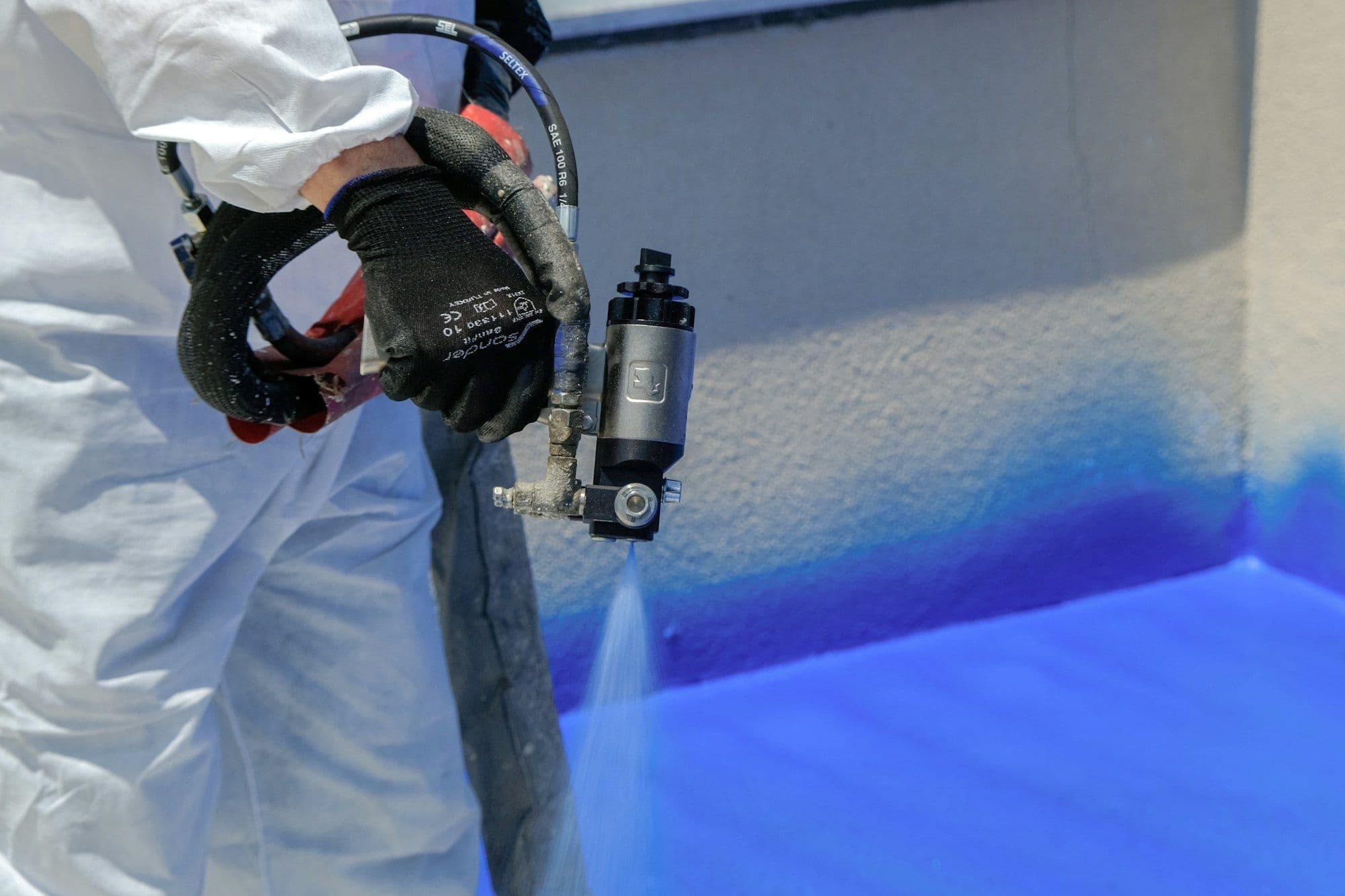
Post-renovation projects pass or fail on a closed-room re-test. We supply the complete protocol — thermal extraction, source scavenging and a photocatalyst finish — plus odor clearance, aftercare gels and the HVLP and steam hardware to apply it the same way on every job.
01The challenge
Free formaldehyde gas is under 5% of the indoor load. 70–80% is bound in urea-formaldehyde resin and keeps releasing for 3–15 years, so ventilation and air purifiers alone cannot bring a new fit-out down for good.
Walls, ceilings and cabinets add up to 2.4–2.8 times the floor area in a typical flat or office. Estimate litres per surface zone and dosage, not per square metre of floor.
Fresh paint and carpet backing add TVOC and 4-PCH odor that clients notice even when formaldehyde is within the limit. Odor clearance belongs in the same visit.
02Recommended formulations
Open any product for its full technical data sheet, or add it to your inquiry list and request samples in one go.
Browse the full catalogStage 1 · Extraction
Formaldehyde & Benzene
Thermal steam extraction fluid
Stage 2 · Source scavenger
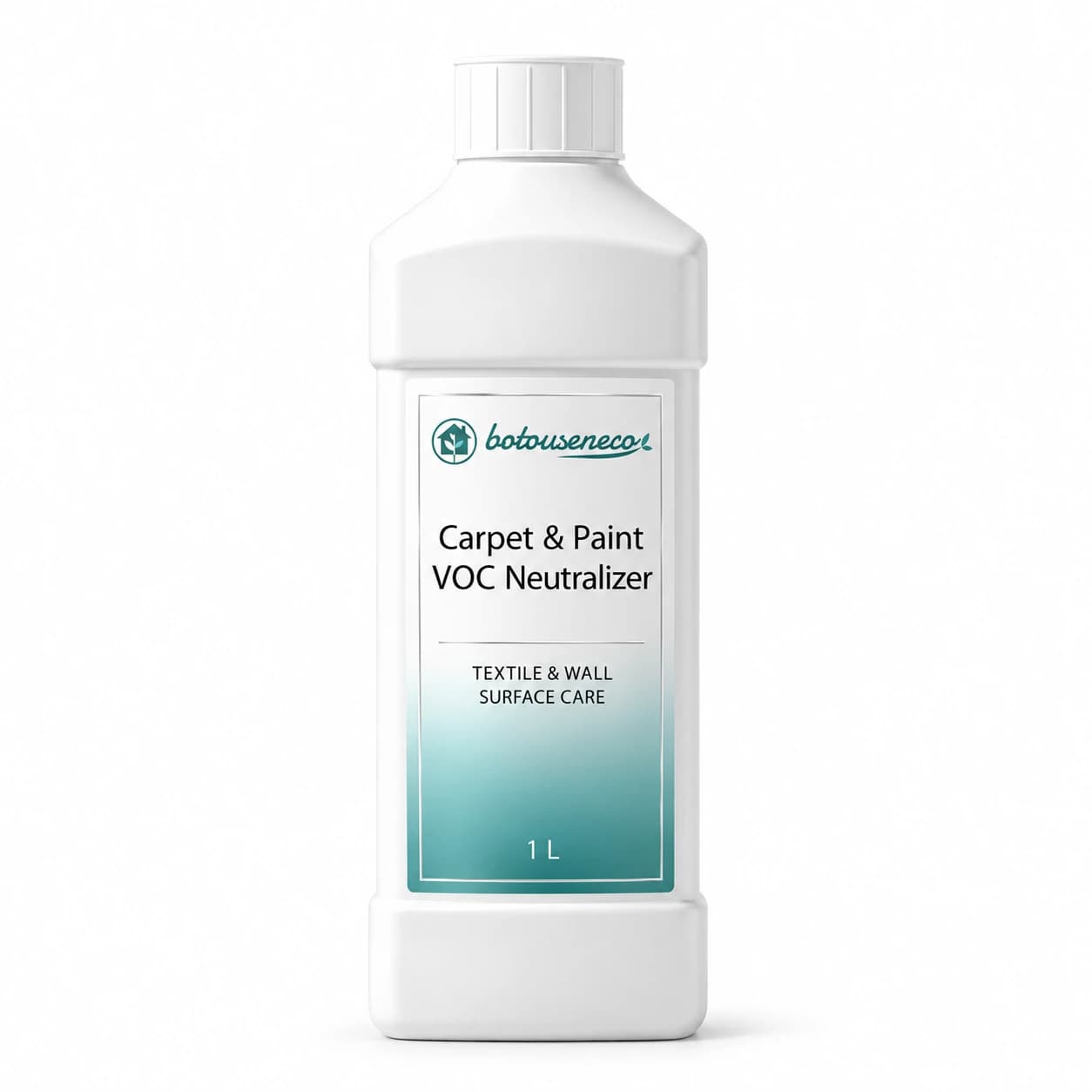
Stage 2 · Paint & walls
Stage 2 · Carpet & 4-PCH
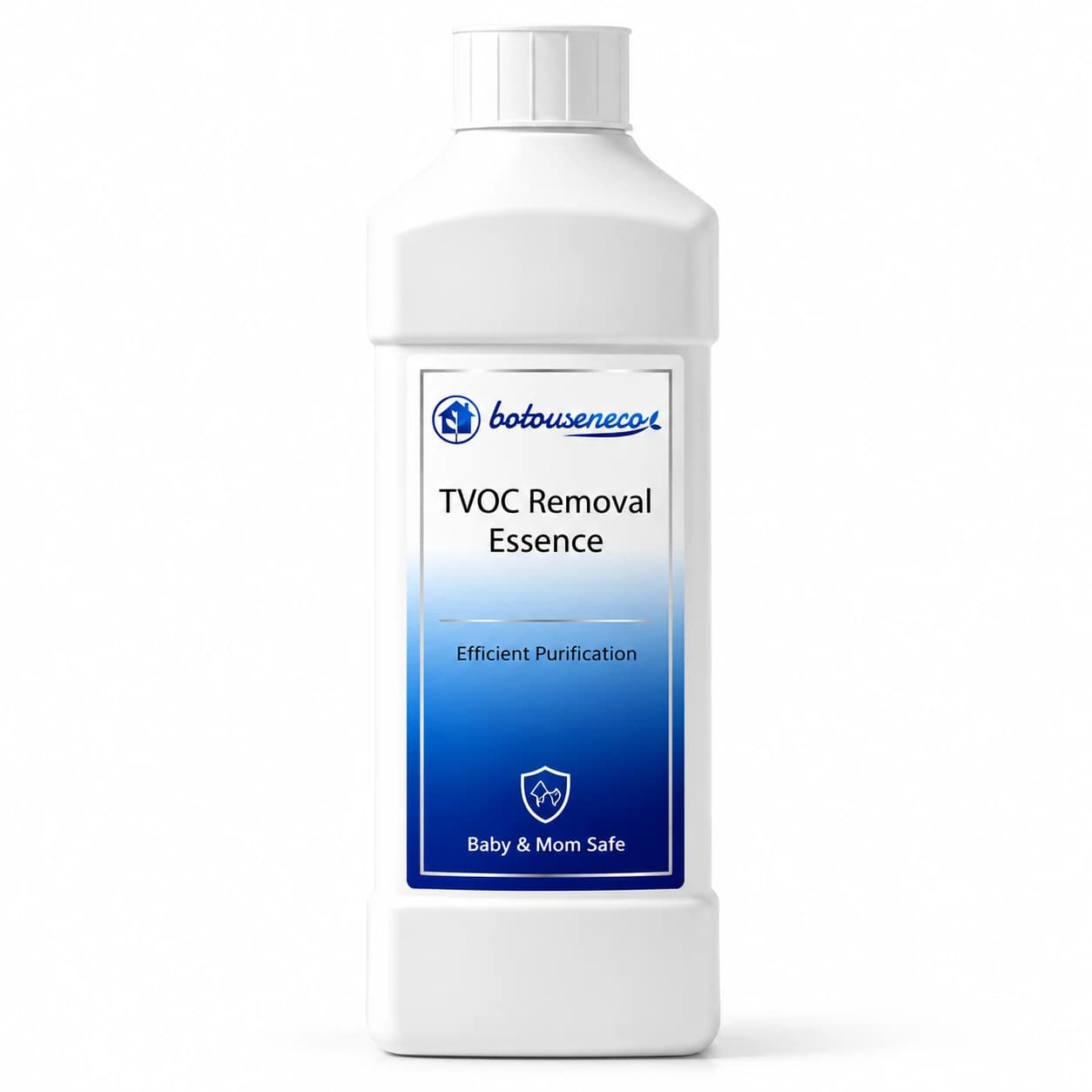
TVOC & Photocatalyst
Carpet & paint VOC specialist
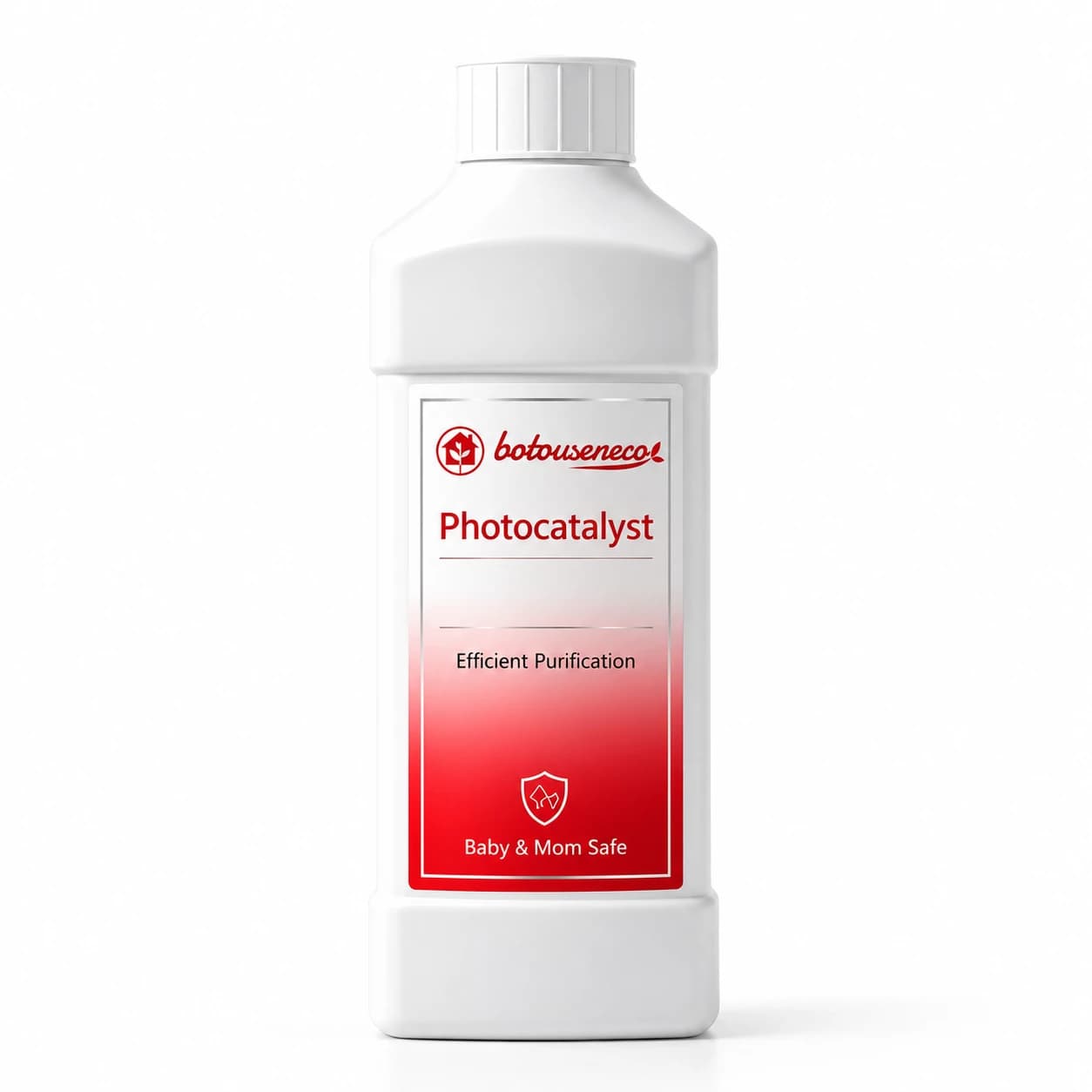
Stage 3 · Photocatalyst
Odor clearance
Aftercare
Gels & Adsorbents
90-day ClO₂ slow-release gel
Crew equipment
Bulk & Pro Equipment
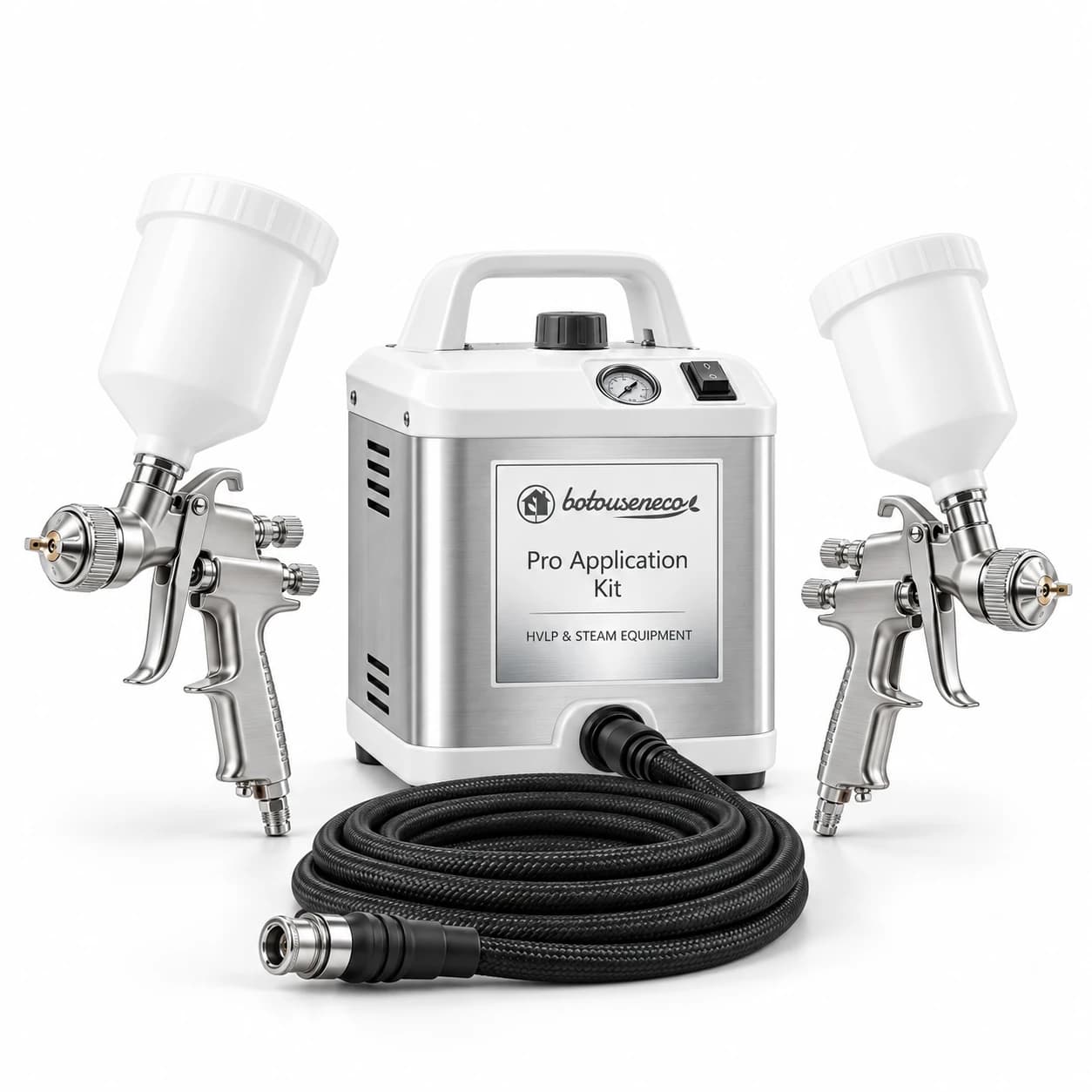
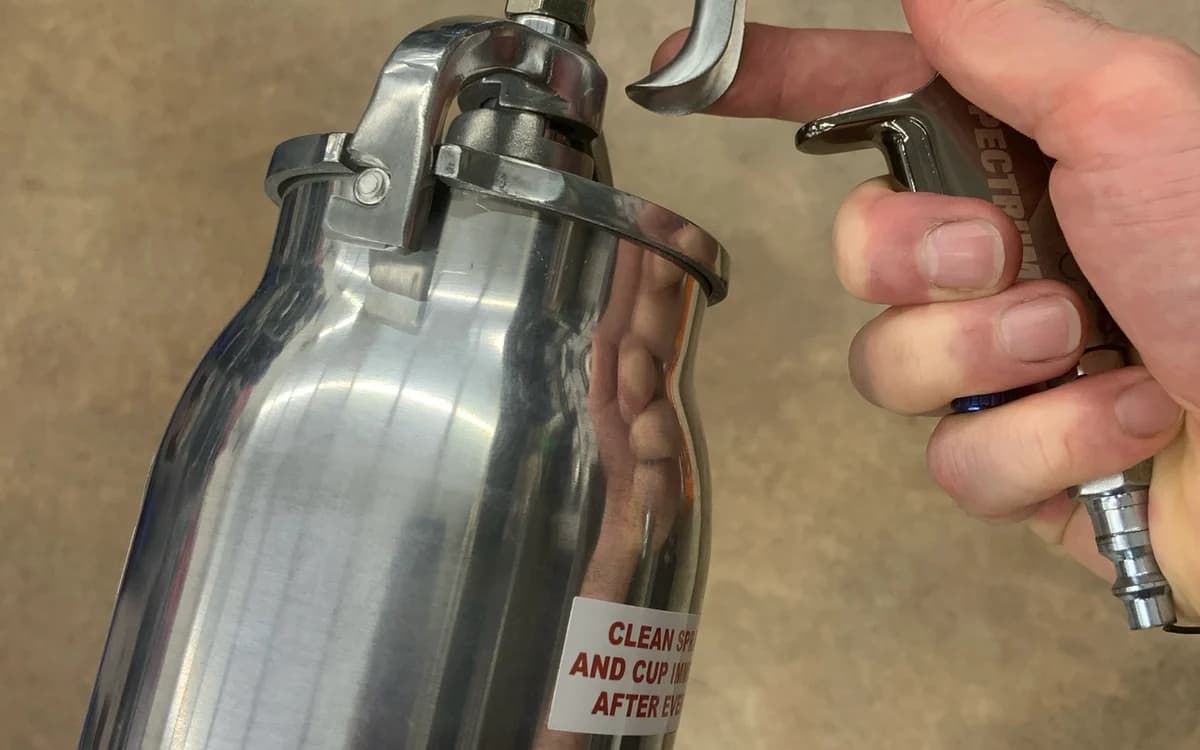
HVLP & steam contractor kit
03Workflow
Close doors and windows for 12 hours, then sample at breathing height (0.8–1.5 m) in the centre of each room. Record the values the client will be accepted against.
Run the fumigation fluid through a steam machine on dense wardrobes, upholstered sofas, mattresses and heavy drapes at 20–30 ml/m² to pull deep-seated formaldehyde out in one cycle. Keep heat away from PVC edge banding and electronics.
Spray board edges, cabinet interiors and subfloors at 15–25 ml/m² with a 0.8–1.0 mm HVLP gun. Treat fresh paint and carpet with the TVOC and 4-PCH formulations.
Once surfaces are dry (2–4 h), coat light-exposed walls and ceilings at 8–12 ml/m² with a 0.5–0.8 mm gun held 30–40 cm away. The TiO₂ film keeps working after handover.
ULV-fog the room volume and mist soft furnishings, re-test after 24–48 hours under the baseline conditions, and leave ClO₂ gel jars in wardrobes as a maintenance add-on.
04By the numbers
05Quantity estimate
Pick a formulation and the area to treat. Estimates use the coverage published in each technical data sheet.
Published coverage: 20 – 30 ml/m² (diluted or direct per steamer specification)
Use 2–3 passes for raw high-density board or heavy TVOC loads.
Estimated quantity
6.0–9.0L
20–30 ml/m² × 300 m² × 1 pass
Estimate from the published coverage range. Real consumption depends on substrate porosity, nozzle size and baseline readings — our engineers confirm it with your quote.
06Questions
A 100 m² flat typically has 180–250 m² of treatable panel and cabinet surface (shelves, drawer backs, bed frames). At 20 ml/m² that is roughly 3.5–5.0 L. Use the quantity estimator on this page for the other stages.
Thermal extraction and source scavenging first, directly on raw wood, cabinet interiors and joints. When those surfaces are dry (2–4 hours), apply the photocatalyst to light-exposed walls and ceilings, then finish with odor clearance.
After 24–48 hours. Repeat the closed-room measurement exactly as for the baseline — 12 hours closed, sampling at 0.8–1.5 m in the centre of the room — so the two readings are comparable.
The Pro HVLP & Steam Application Kit holds 0.5 mm and 0.8 mm HVLP guns, a 2600 W steamer, hoses and PPE in one flight case, in 110 V or 220–240 V versions. The guns run from an oil-free compressor at 0.25 MPa.
Keep reading
Step-by-step guide to neutralizing 4-phenylcyclohexene (new carpet odor), styrene, and latex paint acrylic monomers in commercial office fit-outs at 10 to 25 ml/m2 to pass GB/T 18883-2022 TVOC handovers.
 Loo
Technical comparison of neutral pH 6.5 to 7.5 amino-polymer formaldehyde scavengers versus acidic pH 4.5 ammonium chloride sprays on MDF cabinetry, Euro-hinges, and dark wood finishes.
 PIN
Engineering analysis of Stage 1 thermal steam fumigation kinetics (60 to 95 C) using High-Temperature Formaldehyde HCHO Fumigation Solution at 20 to 30 ml/m2 to flush and capture 3 to 6 months of shallow formaldehyde.
 Jyen
Engineering guide to large-floorplate commercial office TVOC remediation using 25 L bulk drums of Total VOC Eliminator at 15 to 25 ml/m2 to pass LEED v4.1 EQ Credit and GB/T 18883-2022 Tenax-TA GC-MS handovers.
Jyen
Field engineering guide to spraying 5 to 10 nm visible-light Nano Photocatalyst Spray at 8 to 12 ml/m2 using a 0.5 mm HVLP gun at 0.25 MPa to achieve optically clear film uniformity without white chalking.
Jyen
Step-by-step IAQ guide to treating decorative acoustic wood slat walls (Akupanel-style) and veneered MDF ceiling baffles using 0.5 mm HVLP atomization of TVOC Eliminator (10 to 20 ml/m2) and Dual Essence (12 to 18 ml/m2) with zero slat warping.
Loo
Step-by-step IAQ guide to eliminating vulcanized SBR rubber mat odors (benzothiazole, styrene, and 4-PCH) and neoprene adhesive fumes in commercial gyms at 20 to 25 ml/m2 without making gym floors slippery.
Loo
Step-by-step overnight (10:00 PM to 10:00 AM) retail fit-out IAQ guide to neutralizing methyl methacrylate (MMA), cyclohexanone vinyl-graphic solvents, and PU lacquer BTEX/HCHO using TVOC Eliminator and Dual Essence with zero gloss hazing.
Jyen
Step-by-step B2B contractor tutorial on estimating bulk 25 L drum consumption and crew labor for 100+ unit multi-family and serviced apartment IAQ handovers using the 2.4x to 2.8x treatable surface-to-floor area multiplier.
Jyen
Head-to-head engineering comparison of GB 50325-2020 Class I civil building acceptance (<= 0.07 mg/m3 HCHO after 1-hour closure) versus GB/T 18883-2022 occupancy standards (<= 0.08 mg/m3 after 12-hour closure) and how contractors dose 1.4x higher to pass both.
Jyen
Step-by-step property restoration IAQ guide to stopping 48-hour carpet sub-pad butyric acid souring, wet SBR 4-PCH hydrolysis, and drywall Aspergillus MVOCs after floods or sprinkler leaks using cationic biofilm strippers and Bacillus enzymes.
Loo
Step-by-step B2B IAQ contractor bidding guide using 2.4x to 3.1x unfolded surface-area multipliers instead of floor area to calculate exact liter quotas, crew hours, and gross margins.
Jyen
Forensic IAQ contractor guide to diagnosing Day-30 formaldehyde rebound across 50 failed jobs, fixing missed 3 mm MDF drawer backs, baseboard floor gaps, and salt hydrolysis.
Jyen
Complete IAQ contractor crew PPE, EN 14387 ABEK1P3 respirator, and 12-substrate masking SOP for protecting piano-black lacquer, brass, silk, OLED screens, and smoke detectors during HVLP spraying.
Jyen
Field guide on why opening windows fails against bound wood glue, and how B2B crews use a 3-stage spray plan to pass ISO 16000 and GB/T 18883 air tests.
Jyen
Last updated
Factory-direct supply
Tell us the rooms, materials and volumes involved. Our Botou engineering desk replies with a matched set of formulations, dosages and documents.