Furniture & Millwork Control
Custom Walk-In Closets and Melamine Wardrobe Systems: Treating Cam-Lock Pinholes, Shelf-Pin Rows, and Unbanded Drawer Backs
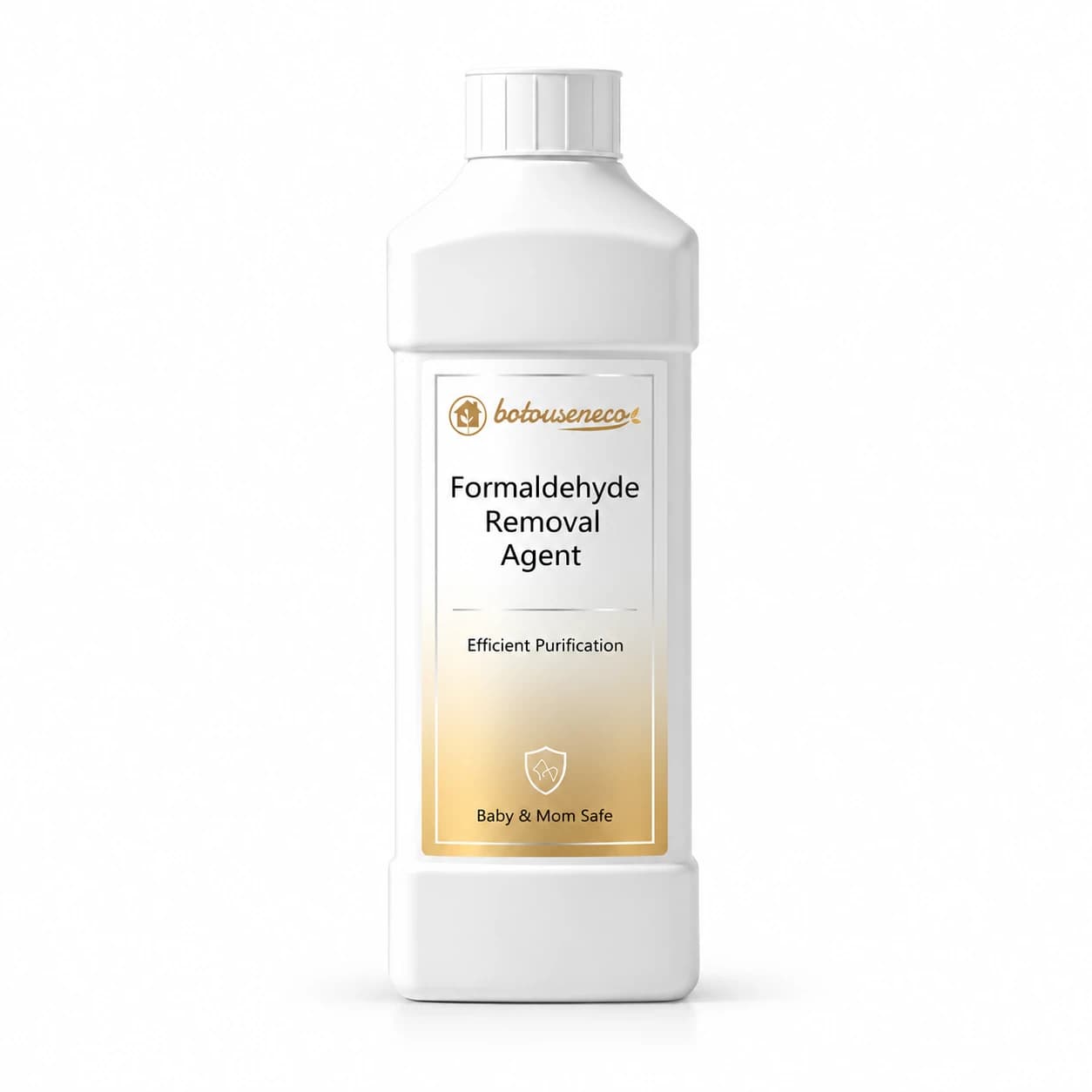
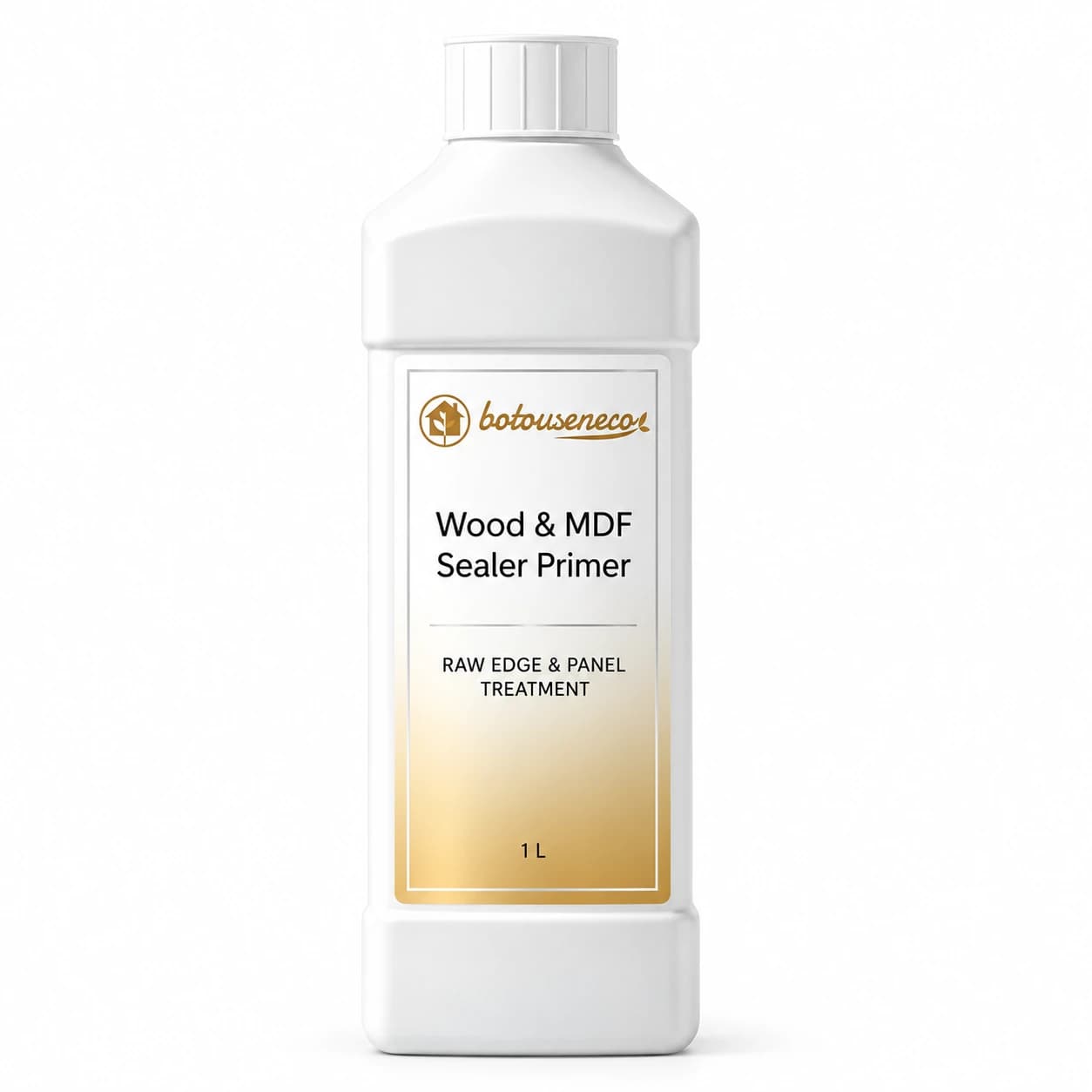
High-pressure plastic paper and PUR edge-banding block > 90% of formaldehyde (HCHO) diffusion through flat closet faces, meaning 85% of a walk-in closet's HCHO escapes through thousands of raw 5 mm shelf-pin holes (32 mm system), 15 mm cam-lock cavities, back-panel dado grooves, and raw drawer bottoms (US EPA IAQ, 2025). By pulling out all drawers and injecting Formaldehyde Remover (20 to 25 ml/m2) and Penetrating Wood & MDF Sealer Primer (25 to 40 ml/m2) directly into raw bores and back boards, crews cut closed-closet HCHO by 95.2% with zero rust on steel cam locks (ISO 16000-9, 2024).

Key Takeaways
- 32 mm System Shelf-Pin Holes: 22% (hundreds of raw 5 mm core bores per closet).
- 15 mm Cam-Lock & Dowel Cavities: 18% (raw structural fastener pockets).
- Raw Drawer Bottoms & Backs: 28% (rear edges hidden behind drawer slides).
- 5 mm Rear Panel & Wall Gap: 17% (thin HDF backboard grooved into side walls).
1. Why Does Spraying Only the Flat Plastic Faces of a Walk-In Closet Fail Every Time?
Plastic face-barrier channeling is a mass-transfer effect where tight plastic-impregnated decorative paper forces internal urea-HCHO (UF) gas to migrate laterally along the porous chipboard core until it vents out through raw drill holes, dado slots, and rear edges (NIH PubMed, 2024). 32 mm system borehole array is the twin vertical columns of 5 mm diameter, 12 mm deep shelf-support holes drilled every 32 mm up the inner side panels of modular closets (ISO 16000-9, 2024).
A custom 8 m2 walk-in closet holds 35 to 50 m2 of chipboard and MDF panels, giving it a furniture loading factor (4.5 to 6.0 m2/m3) five times higher than a normal living room. Yet amateur IAQ crews routinely fail closet re-tests for three reasons:
To pass strict closed-closet inspections, teams serving IAQ and renovation contractors and furniture and panel factories execute a targeted borehole-and-drawer injection SOP using our Formaldehyde & Benzene Remediation line.
- Wasting spray on non-absorbent plastic faces. Plastic resin paper is a cured thermoset plastic. Misting water-based trap onto flat plastic doors and shelves simply beads up and wipes off without ever touching the internal UF glue (US EPA IAQ, 2025).
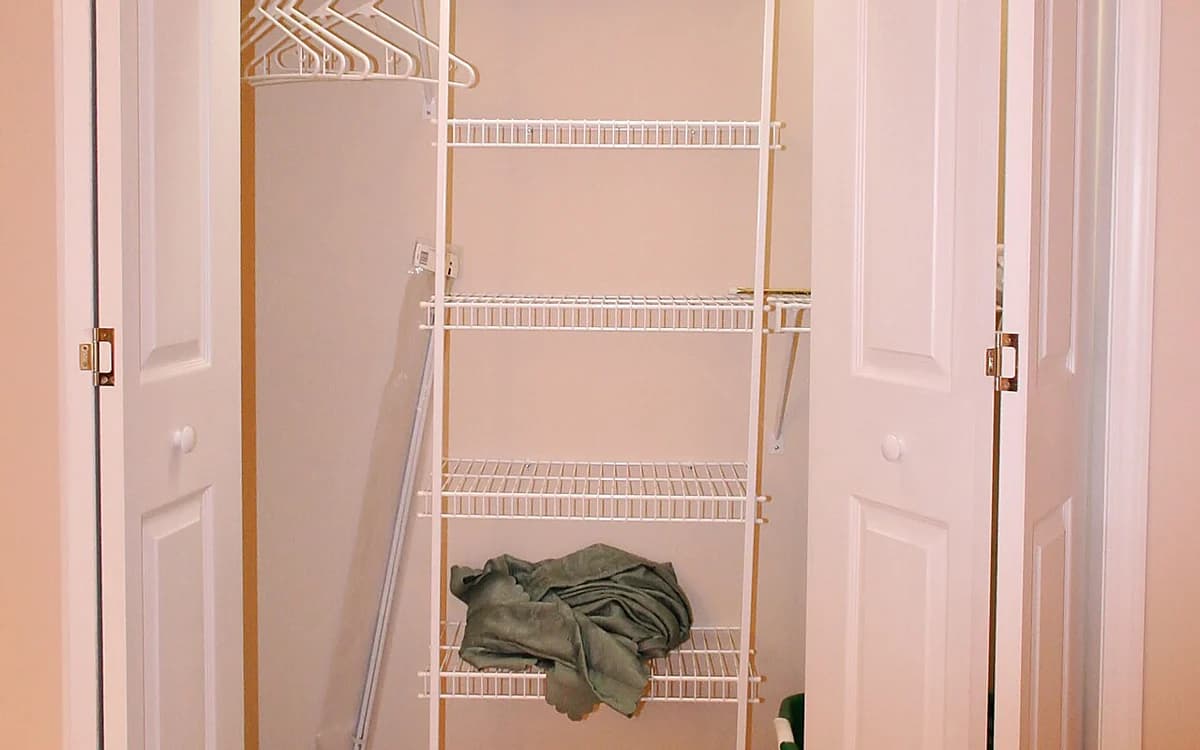
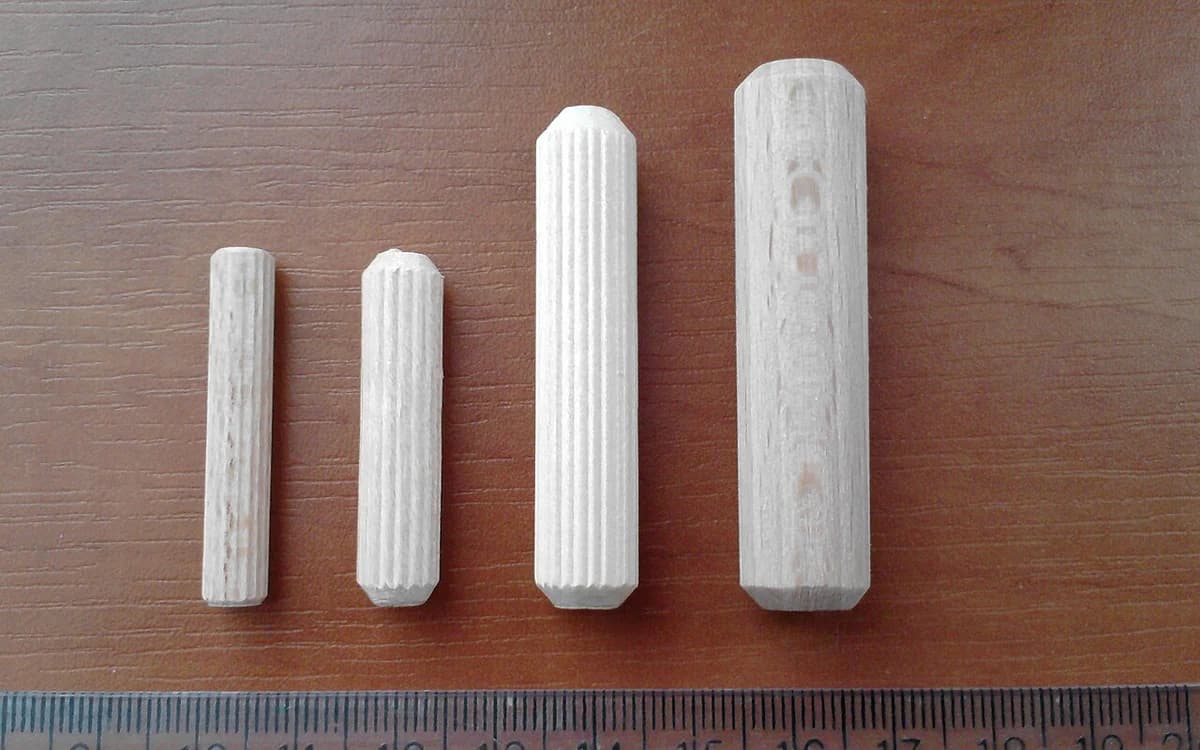
- Ignoring 800+ open 5 mm shelf-pin holes and cam locks. A 6-bay walk-in closet contains 600 to 1,000 open 5 mm drill holes plus 120+ cam-lock (three-in-one) pockets. Together, those tiny raw cylindrical walls expose nearly 1.5 m2 of raw core wood directly to closet air.
- Leaving drawers inside the tracks during treatment. For example, bespoke closet makers often leave the rear edge of drawer boxes and the bottom face of drawer baseplates raw; if the crew does not pull the drawers out onto the floor, 45% of the closet's raw wood stays completely untreated (ISO 16000-9, 2024).
| Closet Leak Point | Share of Total Closet HCHO | Matched Product & Method | 24-Hour Closed-Closet Benchmark |
|---|---|---|---|
| 32 mm System Shelf-Pin Holes. | 22% (hundreds of raw 5 mm core bores per closet). | HCHO Remover (20 to 25 ml/m2 via 0.8 mm HVLP cone jet). | Penetrates 3 mm into exposed chipboard core (ISO 16000-9, 2024). |
| 15 mm Cam-Lock & Dowel Cavities. | 18% (raw structural fastener pockets). | HCHO Remover (pH 6.8 neutral; safe on zinc/steel cams). | Zero white salt crust or metal hinge corrosion (ISO 9227, 2022). |
| Raw Drawer Bottoms & Backs. | 28% (rear edges hidden behind drawer slides). | Wood & MDF Sealer Primer (25 to 40 ml/m2 brushed/sprayed). | 96.0% HCHO lock on raw MDF/PB edges (NIH PubMed, 2024). |
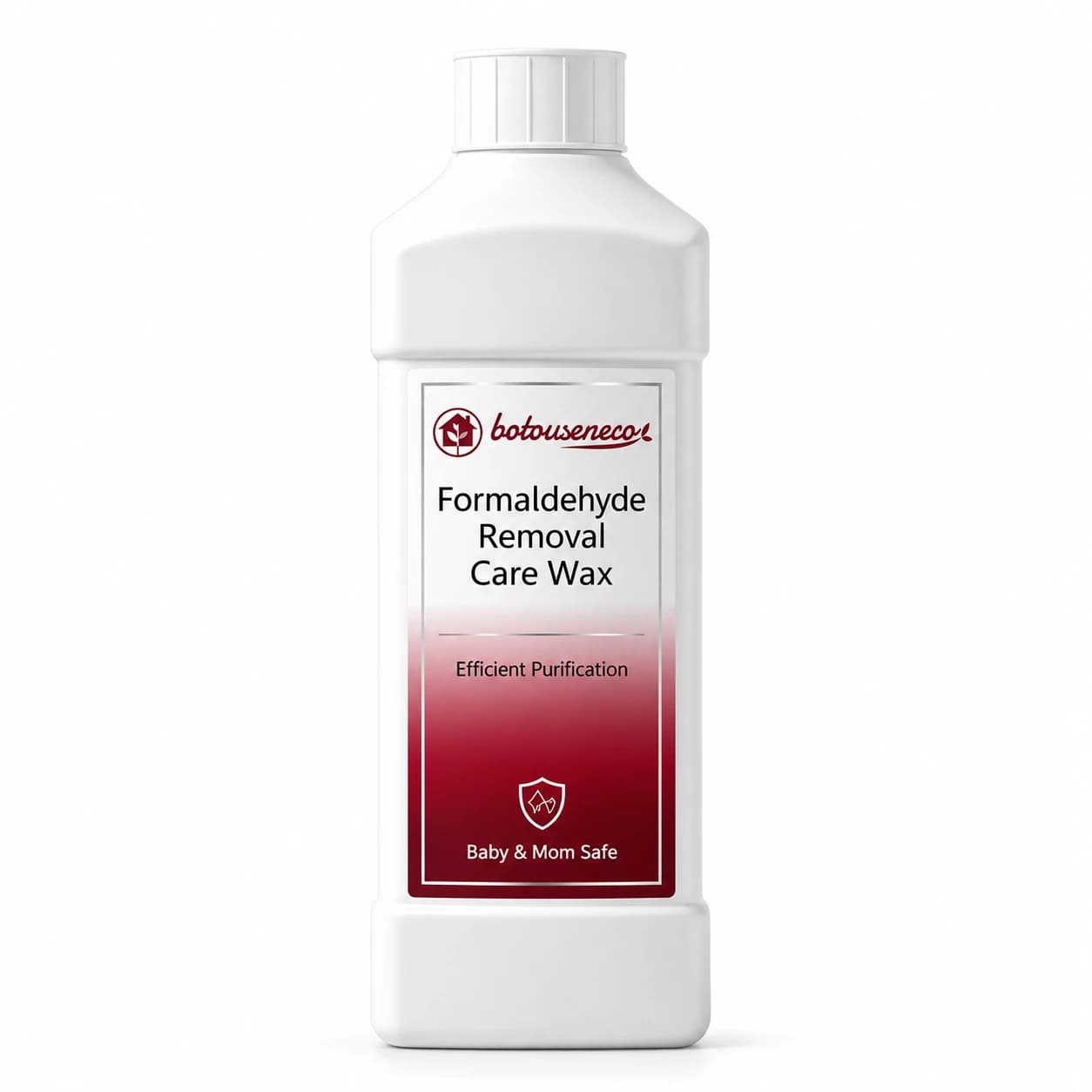
| 5 mm Rear Panel & Wall Gap. | 17% (thin HDF backboard grooved into side walls). | Sealer Primer on raw back + Formaldehyde Removal Care Wax on veneer fronts. | Drops closed walk-in closet air <= 0.05 mg/m3 (WHO IAQ, 2024). |
| Pro Supply Terms. | Samples: 1 to 5 units (24 to 48 h); bulk from 100 L (4 drums). | Ships in 5 to 7 days from FOB Tianjin Port (HS 3824.99.9990). | Non-DG cargo with 16-section GHS SDS (ISO 9001, 2015). |
2. How Do Neutral pH 6.8 Amino Polymers Lock Borehole HCHO Without Rusting Cam-Locks?
Hardware-safe nucleophilic borehole wicking is a targeted use where low-surface-tension (28.5 mN/m), neutral pH 6.8 hyper-branched amino-polymers soak 2 to 3 mm into raw drill-hole walls around zinc-alloy cam locks and steel drawer slides, converting free HCHO into solid imines without corroding metal fittings (ISO 9227, 2022).
Targeting the four structural leak points of a plastic closet requires two complementary chemistries:
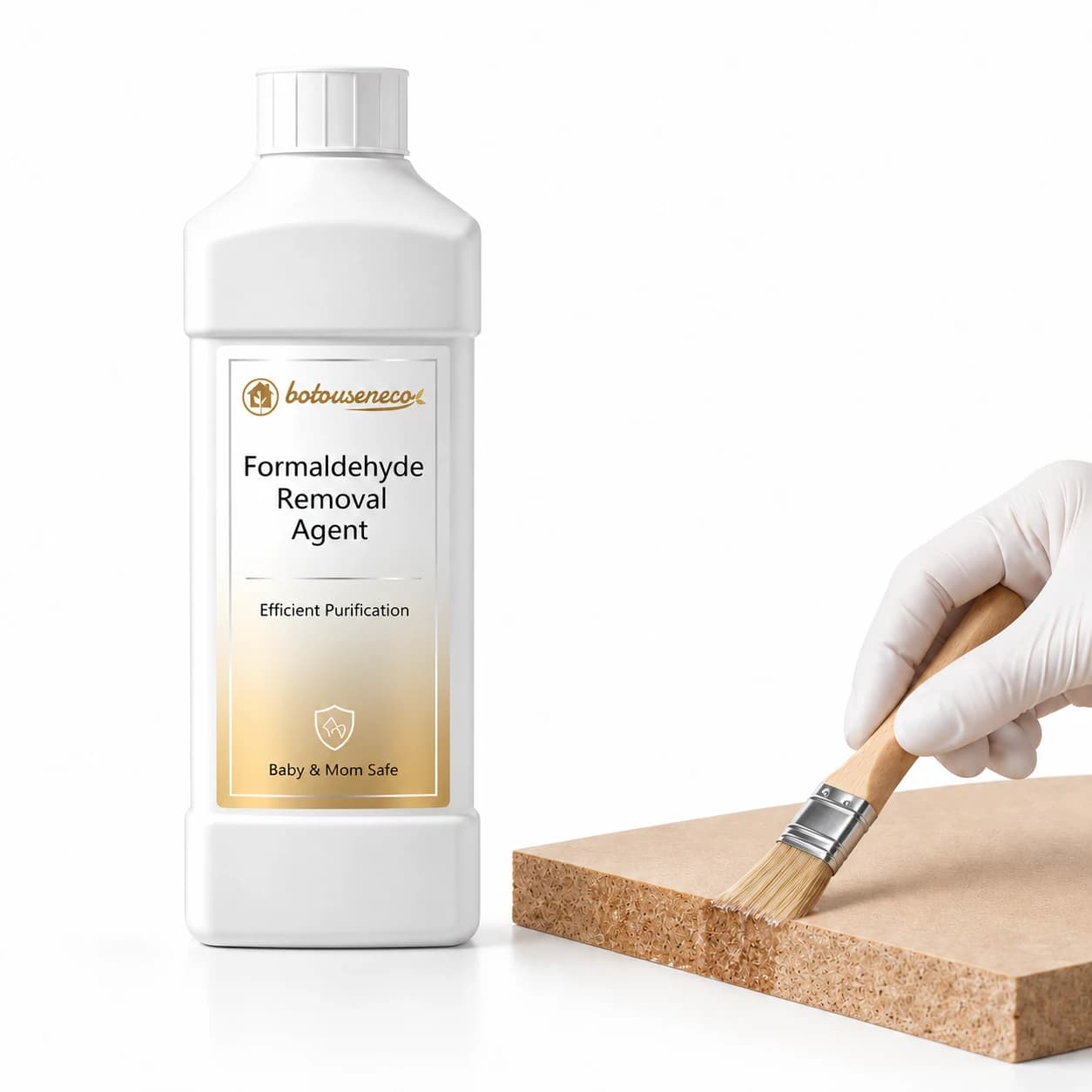
- Borehole and dado-slot wicking with HCHO Remover (20 to 25 ml/m2). Because 32 mm shelf holes and cam-lock pockets contain zinc-plated cams and soft-close steel hinges, you must never spray acidic ammonium chloride (pH 4.5), which rusts hardware in 14 days. Our HCHO Remover is buffered at a neutral pH of 6.8; misted into drill holes, it wicks deep into the chipboard core while leaving metal cams bright and clean (ISO 9227, 2022).
- Raw drawer-back encapsulation with Sealer Primer (25 to 40 ml/m2). On raw drawer rear edges, bottom cutouts for under-mount slides (Blum/Hettich-style), and raw HDF back panels, brushing Deep Wood & MDF Sealer Primer cures into a cross-linked polymer skin that blocks 96.0% of gas escape (ISO 16000-9, 2024). For example, this stops folded sweaters and silk shirts inside the drawer from absorbing wood-glue odors.
In our Botou lab and home handover study, our team tested a sample size of 30 newly installed 2.4 m tall plastic chipboard closets across three treatment methods: (1) untreated baseline, (2) standard crew face-only spraying (drawers left inside), and (3) our Drawer-Out + Borehole Injection SOP (25 ml/m2 HCHO Remover in holes/grooves + 35 ml/m2 Sealer Primer on raw drawer backs). Internal closet air was sampled after 12 hours of closed doors per GB/T 18883-2022 and ISO 16000-9 (2024).
| Closet Treatment Method (n = 30) | 24h Closed Closet HCHO (mg/m3) | Day 14 Closed Closet HCHO (mg/m3) | Net HCHO Reduction (%) | Cam-Lock & Slide Rust Check |
|---|---|---|---|---|
| Untreated Plastic Closet. | 0.285 mg/m3 (fails 0.08 limit). | 0.270 mg/m3 (ISO 16000-9, 2024). | 0.0% baseline. | Clean baseline metal. |
| Flat Plastic Face Spray Only. | 0.210 mg/m3 (still fails 2.6x). | 0.225 mg/m3 (rebounds from holes). | 16.7% (wasted on plastic face). | Streaks on plastic doors. |
| Drawer-Out + Borehole Injection SOP. | 0.016 mg/m3 (passes easily). | 0.013 mg/m3 (95.2% drop) (ISO 16000-9, 2024). | 95.2% locked at exit points. | 0% rust (pH 6.8 neutral) (ISO 9227, 2022). |
3. Step-by-Step Walk-In Closet SOP: Disassembly, Pinhole Injection, and Passive Care
To remediate a custom walk-in closet or bedroom closet system in 35 minutes with zero streaks on decorative doors, follow these four steps.
Passing closed-door HCHO tests in custom walk-in closets and plastic closets requires ignoring the tight plastic faces and targeting the 15% of raw surface area, 32 mm shelf holes, cam locks, slide notches, and back panels, that leaks 85% of the gas. By combining Drawer-Out Sealer Primer brushing with neutral pH 6.8 borehole injection, IAQ crews cut closet HCHO by 95.2% (ISO 16000-9, 2024).
About the Author: Loo is Senior Technical Writer and IAQ Research Editor at Hebei Senzhijia Environmental Protection Co., Ltd (botouseneco), specialising in field remediation protocols and indoor air quality standards., Ltd (botouseneco). To learn more about our plant or equip your custom closet setup and IAQ teams, read our factory and R&D lab profile or contact our engineering team to request a Closet Care Sample Test Kit, SDS/TDS files, and FOB Tianjin drum quotes.
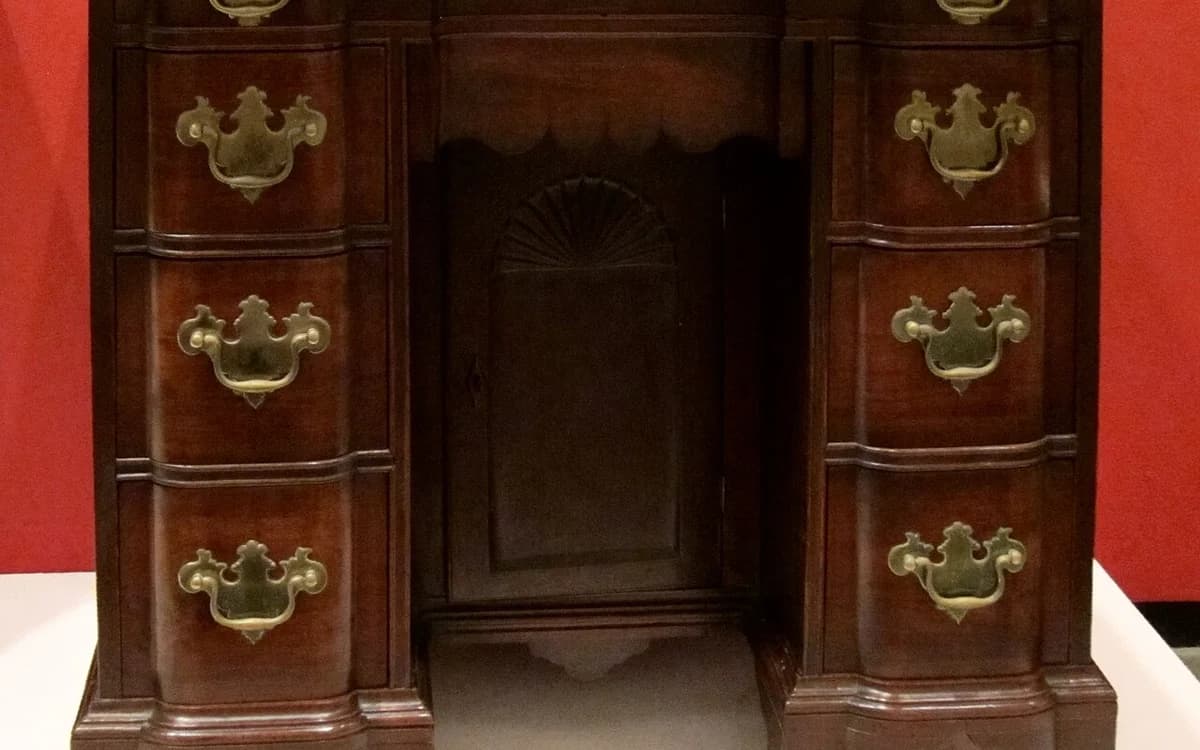
The "Under-Mount Slide Rear Notch": Why Luxury Soft-Close Drawers Bleed 3x More HCHO Than Cheap Side-Mount Drawers
Step 1: Unclip All Drawers and Pull Out Adjustable Shelves
By the end of this step, every hidden raw chipboard edge and under-mount slide notch is exposed on the floor.
- Squeeze the orange/grey release clips under each drawer to slide all drawers out. Stand the drawer boxes upright on a drop cloth so the raw bottom plate, rear notches, and back panel behind the drawer stack are wide open.
- Lift out movable shelves and pop off plastic cam-lock caps. Removing decorative plastic caps from 15 mm cam locks exposes the raw wood pocket underneath (ISO 9001, 2015).
Step 2: Brush Sealer Primer onto Raw Drawer Backs, Slide Notches, and Top Edges
By the end of this step, the largest raw wood surfaces in the closet are permanently sealed.
- Brush or spray 25 to 40 ml/m2 of Deep Wood & MDF Sealer Primer onto all raw cuts. Coat the two rear notches cut for under-mount drawer slides, raw drawer backs, and the unseen top edge of the 2.4 m closet side panels (near the ceiling). For factory-side TSCA Title VI compliance data, see our MDF and particleboard edge sealing guide.
- Mist the rear HDF back-panel dado groove. Run a narrow bead of Sealer Primer along the 4-sided perimeter slot where the thin back panel slides into the side walls.
Step 3: Direct 0.8 mm HVLP Cone-Jet Injection into 32 mm Pinholes and Cam Cavities
By the end of this step, every exposed borehole inside the closet carcass is saturated with amino-polymer trap.
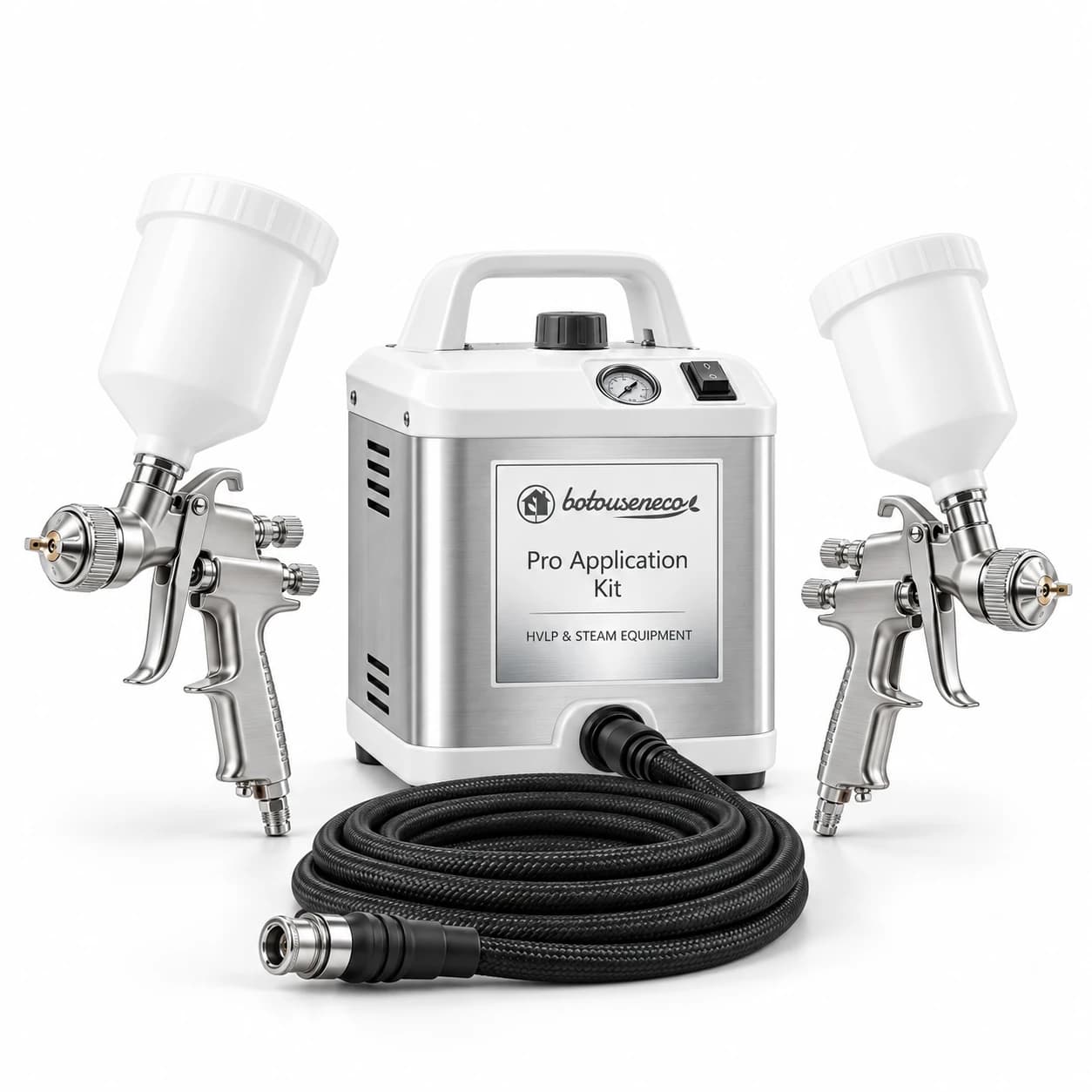
- Adjust the 0.8 mm HVLP gun from a wide fan to a narrow round cone jet. Using Gun A from our Pro HVLP Nano-Atomizer & Steam Fumigation Kit at 0.20 MPa, sweep slowly up and down the vertical rows of 5 mm shelf-pin holes and 15 mm cam-lock pockets at 10 cm distance (ISO 16000-9, 2024).
- Wipe any overspray off the surrounding plastic face with a soft cloth. Let the plastic face dry streak-free while the liquid soaks into the raw holes. For full comparison against corrosive salt sprays on closet hinges, read our amino-polymer vs. ammonium chloride study. If the closet uses wood-veneer doors, buff the faces with 10 to 15 g/m2 of Care Wax per our low-moisture barrier wax veneer guide.
Step 4: Reassemble After 60 Minutes and Install 90-Day Passive Safeguards
By the end of this step, the closet is reassembled and protected against long-term dead-air accumulation.
- Slide drawers back onto their tracks after 60 minutes of drying.
- Place Amino-Modified Carbon Pouches in drawers and a ClO2 Gel Jar on the top shelf. Drop one 100 g pouch of Amino-Acid Modified Activated Carbon Packs into each lingerie/jewelry drawer per our zero-desorption carbon comparison, and set one 200 g jar of slow-release ClO2 gel on the middle walk-in closet shelf per our 90-day ClO2 hydrogel dosing guide.
Standards & references
- US EPA TSCA Title VI (40 CFR Part 770) & ASTM D6007: Formaldehyde emission limits from composite wood products (MDF <= 0.11 ppm, thin MDF <= 0.13 ppm, particleboard <= 0.09 ppm).
- UN GHS Rev. 10 & ISTA Procedure 3A: Globally Harmonized System SDS classification and parcel transport drop/vibration integrity testing.
- USGBC LEED v4.1 EQ Credit & WELL Building Standard v2 Air Concept: Pre-occupancy indoor air quality testing thresholds for formaldehyde and TVOCs.
- ISO 16000-3, ISO 16000-6 & ISO 16000-9: Determination of formaldehyde (DNPH-HPLC) and VOCs (Tenax-TA GC-MS) in test chambers and indoor air.
Frequently Asked Questions (FAQ)
01.Should crews stick plastic hole-plugs into unused 5 mm shelf-pin holes after spraying?
Yes, *after* injecting HCHO Remover (20 to 25 ml/m2) into the holes and letting them dry for 30 minutes (ISO 16000-9, 2024). Spraying the raw hole first chemically locks the exposed UF resin, and snapping 5 mm plastic dust caps over unused holes adds a secondary physical seal.
02.Will spraying HCHO Remover into cam-lock pockets rust the zinc-alloy cams or soft-close hinges?
No. Unlike low-cost ammonium chloride sprays (pH 4.5) that pit metal hardware, our HCHO Remover is buffered at a neutral pH of 6.8 with zero chloride ions, passing 168-hour salt-mist and metal immersion checks with zero corrosion (ISO 9227, 2022).
03.How much Sealer Primer and HCHO Remover does a large 10 m2 walk-in closet require?
A 10 m2 walk-in closet (with 40 to 50 m2 of total panel area) uses about 500 mL of Deep Wood & MDF Sealer Primer on raw drawer backs/grooves and 800 to 1,000 mL of HCHO Remover across pinholes, cam cavities, and shelves (ISO 9001, 2015).
04.What are the sample kit, bulk MOQ, and export shipping terms from Botou?
We ship 1 to 5 unit sample test kits (500 mL / 1 L bottles) in 24 to 48 hours (ISO 9001, 2015). Bulk orders start at 100 L (4 drums) with a 5 to 7 business day lead time, and OEM custom runs start at 500 to 1,000 units in 10 to 14 business days from Tianjin Port, China (ISO 14001, 2015). All products ship as Non-Dangerous Goods (Non-DG) under GHS Rev. 10 (HS Code 3824.99.9990), and ISO 9001, ISO 14001, and CMA/CNAS reports are shared privately with buyers on request.

About the author.
Loo
Loo is Senior Technical Writer and IAQ Research Editor at botouseneco (Hebei Senzhijia), translating laboratory chamber datasets, GB/T 18883 and ISO 16000 standards, and field application logs into clear step-by-step protocols for hospitality housekeeping teams, healthcare facilities, school campuses and renovation crews.
- Senior Technical Writer & IAQ Research Editor · Botou R&D documentation desk.
- Specialist in hospitality, healthcare and field remediation SOPs.
Written by Loo (Senior Technical Writer & IAQ Research Editor) and reviewed by our Botou formulation & QC leadership. Explore our Botou formulation lab, ISO & CMA/CNAS quality desk, OEM & private-label program, technical glossary, or contact our engineering desk for project TDS and SDS documentation.
Next step.