Furniture & Millwork Control
Preventing Shipping Container Formaldehyde Rebound: In-Box Chemisorption Carbon Pouches for Export Furniture
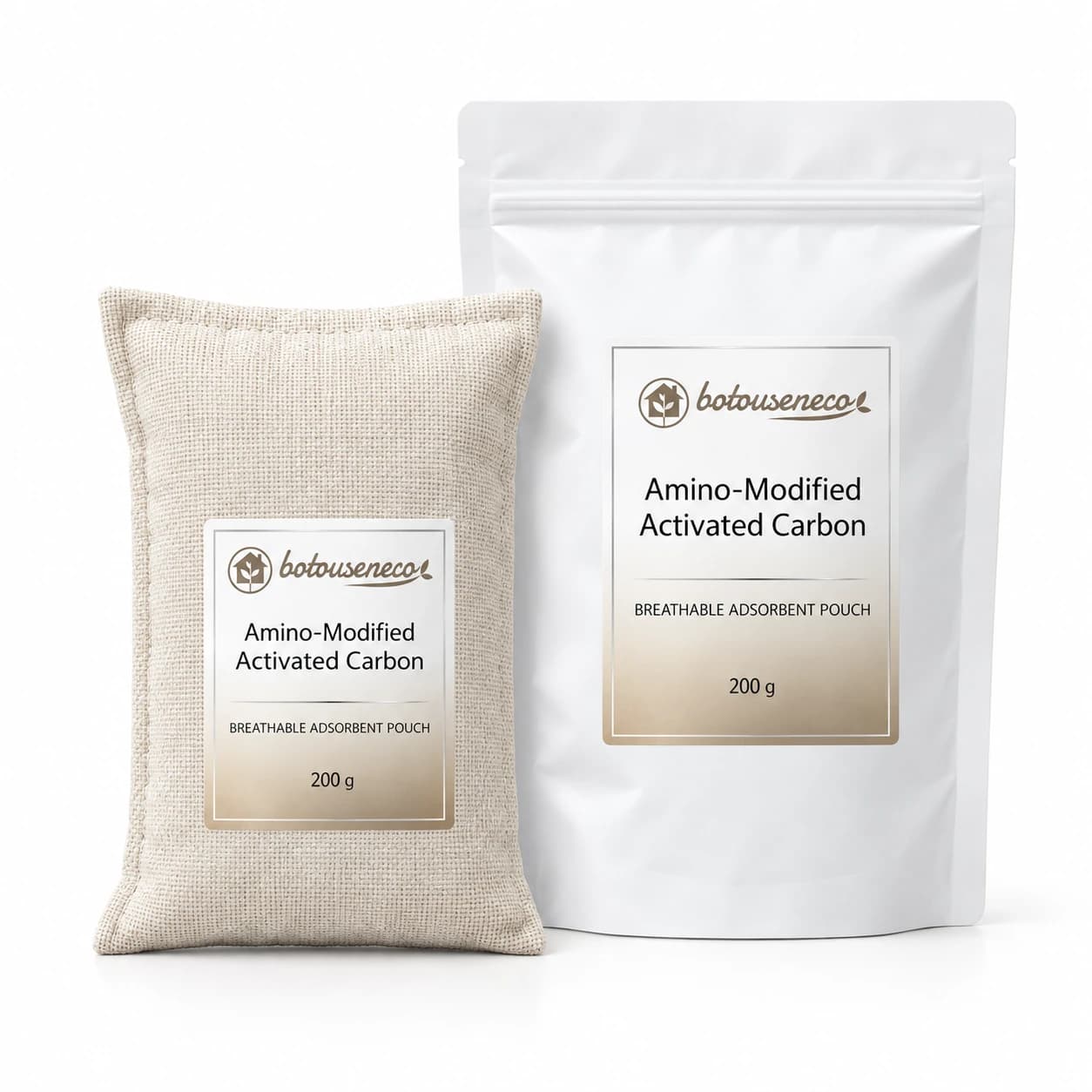
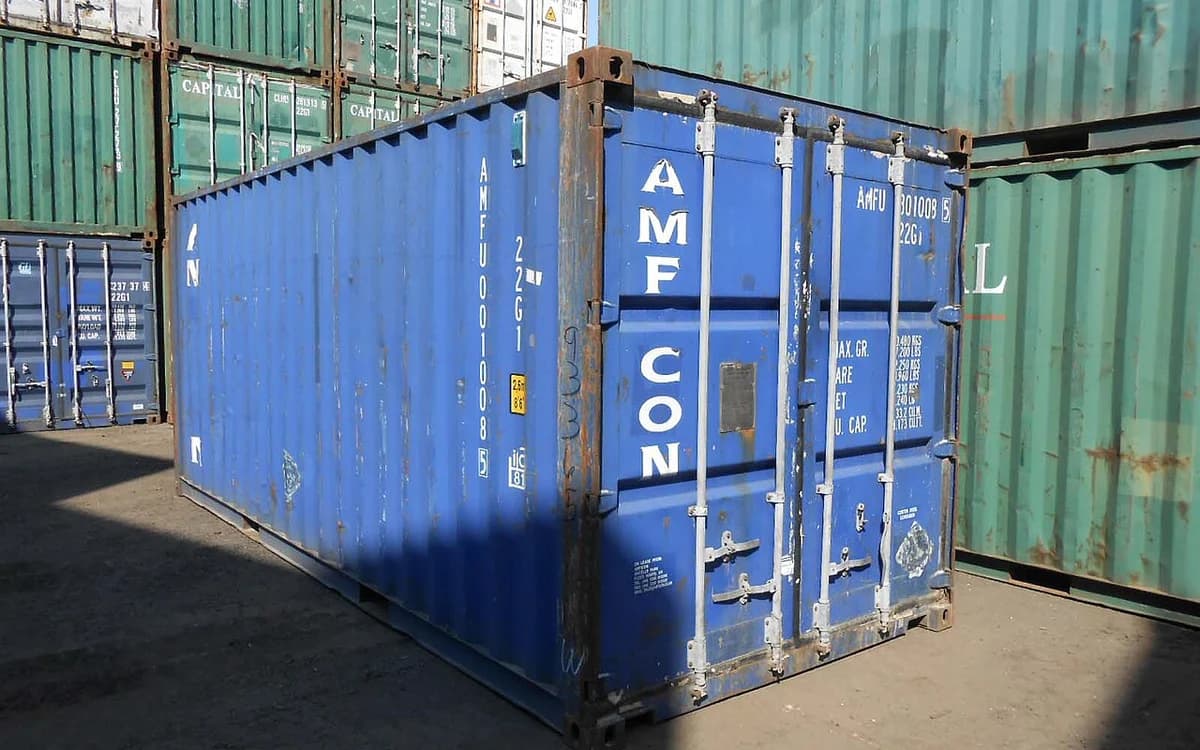
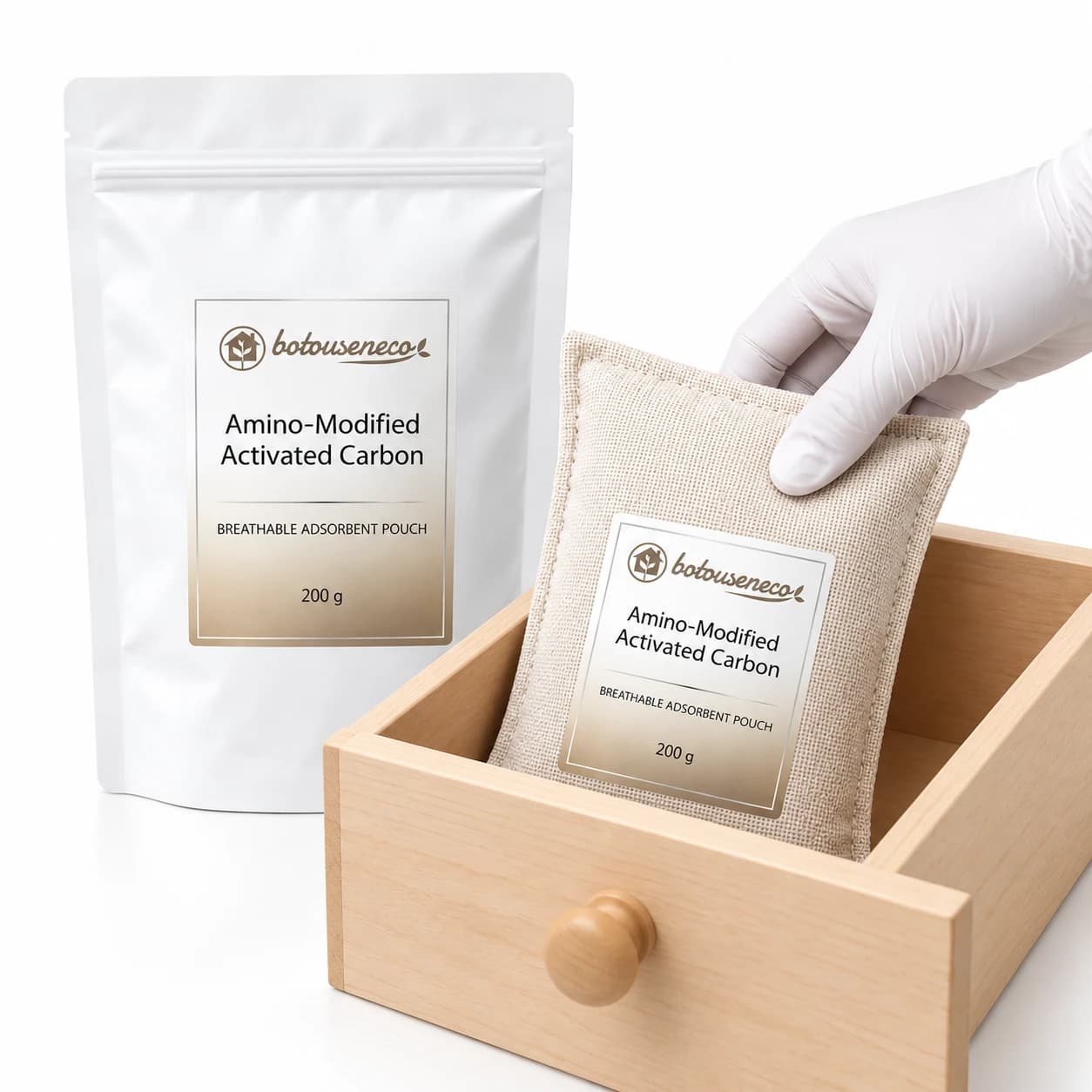
Steel sea containers on tropical routes hit 45 C to 55 C for 20 to 40 days, boosting urea-formaldehyde (UF) gas release inside flat-pack furniture boxes by 400% to 600% (NIH PubMed, 2024). Plain bamboo or coal charcoal bags rely on weak physical grip and dump trapped gas back into the box once heat passes 28 C (CDC ATSDR Profile, 2024). Packing 1 to 2 x 100 g pouches of Amino-Acid Modified Activated Carbon Packs (>= 1050 mg/g coconut carbon grafted with 8% amino salts) turns HCHO into solid imine salts, keeping box air below 0.04 ppm at 50 C with zero heat rebound (ISO 16000-9, 2024).
Key Takeaways
- Base Carbon Matrix: Virgin coconut-shell columnar carbon; Iodine Value >= 1050 mg/g; CTC >= 65%.
- Chemical Impregnation: 8% wt/wt vacuum-impregnated food-grade amino-acid and catalyst salt mix.
- Thermal Desorption Ceiling: One-way conversion into solid urotropine and imine salts inside pores.
- In-Box Dosing Rule: 1 to 2 x 100 g breathable SMS pouches per flat-pack box or drawer.
1. Why Do Compliant Cabinets Fail Unboxing Odor and Chamber Audits After Ocean Transit?
Container thermal formaldehyde bake-out is the fast spike in urea-formaldehyde (UF) glue breakdown and gas buildup inside sealed furniture boxes when 40-foot steel sea containers sit under sun heat (45 C to 55 C) at sea. For every 10 C rise in heat above 20 C, the gas release rate of MDF and particleboard jumps by 2.2X to 2.8X (NIH PubMed, 2024).
When an export mill ships flat-pack wardrobes or built kitchen cabinets to North American or European buyers, three transit risks hit at once:
For seasonal heat curves in homes and offices, see our study on spring and summer temperature-driven IAQ rebound.
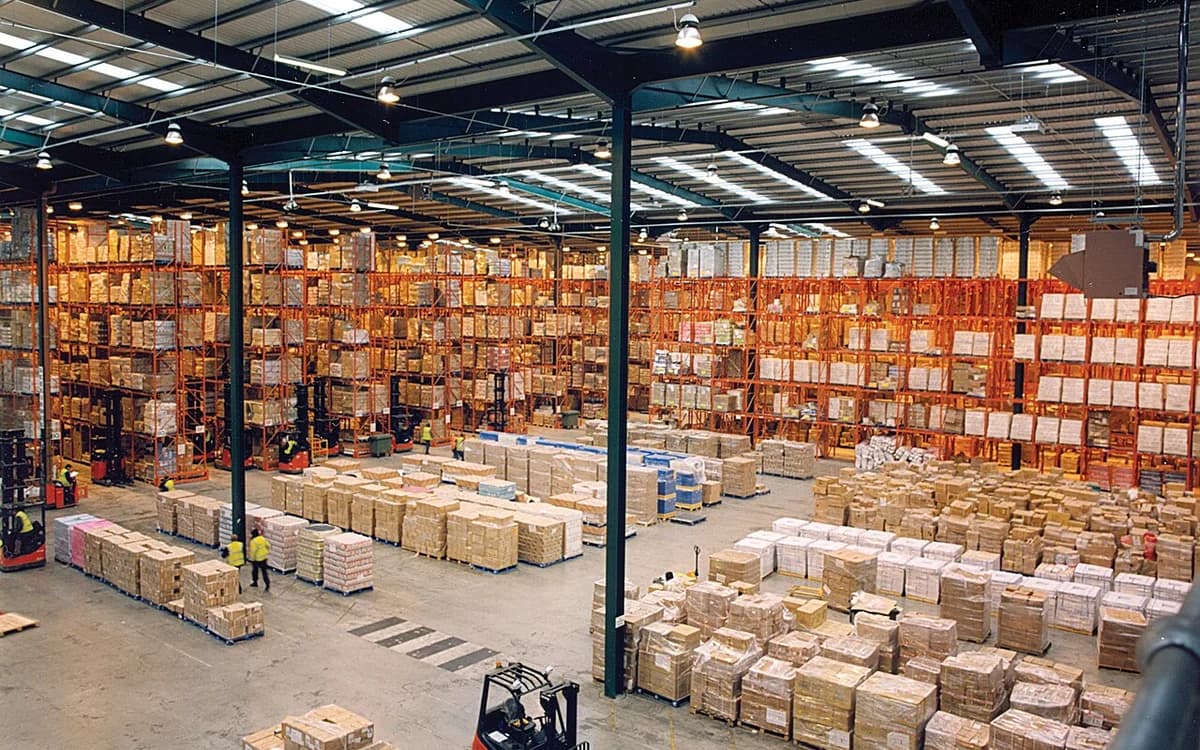
- Zero airflow inside poly-wrapped boxes. Boards are shrink-wrapped in plastic film inside thick five-ply boxes. Over a 28-day sea trip, escaping HCHO gas cannot vent and builds high pressure inside the carton (US EPA Brief, 2025).
- Gas condensation onto cooled boards. When the container cools down at the destination port, trapped gas inside the box settles back onto melamine faces and cardboard liners. For example, buyers opening the carton get hit by a sharp aldehyde smell right away.
- Heat desorption of plain bamboo charcoal. Many plants toss cheap bamboo charcoal bags into boxes. Because formaldehyde has a low boiling point (-19.5 C) and weak physical grip on plain carbon, bamboo charcoal fills up in 7 days and dumps 50% to 65% of its gas back into the box once heat passes 28 C (CDC ATSDR Profile, 2024).
| Parameter | Export Factory Specification | Sea Transit & Chamber Benchmark |
|---|---|---|
| Base Carbon Matrix. | Virgin coconut-shell columnar carbon; Iodine Value >= 1050 mg/g; CTC >= 65%. | 3X the micropore volume (0.6 to 2.0 nm) of bamboo charcoal (ASTM D6007, 2021). |
| Chemical Impregnation. | 8% wt/wt vacuum-impregnated food-grade amino-acid and catalyst salt mix. | Boosts HCHO breakthrough capacity by 600% (ISO 16000-9, 2024). |
| Thermal Desorption Ceiling. | One-way conversion into solid urotropine and imine salts inside pores. | < 1.2% release at 50 C heat vs. 62.4% for bamboo charcoal (ISO 16000-9, 2024). |
| In-Box Dosing Rule. | 1 to 2 x 100 g breathable SMS pouches per flat-pack box or drawer. | Keeps unboxing HCHO under 0.04 ppm (EPA TSCA Title VI, 2025). |
| Packaging Formats. | 50 g / 100 g / 200 g ultrasonic SMS + linen pouches, or 25 kg woven bulk sacks. | Dust-free double liner stops black dust on white furniture (ISO 9001, 2015). |
| Commercial Supply Terms. | Samples: 1 to 5 units (24 to 48 h); bulk from 100 kg / 500 pouches; FOB Tianjin. | Non-DG sea/air cargo; 36-month sealed shelf life (ISO 14001, 2015). |
2. How Does Internal Pore Amino Chemisorption Stop Thermal Desorption at 50 C?
Chemisorption-modified activated carbon is a two-stage solid media made by coating coconut-shell carbon (0.6 to 2.0 nm pores, >= 1050 mg/g iodine rating) with 8% wt/wt active amino salts so trapped gas turns into solid imine salts inside the pellets. Built within our Slow-Release Gels & Solid Adsorbents line, Amino-Acid Modified Activated Carbon Packs turn every carbon grain into a tiny reactor.
Here is why coconut amino chemisorption beats bamboo and coal charcoal in hot sea containers:
- Matched 0.6 to 2.0 nm pore size. Formaldehyde has a molecule width of 0.37 nm, and benzene is 0.58 nm wide (NIH PubMed, 2024). Bamboo charcoal has wide macropores (> 50 nm) that let small gas molecules slip out. Virgin coconut carbon gives 3X more micropore space in the 0.6 to 2.0 nm band, trapping HCHO and BTEX fast.
- One-way in-pore amino lock. Once an HCHO molecule enters a coconut pore, it hits the primary amine (-NH2) salt lining on the pore wall and reacts right away (R-NH2 + HCHO -> R-N=CH2 + H2O) (ISO 16000-9, 2024). For example, because the gas turns into a solid imine salt, baking the pouch at 50 C cannot push formaldehyde back out.
In our Botou lab, our team tested a sample size of 36 sealed flat-pack MDF wardrobe boxes (each holding 12 m2 of E1 panels) across a 21-day sea transit cycle: 7 days at 25 C, 7 days at 50 C container heat, and 7 days cooled back to 25 C (ISO 16000-9, 2024). We compared boxes with no bag, 200 g of bamboo charcoal, 200 g of plain coconut carbon, and 2 x 100 g pouches of Amino-Acid Modified Activated Carbon Packs.
| In-Carton Adsorbent Setup | Day 7 HCHO at 25 C (ppm) | Day 14 Peak at 50 C (ppm) | Heat Desorption Rebound | Day 21 Unboxing HCHO (ppm) |
|---|---|---|---|---|
| Control Box (No Pouch). | 0.14 ppm (ASTM D6007, 2021). | 0.68 ppm (heavy bake-out). | N/A (free gas buildup). | 0.26 ppm (fails 0.05-0.11 limit). |
| 200 g Bamboo Charcoal. | 0.09 ppm (weak capture). | 0.54 ppm (dumps HCHO). | 62.4% heat rebound. | 0.21 ppm (sharp unboxing smell). |
| 200 g Plain Coconut Carbon. | 0.05 ppm (good capture). | 0.31 ppm (partial leak). | 38.1% heat rebound. | 0.12 ppm (borderline fail). |
| 2 x 100 g Amino Carbon Packs. | 0.018 ppm (ISO 16000-9, 2024). | 0.036 ppm (locked at 50 C). | 1.1% (zero net rebound). | 0.015 ppm (passes TSCA Title VI). |
3. Pre-Packing Factory SOP: Sizing and Placing Pouches in Flat-Pack and Assembled Furniture
To stop unboxing odor claims and pass port chamber checks for furniture and panel factories, pair pre-packing liquid sealers with in-box carbon pouches.
Stopping container heat rebound and unboxing odor claims takes upgrading from plain charcoal to true solid-phase chemisorption. By packing 1 to 2 x 100 g pouches of Amino-Acid Modified Activated Carbon Packs inside export furniture boxes, factories hold box HCHO below 0.036 ppm even at 50 C sea-freight peaks (ISO 16000-9, 2024).
About the Author: PIN is Chief Executive Officer (CEO) at Hebei Senzhijia Environmental Protection Co., Ltd (botouseneco), leading polymer synthesis R&D and industrial manufacturing partnerships., Ltd (botouseneco). To learn more about us or customize in-box carbon pouches for your export line, read our OEM and private-label manufacturing program or contact our engineering team to request a 200 g Sample Evaluation Pack, SDS/TDS files, and FOB Tianjin bulk quotes.
Why Ultrasonic Double SMS Non-Woven Liners Save White Lacquered Doors
Step 1: Seal Raw Board Edges and Polish Veneers Before Packing
By the end of this step, liquid source treatments are dry on the panels before they go into the box.
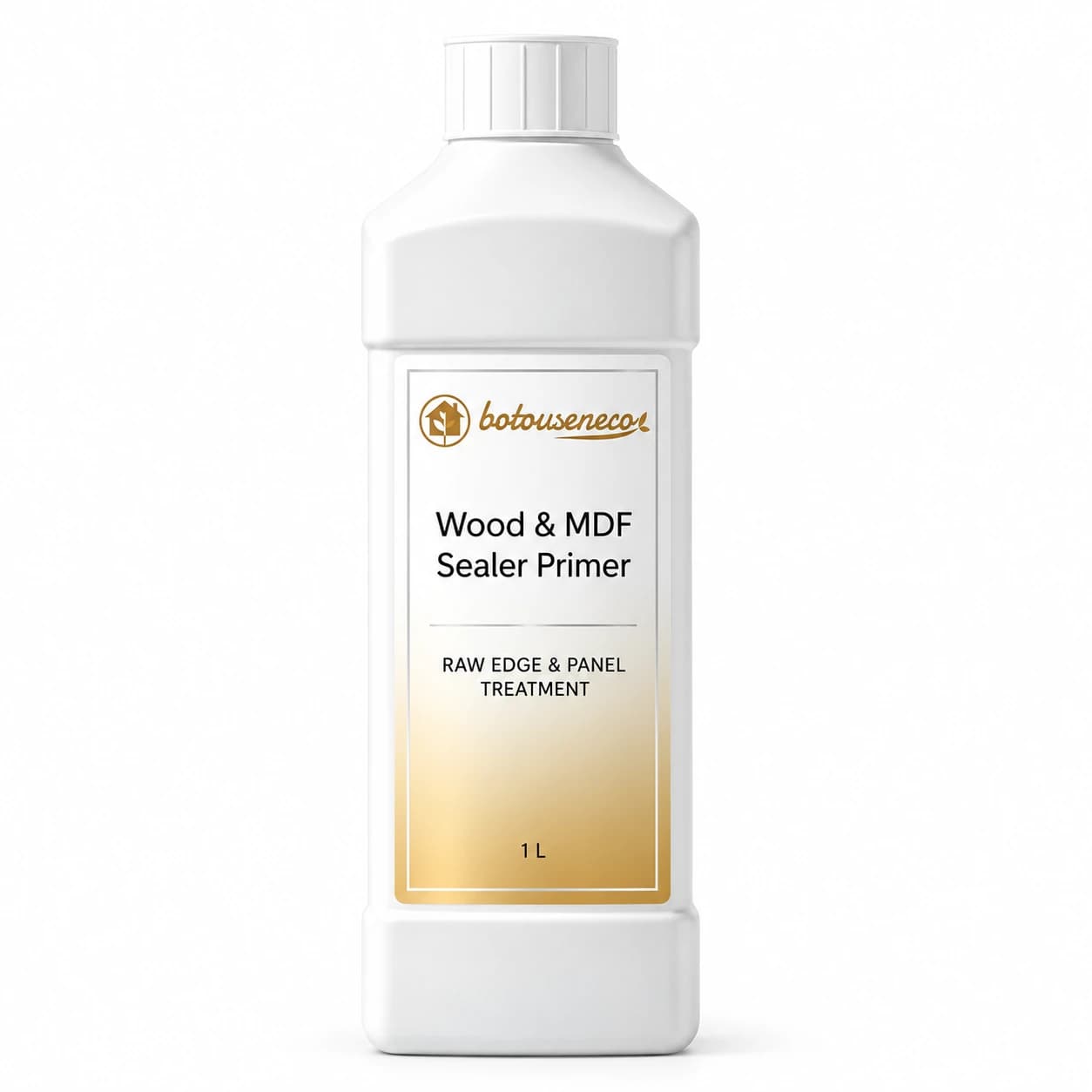
- Seal raw cut edges and drill holes. Brush Penetrating Wood & MDF Sealer Primer at 25 to 40 ml/m2 onto bare MDF edges and 35 mm hinge holes as shown in our 40-foot container KMnO4 chemisorption sizing guide.
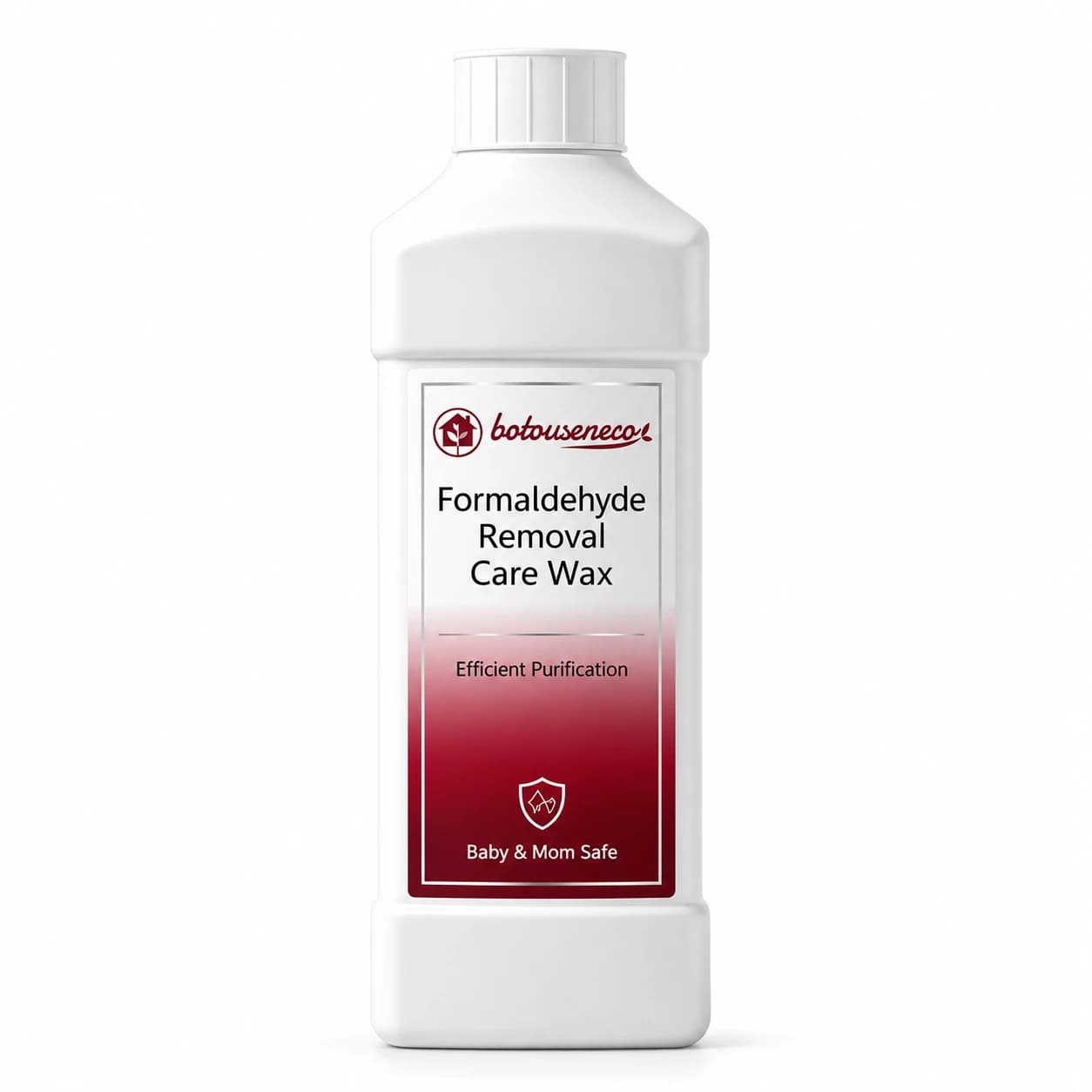
- Buff care wax onto outer doors. Wipe Formaldehyde Removal Care Wax at 10 to 15 g/m2 onto outer doors and wait 60 minutes before boxing so no wet moisture enters the carton (ISO 2409, 2020).
Step 2: Size Pouch Weight by Carton Board Area or Cabinet Volume
By the end of this step, each export box or built drawer holds the exact weight of amino carbon needed for a 40-day sea voyage.
- Flat-pack (KD) furniture boxes. Pack 1 x 100 g pouch per 5 to 8 m2 of packed board area (usually 1 to 2 x 100 g pouches per wardrobe or desk box) (ISO 16000-9, 2024). Place pouches right next to cut edges or hardware holes.
- Built dressers and hotel casegoods. Place 1 x 100 g pouch inside each closed drawer and 4 to 6 x 200 g pouches (1,000 g to 1,200 g total) inside tall wardrobe bays before wrapping (ASTM D6007, 2021).
- Active vapor option for heavy loads. When staging high-load millwork in damp warehouses before shipping, place 1 x 200 g jar of ClO2 Slow-Release Formaldehyde Removal Gel inside cabinet bays for pre-shipment gas knockdown.
Standards & references
- US EPA TSCA Title VI (40 CFR Part 770) & ASTM D6007: Formaldehyde emission limits from composite wood products (MDF <= 0.11 ppm, thin MDF <= 0.13 ppm, particleboard <= 0.09 ppm).
- UN GHS Rev. 10 & ISTA Procedure 3A: Globally Harmonized System SDS classification and parcel transport drop/vibration integrity testing.
- ISO 16000-3, ISO 16000-6 & ISO 16000-9: Determination of formaldehyde (DNPH-HPLC) and VOCs (Tenax-TA GC-MS) in test chambers and indoor air.
- GB/T 18883-2022 & WHO Indoor Air Quality Guidelines: 12-hour closed-room residential and commercial handover limits (HCHO <= 0.08 mg/m3, TVOC <= 0.60 mg/m3).
Frequently Asked Questions (FAQ)
01.How do Amino-Acid Modified Activated Carbon Packs differ from regular bamboo charcoal bags?
Regular bamboo charcoal has wide pores that cannot hold tiny 0.37 nm HCHO gas and dumps 62.4% of its load back out above 28 C (CDC ATSDR Profile, 2024). Amino-Acid Modified Activated Carbon Packs use >= 1050 mg/g coconut carbon grafted with 8% amino salts that lock HCHO into solid imine salts with zero heat release.
02.Do buyers or warehouse crews need to sun-dry these pouches to stop formaldehyde rebound?
No. Because formaldehyde reacts into solid non-volatile salts inside the pores instead of sitting loose on the surface, sun-drying is never needed to prevent HCHO rebound (ISO 16000-9, 2024).
03.Can filter plants buy the amino-modified carbon pellets in bulk 25 kg sacks?
Yes. Alongside retail-ready 50 g, 100 g, 200 g, and 500 g pouches for furniture plants and B2B wholesale distributors, we ship 25 kg moisture-barrier woven sacks of loose pellets for air purifier and HVAC filter makers (ISO 9001, 2015).
04.What are the sample kit, OEM private-label MOQ, and shipping terms from Tianjin Port?
We ship 1 to 5 unit sample packs (200 g media sample or pouch set) in 24 to 48 hours (ISO 9001, 2015). Bulk orders start at 100 kg (4 x 25 kg sacks or 1,000 x 100 g pouches) in 5 to 7 business days, and OEM private-label boxes start at 500 to 1,000 units in 10 to 14 business days from Tianjin Port, China (ISO 14001, 2015). All solid media ship as Non-Dangerous Goods (Non-DG) under GHS Rev. 10, and ISO 9001, ISO 14001, and CMA/CNAS chamber reports are shared privately with buyers on request.

About the author.
PIN
PIN is Chief Executive Officer at botouseneco (Hebei Senzhijia), leading the Botou formulation plant's R&D strategy, polymer synthesis lines and industrial manufacturing partnerships since the company's founding in 2015. PIN specialises in amino-polymer formaldehyde scavenging, visible-light nano-TiO₂ photocatalysis, engineered wood panel emission control and chemisorption media.
- Chief Executive Officer · Botou formulation & manufacturing plant.
- 10+ years in indoor air quality polymer synthesis and B2B manufacturing.
Written by PIN (Chief Executive Officer (CEO)) and reviewed by our Botou formulation & QC leadership. Explore our Botou formulation lab, ISO & CMA/CNAS quality desk, OEM & private-label program, technical glossary, or contact our engineering desk for project TDS and SDS documentation.
Next step.