01/06HCHO · BTEX · Amino-Polymer
Formaldehyde Scavenger Manufacturer & B2B Supplier
Formaldehyde scavengers neutralize free and shallow-bound HCHO directly at its source — the urea-formaldehyde (UF) resin inside MDF, particleboard, and plywood. Our 5-product line covers amino-polymer scavengers for raw board edges, a dual-phase micro-emulsion for benzene-series (BTEX) solvents, a self-crosslinking MDF pore sealer for furniture production lines, a ≥95% deacetylated marine chitosan grade for nurseries and hospitals, and a thermal-stable fluid for 60–95 °C steam fumigation.
01The range
Formaldehyde & Benzene: 5 formulations.
Compare target pollutants, dosage and pack range, then open a product for its full technical data sheet.
Compare with other linesFormaldehyde & Benzene
Formaldehyde & Benzene C6H6 Essence
Dual-phase micro-emulsion
- Dosage
- 12–20 ml/m²
- Packs
- 500 ml – 20 L
Formaldehyde & Benzene
High-Temperature HCHO Fumigation Solution
Thermal steam extraction fluid
- Dosage
- 20–30 ml/m²
- Packs
- 1 L – 200 L
Formaldehyde & Benzene
Wood & MDF Sealer Primer
Deep-pore edge sealer
- Dosage
- 25–40 ml/m²
- Packs
- 1 L – 200 L
Formaldehyde & Benzene
Chitosan Bio-Based HCHO Scavenger
Bio-based chitosan scavenger
- Dosage
- 15–25 ml/m²
- Packs
- 500 ml – 25 L
Compare the formaldehyde & benzene range
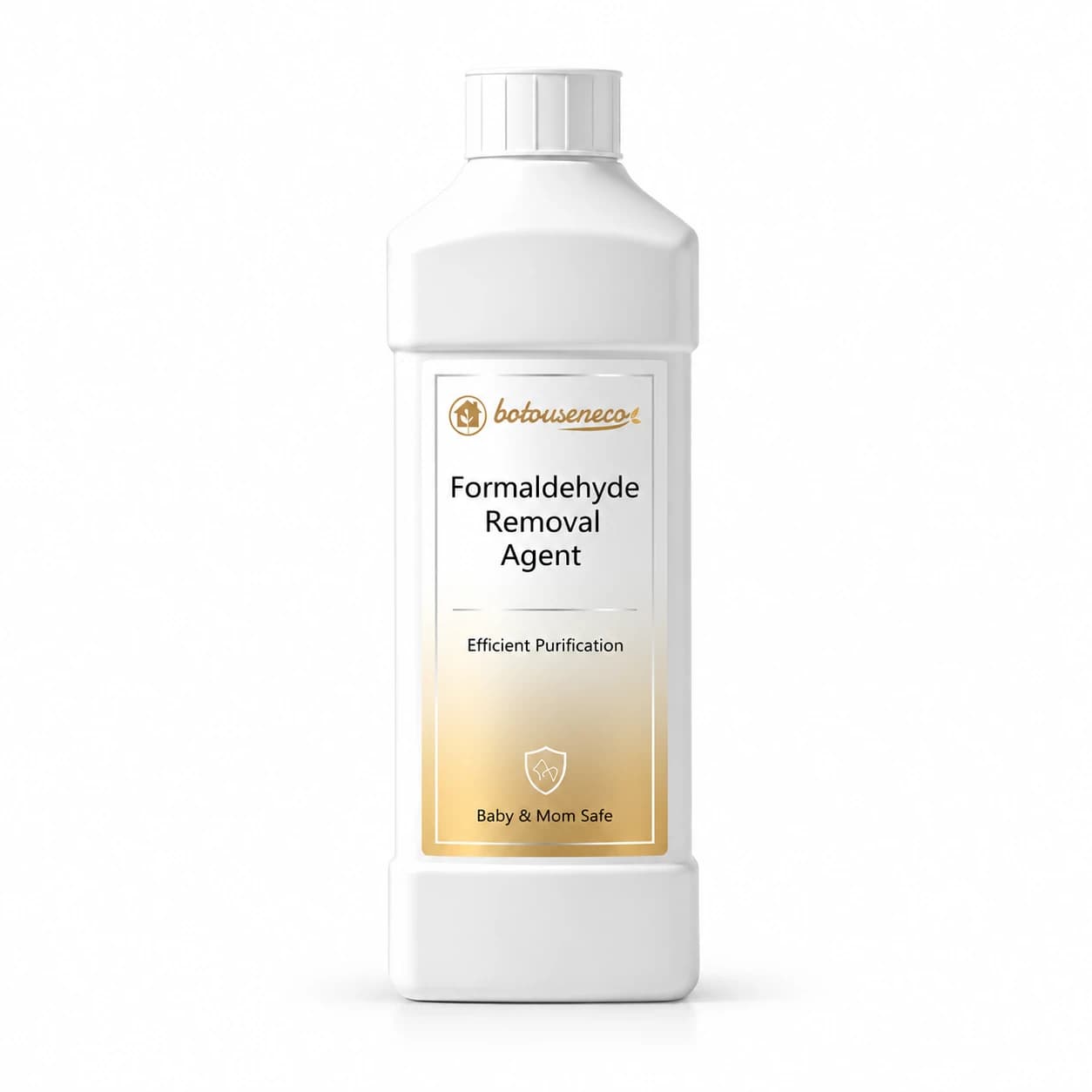 Formaldehyde Remover | 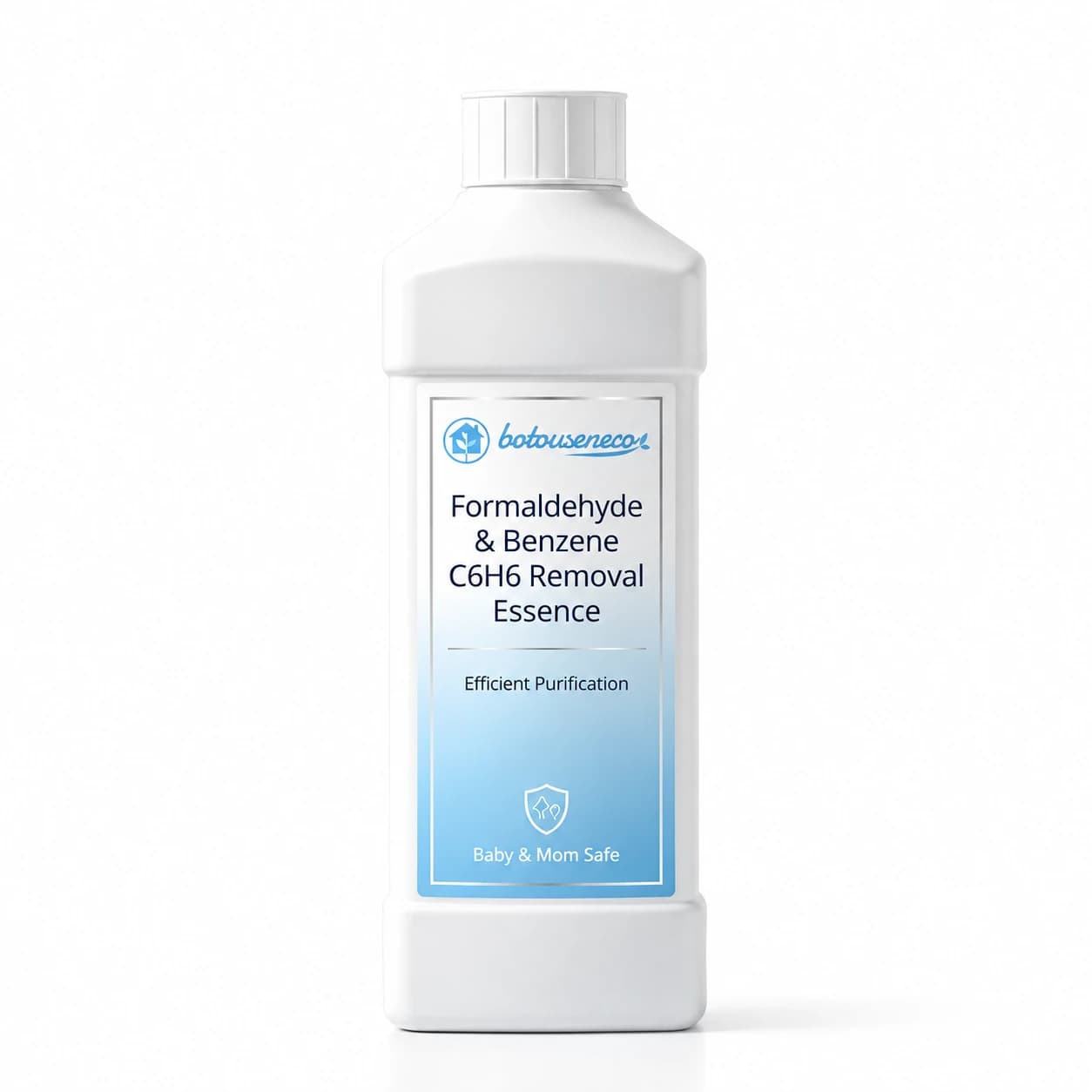 Formaldehyde & Benzene C6H6 Essence | 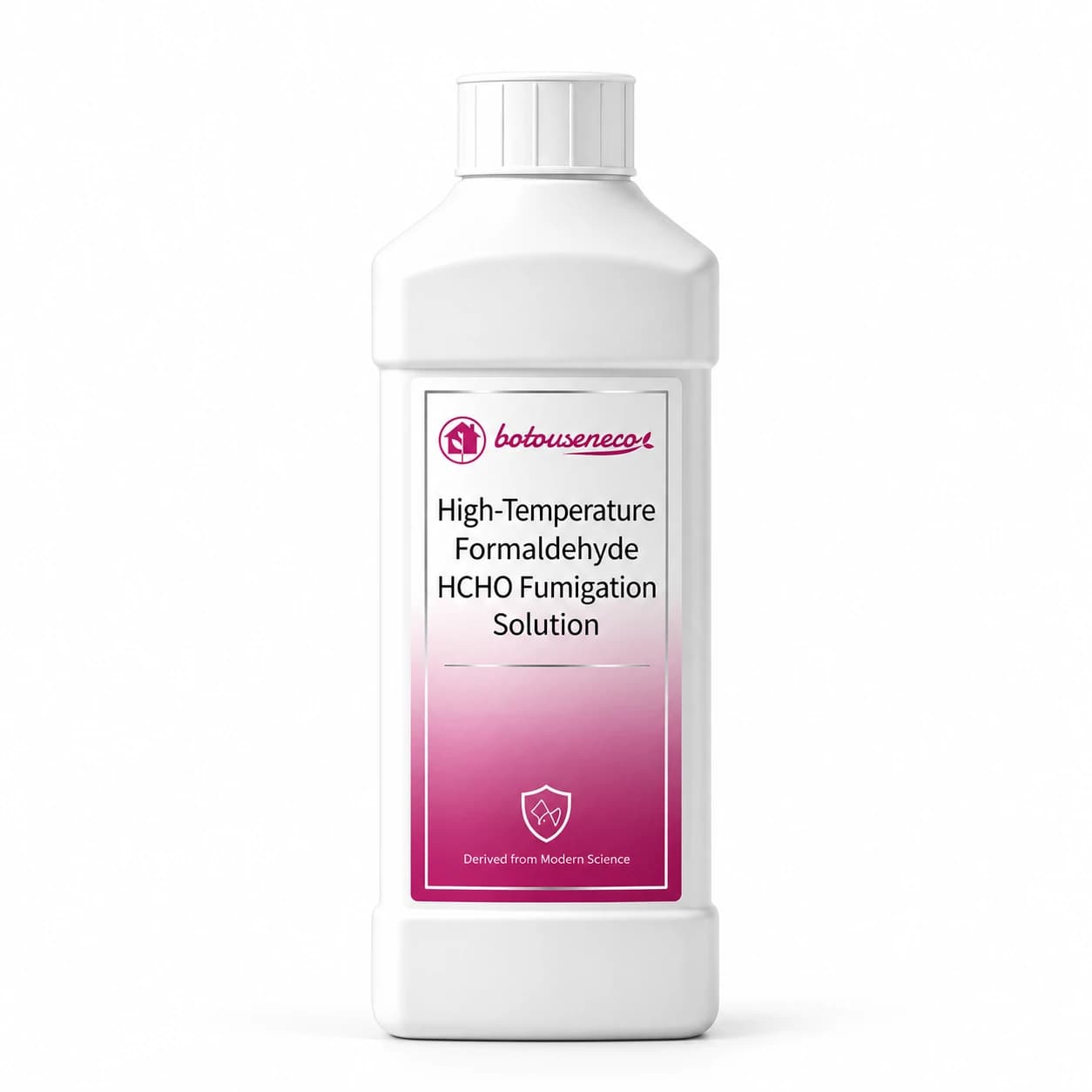 High-Temperature HCHO Fumigation Solution | 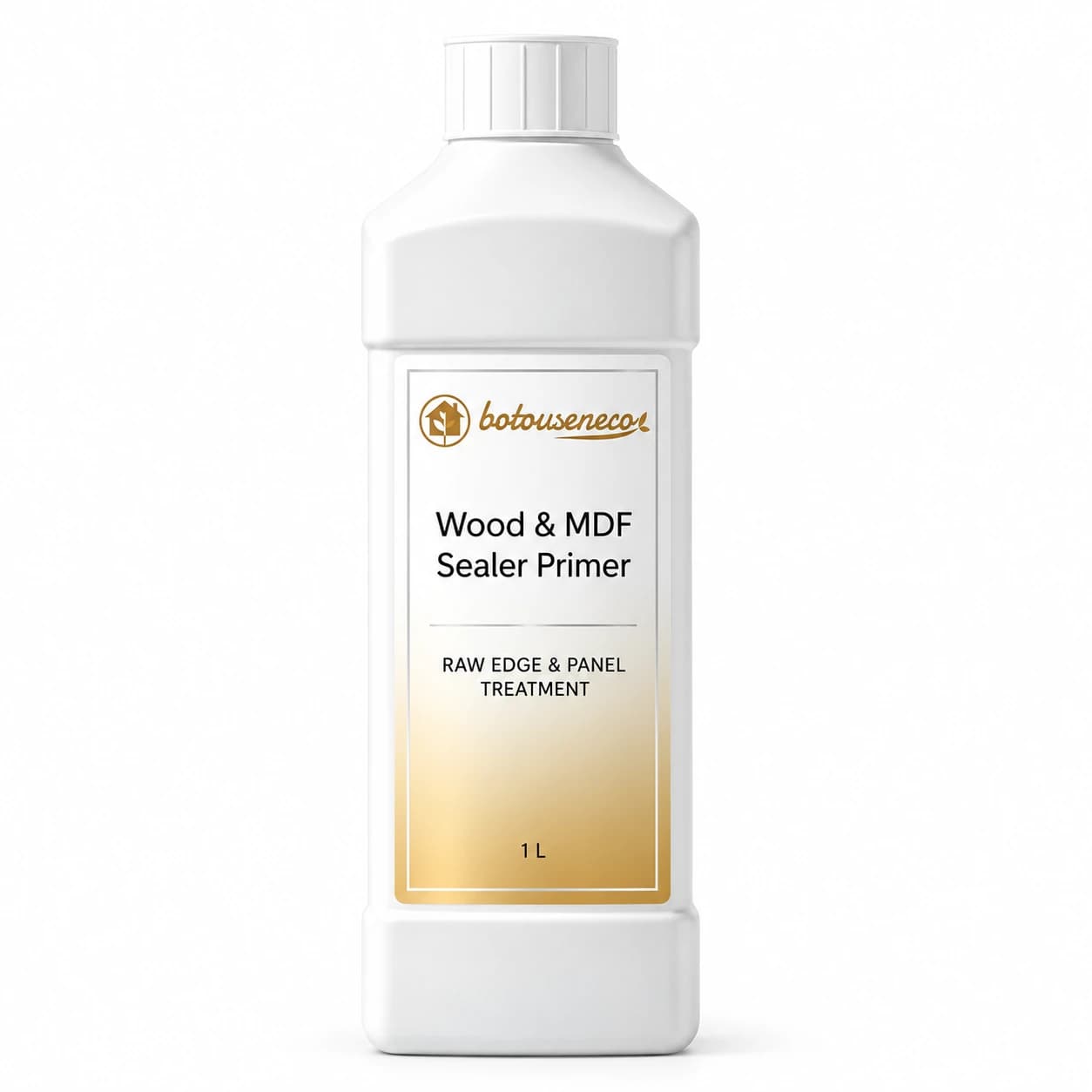 Wood & MDF Sealer Primer | 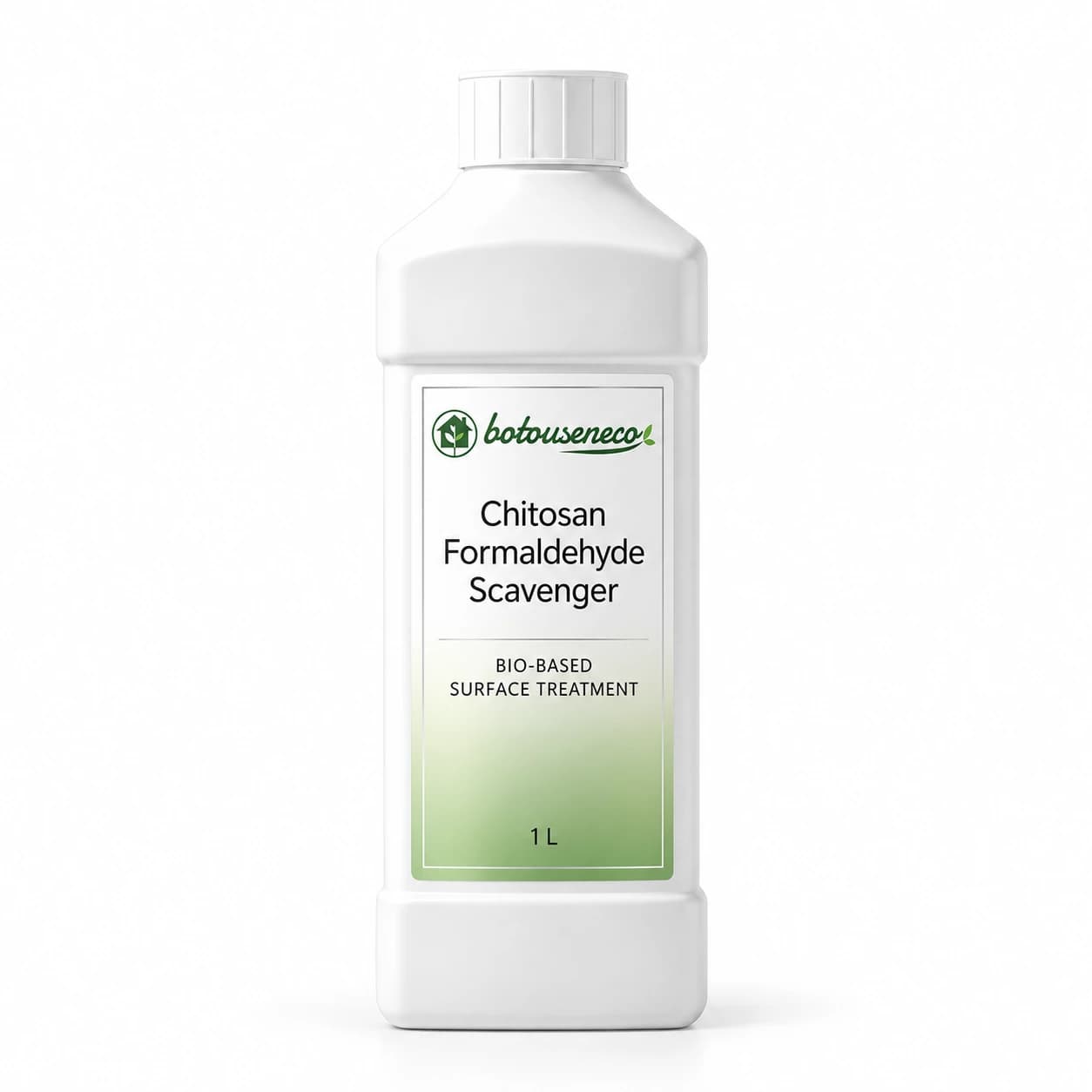 Chitosan Bio-Based HCHO Scavenger | |
|---|---|---|---|---|---|
| Product line | Formaldehyde & Benzene Remediation | Formaldehyde & Benzene Remediation | Formaldehyde & Benzene Remediation | Formaldehyde & Benzene Remediation | Formaldehyde & Benzene Remediation |
| Technology | Amino-polymer scavenger | Dual-phase micro-emulsion | Thermal steam extraction fluid | Deep-pore edge sealer | Bio-based chitosan scavenger |
| Target pollutants | Formaldehyde | Formaldehyde, Benzene / BTEX | Formaldehyde | Formaldehyde | Formaldehyde |
| Applications | Post-renovation, Furniture factory, Hotel & hospitality | Post-renovation, Furniture factory | Post-renovation, Furniture factory | Furniture factory, Post-renovation | Schools & healthcare, Post-renovation |
| Format | Liquid spray | Liquid spray | Liquid spray | Liquid spray | Liquid spray |
| Coverage | 15–25 ml/m² | 12–20 ml/m² | 20–30 ml/m² | 25–40 ml/m² | 15–25 ml/m² |
| Pack range | 1 L – 200 L | 500 ml – 20 L | 1 L – 200 L | 1 L – 200 L | 500 ml – 25 L |
| Application method | 0.8mm–1.0mm HVLP spray atomization or direct microfiber/brush saturation | Precision fine spray or microfiber wipe-on across coated wood and joints | High-temperature steam fumigation machine or thermal mist generator | Direct brush saturation on cut edges or 1.0mm HVLP spray on raw back panels | 0.5mm–0.8mm fine HVLP mist atomization across wood, bedding, and wall surfaces |
R–NH₂ + HCHO → R–N=CH₂ + H₂OAmino-polymer scavenging
02How it works
The chemistry behind the line.
Active amino (-NH₂) and imino (-NH-) functional groups undergo irreversible nucleophilic addition across the C=O double bond of formaldehyde, converting volatile gas into stable, non-volatile imine macromolecules (R–NH₂ + HCHO → R–N=CH₂ + H₂O). Unlike physical activated carbon that desorbs above 25 °C, chemical scavenging prevents temperature rebound. Treat porous zones first: unsealed board edges, cam-lock holes, cabinet backs, drawer cavities, and subfloors release over 85% of total indoor HCHO load.
- Free airborne gas< 5%of the total load
- Shallow adsorbed15–25%of the total load
- Bound in UF resin70–80%of the total load
03Quantity estimate
Plan quantities before you quote.
Published coverage: 15 – 25 ml/m² (single pass); up to 35 ml/m² on raw high-density particleboard
Use 2–3 passes for raw high-density board or heavy TVOC loads.
Estimated quantity
4.5–7.5L
15–25 ml/m² × 300 m² × 1 pass
Estimate from the published coverage range. Real consumption depends on substrate porosity, nozzle size and baseline readings — our engineers confirm it with your quote.
Coverage per pass in this line
- Formaldehyde & Benzene C6H6 Essence12–20 ml/m²
- Formaldehyde Remover15–25 ml/m²
- Chitosan Bio-Based HCHO Scavenger15–25 ml/m²
- High-Temperature HCHO Fumigation Solution20–30 ml/m²
- Wood & MDF Sealer Primer25–40 ml/m²
04Questions
About formaldehyde & benzene.
01What is the difference between a formaldehyde scavenger and activated carbon?
Activated carbon adsorbs formaldehyde physically via van der Waals forces and can release it again when room temperatures exceed 25 °C. An amino-polymer scavenger reacts chemically with HCHO at the source and converts it into a stable solid-phase imine polymer, preventing secondary desorption.
02Which product should a furniture factory use on MDF and particleboard lines?
For furniture manufacturing lines, apply Penetrating Wood & MDF Sealer Primer (25–40 ml/m²) on raw board edges prior to edge-banding, or dilute 10X HCHO Scavenger Masterbatch 1:9 with RO water for inline conveyor spraying.
03Can you supply private-label formaldehyde remover in custom packaging?
Yes. We customize bottle molds, label artwork, active concentration, and packaging formats from 500 ml trigger sprays and 1 L contractor bottles to 5 L, 20 L, 25 L pails and 200 L drums, complete with English MSDS, TDS, and batch COA.
Engineering journal
Technical guides for formaldehyde & benzene.
Reaction kinetics, substrate dosing calculations and closed-room verification protocols for this product line.
All 66 engineering guides
Building a Regional B2B Indoor Air Quality Distribution and Service Franchise Network: Starter SKU Matrix, 10X Local Bottling, and Margin Model
Step-by-step B2B IAQ distribution and service franchise guide covering the 8-SKU starter drum matrix, 10X masterbatch local RO water bottling, and 3-stage gross margin model from 54% to 81%.
 PIN

IAQ Contractor Crew Safety, PPE, and Substrate Masking SOP: Protecting Piano-Black Trim, Brass Hardware, Silk, and Electronics During HVLP Spraying
Complete IAQ contractor crew PPE, EN 14387 ABEK1P3 respirator, and 12-substrate masking SOP for protecting piano-black lacquer, brass, silk, OLED screens, and smoke detectors during HVLP spraying.
 Jyen
Troubleshooting Post-Treatment Formaldehyde Rebound (48h vs. Day 30): Diagnosing Missed Drawer Backs, Unsealed Subfloors, and High-Humidity Traps
Forensic IAQ contractor guide to diagnosing Day-30 formaldehyde rebound across 50 failed jobs, fixing missed 3 mm MDF drawer backs, baseboard floor gaps, and salt hydrolysis.
Jyen
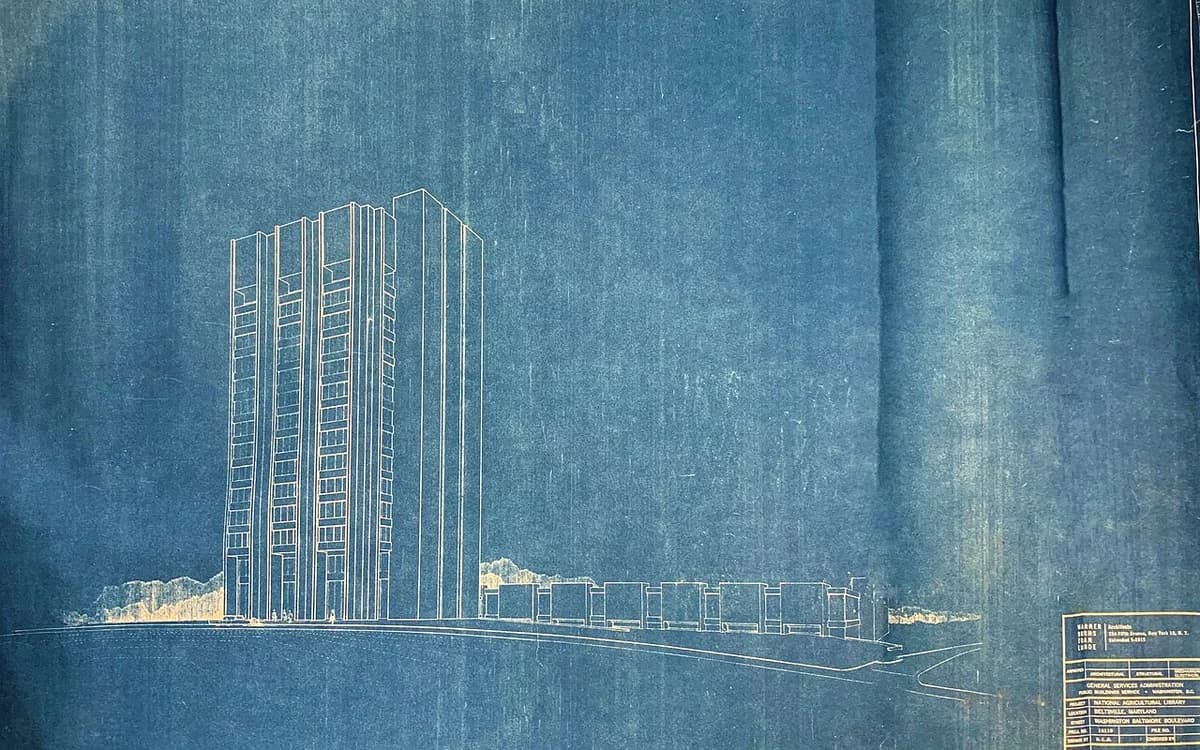
How to Bid Commercial IAQ Projects by Surface Area (2.4x to 2.8x Multiplier) Instead of Floor Area: Solution Consumption and Labor Calculator
Step-by-step B2B IAQ contractor bidding guide using 2.4x to 3.1x unfolded surface-area multipliers instead of floor area to calculate exact liter quotas, crew hours, and gross margins.
Jyen

Museum Display Cases, Archives, and Rare Book Vaults: Zero-Desorption Amino Carbon and KMnO4 Media to Prevent Acetic and Formic Acid Corrosion
Preventive conservation guide to abating acetic acid, formic acid, and formaldehyde in museum vitrines and rare book vaults using amino carbon and KMnO4 media.
Jyen
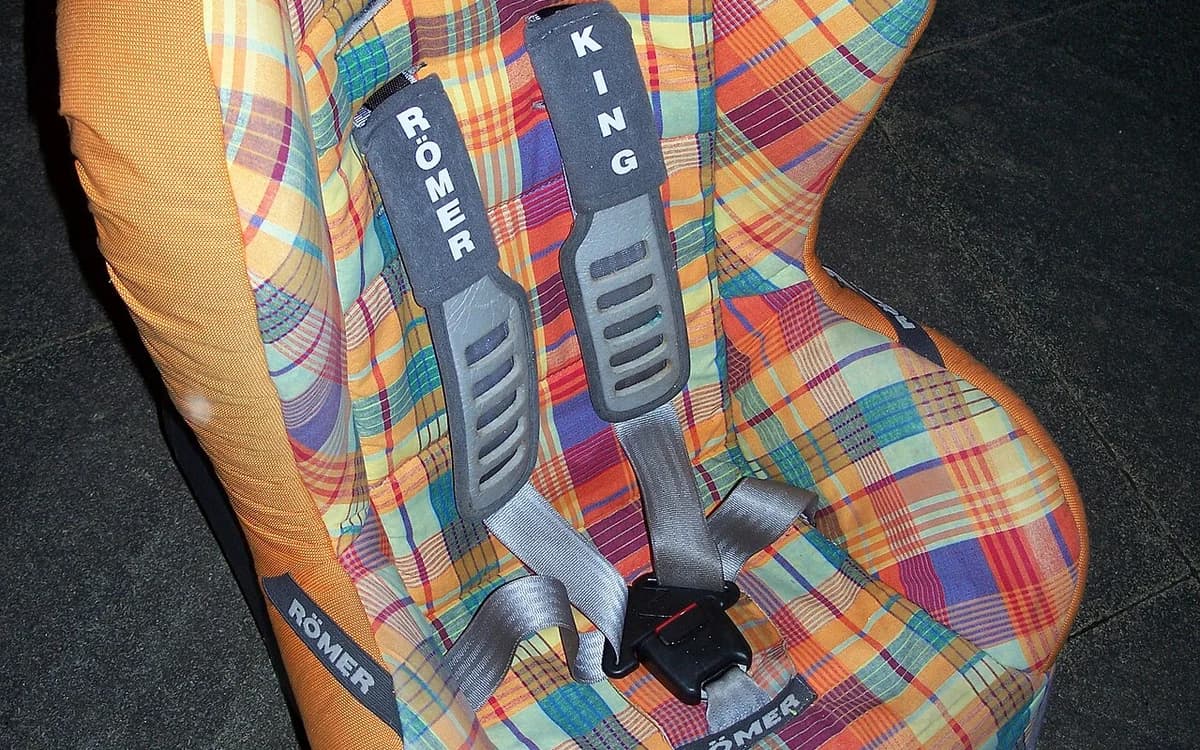
Child Safety Car Seats, Strollers, and Infant Bassinets: Bio-Based Chitosan Formaldehyde and Flame-Retardant Fabric Monomer Remediation
Infant-safe guide to clearing formaldehyde, acetaldehyde, and flame-retardant fabric monomers from child car seats, strollers, and bassinets using >=95% DD marine chitosan.
 Loo
Other product lines
Explore the other five lines.
Factory-direct supply
Specify this line for your project.
Tell us the substrates, area and target market. We'll recommend formulations from this line, send TDS/MSDS and quote sample kits or bulk drums.