5–10nm Ultra-Fine Anatase Sol
High specific surface area nanoparticles remain stably dispersed without sedimentation or nozzle clogging.
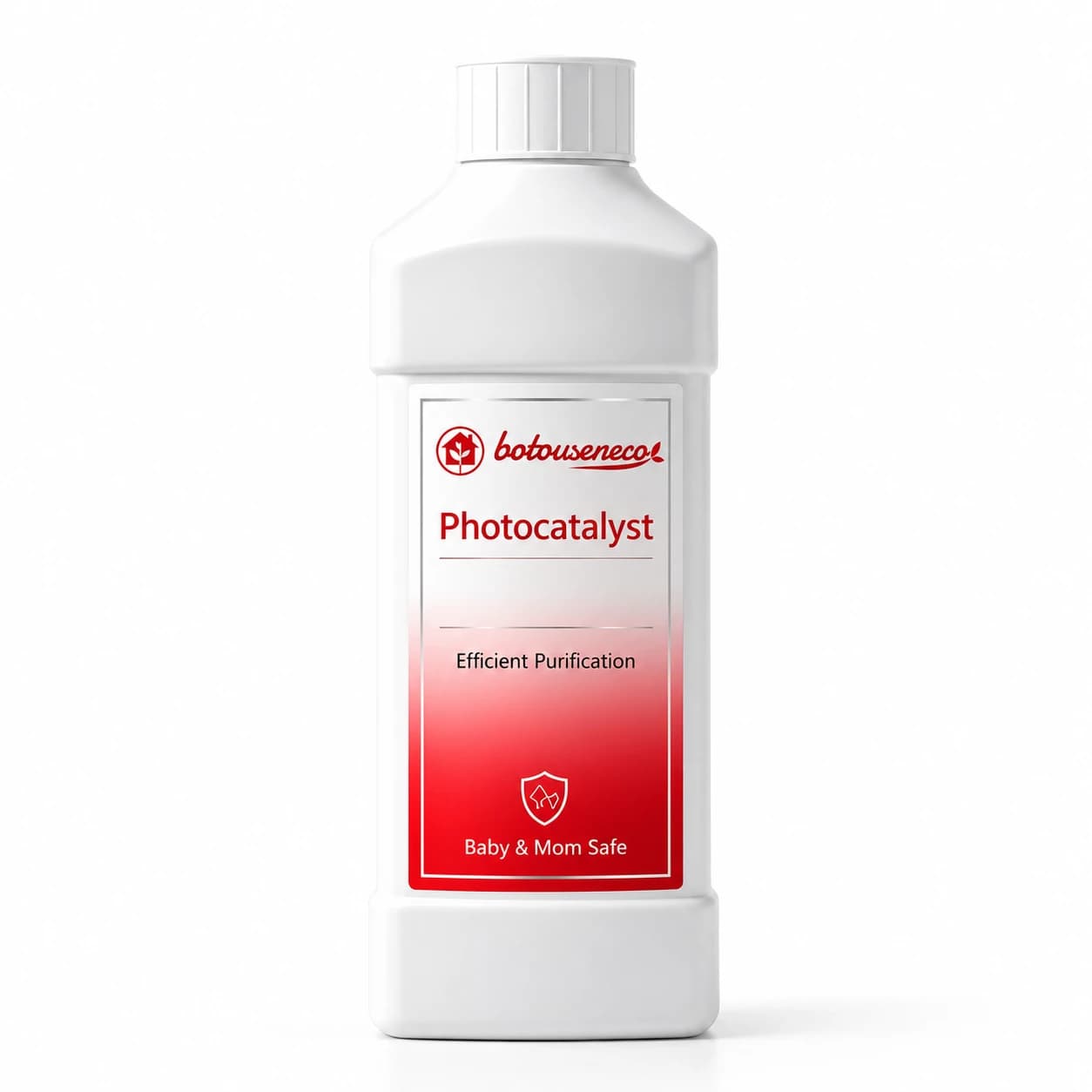 01 / 05 · Studio Packshot
5–10nm Visible-Light Anatase TiO₂
botouseneco Nano Photocatalyst Spray is a B2B visible-light-responsive nano-titanium dioxide (5–10nm anatase TiO₂) coating dispersion for interior walls, ceilings, and light-exposed surfaces. Applied once with a 0.5mm HVLP spray gun at 8–12 ml/m², it forms a durable, transparent catalytic film that continuously oxidizes formaldehyde, TVOC, and odors into CO₂ and H₂O under indoor LED or daylight illumination.
Last updated
01Overview
The long-term protective shield in professional multi-stage indoor air quality remediation packages.
While amino scavengers neutralize immediate source formaldehyde inside furniture, engineered panels can slowly release residual gases over multi-year cycles. botouseneco Nano Photocatalyst Spray turns room walls and ceilings into a continuous air-purifying reactor. Formulated with doped 5–10nm anatase TiO₂ nanoparticles suspended in a neutral aqueous sol, it activates under both natural window daylight and standard indoor visible LED lighting (400–600nm) without requiring harsh UV lamps.
High specific surface area nanoparticles remain stably dispersed without sedimentation or nozzle clogging.
Doped formulation responds to standard indoor LED lighting as well as natural window sunlight.
Because TiO₂ acts as a catalyst rather than a sacrificial reactant, the cured film remains active long-term.
Low 8–12 ml/m² dosage allows a single 1L bottle to coat up to 100 m² of wall and ceiling area.
Reaction mechanism
When photons strike the nano-TiO₂ film, electron-hole pairs are generated on the crystal surface, reacting with ambient H₂O and O₂ to produce hydroxyl radicals (•OH) and superoxide anions (O₂⁻). These high-redox-potential radicals mineralize airborne HCHO, TVOC, and organic odors into trace carbon dioxide (CO₂) and water (H₂O) without consuming the TiO₂ catalyst.
Reaction pathway
TiO₂ + hν → •OH + O₂⁻ → CO₂ + H₂O02Technical data
Published factory QC parameters for engineering submittals, tenders and procurement files, grouped the way distributors list them.
English TDS, GHS-format SDS and a batch COA for Nano Photocatalyst Spray.
Request documents| Active Ingredient | 5–10nm Anatase Nano-Titanium Dioxide (TiO₂) aqueous dispersion |
|---|
| Activation Spectrum | UV and Visible Indoor Light (380nm – 550nm doped response) |
|---|---|
| pH & Binder System | pH 6.5 – 7.5; inorganic self-adhering sol (no organic binder yellowing) |
| Grade | Visible-Light Architectural & Commercial Photocatalytic Grade |
| CAS number(s) | 7732-18-5 (Deionized Water) · 1317-70-0 (Anatase Nano-TiO₂ Sol, 5-10 nm) |
| Appearance | Translucent bluish-white Tyndall-effect nano-colloid |
| Odor | Odorless (Fragrance-free) |
| Density | 1.01 - 1.03 g/cm³ (20 °C) |
| Viscosity | 1.2 - 2.5 mPa·s (25 °C, optimized for 0.5 mm HVLP) |
| Flash point | Non-flammable (Aqueous dispersion) |
| Solubility | Stable aqueous nano-sol dispersion |
| VOC content | 0 g/L (100% inorganic aqueous carrier) |
| HS code | 3815.90.0000 |
| Target Pollutants | Formaldehyde (HCHO), TVOC, Benzene homologues, Ammonia, Organic surface odors |
|---|
| Recommended Nozzle & Pressure | 0.5mm – 0.8mm HVLP spray gun at 0.2 – 0.3 MPa air pressure |
|---|---|
| Recommended Dosage | 8 – 12 ml/m² in a uniform cross-hatch pass |
03Application
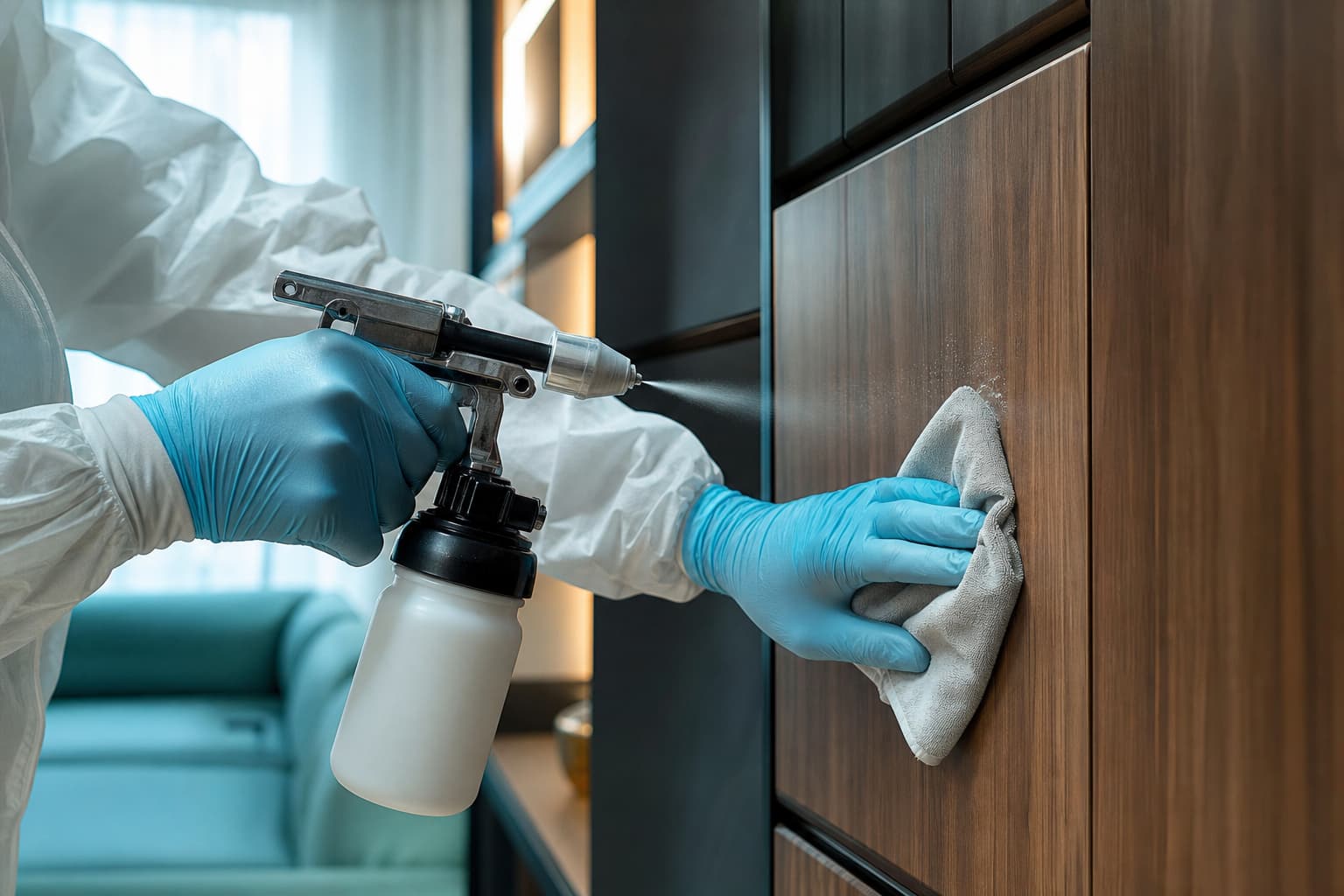
Use a 0.5mm–0.8mm nozzle for invisible nano-film formation.
Photocatalytic efficiency is proportional to exposed surface area. Using a fine 0.5mm HVLP nozzle prevents droplet agglomeration, ensuring an optically clear film that will not whiten colored wall paint. Pair with Formaldehyde Remover inside dark, unlit cabinet interiors.
Record initial HCHO/TVOC readings (mg/m³), room temperature (°C), relative humidity (% RH), and closure window (1h vs. 12h).
Identify whether off-gassing stems from urea-formaldehyde MDF/particleboard, phenolic plywood, solvent lacquers, or textile backings.
Calculate total surface area (m²) of panels, walls, and ceilings to determine exact liquid volume (ml/m²) and nozzle gauge (0.5mm–1.0mm).
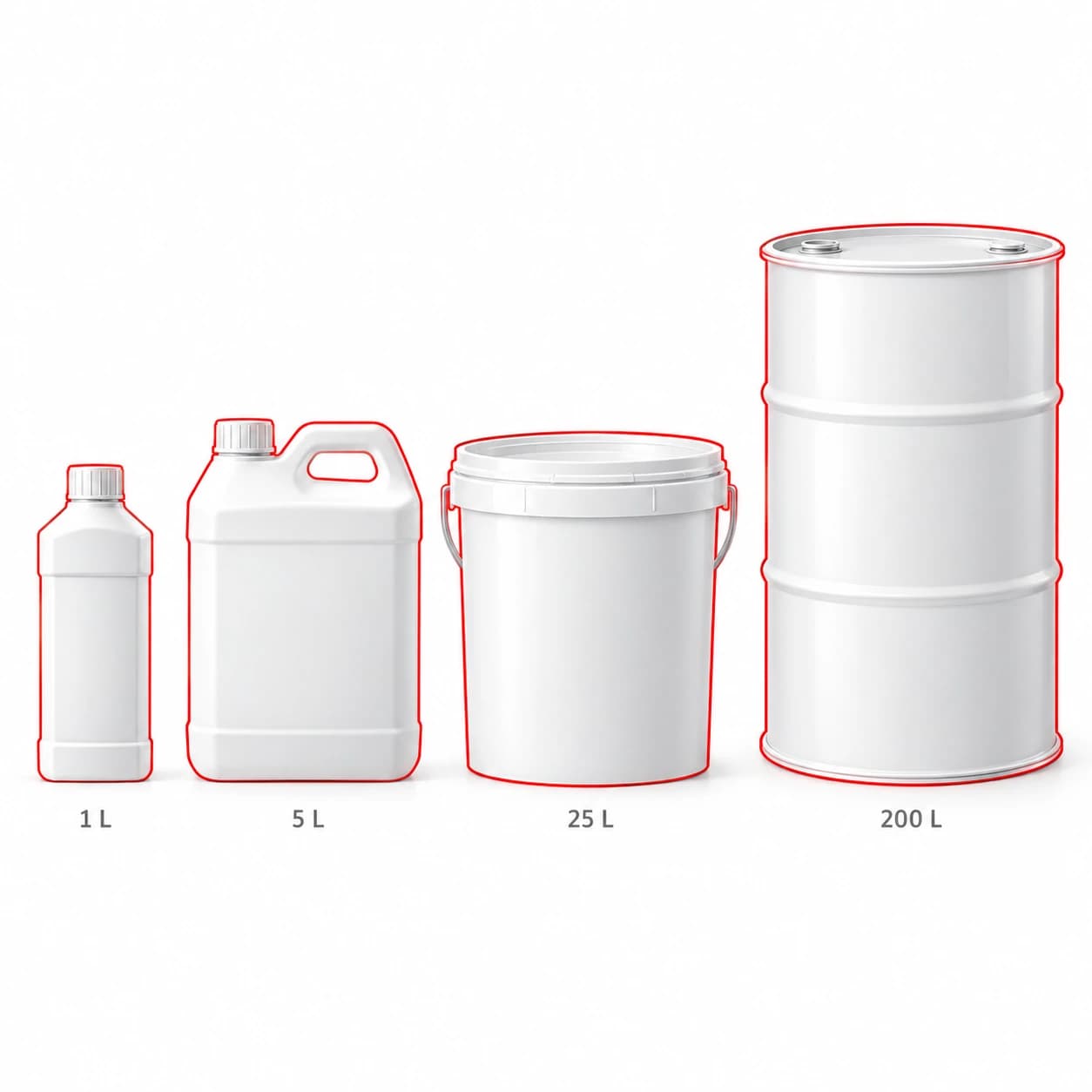
Confirm sample evaluation batch, TDS/MSDS export documentation, and commercial drum sizing (1L / 5L / 20L / 25L / 200L).
Mask dark high-gloss glass, mirrors, and polished metal prior to spraying
04Safety, handling & compliance
Hazard classification, storage and transport data follow the product's safety data sheet. Request the SDS for the full 16-section document.
Mask dark high-gloss glass, mirrors, and polished metal prior to spraying
Protective equipment: Nitrile gloves, safety glasses, and FFP2/N95 mist mask during enclosed HVLP atomization.
Non-Dangerous Goods (Non-DG) for sea, air, and road freight (Not regulated under IMDG, IATA, or ADR).
Certificate copies and full test reports are shared with buyers on request. Request copies · Quality & certifications
| Test | Standard | Laboratory | Result |
|---|---|---|---|
| 24h Closed-Chamber Pollutant Abatement | ISO 22197-1 / JIS R 1701-1 Photocatalytic Oxidation | CMA/CNAS Accredited Environmental Lab & botouseneco QC Center | 92.4% HCHO & 89.6% TVOC mineralization under 420-450 nm LED |
| Substrate Corrosion, pH Neutrality & Zero-Stain Verification | GB/T 18883 Annex & ISO 2409 Surface Integrity Protocol | botouseneco Botou R&D Lab (Supervised by Jyen) | Pass (pH 6.5-7.5; 0% yellowing, blistering, or hardware corrosion) |
05Ordering & logistics
06Documents
Every shipment travels with these documents. Download them here when available, or request the current version from our engineers.
07Dosage
Based on the published coverage for Nano Photocatalyst Spray: 8 – 12 ml/m² (1 liter covers 80–120 m² of wall/ceiling surface).
Published coverage: 8 – 12 ml/m² (1 liter covers 80–120 m² of wall/ceiling surface)
Use 2–3 passes for raw high-density board or heavy TVOC loads.
Estimated quantity
2.4–3.6L
8–12 ml/m² × 300 m² × 1 pass
Estimate from the published coverage range. Real consumption depends on substrate porosity, nozzle size and baseline readings — our engineers confirm it with your quote.
08Questions
Yes. Nano Photocatalyst Spray uses a visible-light-responsive doped anatase TiO₂ dispersion that activates under standard indoor LED and fluorescent illumination as well as daylight through windows.
Photocatalysts require light to generate •OH radicals, so they excel on walls, ceilings, and room exteriors. Inside pitch-dark drawers, cabinet backs, and bed frames, direct chemical scavengers like Formaldehyde Remover work without light. Combining both provides 24/7 dark + light remediation.
09Related
TVOC & Photocatalyst
Engineering-grade VOC treatment
TVOC & Photocatalyst
Ag⁺ dark-active photocatalyst
TVOC & Photocatalyst
Carpet & paint VOC specialist
Engineering journal
Step-by-step dosing schedules, chamber test datasets and substrate compatibility guides written by our Botou formulation and QC team.
All 66 engineering guidesB2B paint plant guide for adding 10X Amino Acid Scavenger and 5X Visible-Light Nano-TiO2 Sol into latex wall paint at the 400 rpm let-down stage to pass JC/T 1074 Class I.
 PIN
Step-by-step B2B IAQ contractor bidding guide using 2.4x to 3.1x unfolded surface-area multipliers instead of floor area to calculate exact liter quotas, crew hours, and gross margins.
 Jyen
OEM air filter coating guide for loading 5X Visible-Light Nano-TiO2 Sol onto PET non-woven, H13 fiberglass HEPA, and aluminum honeycomb media with under 3 Pa pressure drop and 405 to 450 nm LED reactors.
PIN
Head-to-head engineering comparison of GB 50325-2020 Class I civil building acceptance (<= 0.07 mg/m3 HCHO after 1-hour closure) versus GB/T 18883-2022 occupancy standards (<= 0.08 mg/m3 after 12-hour closure) and how contractors dose 1.4x higher to pass both.
Jyen
Step-by-step technical buyer's guide to auditing CMA and CNAS 1 m3 climate chamber test reports under ISO 16000-9 and GB/T 18883-2022, including blank-decay deduction math and 24-hour thermal desorption checks.
Jyen
Step-by-step contractor hardware guide comparing 0.5 mm, 0.8 mm, and 1.3 mm HVLP spray nozzles at 0.20 to 0.25 MPa air pressure to achieve 5 to 30 um droplet Sauter mean diameter (SMD) with zero wall drips.
Jyen
Factory-direct supply
Request a sample with the English TDS and SDS, or send your project size for a bulk or private-label quotation of Nano Photocatalyst Spray.