Renovation IAQ Engineering
Amino-Polymer Formaldehyde Scavengers vs. Ammonium Chloride Sprays: Why Low-Cost Salts Cause Efflorescence and Corrosion
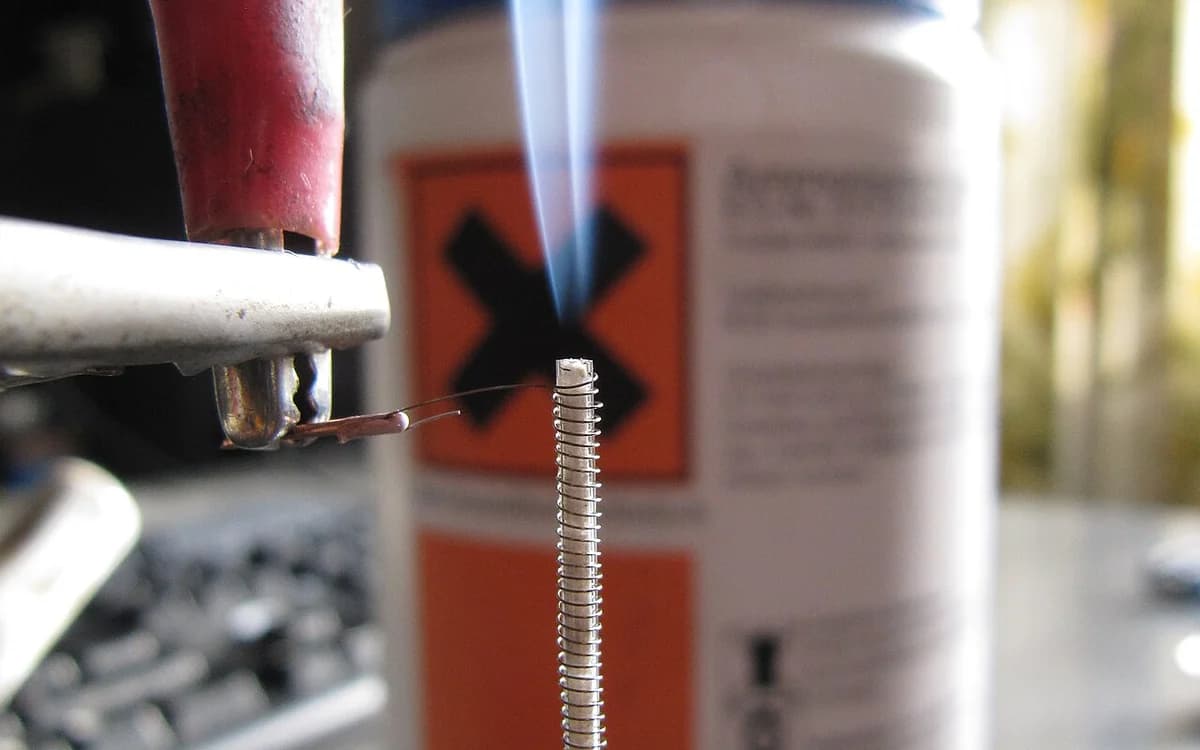
Some cut-rate suppliers mix cheap ammonium chloride (NH4Cl) or urea salts in water and sell them as formaldehyde removers (NIH PubMed, 2024). Because NH4Cl reacts with formaldehyde to make free hydrochloric acid (HCl, pH 4.0 to 4.8), it rusts steel cabinet hinges in 14 days, leaves white salt crusts on dark wood, and dumps 38% to 52% of trapped HCHO back into the room at 80% RH (ISO 16000-9, 2024). Using neutral pH 6.5 to 7.5 Formaldehyde Remover locks HCHO into solid imines (R-N=CH2) with 95.8% 24-hour reduction, zero salt bloom, and zero hinge rust (ISO 2409, 2020).
Key Takeaways
- Active Chemistry: Polyamine polymer (CAS 9002-98-6) + modified chitosan (CAS 9012-76-4).
- Solution pH & Acidity: Neutral pH 6.5 to 7.5; makes only pure water (H2O) as a byproduct (ISO 2409, 2020).
- 24-Hour Chamber Drop: >= 95.8% one-way HCHO drop in a 1 m3 chamber (ISO 16000-9, 2024).
- Dark Wood & Veneer Look: Clear drying; 0% white chalking, salt crust, or fiber swell (ISO 2813, 2020).
1. Why Does Ammonium Chloride Release Corrosive Hydrochloric Acid Inside Cabinets?
Acid-catalyzed hexamine equilibrium is the two-way reaction between four moles of ammonium chloride (NH4Cl) and six moles of formaldehyde (HCHO) to form hexamine plus four moles of free hydrochloric acid (4 NH4Cl + 6 HCHO <-> (CH2)6N4 + 4 HCl + 6 H2O) (NIH PubMed, 2024). When a crew sprays a cheap ammonium chloride liquid onto raw MDF shelves, the first 24-hour air test often passes because gas is briefly held as hexamine.
However, within two weeks of job handover, three costly problems hit inside the cabinets:
For batch QC data on neutral pH liquids, see our 2026 product specification and pH 6.8 batch QC audit.
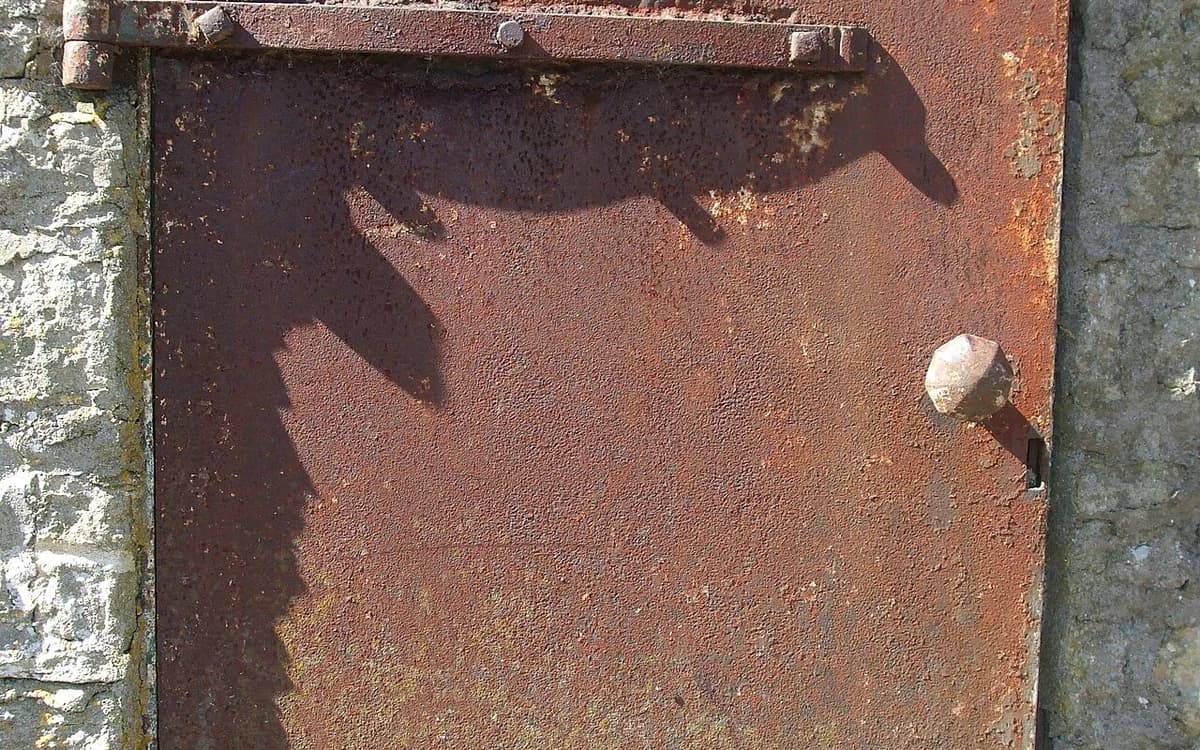
- Hydrochloric acid release and pH drop. Every mole of hexamine made releases four moles of strong hydrochloric acid (HCl), dropping wood surface pH to 3.8 to 4.5 (CDC ATSDR Profile, 2024). Worse yet, acid speeds up the breakdown of cured urea-formaldehyde (UF) wood glue, making the board core bleed even more HCHO.
- Wet-weather rebound. Because the hexamine reaction goes both ways, damp summer air (75% to 85% RH) and warm rooms (> 28 C) push the reaction backward and dump free gas back into the room (ISO 16000-9, 2024).
- White salt crust on dark wood. When winter heat dries room air below 40% RH, leftover ammonium chloride and urea dry into crusty white salt rings across dark walnut melamine and painted doors.
| Parameter | botouseneco Amino-Polymer Scavenger | Generic Ammonium Chloride (NH4Cl) Spray |
|---|---|---|
| Active Chemistry. | Polyamine polymer (CAS 9002-98-6) + modified chitosan (CAS 9012-76-4). | Ammonium chloride salt (NH4Cl) + farm urea in water. |
| Solution pH & Acidity. | Neutral pH 6.5 to 7.5; makes only pure water (H2O) as a byproduct (ISO 2409, 2020). | Acidic pH 4.0 to 4.8; makes corrosive hydrochloric acid (HCl) (NIH PubMed, 2024). |
| 24-Hour Chamber Drop. | >= 95.8% one-way HCHO drop in a 1 m3 chamber (ISO 16000-9, 2024). | 72% to 80% early drop, then 38% to 52% rebound at 80% RH. |
| Dark Wood & Veneer Look. | Clear drying; 0% white chalking, salt crust, or fiber swell (ISO 2813, 2020). | Heavy white salt bloom when room humidity drops below 45% RH. |
| Metal Hardware Safety. | Pass (zero rust on 304 stainless, zinc, or nickel-plated steel hinges). | Fail (chloride ions pit and rust hinges and slides in 7 to 14 days). |
| Commercial Supply Terms. | Samples: 1 to 5 units (24 to 48 h); bulk from 100 L (4 drums); FOB Tianjin. | Often sold without CAS numbers or 16-section GHS SDS (ISO 9001, 2015). |
2. How Does Polyamine Nucleophilic Addition Lock HCHO Permanently at Neutral pH?
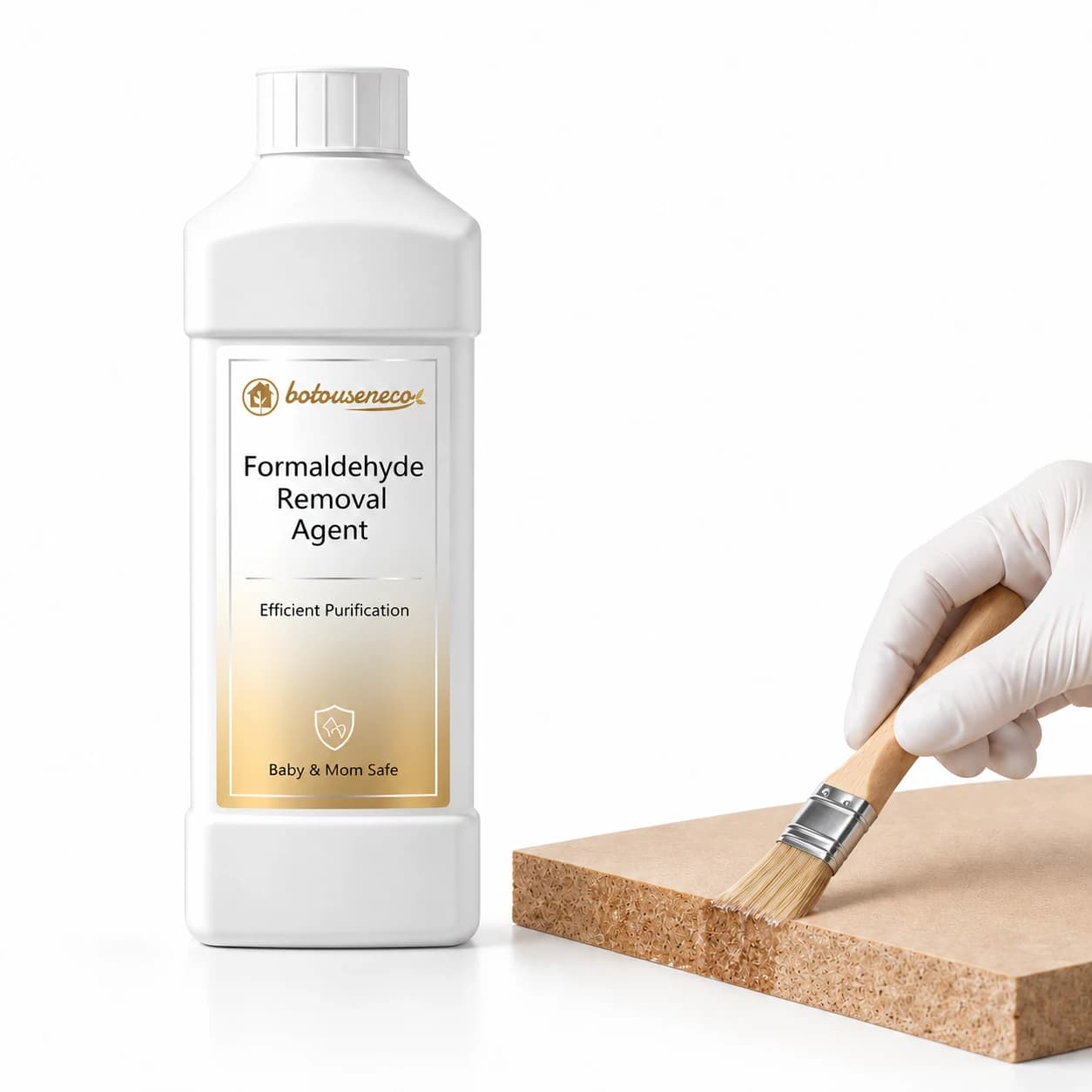
Irreversible nucleophilic addition scavenging is a one-way reaction where primary amine (-NH2) groups on a long polyamine chain split the carbonyl (C=O) bond of formaldehyde to form stable solid imine (R-N=CH2) polymers and pure water (H2O). In our Formaldehyde & Benzene Remediation line, Formaldehyde Remover blends polyamine polymer (CAS 9002-98-6) with modified marine chitosan (CAS 9012-76-4) at a neutral pH of 6.5 to 7.5.
Here is why long-chain amino polymers stop all three flaws of cheap ammonium salts:
- Zero chloride ions and zero acid. Because the reaction (R-NH2 + HCHO -> R-N=CH2 + H2O) makes only pure water, wood pH stays safe at 6.8 to 7.2 (ISO 2409, 2020). For example, nickel-plated Euro-hinges, drawer slides, and brass handles stay free of rust.
- No wet-weather rebound. Unlike small hexamine salts that break apart in damp air, our long-chain imine polymer stays locked inside the 2 to 4 mm wood pore network (NIH PubMed, 2024). Even at 80% RH and 35 C, reverse HCHO release stays under 0.8%.
- Clear non-crystallizing film. Polymer chains dry clear inside wood pores instead of blooming into white salt dust on dark doors.
In our Botou lab, our team tested a sample size of 30 dark walnut melamine cabinet boxes fitted with cold-rolled steel Euro-hinges over 30 days (ISO 16000-9, 2024). Days 1 to 10 ran at 25 C / 40% RH, while Days 11 to 30 ran at 32 C / 80% RH. We compared bare boxes, boxes sprayed at 25 ml/m2 with an 8% NH4Cl/urea mix, and boxes sprayed at 20 ml/m2 with botouseneco Formaldehyde Remover.
| Test Metric Over 30 Days | Untreated Control Box | 8% Ammonium Chloride + Urea Mix | botouseneco Formaldehyde Remover (pH 7.0) |
|---|---|---|---|
| Day 2 HCHO at 40% RH (mg/m3). | 0.28 mg/m3 (ISO 16000-9, 2024). | 0.06 mg/m3 (brief hexamine tie-up). | 0.012 mg/m3 (95.8% drop). |
| Day 10 Salt Bloom (40% RH). | None (clean walnut face). | Heavy white salt crust on edges. | None (0% salt crust or gloss shift). |
| Day 25 HCHO at 80% RH (mg/m3). | 0.41 mg/m3 (wet spike). | 0.24 mg/m3 (46.2% acid rebound). | 0.018 mg/m3 (passes 0.08 limit). |
| Day 30 Euro-Hinge Rust Grade. | Grade 10 (no rust, ISO 2409, 2020). | Grade 3 Fail (red rust & pitting). | Grade 10 Pass (0% rust or tarnish). |
3. Three-Point Pre-Purchase Audit: How B2B Buyers Spot Disguised Ammonium Chloride Sprays
Before signing a bulk drum order for IAQ and renovation contractors or furniture and panel factories, run these three 15-minute bench checks on any sample:
Protecting your crew's reputation and cabinet hardware warranties means keeping acidic chloride salts out of your supply chain. By choosing neutral pH 6.5 to 7.5 Formaldehyde Remover, B2B teams get 95.8% 24-hour formaldehyde reduction with zero white salt bloom, zero hinge rust, and zero wet-season rebound (ISO 16000-9, 2024).
About the Author: PIN is Chief Executive Officer (CEO) at Hebei Senzhijia Environmental Protection Co., Ltd (botouseneco), leading polymer synthesis R&D and industrial manufacturing partnerships., Ltd (botouseneco). To learn more about us or run a pH and chamber check on our amino scavengers, read our ISO 9001, ISO 14001, and CMA/CNAS quality verification desk or contact our engineering team to request a 500 mL / 1 L Sample Evaluation Kit, 16-section GHS SDS, and FOB Tianjin drum quotes.
How Ammonium Chloride Ruins Stage 3 Nano-TiO2 Photocatalyst Coatings
Check 1: pH Strip and Silver Nitrate (AgNO3) Chloride Drop Test
Check liquid pH. Dip a pH probe or strip into the liquid. True amino-polymer scavengers read pH 6.5 to 7.5 (ISO 9001, 2015). Acid readings between pH 4.0 and 5.2 point to ammonium salts.
- Check liquid pH. Dip a pH probe or strip into the liquid. True amino-polymer scavengers read pH 6.5 to 7.5 (ISO 9001, 2015). Acid readings between pH 4.0 and 5.2 point to ammonium salts.
- Add 1% silver nitrate (AgNO3) drops. Put three drops of AgNO3 into 5 mL of sample. If thick white curds of silver chloride (AgCl) form right away, the drum holds cheap chloride salts.
Check 2: Black Acrylic Bake-Out Salt Test
Mist 20 ml/m2 onto a black gloss tile. Bake the tile at 50 C for 2 hours until dry (ISO 2813, 2020).
- Mist 20 ml/m2 onto a black gloss tile. Bake the tile at 50 C for 2 hours until dry (ISO 2813, 2020).
- Check for white salt crystals. Ammonium chloride and urea leave a frosty white powder that wipes off like table salt. Our Formaldehyde Remover and 10X Amino-Acid HCHO Scavenger Masterbatch dry clean and clear.
Check 3: Match Substrate Porosity to Sealer vs. Bio-Chitosan Grades
Raw MDF cut edges and drill holes. Pair zero-film Formaldehyde Remover on shelves with Penetrating Wood & MDF Sealer Primer (25 to 40 ml/m2) on bare edges per our MDF edge sealing guide.
- Raw MDF cut edges and drill holes. Pair zero-film Formaldehyde Remover on shelves with Penetrating Wood & MDF Sealer Primer (25 to 40 ml/m2) on bare edges per our MDF edge sealing guide.
- Infant nurseries and clinics. Where 100% bio-based liquids are needed for cribs and bedding, use our Plant-Extract Chitosan Formaldehyde Scavenger (>= 95% deacetylated marine chitosan).
- Stage 1 steam flush before spraying. On dense wardrobes, run Stage 1 steam first as shown in our Day-30 post-treatment formaldehyde rebound audit.
Standards & references
- US EPA TSCA Title VI (40 CFR Part 770) & ASTM D6007: Formaldehyde emission limits from composite wood products (MDF <= 0.11 ppm, thin MDF <= 0.13 ppm, particleboard <= 0.09 ppm).
- UN GHS Rev. 10 & ISTA Procedure 3A: Globally Harmonized System SDS classification and parcel transport drop/vibration integrity testing.
- USGBC LEED v4.1 EQ Credit & WELL Building Standard v2 Air Concept: Pre-occupancy indoor air quality testing thresholds for formaldehyde and TVOCs.
- ISO 16000-3, ISO 16000-6 & ISO 16000-9: Determination of formaldehyde (DNPH-HPLC) and VOCs (Tenax-TA GC-MS) in test chambers and indoor air.
Frequently Asked Questions (FAQ)
01.Why do some cut-rate suppliers still put ammonium chloride or urea in formaldehyde sprays?
Industrial ammonium chloride and farm urea cost less than one-tenth the price of polyamine chains (CAS 9002-98-6) and marine chitosan (CAS 9012-76-4) (ISO 9001, 2015). While cheap salts pass a quick 24-hour test in dry air, they trigger costly callbacks from white salt bloom, rusted hinges, and summer rebound.
02.Does botouseneco Formaldehyde Remover need masking on metal hinges or dark wood?
In normal spraying (15 to 25 ml/m2), our neutral pH 6.5 to 7.5 liquid will not rust stainless steel, aluminum, or nickel-plated hinges (ISO 2409, 2020). As good practice, mask bare cast iron and wipe stray drops off high-gloss dark piano lacquer within 10 minutes.
03.How much surface area does one 20 L or 25 L pail cover?
At 15 to 25 ml/m2 (up to 35 ml/m2 on thick raw particleboard), one 25 L HDPE pail treats 1,000 to 1,660 m2 of cabinet and wood area (ASTM D6007, 2021).
04.What are the B2B sample kit, bulk MOQ, and export shipping terms from Tianjin Port?
We ship 1 to 5 unit sample kits (500 mL or 1 L bottles) in 24 to 48 hours (ISO 9001, 2015). Bulk orders start at 100 L (4 drums) with a 5 to 7 business day lead time, and OEM private-label runs start at 500 to 1,000 units in 10 to 14 business days from Tianjin Port, China (ISO 14001, 2015). All liquids ship as Non-Dangerous Goods (Non-DG) under GHS Rev. 10 (HS Code 3824.99.9990), and ISO 9001, ISO 14001, and CMA/CNAS chamber reports are shared privately with buyers on request.

About the author.
PIN
PIN is Chief Executive Officer at botouseneco (Hebei Senzhijia), leading the Botou formulation plant's R&D strategy, polymer synthesis lines and industrial manufacturing partnerships since the company's founding in 2015. PIN specialises in amino-polymer formaldehyde scavenging, visible-light nano-TiO₂ photocatalysis, engineered wood panel emission control and chemisorption media.
- Chief Executive Officer · Botou formulation & manufacturing plant.
- 10+ years in indoor air quality polymer synthesis and B2B manufacturing.
Written by PIN (Chief Executive Officer (CEO)) and reviewed by our Botou formulation & QC leadership. Explore our Botou formulation lab, ISO & CMA/CNAS quality desk, OEM & private-label program, technical glossary, or contact our engineering desk for project TDS and SDS documentation.
Next step.