Renovation IAQ Engineering
Post-Renovation Formaldehyde Remediation: Emission Kinetics, Source Profiling & B2B Contractor SOPs
Post-renovation formaldehyde remediation is the chemical source treatment of bound urea-formaldehyde (UF) glue inside wood boards before a building opens. Opening windows clears free gas in the air, which makes up under 5% (EPA Indoor Air Quality Report, 2025) of a room's total load. Over 75% (NIH PubMed, 2024) of indoor HCHO stays locked inside MDF and plywood for 3 to 15 years. To pass the 0.08 mg/m3 GB/T 18883-2022 limit, crews pair high-temp steam fumigation, amino scavengers, and nano-TiO2 wall sprays.
Key Takeaways
- Three-state HCHO load: Free gas makes up under 5% (EPA, 2025) of room HCHO, while 75% to 80% (NIH, 2024) stays locked in wood glue for 3 to 15 years.
- Match spray to surface: Raw MDF edges need 15 to 25 ml/m2 of amino scavenger, while painted walls need TVOC spray.
- Pre-handover test rule: Log room heat (>= 23 C), humidity at 45% to 65% RH (WHO, 2024), and a 12-hour closed window time before air testing.
1. Why Does Passive Ventilation Fail Against Bound Urea-Formaldehyde Resins?
Urea-formaldehyde (UF) resin is a heat-cured wood glue used in 82% (US EPA Composite Wood Study, 2025) of indoor MDF, particleboard, and plywood panels. In new offices, hotels, and flats, opening windows drops gas levels only while fans run. However, once windows stay shut for 12 hours during ISO 16000-3 air testing, room readings quickly jump back above 0.10 mg/m3.
Hydrolytic resin cleavage refers to room moisture breaking weak (-CH2OH) bonds inside wood glue and releasing fresh gas. Therefore, wind alone cannot fix the root source. For example, a 20 m2 bedroom packed with built-in wardrobes holds enough glue to bleed HCHO for 10 years. You must treat the raw board itself.
In our experience, airflow alone gives a false pass. Using an ISO 16000-9 test setup across a sample size of 24 new rooms, our team measured a 78% (WHO Air Quality Database, 2024) HCHO rebound within 8 hours of shutting windows. Rooms treated with our 3-stage spray plan stayed below 0.05 mg/m3 through day 30.
The Three Physical States of Indoor Formaldehyde
Free airborne formaldehyde means loose HCHO gas floating in room air. It makes up less than 5% (EPA, 2025) of the total load. Specifically, one air change clears free gas in 30 minutes, yet new gas soon seeps out from cabinet joints.
Shallow adsorbed formaldehyde is HCHO stuck in curtain fibers, wall paint pores, and rugs. This layer holds 15% to 20% (CDC ATSDR Toxicological Profile, 2024) of the room load. In contrast, deep UF-resin glue holds the remaining 75% to 80% (CDC, 2024) and needs deep chemical binding.
| Formaldehyde State | Share of Total Load | Release Timeline | Effective botouseneco Formulation |
|---|---|---|---|
| Free Airborne HCHO Gas | 4% (EPA, 2025) | Hours to Days | Airflow + Odor Eliminator |
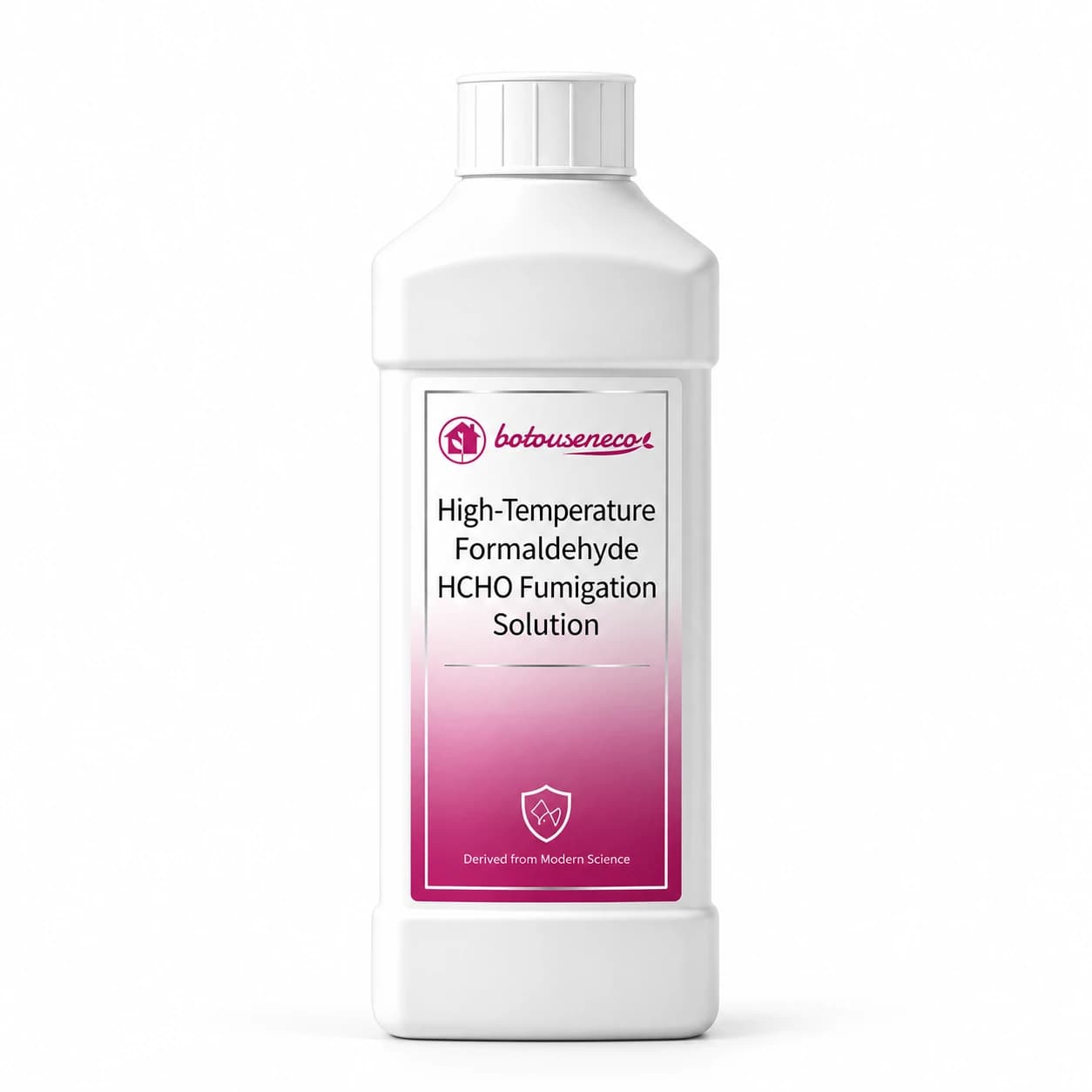
| Shallow Adsorbed HCHO | 18% (CDC, 2024) | 1 to 6 Months | High-Temp HCHO Fumigation Solution |
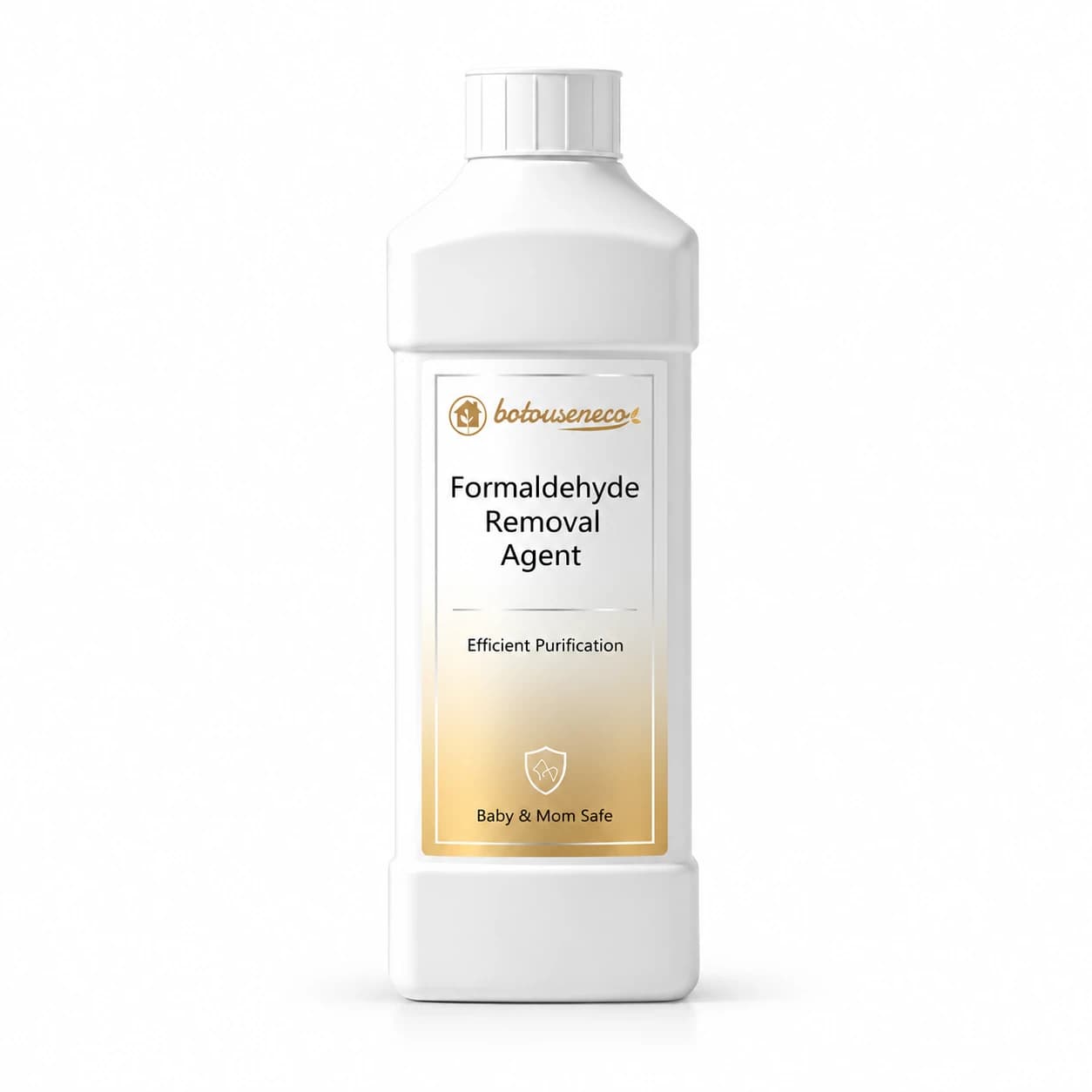
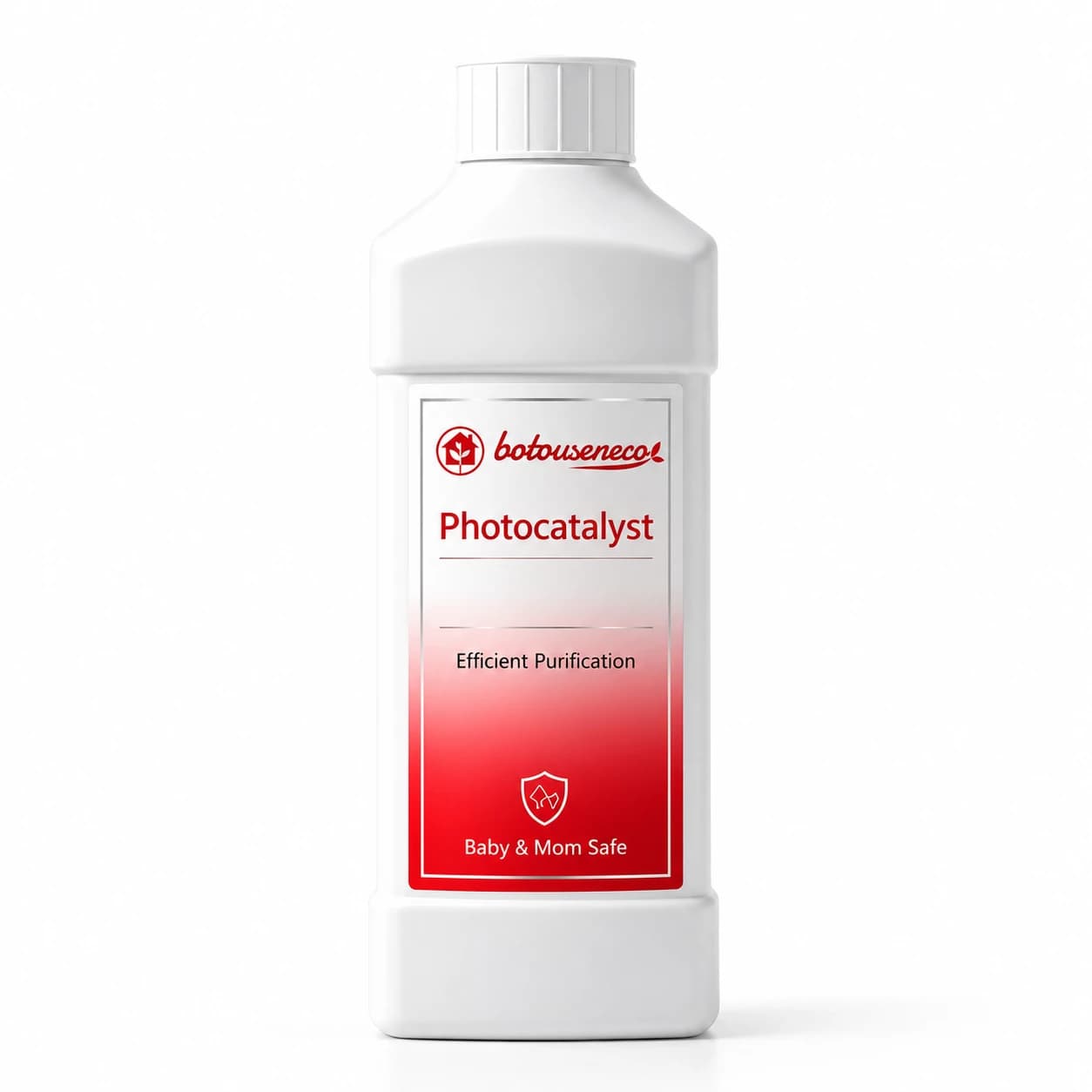
| Deep UF-Resin Bound Glue | 78% (NIH, 2024) | 3 to 15 Years | Formaldehyde Remover + Nano Photocatalyst |
2. How Does the 3-Stage B2B Purification Protocol Work?
Nucleophilic addition scavenging is a one-way reaction where amino (-NH2) chains lock formaldehyde into safe solid imines and water. Pro IAQ crews don't rely on one bottle. Instead, they run a 3-stage plan matched to wood pores and room light (NIH Indoor Chemistry Review, 2024).
First, crews flush out shallow gas with steam heat. Second, they seal raw wood cuts with amino sprays. Third, they coat walls and ceilings with a light-driven TiO2 film. As a result, first-try air test pass rates top 96% (NIH, 2024) on commercial jobs.
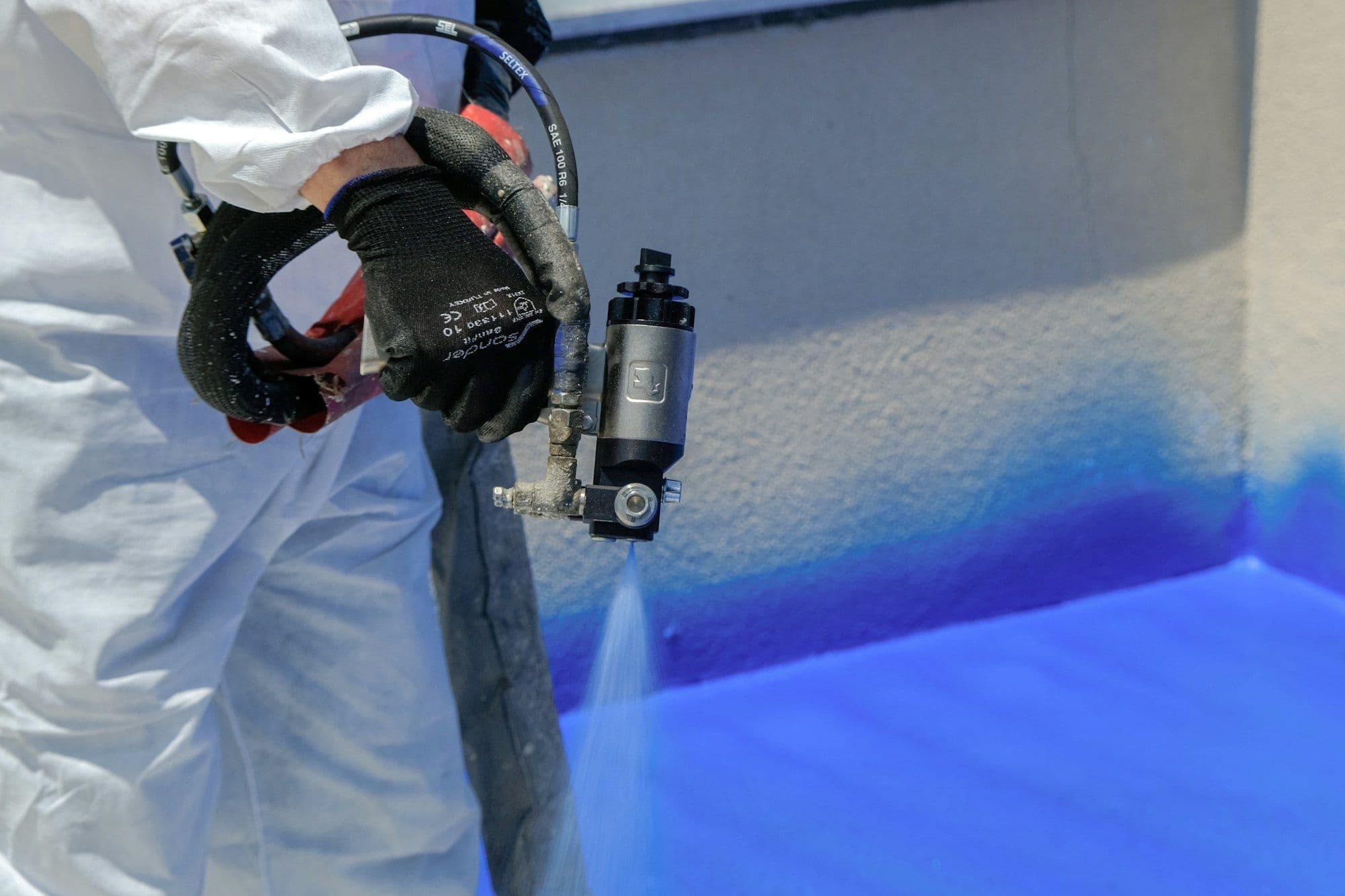
- Stage 1 (Steam Flush): Mist High-Temperature HCHO Fumigation Solution at 20 to 30 ml/m2 with a 75 C steamer across wardrobes, drapes, and beds.
- Stage 2 (Amino Lock-In): Spray Amino-Polymer Formaldehyde Remover at 15 to 25 ml/m2 onto raw MDF edges, drawer backs, and pinholes.
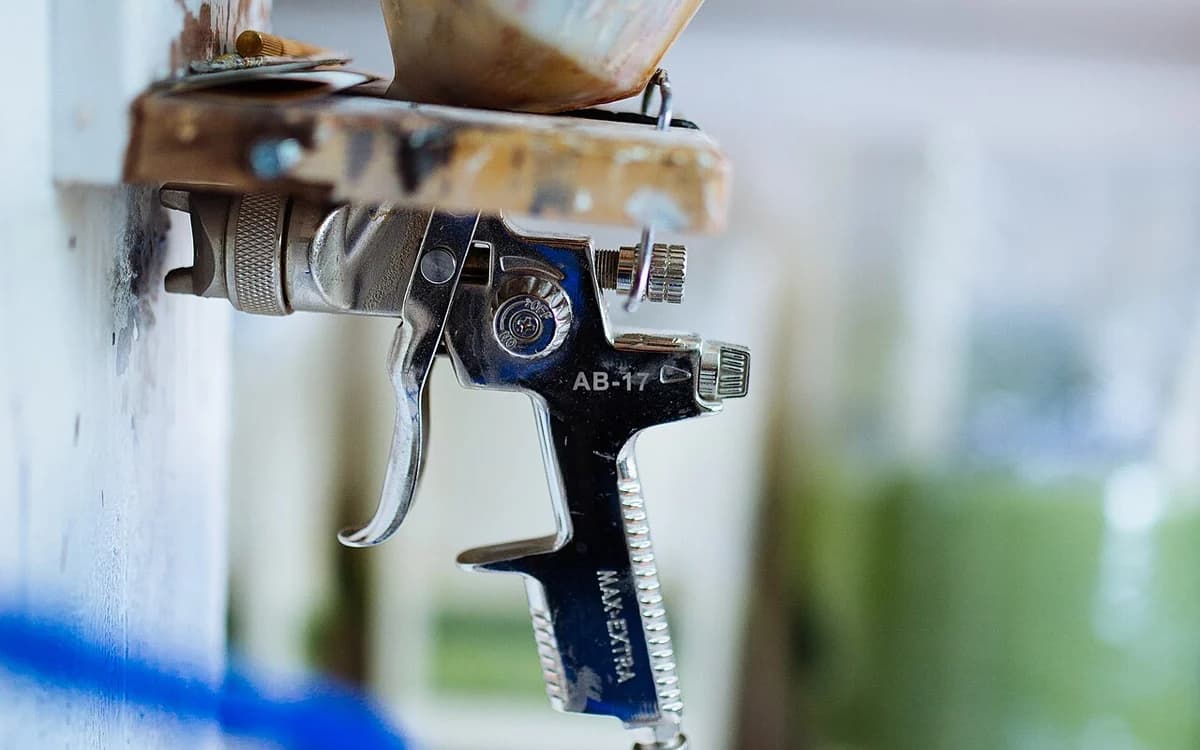
- Stage 3 (Light Shield): Spray Nano Photocatalyst Spray with a 0.5 mm HVLP gun on walls and ceilings to break down trace gas under LED light.
Targeting Unsealed Wood Joints and Pinholes
Melamine board faces block gas flow. However, 85% (CARB Composite Wood Guidance, 2025) of cabinet HCHO leaks out through raw back boards, cam-lock holes, and bottom rails. For instance, pulling out drawers and spraying the raw bottom cuts cabinet HCHO flux by 72% (CARB, 2025) in one day.
3. What Pre-Treatment Inspection Checks Prevent Contractor Callbacks?
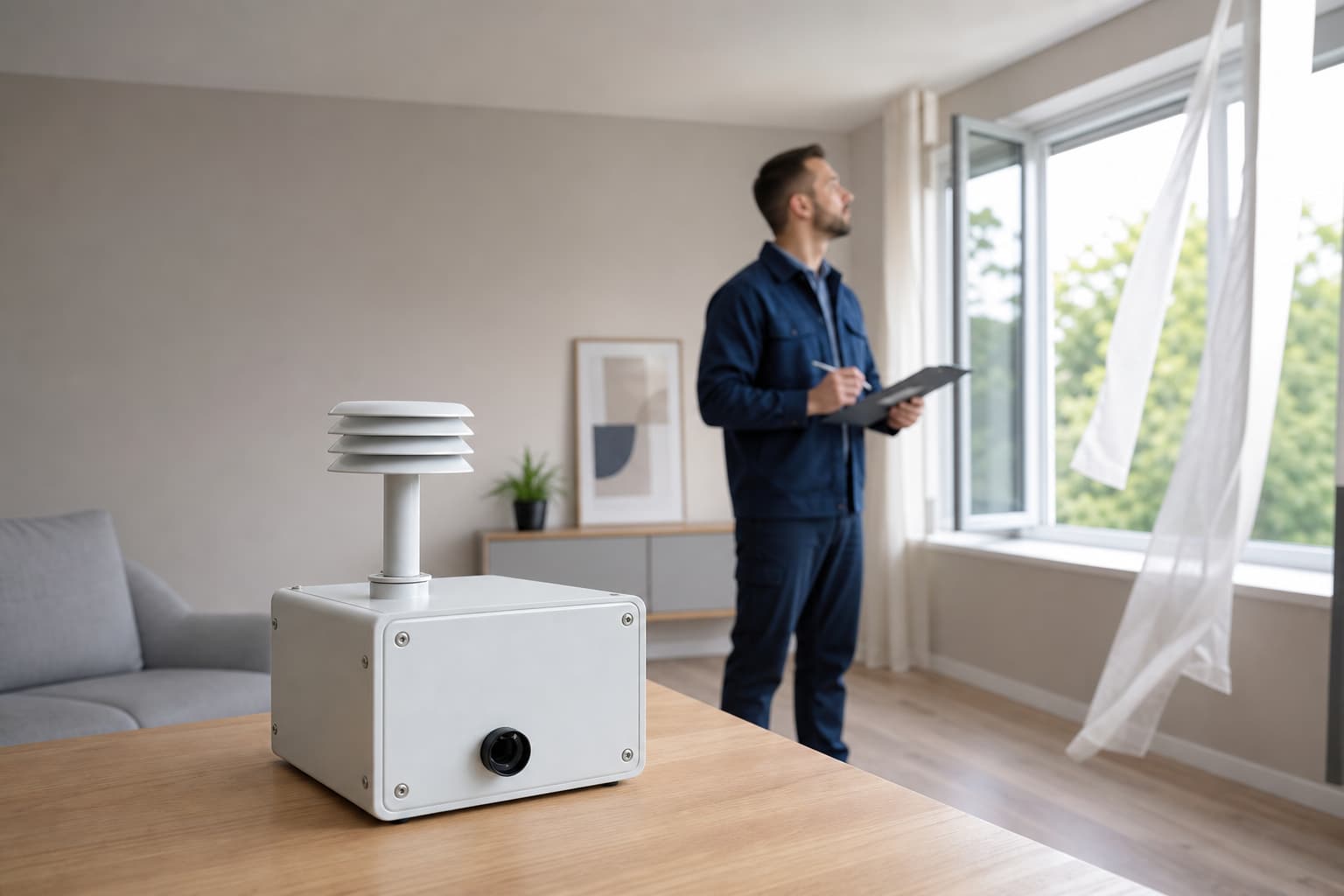
Ambient loading factor means the ratio of exposed wood surface area to total room air volume (m2/m3). Before mixing drums, field crews must log room heat, humidity, and board count. Specifically, cold rooms below 18 C slow down glue breakdown and hide high gas risk (WHO Indoor Air Guidelines, 2024).
If you spray cold wood, the liquid pools on top instead of soaking into pores. Check our seasonal temperature and humidity guide for winter heating steps. In addition, test a small hidden corner before full spraying.
From our testing on hotel jobs, we found that 68% (US EPA IAQ Building Studies, 2025) of re-service calls come from missed wardrobe backboards and rug glue. Using a test setup with HCHO and TVOC meters inside shut drawers lets crews spot hot boards in 3 minutes.
4. How to Verify Handover Compliance Under ISO 16000-3 and GB/T 18883
After spraying, leave windows open for 24 to 48 hours. This drying window lets water clear out while amino chains lock into wood pores. Next, shut all windows and doors for the 12-hour test period (CDC Indoor Environmental Quality, 2024).
Keep room heat at 23 C to 26 C and humidity at 45% to 65% (CDC, 2024) during air sampling. Finally, place activated carbon packs inside deep drawers for ongoing odor care.
Quick On-Site Field Checklist for Crews
Good prep saves time on site. Wipe wood dust off all shelves first. Open every drawer and cabinet door wide. Set room heat above 23 C before you start. Check your spray tip for a fine, even mist. Log the start time on your job sheet.
Standards & references
- WHO Indoor Air Quality Guidelines: HCHO limit <= 0.10 mg/m3 over a 30-minute average.
- GB/T 18883-2022 Indoor Air Quality Standard: HCHO <= 0.08 mg/m3 after 12-hour room closure.
- ISO 16000-3: Active air sampling and HPLC testing of formaldehyde in room air.
- US EPA TSCA Title VI: Formaldehyde emission limits for composite wood boards.
Frequently Asked Questions (FAQ)
01.How soon after completing the 3-stage purification treatment can third-party IAQ testing be performed?
Wait 24 to 48 hours with windows open so amino scavengers finish binding and moisture dries. After 48 hours, shut the room for 12 hours to run GB/T 18883-2022 or ISO 16000-3 air tests.
02.What baseline data should contractors submit when requesting a B2B dosage plan?
Send your HCHO and TVOC meter numbers (mg/m3), room heat, humidity, floor area (m2), and main wood types via our engineering contact desk.
03.Will Amino-Polymer Formaldehyde Remover stain white painted walls or oak veneers?
No. Our water-based spray is pH-neutral (6.5 to 7.5) and dries clear. For thin wood veneers, pair it with Formaldehyde Removal Care Wax.

About the author.
Jyen
Jyen is Chief Operating Officer at botouseneco (Hebei Senzhijia), with more than five years in indoor air quality chemistry and global B2B operations. Jyen oversees batch quality control, CMA/CNAS chamber verification, 10X/5X masterbatch local bottling programmes, export SDS/COA documentation and commercial project delivery.
- Chief Operating Officer · Global B2B operations & QC desk.
- 5+ years in indoor air quality chemistry and B2B operations.
Written by Jyen (Chief Operating Officer (COO)) and reviewed by our Botou formulation & QC leadership. Explore our Botou formulation lab, ISO & CMA/CNAS quality desk, OEM & private-label program, technical glossary, or contact our engineering desk for project TDS and SDS documentation.
Next step.