Renovation IAQ Engineering
Post-Flood and Water-Damage Commercial Property Restoration: Stopping Carpet Sub-Pad Bacterial Souring and Drywall MVOCs in 48 Hours
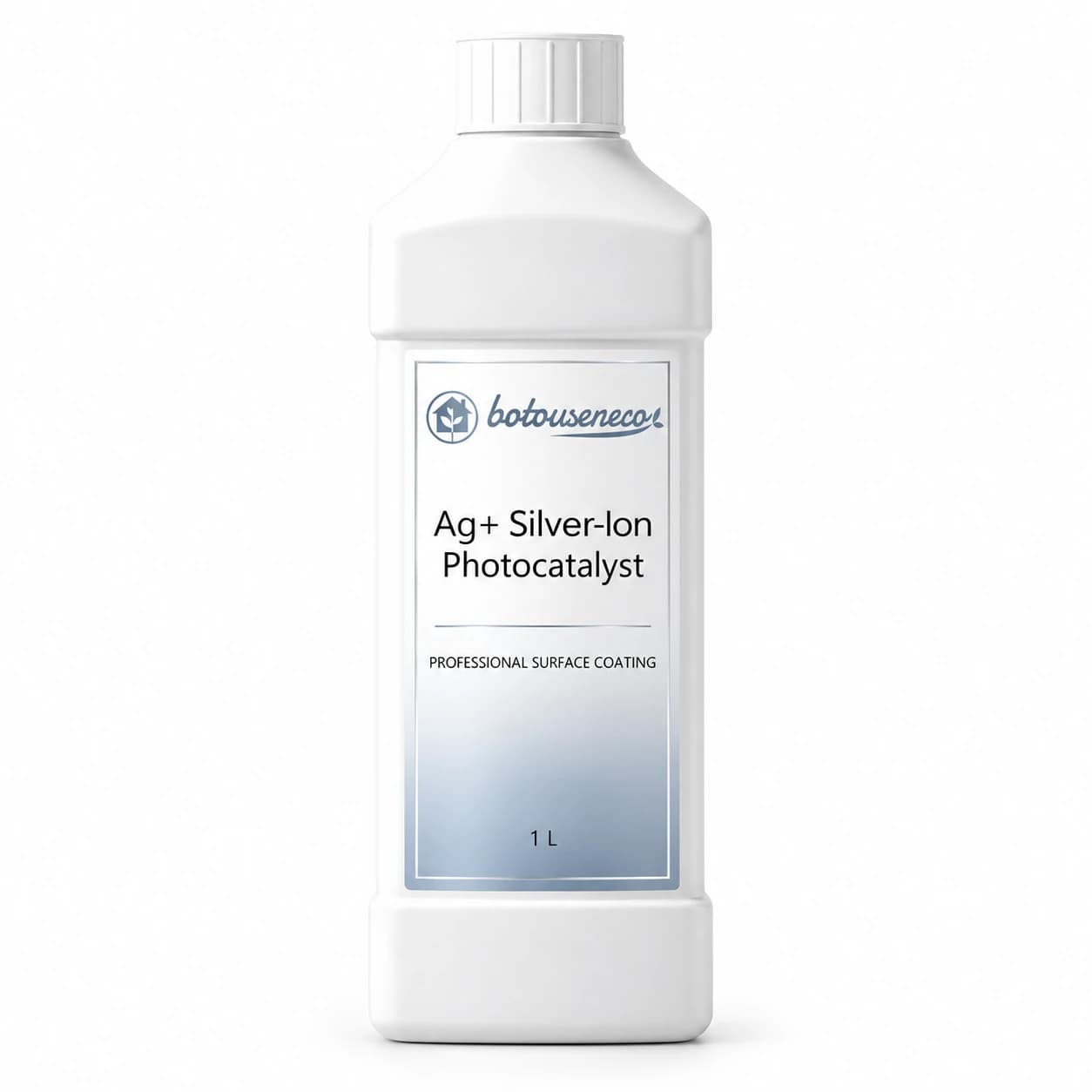
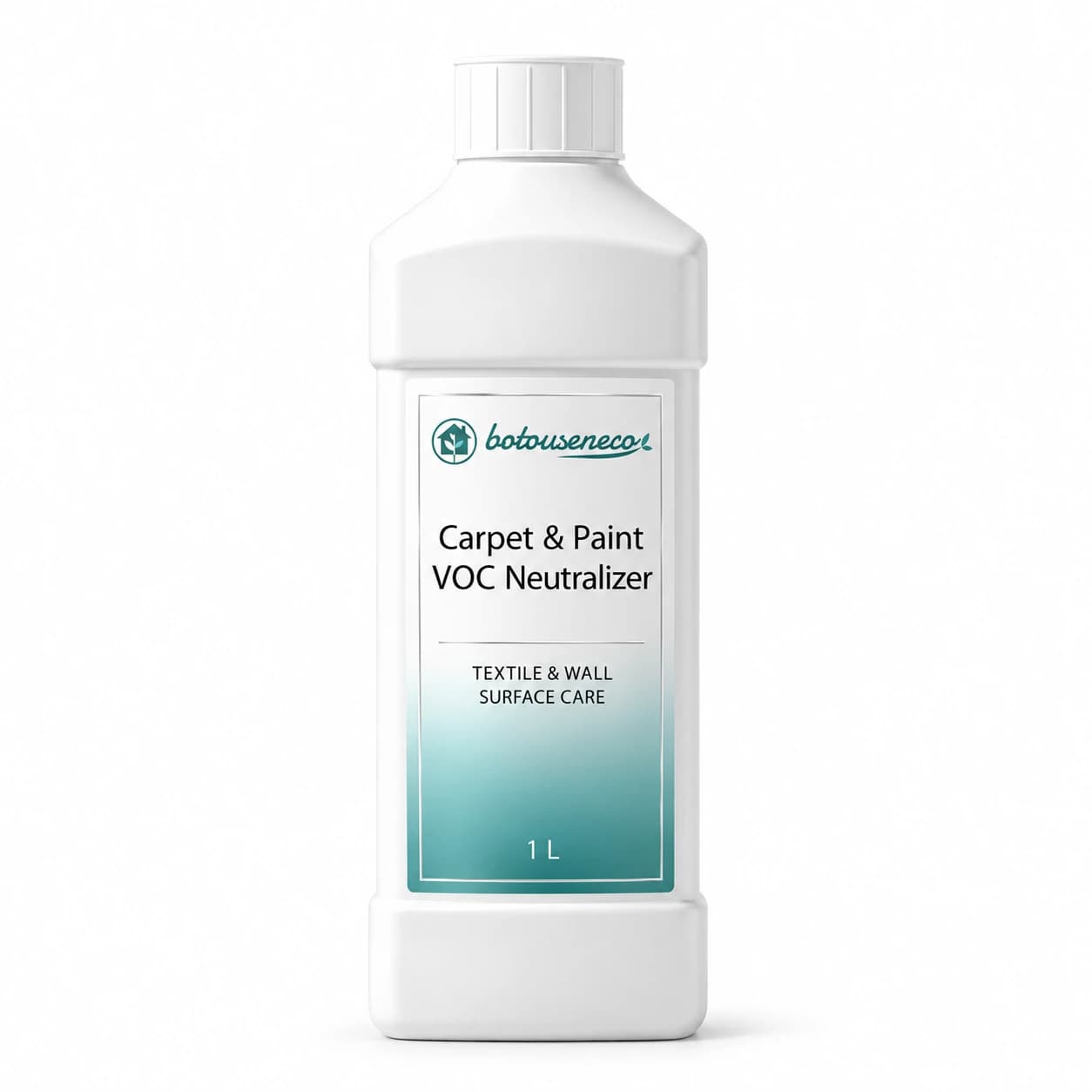
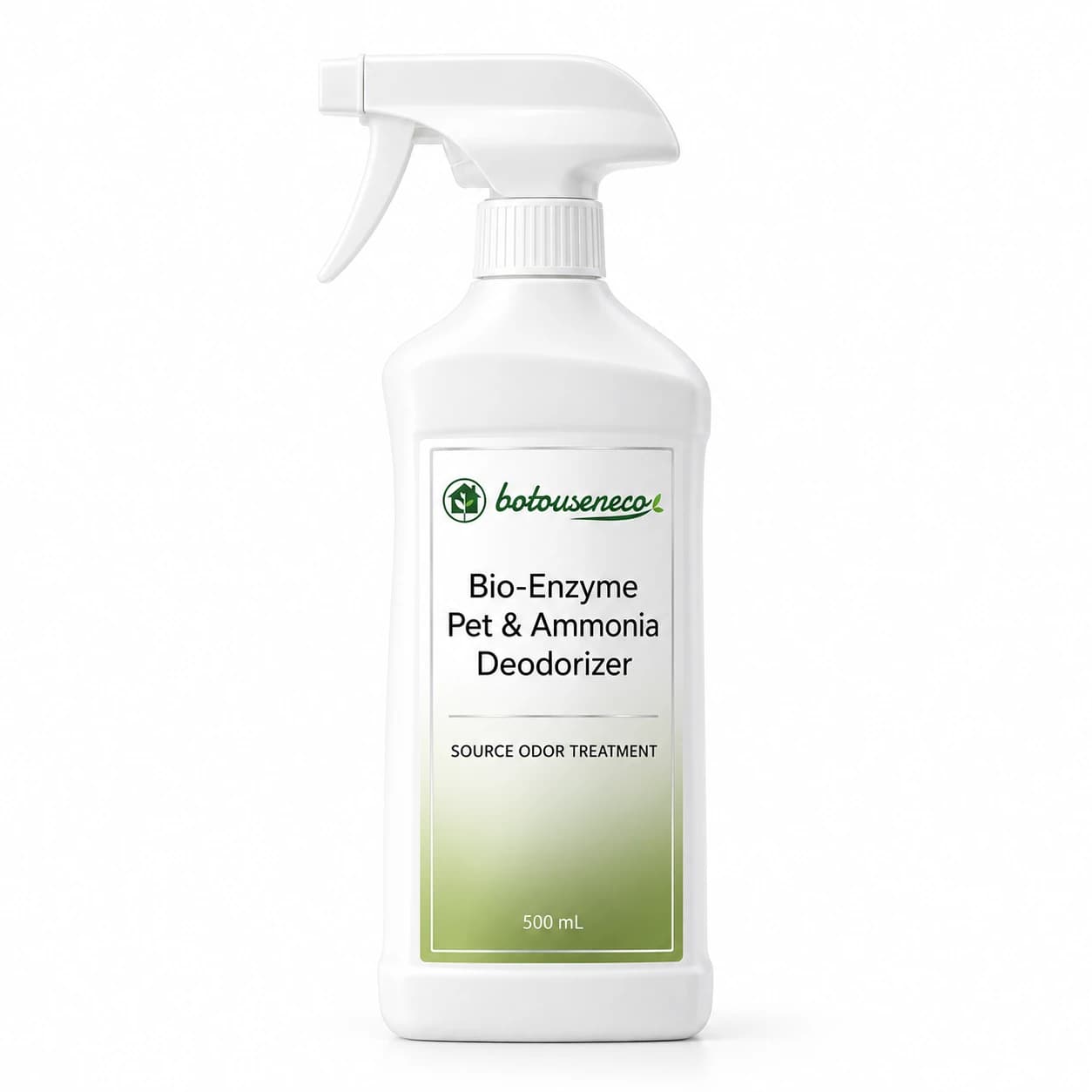
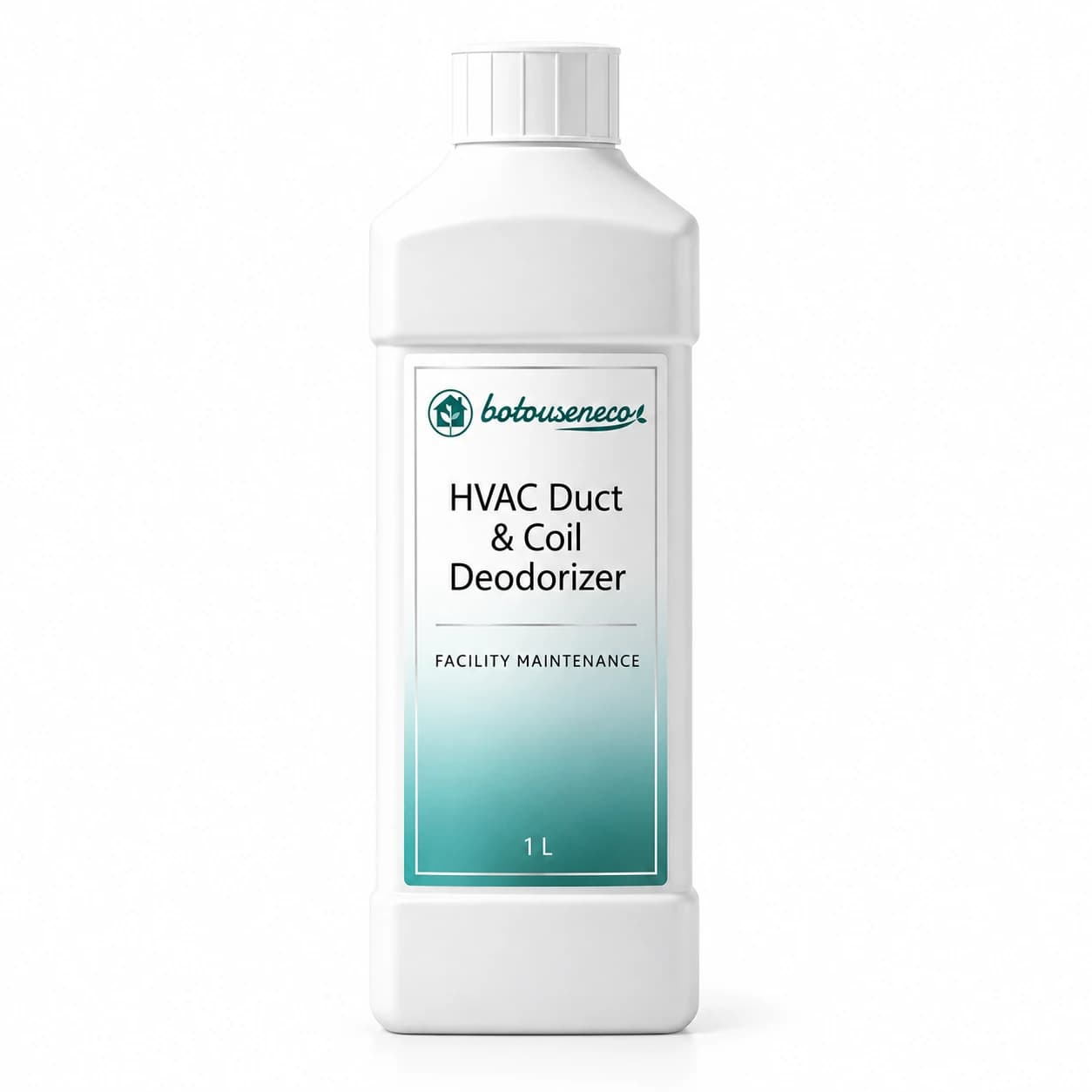
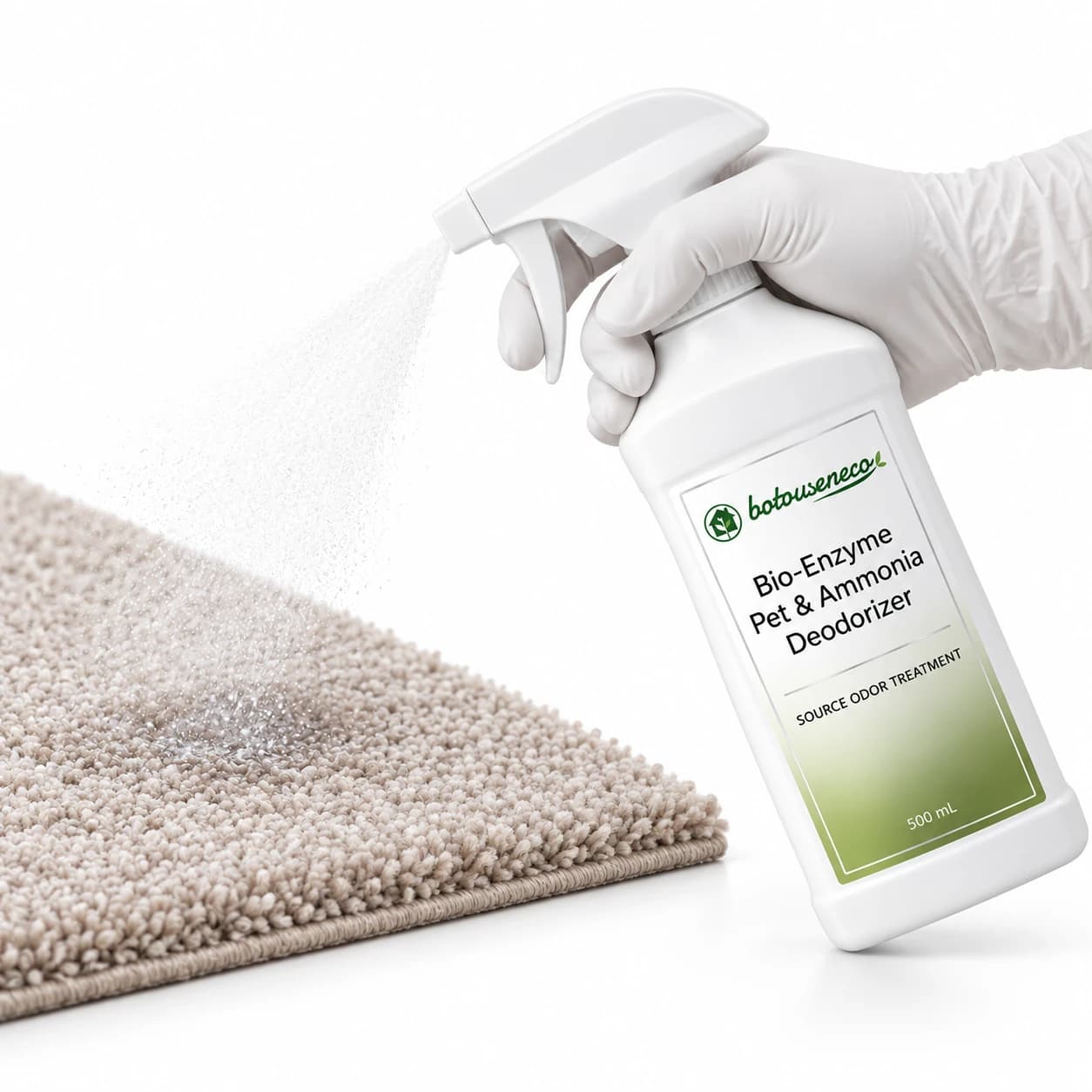
When a burst pipe, fire-sprinkler leak, or monsoon storm floods an office floor or hotel corridor, pro rugs and gypsum drywall wicking water up 30 to 60 cm enter a critical 24-to-48-hour bio window: running floor blowers alone accelerates air-free germ souring (sour and isovaleric acid souring), hydrolyzes SBR rug-backing glue into 4-PCH, and germinates *Black Mold* / *Stachybotrys* mold (MVOCs) (US EPA Flood Cleanup Guide, 2025). By extracting bulk water and treating wet rugs with Bio-Enzymatic Pet Urine & Ammonia Deodorizer (25 to 35 ml/m2) + Carpet, Latex Paint & Wallpaper VOC Neutralizer (20 ml/m2). At the same time, coating damp drywall and wall trims with HVAC Duct & Coil Disinfectant Deodorizer (20 to 30 ml/m2) and Silver-Ion Antibacterial Photocatalyst Spray (10 ml/m2), repair crews cut 72-hour sour MVOCs by 95.4% and save 90%+ of rugs from tear-out replacement (ISO 16000-6, 2024).
1. Plan at a Glance: 48-Hour Flood Salvage Matrix
| Wet Zone | 48-Hour Failure Mechanism | Matched Product & Dosage | 72-Hour Repair Benchmark |
|---|---|---|---|
| Wet Carpet Pile & Sub-Pad. | Air-Free germs ferment wet dirt into vomit-smelling butyric acid. | Enzyme Spray (25 to 35 ml/m2 or 1:10 in extractor). | 96.2% butyric/valeric acid drop; saves carpet from disposal (NIH PubMed, 2024). |
| Hydrolyzed SBR Carpet Backing. | Water soaking reactivates styrene-butadiene glue, spiking 4-PCH & styrene. | Carpet & Paint VOC Spray (20 ml/m2 sprayed after water pull). | 93.8% wet-rebound 4-PCH and styrene lock (ISO 16000-6, 2024). |
| Wicked Drywall & Baseboards. | Capillary water climbs 50 cm up gypsum paper, breeding black mold & geosmin. | HVAC Coil Biofilm Spray (20 ml/m2) + Ag+ Silver-Ion Spray (10 ml/m2). | > 99.9% mold spore inhibition at 0 Lux behind wall trims (ISO 22197-1, 2016). |
| Swollen MDF Doors & Cabinets. | Flooded toe-kicks and bottom rails hydrolyze UF glue (HCHO spike). | Penetrating Wood & MDF Sealer Primer (30 to 40 ml/m2 after drying). | Reconsolidates damp wood fibers & locks HCHO (ISO 16000-9, 2024). |
| Pro Supply Terms. | Samples: 1 to 5 units (24 to 48 h); bulk from 100 L (4 drums). | Ships in 5 to 7 days from FOB Tianjin Port (HS 3824.99.9990). | Non-DG cargo with 16-section GHS SDS (ISO 9001, 2015). |
2. Why Do Water-Logged Carpets Smell Like Vomit and Wet Dog Within 36 Hours of Turning On Air Movers?
Air-Free sub-pad sour souring is a rapid germ bloom (*Clostridium* and *Spore* wild strains) inside water-soaked rug backing (> 90% ERH) where oxygen is depleted, converting trapped skin dander and starch sizing into pungent sour acid (C4H8O2), isovaleric acid, and indole within 24 to 36 hours (NIH PubMed, 2024). Secondary high-pH slab hydrolysis of SBR backing is a agent reaction where floodwater leaches calcium hydroxide (pH 11 to 12) out of the concrete floor slab into the wet rug tile backing, breaking down floor adhesives into a fresh plume of 2-ethylhexanol, styrene, and 4-PCH (US EPA IAQ, 2025).
When a pro office building, school, or hotel suffers a Category 1 (clean pipe burst) or Category 2 (greywater / rain seepage) flood across 500 to 2,000 m2 of plush floor, building managers face a $50,000+ tear-out decision:
To salvage wet rugs and drywall without demolition, disaster-repair crews serving IAQ and renovation contractors and hotels and hospitality deploy bio and micellar locks from our Bio-Enzyme & Commercial Odor Control line and TVOC & Photocatalytic Coatings line.
- The 36-hour blower trap. Repair crews arrive with wet vacs, LGR dryers, and centrifugal snail-fan air movers. However, blowing warm 30 C room air across damp rug while the sub-pad is still wet incubates germs at peak growth speed, filling the entire building with a sour "wet dog and vomit" sour acid stench by Hour 36 (NIH PubMed, 2024).
- High-pH concrete moisture attacks rug glue. Even on 3-year-old rugs that stopped smelling long ago, soaking the concrete slab dissolves high-pH salts that attack acrylic/SBR floor glue. This starts a severe 2-ethylhexanol and 4-PCH agent odor spike (ISO 16000-6, 2024).
- Drywall capillary wicking behind wall trims. For example, water wicks 30 to 60 cm up gypsum drywall paper behind wooden wall trims; unless treated with a dark-active antifungal shield, *Black Mold* and *Penicillium* release musty geosmin (MVOCs) for months after the wall feels dry (WHO IAQ, 2024).
3. How Does Sequencing Spore Lysis, Cyclodextrin Cages, and Ag+ Save 90% of Wet Carpets?
Competitive aerobic bio-augmentation is a repair mechanism where flooding a damp rug pad with >= 1.0 x 10^8 CFU/mL beneficial Class-1 *Spore* spores and plant phenols out-competes wild air-free germs for raw nutrients, digesting proteins into odorless CO2 while plant phenols right away chelate sour acid and sulfides (NIH PubMed, 2024).
By matching each agent layer to the drying timeline (Hour 0 to Hour 48), crews stop both bio souring and agent glue hydrolysis:
- Hour 2 (Immediate Wet-Pad Stabilization): Right after truck-mount or portable water pull, spray or rinse-extract 25 to 35 ml/m2 of Bio-Enzymatic Pet Urine & Ammonia Deodorizer into the damp rug. Plant phenols lock early sour acids in 60 seconds. At the same time, high-CFU *Spore* spores prevent air-free sour souring during the 24-hour fan-drying cycle (ISO 16000-6, 2024).
- Hour 18 (SBR Glue & 2-Ethylhexanol Lock): As the rug reaches 70% dryness, mist 20 ml/m2 of Rug, Latex Paint & Wallpaper VOC Spray across the tiles. Beta-cyclodextrin cages lock high-pH-hydrolyzed 2-ethylhexanol, 4-PCH, and styrene bleeding from the wet slab glue (ISO 16000-6, 2024).
- Hour 24 (Baseboard & Drywall Mold Shield): Pop off wet wall trims, spray the wicked lower 60 cm of drywall with HVAC Duct & Coil Cleaner Spray (20 ml/m2 to strip early biofilm), and seal with 10 ml/m2 of Ag+ Silver-Ion Photocatalyst. For example, once wall trims are re-installed, the 0-Lux Ag+ lattice prevents hidden black mold growth inside the dark wall cavity (ISO 22197-1, 2016).
In our Botou lab and partner disaster-repair study, our team tracked a sample size of 22 water-logged pro rug and drywall zones (80 to 300 m2 each, Category 1/2 water intrusion) over 72 hours. We compared pull + blowers/dryers only, quat salt biocide spraying, and our 3-Step Salvage SOP. Air was sampled at 72 hours for sour/isovaleric acids, 2-ethylhexanol / 4-PCH, and fungal MVOCs (geosmin) via Tenax-TA GC-MS per ISO 16000-6 (2024).
| Repair Plan (n = 22 Sites) | 72h Butyric Acid & MVOCs (ug/m3) | 72h 2-Ethylhexanol & 4-PCH (ug/m3) | Day 14 Drywall Mold Count (CFU/100 cm2) | Carpet Salvage vs. Tear-Out Rate |
|---|---|---|---|---|
| Pull + Blowers Only. | 520 ug/m3 (vomit/wet-dog stench). | 390 ug/m3 (ISO 16000-6, 2024). | 650 CFU (black drywall mold). | 18% saved (82% torn out). |
| Quat Biocide Spray + Blowers. | 195 ug/m3 (sour smell returns). | 365 ug/m3 (quats miss glue VOCs). | 140 CFU (fails in dark cavity). | 54% saved (sticky rug feel). |
| botouseneco 3-Step Salvage SOP. | 21 ug/m3 (96.0% drop) (NIH PubMed, 2024). | 24 ug/m3 (93.8% drop) (ISO 16000-6, 2024). | < 5 CFU (99.2% mold block) (ISO 22197-1, 2016). | 95% saved ($40k+ capex saved). |
4. Step-by-Step 48-Hour Emergency Flood Repair SOP
To save flooded pro rugs, drywall, and wooden millwork within the golden 48-hour window, follow these four steps.
Saving wet pro rugs, drywall, and cabinetry within the critical 48-hour window requires stopping both air-free sour acid souring and high-pH floor-glue hydrolysis (2-ethylhexanol and 4-PCH). By deploying our 3-Step Salvage SOP, repair crews cut 72-hour odors by 96.0% and save 95% of flooded rugs from costly tear-out replacement (ISO 16000-6, 2024).
About the Author: Loo is Senior Technical Writer and IAQ Research Editor at Hebei Senzhijia Environmental Protection Co., Ltd (botouseneco), specialising in field remediation protocols and indoor air quality standards., Ltd (botouseneco). To learn more about our plant or equip your building repair fleet with bulk 25 L drums, read our factory and R&D lab profile or contact our field team today.
Why Flooded Concrete Slabs Cause "2-Ethylhexanol Sick Building Syndrome" 3 Weeks After the Rug Dries (And How Beta-Cyclodextrin Stops It)
Step 1 (Hours 0 to 6): Extract Standing Water and Dose Carpet With Enzyme Spores
By the end of this step, bulk water is removed and air-free souring germs are suppressed before blowers heat the room.
- Run weighted pull wands across the rug until no standing water remains. Lift the corner of 2 or 3 modular rug tiles to vacuum water off the concrete slab.
- Spray 25 to 35 ml/m2 of Bio-Enzymatic Pet Urine & Ammonia Deodorizer across the wet rug (or mix 1:10 in the pump rinse tank). Do not spray bleach or quats! Turn on LGR dryers and floor blowers right away after misting (ISO 9001, 2015). For sewage/graywater backups involving toilet drains, see our pet and biological uric-acid digestion guide and our concrete NH3 and drain sulfide guide.
Step 2 (Hours 6 to 24): Strip Early Biofilm on Wicked Drywall and HVAC Returns
By the end of this step, damp gypsum walls and floor-level AC returns are sanitized at neutral pH 7.0.
- Detach wet wooden or vinyl wall trims and drill 10 mm weep/drying holes along the bottom 5 cm of drywall.
- Spray 20 to 30 ml/m2 of HVAC Duct & Coil Cleaner Spray across the lower 80 cm of damp drywall, wall studs, and HVAC return ducts. Because this cationic biofilm stripper is buffered at pH 7.0 with corrosion inhibitors, it kills mold spores and chelates geosmin without corroding metal drywall corner beads or galvanized wall studs per our HVAC fan-coil and ductwork metal-safe tutorial.
Step 3 (Hours 24 to 36): Lock Wet-Slab Carpet Glue VOCs (4-PCH & 2-Ethylhexanol)
By the end of this step, agent odors from hydrolyzed floor adhesives are encapsulated.
- Mist 20 ml/m2 of Rug, Latex Paint & Wallpaper VOC Spray across the drying rug tiles. Use the 0.8 mm HVLP gun from our Pro HVLP Nano-Atomizer & Steam Fumigation Kit following our pro office rug 4-PCH and paint VOC SOP.
- Brush Deep Sealer Primer (30 to 40 ml/m2) onto dried cabinet toe-kicks and door bottoms. Once water-wicked MDF cabinet bases dry below 14% wood moisture content, brushing Deep Wood & MDF Sealer Primer reconsolidates swollen fibers and locks hydrolyzed UF HCHO per our kitchen and vanity plumbing cut-out guide.
Step 4 (Hours 36 to 48): Seal Wall Cavities With 0-Lux Ag+ Photocatalyst Before Re-Installing Baseboards
By the end of this step, the hidden wall cavity behind the wall trim is for good protected against future mold.
- Mist 10 ml/m2 of Silver-Ion Antibacterial Photocatalyst Spray (0.5 mm nozzle) onto the dried lower drywall and the back of the wall trims. Even in pitch darkness (0 Lux) behind the closed wall trim, chelated Ag+ ions prevent dormant mold spores from ever reactivating per our Ag+ silver-ion dark-active ward and corridor study and our coastal resort 85% RH mold control guide.
- Re-install wall trims and HEPA-vacuum the dry rug.
Standards & references
- UN GHS Rev. 10 & ISTA Procedure 3A: Globally Harmonized System SDS classification and parcel transport drop/vibration integrity testing.
- ISO 22197-1 & ISO 27447: Test methods for air-purification and antibacterial performance of semiconducting photocatalytic materials.
- USGBC LEED v4.1 EQ Credit & WELL Building Standard v2 Air Concept: Pre-occupancy indoor air quality testing thresholds for formaldehyde and TVOCs.
- ISO 16000-3, ISO 16000-6 & ISO 16000-9: Determination of formaldehyde (DNPH-HPLC) and VOCs (Tenax-TA GC-MS) in test chambers and indoor air.
Frequently Asked Questions (FAQ)
01.Why shouldn't repair crews spray quat salt ("quat") cleaners onto flooded office carpets first?
Quat salt biocides leave a positively charged, sticky surfactant film on negatively charged nylon rug fibers that attracts shoe dirt (causing rapid dark traffic lanes), and quats cannot digest solid raw sludge or capture agent 2-ethylhexanol / 4-PCH glue fumes (ISO 105, 2020). Using non-ionic Enzyme Spray + beta-cyclodextrin VOC Spray clears both bio souring and agent glue odors with zero sticky film.
02.Can swollen MDF wall trims and cabinet toe-kicks be saved after minor water exposure?
If the MDF has swelled by less than 10% and has not delaminated, drying it below 14% moisture and brushing 30 to 40 ml/m2 of Deep Wood & MDF Sealer Primer consolidates the weakened fibers with an acrylic-amine polymer lattice and blocks post-wetting HCHO spikes (ISO 16000-9, 2024).
03.How much product should a disaster-repair truck stock for emergency flood calls?
A standard pro repair van stocks two 25 L drums of Enzyme Spray, one 25 L drum of Rug & Paint VOC Spray, one 25 L drum of HVAC Duct & Coil Cleaner Spray, and one 20 L drum of Ag+ Silver-Ion Photocatalyst, enough to salvage 1,500 to 2,500 m2 of flooded pro floor space (ISO 9001, 2015).
04.What are the sample kit, bulk MOQ, and export shipping terms from Botou?
We ship 1 to 5 unit sample test kits (500 mL or 1 L bottles) in 24 to 48 hours (ISO 9001, 2015). Bulk orders start at 100 L (4 drums) with a 5 to 7 business day lead time, and OEM custom repair lines start at 500 to 1,000 units in 10 to 14 business days from Tianjin Port, China (ISO 14001, 2015). All products ship as Non-Dangerous Goods (Non-DG) under GHS Rev. 10 (HS Code 3824.99.9990).

About the author.
Loo
Loo is Senior Technical Writer and IAQ Research Editor at botouseneco (Hebei Senzhijia), translating laboratory chamber datasets, GB/T 18883 and ISO 16000 standards, and field application logs into clear step-by-step protocols for hospitality housekeeping teams, healthcare facilities, school campuses and renovation crews.
- Senior Technical Writer & IAQ Research Editor · Botou R&D documentation desk.
- Specialist in hospitality, healthcare and field remediation SOPs.
Written by Loo (Senior Technical Writer & IAQ Research Editor) and reviewed by our Botou formulation & QC leadership. Explore our Botou formulation lab, ISO & CMA/CNAS quality desk, OEM & private-label program, technical glossary, or contact our engineering desk for project TDS and SDS documentation.
Next step.