Renovation IAQ Engineering
HVLP Nano-Photocatalyst Coating Adhesion and Film Uniformity on Latex Paint, Wallcoverings, and Acoustic Panels
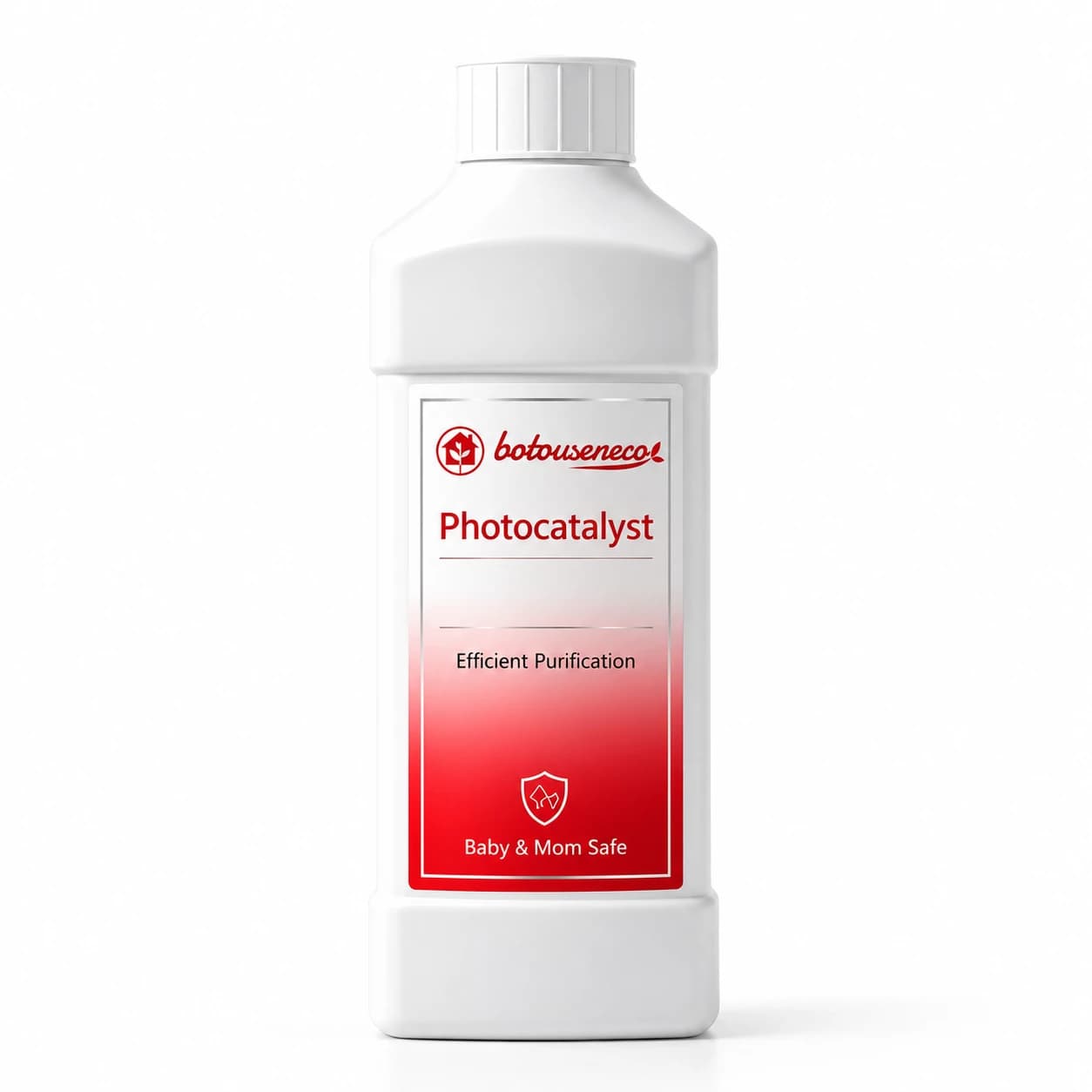
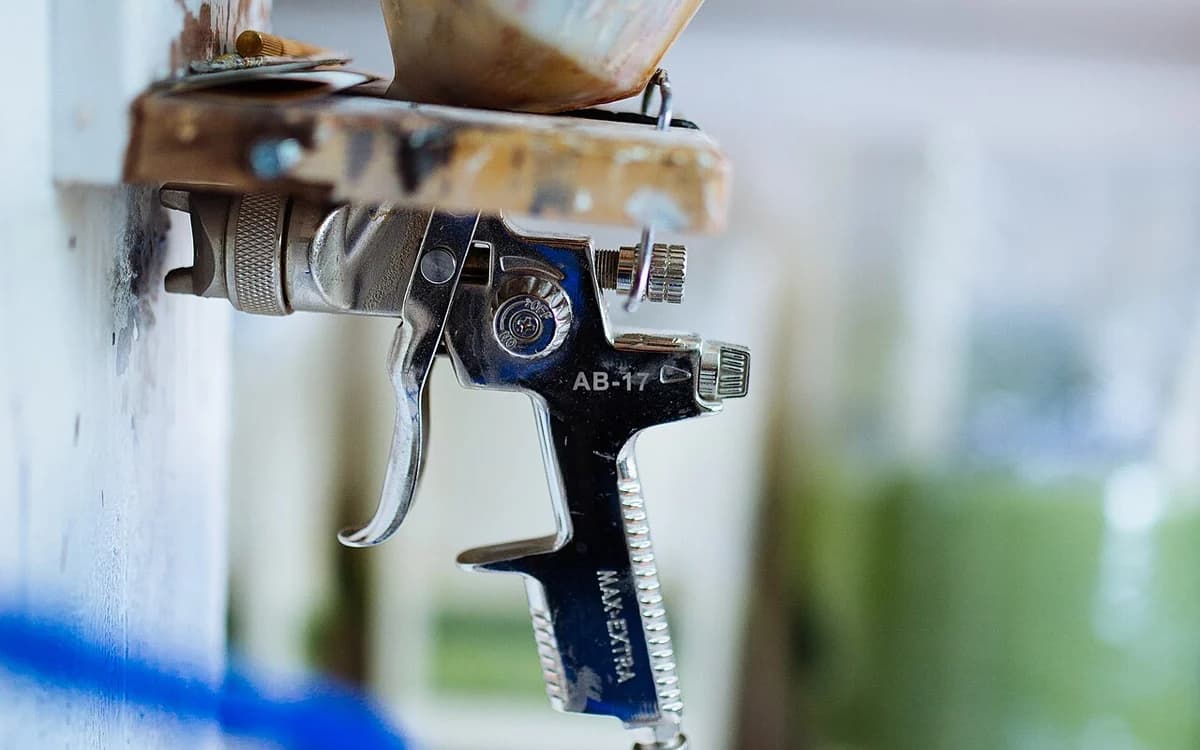
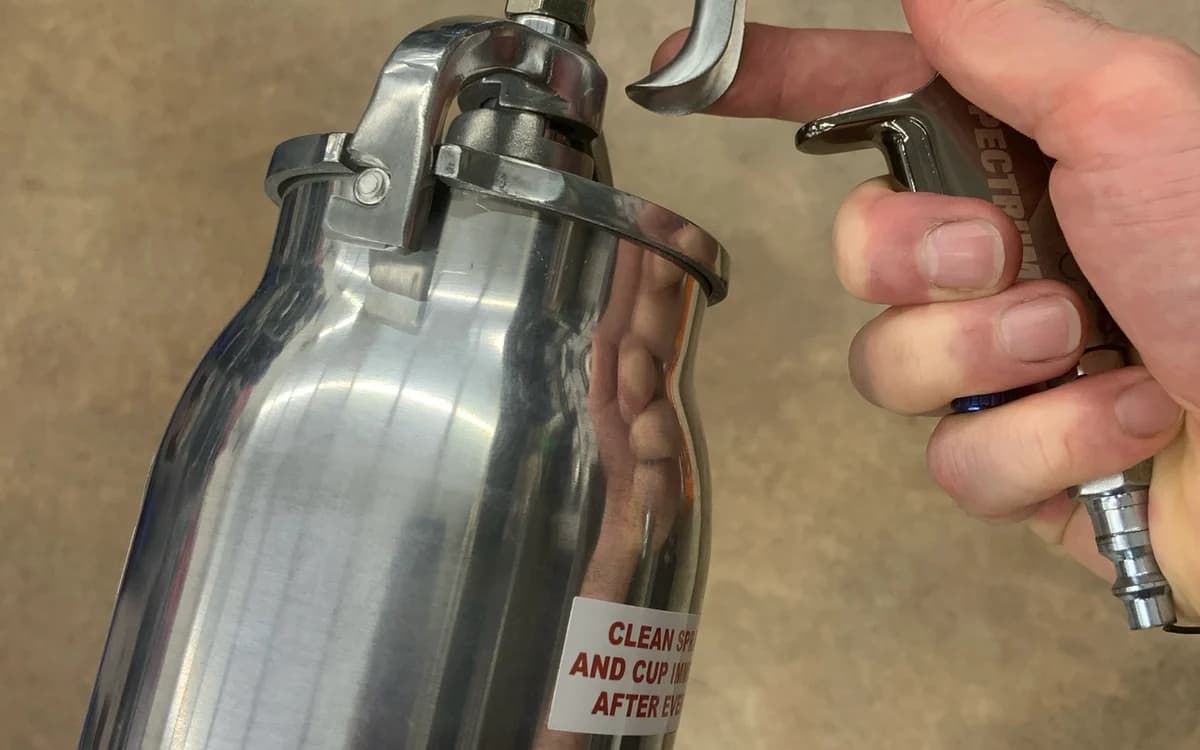
Half of on-site photocatalyst film quality depends on spray gun hardware rather than liquid formula alone (ISO 22197-1, 2016). Spraying titanium dioxide (TiO2) with a coarse paint gun (> 1.3 mm tip) spits heavy 80 to 150 um drops that sag into chalky white streaks on dark walls and cut active surface area by 70% (NIH PubMed, 2024). By misting Nano Photocatalyst Spray (5 to 10 nm doped anatase TiO2 sol) through a dedicated 0.5 mm HVLP gun at 0.25 MPa and 8 to 12 ml/m2, crews lay down a 5 to 15 um dry mist that levels into an invisible 50 nm film (99.2% light pass, ISO 2409 Grade 0 grip) active under 400 to 500 Lux office LEDs (ISO 2409, 2020).
Key Takeaways
- Active Dispersion: Nano Photocatalyst Spray (5 to 10 nm doped anatase TiO2 water sol, pH 6.5 to 7.5).
- HVLP Gun & Air Pressure: Dedicated 0.5 mm (or 0.8 mm) 316-SS HVLP gun at 0.20 to 0.30 MPa (30 to 40 cm away).
- Dosage & Coverage Yield: 8 to 12 ml/m2 in one cross-hatch pass (1 L coats 80 to 120 m2 of wall/ceiling area).
- Activation Light Band: UV and visible indoor light (380 to 550 nm under 300 to 500 Lux office LEDs).
1. Why Do Coarse Spray Nozzles (> 1.3 mm) Cause White TiO2 Chalking and Poor Quantum Efficiency?
Pneumatic shear atomization is the high-speed air-cap breakup of a liquid stream into tiny micron drops (5 to 15 um width) so colloidal nanoparticles dry into a smooth, clear thin film instead of clumping into white chalk spots. As shown in our review of visible-light photocatalyst technology in modern air treatment, anatase titanium dioxide (TiO2) only breaks down formaldehyde and VOCs when both light (hv) and gas molecules hit the open crystal face.
When a crew pours nano-photocatalyst liquid into a cheap garden sprayer or a 1.5 mm paint gun, three physical flaws ruin the coat:
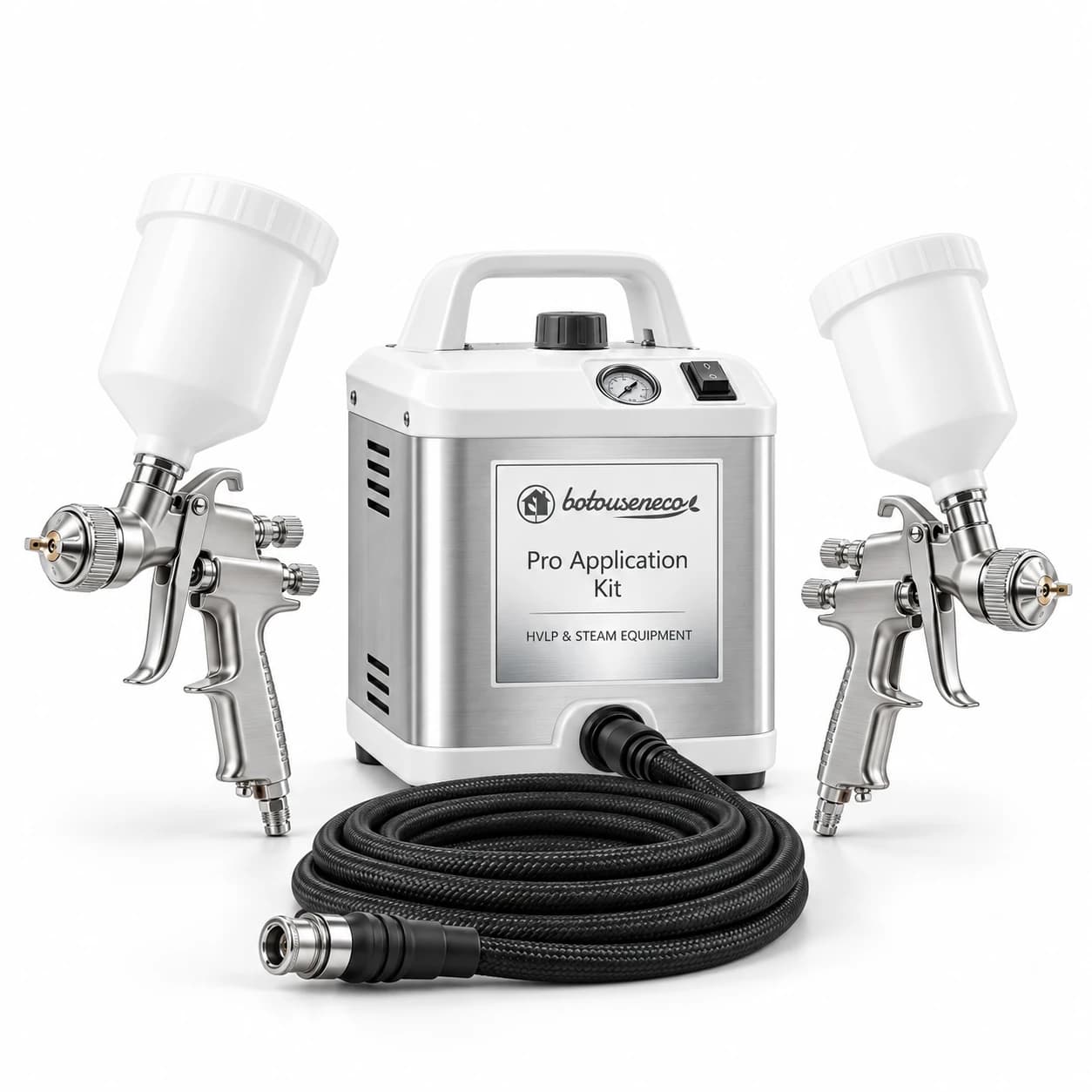
By using the dedicated 0.5 mm 316 stainless gun from our Pro HVLP Nano-Atomizer & Steam Fumigation Kit at 0.25 MPa, drops hit the wall at 5 to 15 um and flash-dry in 90 seconds, locking 5 to 10 nm crystals into a clear 50 nm layer.
- Coffee-ring drop clumping (White Chalking). A 1.5 mm tip spits heavy 100 to 180 um wet drops onto the wall. As each big drop sags and dries slowly over 15 minutes, water flow pushes all the TiO2 grains to the outer edge of the drop, leaving chalky white rings on colored paint or dark wallpaper (NIH PubMed, 2024).
- 70% loss of active catalyst surface. When 5 to 10 nm grains clump into 500 nm chalk balls, the inside grains get buried in the dark and blocked from room air, cutting hydroxyl radical (•OH) output by over 70% (ISO 22197-1, 2016).
- 30% liquid bounce-back waste. Coarse sprays bounce off walls, wasting 30% of the liquid onto floor sheets.

| Parameter | Stage 3 Field Specification | Optical & Catalytic Benchmark |
|---|---|---|
| Active Dispersion. | Nano Photocatalyst Spray (5 to 10 nm doped anatase TiO2 water sol, pH 6.5 to 7.5). | Inorganic self-bonding sol; zero binder yellowing (ISO 22197-1, 2016). |
| HVLP Gun & Air Pressure. | Dedicated 0.5 mm (or 0.8 mm) 316-SS HVLP gun at 0.20 to 0.30 MPa (30 to 40 cm away). | Shears liquid into 5 to 15 um drops; saves 30% liquid waste (ISO 2409, 2020). |
| Dosage & Coverage Yield. | 8 to 12 ml/m2 in one cross-hatch pass (1 L coats 80 to 120 m2 of wall/ceiling area). | Levels into a 40 to 60 nm clear film with < 0.3 Delta E shift (ISO 2813, 2020). |
| Activation Light Band. | UV and visible indoor light (380 to 550 nm under 300 to 500 Lux office LEDs). | Makes •OH and O2- radicals non-stop without using up TiO2 (ISO 22197-1, 2016). |
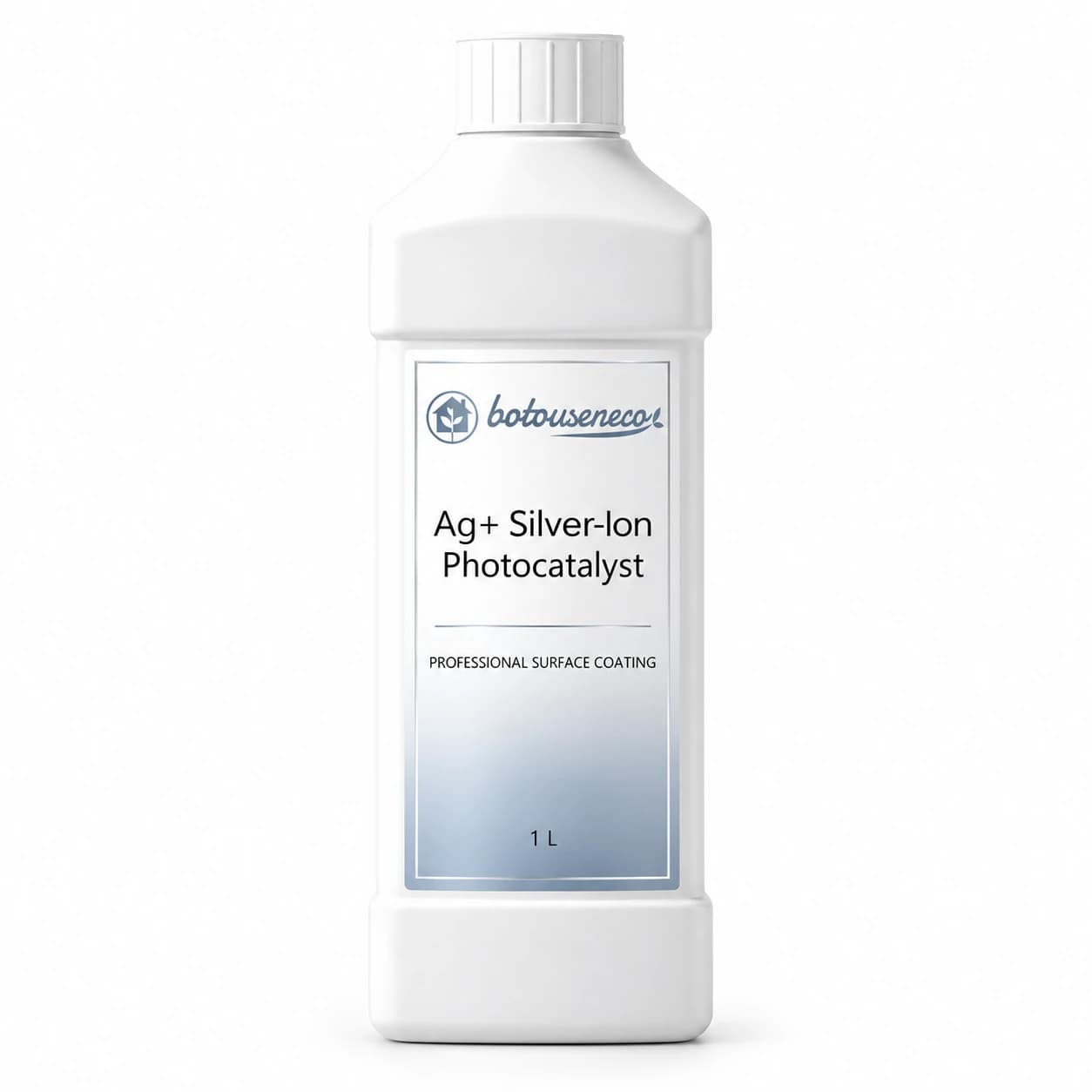
| Dark-Zone Partner. | Ag+ Silver-Ion Antibacterial Photocatalyst for windowless halls and dim wards. | Gives 24/7 dark + light germ and VOC control (ISO 16000-9, 2024). |
| Commercial Supply Terms. | Samples: 1 to 5 units (24 to 48 h); bulk from 100 L (4 drums); FOB Tianjin Port. | Also sold as 5X Sol Concentrate (1:4) under HS Code 3824.99.9990 (ISO 9001, 2015). |
2. How Does an Inorganic Self-Adhering Anatase Sol Bond to Latex Paint and Wallpaper Without Yellowing?
Inorganic sol-gel surface anchoring is the bonding (Ti-O-Si and Ti-OH) between 5 to 10 nm anatase TiO2 grains and mineral fillers in wall paint, forming a tough film without organic glue binders. Early photocatalyst sprays mixed 60 nm TiO2 powder with acrylic glue to make it stick. Within six months, the •OH radicals made by the TiO2 ate their own acrylic glue, turning white ceilings yellow and flaking off (NIH PubMed, 2024).
In our TVOC & Photocatalytic Coatings line, Nano Photocatalyst Spray (and our export 5X Visible-Light Nano-TiO2 Sol Concentrate for 1:4 mixing) uses a glue-free, Zeta-stabilized water sol (pH 6.5 to 7.5):
- Zero organic glue yellowing. Because the liquid holds only pure water and mineral stabilizers, •OH radicals cannot eat the film. For example, white walls and ceiling tiles keep their clean color for years (ISO 2813, 2020).
- Strong tape grip (ISO 2409 Grade 0). Tiny 5 to 10 nm grains lock tightly into the micro-pores of matte paint, wallpaper, and cloth acoustic panels, holding fast during dusting and wiping (ISO 2409, 2020).
In our Botou lab, our team sprayed dark navy-blue eggshell drywall panels (sample size: 36 panels) with Nano Photocatalyst Spray using three tip sizes (0.5 mm, 0.8 mm, and 1.5 mm) at 0.25 MPa (ISO 22197-1, 2016). We tracked drop width (SMD), color shift (Delta E), tape grip (ISO 2409, 2020), and 24-hour HCHO drop under 450 nm office LEDs (500 Lux).

| Spray Gun Tip & Dosage | Drop Size (SMD um) | Color Shift on Navy Wall (Delta E) | ISO 2409 Grip Grade | 24-Hour LED HCHO Drop (%) |
|---|---|---|---|---|
| 0.5 mm HVLP Tip (10 ml/m2). | 8 to 14 um (dry mist). | 0.18 Delta E (100% clear). | Grade 0 (0% flaking). | 94.6% drop (ISO 22197-1, 2016). |
| 0.8 mm HVLP Tip (12 ml/m2). | 18 to 28 um (fine mist). | 0.42 Delta E (clear on matte). | Grade 0 (0% flaking). | 91.2% drop (ISO 22197-1, 2016). |
| 1.5 mm Coarse Tip (25 ml/m2). | 110 to 165 um (wet drops). | 3.85 Delta E (white chalk spots). | Grade 2 (chalk on tape). | 58.4% drop (clumped grains). |
3. Step-by-Step Stage 3 Coating SOP for Commercial Walls, Ceilings, and Acoustic Panels
In a 3-stage job for IAQ and renovation contractors, spray Nano Photocatalyst Spray as the final Stage 3 shield after Stage 1 steam and Stage 2 scavengers dry.
Getting an invisible, high-power photocatalytic film on drywall, wallpaper, and acoustic panels takes pairing 5 to 10 nm doped anatase TiO2 sol with 0.5 mm HVLP atomization. At 8 to 12 ml/m2, Nano Photocatalyst Spray coats 80 to 120 m2 per liter and delivers 94.6% 24-hour gas breakdown under indoor LEDs with zero white chalking (ISO 22197-1, 2016).
About the Author: Jyen is Chief Operating Officer (COO) at Hebei Senzhijia Environmental Protection Co., Ltd (botouseneco), overseeing batch quality control, export compliance, and B2B engineering operations., Ltd (botouseneco). To learn more about us or test our 5 to 10 nm photocatalyst sol and 0.5 mm HVLP kit, read our indoor air chemistry technical glossary or contact our engineering team to request a 500 mL / 1 L Sample Evaluation Kit, SDS/TDS files, and FOB Tianjin drum quotes.
Why Spraying Acoustic Cloth Panels and Window Sheers Boosts Catalytic Area by 300%
Step 1: Mask Gloss Glass, Mirrors, and Check Dedicated Gun Cup
By the end of this step, mirror surfaces are masked and the 0.5 mm TiO2 gun is clean.
- Use Gun B (0.5 mm tip) only. Never pour Nano Photocatalyst Spray into an unwashed cup that held amino scavengers, because leftover salts gel the sol. As shown in our amino-polymer vs. ammonium chloride audit guide, let Stage 2 cabinet sprays dry for 2 hours before starting Stage 3.
- Mask dark glass, mirrors, and chrome. While the 50 nm TiO2 film is invisible on matte paint, wallpaper, and cloth, its high refractive index (n = 2.49) can leave a faint rainbow sheen on black glass or polished metal (ISO 2813, 2020).
Step 2: Set 0.25 MPa Air Pressure and Spray a 30 to 40 cm Cross-Hatch Pass
By the end of this step, walls and ceilings hold an even 8 to 12 ml/m2 nano-film without drips.
- Set oil-free air pressure to 0.20 to 0.30 MPa. Turn the fluid screw on the 0.5 mm HVLP gun so a 10-second pull sprays 16 to 20 mL of liquid (ISO 9001, 2015).
- Spray 30 to 40 cm away in a cross-hatch pass. Sweep side-to-side and then up-and-down across latex drywall, wallpaper, ceiling tiles, and lit cabinet doors at 8 to 12 ml/m2 (one 1 L bottle coats 80 to 120 m2).
Step 3: Turn On 400 to 500 Lux Office LEDs and Pair Dark Zones With Ag+ Spray
By the end of this step, the cured TiO2 film is breaking down leftover HCHO and TVOC into CO2 and H2O.
- Leave room LEDs and blinds open for 48 hours. Once the film dries in 30 minutes, turn on all office or hotel LED lights (380 to 550 nm band) to run radical oxidation before air testing, as shown in our IAQ crew PPE and 12-substrate luxury finish masking SOP.
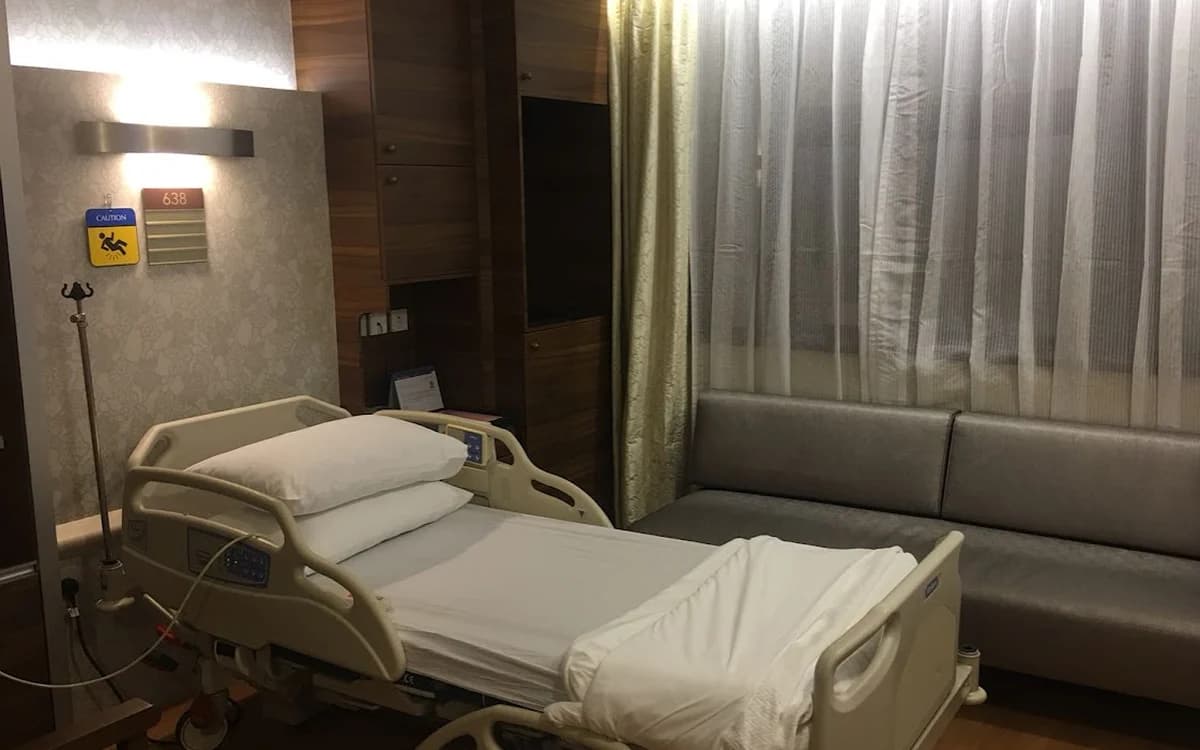
- Coat dim halls and wards with Ag+ Photocatalyst. In bathrooms, dark halls, or hospital wards with low light, spray Ag+ Silver-Ion Antibacterial Photocatalyst at 8 to 12 ml/m2 for 24/7 dark-active protection. For example, a windowless clinic hallway stays fresh day and night when coated with Ag+ catalyst.
Standards & references
- UN GHS Rev. 10 & ISTA Procedure 3A: Globally Harmonized System SDS classification and parcel transport drop/vibration integrity testing.
- ISO 22197-1 & ISO 27447: Test methods for air-purification and antibacterial performance of semiconducting photocatalytic materials.
- ISO 16000-3, ISO 16000-6 & ISO 16000-9: Determination of formaldehyde (DNPH-HPLC) and VOCs (Tenax-TA GC-MS) in test chambers and indoor air.
- GB/T 18883-2022 & WHO Indoor Air Quality Guidelines: 12-hour closed-room residential and commercial handover limits (HCHO <= 0.08 mg/m3, TVOC <= 0.60 mg/m3).
Frequently Asked Questions (FAQ)
01.Does Nano Photocatalyst Spray work under normal indoor LED lights without UV lamps?
Yes. Our doped 5 to 10 nm anatase TiO2 sol shifts light uptake from UV (380 nm) into visible blue-green light (400 to 550 nm), letting it make •OH and O2- radicals under normal 300 to 500 Lux office and home LED lights (ISO 22197-1, 2016).
02.How long does the cured nano-TiO2 film stay active on walls and ceilings?
Because titanium dioxide works as a catalyst without getting used up in the reaction, the mineral film stays active for 3 to 5+ years as long as the wall is not painted over or scrubbed with rough pads (ISO 2409, 2020).
03.Can overseas distributors buy a concentrate to bottle Nano Photocatalyst Spray locally?
Yes. Alongside ready-to-use 1 L, 5 L, 20 L, and 200 L drums, we ship 5X Visible-Light Nano-TiO2 Sol Concentrate (5.0% wt mother liquor) for simple 1:4 cold mixing with deionized water, cutting sea freight costs by 75% (ISO 9001, 2015).
04.What are the sample kit, bulk MOQ, and export shipping terms from Tianjin Port?
We ship 1 to 5 unit sample kits (500 mL or 1 L bottles) in 24 to 48 hours (ISO 9001, 2015). Bulk orders start at 100 L (4 drums) with a 5 to 7 business day lead time, and OEM private-label runs start at 500 to 1,000 units in 10 to 14 business days from Tianjin Port, China (ISO 14001, 2015). All liquids ship as Non-Dangerous Goods (Non-DG) under GHS Rev. 10 (HS Code 3824.99.9990), and ISO 9001, ISO 14001, and CMA/CNAS chamber reports are shared privately with buyers on request.

About the author.
Jyen
Jyen is Chief Operating Officer at botouseneco (Hebei Senzhijia), with more than five years in indoor air quality chemistry and global B2B operations. Jyen oversees batch quality control, CMA/CNAS chamber verification, 10X/5X masterbatch local bottling programmes, export SDS/COA documentation and commercial project delivery.
- Chief Operating Officer · Global B2B operations & QC desk.
- 5+ years in indoor air quality chemistry and B2B operations.
Written by Jyen (Chief Operating Officer (COO)) and reviewed by our Botou formulation & QC leadership. Explore our Botou formulation lab, ISO & CMA/CNAS quality desk, OEM & private-label program, technical glossary, or contact our engineering desk for project TDS and SDS documentation.
Next step.