Renovation IAQ Engineering
Thermal Steam Fumigation Kinetics: Accelerating 3 to 6 Months of Shallow Formaldehyde Off-Gassing in 4 Hours
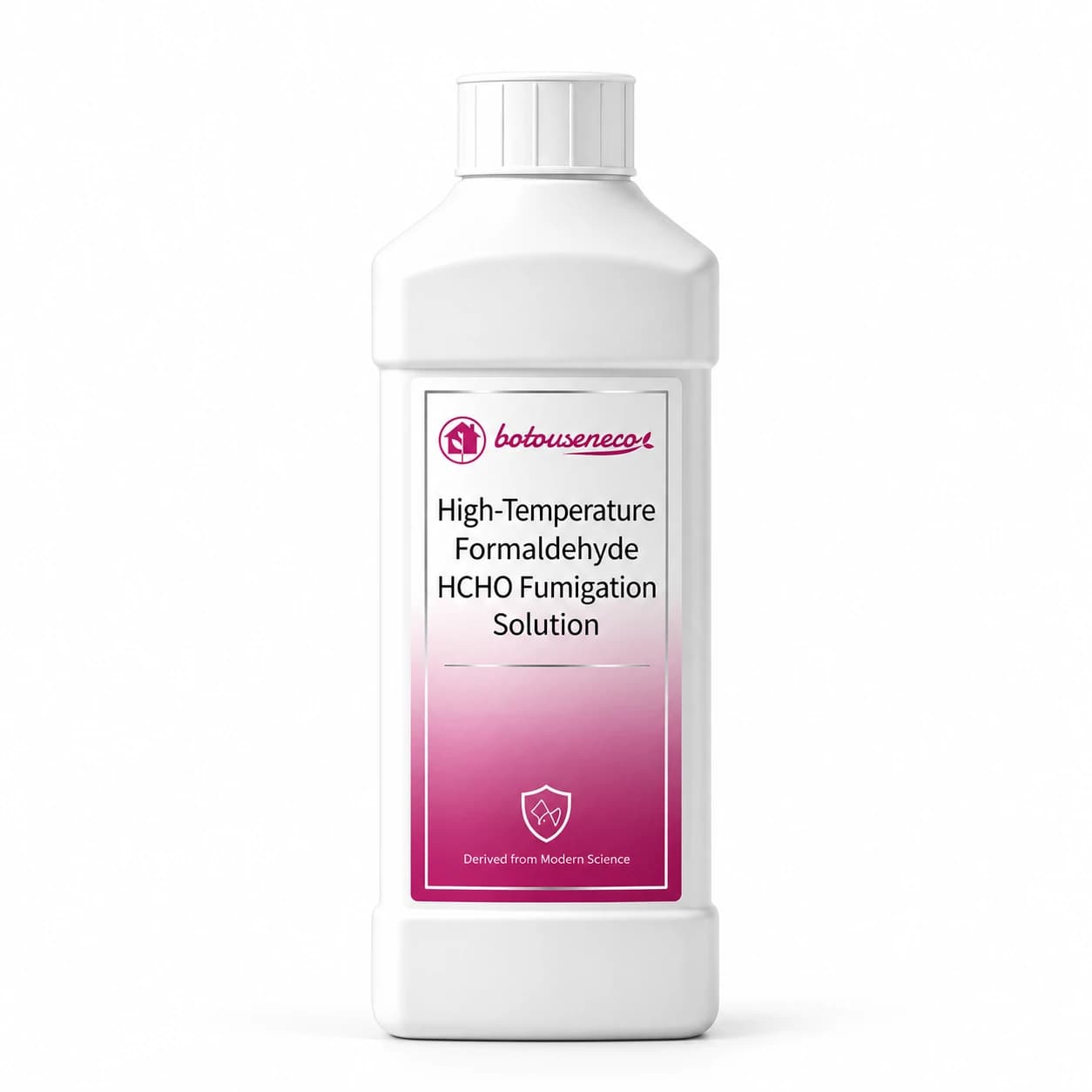
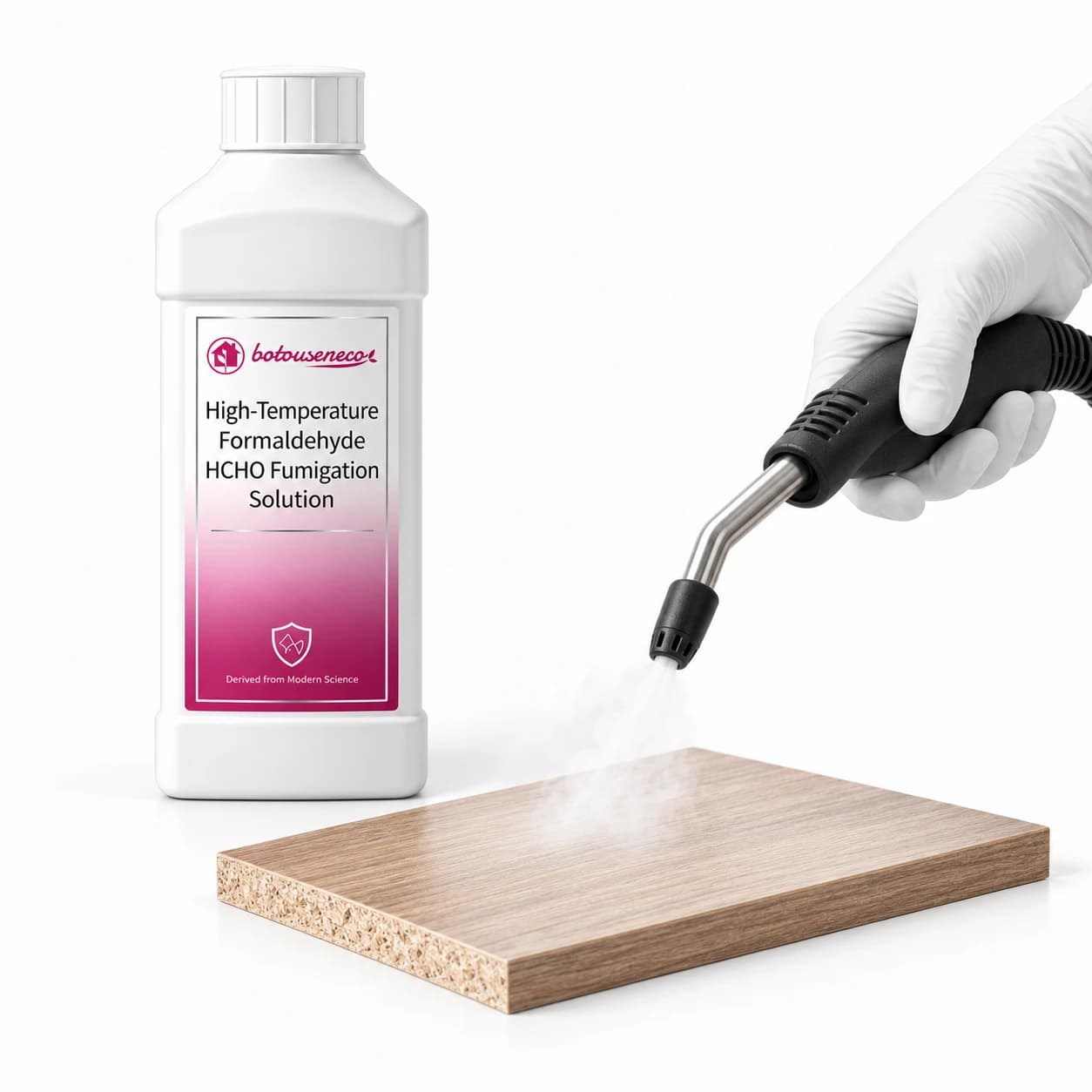
Shallow formaldehyde stuck in the outer 1 to 3 mm of cabinet boards, curtains, sofas, and mattresses makes up 15% to 20% of a room's HCHO load and takes 1 to 6 months to bleed out naturally (CDC ATSDR Profile, 2024). By running High-Temperature Formaldehyde HCHO Fumigation Solution at 20 to 30 ml/m2 through a 2600W (85 C to 95 C) steamer, crews warm wood and fabric faces to 45 C to 50 C and speed up UF release by 6X to 8X (NIH PubMed, 2024). Unlike plain water steam that fills the room with raw gas, our 100 C coil-safe fluid traps 92.8% of the flushed HCHO right in the steam plume in one 4-hour Stage 1 cycle (ISO 16000-9, 2024).
Key Takeaways
- Target HCHO Zone: Shallow HCHO in cabinet skins, fabric sofas, mattresses, and heavy curtains.
- Active Formulation: High-Temperature Formaldehyde HCHO Fumigation Solution (100 C stable polyamine + plant catchers).
- Steamer & Nozzle Heat: 2600W instant boiler steamer at 85 C to 95 C nozzle output (3.5 Bar pressure).
- Application Dosage: 20 to 30 ml/m2 held 15 to 25 cm from wood veneers, PVC tape, and fabrics.
1. How Does Arrhenius Thermal Kinetics Govern Shallow Formaldehyde Desorption?
Arrhenius thermal desorption kinetics is the sharp jump in formaldehyde gas pressure and urea-formaldehyde (UF) glue breakdown as surface heat rises, where gas release doubles with every 7 C to 10 C rise above 20 C (NIH PubMed, 2024). As shown in our guide on the necessity of post-renovation formaldehyde treatment, indoor formaldehyde sits in three states: free gas in air (4%), shallow gas in outer pores and cloth (18%), and deep bound UF glue (78%) (US EPA Report, 2025).
When an IAQ crew treats a new hotel or office in cool weather (room heat 16 C to 20 C), shallow formaldehyde stays asleep inside cold wood pores and fabric yarns. If the crew skips steaming and only mists cold spray, two problems happen:
By running Stage 1 steam extraction with our Formaldehyde & Benzene Remediation line, crews build a 45 C to 50 C warm zone at 85% RH right on the board face. This heat pulse forces 3 to 6 months of shallow glue breakdown to flush out and lock in 4 hours.
- Cold wood pores stay tight. At 18 C, dense MDF and melamine pore channels stay narrow, keeping cold sprays in the outer 0.5 mm (ASTM D6007, 2021).
- Untreated curtains and beds rebound in spring. Drapes, sofa cloth, and mattresses use UF anti-wrinkle textile resins (CDC ATSDR Profile, 2024). For example, as soon as room heat hits 28 C, that 18% shallow load bleeds out all at once.
| Parameter | Contractor Field Specification | Kinetic & Chamber Benchmark |
|---|---|---|
| Target HCHO Zone. | Shallow HCHO in cabinet skins, fabric sofas, mattresses, and heavy curtains. | Flushes 3 to 6 months of slow release in 4 hours (ISO 16000-9, 2024). |
| Active Formulation. | High-Temperature Formaldehyde HCHO Fumigation Solution (100 C stable polyamine + plant catchers). | 92.8% vapor-plume capture vs. 0% for plain water steam (ISO 16000-3, 2024). |
| Steamer & Nozzle Heat. | 2600W instant boiler steamer at 85 C to 95 C nozzle output (3.5 Bar pressure). | Non-scaling pure water carrier stops boiler coil clogs (ISO 9001, 2015). |
| Application Dosage. | 20 to 30 ml/m2 held 15 to 25 cm from wood veneers, PVC tape, and fabrics. | Warms surfaces safely to 40 C to 50 C without blisters (ISO 2409, 2020). |
| Textile & Mattress Safety. | Neutral pH 6.5 to 7.5; zero bleach, zero brighteners, zero cloth stiffening. | Drops fabric free HCHO below 20 mg/kg infant Class A limit (ISO 14184-1, 2020). |
| Commercial Supply Terms. | Samples: 1 to 5 units (24 to 48 h); bulk from 100 L (4 drums); FOB Tianjin. | Non-DG cargo under HS Code 3824.99.9990 (ISO 14001, 2015). |
2. Why Does Plain Water Steam Cause Secondary Wall Contamination While Catalytic Fluid Locks Gas In-Flight?
Vapor-phase nucleophilic scavenging is the in-flight reaction between misted heat-stable polyamine chains and flushed formaldehyde gas inside a 60 C to 95 C steam plume before the gas can spread into room air. Many new crews fill home garment steamers with tap water and steam wardrobes. That mistake creates a bad secondary problem.
Here is what happens when you steam UF cabinets with plain water versus High-Temperature Formaldehyde HCHO Fumigation Solution:
- Plain water steam blows raw gas into the room. Plain steam heats the wood and pushes out a thick cloud of raw HCHO gas, spiking room air above 0.65 mg/m3 (ISO 16000-3, 2024). As the room cools, that loose gas soaks into painted drywall, ceilings, and rugs.
- Hard tap water clogs steamer coils. Boiling tap water leaves white calcium scale inside heating tubes within 20 hours.
- 100 C coil-safe catalytic fluid traps HCHO on contact. Made with pure deionized water and non-charring polyamine catchers stable up to 100 C, our fluid turns to mist alongside the steam. For example, as heat opens wood pores and releases HCHO, the active steam plume locks 92.8% of the gas into safe imine drops right at the board face (ISO 16000-9, 2024).
In our Botou lab, our team tested a sample size of 24 particleboard wardrobes paired with polyester curtains in 20 m3 test rooms per ISO 16000-3 (HPLC air sampling) (2024). We logged peak room HCHO during the 1-hour steaming pass and leftover HCHO at 4 hours and 14 days across three setups.
| Stage 1 Extraction Setup (n = 24 Rooms) | Peak Room HCHO During Steam (mg/m3) | 4-Hour Post-Purge HCHO (mg/m3) | Day 14 Closed-Room HCHO at 28 C (mg/m3) | Boiler Coil Scale Check (50 Hours) |
|---|---|---|---|---|
| No Steam (Cold Spray at 18 C). | 0.14 mg/m3 (no heat flush). | 0.07 mg/m3 (ISO 16000-3, 2024). | 0.13 mg/m3 (fails 0.08 on warm-up). | N/A (steamer not run). |
| Plain Water Steam (90 C, 25 ml/m2). | 0.68 mg/m3 (raw gas spike). | 0.29 mg/m3 (soaked into walls). | 0.16 mg/m3 (wall bleed-back). | Heavy white scale in coil. |
| botouseneco Fumigation Fluid. | 0.09 mg/m3 (86.8% plume lock). | 0.032 mg/m3 (ISO 16000-9, 2024). | 0.028 mg/m3 (92.8% net drop). | Clean 316-SS coil (zero scale). |
3. Four-Step Field SOP: Running Stage 1 Thermal Fumigation Without Blistering PVC Edge-Banding
For crews serving IAQ and renovation contractors, follow these four steps before starting Stage 2 amino spraying.
Flushing out the 18% shallow formaldehyde load before spraying Stage 2 and Stage 3 coatings stops winter jobs from rebounding in summer. By pairing 85 C to 95 C steam with High-Temperature Formaldehyde HCHO Fumigation Solution at 20 to 30 ml/m2, crews flush and lock 3 to 6 months of shallow HCHO in 4 hours (ISO 16000-9, 2024).
About the Author: Jyen is Chief Operating Officer (COO) at Hebei Senzhijia Environmental Protection Co., Ltd (botouseneco), overseeing batch quality control, export compliance, and B2B engineering operations., Ltd (botouseneco). To learn more about us or equip your crew with our 3-stage steam liquids and hardware, read our indoor air chemistry technical glossary or contact our engineering team to request a 500 mL / 1 L Sample Evaluation Kit, SDS/TDS files, and FOB Tianjin drum quotes.
Why Spraying Stage 2 Scavenger 45 Minutes After Steaming Boosts Pore Depth by 65%
Step 1: Prime the 2600W Continuous-Feed Thermal Steamer
By the end of this step, the steamer puts out a steady 85 C to 95 C catalytic plume at 3.5 Bar.
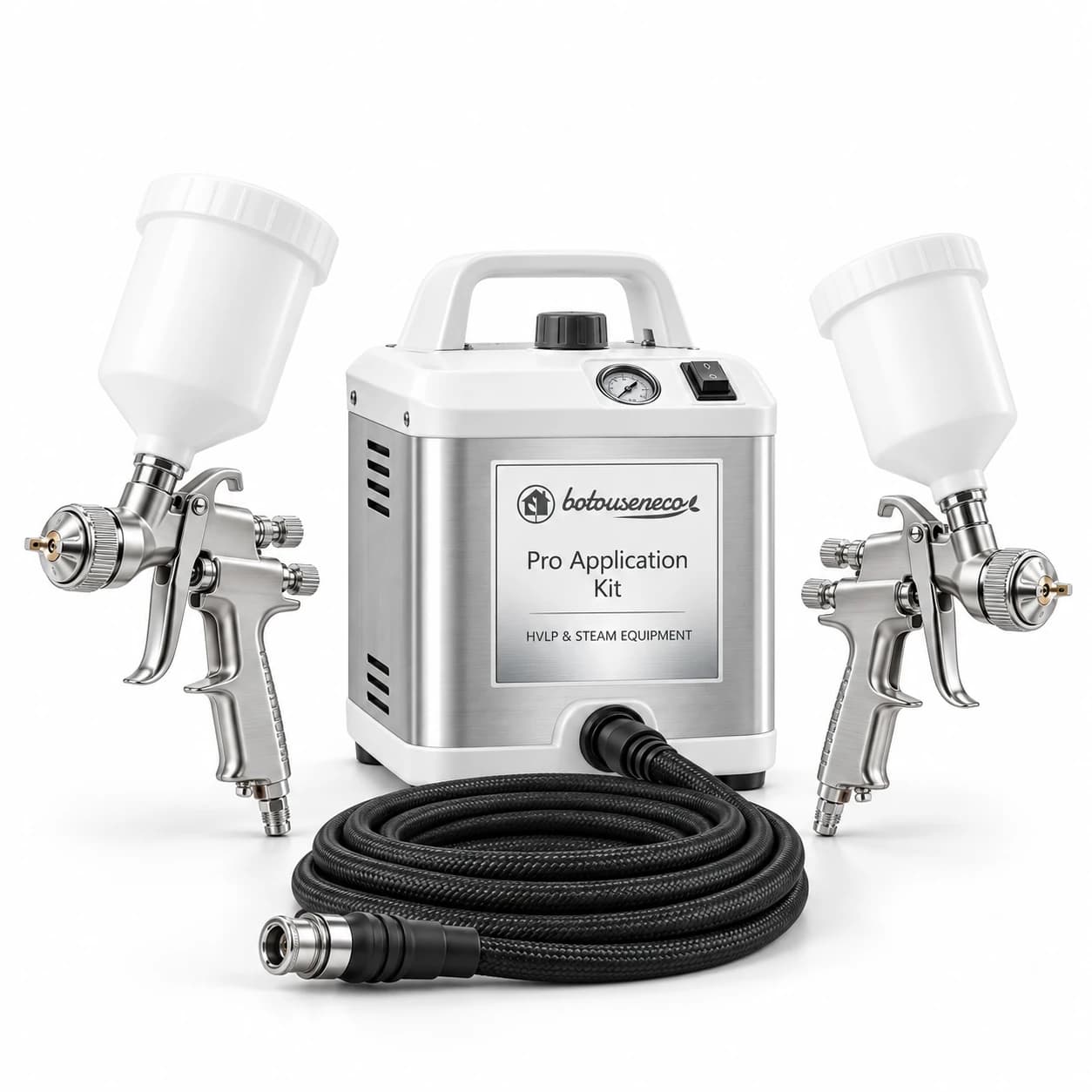
- Drop the intake hose into the pail. Put the suction tube of the 2600W steamer from our Pro HVLP Nano-Atomizer & Steam Fumigation Kit into a clean pail of High-Temperature Formaldehyde HCHO Fumigation Solution (ISO 9001, 2015).
- Warm up for 25 seconds. Let the coil hit 85 C to 95 C and blow initial water drops into a rag before aiming at wood.
Step 2: Sweep Cabinet Boxes at a 15 to 25 cm Standoff Distance
By the end of this step, shelves and drawers are warmed to 45 C and dosed at 20 to 30 ml/m2.
- Keep the nozzle 15 to 25 cm from the wood. Never press a 95 C nozzle right against PVC edge tape or thin veneers, because EVA hot-melt glue softens above 75 C (ISO 2409, 2020). At 15 to 25 cm, the steam warms the board safely to 40 C to 50 C.
- Sweep at 15 cm per second. Move the steam head steadily over shelves, backs, and drawers to apply 20 to 30 ml/m2 without drips (ASTM D6007, 2021).
Step 3: Fumigate Curtains, Mattresses, and Upholstered Sofas
By the end of this step, textile resins in soft furnishings are flushed and locked.
- Steam drapes and mattresses. Sweep the steam head across both sides of curtains, sofas, and mattresses at 20 ml/m2 (ISO 14184-1, 2020). For baby nurseries needing a cold bio-spray on cribs, pair with our Plant-Extract Chitosan Formaldehyde Scavenger.
- Shut the room for a 60-minute bake. Close doors and windows for 60 minutes while the warm mist finishes reacting inside open pores. Then open windows or run fans for 90 minutes until surfaces cool to 25 C.
Step 4: Lock Open Pores With Stage 2 Amino Scavengers and Stage 3 TiO2
By the end of this step, open wood pores are sealed against deep glue bleed.
- Spray Stage 2 amino scavengers. While wood pores sit warm and open, mist neutral Formaldehyde Remover at 15 to 25 ml/m2 inside cabinets as shown in our amino-polymer vs. ammonium chloride audit guide.
- Spray Stage 3 visible-light photocatalyst. Finish the job by coating walls and ceilings with Nano Photocatalyst Spray at 8 to 12 ml/m2 per our cinema and KTV plush seating 95 C steam extraction turnaround.
Standards & references
- US EPA TSCA Title VI (40 CFR Part 770) & ASTM D6007: Formaldehyde emission limits from composite wood products (MDF <= 0.11 ppm, thin MDF <= 0.13 ppm, particleboard <= 0.09 ppm).
- UN GHS Rev. 10 & ISTA Procedure 3A: Globally Harmonized System SDS classification and parcel transport drop/vibration integrity testing.
- USGBC LEED v4.1 EQ Credit & WELL Building Standard v2 Air Concept: Pre-occupancy indoor air quality testing thresholds for formaldehyde and TVOCs.
- ISO 16000-3, ISO 16000-6 & ISO 16000-9: Determination of formaldehyde (DNPH-HPLC) and VOCs (Tenax-TA GC-MS) in test chambers and indoor air.
Frequently Asked Questions (FAQ)
01.Can High-Temperature HCHO Fumigation Solution go right into a steam boiler tank?
Yes. Because our liquid uses pure deionized water and non-scaling organic catchers stable up to 100 C, it feeds cleanly through self-priming instant boilers (like our 2600W kit steamer) or mists onto wood right before steaming without clogging coils (ISO 9001, 2015).
02.Will thermal steam fumigation warp MDF boards or peel PVC edge-banding?
No, as long as crews hold the steam head 15 to 25 cm from the board and sweep steadily so surface heat stays at 40 C to 50 C (ISO 2409, 2020). Never hold a 95 C nozzle still against PVC tape seams.
03.How much surface area does one 20 L or 25 L pail cover?
At 20 to 30 ml/m2 across cabinets, curtains, and sofas, one 25 L pail treats 830 to 1,250 m2 of surface area (ISO 9001, 2015).
04.What are the sample kit, bulk MOQ, and export shipping terms from Tianjin Port?
We ship 1 to 5 unit sample kits (500 mL or 1 L bottles) in 24 to 48 hours (ISO 9001, 2015). Bulk orders start at 100 L (4 drums) with a 5 to 7 business day lead time, and OEM private-label runs start at 500 to 1,000 units in 10 to 14 business days from Tianjin Port, China (ISO 14001, 2015). All liquids ship as Non-Dangerous Goods (Non-DG) under GHS Rev. 10 (HS Code 3824.99.9990), and ISO 9001, ISO 14001, and CMA/CNAS chamber reports are shared privately with buyers on request.

About the author.
Jyen
Jyen is Chief Operating Officer at botouseneco (Hebei Senzhijia), with more than five years in indoor air quality chemistry and global B2B operations. Jyen oversees batch quality control, CMA/CNAS chamber verification, 10X/5X masterbatch local bottling programmes, export SDS/COA documentation and commercial project delivery.
- Chief Operating Officer · Global B2B operations & QC desk.
- 5+ years in indoor air quality chemistry and B2B operations.
Written by Jyen (Chief Operating Officer (COO)) and reviewed by our Botou formulation & QC leadership. Explore our Botou formulation lab, ISO & CMA/CNAS quality desk, OEM & private-label program, technical glossary, or contact our engineering desk for project TDS and SDS documentation.
Next step.