Industrial Wood & Furniture HCHO Control
Preventing Monsoon Warehouse UF-Resin Hydrolysis: 80% RH Chamber Data on Cross-Linking Edge Primers vs. Unsealed Millwork
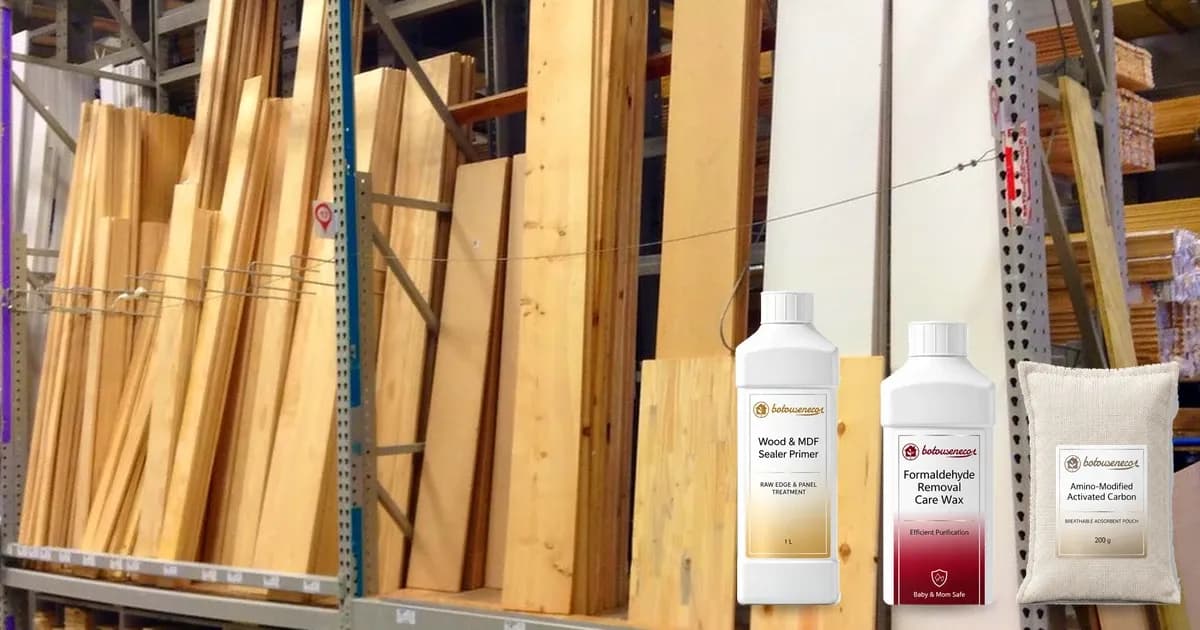
High-humidity MDF formaldehyde hydrolysis occurs when tropical warehouse storage or ocean container transit exposes unsealed medium-density fiberboard (MDF) and particleboard to 75% to 85% relative humidity (RH) at 30 to 38 C. Moisture wicks into raw saw cuts, cam-lock holes, and 3 mm back panels, cleaving cured urea-formaldehyde (UF) methylene-ether bridges (-CH2-O-CH2-) and spiking formaldehyde (HCHO) emissions by 3.2x to 4.5x above dry 45% RH mill readings. Applying Penetrating Wood & MDF Sealer Primer (25-40 ml/m2) plus in-carton Amino-Acid Modified Activated Carbon Packs blocks moisture ingress and keeps export cabinets below the 0.062 mg/m3 EU REACH 2026 limit.
Key Takeaways
- 3.2x-4.5x Monsoon Hydrolysis Spike: At 32 C and 80% RH, raw MDF and particleboard cuts wick moisture from 8% to 15.5% EMC in 7 days, causing unsealed E1 cabinets (0.058 mg/m3 dry) to jump to 0.236 mg/m3.
- 78% WVTR Reduction & pH 7.0-8.0 Acid Neutralization: Penetrating Wood & MDF Sealer Primer wicks 2-4 mm deep into saw cuts, neutralizing residual acid curing catalysts while sealing capillaries with a 12% cross-linking acrylic-amine film.
- EU REACH 0.062 mg/m3 Pass at 80% RH: Treated cabinets hold at 0.046 mg/m3 (sealer alone) and 0.031 mg/m3 (3-layer defense with wax and in-carton amino carbon) after a 14-day 80% RH monsoon soak.
- $0.65-$0.95 Protection per Wardrobe Carton: Treating 4.0 m2 of raw cuts per flat-pack wardrobe (120 mL sealer + 1 x 100 g amino carbon pouch) requires 38.4 L (two 20 L pails) per 320-unit 40HQ container.
Why 80% Monsoon Relative Humidity Triggers Exponential UF-Resin Hydrolysis
Hygrothermal UF-resin depolymerization is the moisture- and heat-driven reverse hydrolysis of weakly cross-linked hydroxymethyl (-NH-CH2OH) and dimethylene-ether (-CH2-O-CH2-) linkages inside cured urea-formaldehyde wood adhesives when ambient relative humidity exceeds 70% RH above 28 C.
Furniture exporters in Vietnam, Malaysia, Indonesia, and southern China frequently pass dry factory QC checks at 23 C and 45% RH, only to have entire 40-foot containers rejected by European or North American retail buyers after a 30-day monsoon sea voyage. Review the complete wood-panel chemistry framework in our pillar guide on industrial formaldehyde scavengers for MDF, particleboard, and furniture lines.
The Two-Step Moisture Attack Inside Unsealed MDF and Particleboard Cores
As documented in composite wood emission studies from the US EPA Composite Wood Products TSCA Title VI Program (2025) and toxicological exposure profiles in CDC ATSDR Formaldehyde Toxicological Profiles (2024), cured UF adhesive sits in a delicate chemical equilibrium with wood moisture content (EMC):
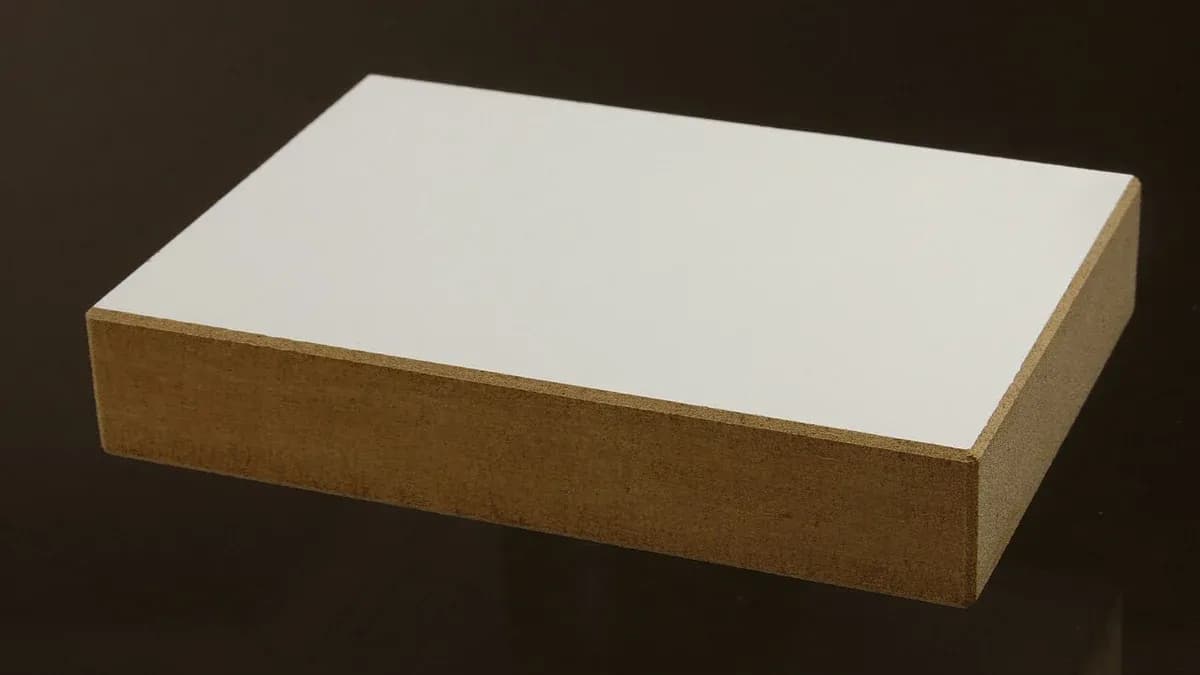
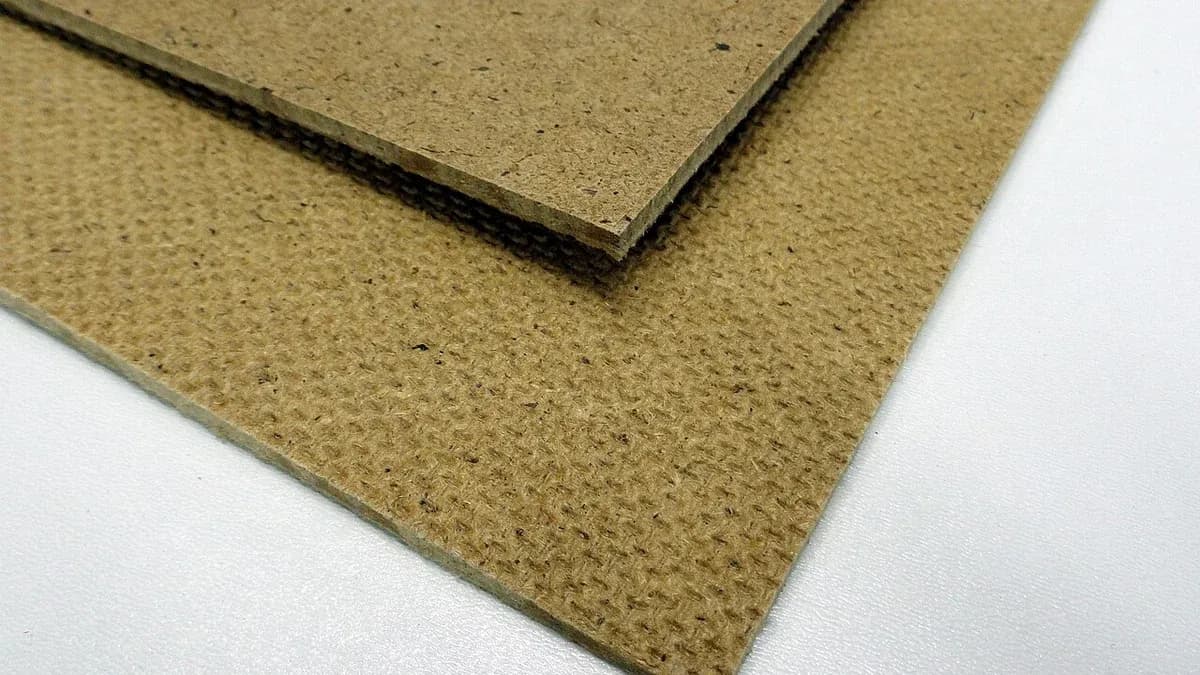
- Capillary Wicking Through Raw CNC Cuts (8% to 16% EMC Jump): Melamine decorative paper blocks water vapor across flat board faces. Yet once CNC routers cut 35 mm hinge cups, 5 mm shelf pinholes, grooving channels, and raw rear edges, low-density core wood fibers (550 to 650 kg/m3) act like a dry sponge. In an 80% RH monsoon warehouse, edge equilibrium moisture content jumps from 8% to 15.5% within 7 days.
- Acid-Catalyzed Methylene-Ether Cleavage: Residual curing catalysts (ammonium chloride or latent organic acids left from hot pressing) dissolve in that absorbed pore water. Every 10% rise in relative humidity between 40% and 80% RH increases airborne formaldehyde flux by 1.8x to 2.4x, while every 5 C temperature rise doubles the reaction rate (Berge equation kinetics). See seasonal residential impacts in spring and summer indoor air quality considerations.
| Millwork Conditioning State | Chamber Test at 23 C / 45% RH (Dry Baseline) | Monsoon Stress at 32 C / 80% RH (14-Day Soak) | Post-Monsoon Recovery at 23 C / 50% RH | Edge Thickness Swelling (24h RH Stress) | EU REACH 0.062 mg/m3 Pass Status |
|---|---|---|---|---|---|
| Unsealed E1 Melamine Particleboard Cabinet | 0.058 mg/m3 (Barely passes dry check) | 0.236 mg/m3 (4.1x hydrolysis spike) | 0.142 mg/m3 (Permanent resin damage) | +4.8% edge fiber swell | FAIL (Exceeds 0.062 mg/m3 by 280%) |
| PVC Edge-Banded Only (Raw Cam Holes & Back) | 0.049 mg/m3 | 0.168 mg/m3 (3.4x spike via pinholes/back) | 0.105 mg/m3 | +3.1% at hinge/cam bores | FAIL (Fails buyer destination audit) |
| botouseneco Penetrating MDF Sealer (30 ml/m2) | 0.019 mg/m3 | 0.046 mg/m3 (Hydrophobic acrylic-amine lock) | 0.022 mg/m3 | Under +0.9% (2-4 mm pore seal) | PASS (Holds under 0.062 mg/m3 at 80% RH) |
| 3-Layer Defense (Sealer + Wax + 100g Amino Carbon) | 0.014 mg/m3 | 0.031 mg/m3 (50% below EU REACH cap) | 0.016 mg/m3 | Under +0.6% | PASS (Export container & tropical warehouse grade) |
80% RH Chamber Comparison: Unsealed MDF vs. Acrylic-Amino Sealer Primer
Dual-action hydrophobic-nucleophilic edge sealing is the simultaneous physical blocking of wood capillary pores (2 to 4 mm depth) by cross-linking micro-acrylic emulsions (12% solids) and irreversible chemical capture of free HCHO by grafted primary amine groups (-NH2).
Within our industrial formaldehyde and benzene scavenger product line, engineers compare plain water-based amino sprays against film-forming sealer primers under tropical chamber stress tested per ISO 16000-9 Emission Test Chamber Standards (2024).
Why Plain Aqueous Sprays Need a Hydrophobic Sealer Partner in Tropical Climates
- Standard Aqueous Amino Sprays (Great for Dry Assembly, Vulnerable to 80% RH Soak): Spraying a non-film-forming amino scavenger locks existing free formaldehyde (HCHO) inside the wood. However, if raw MDF edges sit unsealed in an 85% RH coastal warehouse for six weeks, outside water vapor still diffuses into the open wood fibers and hydrolyzes fresh UF resin deeper inside the core.
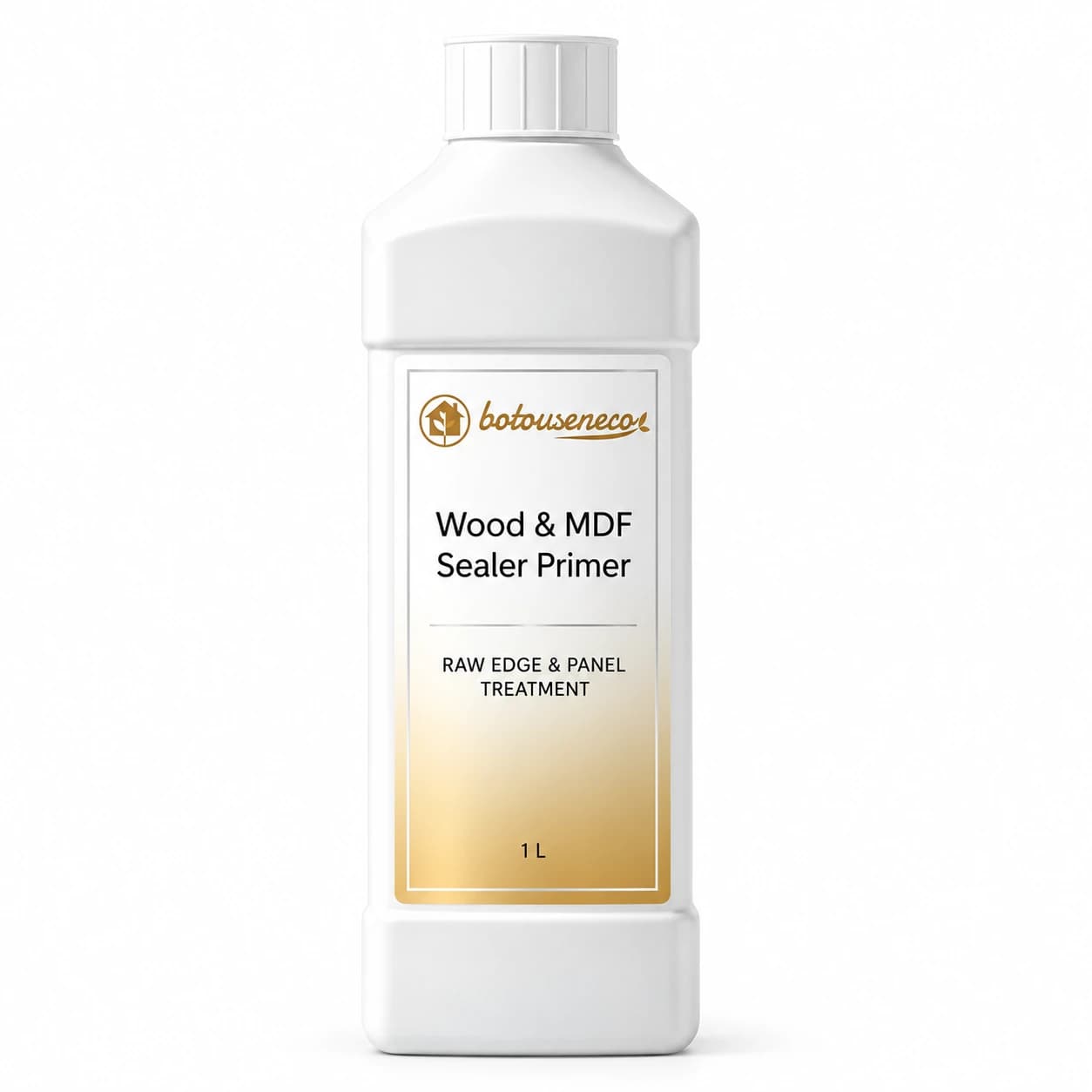
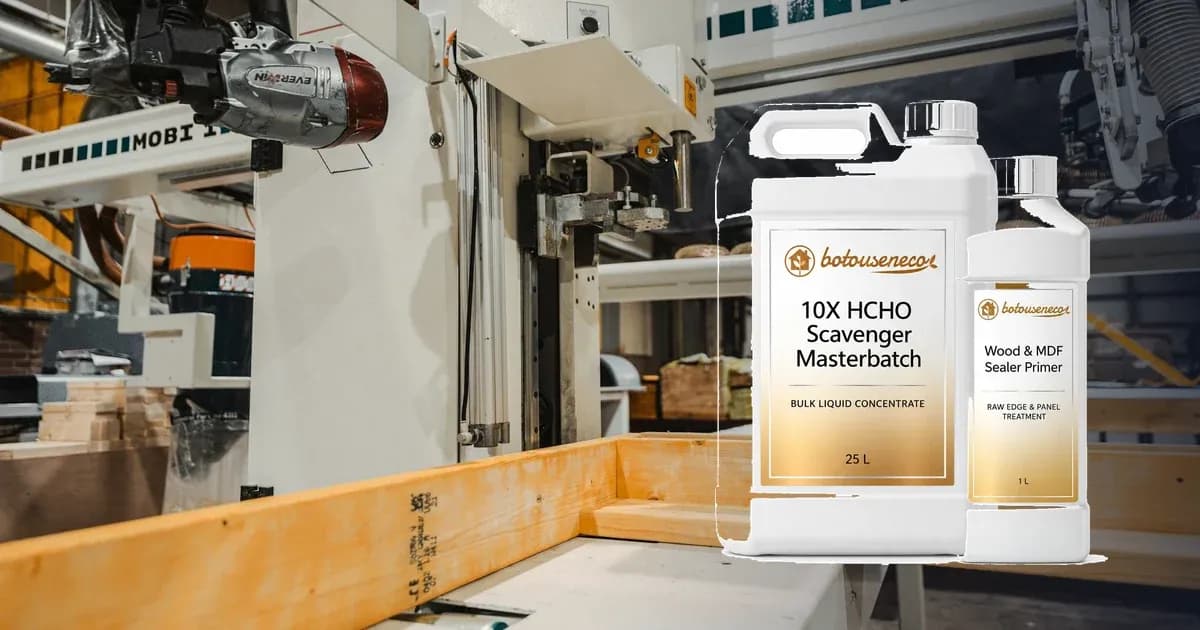
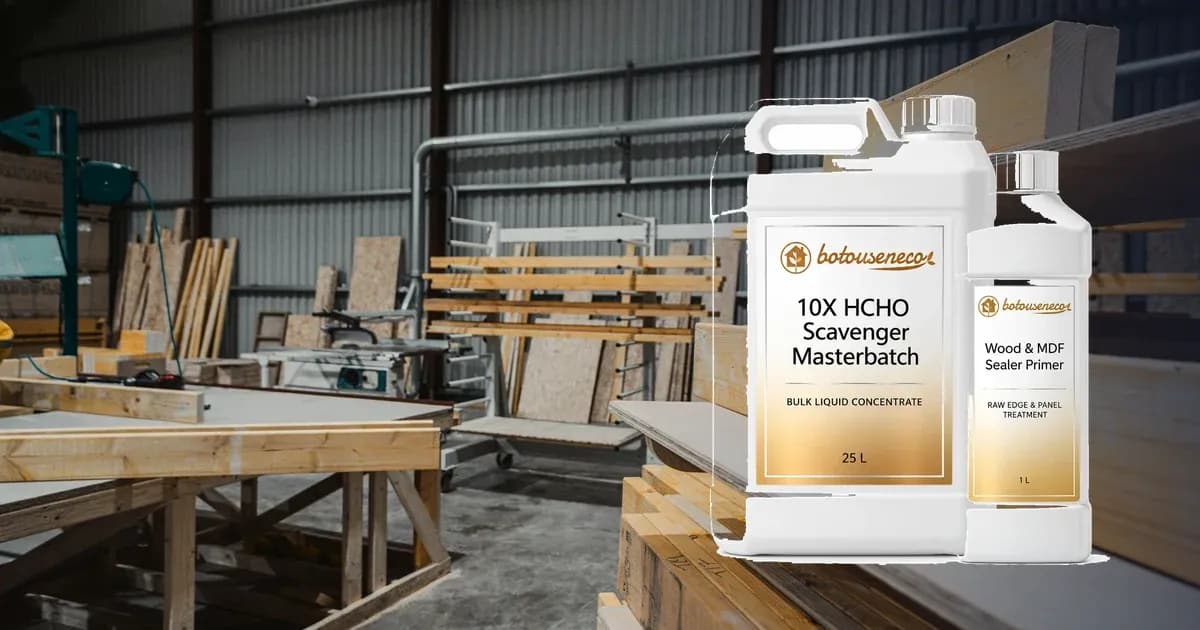
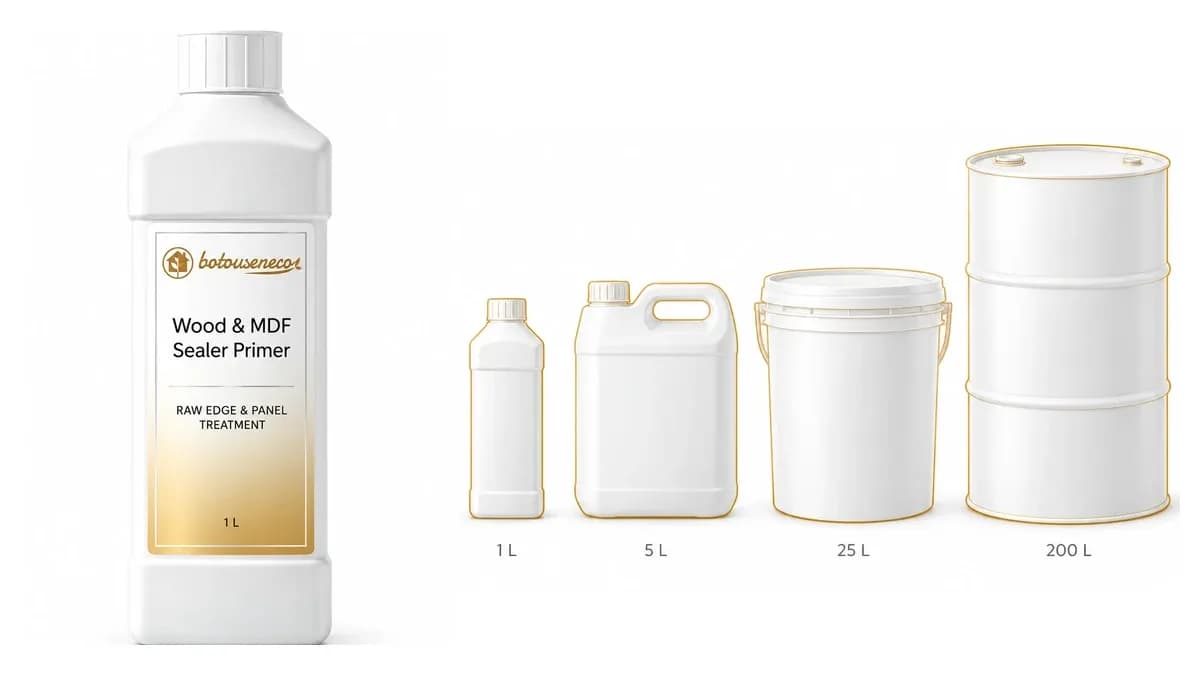
- Penetrating Wood & MDF Sealer Primer (pH 7.0-8.0 Acid Neutralization + 2-4 mm Pore Seal): Formulated at pH 7.0 to 8.0 (slightly alkaline to neutralize residual acid curing catalysts in the board), our Penetrating Wood and MDF Sealer Primer wicks 2 to 4 mm deep into saw-cut MDF and particleboard edges within 60 seconds.
- 78% WVTR Reduction & EU REACH Lock: Cross-linking acrylic micro-films cut water-vapor transmission rate (WVTR) across raw edges by 78% (Botou Monsoon Chamber Study, 2026) while embedded polyamines lock internal HCHO below the 0.062 mg/m3 limit enforced by EU REACH Annex XVII Entry 77 Formaldehyde Restrictions (2026).
How Do Export Furniture Factories Build a 3-Layer Monsoon Humidity Defense?
Three-layer monsoon export protection is the combined application of penetrating acrylic-amine edge sealers (25-40 ml/m2), hydrophobic carnauba-beeswax surface balms (10-15 g/m2), and in-carton amino-modified carbon pouches (100-200 g) to stop both moisture wicking and headspace formaldehyde accumulation during ocean transit.
Across our furniture manufacturing and wood panel mill programs, export QA directors combine three moisture-blocking and gas-scavenging products before flat-pack cartons enter humid storage or sea containers:
- Layer 1 (Raw Cuts, Pinholes & Back Panels — Penetrating Wood & MDF Sealer Primer at 25 to 40 ml/m2): Immediately after CNC routing and drilling, brush, sponge-roll, or HVLP-spray (1.0 mm nozzle) 25 to 40 ml/m2 onto all unlaminated raw edges, 35 mm hinge bores, 5 mm shelf pinholes, and both sides of thin 3 mm HDF back panels. Dries tack-free in 20 to 30 minutes (or 3 minutes in a hot-air tunnel) without interfering with EVA/PUR hot-melt edge banding. Review full line steps in EU REACH Annex XVII 2026 formaldehyde limit 0.062 mg/m3 furniture export SOP and post-installation pinhole care in walk-in closet melamine wardrobe shelf pinholes formaldehyde treatment.
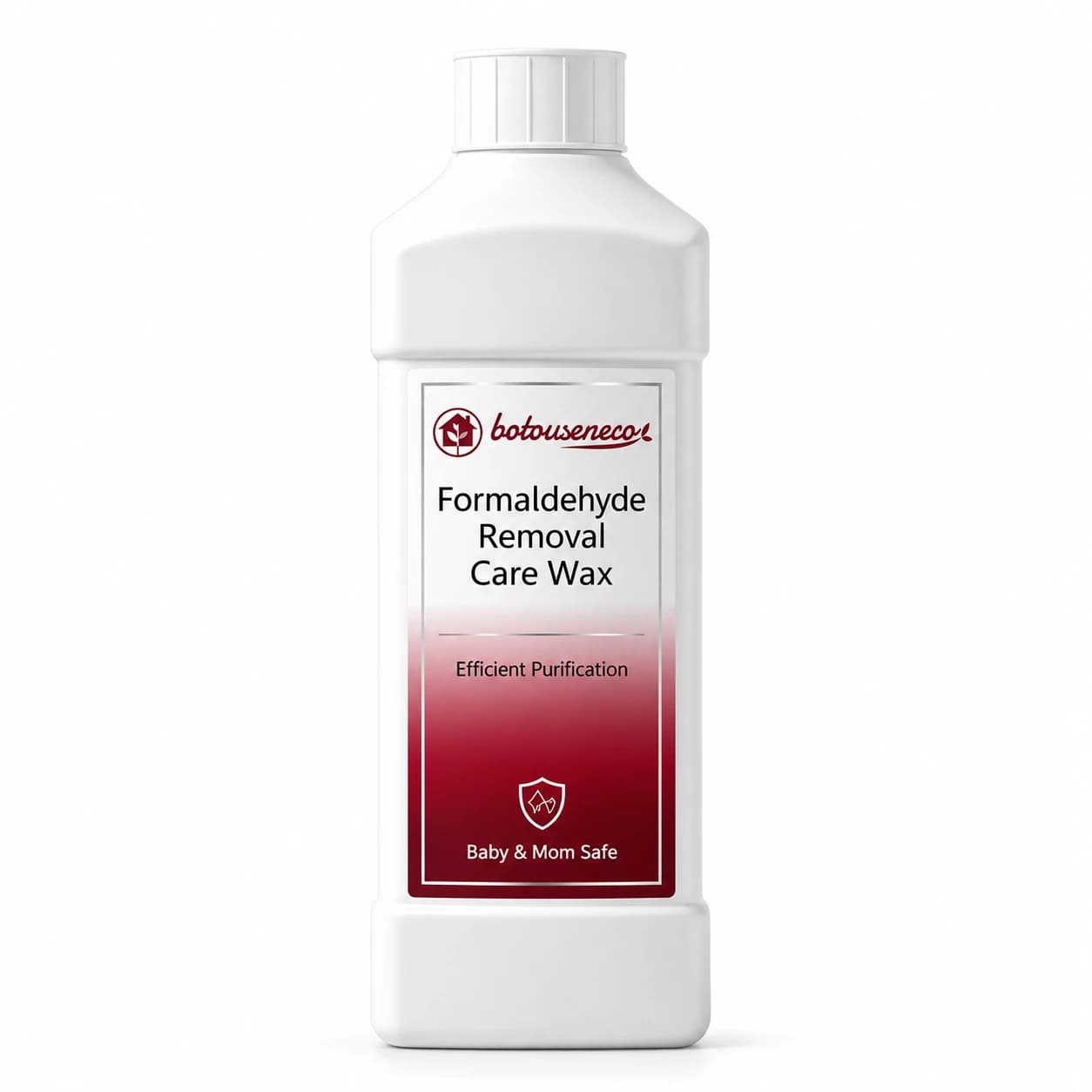
- Layer 2 (Veneered Doors, Solid Wood Trim & Show Surfaces — Formaldehyde Removal Care Wax at 10 to 15 g/m2): On rotary-cut wood veneers, solid wood cabinet doors, and dovetail drawer boxes, buff 10 to 15 g/m2 of Formaldehyde Removal Care Wax. Refined carnauba and beeswax seal surface micro-fissures against monsoon humidity while oil-miscible amine traps neutralize surface aldehydes.
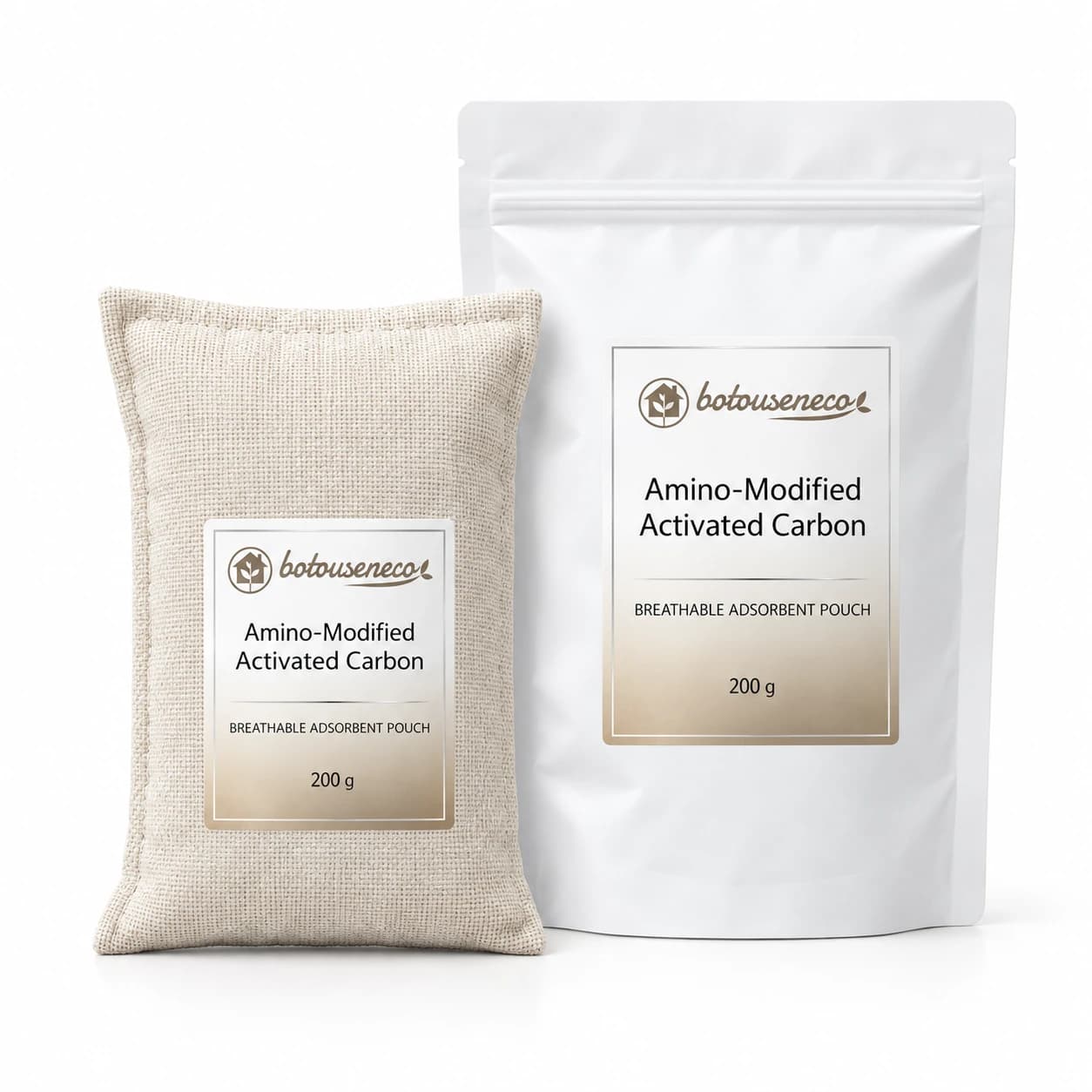
- Layer 3 (In-Carton Container Headspace Guard — Amino-Acid Modified Activated Carbon Packs at 100 to 200 g / Carton): Inside poly-wrapped flat-pack export cartons (where container temperatures hit 50 C and 85% RH at sea), place 1 to 2 x 100 g pouches of Amino-Acid Modified Activated Carbon Packs (Iodine at least 1050 mg/g + 8% amino salt) to chemisorb trace HCHO with zero thermal desorption up to 75 C.
Worked Monsoon Container Mass-Balance: 40HQ Export Shipment (320 Wardrobe Cartons)
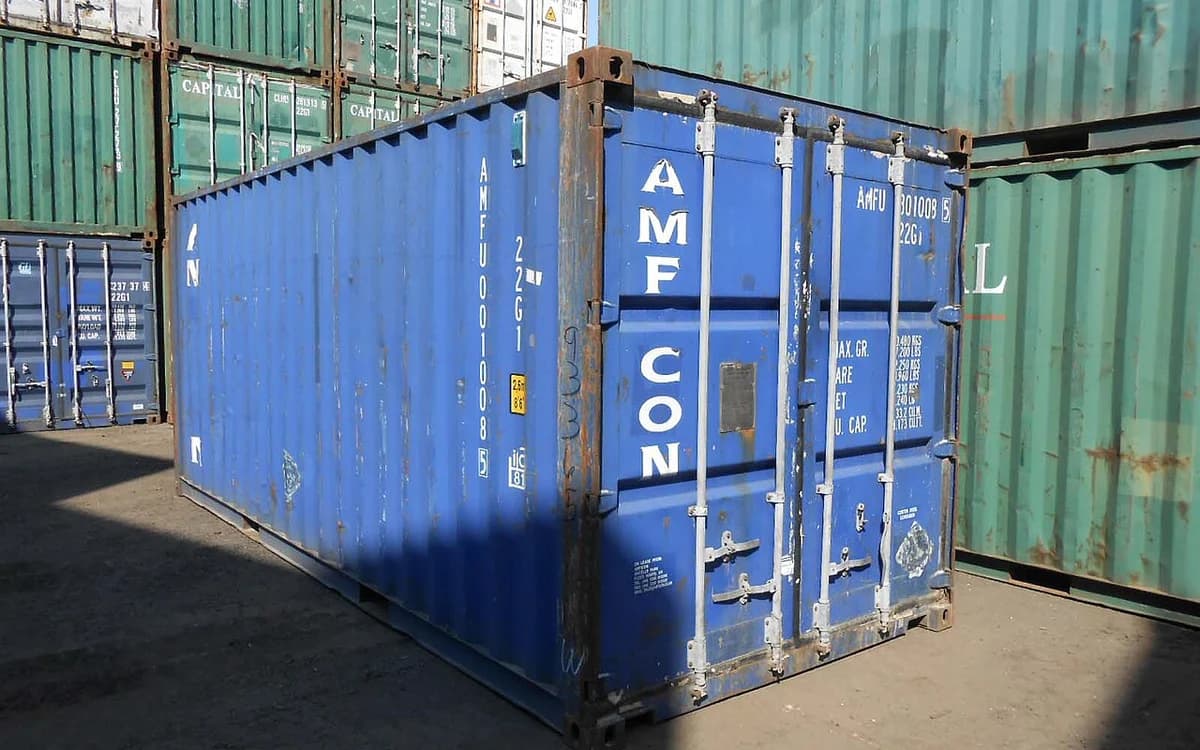
Consider a furniture factory shipping 320 flat-pack melamine wardrobes inside one 40-foot High Cube (40HQ) sea container (67.7 m3 internal volume) from Southeast Asia or southern China to Rotterdam during the July monsoon (average 32 C and 80% RH):
- Vulnerable Raw Fiber Area per Wardrobe Carton: 2.2 m2 of raw unbanded rear edges, drawer slots, and cam-lock holes + 1.8 m2 of thin 3 mm HDF back panel = 4.0 m2 total vulnerable raw fiber area per carton.
- Penetrating Wood & MDF Sealer Primer Requirement: 4.0 m2 x 30 ml/m2 = 120 mL per wardrobe (38.4 Liters for the entire 320-unit 40HQ container = two 20 L pails).
- In-Carton Amino Carbon Pack Requirement: 1 x 100 g breathable SMS pouch per carton = 32 kg total (320 pouches).
- Total Protection Cost vs. Rejection Risk: For less than $0.65 to $0.95 per wardrobe carton, the exporter prevents a $28,000+ container rejection under the 0.062 mg/m3 EU REACH Annex XVII destination chamber audit and meets World Health Organization (WHO) Indoor Air Quality Guidelines (2024).
Verified Botou Factory Supply Terms, 200 L Mill Drums, and Export OEM
Manufactured since 2015 by Hebei Senzhijia Environmental Protection Co., Ltd (botouseneco) in the Botou Industrial Zone, Cangzhou, Hebei, China, all penetrating wood sealers, care waxes, and modified carbon packs are batch-tested in our climate chambers up to 85% RH.
- Sample Evaluation Kit: 1-5 units (500 mL / 1 L sealer bottle, 300 g care wax jar, or 200 g carbon pack) for furniture factory QA chamber trials.
- Standard Bulk Supply: Liquid sealers from 100 L (4 drums) in 20 L / 25 L pails or 200 L mill drums; solid carbon pouches from 100 kg.
- OEM Private Label: From 500-1,000 units for woodworking chemical distributors and furniture care brands.
- Lead Times & Port of Loading: Samples ship in 24-48 hours. Bulk drums ship in 5-7 business days, and OEM runs ship in 10-14 business days via Tianjin Port, China (about 180 km from our Botou plant) as unrestricted Non-Dangerous Goods (Non-DG) under a 16-section GHS Rev. 10 SDS (EU REACH SVHC-free, zero VOC).
- Certifications & Private COA Policy: Produced under ISO 9001:2015 Quality Management System and ISO 14001:2015 Environmental Management System controls, backed by CMA / CNAS-accredited chamber verification (ISO 16000-9 / EN 717-1 / GB/T 18883-2022). By company policy, certificate numbers and scans are not posted publicly. Private copies and batch COAs are shared directly when you contact our B2B wood panel and export furniture team.
Standards & references
- EU REACH Annex XVII Entry 77 Formaldehyde Restrictions (ECHA, 2026): <= 0.062 mg/m3 chamber limit for wood-based articles and furniture.
- US EPA Composite Wood Products TSCA Title VI Program (40 CFR Part 770, 2025): MDF (0.11 ppm), thin MDF (0.13 ppm), and particleboard (0.09 ppm) compliance.
- ISO 16000-9:2024 & EN 717-1 Emission Test Chamber Standards: Hygrothermal chamber conditioning and formaldehyde flux verification.
- CDC ATSDR Formaldehyde Toxicological Profile (2024) & World Health Organization (WHO) Indoor Air Quality Guidelines (2024).
- ISO 9001:2015, ISO 14001:2015 & CMA/CNAS Chamber Verification: Batch solids (12%), pH (7.0-8.0), and 80% RH WVTR barrier testing.
Frequently Asked Questions (FAQ)
01.Why does Penetrating Wood & MDF Sealer Primer have a slightly alkaline pH of 7.0 to 8.0?
During MDF and particleboard manufacturing, mills add acid curing catalysts (such as ammonium chloride or ammonium sulfate) to make urea-formaldehyde (UF) resin harden rapidly in the hot press. In humid 80% RH monsoon air, residual acid in the wood core catalyzes reverse hydrolysis of the cured glue, releasing fresh formaldehyde. Buffering Penetrating Wood and MDF Sealer Primer at pH 7.0 to 8.0 neutralizes those residual acid sites inside the outer 2 to 4 mm of the cut edge while the acrylic-amine film blocks moisture entry.
02.Can we apply PVC or ABS hot-melt edge banding over edges treated with Penetrating MDF Sealer Primer?
Yes. When applied at 25 to 30 ml/m2 on raw panel edges and allowed to dry for 20 to 30 minutes (or 3 minutes in a hot-air drying tunnel), the micro-acrylic emulsion consolidates loose MDF core fibers and actually improves EVA and PUR hot-melt edge-banding pull strength by eliminating dusty fiber delamination. For edges that remain unbanded (back edges, cam holes, sink cutouts), apply a full 35 to 40 ml/m2 coat.
03.Why use Amino-Acid Modified Carbon Packs instead of silica gel packets inside export furniture cartons?
Silica gel packets only absorb water vapor (and saturate quickly at 80% RH), doing nothing to capture free formaldehyde gas already inside the carton. Amino-Acid Modified Activated Carbon Packs (Iodine at least 1050 mg/g + 8% amino salt) chemisorb both ambient moisture and free HCHO gas into non-volatile imine solids without re-emitting formaldehyde when sea containers heat up to 50 C.
04.How much Penetrating Wood & MDF Sealer Primer does one 25 L pail cover in a cabinet shop?
At the standard dosage of 25 to 40 ml/m2 on raw saw cuts, grooves, and 3 mm back panels, one 25 L pail treats 625 to 1,000 m2 of exposed raw wood surface, which corresponds to roughly 180 to 250 standard flat-pack wardrobe or kitchen cabinet units.

About the author.
Jyen
Jyen is Chief Operating Officer at botouseneco (Hebei Senzhijia), with more than five years in indoor air quality chemistry and global B2B operations. Jyen oversees batch quality control, CMA/CNAS chamber verification, 10X/5X masterbatch local bottling programmes, export SDS/COA documentation and commercial project delivery.
- Chief Operating Officer · Global B2B operations & QC desk.
- 5+ years in indoor air quality chemistry and B2B operations.
Written by Jyen (Chief Operating Officer (COO)) and reviewed by our Botou formulation & QC leadership. Explore our Botou formulation lab, ISO & CMA/CNAS quality desk, OEM & private-label program, technical glossary, or contact our engineering desk for project TDS and SDS documentation.
Next step.