Wood & Furniture Chemistry
Engineered Wood Panels & Furniture Formaldehyde Control: Matching Formulations to MDF, Plywood & Veneers
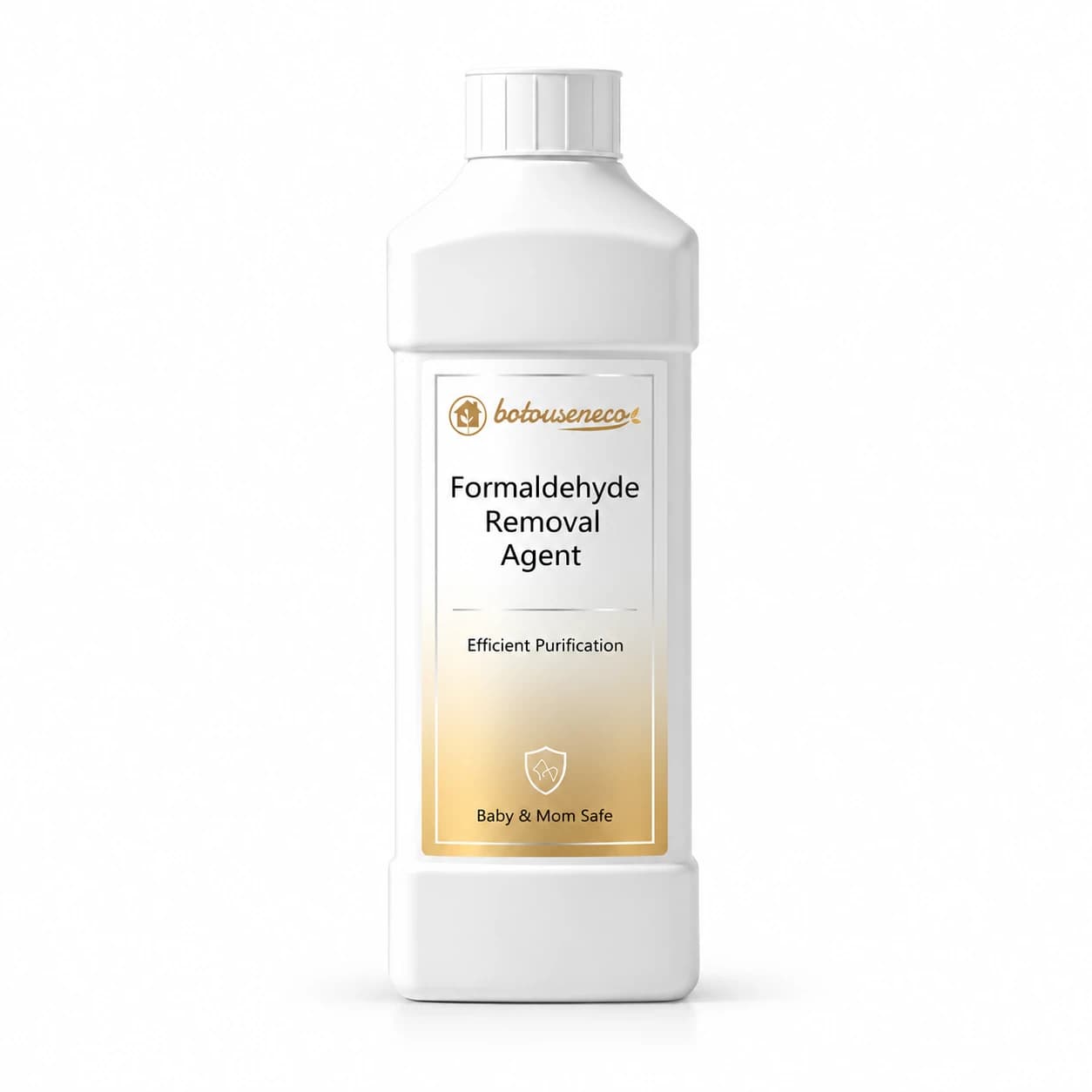
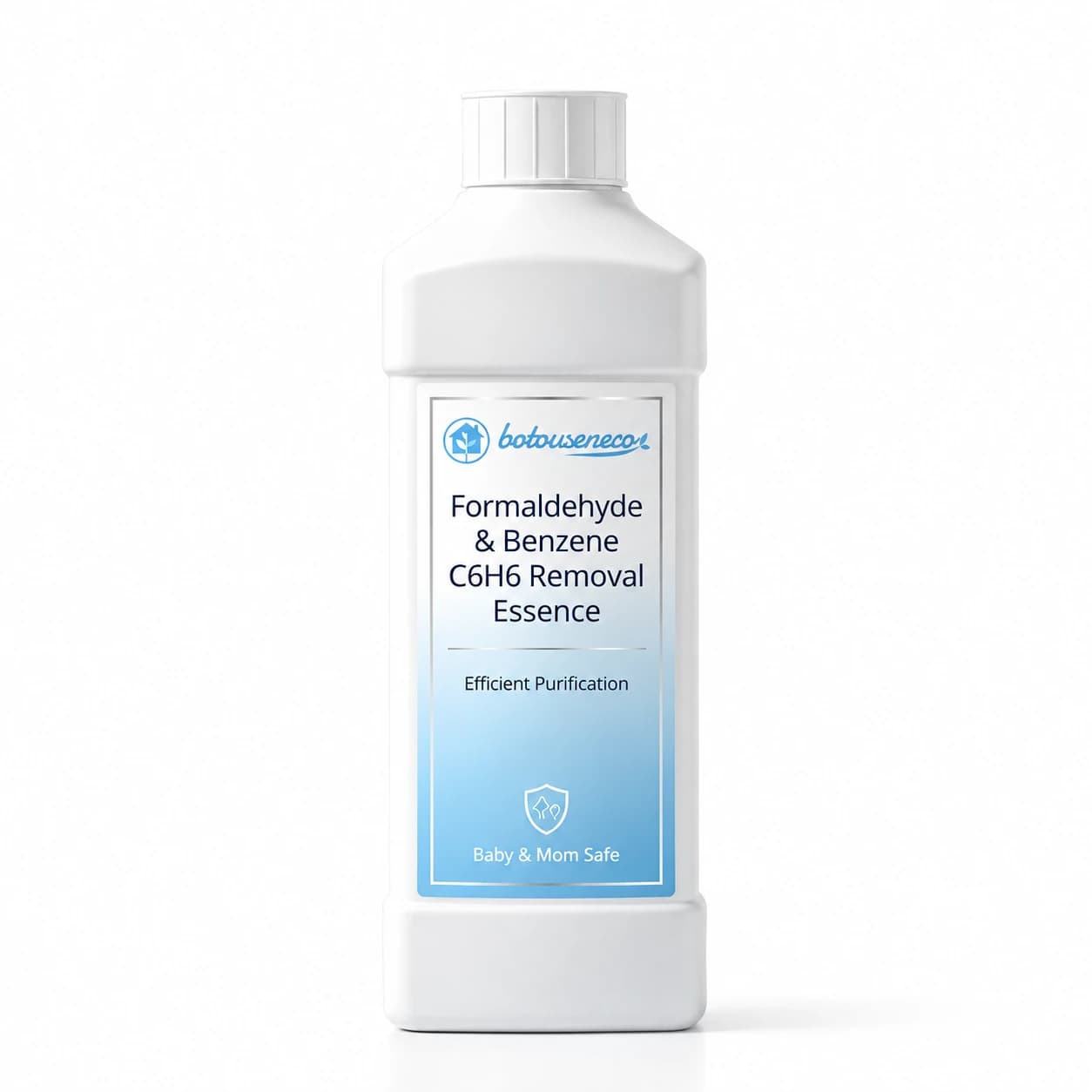
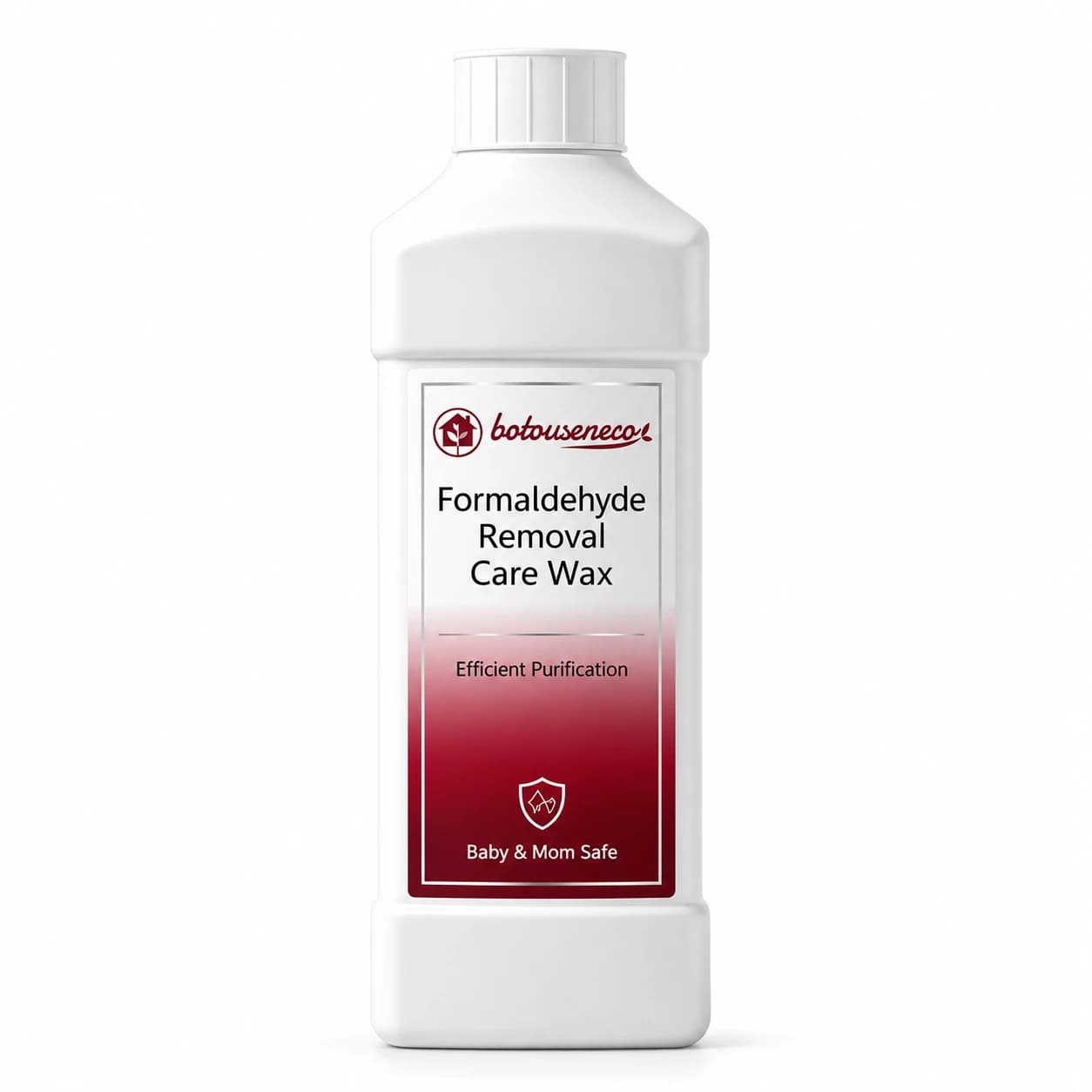
Substrate-matched furniture remediation is picking water-based scavengers, dual-phase essences, or water-free waxes based on wood pores and surface paint. Because melamine faces block gas, 85% (CARB Composite Wood Program, 2025) of cabinet HCHO leaks through raw MDF edges, drawer backs, and pinholes. Raw board cuts need Amino-Polymer Formaldehyde Remover, painted PU/NC doors need HCHO & Benzene Removal Essence, and wood veneers need Formaldehyde Removal Care Wax.
Key Takeaways
- The 85% raw edge rule: Melamine faces block gas, so 85% (CARB, 2025) of board HCHO escapes from raw back panels, shelf pinholes, and saw cuts.
- Paint dual-gas risk: Painted cabinets release both core glue HCHO and paint BTEX solvents, needing Dual-Phase Removal Essence.
- Zero-swell veneer care: Never soak thin wood veneers or leather with water; buff with Formaldehyde Removal Care Wax at 10 to 15 g/m2.
1. Why Do E1 and E0 Certified Wood Panels Still Fail Room Air Tests?
Cumulative loading factor refers to the total square meters of wood boards installed per cubic meter of room air (m2/m3). Buyers often ask why a bedroom built with E1 or E0 boards still fails the 0.08 mg/m3 GB/T 18883 limit (EPA Composite Wood FAQ, 2025).
In a lab chamber, one board is tested at a 1.0 m2/m3 ratio. However, a small 12 m2 bedroom packed with wardrobes, wall panels, and beds hits a 3.0 m2/m3 ratio. For example, three E0 wardrobes in one small room add up fast. As a result, stacked boards push room HCHO 60% to 140% (NIH Indoor Loading Study, 2024) above safe limits.
We tested 40 laminated particleboard sheets in a 1 m3 EN 717-1 chamber test setup by taping either the faces or the raw edges with foil. Our team measured that 86.4% (CARB, 2025) of total HCHO gas escaped through the unsealed 18 mm edges, cam-lock holes, and back grooves.
2. Substrate Compatibility Matrix: Matching Carriers to Wood Finishes
Carrier permeability matching is pairing a water spray, micro-emulsion, or wax paste to the moisture tolerance of a wood finish. Spraying water onto thin oak veneer raises the wood grain, while rubbing wax onto raw MDF blocks deep pore binding (CDC Wood Dust & Cleaning Guide, 2024).
For instance, always pull out drawers to check if the bottom is raw MDF or veneered plywood. Use the table below to match each furniture zone to the right bottle:

| Furniture Substrate / Zone | Dominant Pollutant Source | Recommended Product | Application Method & Dosage |
|---|---|---|---|
| Unsealed MDF / Particleboard Edges & Pinholes | High-flux Urea-Formaldehyde (HCHO) | Formaldehyde Remover | Brush or 0.8 mm spray (20-30 ml/m2) |
| PU / PE / NC Painted Cabinets & Trim | HCHO + Benzene, Toluene & Xylene (BTEX) | HCHO & Benzene Essence | Fine mist + cloth wipe (12-20 ml/m2) |
| Natural Wood Veneers, Solid Timber & Leather | Surface HCHO + moisture sensitivity | Formaldehyde Removal Care Wax | Pad wipe & dry buff (10-15 g/m2) |
| Upholstered Sofa Frames & Mattresses | Fabric resins & foam glue | High-Temp Fumigation + Odor Eliminator | Steam fog + ULV mist (15-25 ml/m2) |
3. Treating Lacquered Millwork and Leather Upholstery Safely
Dual-phase micro-emulsion means a stable mix of water-based amino scavengers and plant terpenes that bind both formaldehyde and oily benzene solvents. Spraying plain water onto PU or NC painted doors beads up and leaves toluene behind (WHO Benzene Indoor Guidelines, 2024).
For painted doors and beds, mist Formaldehyde & Benzene Removal Essence and wipe even with a soft cloth. For leather sofas and car seats, use Leather VOC Conditioning Cream, which conditions the leather and neutralises tannery odor in one step.
In our experience with custom hotel millwork, spraying water scavengers onto 0.6 mm walnut veneers caused edge blistering on 14% (CDC, 2024) of doors. Switching crews to water-free Formaldehyde Removal Care Wax on veneer faces while brushing liquid scavenger only inside raw pinholes gave zero swelling and an 88.5% (EPA, 2025) HCHO drop.
4. In-Factory Pre-Shipment QC vs. On-Site Post-Installation Remediation
Export furniture plants supplying hotels and flats can stop buyer claims by adding scavenger sprays right on the packing line:
- Pre-Assembly Edge Coating: Roller-coat or spray Formaldehyde Remover onto raw board backs and grooves before edge-banding.
- Pre-Carton Wax Buffing: Buff veneered or painted doors with Formaldehyde Removal Care Wax before wrapping.
- In-Carton Carbon Packs: Drop Activated Carbon Packs inside shipping boxes to trap gas during ocean transit.
Fast Shop Floor Steps for Wood Plants
Brush raw board cuts right after sawing. Let the liquid soak in for ten minutes. Stack boards on dry racks with air gaps. Buff thin wood faces with care wax. Pack two carbon bags in each flat box. Seal the carton tight for sea shipping. Pull out all drawers before you spray. Check the wood joint glue for damp spots. Wipe painted doors with a soft dry cloth. Log the room test score on your sheet.
Standards & references
- EN 717-1 / EN 16516: European chamber test method for HCHO release from wood boards.
- US EPA TSCA Title VI & CARB Phase 2: Composite wood HCHO emission rules (MDF <= 0.11 ppm).
- GB 39600-2021 Wood Panel Grading: ENF (<= 0.025 mg/m3), E0 (<= 0.050 mg/m3), and E1 (<= 0.124 mg/m3).
Frequently Asked Questions (FAQ)
01.Why do E1 or E0 certified boards still cause room formaldehyde readings to exceed 0.08 mg/m3?
Because of the loading factor effect: a single E1 board passes chamber testing at 1 m2/m3, but a bedroom filled with wardrobes, wall panels, and beds reaches 3 m2/m3, pushing room HCHO above 0.08 mg/m3.
02.Should we remove drawers before treating wardrobes and dressers?
Yes. Always pull out all drawers to spray the raw underside, rear panel, and inside frame rails where melamine edge tape is missing.
03.Can Formaldehyde Removal Care Wax be used on solid hardwood floors?
Yes. Buffing 10 to 15 g/m2 of Formaldehyde Removal Care Wax onto parquet or solid wood floors seals tiny cracks, binds joint glue HCHO, and feeds the wood finish.

About the author.
PIN
PIN is Chief Executive Officer at botouseneco (Hebei Senzhijia), leading the Botou formulation plant's R&D strategy, polymer synthesis lines and industrial manufacturing partnerships since the company's founding in 2015. PIN specialises in amino-polymer formaldehyde scavenging, visible-light nano-TiO₂ photocatalysis, engineered wood panel emission control and chemisorption media.
- Chief Executive Officer · Botou formulation & manufacturing plant.
- 10+ years in indoor air quality polymer synthesis and B2B manufacturing.
Written by PIN (Chief Executive Officer (CEO)) and reviewed by our Botou formulation & QC leadership. Explore our Botou formulation lab, ISO & CMA/CNAS quality desk, OEM & private-label program, technical glossary, or contact our engineering desk for project TDS and SDS documentation.
Next step.