Simultaneous HCHO & BTEX Action
Eliminates the need for separate aldehyde and benzene treatments on painted engineered wood furniture.
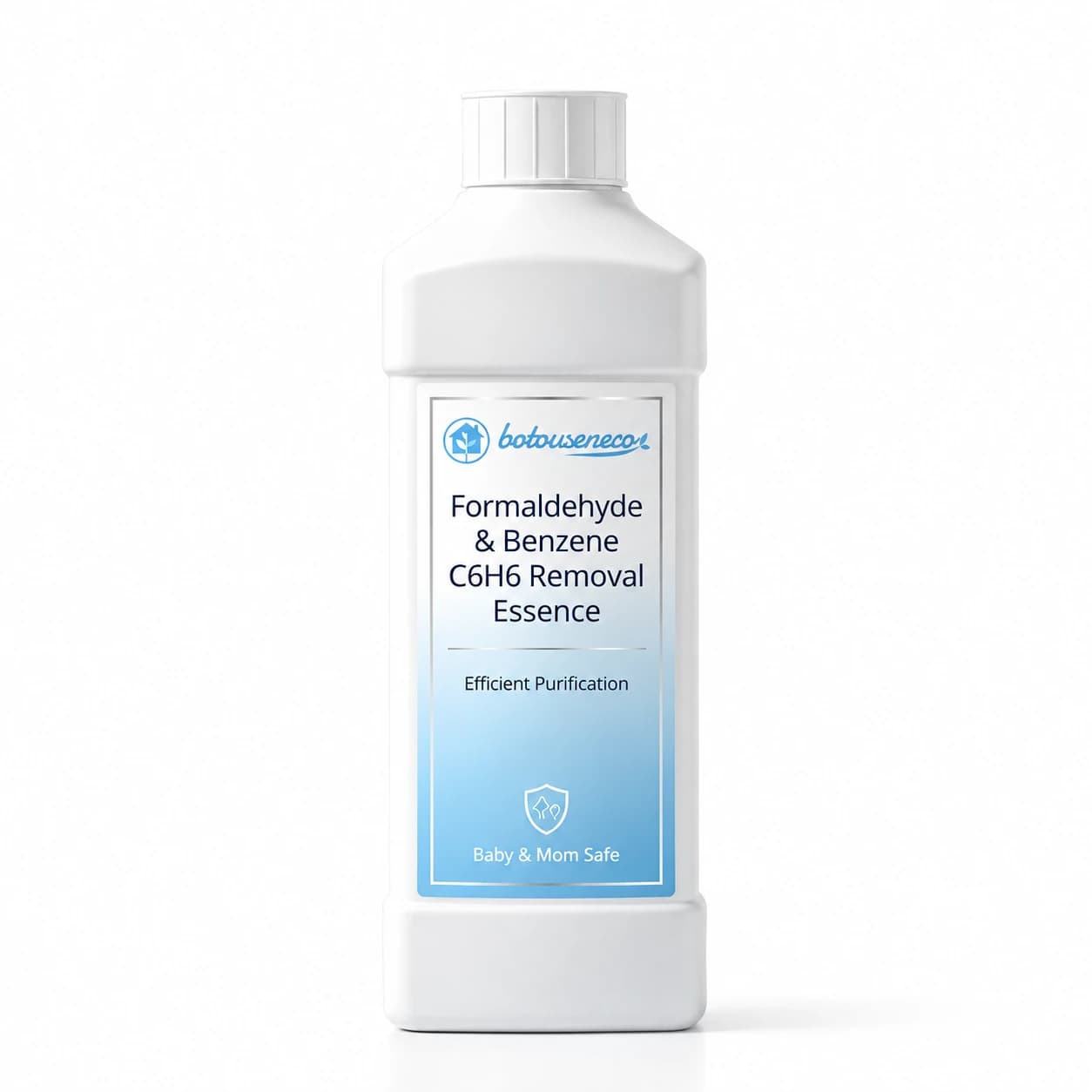 01 / 05 · Studio Packshot
Dual-Phase HCHO + BTEX Essence
botouseneco Formaldehyde & Benzene C6H6 Removal Essence is a concentrated dual-phase B2B micro-emulsion engineered for lacquered furniture, PU/PE wood coatings, and solvent-based construction adhesives that emit both formaldehyde and benzene-series compounds (benzene, toluene, xylene). Applied at 12–20 ml/m², it penetrates cured coating films to neutralize dual-pollutant hotspots.
Last updated
01Overview
Coordinated purification for custom millwork, painted timber, and heavy adhesive joints.
In high-end residential and hospitality fit-outs, custom wardrobes and wooden wallcladding are often fabricated from engineered panels (emitting HCHO) and finished with polyurethane (PU), polyester (PE), or nitrocellulose lacquers diluted with benzene-series solvents (toluene and xylene). Standard aqueous sprays cannot penetrate hydrophobic lacquer films. botouseneco Formaldehyde & Benzene C6H6 Removal Essence utilizes a micro-emulsion carrier that bridges polar and non-polar phases to neutralize both aldehydes and aromatic hydrocarbons.
Eliminates the need for separate aldehyde and benzene treatments on painted engineered wood furniture.
Higher active-solids ratio engineered specifically for heavy pollutant hotspots and enclosed cabinet cavities.
Micro-emulsion wets cured PU/UV wood coatings evenly without causing film clouding or blistering.
Adopted by both wood furniture exporters pre-packing and IAQ contractors treating installed millwork.
Reaction mechanism
Formaldehyde & Benzene Removal Essence pairs lipophilic cyclodextrin/plant-ester inclusion complexes (which trap nonpolar benzene, toluene, and xylene rings) with concentrated amino-functional scavengers (which bind polar formaldehyde molecules), delivering dual-pollutant abatement in a single application pass.
Reaction pathway
HCHO + C₆H₆ / C₇H₈ / C₈H₁₀02Technical data
Published factory QC parameters for engineering submittals, tenders and procurement files, grouped the way distributors list them.
English TDS, GHS-format SDS and a batch COA for Formaldehyde & Benzene C6H6 Essence.
Request documents| Active Chemistry | Dual-phase micro-emulsion with cyclodextrin aromatic traps & amino scavengers |
|---|
| Target Pollutants | Formaldehyde (HCHO), Benzene (C₆H₆), Toluene (C₇H₈), Xylene (C₈H₁₀) |
|---|
| Recommended Dosage | 12 – 20 ml/m² via fine mist spray followed by microfiber leveling |
|---|---|
| Applicable Substrates | Painted timber, lacquered MDF/plywood, adhesive joints, wood trim |
| Storage | 24 months sealed in cool, ventilated storage (5°C–35°C) |
|---|
| Grade | Professional IAQ Contractor & Millwork Grade |
|---|---|
| CAS number(s) | 7732-18-5 (Deionized Water) · 9002-98-6 (Polyamine Scavenger Polymer) · 9012-76-4 (Modified Chitosan / Amino Co-Reactant) |
| Appearance | Clear to pale amber homogeneous liquid |
| Odor | Odorless to faint botanical neutral note |
| Density | 1.02 - 1.05 g/cm³ (20 °C) |
| Viscosity | 2.5 - 6.0 mPa·s (25 °C) |
| Flash point | Non-flammable (Aqueous base, >100 °C closed cup) |
| Solubility | 100% miscible in water |
| VOC content | < 5 g/L (Ultra-low VOC, zero added formaldehyde) |
| HS code | 3824.99.9990 |
03Application
Target both resin cores and aromatic paint films.
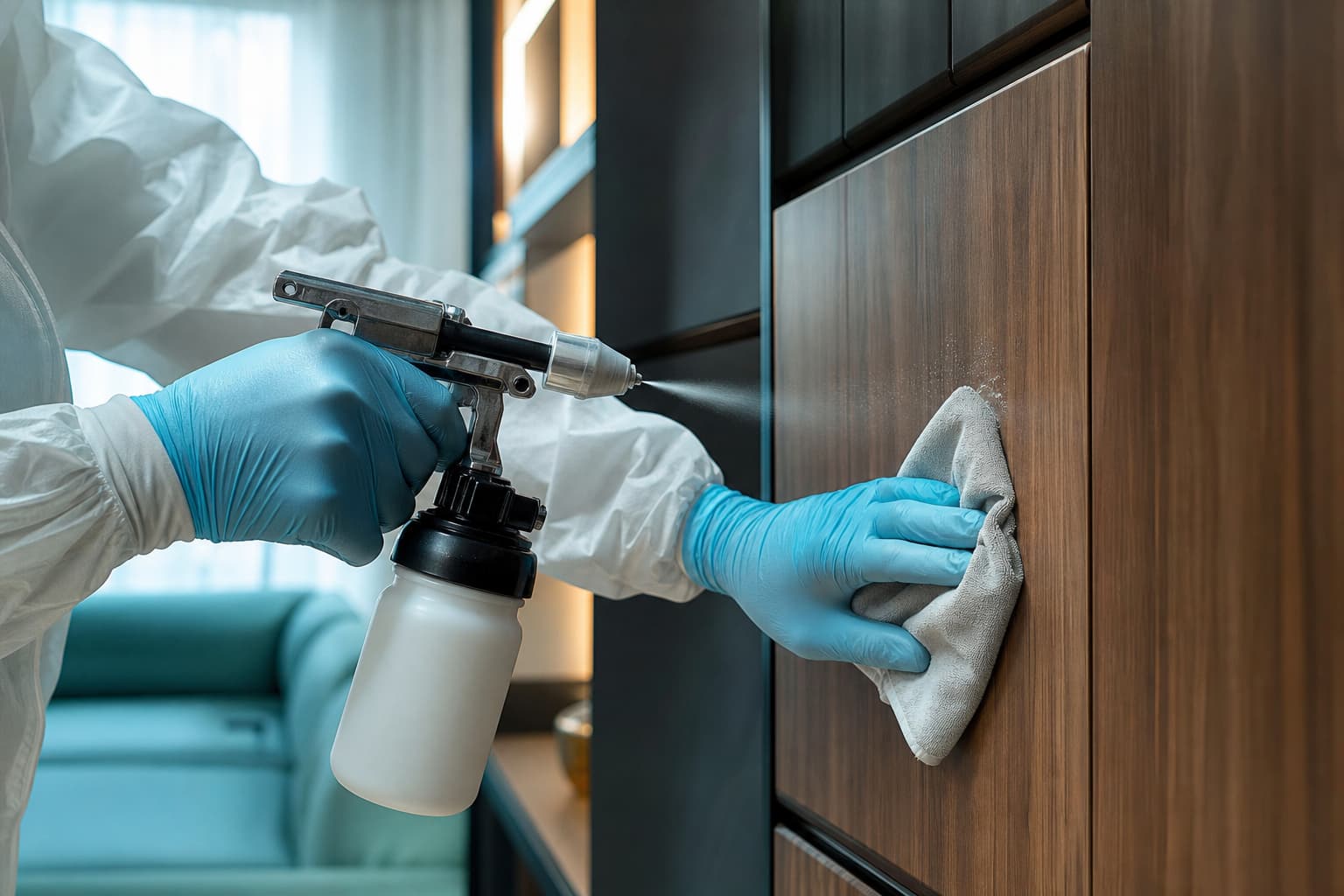
Apply directly inside newly painted cabinets, drawer undersides, and wood trim joints where pungent aromatic solvent odors overlap with formaldehyde off-gassing.
Record initial HCHO/TVOC readings (mg/m³), room temperature (°C), relative humidity (% RH), and closure window (1h vs. 12h).
Identify whether off-gassing stems from urea-formaldehyde MDF/particleboard, phenolic plywood, solvent lacquers, or textile backings.
Calculate total surface area (m²) of panels, walls, and ceilings to determine exact liquid volume (ml/m²) and nozzle gauge (0.5mm–1.0mm).
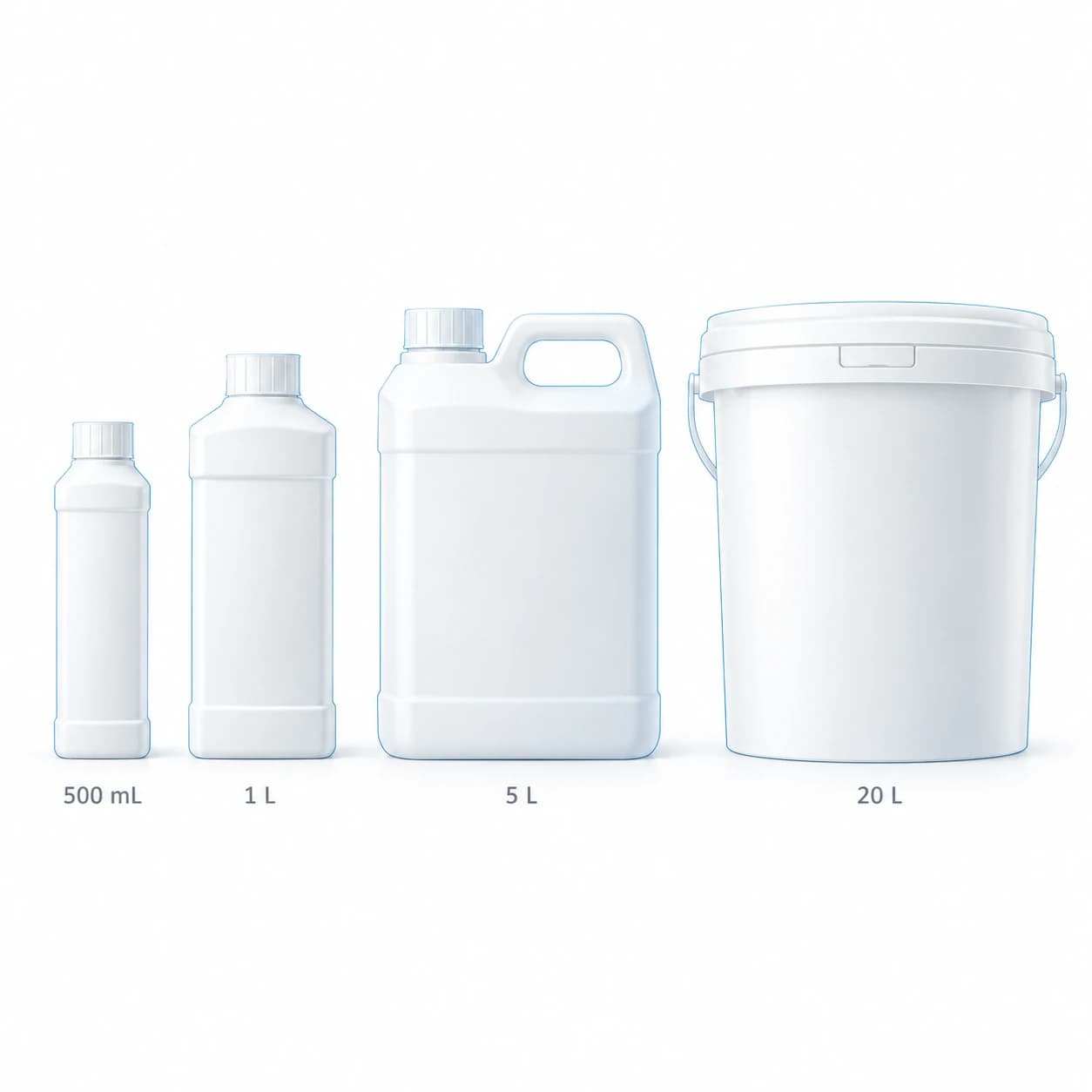
Confirm sample evaluation batch, TDS/MSDS export documentation, and commercial drum sizing (1L / 5L / 20L / 25L / 200L).
Always buff evenly with a soft microfiber pad on high-gloss piano lacquer
04Safety, handling & compliance
Hazard classification, storage and transport data follow the product's safety data sheet. Request the SDS for the full 16-section document.
Always buff evenly with a soft microfiber pad on high-gloss piano lacquer
Protective equipment: Nitrile gloves, safety glasses, and FFP2/N95 mist mask during enclosed HVLP atomization.
Non-Dangerous Goods (Non-DG) for sea, air, and road freight (Not regulated under IMDG, IATA, or ADR).
Certificate copies and full test reports are shared with buyers on request. Request copies · Quality & certifications
| Test | Standard | Laboratory | Result |
|---|---|---|---|
| 24h Closed-Chamber Pollutant Abatement | ISO 16000-9 / GB/T 18883-2022 1 m³ Chamber | CMA/CNAS Accredited Environmental Lab & botouseneco QC Center | ≥ 95.8% 24h free HCHO reduction |
| Substrate Corrosion, pH Neutrality & Zero-Stain Verification | GB/T 18883 Annex & ISO 2409 Surface Integrity Protocol | botouseneco Botou R&D Lab (Supervised by Jyen) | Pass (pH 6.5-7.5; 0% yellowing, blistering, or hardware corrosion) |
05Ordering & logistics
06Documents
Every shipment travels with these documents. Download them here when available, or request the current version from our engineers.
07Dosage
Based on the published coverage for Formaldehyde & Benzene C6H6 Essence: 12 – 20 ml/m² on coated wood panels and interior cabinetry cavities.
Published coverage: 12 – 20 ml/m² on coated wood panels and interior cabinetry cavities
Use 2–3 passes for raw high-density board or heavy TVOC loads.
Estimated quantity
3.6–6.0L
12–20 ml/m² × 300 m² × 1 pass
Estimate from the published coverage range. Real consumption depends on substrate porosity, nozzle size and baseline readings — our engineers confirm it with your quote.
08Questions
Choose Formaldehyde & Benzene Removal Essence whenever the wood furniture or wall paneling is finished with solvent-based paint/lacquer or exhibits a sharp aromatic paint odor alongside elevated HCHO readings.
Yes. Spray a light mist (12–15 ml/m²) and wipe gently with a clean microfiber cloth after 10–15 minutes to leave a clean, streak-free finish.
09Related
Formaldehyde & Benzene
Thermal steam extraction fluid
Formaldehyde & Benzene
Deep-pore edge sealer
Formaldehyde & Benzene
Bio-based chitosan scavenger
Engineering journal
Step-by-step dosing schedules, chamber test datasets and substrate compatibility guides written by our Botou formulation and QC team.
All 66 engineering guidesComplete IAQ contractor crew PPE, EN 14387 ABEK1P3 respirator, and 12-substrate masking SOP for protecting piano-black lacquer, brass, silk, OLED screens, and smoke detectors during HVLP spraying.
 Jyen
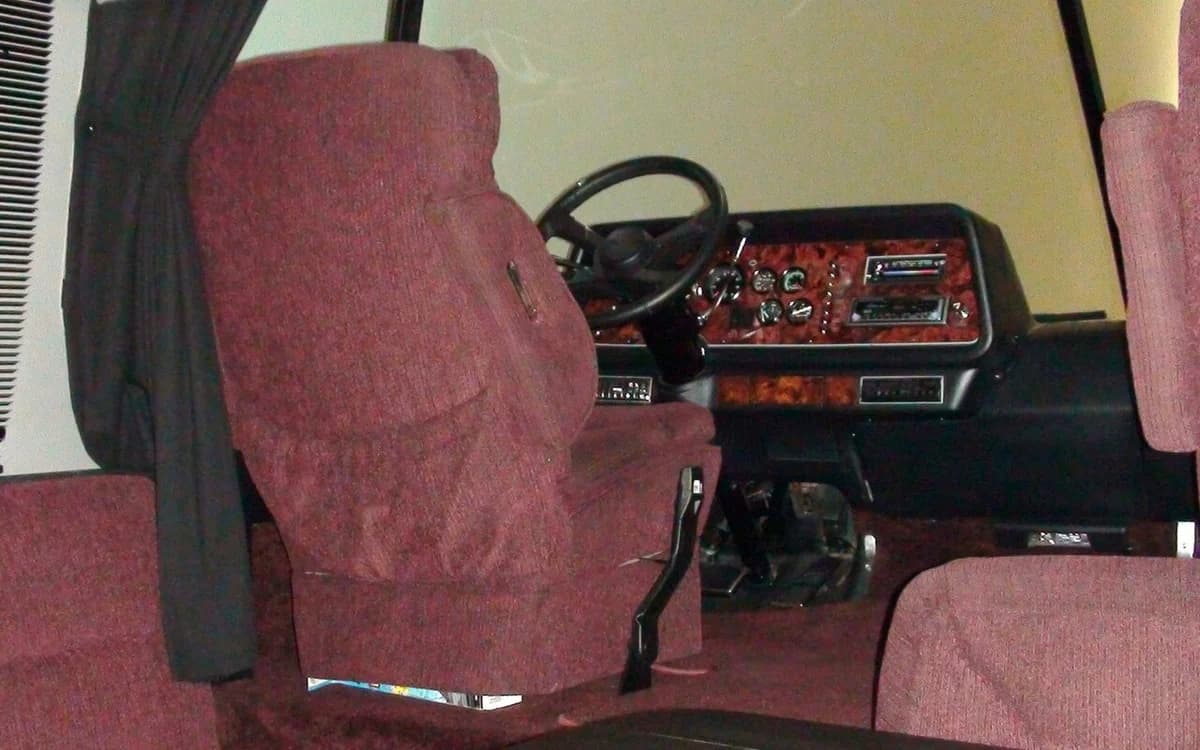
Step-by-step IAQ guide for RV motorhomes, fiberglass yacht saloons, and sleeper truck cabs to neutralize high-load poplar plywood formaldehyde, FRP hull styrene, and bilge or holding-tank H2S odors.
 Loo
Head-to-head engineering comparison of GB 50325-2020 Class I civil building acceptance (<= 0.07 mg/m3 HCHO after 1-hour closure) versus GB/T 18883-2022 occupancy standards (<= 0.08 mg/m3 after 12-hour closure) and how contractors dose 1.4x higher to pass both.
Jyen
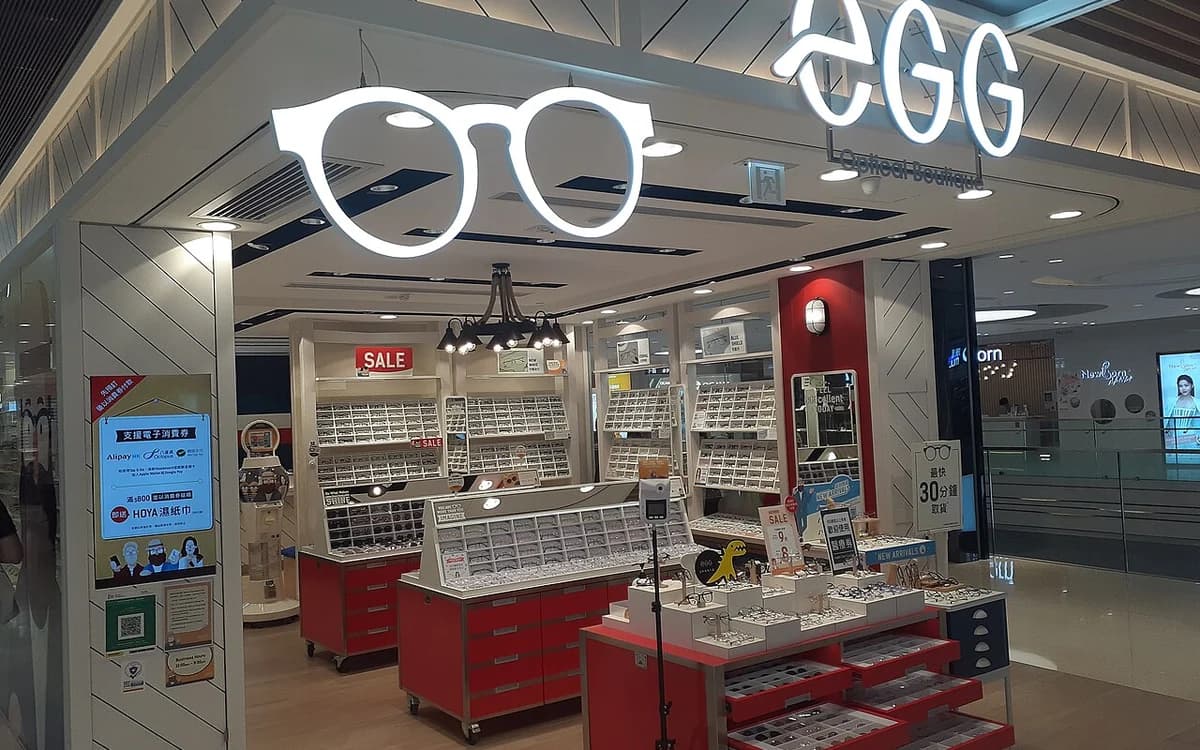
Step-by-step overnight (10:00 PM to 10:00 AM) retail fit-out IAQ guide to neutralizing methyl methacrylate (MMA), cyclohexanone vinyl-graphic solvents, and PU lacquer BTEX/HCHO using TVOC Eliminator and Dual Essence with zero gloss hazing.
Jyen
Step-by-step IAQ guide to treating decorative acoustic wood slat walls (Akupanel-style) and veneered MDF ceiling baffles using 0.5 mm HVLP atomization of TVOC Eliminator (10 to 20 ml/m2) and Dual Essence (12 to 18 ml/m2) with zero slat warping.
Loo
Step-by-step millwork IAQ tutorial on sealing kitchen sink cabinets and bathroom vanities against steam-driven formaldehyde hydrolysis and contact-cement BTEX emissions using Penetrating Sealer Primer (25 to 40 ml/m2) and Dual Essence (12 to 20 ml/m2).
Loo
Factory-direct supply
Request a sample with the English TDS and SDS, or send your project size for a bulk or private-label quotation of Formaldehyde & Benzene C6H6 Essence.