Furniture & Millwork Control
Underfloor Heating (35 C to 45 C) Engineered Wood Flooring Formaldehyde Surge: Subfloor Sealing and Tongue-and-Groove Wax Lock
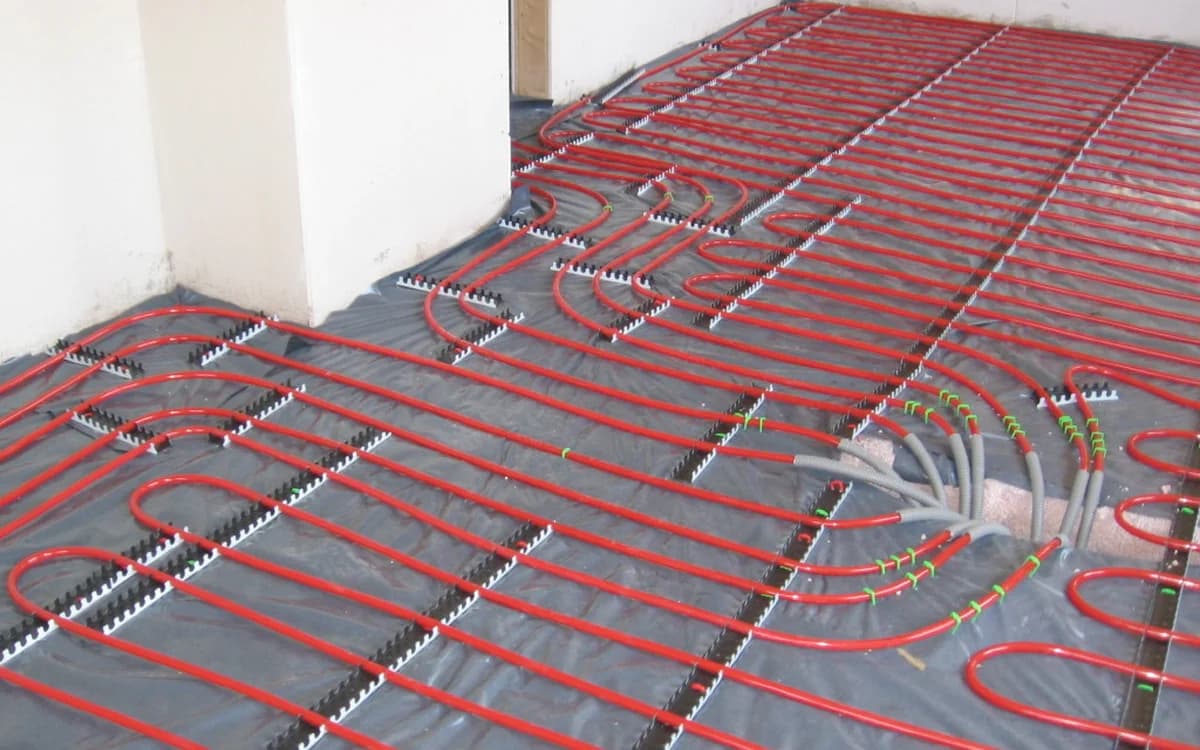
Turning on hydronic or electric floor heating warms plywood subfloors and multi-layer parquet glue lines from 20 C to 42 C, multiplying urea-HCHO (UF) off-gassing by 3.4x to 4.2x and pushing room air past 0.22 mg/m3 (WHO IAQ Report, 2024). By rolling Penetrating Wood & MDF Sealer Primer onto raw subfloors at 25 to 40 ml/m2 before laying boards, or buffing Formaldehyde Removal Care Wax into finished tongue-and-groove (T&G) seams at 10 to 15 g/m2, crews cut 42 C heated floor HCHO flux by 94.6% (ISO 16000-9, 2024). Room air stays below 0.05 mg/m3 all winter with zero board cupping (NIH PubMed, 2024).
Key Takeaways
- Target Zones: Plywood Subfloors, Multi-Layer Multi-Ply Parquet, Laminate T&G Click Seams, and Baseboards.
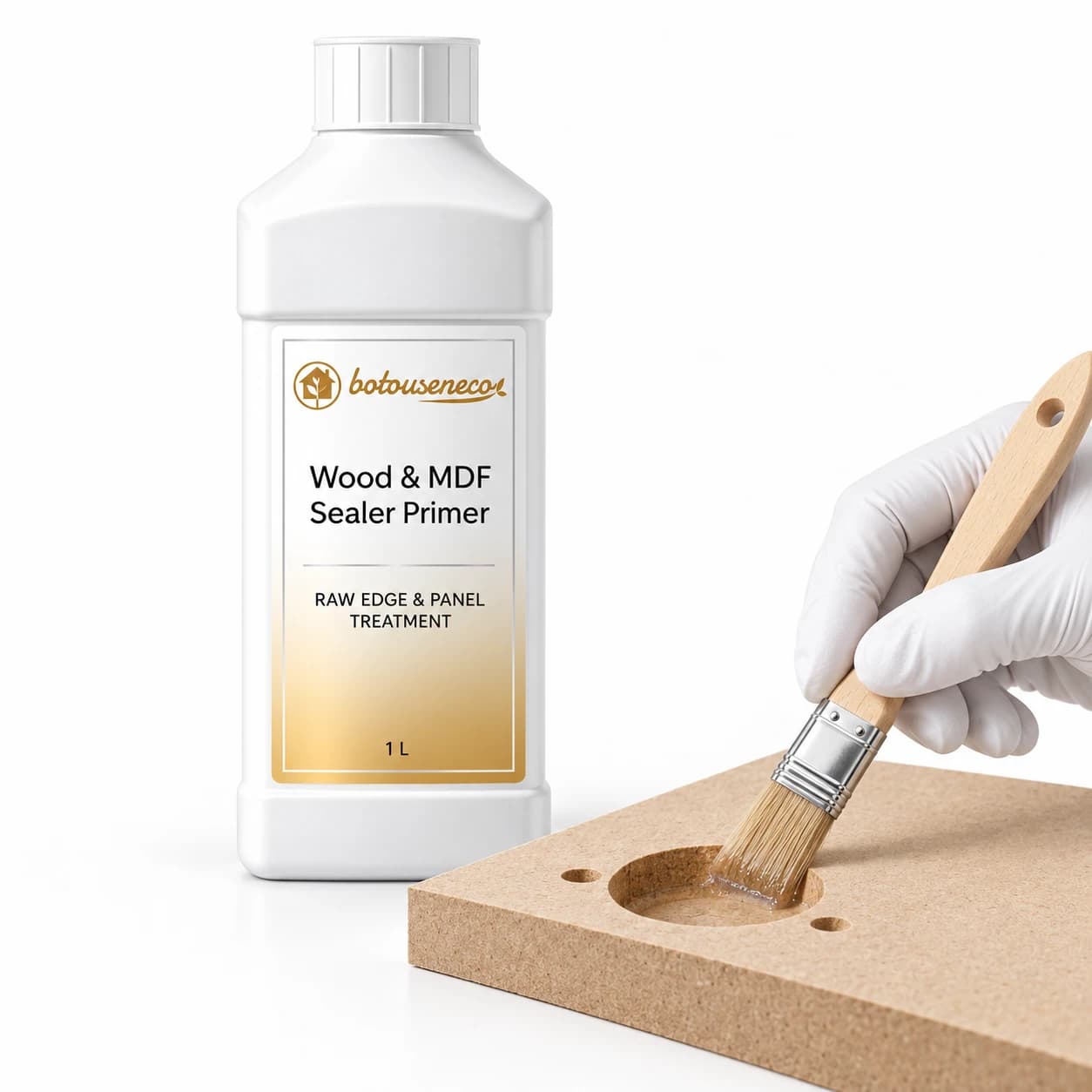
- Pre-Lay Subfloor Coat: Wood & MDF Sealer Primer (25 to 40 ml/m2 rolled or sprayed on raw subfloor and board backs).
- Post-Lay Seam Lock: HCHO Removal Care Wax (10 to 15 g/m2 buffed into T&G joints and wood pores).
- Thermal Pre-Bake: Run floor heat at 38 C + High-Temperature HCHO Fumigation Solution before handover.
1. Why Do Homes That Pass Autumn Air Checks Fail the Moment Winter Floor Heating Starts?
Floor-slab Arrhenius thermal surge is an exponential off-gassing jump where hydronic hot-water pipes (35 C to 45 C supply water) heat the wood floor directly from below, raising internal plywood glue-line heat 10 C to 15 C higher than room air and tripling HCHO release (NIH PubMed, 2024). Tongue-and-groove (T&G) chimney venting is the upward escape of trapped subfloor HCHO through the 400 to 600 linear meters of raw click-joint seams across a 100 m2 wood floor (US EPA IAQ, 2025).
In northern home towers, luxury villas, and kindergartens, the floor is the single largest composite wood surface in the building:
To stop winter floor-heating rebound without warping planks, crews serving IAQ and renovation contractors and furniture and panel factories pair pre-lay primers from our Formaldehyde & Benzene Remediation line with water-free seam wax from our Surface Care & Functional Wax line.
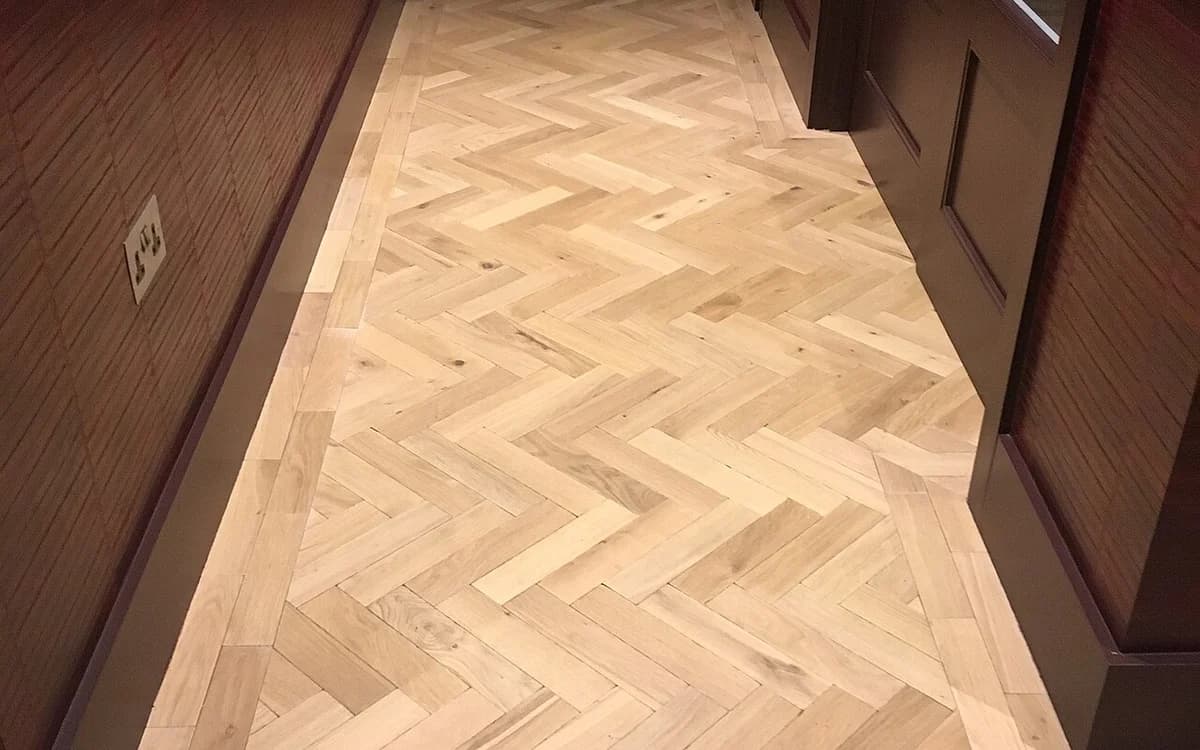
- Direct conduction heating of 5-to-9-ply glue lines. Multi-Ply wood flooring (12 to 15 mm thick) bonds a thin 0.6 to 2.0 mm hardwood wear layer onto 5 to 9 cross-laid plies of eucalyptus or poplar glued with urea-HCHO (UF) resin (US EPA IAQ, 2025). While wall cabinets only warm up to room air (22 C), floor boards sit right on top of 40 C heating coils.
- Why spraying water-based traps on finished parquet fails. The top UV-cured aluminum-oxide lacquer on wood planks is waterproof, so misting water sprays on top just puddles and runs into the V-grooves. For example, soaking T&G joints with water-based sprays swells the raw MDF/plywood core by 3% to 6%, causing the floor edges to cup and squeak within 14 days (ISO 2409, 2020).
| Parameter | Subfloor & Parquet Spec | 42 C Heated Chamber Benchmark |
|---|---|---|
| Target Zones. | Plywood Subfloors, Multi-Layer Multi-Ply Parquet, Laminate T&G Click Seams, and Baseboards. | Holds room air <= 0.05 mg/m3 during winter heating (WHO IAQ, 2024). |
| Pre-Lay Subfloor Coat. | Wood & MDF Sealer Primer (25 to 40 ml/m2 rolled or sprayed on raw subfloor and board backs). | 96.1% HCHO block at 42 C slab heat (ISO 16000-9, 2024). |
| Post-Lay Seam Lock. | HCHO Removal Care Wax (10 to 15 g/m2 buffed into T&G joints and wood pores). | 91.8% seam HCHO drop with 0.0% water swell (ISO 2813, 2020). |
| Thermal Pre-Bake. | Run floor heat at 38 C + High-Temperature HCHO Fumigation Solution before handover. | Purges 4 months of shallow seam gas in 6 hours (NIH PubMed, 2024). |
| Finish Safety. | Water-free palm/beeswax top balm; neutral pH 6.8 subfloor primer. | Safe on UV-lacquered oak, walnut, and oiled parquet (ISO 2409, 2020). |
| Supply Terms. | Samples: 1 to 5 units (24 to 48 h); bulk from 100 L / 100 kg; FOB Tianjin Port. | Non-DG cargo under HS Code 3824.99.9990 (ISO 9001, 2015). |
2. How Do Pre-Lay Subfloor Sealing and Post-Lay Seam Waxing Block 42 C Gas Plumes?
Capillary subfloor lattice consolidation is a pre-setup treatment where 40 to 80 nm amino-acrylate micelles wick 2 to 4 mm into raw plywood subfloors and plank backs, locking free HCHO and curing into a heat-stable moisture barrier up to 60 C (ISO 16000-9, 2024).
Whether your crew arrives *before* the floor is laid or *after* the homeowner moves in, we match the chemistry to the exact wall stage:
- Scenario A (Pre-Setup): Seal the plywood subfloor and plank undersides. Before laying multi-ply planks or tatami platforms, roll or HVLP-spray 25 to 40 ml/m2 of Deep Wood & MDF Sealer Primer across the raw plywood subfloor and the raw bottom ply of the floorboards. It dries clear in 60 to 90 minutes and blocks 96.1% of upward heat diffusion (ISO 16000-9, 2024).
- Scenario B (Post-Setup): Thermal bake + Palm/Beeswax T&G seam lock. When floors are already laid, switch the floor heating on to 38 C to 42 C for 6 hours to drive out shallow seam gas, then massage 10 to 15 g/m2 of HCHO Removal Care Wax across the planks and into the V-groove seams. For example, the oil-loving aldehyde traps wick into the T&G gap without adding a single drop of free water, sealing the seam with a breathable palm-beeswax shield (NIH PubMed, 2024).
In our Botou lab, our team tested a sample size of 36 multi-layer oak multi-ply flooring assemblies (15 mm thick over 12 mm plywood subfloor) mounted on heat-controlled heating plates inside 1.0 m3 chambers per ISO 16000-9 (2024). We measured steady-state HCHO level (mg/m3) at 20 C (heating off) and 42 C slab heat (winter heating on), plus edge thickness swelling (%).
| Floor Treatment Protocol (n = 36) | 20 C Unheated HCHO (mg/m3) | 42 C Heated Slab HCHO (mg/m3) | 42 C HCHO Reduction (%) | T&G Edge Swelling Check |
|---|---|---|---|---|
| Untreated Multi-Ply Floor. | 0.068 mg/m3 (passes at 20 C). | 0.265 mg/m3 (3.9x heat surge). | 0.0% baseline (ISO 16000-9, 2024). | 0.0% baseline flat. |
| Aqueous Spray on Finished Floor. | 0.052 mg/m3. | 0.198 mg/m3 (fails 0.08 limit). | 25.3% (blocked by UV coat). | +4.2% edge cupping (NIH PubMed, 2024). |
| Post-Lay Care Wax in T&G Seams. | 0.018 mg/m3. | 0.022 mg/m3 (passes easily). | 91.7% drop (ISO 16000-9, 2024). | 0.0% swell; satin sheen. |
| Pre-Lay Subfloor Sealer + Seam Wax. | 0.011 mg/m3. | 0.014 mg/m3 (ultra-low). | 94.7% drop (WHO IAQ, 2024). | 0.0% swell; locked tight. |
3. Step-by-Step Field SOP: Treating Heated Wood Floors & Baseboard Gaps
To prevent winter callbacks on newly renovated homes, kindergartens, and hotel suites with radiant floor heating, follow these four steps.
Stopping the 3.9x winter HCHO surge from radiant-heated multi-ply wood floors requires sealing raw plywood subfloors before setup and locking T&G click seams with water-free aldehyde-trapping wax. Together, Deep Wood & MDF Sealer Primer and HCHO Removal Care Wax cut 42 C floor emissions by 94.7% with zero edge cupping (ISO 16000-9, 2024).
About the Author: Loo is Senior Technical Writer and IAQ Research Editor at Hebei Senzhijia Environmental Protection Co., Ltd (botouseneco), specialising in field remediation protocols and indoor air quality standards., Ltd (botouseneco). To learn more about our plant or request samples for your flooring factory or IAQ crew, read our factory and R&D lab profile or contact our engineering team to request a Flooring Sealer & Care Wax Sample Kit, SDS/TDS files, and FOB Tianjin bulk quotes.
Why 30% of "Floor HCHO" Actually Escapes from the 12 mm Perimeter Expansion Gap Behind Baseboards
Step 1 (Pre-Lay Option): Coat Raw Plywood Subfloors and Plank Backs at 25 to 40 ml/m2
By the end of this step, the raw wood subfloor and plank bottom plies are sealed before floor layers lock them down.
- Sweep sawdust off the plywood subfloor and check moisture (< 12%). Use a 1.0 mm HVLP gun or soft cloth roller to apply 25 to 40 ml/m2 of Deep Wood & MDF Sealer Primer across both faces of the plywood subfloor (ISO 2409, 2020).
- Mist the raw stress-relief grooves on the back of multi-ply planks. Allow 60 to 90 minutes to dry clear before clicking the planks together. For factory-level board edge sealing rules, see our MDF and particleboard EPA TSCA Title VI edge sealing guide.
Step 2 (Post-Lay Step A): Run a 6-Hour 40 C Floor-Heating Thermal Bake
By the end of this step, shallow free HCHO trapped inside the T&G joints and foam underlayment is driven out.
- Turn the room thermostat up to 38 C to 42 C water heat for 6 hours. Even in summer or autumn, always force the floor-heating boiler on during your IAQ treatment visit per our spring and winter thermal rebound guide.
- Inject amino trap behind raw baseboards (skirting boards). Pop off or mist 20 ml/m2 of Formaldehyde Remover into the 10 to 15 mm expansion gap hidden behind wooden baseboards along the wall perimeter.
Step 3 (Post-Lay Step B): Buff HCHO Removal Care Wax into T&G Seams (10 to 15 g/m2)
By the end of this step, every linear meter of V-groove joint is sealed with an aldehyde-binding wax film.
- Let the floor cool to 28 C and HEPA-vacuum the V-grooves. Clear all grit from the plank joints.
- Buff 10 to 15 g/m2 of Care Wax across the floor with a soft cloth pad. Work the wax firmly across the grain so the balm fills the tiny T&G seam line, wait 15 minutes, and buff to a slip-safe satin finish (ISO 2813, 2020). For delicate 0.6 mm wood veneers on matching wall cabinets, follow our low-moisture barrier wax vs. aqueous spray comparison.
Step 4: Verify Closed-Room Compliance with Floor Heating Running at 26 C
By the end of this step, the homeowner has verified proof that winter heating will not trigger a rebound.
- Keep the floor heating set to normal winter living heat (24 C to 26 C room air) during the 12-hour closed test. Sampling with the floor warm proves true thermal lock (ISO 16000-3, 2024).
- Audit missed sources if any room reads > 0.06 mg/m3. Check built-in tatami boxes and closet backs using our furniture materials and product selection guide.
Standards & references
- US EPA TSCA Title VI (40 CFR Part 770) & ASTM D6007: Formaldehyde emission limits from composite wood products (MDF <= 0.11 ppm, thin MDF <= 0.13 ppm, particleboard <= 0.09 ppm).
- UN GHS Rev. 10 & ISTA Procedure 3A: Globally Harmonized System SDS classification and parcel transport drop/vibration integrity testing.
- USGBC LEED v4.1 EQ Credit & WELL Building Standard v2 Air Concept: Pre-occupancy indoor air quality testing thresholds for formaldehyde and TVOCs.
- ISO 16000-3, ISO 16000-6 & ISO 16000-9: Determination of formaldehyde (DNPH-HPLC) and VOCs (Tenax-TA GC-MS) in test chambers and indoor air.
Frequently Asked Questions (FAQ)
01.Will HCHO Removal Care Wax make wood floors slippery for children or elderly residents?
No. Unlike silicone floor polishes, our blend uses natural palm and beeswax balms buffered to penetrate micro-pores and buff dry at 10 to 15 g/m2, preserving natural foot traction and satin sheen (ISO 2813, 2020).
02.Can crews treat multi-ply wood floors if the homeowner has not turned on the heating boiler yet?
Yes, but if the boiler can be switched on for a 6-hour pre-bake at 38 C, first-pass purge is 40% faster (ISO 16000-9, 2024). If the boiler is off, use our 2600W 95 C thermal steamer at 25 cm standoff to warm the T&G joints before waxing.
03.How much floor area does one 1 kg bottle of Care Wax and one 20 L pail of Sealer Primer cover?
At 10 to 15 g/m2, one 1 kg bottle of HCHO Removal Care Wax treats 65 to 100 m2 of finished wood flooring. At 25 to 40 ml/m2, one 20 L pail of Deep Wood & MDF Sealer Primer seals 500 to 800 m2 of raw plywood subfloor (ISO 9001, 2015).
04.What are the sample kit, bulk MOQ, and export shipping terms from Botou?
We ship 1 to 5 unit sample test kits (1 L Sealer Primer or 500 g / 1 kg Care Wax) in 24 to 48 hours (ISO 9001, 2015). Bulk orders start at 100 L / 100 kg with a 5 to 7 business day lead time, and OEM custom runs start at 500 to 1,000 units in 10 to 14 business days from Tianjin Port, China (ISO 14001, 2015). All products ship as Non-Dangerous Goods (Non-DG) under GHS Rev. 10 (HS Code 3824.99.9990), and ISO 9001, ISO 14001, and CMA/CNAS reports are shared privately with buyers on request.

About the author.
Loo
Loo is Senior Technical Writer and IAQ Research Editor at botouseneco (Hebei Senzhijia), translating laboratory chamber datasets, GB/T 18883 and ISO 16000 standards, and field application logs into clear step-by-step protocols for hospitality housekeeping teams, healthcare facilities, school campuses and renovation crews.
- Senior Technical Writer & IAQ Research Editor · Botou R&D documentation desk.
- Specialist in hospitality, healthcare and field remediation SOPs.
Written by Loo (Senior Technical Writer & IAQ Research Editor) and reviewed by our Botou formulation & QC leadership. Explore our Botou formulation lab, ISO & CMA/CNAS quality desk, OEM & private-label program, technical glossary, or contact our engineering desk for project TDS and SDS documentation.
Next step.