Japanese JIS F-Four-Star Wood Panel Compliance
Achieving JIS F-Four-Star (F☆☆☆☆ <= 0.3 mg/L) Desiccator Compliance on Veneered Plywood, Tatami Cores and Export Millwork
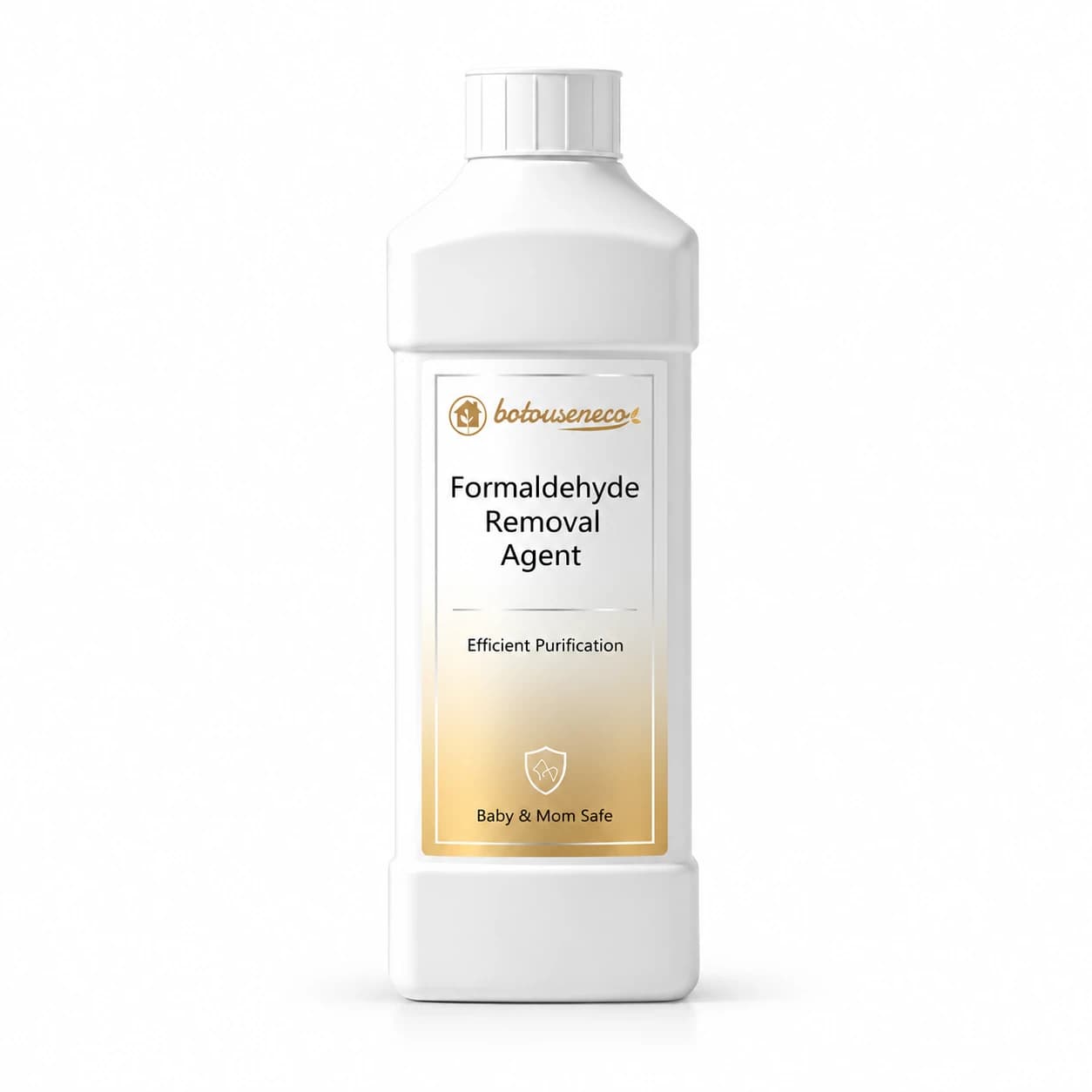
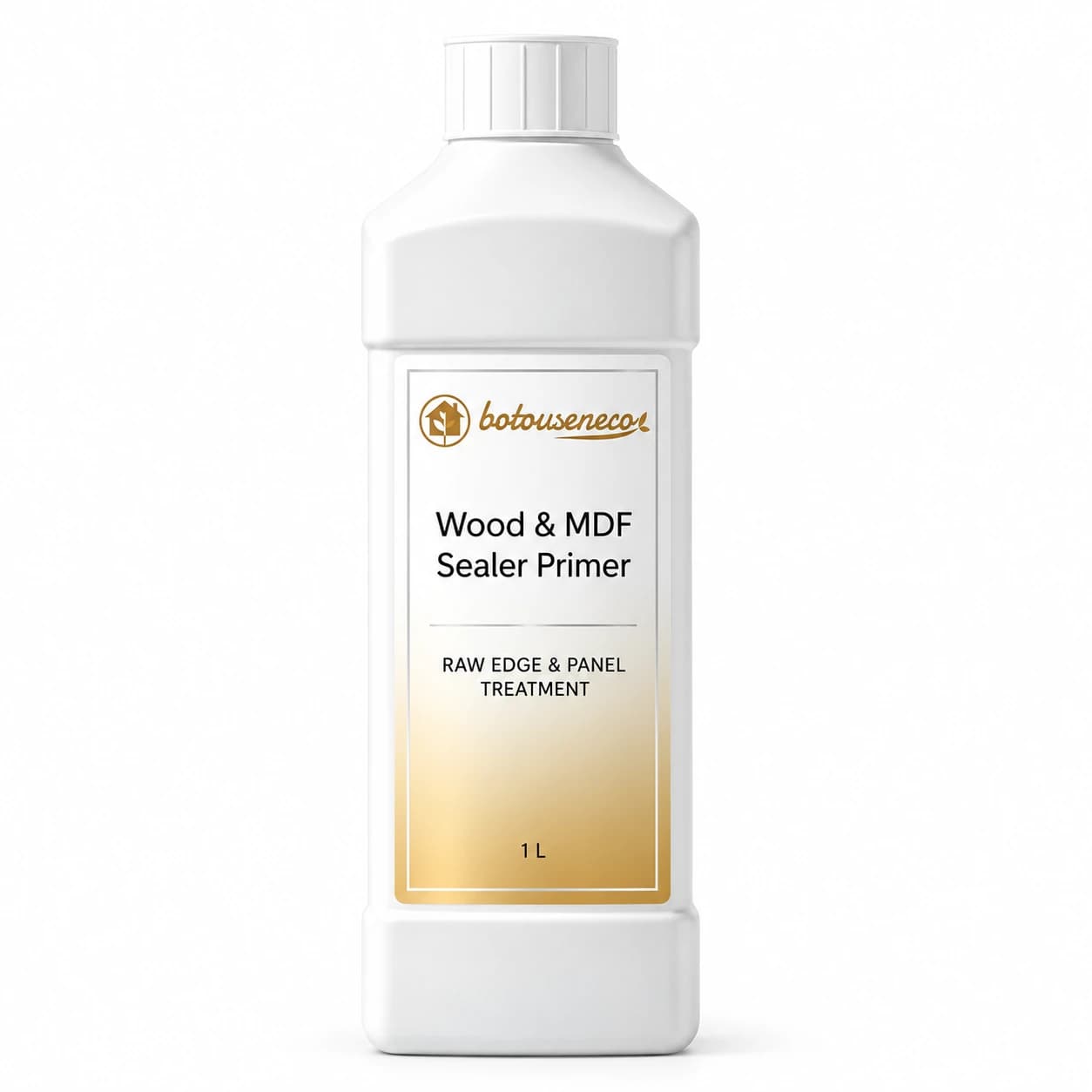
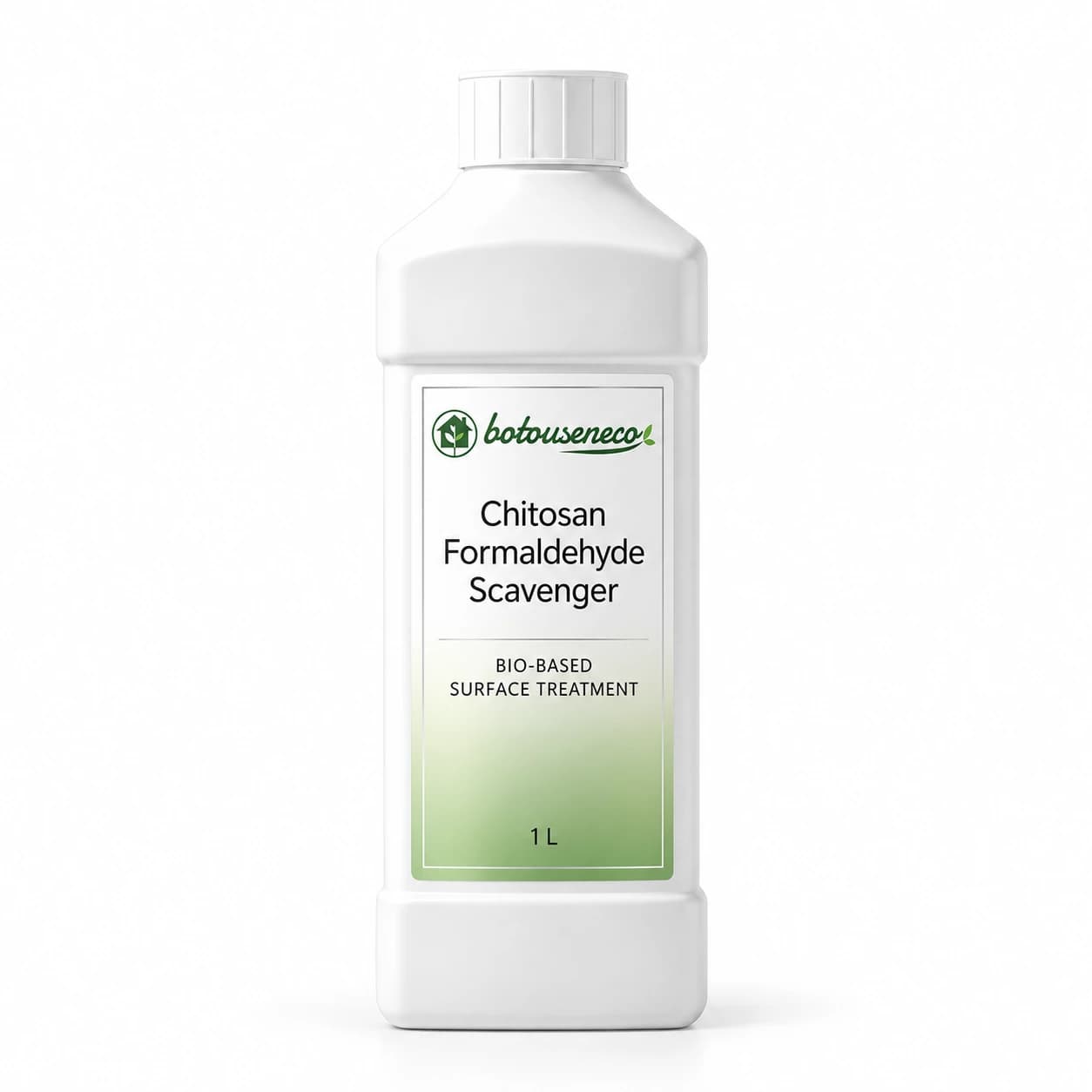
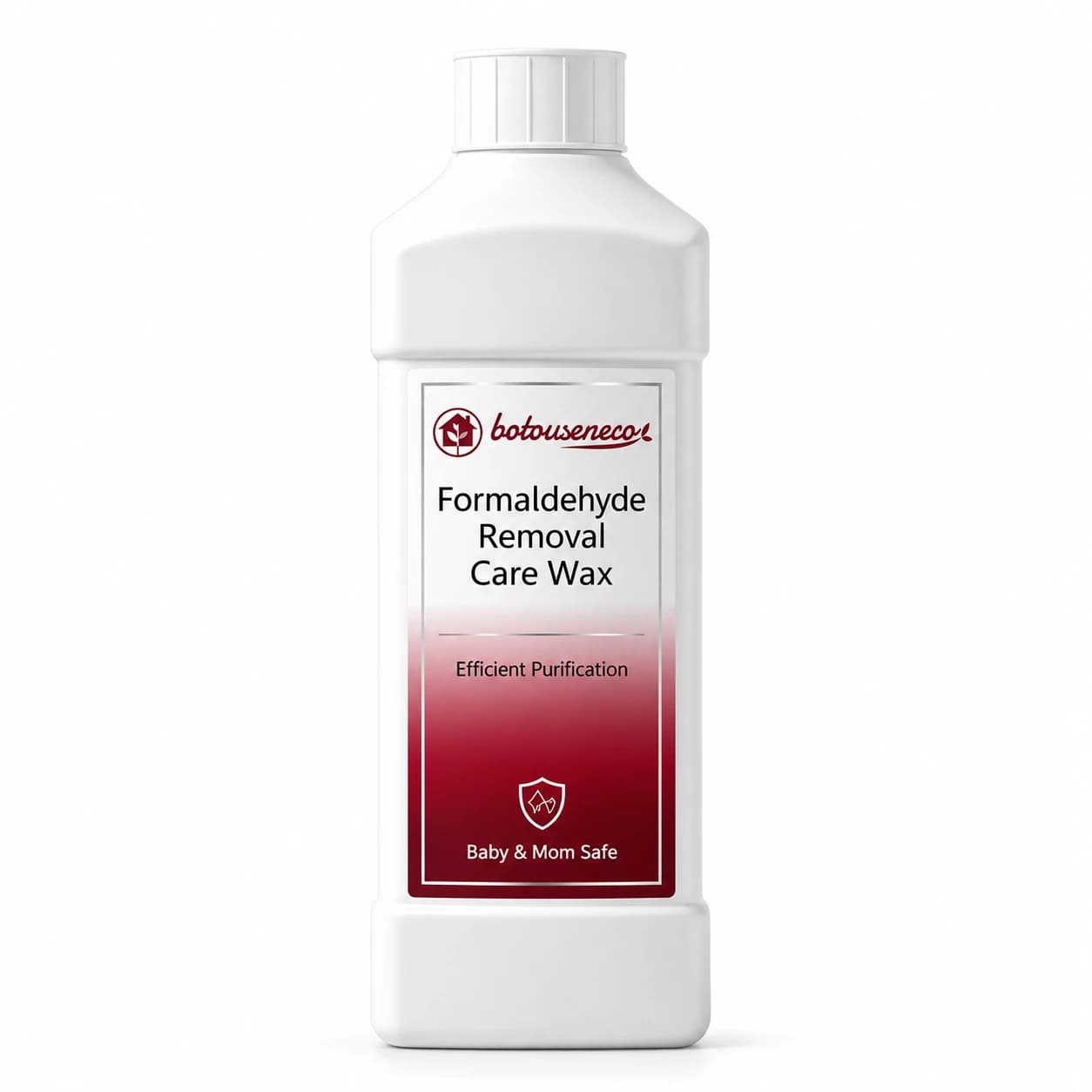
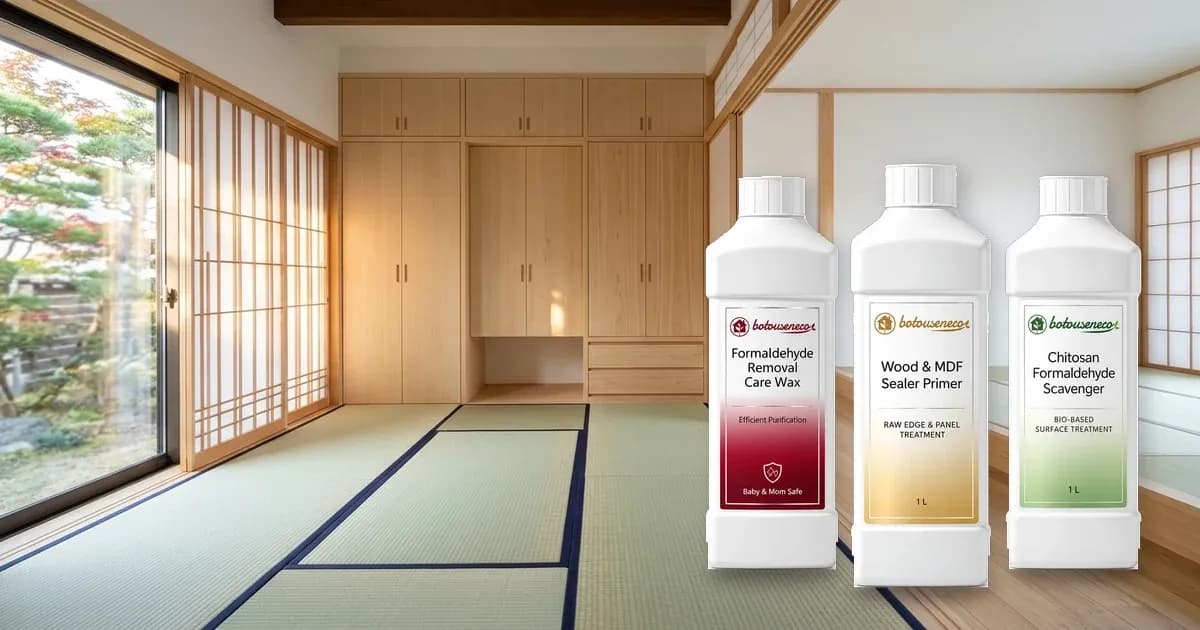
JIS F-four-star (F☆☆☆☆) compliance requires wood panels and export millwork to average <= 0.3 mg/L (maximum <= 0.4 mg/L) under the JIS A 1460 24-hour glass desiccator test (20 C, 300 mL pure water). Standard E1 plywood fails this test because unsealed multi-ply saw cuts and tatami cores (kenzaitoko) emit free formaldehyde rapidly into stagnant jar air. Seal raw cuts with Penetrating Wood & MDF Sealer Primer (25 to 40 ml/m2) and buff thin veneers with Formaldehyde Removal Care Wax (10 to 15 g/m2). Mist direct-contact wood with Plant-Extract Chitosan (15 to 25 ml/m2) to lock emissions with zero veneer swell.
Key Takeaways
- Strict JIS A 1460 Desiccator Physics: F☆☆☆☆ requires <= 0.3 mg/L mean (<= 0.4 mg/L max) in a stagnant 0 ACH glass jar where 18 mm coupon saw cuts expose over 30% raw edge area.
- 3-Zone Substrate-Segregated Protocol: Seal raw plywood edges and kenzaitoko cores at 25 to 40 ml/m2 (2-4 mm penetration), buff 0.3-0.6 mm veneers with low-moisture Care Wax (10 to 15 g/m2), and mist direct-contact tatami slats with pH 6.0-7.0 Chitosan (15 to 25 ml/m2).
- Zero Veneer Grain Swell: Keeping water-heavy primers off decorative face veneers eliminates bubbling and fiber telegraphing on oak, walnut, birch, and hinoki export joinery.
- 40HQ Order Consumption Math: 100 tatami storage beds + 400 plywood cabinet boxes require 35.1 L Sealer Primer (2 x 25 L pails), 7.8 kg Care Wax (2 x 5 kg B2B pails), and 10.0 L Chitosan (2 x 5 L jugs).
Inside JIS A 1460 Desiccator Testing: Why <= 0.3 mg/L Is Stricter Than Standard Chamber Tests
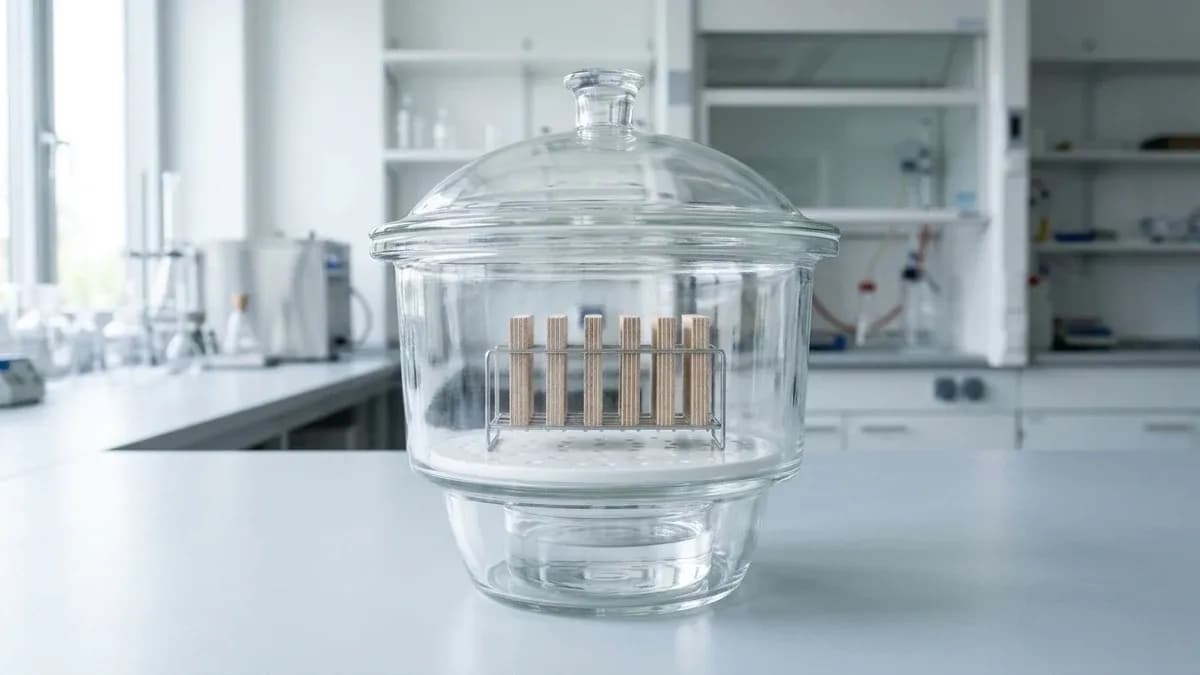
JIS A 1460 desiccator testing is the Japanese Industrial Standard method measuring formaldehyde emitted from cut wood-panel coupons (150 mm x 50 mm, ~1,800 cm2 exposed area) inside a sealed 9 to 11 L glass jar for 24 hours at 20 C. Released gas absorbs into 300 mL of distilled water for 412 nm acetylacetone spectrophotometry.
Export furniture mills shipping to Tokyo, Osaka, and regional Japanese homebuilders often pass European E1 or US EPA TSCA Title VI Composite Wood Products (2025) chamber audits, yet still fail Japanese F☆☆☆☆ lot acceptance. Three physical details inside the JIS A 1460 glass jar make this test uniquely demanding.
Meeting Japan's 0.10 mg/m3 (0.08 ppm) indoor guideline also aligns with the 0.10 mg/m3 30-minute cap in the World Health Organization (WHO) Indoor Air Quality Guidelines (2010; current IAQ reference). It matches exposure health profiles in the CDC ATSDR Toxicological Profile for Formaldehyde (1999; current toxicological reference).
Why Unsealed Saw Cuts Dominate the 24-Hour Desiccator Score
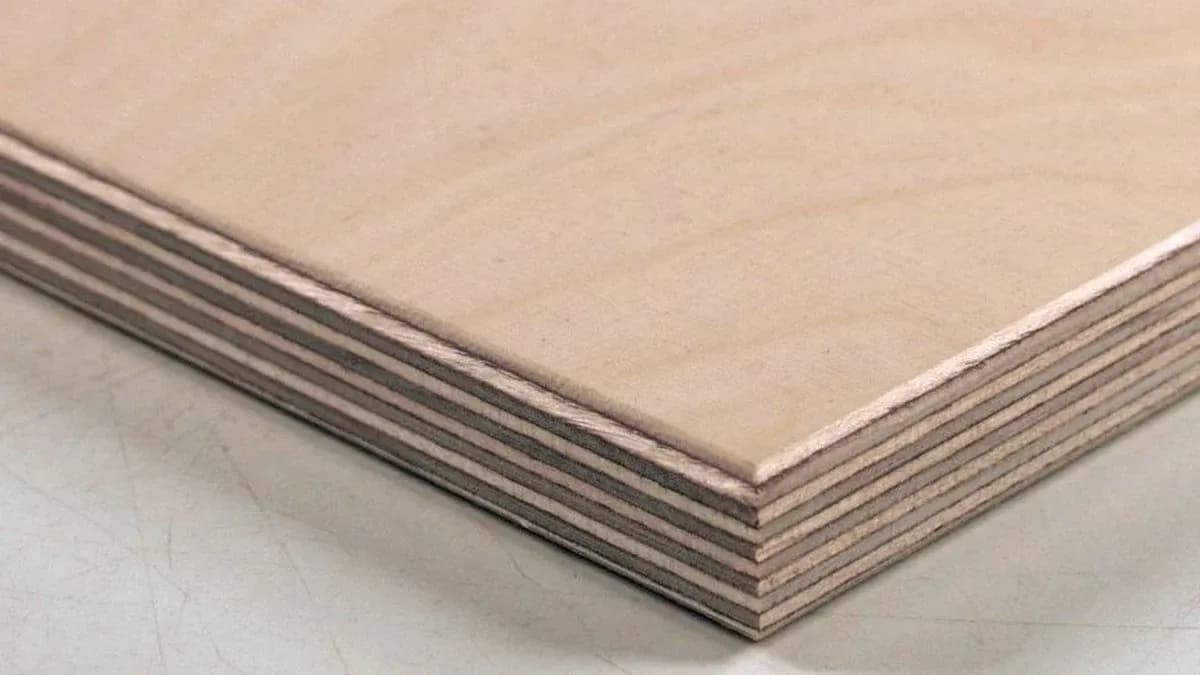
- 1. Extreme Exposed Edge-to-Face Ratio: Cutting an 18 mm veneered plywood panel into 150 mm x 50 mm lab coupons exposes four freshly sawn edges on every coupon. Those raw edges account for over 30% of total specimen surface area (72 cm2 edge vs. 150 cm2 face per coupon under JIS A 1460:2021 geometry), whereas a full cabinet door has mostly laminated faces.
- 2. High Water Affinity Pulls Vapor Continuously: As recorded in the NIH PubChem Formaldehyde Chemical Profile (2024), gaseous formaldehyde (boiling point -19.5 C) dissolves readily in water as methylene glycol. Inside a sealed 20 C desiccator, the open 300 mL dish of pure water acts as a continuous chemical sink that pulls free HCHO out of open ply seams for 24 hours.
- 3. Zero Fresh-Air Dilution (0 ACH): Unlike 1 m3 environmental chambers operating at 0.5 to 1.0 air changes per hour, a closed desiccator has zero fresh airflow. Comparative wood-testing research in PLoS One Wood Building Material Emission Test Correlations (PMC4675528) (2015) confirms that 9 to 11 L desiccator grades can diverge from chamber rankings when panel cores retain soluble free formaldehyde.
| JIS / JAS Grade | Desiccator Mean (JIS A 1460) | Desiccator Max | MLIT Emission Rate | Japanese Interior Use Rule |
|---|---|---|---|---|
| F☆☆☆☆ (F-Four-Star) | <= 0.3 mg/L | <= 0.4 mg/L | <= 5 ug/m2·h | Unrestricted interior surface area |
| F☆☆☆ (F-Three-Star) | <= 0.5 mg/L | <= 0.7 mg/L | > 5 to <= 20 ug/m2·h | Area capped by room ventilation rate (ACH) |
| F☆☆ (F-Two-Star) | <= 1.5 mg/L | <= 2.1 mg/L | > 20 to <= 120 ug/m2·h | Strict surface-area limit in habitable rooms |
| Below F☆☆ (Unrated) | > 1.5 mg/L | > 2.1 mg/L | > 120 ug/m2·h | Prohibited as interior finish under Building Standards Act |
Veneered Plywood and Tatami Cores: Why Standard E1 Panels Fail JIS F-Four-Star Audits
Multi-ply glue-line edge migration is the lateral diffusion of unbound formaldehyde along cross-banded veneer adhesive layers and low-density core plies inside plywood, blockboard, and compressed wood-fiber tatami boards (kenzaitoko).
Even when an exporter purchases certified low-emission core panels, downstream fabrication introduces secondary formaldehyde sources that push JIS A 1460 readings past 0.3 mg/L. A peer-reviewed review in Molecules Wood-Based Panels and VOC Emissions Overview (PMC12348141) (2025) details how wood species, hot-press resin ratios, and veneer overlays govern total aldehyde release.
For an engineering overview of resin hydrolysis and full panel-line dosing, read our pillar guide on industrial formaldehyde scavengers for MDF, particleboard, and furniture lines.
Three Hidden Emission Culprits in Japanese-Style Export Millwork
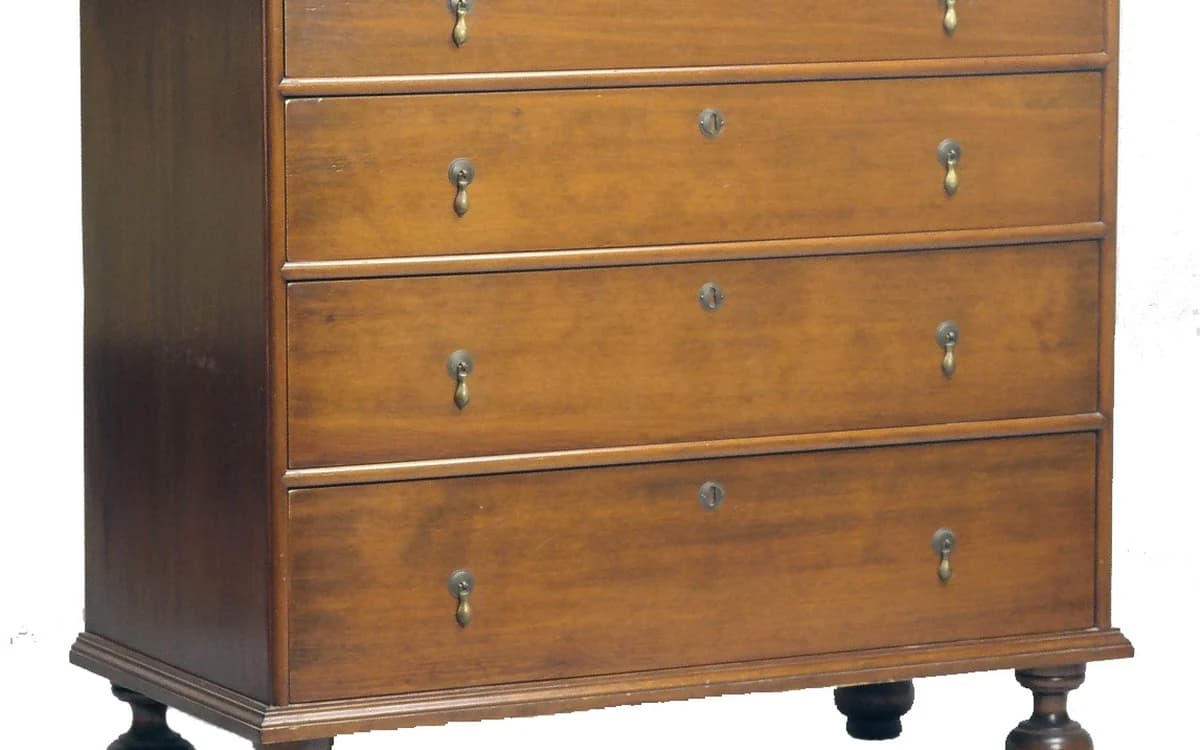
- Cross-Banded Plywood Glue Seams (7 to 13 Plies): A 15 mm or 18 mm birch or poplar plywood sheet stacks six to twelve urea-formaldehyde (UF) or melamine-urea-formaldehyde (MUF) glue lines. When CNC saws cut cabinet boxes, sliding fusuma grooves, or shelving slots, every ply edge vents straight into the room.
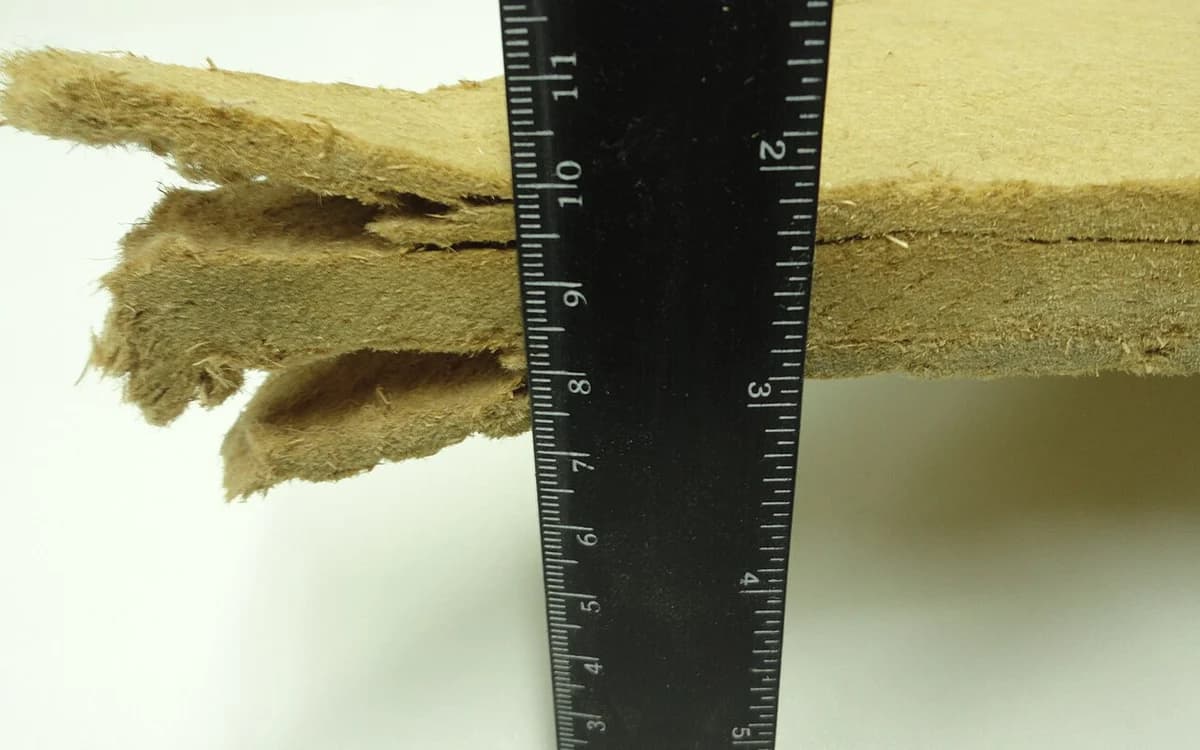
- Compressed Insulation-Board Tatami Cores (Kenzaitoko): Modern Japanese tatami mats rarely use pure stitched rice straw (waradoko). Instead, export factories build lightweight kenzaitoko cores by laminating wood-fiber insulation boards (softboard / MDF) with polystyrene foam using UF or contact adhesives. Under warm summer rooms or radiant floor heating, unsealed wood-fiber cores off-gas upward right through the woven igusa rush top mat.
- Thin Decorative Face Veneers (0.3 to 0.6 mm Oak, Hinoki, or Walnut): Applying conventional water-heavy liquid scavengers onto thin rotary or sliced wood veneers causes instant fiber swelling, telegraphing, and veneer bubbling. Consequently, mills often leave face veneers untreated, allowing residual pressing glue to bleed through microscopic wood pores.
How Do Export Mills Treat Plywood Edges, Thin Veneers, and Tatami Cores Without Grain Swell?
Substrate-segregated millwork remediation matches three chemical carriers to three wood surfaces: acrylic-amine primers on raw cores, carnauba-beeswax balms on thin veneers, and zero-solvent marine chitosan on contact tatami rush and nursery joinery.
Treating every wood part with one generic aqueous spray either raises delicate veneer grain or fails to seal open saw-cut cores. Across our furniture and wood panel factory compliance programs, export QA teams follow a three-zone surface protocol aligned with US EPA Indoor Air Quality Technical Reference (2025) source-control principles.
Step-by-Step Factory Application Sequence
For example, in an illustrative quality-control scenario, skipping raw underside slots on 18 mm birch-veneered tatami bed frames leaves exposed plies open. Those hidden edges alone can push a JIS A 1460 coupon check from 0.24 mg/L (F☆☆☆☆ pass) up to 0.48 mg/L (F☆☆☆☆ fail). Sealing underside cutouts and rear grooves closes that leak path cleanly.
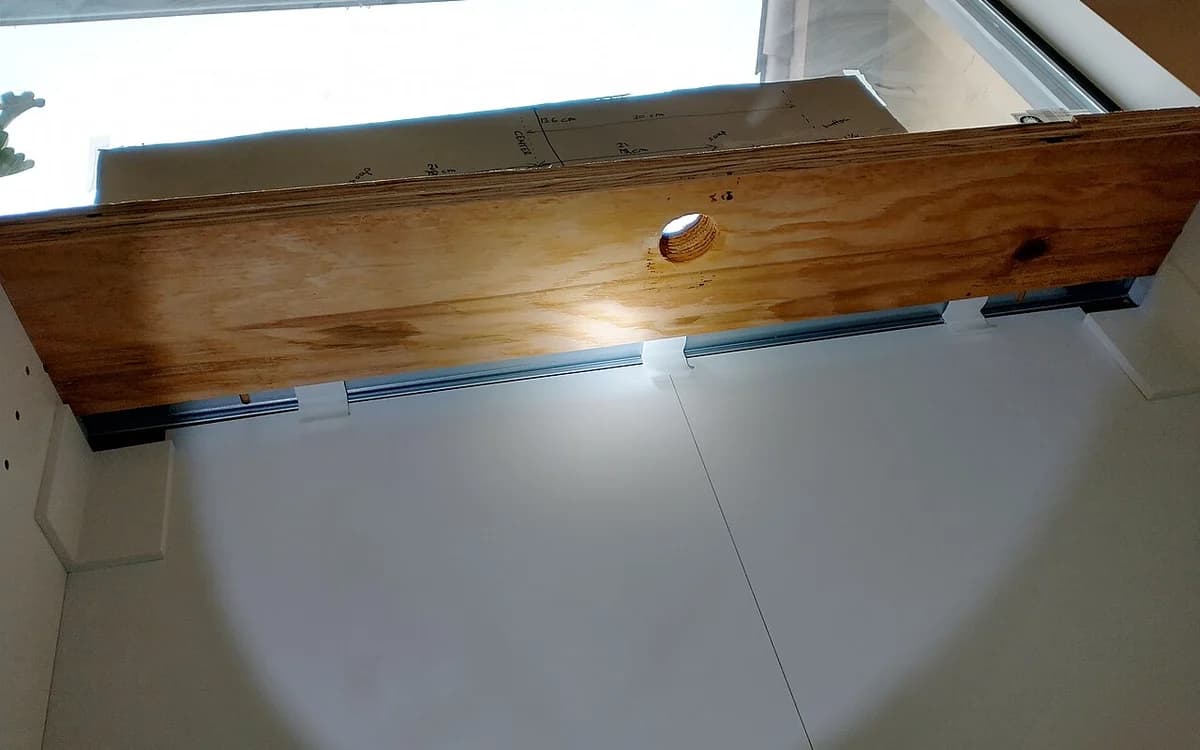
- Zone 1 (Seal Exposed Multi-Ply Edges & Tatami Core Cutouts at 25 to 40 ml/m2): Right after CNC sizing, grooving, and boring, apply Penetrating Wood & MDF Sealer Primer by brush, roller, or 1.0 mm HVLP gun across raw plywood edges and kenzaitoko fiberboard perimeters. Buffered at pH 7.0 to 8.0, the micro-acrylic amine emulsion penetrates 2 to 4 mm deep (Botou Technical Datasheet, 2026). It dries touch-free in 30 to 45 minutes (3 minutes in a hot-air tunnel; full cross-linked cure in 12 to 24 hours) without weakening EVA or PUR edge banding.
- Zone 2 (Buff Thin Veneered Show Faces & Solid Trim at 10 to 15 g/m2): Wipe 10 to 15 g/m2 of Formaldehyde Removal Care Wax onto 0.3 to 0.6 mm oak, walnut, birch, or hinoki veneers with a clean microfiber pad. Let it soak for 10 minutes, then buff to a satin sheen. Refined carnauba and plant waxes block moisture while oil-miscible traps bind surface aldehydes with zero veneer swelling. See timber finishing notes in our guide on rosewood and oiled solid-timber furniture beeswax-carnauba formaldehyde barrier wax.
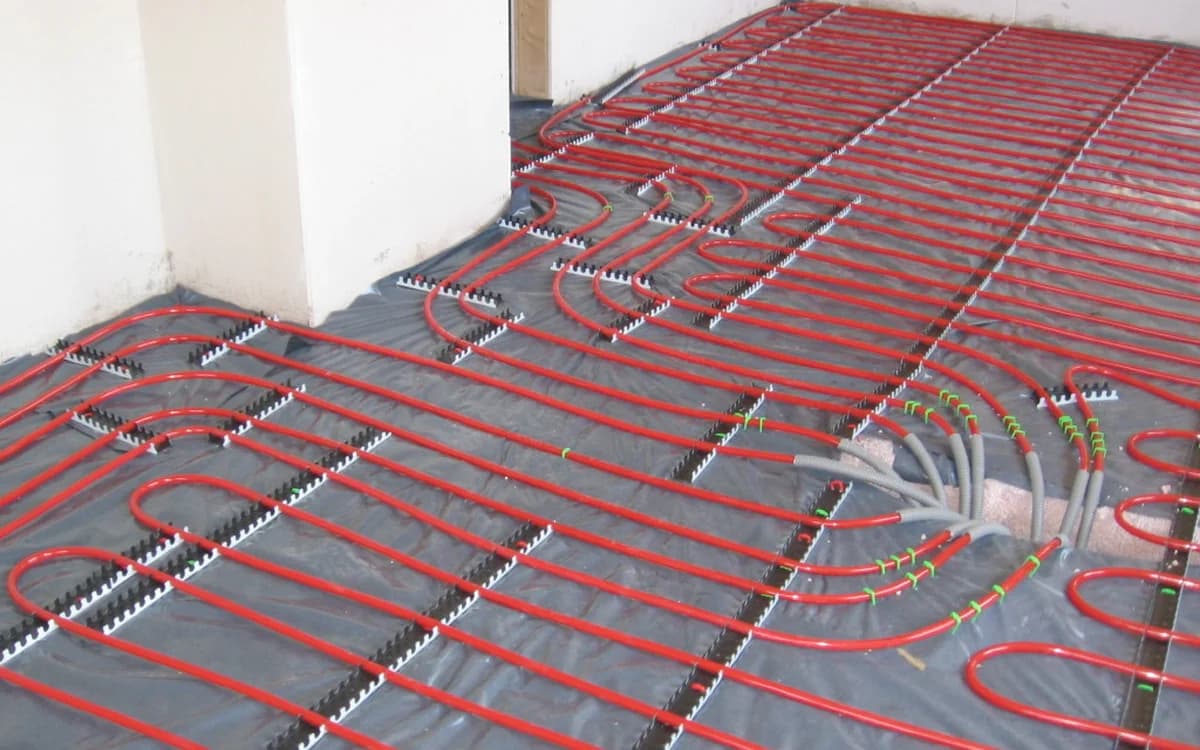
- Zone 3 (Mist Direct-Contact Tatami Bases & Nursery Millwork at 15 to 25 ml/m2): Some Japanese orders require zero synthetic polymers on bare softwood tatami slats, children's storage beds, and closet drawers. On those contact zones, mist 15 to 25 ml/m2 of Plant-Extract Chitosan Formaldehyde Scavenger via a 0.5 to 0.8 mm HVLP gun. For heated Japanese wood-flooring assemblies resting above plywood subfloors, review underfloor heating engineered wood flooring formaldehyde subfloor sealing.
| Export Millwork Component | Primary Emission Path | Specified botouseneco Formulation | Dosage & Drying Window |
|---|---|---|---|
| Raw Plywood Edges, CNC Bores & Tatami Fiberboard Cores | Unsealed multi-ply UF glue seams & porous core edges | Penetrating Wood & MDF Sealer Primer (pH 7.0-8.0, 12% acrylic-amine) | 25-40 ml/m2 brush, roll, or 1.0 mm HVLP; touch-dry 30-45 min (full cure 12-24 h) |
| Thin Decorative Wood Veneers (0.3-0.6 mm Oak, Walnut, Hinoki) | Micro-fissures in rotary/sliced veneers & show faces | Formaldehyde Removal Care Wax (refined carnauba + plant wax) | 10-15 g/m2 thin pad wipe + dry buff; zero grain swell |
| Woven Rush (Igusa) Tatami Mats, Shoji & Nursery Joinery | Skin-contact wood & rush needing zero synthetic solvent | Plant-Extract Chitosan Scavenger (>= 95% deacetylated, pH 6.0-7.0) | 15-25 ml/m2 via 0.5-0.8 mm HVLP mist; bio-based film |
| Underfloor Heated Plywood Subfloors & Tatami Bases | Heat-accelerated UF flux at 28-35 C floor temperatures | Penetrating Sealer Primer (raw cuts/backs) + Care Wax (faces) | 30 ml/m2 on raw cuts + 10-15 g/m2 surface wax barrier |
Selecting F-Four-Star Export Millwork Formulations: MDF Sealer Primer, Care Wax, and Chitosan Scavenger
Inside our industrial formaldehyde and benzene scavenger product line, export woodworkers pair three zero-VOC, neutral-to-mild formulations matched to core density, veneer thickness, and end-user contact sensitivity.
1. Core & Cut-Edge Barrier: Penetrating Wood & MDF Sealer Primer (pH 7.0-8.0)
Core Specs: 12% +/- 1% solids (Botou Technical Datasheet, 2026) cross-linking micro-acrylic emulsion grafted with primary amine groups (-NH2). Slightly alkaline pH 7.0 to 8.0 neutralizes latent acid curing catalysts inside plywood and MDF cores while sealing pores 2 to 4 mm deep.
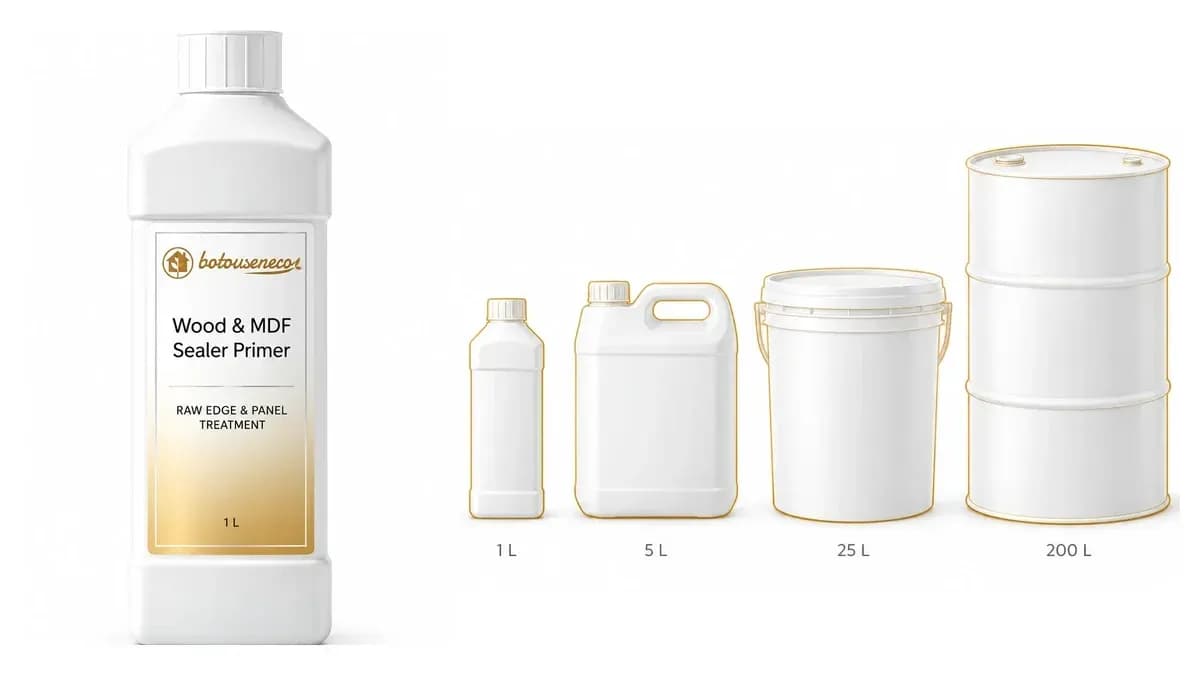
Coverage & Packaging: Applied at 25 to 40 ml/m2, one 25 L pail covers 625 to 1,000 m2 of raw plywood edges, grooves, and tatami core faces. Available in 1 L, 5 L, 25 L pails, and 200 L mill drums on our Penetrating Wood and MDF Sealer Primer page.
2. Veneer-Safe Surface Lock: Formaldehyde Removal Care Wax (10-15 g/m2)
Core Specs: Low-moisture smooth milky-white refined plant and carnauba wax emulsion blended with active aldehyde cross-linkers (zero silicones, zero harsh solvents).
Coverage & Packaging: Buffed at 10 to 15 g/m2, one 500 g bottle finishes 33 to 50 m2 (and one 1 kg bottle finishes 65 to 100 m2) of veneered doors, tatami trim, and solid wood joinery, with 5 kg and 20 kg B2B pails available for production lines. View specifications on our Formaldehyde Removal Care Wax page.
3. Bio-Based Direct-Contact Spray: Plant-Extract Chitosan Formaldehyde Scavenger (pH 6.0-7.0)
Core Specs: Formulated from 100% bio-based marine chitosan (>= 95% deacetylation, Botou Technical Datasheet, 2026) plus green tea polyphenols at mild pH 6.0 to 7.0. Primary glucosamine -NH2 chains lock surface formaldehyde into stable non-volatile Schiff bases while forming an antibacterial, odor-free film.
Coverage & Packaging: Misted at 15 to 25 ml/m2 (1 L covers 40 to 65 m2) onto infant furniture, tatami slats, and interior closet shelves. Review safety sheets on our Plant-Extract Chitosan Formaldehyde Scavenger page.
Worked Export Millwork Calculation: 100 Tatami Storage Beds and 400 Plywood Cabinet Boxes
For instance, calculate exact chemical consumption for an export woodshop fulfilling a Japanese contract order of 100 veneered-plywood tatami storage beds plus 400 matching wall cabinet boxes (a 1 x 40HQ shipment):
- 1. Raw Cut Edges, Underside Grooves & Tatami Core Perimeters (Sealer Primer at 30 ml/m2): 100 tatami storage beds (4.5 m2 raw plywood slots, base slats, and core cutouts each = 450 m2) + 400 plywood cabinet boxes (1.8 m2 unbanded rear edges, cam bores, and back panels each = 720 m2) = 1,170 m2 total raw area. Sealer Primer required = 1,170 m2 x 0.030 L/m2 = 35.1 Liters (two 25 L pails, leaving 14.9 L reserve for rework).
- 2. Thin Birch & Oak Veneered Show Faces (Care Wax at 12 g/m2): Visible veneered drawer fronts, trim rails, and cabinet doors across the order = 650 m2. Care Wax required = 650 m2 x 12 g/m2 = 7,800 g (7.8 kg) (two 5 kg B2B mill pails).
- 3. Direct-Contact Tatami Support Slats & Inner Drawers (Chitosan Scavenger at 20 ml/m2): Uncoated timber slats and interior drawer contact surfaces = 500 m2. Plant-Extract Chitosan Scavenger required = 500 m2 x 0.020 L/m2 = 10.0 Liters (two 5 L jerrycans).
Verified Botou Plant Supply Terms, Sample Trial Kits, and Private Test Documentation
Made in-house since 2015 by Hebei Senzhijia Environmental Protection Co., Ltd (botouseneco) in the Botou Industrial Zone, Cangzhou, Hebei, China, all products carry full batch traceability for export mills. Learn more about us and our Botou wood-chemistry plant before booking your pre-shipment coupon trial.
- Sample Evaluation Kit (MOQ 1-5 units): 500 mL / 1 L Sealer Primer or Chitosan Scavenger, or 500 g / 1 kg Care Wax bottle for direct JIS A 1460 lab coupon testing on your own panels.
- Standard Bulk Supply (MOQ 100 L / 4 drums): Liquid sealers and chitosan sprays ship in 5 L jugs, 25 L pails, or 200 L mill drums. Care Wax ships in 500 g / 1 kg bottles or 5 kg / 20 kg B2B pails.
- OEM Private Label (MOQ 500-1,000 units): Custom brand runs for regional woodworking distributors and furniture care brands.
- Lead Times & Port of Loading: Evaluation samples dispatch in 24-48 hours, bulk drums in 5-7 business days, and OEM runs in 10-14 business days. All cargo ships via Tianjin Port, China (about 180 km from our plant) as unrestricted Non-Dangerous Goods (Non-DG) with a 16-section GHS Rev. 10 / ISO 11014 SDS (EU REACH SVHC-free).
- Quality Systems & Private Report Policy: Production operates under ISO 9001:2015 Quality Management System and ISO 14001:2015 Environmental Management System controls, supported by CMA / CNAS-accredited chamber verification (ISO 16000-9 / GB/T 18883-2022). By company policy, certificate numbers and lab scans are never posted online. Private copies, batch COAs, and technical dosing sheets are shared directly when you contact our B2B wood-panel compliance desk.
Standards & references
- JIS A 1460:2021 (Building Boards Determination of Formaldehyde Emission - Desiccator Method), JIS A 5905, JIS A 5908 & JAS Plywood F☆☆☆☆ Tiers.
- Japan Ministry of Land, Infrastructure, Transport and Tourism (MLIT) Building Standards Act (<= 5 ug/m2·h unrestricted interior use) & MHLW 0.10 mg/m3 (0.08 ppm) guideline.
- US EPA TSCA Title VI Composite Wood Products Regulation & Indoor Air Quality Technical Reference (2025).
- World Health Organization (WHO) Indoor Air Quality Guidelines, NIH PubChem Formaldehyde Profile & CDC ATSDR Toxicological Profile.
- UN GHS Rev. 10 / ISO 11014 Non-DG SDS, ISO 9001:2015, ISO 14001:2015 & CMA / CNAS Chamber Verification (ISO 16000-9 / GB/T 18883-2022).
Frequently Asked Questions (FAQ)
01.What exact desiccator limits define JIS F-four-star (F☆☆☆☆) certification?
Under JIS A 1460 (JIS A 5905, JIS A 5908, and JAS plywood tiers), F☆☆☆☆ requires a mean formaldehyde reading of <= 0.3 mg/L and a maximum of <= 0.4 mg/L. Samples stand for 24 hours at 20 C above 300 mL of distilled water. Only F☆☆☆☆ boards qualify for unrestricted interior area use under Japan's Building Standards Act.
02.Why does E1 or CARB Phase 2 plywood still fail JIS A 1460 desiccator tests after cutting?
Cutting 150 mm x 50 mm desiccator coupons exposes four raw multi-ply edges per piece, turning cross-banded UF adhesive seams into open emission channels inside a stagnant (0 ACH) glass jar. Applying Penetrating Wood & MDF Sealer Primer (25 to 40 ml/m2) seals exposed ply edges 2 to 4 mm deep and locks migrating formaldehyde before testing or shipment.
03.Will Penetrating Wood & MDF Sealer Primer raise the grain on 0.3 mm decorative wood veneers?
Do not flood thin decorative face veneers with water-based edge primers. Use Penetrating Wood & MDF Sealer Primer strictly on raw saw-cut edges, CNC bores, grooves, and unlaminated back panels. On thin 0.3 to 0.6 mm oak, birch, or hinoki show faces, buff low-moisture Formaldehyde Removal Care Wax (10 to 15 g/m2) for zero grain swell.
04.Is Plant-Extract Chitosan Formaldehyde Scavenger safe for woven tatami beds and children's joinery?
Yes. Built from 100% bio-based marine chitosan (>= 95% deacetylation) and green tea polyphenols at mild pH 6.0 to 7.0, it contains zero synthetic solvents or harsh ammonia. Misted at 15 to 25 ml/m2 via a 0.5 to 0.8 mm HVLP gun, Plant-Extract Chitosan Formaldehyde Scavenger converts surface aldehydes into stable, odor-free solid complexes while leaving a gentle antibacterial layer.

About the author.
Loo
Loo is Senior Technical Writer and IAQ Research Editor at botouseneco (Hebei Senzhijia), translating laboratory chamber datasets, GB/T 18883 and ISO 16000 standards, and field application logs into clear step-by-step protocols for hospitality housekeeping teams, healthcare facilities, school campuses and renovation crews.
- Senior Technical Writer & IAQ Research Editor · Botou R&D documentation desk.
- Specialist in hospitality, healthcare and field remediation SOPs.
Written by Loo (Senior Technical Writer & IAQ Research Editor) and reviewed by our Botou formulation & QC leadership. Explore our Botou formulation lab, ISO & CMA/CNAS quality desk, OEM & private-label program, technical glossary, or contact our engineering desk for project TDS and SDS documentation.
Next step.