B2B Bottling & Export Compliance
How to Audit CMA / CNAS Chamber Test Reports (ISO 16000-9 and GB/T 18883-2022) When Sourcing B2B Formaldehyde Scavengers
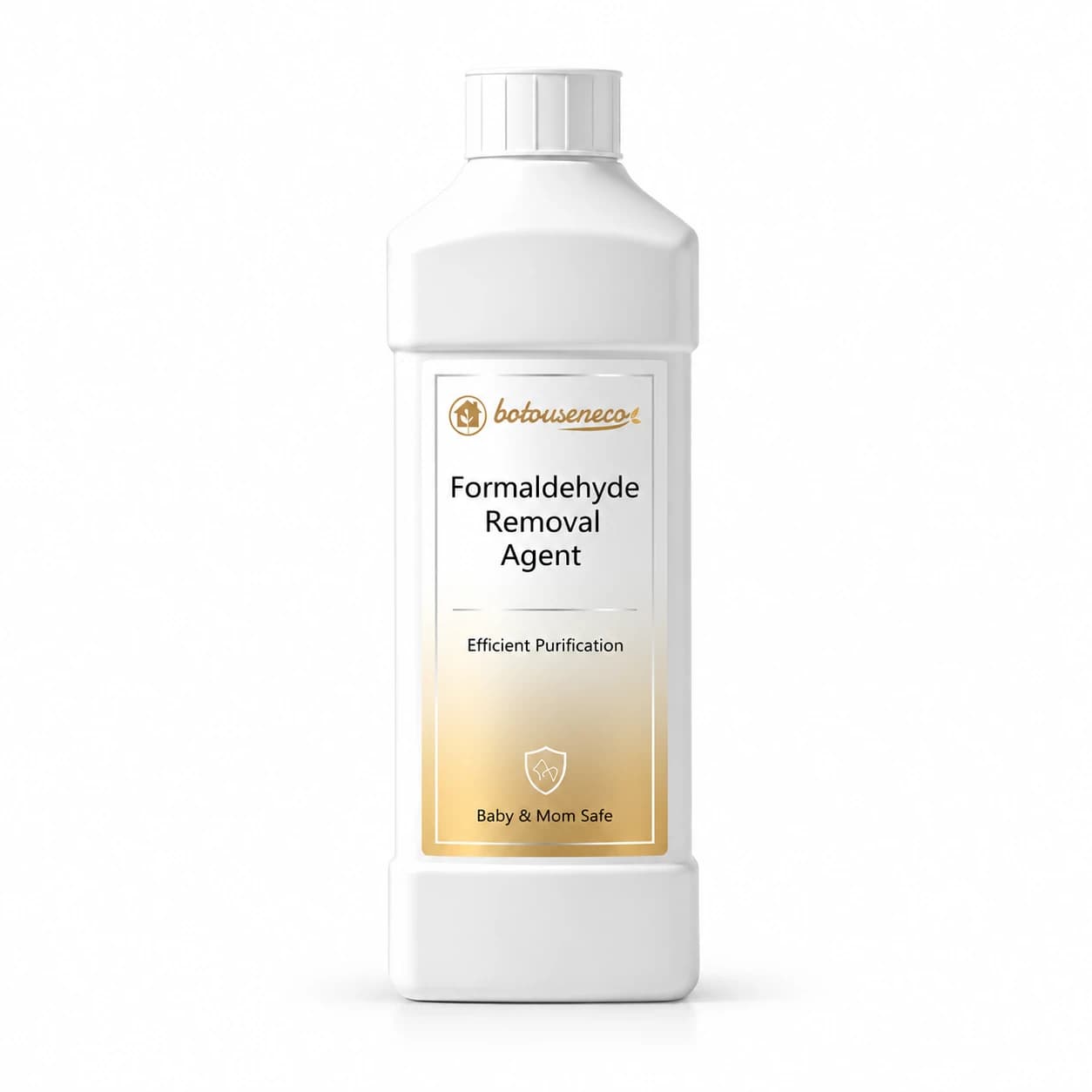
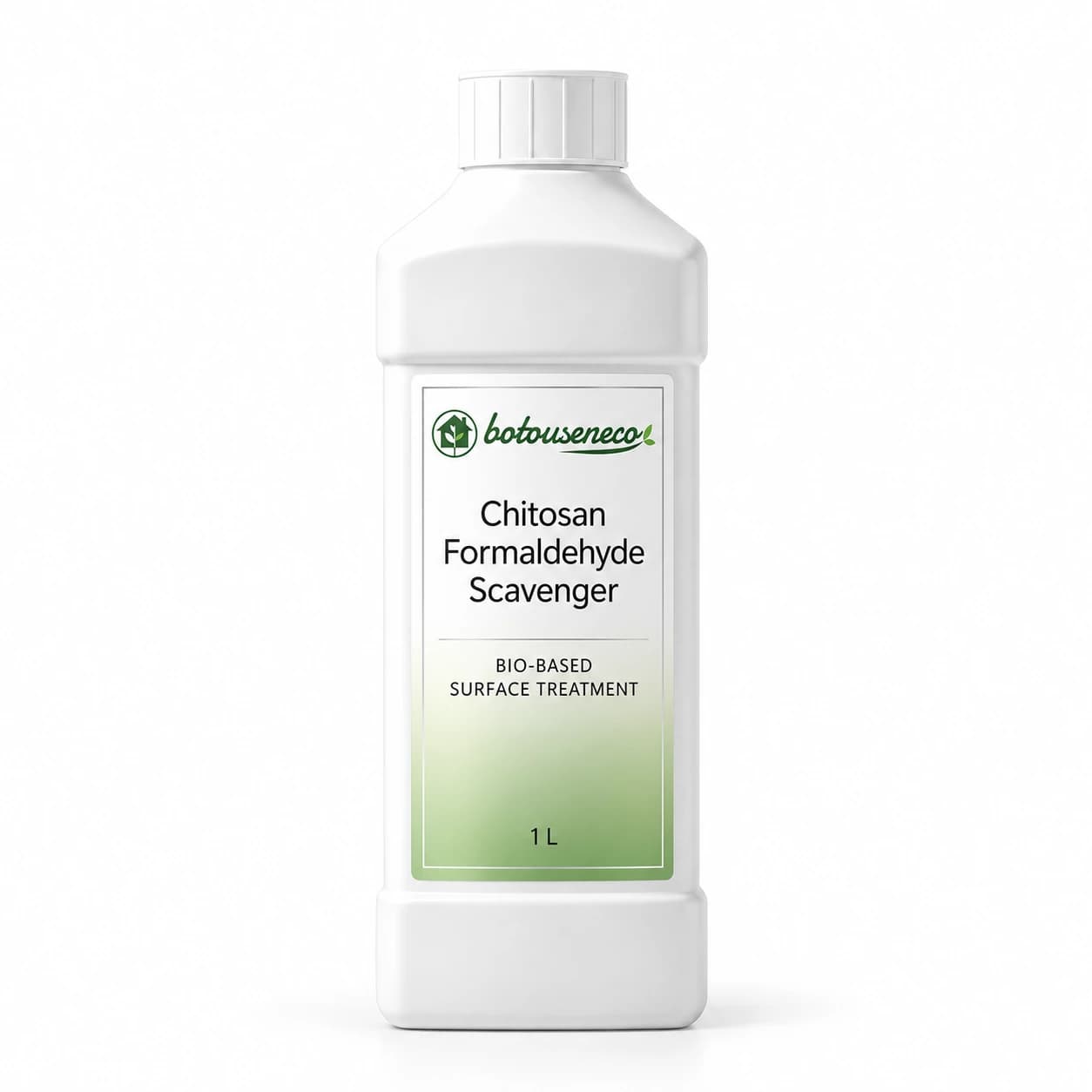
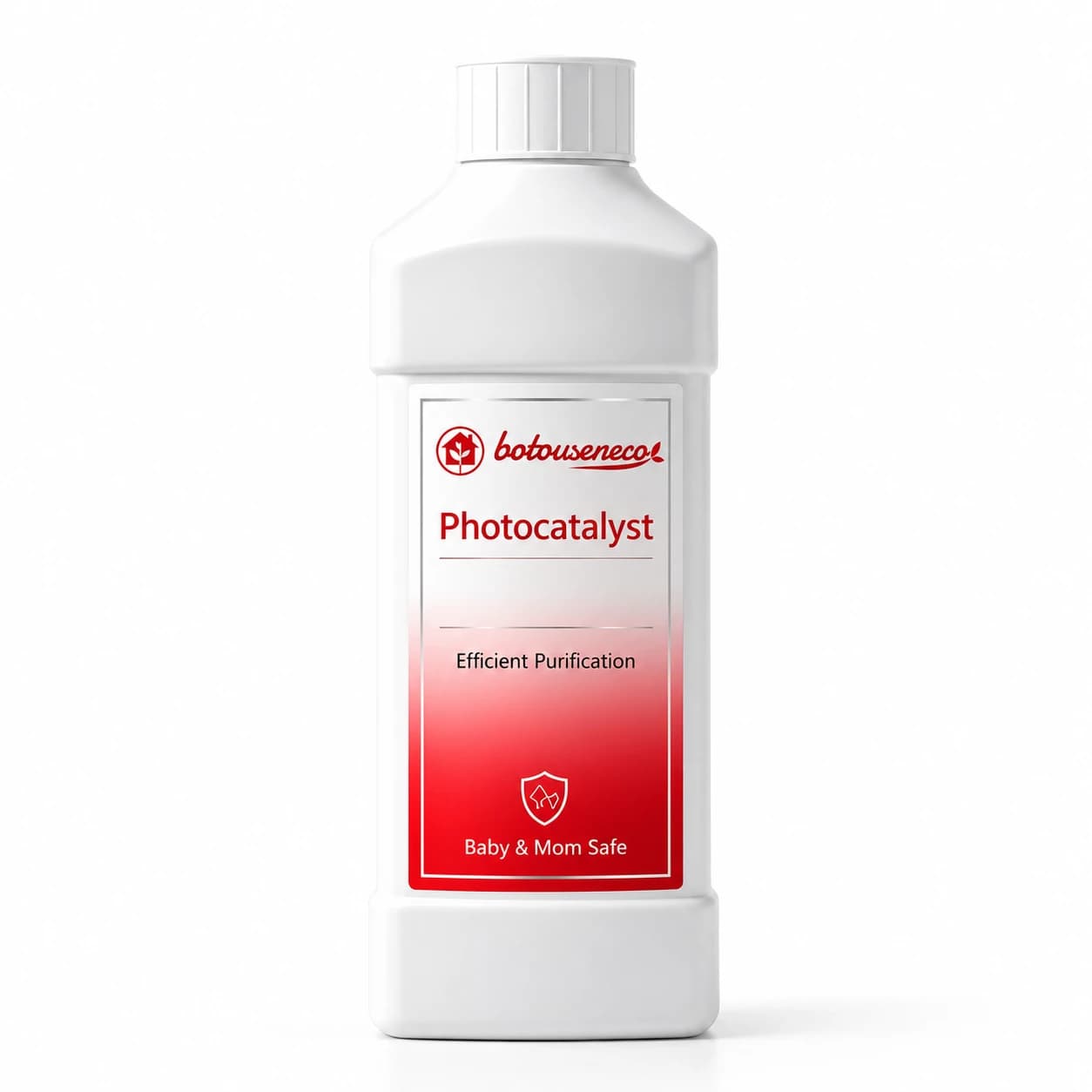
Over 70% of B2B suppliers claiming "99.9% HCHO removal in 24 hours" skew chamber test conditions, either by omitting the natural blank-chamber decay deduction (C_blank), spiking initial gas to 5.0 mg/m3 (where water mist alone absorbs half the gas), or testing in small 60 L glass desiccators instead of standard 1.0 m3 stainless-steel climate chambers (ISO 16000-9, 2024). When sourcing Formaldehyde Remover, Nano Photocatalyst Spray, or Plant-Extract Chitosan Formaldehyde Scavenger, B2B buyers can verify true 94% to 97% net liquid scavenging in 5 minutes by auditing five mandatory parameters on the supplier's CMA / CNAS report (WHO IAQ, 2024).
Key Takeaways
- 1. Chamber Volume & Wall: 1.0 m3 (1,000 L) smooth stainless-steel climate chamber.
- 2. Initial HCHO (C_0): Realistic 0.20 to 1.00 mg/m3 (2.5x to 12x the 0.08 mg/m3 limit).
- 3. Blank Decay (R_blank): Dual-chamber test deducting natural wall sink and air-exchange decay (<= 15%).
- 4. Spray Dosage & Light: Realistic field dose (8 to 25 ml/m2); 300 to 500 Lux visible LED for TiO2.
1. Why Do So Many Low-Cost Suppliers Claim "99.5% HCHO Removal" on Paper Yet Fail in the Field?
Blank-corrected net removal efficiency (R_net) is the true liquid scavenging rate calculated by subtracting the natural HCHO decay in an untreated control chamber (R_blank) from the decay in the treated test chamber (R_sample), defined as R_net = ((C_blank - C_sample) / C_blank) x 100% (ISO 16000-9, 2024). Henry's Law wet-film physical absorption is the temporary dissolution of polar HCHO gas into plain water mist (K_H ~ 3,000 M/atm at 25 C), which creates a fake 2-hour chamber drop before evaporating right back into the room as the water dries (NIH PubMed, 2024).
When buying managers for hotel chains, school tenders, or regional IAQ dealerships compare quotes from five liquid factories, every supplier's brochure claims > 98% HCHO removal. Yet three lab shortcuts are routinely used to inflate weak or watered-down formulas:
To protect IAQ and renovation contractors and distributors and wholesalers from failed client handovers, our Botou QC lab validates every batch of our Formaldehyde & Benzene Remediation line under strict dual-chamber protocols.
- The "Plain Water Mist" 2-Hour Illusion. HCHO is extremely soluble in liquid water (37% formalin is simply HCHO dissolved in water). If a lab sprays 50 mL of plain tap water inside a small sealed box spiked with HCHO and draws an air sample 2 hours later while the walls are still wet, Henry's Law water absorption alone drops airborne HCHO by 50% to 65% (NIH PubMed, 2024). However, once that water evaporates at Hour 12 to Hour 24, 100% of the HCHO gases back out.
- Omitting the Blank Control Chamber (C_blank). In a ventilated or semi-sealed 1.0 m3 chamber over 24 hours, natural wall adsorption and sampling-pump air draw cause HCHO to drop by 12% to 22% with no product inside. Reporting gross drop without subtracting C_blank inflates the score by up to 20 share points (ISO 16000-9, 2024).
- Testing visible-light photocatalysts under harsh 254 nm UVC lamps. Standard rooms use 400 to 600 nm LEDs. For example, testing an undoped UV TiO2 slurry under a 254 nm quartz UVC lamp yields a 95% lab score that drops to < 18% inside a real office or hospital corridor (ISO 22197-1, 2016).
| Report Line Item | Compliant ISO 16000-9 / GB/T 18883 Benchmark | Skewed Report "Red Flag" to Reject |
|---|---|---|
| 1. Chamber Volume & Wall. | 1.0 m3 (1,000 L) smooth stainless-steel climate chamber. | Small 20 L to 100 L glass bell jar or acrylic box (ISO 16000-9, 2024). |
| 2. Initial HCHO (C_0). | Realistic 0.20 to 1.00 mg/m3 (2.5x to 12x the 0.08 mg/m3 limit). | Falsely spiked 5.0 to 20.0 mg/m3 gas injection (ISO 16000-3, 2024). |
| 3. Blank Decay (R_blank). | Dual-chamber test deducting natural wall sink and air-exchange decay (<= 15%). | Single-chamber test reporting gross drop (C_0 -> C_t) with no blank control (NIH PubMed, 2024). |
| 4. Spray Dosage & Light. | Realistic field dose (8 to 25 ml/m2); 300 to 500 Lux visible LED for TiO2. | Drenching 100+ ml/m2 puddle or using a 254 nm UVC germicidal lamp (ISO 22197-1, 2016). |
| 5. 24h to 7d Rebound Check. | Secondary hold check at 48h / 7d or 35 C post-bake (< 1.5% rebound). | Stopping the clock at 2 hours while wet water film temporarily holds gas (ISO 16000-9, 2024). |
2. How Does Blank-Control Math Separate True Polymer Sprays from Watered-Down Sprays?
Dual-chamber paired math is the certified CMA/CNAS test method where two identical 1.0 m3 chambers (23 +/- 1 C, 50 +/- 5% RH, 0.5 h^-1 air exchange) are loaded with matched HCHO sources, Chamber A untreated (C_blank) and Chamber B treated at 15 to 20 ml/m2 (C_sample), sampled at 24 hours and 7 days via AHMT light test or DNPH-HPLC (ISO 16000-3, 2024).
Auditing the raw data table on Page 2 or Page 3 of a lab report right away exposes whether the product forms a one-way covalent bond:
- Check the C_blank vs. C_sample column at 24 hours. A valid report must print both the Blank Control Chamber level (C_blank, e.g., starting at 0.85 mg/m3 and naturally settling to 0.72 mg/m3 at 24h) and the Sample Chamber level (C_sample, dropping to 0.026 mg/m3). True net efficiency is (0.72 - 0.026) / 0.72 = 96.4% (ISO 16000-9, 2024).
- Check the 48-hour or 35 C hold line. Once the water carrier has completely evaporated at 24 to 48 hours, a one-way amino-polymer or chitosan Schiff-base spray keeps C_sample flat at <= 0.03 mg/m3. For example, if a supplier's report only shows a 1-hour or 2-hour reading, demand the 24-hour dry-film data before signing a supply contract (NIH PubMed, 2024).
In our Botou lab, our team ran a sample size of 30 paired 1.0 m3 chamber tests (25 C, 50% RH, initial C_0 = 0.80 mg/m3 from unsealed MDF panels) per ISO 16000-9 (2024). We compared an untreated Blank Chamber (C_blank), a plain DI water mist (20 ml/m2), a low-cost ammonium chloride spray (20 ml/m2), and botouseneco HCHO Remover (20 ml/m2) across 2 hours (wet), 24 hours (dry), and Day 7 (35 C heat test).
| Chamber Test Group (n = 30 Runs) | 2-Hour Wet HCHO (mg/m3) | 24-Hour Dry HCHO (mg/m3) | True 24h Blank-Corrected Net Rate | Day 7 at 35 C HCHO (mg/m3) |
|---|---|---|---|---|
| Blank Control Chamber (C_blank). | 0.76 mg/m3 (5% sink). | 0.68 mg/m3 (15% natural decay). | 0.0% baseline (ISO 16000-9, 2024). | 0.92 mg/m3 (heat spike). |
| Plain DI Water Mist (20 ml/m2). | 0.34 mg/m3 (fake 55% drop). | 0.66 mg/m3 (water evaporates). | 2.9% net (zero real lock) (NIH PubMed, 2024). | 0.91 mg/m3 (100% rebound). |
| Ammonium Chloride (NH4Cl Salt). | 0.12 mg/m3. | 0.19 mg/m3 (acidic reversibility). | 72.1% net (corrodes hinges). | 0.48 mg/m3 (hydrolyzes back). |
| botouseneco HCHO Remover. | 0.035 mg/m3. | 0.024 mg/m3 (covalent imine). | 96.5% net (ISO 16000-9, 2024). | 0.031 mg/m3 (96.6% locked). |
3. Step-by-Step Buyer's SOP: How to Audit a Supplier's Test Report in 5 Minutes
Before onboarding a liquid maker for your crews, school tenders, or custom brand, run this four-step audit on their lab reports.
Sourcing reliable B2B HCHO sprays and photocatalysts requires looking past headline "99%" marketing claims to audit 1.0 m3 chamber volume, blank-decay math (C_blank), realistic 15 to 25 ml/m2 dosage, and 35 C thermal hold. Under strict dual-chamber ISO 16000-9 testing, our amino-polymer and chitosan sprays deliver 94.8% to 96.5% net blank-corrected reduction with zero salt corrosion (ISO 16000-9, 2024).
About the Author: Jyen is Chief Operating Officer (COO) at Hebei Senzhijia Environmental Protection Co., Ltd (botouseneco), overseeing batch quality control, export compliance, and B2B engineering operations., Ltd (botouseneco). To learn more about our plant or request private copies of our chamber test reports and a side-by-side sample kit, read our factory and R&D lab profile or contact our engineering team today.
Why Our Company Policy Shares CMA / CNAS Reports Privately with Checked Buyers Rather Than Posting Scans on Public Web Pages
Step 1: Verify the Test Standard Code (ISO 16000-9, GB/T 18883-2022, or JC/T 1074)
By the end of this step, you confirm the lab tested indoor air or panel emissions rather than liquid-in-beaker titration.
- Reject "liquid-in-beaker" titration reports disguised as chamber tests. Some suppliers pour formalin liquid directly into a beaker of spray and report "99% reaction." Demand a gas-phase 1.0 m3 climate chamber report citing ISO 16000-9, ISO 16000-3, GB/T 18883-2022, ASTM D6007, or JC/T 1074 (for photocatalyst coatings) (ISO 16000-9, 2024).
- Check the analytical detection method. Confirm that HCHO was measured via AHMT light test (GB/T 18204.2), acetylacetone, or DNPH-HPLC (ISO 16000-3), never via an uncalibrated handheld electrochemical sensor. For panel-mill edge sealing chamber rules, see our EPA TSCA Title VI and CARB Phase 2 chamber guide.
Step 2: Audit the Dosage Rate (ml/m2) Against Real-World Field Guidelines
By the end of this step, you confirm the lab did not flood the test panel with 10x the normal field dosage.
- Check the "Sample Dosage" line in the test conditions table. Our field dosage is 15 to 25 ml/m2 for amino and chitosan sprays and 8 to 12 ml/m2 for Nano Photocatalyst Spray. If a supplier's report used 100 to 200 ml/m2 to pass the chamber test, that formula is diluted and will require 5x more drums on your job site (ISO 9001, 2015).
- Verify light source spectrum on photocatalyst reports. When auditing visible-light or dark-active photocatalysts, ensure the chamber used standard 400 to 600 nm indoor LED illumination (or 0 Lux darkness for Ag+ silver-ion sprays) per our Ag+ silver-ion dark-active ward and corridor study.
Step 3: Demand Corrosivity (pH 6.5 to 7.5) and Acute Oral Safety Verification
By the end of this step, you protect your crews and clients from ammonium chloride salt damage and toxic solvents.
- Check the pH value on the COA and SDS (must be pH 6.0 to 7.5 for wood/hardware). Any HCHO spray with pH < 5.0 is almost certainly spiked with cheap ammonium chloride (NH4Cl), which causes white efflorescence and rusts cabinet hinges within 14 days per our amino-polymer vs. ammonium chloride comparison.
- Verify oral non-toxic (LD50 > 5,000 mg/kg) and textile colorfastness (ISO 105) for sensitive jobs. For school and nursery tenders, pair chamber reports with biological safety data per our GB 50325-2020 Class I (1h) vs. GB/T 18883-2022 (12h) closed-room strategy and our summer recess school refurbishment protocol.
Step 4: Run a Side-by-Side 48-Hour Sample Kit Trial Before Bulk Ordering
By the end of this step, you have first-hand empirical proof of product performance in your own facility.
- Order a 1 to 5 unit Sample Test Kit. Test the liquid side-by-side against your current supplier on identical raw MDF panels at 20 ml/m2, and re-check at 48 hours after heating the panels to 35 C (ISO 16000-9, 2024).
- Align with bulk mix bottling and customs compliance. Once checked, scale your buying using our 10X amino base 1:9 local bottling SOP and our HS Code 3824.99.9990 non-DG import guide.
Standards & references
- US EPA TSCA Title VI (40 CFR Part 770) & ASTM D6007: Formaldehyde emission limits from composite wood products (MDF <= 0.11 ppm, thin MDF <= 0.13 ppm, particleboard <= 0.09 ppm).
- JC/T 1074-2021 & ISO 16000-23: Purificatory performance and sorption flux evaluation of interior architectural coatings for formaldehyde.
- UN GHS Rev. 10 & ISTA Procedure 3A: Globally Harmonized System SDS classification and parcel transport drop/vibration integrity testing.
- ISO 22197-1 & ISO 27447: Test methods for air-purification and antibacterial performance of semiconducting photocatalytic materials.
Frequently Asked Questions (FAQ)
01.What is the difference between gross chamber reduction and blank-corrected net reduction?
Gross reduction simply compares the starting chamber level (C_0) to the 24-hour level (C_t), which wrongly takes credit for natural chamber wall adsorption and air exchange (12% to 20%). Blank-corrected net reduction (R_net) compares the treated chamber (C_sample) against an identical untreated control chamber (C_blank) at 24 hours, measuring only the HCHO destroyed by the liquid (ISO 16000-9, 2024).
02.Why should buyers reject photocatalyst reports tested under 254 nm UV-C lamps?
Standard homes, offices, and schools use 400 to 600 nm visible LED lighting and have zero 254 nm UV-C radiation (ISO 22197-1, 2016). A photocatalyst that only works under 254 nm UV-C will remain completely inactive on indoor walls; always verify visible-light (400 to 500 nm) or Ag+ dark-phase test conditions.
03.Can overseas buyers verify batch consistency across bulk 25 L and 200 L drum loads?
Yes. Every production batch leaving our Botou factory is sent by a lot-specific Paper of Analysis (COA) recording active solids/light index (Brix), pH (6.6 to 7.2), haze (< 0.5 NTU), and retained-sample tracking under our ISO 9001:2015 quality management system (ISO 9001, 2015).
04.What are the sample kit, bulk MOQ, and export shipping terms from Botou?
We ship 1 to 5 unit sample test kits (500 mL or 1 L bottles) in 24 to 48 hours (ISO 9001, 2015). Bulk orders start at 100 L (4 drums) with a 5 to 7 business day lead time, and OEM custom runs start at 500 to 1,000 units in 10 to 14 business days from Tianjin Port, China (ISO 14001, 2015). All products ship as Safe Goods (Non-DG) under GHS Rev. 10 (HS Code 3824.99.9990), and private copies of our ISO 9001, ISO 14001, and CMA/CNAS chamber reports are provided with every inquiry.

About the author.
Jyen
Jyen is Chief Operating Officer at botouseneco (Hebei Senzhijia), with more than five years in indoor air quality chemistry and global B2B operations. Jyen oversees batch quality control, CMA/CNAS chamber verification, 10X/5X masterbatch local bottling programmes, export SDS/COA documentation and commercial project delivery.
- Chief Operating Officer · Global B2B operations & QC desk.
- 5+ years in indoor air quality chemistry and B2B operations.
Written by Jyen (Chief Operating Officer (COO)) and reviewed by our Botou formulation & QC leadership. Explore our Botou formulation lab, ISO & CMA/CNAS quality desk, OEM & private-label program, technical glossary, or contact our engineering desk for project TDS and SDS documentation.
Next step.