Furniture & Millwork Control
Treating Formaldehyde and BTEX in PU/PE Lacquered Furniture and Solvent Glue Seams Without Gloss Hazing
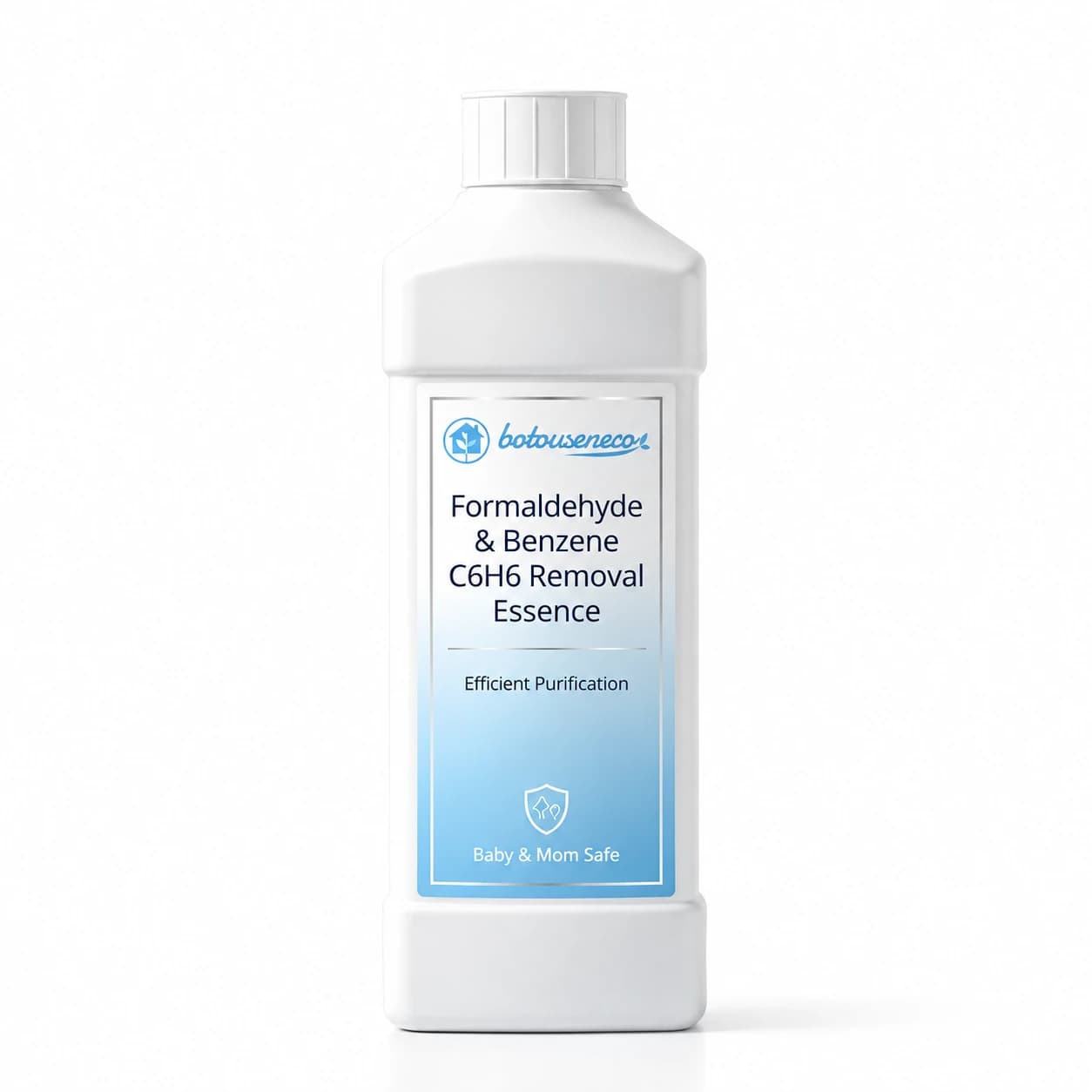
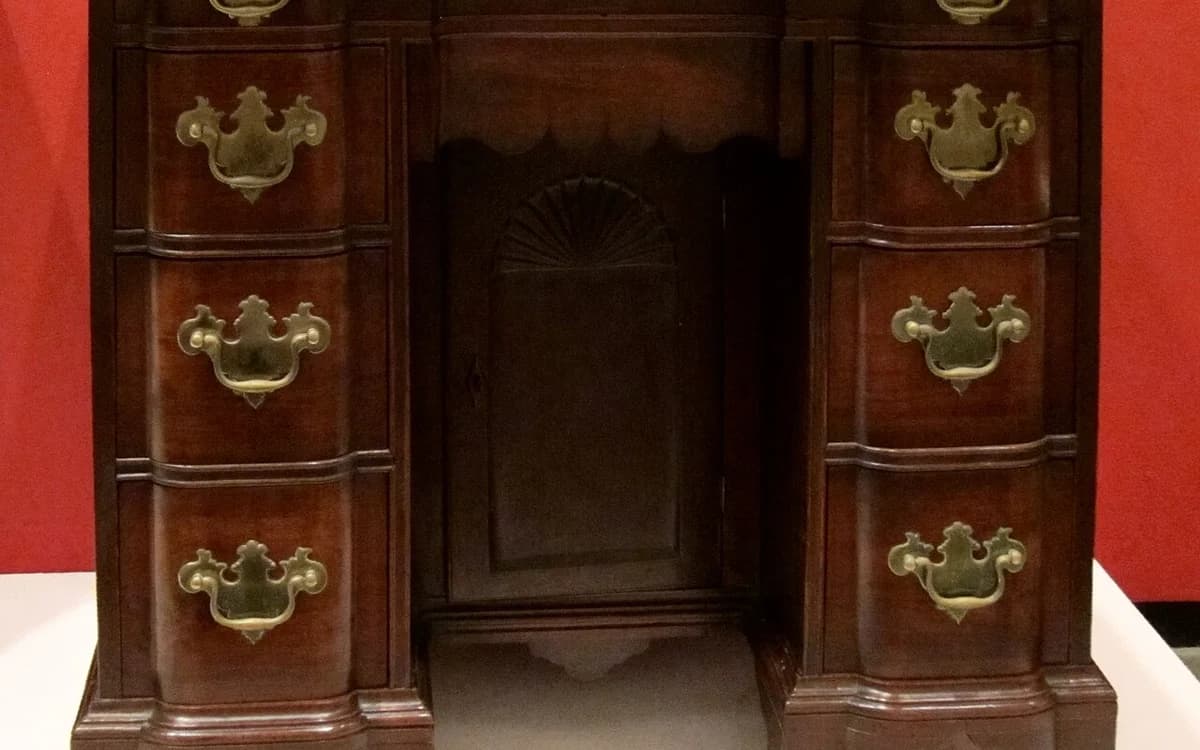
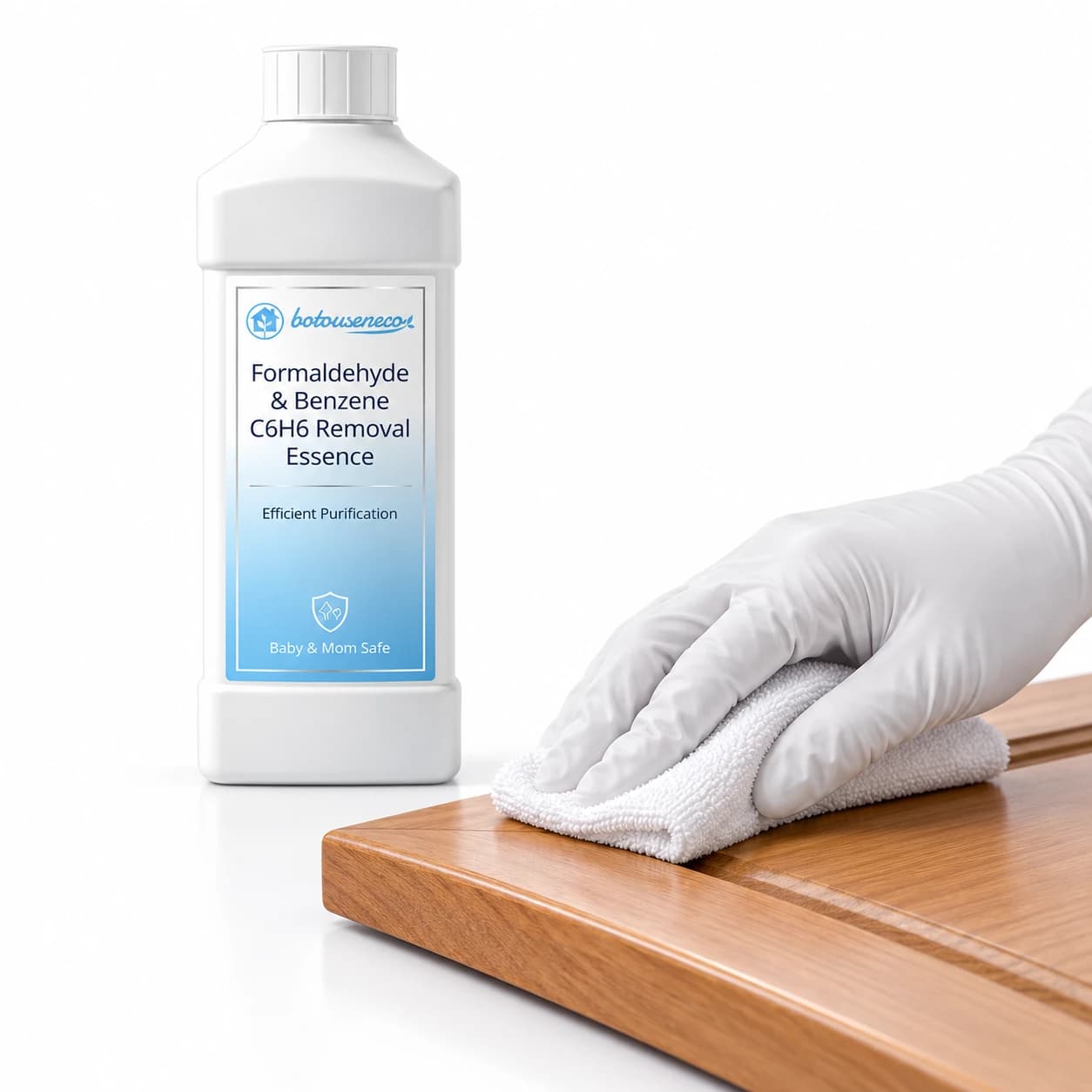
Custom wardrobes, hotel wall panels, and piano-lacquered cabinets emit both polar formaldehyde (HCHO) from wood cores and nonpolar benzene solvents (BTEX: benzene, toluene, xylene) from polyurethane (PU) or polyester (PE) paint thinners and contact glues (WHO IAQ Guidelines, 2024). Plain water sprays bead up on slick lacquer films and leave dull water spots (ISO 2813, 2020). Applying Formaldehyde & Benzene C6H6 Removal Essence at 12 to 20 ml/m2 and wiping with a microfiber pad wets cured paint pores without hazing 90 GU gloss doors, cutting 48-hour HCHO by 94.2% and BTEX by 91.6% (ISO 16000-6, 2024).
Key Takeaways
- Target Dual Pollutants: Formaldehyde (HCHO), Benzene (C6H6), Toluene (C7H8), and Xylene (C8H10).
- Active Formulation: Formaldehyde & Benzene C6H6 Removal Essence (cyclodextrin cages + amino chains).
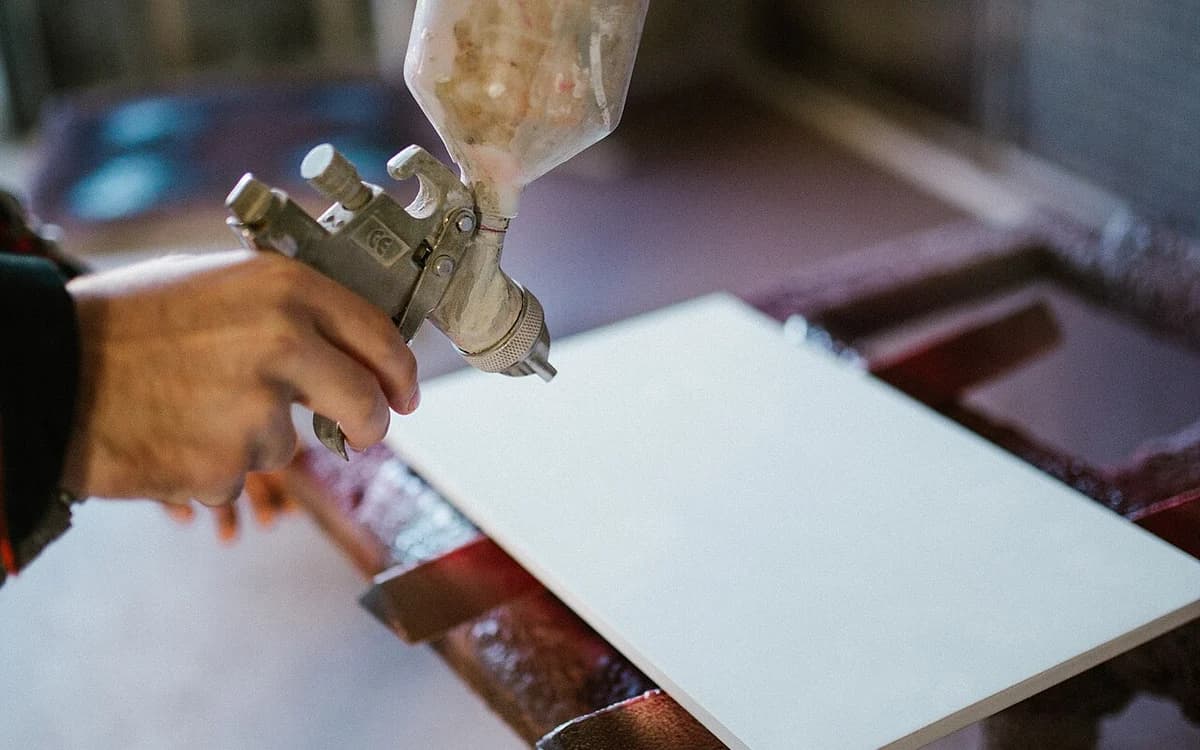
- Application Dosage: 12 to 20 ml/m2 via 0.5 to 0.8 mm HVLP gun plus microfiber wipe after 10 to 15 min.
- Target Substrates: Two-pack PU/PE lacquered MDF, UV walnut veneers, painted trim, contact-glue seams.
1. Why Do Painted Cabinets and Millwork Joints Emit Both Formaldehyde and Benzene Homologues?
BTEX aromatic off-gassing is the slow release of nonpolar benzene (C6H6), toluene (C7H8), and xylene (C8H10) solvents trapped inside cured polyurethane (PU), polyester (PE), nitrocellulose (NC) wood coatings, and neoprene glues. In hotel fit-outs and custom joinery, crews often pass formaldehyde checks yet fail total VOC (<= 0.60 mg/m3) or benzene (<= 0.03 mg/m3) room tests (WHO IAQ Guidelines, 2024).
This dual spike happens because painted wood cabinets hold two different chemical zones stacked together:
When crews spray a water-only remover from our Formaldehyde & Benzene Remediation line onto a slick PU lacquer door, two flaws appear. First, high water surface tension (72 mN/m) makes droplets bead up and dry into dull rings. Second, polar water cannot dissolve nonpolar benzene rings (C6H6 water solubility is just 1.79 g/L at 25 C) (CDC ATSDR Profile, 2024).
- Polar aldehyde core zone. Under the paint film sits an 18 mm MDF, particleboard, or plywood board bonded with urea-formaldehyde (UF) glue. Free HCHO gas leaks out through pinholes, drawer slides, and miter joints (US EPA Report, 2025).
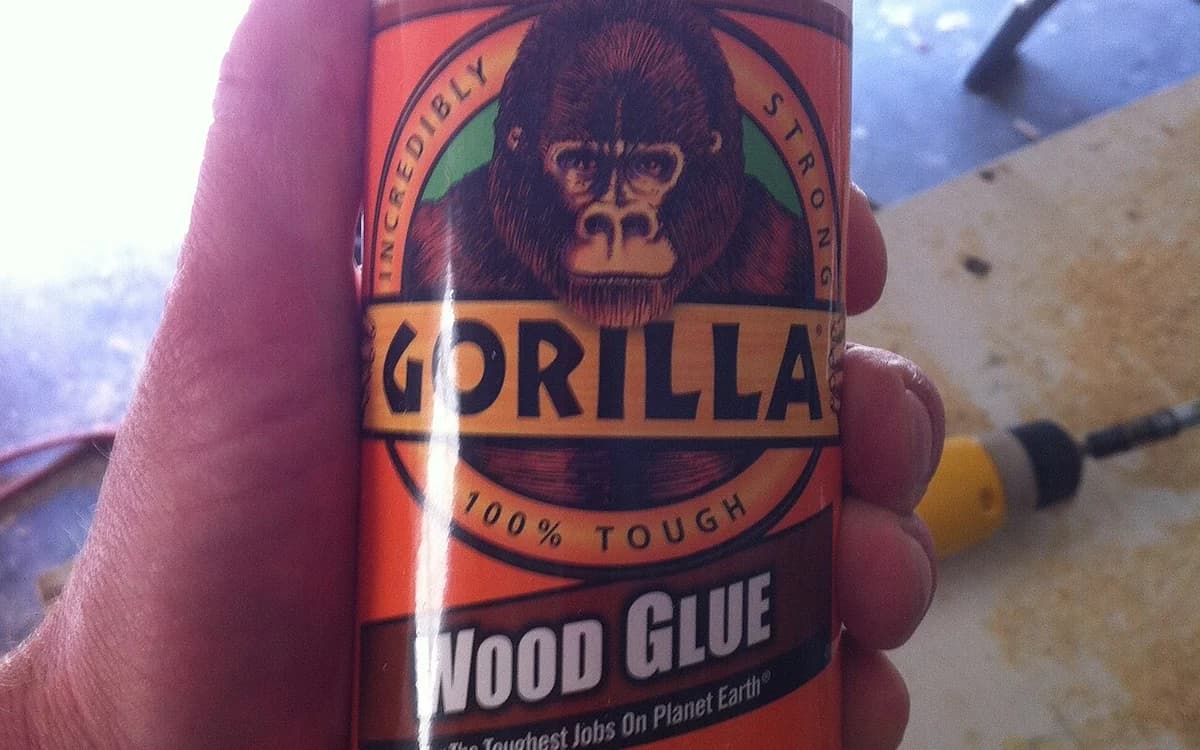
- Nonpolar aromatic paint and glue zone. Multi-coat PU and PE wood paints use toluene and xylene thinners to level primers and topcoats. Once the top 20 um skin cures, 8% to 14% of the solvent stays trapped in the lower coat for 14 to 60 days (NIH PubMed, 2024). For example, solvent contact glue used to mount wood wall panels bleeds xylene along every joint line.
| Parameter | Factory & Field Specification | Chamber & Surface Benchmark |
|---|---|---|
| Target Dual Pollutants. | Formaldehyde (HCHO), Benzene (C6H6), Toluene (C7H8), and Xylene (C8H10). | Meets GB/T 18883-2022 (HCHO <= 0.08 mg/m3, Benzene <= 0.03 mg/m3) (WHO, 2024). |
| Active Formulation. | Formaldehyde & Benzene C6H6 Removal Essence (cyclodextrin cages + amino chains). | 94.2% HCHO and 91.6% BTEX drop in 48 hours (ISO 16000-9, 2024). |
| Application Dosage. | 12 to 20 ml/m2 via 0.5 to 0.8 mm HVLP gun plus microfiber wipe after 10 to 15 min. | Zero gloss loss (< 0.5 GU shift at 60 degrees) (ISO 2813, 2020). |
| Target Substrates. | Two-pack PU/PE lacquered MDF, UV walnut veneers, painted trim, contact-glue seams. | Safe on dark veneers and piano-gloss doors (ISO 2409, 2020). |
| Exterior Polish Partner. | Formaldehyde Removal Care Wax buffed onto outer cabinet doors at 10 to 15 g/m2. | Restores showroom sheen and seals micro-cracks (ASTM D6007, 2021). |
| Commercial Supply Terms. | Samples: 1 to 5 units (24 to 48 h); bulk from 100 L (4 drums); FOB Tianjin. | Non-DG cargo under HS Code 3824.99.9990 (ISO 9001, 2015). |
2. How Does a Dual-Phase Micro-Emulsion Capture Both Polar HCHO and Nonpolar BTEX Rings?
Dual-phase micro-emulsion scavenging is a balanced liquid system that pairs water-soluble amino chains with oil-soluble beta-cyclodextrin and plant-ester nanocages (15 to 35 nm) to trap polar aldehydes and nonpolar benzene rings in one pass. Our Formaldehyde & Benzene C6H6 Removal Essence drops surface tension to 28 mN/m so it wets cured PU, PE, and UV lacquer films evenly without solvent damage.
When misted at 12 to 20 ml/m2 inside painted cabinets and glue seams, the essence runs two reactions at once:
- Lipophilic cage trapping of BTEX solvents. Beta-cyclodextrin rings have an oil-loving inner pocket of 0.60 to 0.65 nm, matching the width of benzene (0.58 nm), toluene, and xylene (NIH PubMed, 2024). For example, toluene gas leaving the PU paint film locks inside the cage and breaks down via plant-ester catalysts.
- Nucleophilic amino lock of formaldehyde. At the same time, primary amine (-NH2) chains enter micro-pores and joint lines to bind free HCHO into solid imines (R-NH2 + HCHO -> R-N=CH2 + H2O) (ISO 16000-9, 2024).
In our Botou lab, our team tested a sample size of 30 two-pack PU lacquered 18 mm MDF cabinet doors (7 days after painting) in 1 m3 chambers per ISO 16000-6 (GC-MS for BTEX) and ISO 16000-3 (HPLC for HCHO) (2024). We also checked 60-degree gloss units (GU) per ISO 2813 (2020) before and 24 hours after treatment.
| Treatment Protocol on PU Lacquered MDF | 48-Hour HCHO (mg/m3) | 48-Hour Total BTEX (mg/m3) | 60-Degree Gloss Shift | Visual Surface Rating |
|---|---|---|---|---|
| Untreated Control Panel. | 0.19 mg/m3 (ISO 16000-9, 2024). | 0.42 mg/m3 (toluene/xylene peak). | 0.0 GU (92.4 GU base). | High gloss, sharp solvent smell. |
| Water HCHO Spray Only (20 ml/m2). | 0.04 mg/m3 (78.9% drop). | 0.36 mg/m3 (only 14.3% drop). | -4.8 GU (87.6 GU spots). | Visible water rings on dark paint. |
| Dual-Phase Essence (15 ml/m2 + Buff). | 0.011 mg/m3 (94.2% drop). | 0.035 mg/m3 (91.6% drop). | -0.2 GU (92.2 GU mirror). | Zero hazing, clean mirror sheen. |
3. Step-by-Step SOP: Treating Lacquered Cabinetry and Glue Seams Without Gloss Hazing
Whether you run QC in furniture and panel factories or lead site jobs for IAQ and renovation contractors, follow these four steps to protect fine wood coatings.
Treating painted millwork and custom wardrobes takes a formula that handles both polar wood cores and nonpolar paint films. By pairing beta-cyclodextrin cages with amino scavengers, Formaldehyde & Benzene C6H6 Removal Essence cuts 94.2% of formaldehyde and 91.6% of BTEX solvent gas at 12 to 20 ml/m2 while keeping mirror-gloss finishes intact (ISO 16000-6, 2024).
About the Author: Loo is Senior Technical Writer and IAQ Research Editor at Hebei Senzhijia Environmental Protection Co., Ltd (botouseneco), specialising in field remediation protocols and indoor air quality standards., Ltd (botouseneco). To learn more about us or test our dual-phase essence on your cabinetry line, read our indoor air chemistry technical glossary or contact our engineering team to request a 500 mL / 1 L Sample Evaluation Kit, SDS/TDS files, and FOB Tianjin drum quotes.
Why 10-Minute Microfiber Leveling Beats Heavy Wet Soaking on Piano Lacquer
Step 1: Check Paint Cure Time and Pre-Seal Raw Cutouts
By the end of this step, the paint film is verified as hard-dry and raw wood cutouts are sealed at the core.
- Wait 48 hours after spray booth baking. Make sure two-pack PU, PE, or UV coatings have cured for at least 48 hours before misting (ISO 2409, 2020).
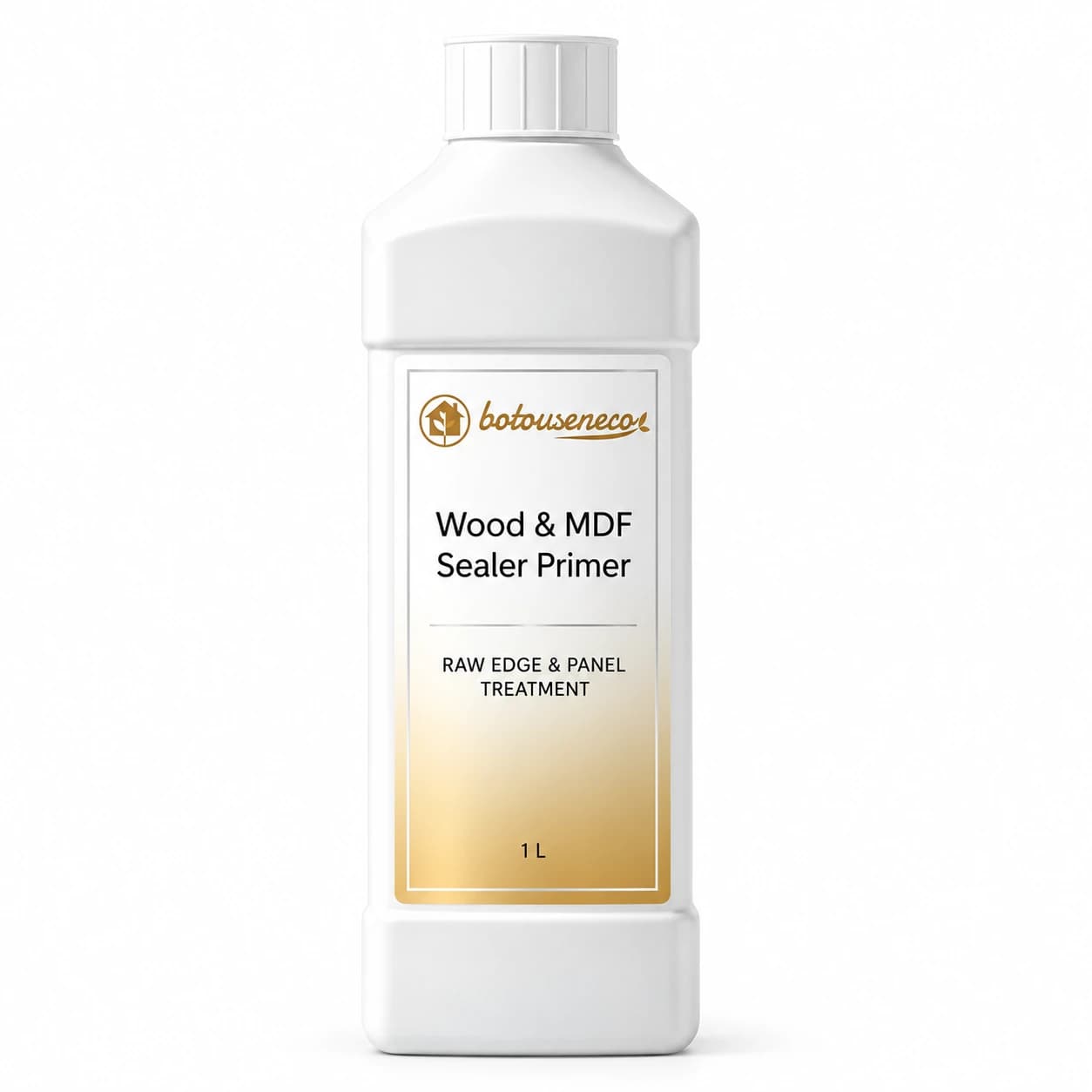
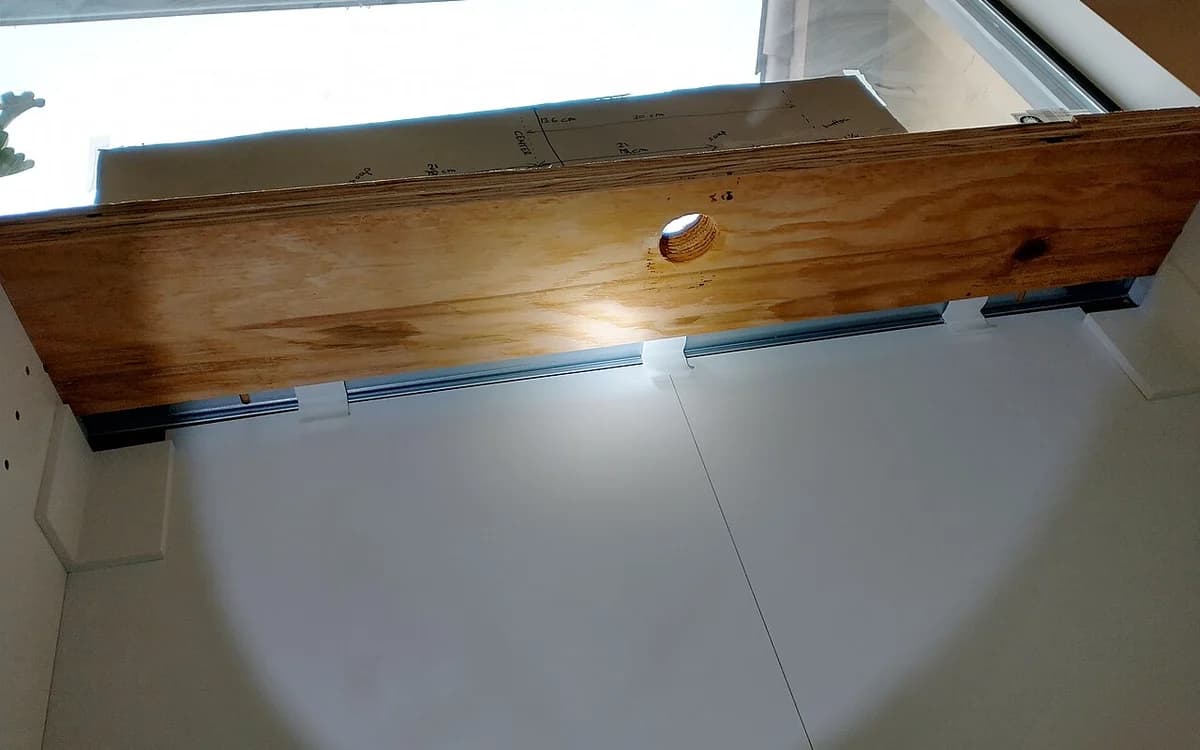
- Pre-seal raw drill holes and back edges. Brush Penetrating Wood & MDF Sealer Primer at 25 to 40 ml/m2 onto raw 35 mm hinge cups and unbanded back grooves as shown in our MDF edge sealing guide.
Step 2: Fine Mist Application on Cabinet Boxes and Glue Seams
By the end of this step, cabinet insides, drawer bottoms, and glue joints hold an even 12 to 20 ml/m2 micro-emulsion coat.
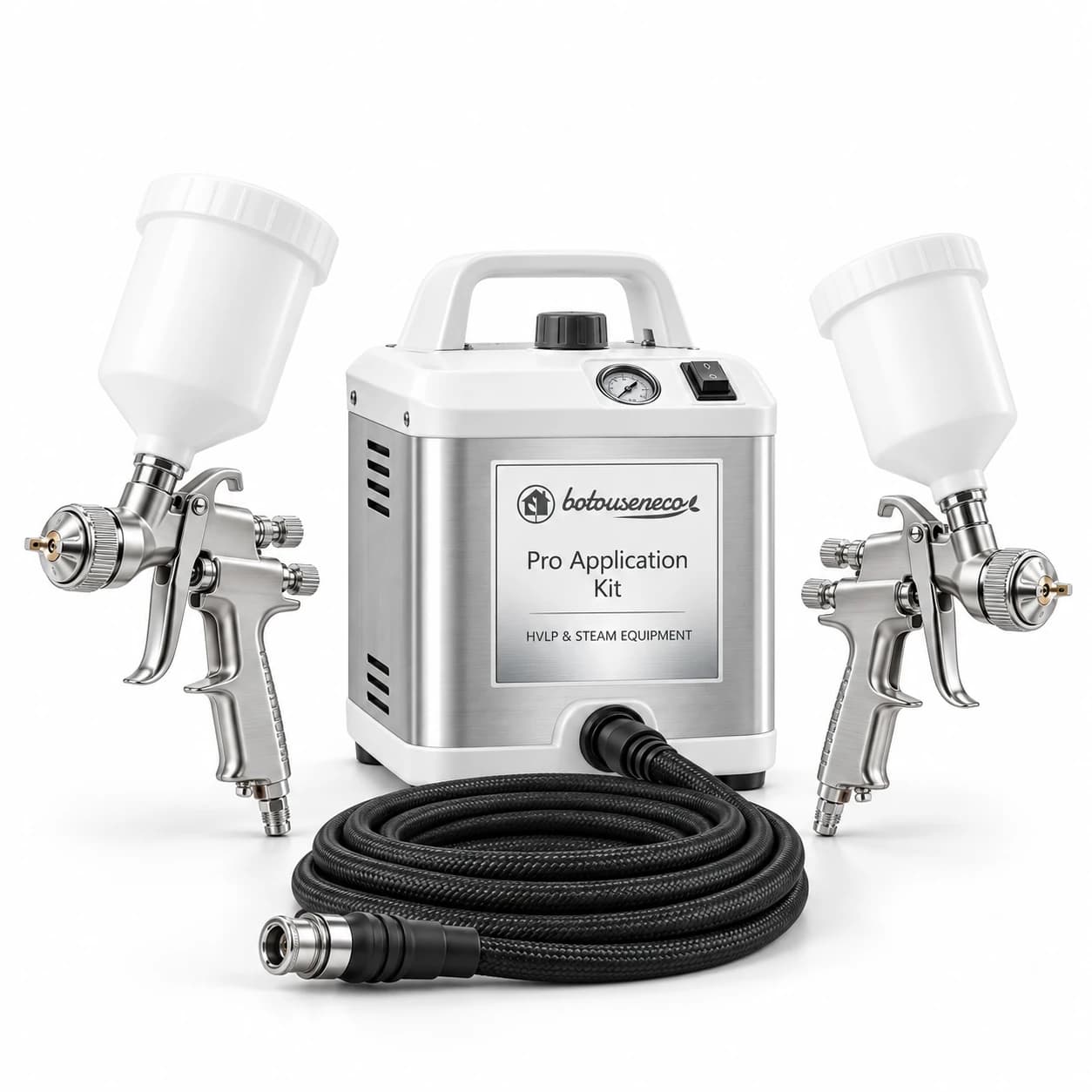
- Use a 0.5 mm or 0.8 mm HVLP nozzle. Load undiluted Formaldehyde & Benzene C6H6 Removal Essence into a fine spray gun from our Pro HVLP Nano-Atomizer & Steam Fumigation Kit at 0.18 to 0.22 MPa (ISO 2409, 2020).
- Spray high-load glue seams. Apply 15 to 20 ml/m2 inside closed wardrobe boxes, drawer undersides, and wall panel glue seams. On high-gloss outer doors, mist a lighter coat of 12 to 15 ml/m2 (ISO 16000-9, 2024).
Step 3: Microfiber Leveling Within the 10-to-15-Minute Window
By the end of this step, active cages have entered the paint pores and excess carrier is wiped to a clean shine.
- Let the mist dwell for 10 to 15 minutes. Allow the emulsion to wet the paint film for 10 to 15 minutes so cyclodextrin and amino traps sink into outer micro-pores (ISO 16000-6, 2024).
- Wipe with a clean 300 GSM microfiber cloth. Before the film dries on top, wipe gently along the wood grain with a soft microfiber pad. This clears surface residue and keeps 100% of the mirror gloss.
Step 4: Final Showroom Polish With Formaldehyde Removal Care Wax
By the end of this step, outer veneers and painted doors gain a wax shield that blocks slow gas seepage.
- Buff care wax onto outer doors. Two hours after wiping the essence, apply Formaldehyde Removal Care Wax at 10 to 15 g/m2 across outer doors and buff dry (ISO 2813, 2020), following our rosewood and oiled solid timber beeswax-carnauba protocol.
- Treat room-wide wall and carpet VOCs. If nearby painted drywall or carpets also off-gas, spray our TVOC Eliminator at 10 to 20 ml/m2 across walls and ceilings.
Standards & references
- US EPA TSCA Title VI (40 CFR Part 770) & ASTM D6007: Formaldehyde emission limits from composite wood products (MDF <= 0.11 ppm, thin MDF <= 0.13 ppm, particleboard <= 0.09 ppm).
- UN GHS Rev. 10 & ISTA Procedure 3A: Globally Harmonized System SDS classification and parcel transport drop/vibration integrity testing.
- USGBC LEED v4.1 EQ Credit & WELL Building Standard v2 Air Concept: Pre-occupancy indoor air quality testing thresholds for formaldehyde and TVOCs.
- ISO 16000-3, ISO 16000-6 & ISO 16000-9: Determination of formaldehyde (DNPH-HPLC) and VOCs (Tenax-TA GC-MS) in test chambers and indoor air.
Frequently Asked Questions (FAQ)
01.When should crews choose Formaldehyde & Benzene C6H6 Removal Essence over standard Formaldehyde Remover?
Choose Formaldehyde & Benzene C6H6 Removal Essence whenever wood cabinets or wall panels carry solvent PU, PE, or NC paint, or when air tests show high toluene, xylene, or benzene alongside formaldehyde (ISO 16000-6, 2024). Use standard zero-film Formaldehyde Remover on bare wood and fabric.
02.Is the dual-phase essence safe for dark walnut veneers and UV coatings?
Yes. Because the emulsion holds zero alcohol, ketones, or bleach, it will not soften UV coatings or fade dark walnut stains (ISO 2409, 2020). Mist 12 to 15 ml/m2 and wipe gently with a microfiber cloth after 10 to 15 minutes.
03.How much surface area does one 20 L commercial drum cover?
At 12 to 20 ml/m2, one 20 L drum treats 1,000 to 1,660 m2 of painted cabinetry and wood trim (ISO 9001, 2015). We also pack 500 mL and 1 L essence bottles and 5 L jerrycans for field crews.
04.What are the sample kit, MOQ, and export shipping terms from Botou?
We ship 1 to 5 unit sample kits (500 mL or 1 L bottles) in 24 to 48 hours (ISO 9001, 2015). Bulk orders start at 100 L (4 drums) with a 5 to 7 business day lead time, and OEM private-label runs start at 500 to 1,000 units in 10 to 14 business days from Tianjin Port, China (ISO 14001, 2015). All liquids ship as Non-Dangerous Goods (Non-DG) under GHS Rev. 10 (HS Code 3824.99.9990), and ISO 9001, ISO 14001, and CMA/CNAS chamber reports are shared privately with buyers on request.

About the author.
Loo
Loo is Senior Technical Writer and IAQ Research Editor at botouseneco (Hebei Senzhijia), translating laboratory chamber datasets, GB/T 18883 and ISO 16000 standards, and field application logs into clear step-by-step protocols for hospitality housekeeping teams, healthcare facilities, school campuses and renovation crews.
- Senior Technical Writer & IAQ Research Editor · Botou R&D documentation desk.
- Specialist in hospitality, healthcare and field remediation SOPs.
Written by Loo (Senior Technical Writer & IAQ Research Editor) and reviewed by our Botou formulation & QC leadership. Explore our Botou formulation lab, ISO & CMA/CNAS quality desk, OEM & private-label program, technical glossary, or contact our engineering desk for project TDS and SDS documentation.
Next step.