Panel & Material Engineering
Treating MUF, PF and MDI Bonded Panels: Why No-Added-Formaldehyde Cabinets Still Fail Finish BTEX and Aldehyde Chamber Audits
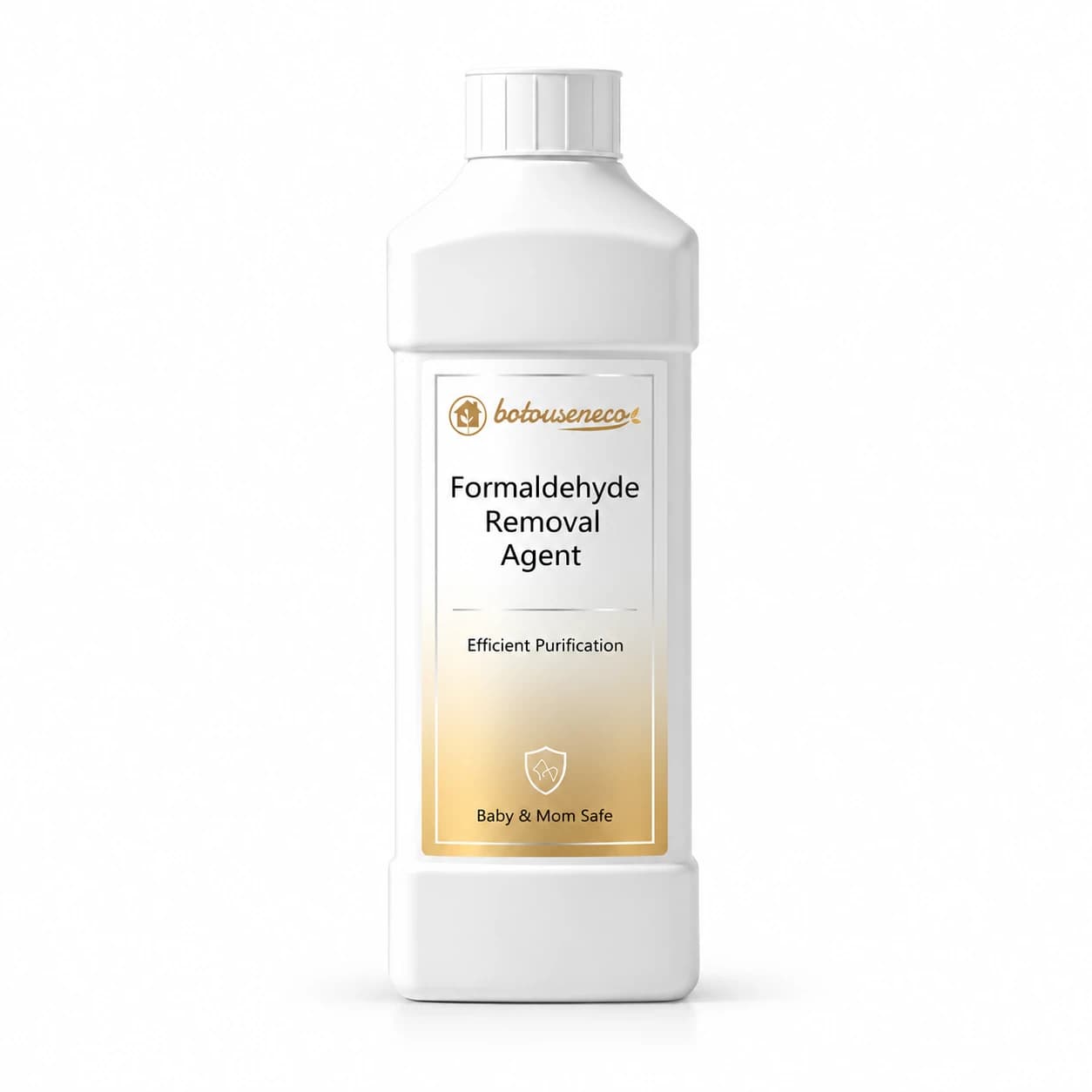
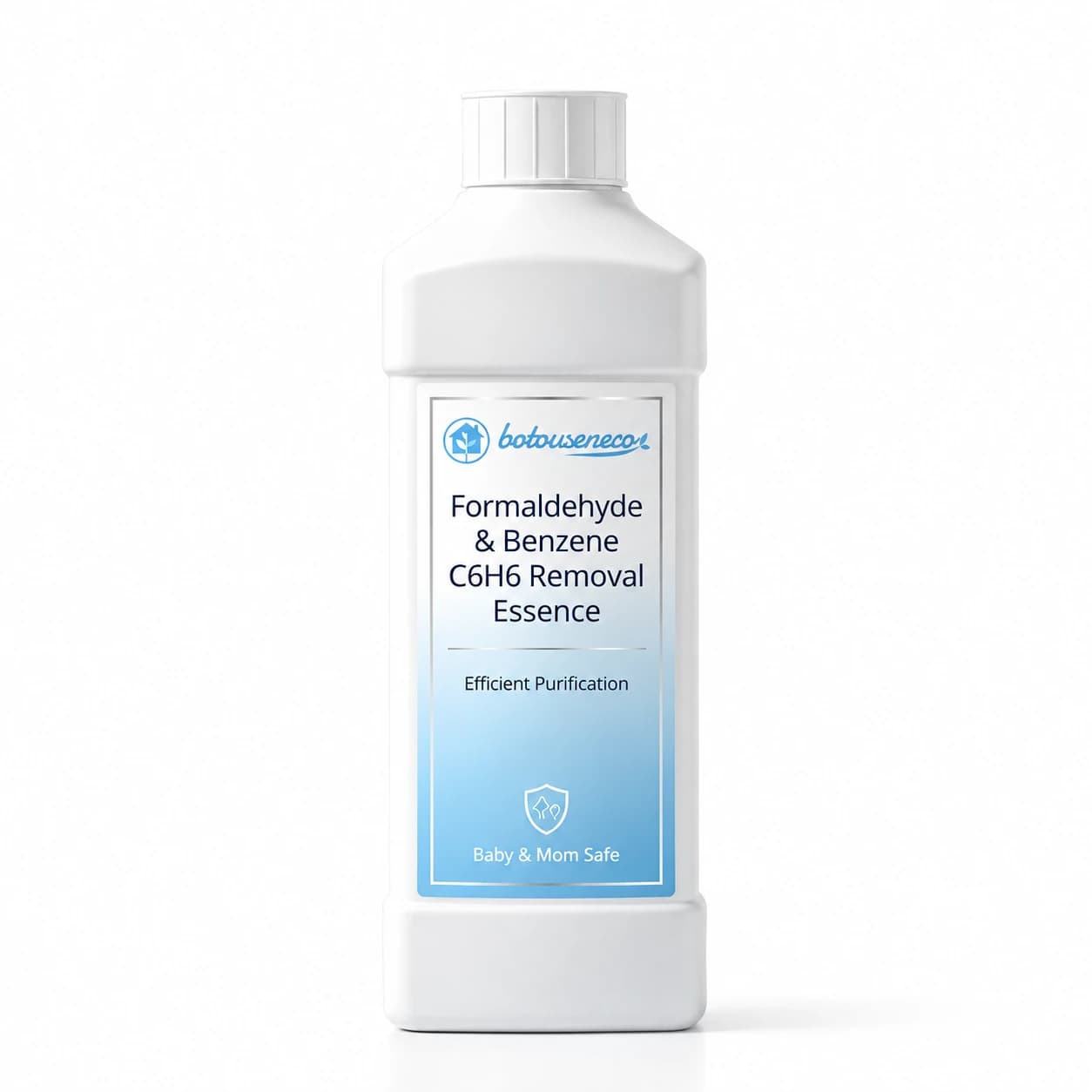
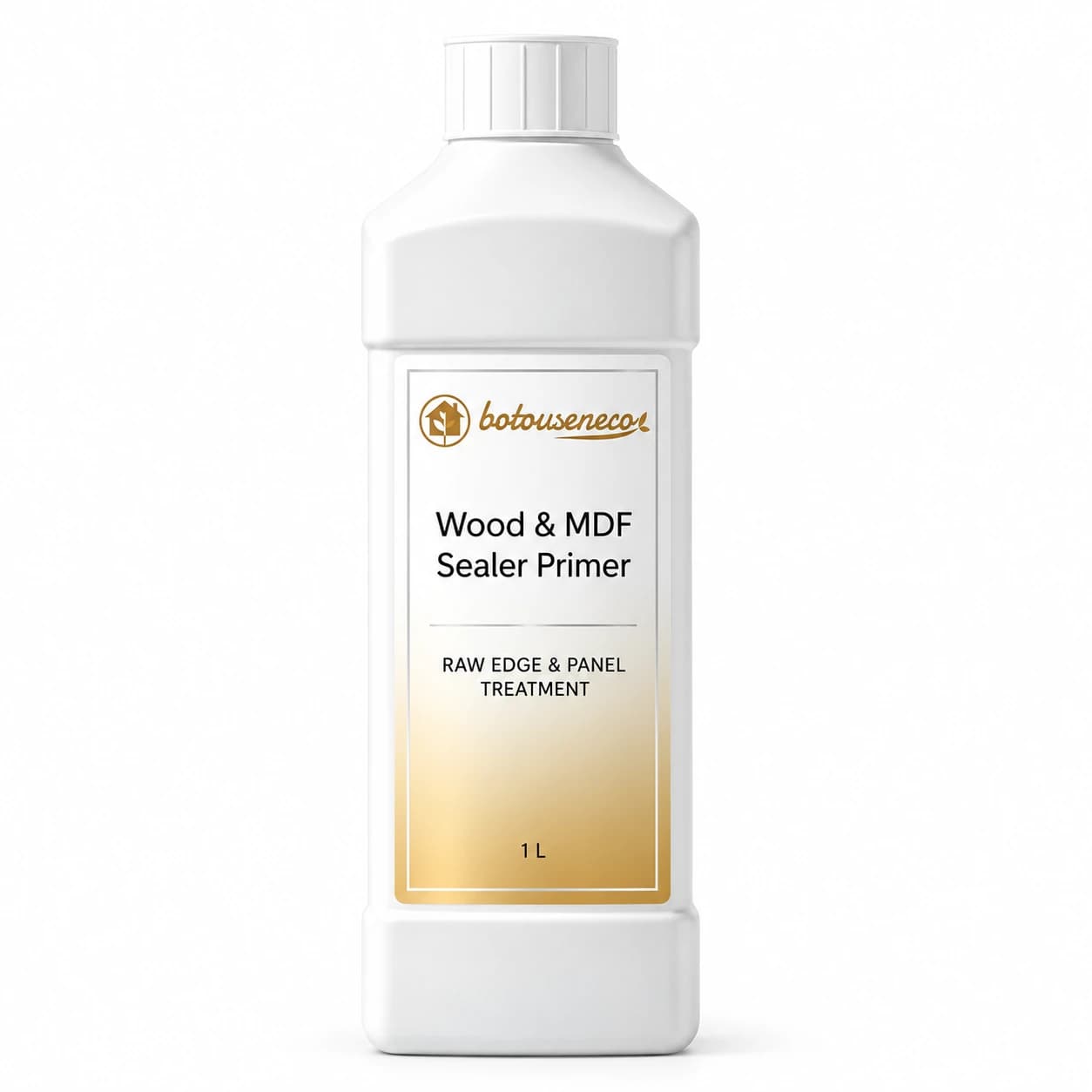
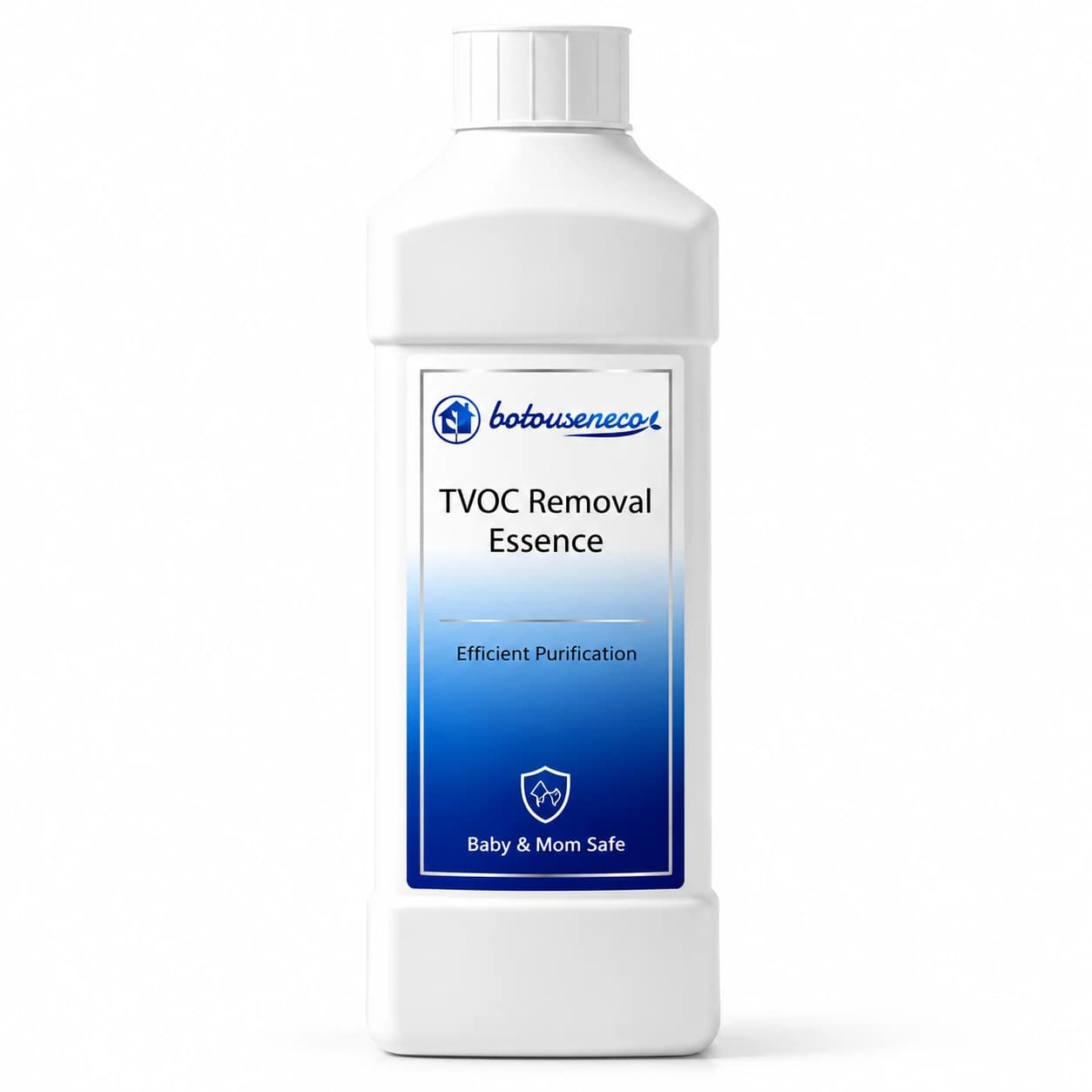
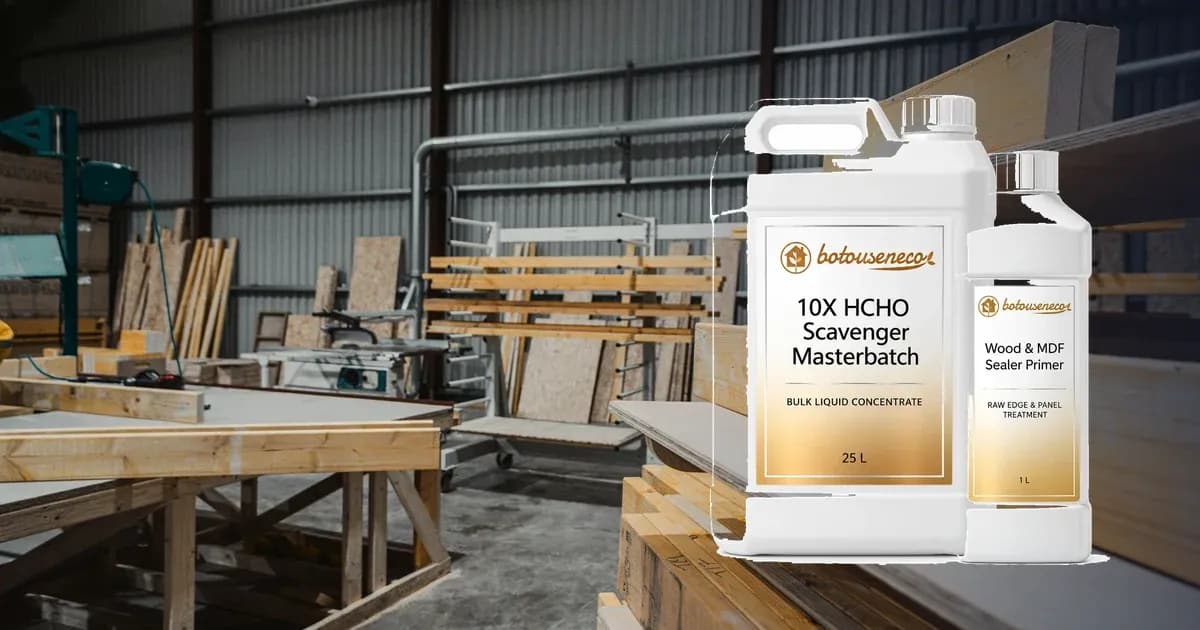
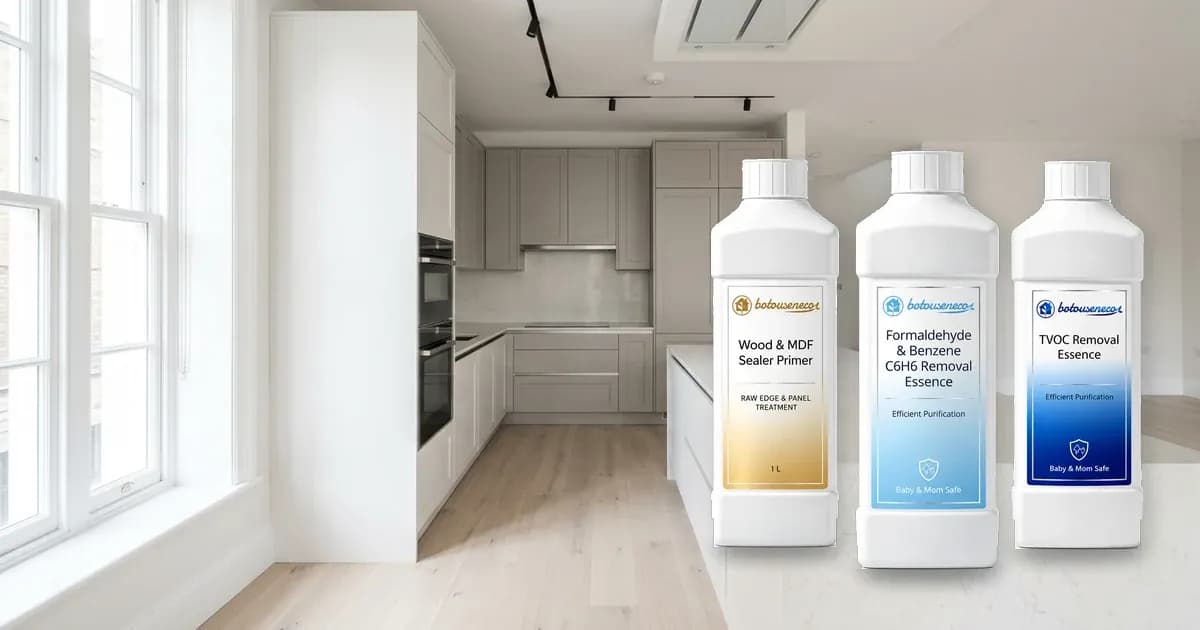
Switching cabinet cores from urea-formaldehyde (UF) boards to melamine-urea-formaldehyde (MUF), phenol-formaldehyde (PF), or polymeric MDI (pMDI) cuts core formaldehyde sharply. However, finished cabinets still fail chamber audits because polyurethane (PU) lacquers, UV coatings, PVC wraps, and softwood OSB strands emit benzene, toluene, xylenes (BTEX), hexanal, and ester TVOCs. Effective MUF and phenolic plywood VOC treatment pairs Penetrating Wood & MDF Sealer Primer (25 to 40 ml/m2) on raw cuts with finish-safe Formaldehyde & Benzene Removal Essence (12 to 20 ml/m2) on painted doors, followed by neutral TVOC Eliminator (10 to 20 ml/m2) at handover.
Key Takeaways
- Why NAF & ENF Cores Still Fail Audits: US EPA 40 CFR 770.17(c) and GB/T 39600-2021 test raw unfinished boards only; PU/UV lacquers, PVC wraps (+67% TVOC), and softwood OSB strands drive finish BTEX and hexanal failures.
- 5 Hidden MFC Carcass Leak Zones: 35 mm hinge cups, unbanded rear grooves/3 mm backs, site plumbing cutouts, cam-lock bores, and contact-glue touch-ups bypass flat melamine face paper.
- 3-Liquid Substrate-Matched System: Seal raw cuts & OSB seams at 25 to 40 ml/m2 (2-4 mm penetration), mist cured painted doors at 12 to 20 ml/m2 (10-15 min dwell + wipe), and clear room haze with TVOC Eliminator (10 to 20 ml/m2).
- 200-Set Export Batch Math: 200 NAF lacquered cabinet sets (840 m2 raw + 2,300 m2 finished) require 150 L total (6 x 25 L pails) including 1.10 HVLP transfer loss, clearing the 100 L bulk MOQ in one 5-7 day pallet shipment.
Comparing MUF, PF and pMDI Bonded Panels: Why No-Added-Formaldehyde Cores Still Emit Aldehydes
Cabinet mills and interior contractors often trust raw panel certificates too far. Buyers specify ENF-grade boards (<= 0.025 mg/m3 under China GB/T 39600-2021) or US EPA No-Added-Formaldehyde (NAF) cores and expect effortless handover compliance. Yet finished kitchens and wardrobes built from those certified panels still fail GB/T 18883-2022 room air audits and ISO 16000-9 climate chambers. In most failed handovers, the panel mill certificate is not fraudulent; instead, a wide regulatory gap separates an uncoated raw panel test from a painted, edge-banded, adhesive-assembled cabinet box.
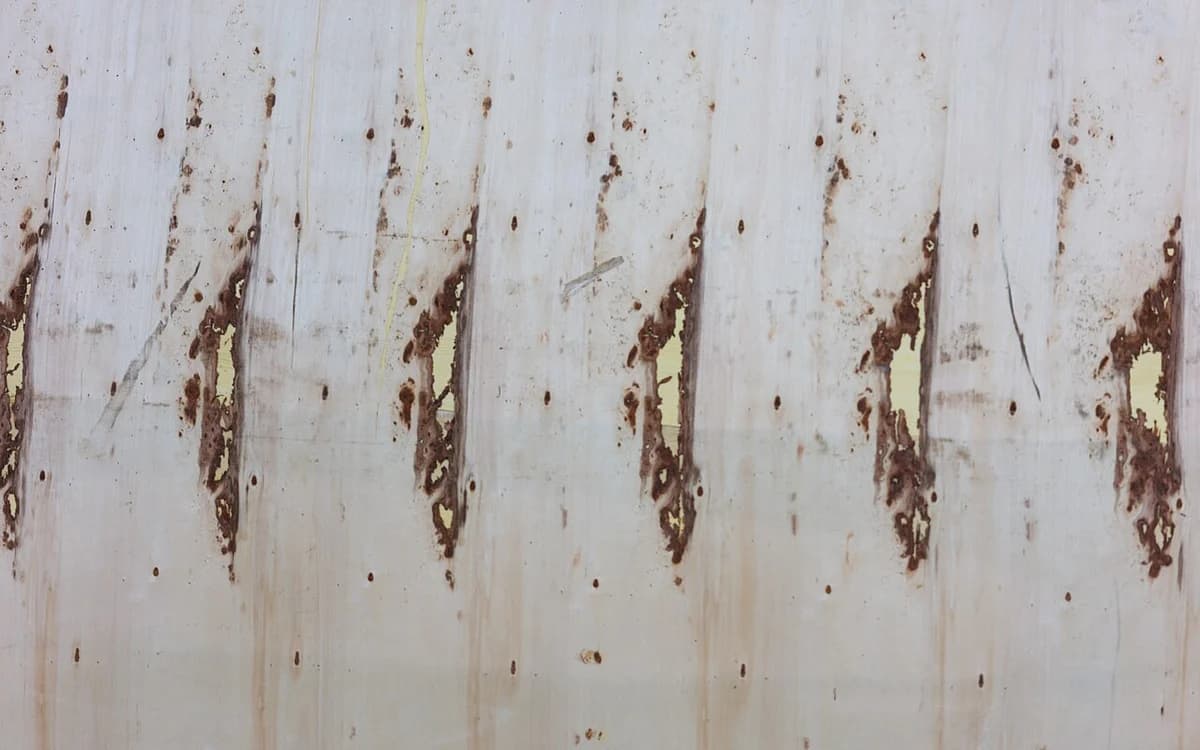
Melamine-Urea-Formaldehyde (MUF) Resin is a moisture-resistant amino thermoset adhesive where melamine rings replace part of the urea backbone to stiffen cross-link density in damp rooms. Compared with standard UF glue, cured MUF slows wet hydrolysis substantially. However, MUF still retains unreacted free formaldehyde and terminal methylol groups that escape through raw CNC hinge bores and unbanded edges.
Phenol-Formaldehyde (PF) Resin is a dark, thermally stable structural binder made by condensing phenol with formaldehyde under alkaline heat for marine plywood and structural subfloors. Its carbon-carbon methylene bridges resist moisture breakdown far better than amino resins. As a result, core formaldehyde release stays very low, while fresh saw cuts can still vent trace phenol and heat-generated wood aldehydes.
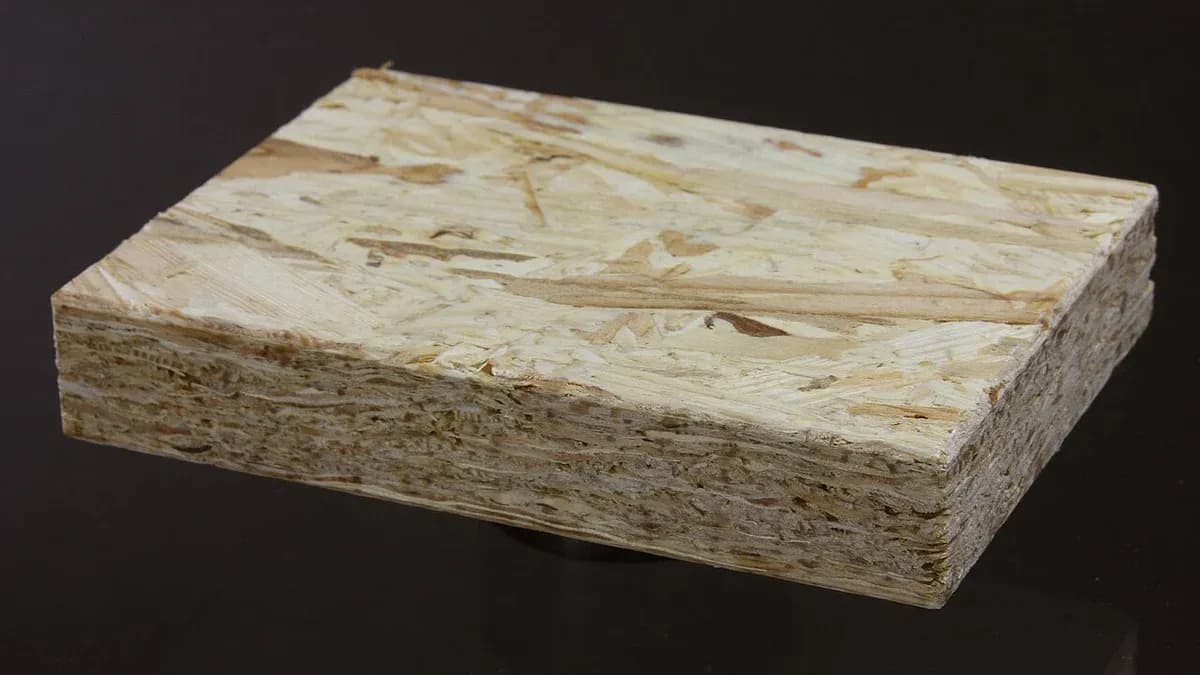
Polymeric Methylene Diphenyl Diisocyanate (pMDI) is a formaldehyde-free polyurethane-forming adhesive that reacts directly with wood hydroxyl groups and natural moisture to bind NAF oriented strand board (OSB), particleboard, and MDF. Zero added resin formaldehyde does not guarantee zero emitted wood aldehydes or VOCs. For example, a July 2025 review in Molecules (Goncalves et al., PubMed 2025) confirms that panel emissions depend on wood species, drying temperature, and press additives alongside adhesive chemistry. Softwood pine and spruce strands used in pMDI-bonded OSB naturally release alpha-pinene, beta-pinene, pentanal, hexanal, organic acids, and trace biogenic formaldehyde formed from hemicellulose under press heat.
Subfloor and carcass builders face this wood-extractive trap most clearly with OSB-3. Trapped strand pockets vent sharp pine terpenes and C5 to C6 aliphatic aldehydes into enclosed rooms for months after installation. Applying an OSB subfloor aldehyde sealer before laying floor underlayment seals surface fiber pores and blocks both biogenic aldehydes and press odors. For deeper hydrolysis comparisons across standard E1, E0, and F4-Star substrates, read our industrial formaldehyde scavenger guide for wood panels.
| Core Resin | Typical Panel Type | Core HCHO Risk | Dominant Non-HCHO VOCs | Primary Treatment Priority |
|---|---|---|---|---|
| Standard UF | Interior MDF, PB | High (hydrolysis) | Acetic acid, formic acid | Deep amine scavenger + barrier |
| MUF | Damp-zone PB, plywood | Low to moderate | Residual amines, cut-edge HCHO | Raw-edge & bore sealing |
| PF | Marine & structural plywood | Very low | Trace phenol, wood aldehydes | Saw-cut sealing + odor wash |
| pMDI (NAF) | ENF OSB, NAF PB/MDF | Biogenic trace only | Terpenes, hexanal, finish BTEX | OSB sealer + finish BTEX control |
Why NAF and ENF Cabinets Fail Finish BTEX and Aldehyde Chamber Audits
Panel emission regulations inspect raw, unfinished sheets before secondary fabrication begins. Under the US EPA TSCA Title VI composite wood rule (40 CFR Part 770), standard formaldehyde caps are 0.05 ppm for hardwood plywood, 0.09 ppm for particleboard, 0.11 ppm for MDF, and 0.13 ppm for thin MDF. For NAF-bonded boards, US EPA 40 CFR 770.17(c) grants a two-year testing exemption when 90% of three-month quality control data stay at or below 0.04 ppm (US EPA, 2025), with no single test exceeding 0.05 ppm for hardwood plywood or 0.06 ppm for particleboard and MDF.
None of those raw-board exemptions cover what happens inside a furniture finishing booth. Once a factory sprays polyurethane lacquer, bonds PVC decorative foil, or applies contact glue to an ENF or NAF core, finished-cabinet VOC release often rises instead of dropping.
BTEX (Benzene, Toluene, Ethylbenzene, and Xylenes) are volatile monocyclic aromatic hydrocarbons introduced primarily by petroleum lacquer thinners, polyurethane hardener solvents, contact adhesives, and film additives. Per the NIH PubChem Benzene Reference (2024), benzene evaporates readily at room temperature and is a confirmed human carcinogen. Moreover, the World Health Organization Indoor Air Quality Guidelines state that no safe level of benzene exposure can be recommended, while setting a 0.1 mg/m3 30-minute guideline for indoor formaldehyde.
Peer-Reviewed Chamber Proof: Coatings and Wraps Reverse Raw-Board Gains
Two peer-reviewed environmental chamber studies explain why NAF board paint formaldehyde emission and finish BTEX spikes cause surprise audit failures.
First, a GC-MS/olfactometry study in Scientific Reports (Wang et al., 2020) evaluated polyurethane (PU), waterborne, and ultraviolet (UV) lacquers on furniture timber. According to Wang et al. (2020), all three coatings cut natural wood olefin release by more than 90%, yet overall TVOC release still increased. PU lacquer drove a sharp spike in esters and aromatic hydrocarbons alongside the highest odor intensity. Waterborne lacquer still emitted substantial esters and alcohols, while UV-curable lacquer suppressed alcohols, aldehydes, and ketones best yet caused a sharp surge in toluene release alongside benzaldehyde and 1,3-dimethylbenzene (m-xylene).
Second, an August 2025 1 m3 chamber study in Polymers (Zhu et al., PubMed 2025) tested particleboard faced with resin-impregnated paper (RIP), polypropylene (PP) film, and polyvinyl chloride (PVC) film using TD-GC/MS. RIP cut flat-face TVOC by 93% and PP film cut TVOC by 83%, yet PP film added xylene to the air. In contrast, PVC film raised total TVOC by 67% and added 12 new volatile compounds from plasticizers (Zhu et al., 2025).
The Regulatory Disconnect at Handover (GB/T 18883-2022)
Indoor concentrations of many VOCs routinely measure two to five times higher indoors than outdoors, according to the US EPA Indoor Air Quality VOC Overview. When a developer seals a furnished apartment for 12 hours under China GB/T 18883-2022, every chemical group must pass strict indoor limits (1-hour averages for HCHO and BTEX; 8-hour average for TVOC):
Consequently, a cabinet built from 0.020 mg/m3 ENF pMDI cores still fails handover if cured PU doors release 0.05 mg/m3 of benzene or if PVC wraps push room TVOC above 0.80 mg/m3. For joint-level diagnosis on painted joinery, review our guide on treating formaldehyde and BTEX in lacquered furniture glue seams.
- Formaldehyde (1-hour avg): <= 0.08 mg/m3
- Benzene (C6H6, 1-hour avg): <= 0.03 mg/m3 (tightened from 0.11 mg/m3 in the 2002 edition)
- Toluene (1-hour avg): <= 0.20 mg/m3
- Xylenes (o-, m-, p-sum, 1-hour avg): <= 0.20 mg/m3
- TVOC (8-hour avg): <= 0.60 mg/m3
| Emission Source | Dominant Pollutants | Primary Chemistry | Target Dosage |
|---|---|---|---|
| MUF, PF & OSB raw cuts / backs | Free HCHO, wood hexanal, terpenes | Micro-acrylic + primary amine sealer | 25 to 40 ml/m2 |
| PU, PE, UV & nitro painted doors | Benzene, toluene, xylenes, esters | Amino + hydrophobic-cage essence | 12 to 20 ml/m2 |
| PVC wrap & contact glue seams | Plasticizer TVOC, aromatic solvents | Micro-emulsion essence + wipe | 12 to 20 ml/m2 |
| Installed room fit-out haze | Residual TVOC, mixed ketones | Terpene-micelle TVOC eliminator | 10 to 20 ml/m2 |
How Does Melamine Faced Chipboard Edge Treatment Stop Hidden Core Leaks?
Resin-impregnated melamine paper forms a tight vapor barrier across intact flat panels. As shown in the Zhu et al. (2025) chamber study, RIP lamination blocked 93% of flat-face TVOC release without adding new odorants. However, that protective skin fails immediately wherever CNC cutters or field saws expose the inner wood matrix.
Across a standard MUF-bonded melamine faced chipboard (MFC) kitchen box, five machining and installation zones bypass the factory face laminate:
Dedicated melamine faced chipboard edge treatment closes those exposed channels before flat-pack dispatch or right after site plumbing cuts. A penetrating micro-acrylic and primary-amine emulsion wicks 2 to 4 mm into raw chipboard pores. Inside the wood layer, primary amines react with free formaldehyde to form stable non-volatile condensates, while the acrylic network dries into a clear barrier against moisture intrusion. For wet-room cutouts, combine factory edge sealing with our site SOP for kitchen and bathroom vanity cabinet plumbing cutout formaldehyde and BTEX sealing.
- 35 mm concealed hinge cups and shelf-pin rows: Dozens of raw chipboard pockets per carcass expose core particles directly to warm cabinet air.
- Unbanded rear grooves and 3 mm HDF/MDF back panels: Factories rarely edge-band back grooves, and thin rear boards often carry higher resin ratios than 18 mm side panels.
- Site-cut sink, hob, and plumbing openings: Carpenters saw large cutouts through installed base cabinets and seldom apply hot-melt PUR edge tape afterward.
- Drawer runner screw ports and cam-lock mortises: Open hardware bores absorb humid vapor whenever damp kitchen air lingers, triggering slow MUF hydrolysis.
- Solvent contact-glue edge repairs: Field touch-ups with neoprene adhesives inject toluene, ethyl acetate, and aromatic distillates directly into closed drawers.
Step-by-Step MUF and Phenolic Plywood VOC Treatment Workflow
No single spray liquid can remediate both rough porous wood cuts and glossy cured lacquer doors. Plain waterborne amine scavengers bead off polyurethane paint and fail to trap nonpolar benzene rings. Conversely, finish-safe essences lack the film-forming polymer required to seal open OSB-3 strands or raw MFC saw cuts. Follow this four-stage workflow across both factory packing lines and completed project rooms.
Stage 1: Baseline Source Profiling and Surface Preparation
Start by mapping porous raw wood surfaces (OSB subfloors, raw PF plywood backs, MFC saw cuts, CNC hinge cups, plumbing cutouts) separately from non-porous coated panels (PU, PE, UV, and nitro lacquered doors, PVC foil wraps, finished drawer boxes). Maintain air temperatures between 15 C and 32 C with relative humidity below 75% RH (Botou Application Standard, 2026) so waterborne micro-emulsions flash off cleanly without blushing. Vacuum all sawdust out of hinge cups and OSB seams, then wipe lacquered doors with a dry microfiber cloth.
Stage 2: Raw Cut, OSB Seam and Back-Panel Sealing
Apply ready-to-use Penetrating Wood & MDF Sealer Primer (pH 7.0 to 8.0, 12% +/- 1% cross-linking micro-acrylic and primary amine solids per Botou Technical Datasheet, 2026) via a 1.0 to 1.3 mm HVLP nozzle or short-nap roller at 25 to 40 ml/m2 across every exposed MUF/PF saw cut, hinge cup, 3 mm cabinet back, and OSB subfloor joint. Allow 30 to 45 minutes to reach touch-dry in ambient air (12 to 24 hours for full cross-linked cure), or 3 minutes inside an automated 50 to 60 C hot-air tunnel.
Stage 3: Lacquered Door and Glue-Seam BTEX Neutralization
Load a fine-mist 0.5 to 0.8 mm HVLP spray gun with Formaldehyde & Benzene Removal Essence. Hold the nozzle 25 to 35 cm from cured PU, PE, UV, or nitro painted surfaces and dose strictly at 12 to 20 ml/m2 across door backs, drawer bottoms, PVC-wrapped trims, and edge-banding glue seams. Let the micro-emulsion dwell for 10 to 15 minutes while hydrophobic beta-cyclodextrin cages trap migrating BTEX rings and amino groups lock surface aldehydes, then wipe gently with a clean damp-dry microfiber cloth to preserve factory gloss.
Stage 4: Final Cabinet-Room TVOC Clearance, Chamber Audit & Scope Limits
After installation wraps up, atomize neutral TVOC Eliminator at 10 to 20 ml/m2 from 30 to 40 cm across laminated walls, cabinet interiors, and concealed toe-kick voids (dries crystal-clear in 15 to 20 minutes). Run forced cross-ventilation (>= 3 ACH) for 12 to 24 hours, then seal the room for 12 hours under GB/T 18883-2022 or test specimens in an ISO 16000-9 chamber.
Engineering Scope Limits: Our methodology targets fully cured paint films, dried edge glues, and porous raw wood edges. No surface spray can stop rapid solvent release from an uncured, soft PU topcoat poured too thick in a cold booth (extend oven bake time first), and spilled neoprene contact cement must be mechanically scraped before essence application.
| Cabinet Component | Primary Failure Pathway | Botou System | Dosage (ml/m2) | Dry / Cure Time |
|---|---|---|---|---|
| OSB-3 subfloor & panel cuts | Wood hexanal, pine terpenes | Penetrating Wood & MDF Sealer Primer | 25 to 40 | 30 to 45 min touch-dry (full cure 12-24 h) |
| MFC hinge cups & raw backs | Residual MUF core HCHO | Penetrating Wood & MDF Sealer Primer | 25 to 40 | 3 min hot tunnel (50-60 C) |
| PU / UV lacquered doors | Toluene, xylene, benzene, esters | Formaldehyde & Benzene Removal Essence | 12 to 20 | 10 to 15 min dwell + microfiber wipe |
| PVC wrap & contact seams | Plasticizer TVOC, aromatic glue | Formaldehyde & Benzene Removal Essence | 12 to 20 | 10 to 15 min dwell + microfiber wipe |
| Assembled cabinet interior | Mixed ketone & ester air haze | TVOC Eliminator | 10 to 20 | 15 to 20 min clear dry |
Botou Product System Selection for MUF, PF and NAF Cabinets
Multi-source cabinetry remediation works best when each chemical targets its matching substrate cleanly. Learn more about us and our Botou manufacturing facility, operated since 2015 by Hebei Senzhijia Environmental Protection Co., Ltd (botouseneco) in Cangzhou, Hebei. Our engineers supply three complementary liquids inside our formaldehyde scavenger product line built for furniture and panel factory finishing lines:
Every production batch runs under our ISO 9001:2015 Quality Management System and ISO 14001:2015 Environmental Management System, backed by CMA / CNAS-accredited chamber verification following ISO 16000-9 and GB/T 18883-2022. Official certificate copies and third-party chamber reports are shared privately with B2B buyers on request. Export cargo ships via Tianjin Port (~180 km from our Botou plant) accompanied by Non-Dangerous Goods (Non-DG) GHS Rev. 10 / ISO 11014 Safety Data Sheets and EU REACH SVHC-free declarations.
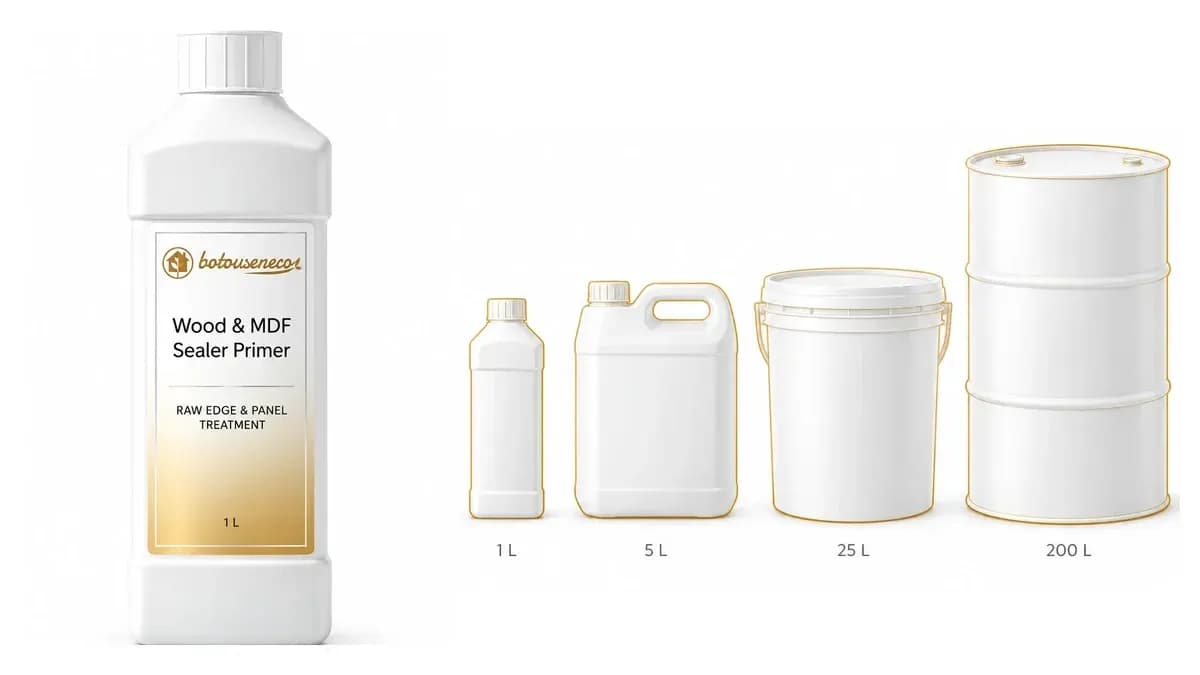
- 1. Penetrating Wood & MDF Sealer Primer: Built with 12% +/- 1% active cross-linking micro-acrylic polymer and primary amines at pH 7.0 to 8.0 (Botou Technical Datasheet, 2026). Penetrates 2 to 4 mm into raw MUF chipboard edges, PF plywood backs, and OSB-3 strands at 25 to 40 ml/m2 (625 to 1,000 m2 per 25 L pail). Touch-dry in 30 to 45 minutes in air (full cross-linked cure 12 to 24 hours), or 3 minutes in a hot-air tunnel.
- 2. Formaldehyde & Benzene (C6H6) Removal Essence: A neutral dual-phase micro-emulsion uniting nucleophilic amino aldehyde scavenging with beta-cyclodextrin hydrophobic benzene-ring trapping. Applied at 12 to 20 ml/m2, it wets cured PU, PE, UV, and nitro lacquer coatings cleanly without clouding, blistering, or softening high-gloss topcoats.
- 3. TVOC Eliminator: A neutral (pH 6.5 to 7.5) system combining plant-derived terpene chelators, amphiphilic micelles, and micro-catalytic oxidizers. Spray at 10 to 20 ml/m2 with a 0.5 to 0.8 mm HVLP gun held 30 to 40 cm from painted or laminated panels to clear fit-out TVOC haze cleanly toward GB/T 18883-2022 limits.
| Product / Parameter | Active Chemistry & pH | Primary Surface Target | Commercial Supply Terms |
|---|---|---|---|
| Penetrating Wood & MDF Sealer Primer | Cross-linking micro-acrylic + amine, pH 7.0-8.0 | OSB seams, MFC cuts, PF backs | Sample 1-5 units (24-48 h) |
| Formaldehyde & Benzene Removal Essence | Amino scavenger + cyclodextrin micro-emulsion | Cured PU/UV lacquer & glue seams | Bulk MOQ 100 L (4 x 25 L) |
| TVOC Eliminator | Terpene chelators + micelles, pH 6.5-7.5 | Painted fit-outs & PVC laminates | OEM MOQ 500-1,000 units |
| Compliance & Export Logistics | Non-DG GHS Rev. 10 / ISO 11014 SDS, REACH-compliant | Air & ocean cargo via Tianjin Port | Lead time 5-7 d bulk / 10-14 d OEM |
Worked Procurement Batch Calculation: 200 NAF Lacquered Cabinet Sets
Take a commercial export contract of 200 custom kitchen and bathroom vanity cabinet sets built from pMDI-bonded NAF particleboard carcasses, PU-lacquered MDF doors, and raw 3 mm HDF back panels. First, calculate total treatable surface area across porous raw edges (4.2 m2/set -> 840 m2 total) and lacquered/laminated finished surfaces (11.5 m2/set -> 2,300 m2 total), then apply nominal mid-range dosage and a 1.10 HVLP transfer factor:
In total, the combined factory and site order equals 150 L (6 x 25 L pails), clearing our 100 L bulk MOQ in a single pallet dispatch within 5 to 7 business days. On a hot-air tunnel line (3 minutes dry time for edge sealing), two spray crews seal all raw edges and wipe all painted doors across the 200 sets inside one two-shift packing window.
Finish BTEX and unsealed MFC edges should never jeopardize a certified ENF or NAF cabinetry contract. Contact our Botou engineering team with your core binder type (MUF, PF, or pMDI), coating finish (PU, UV, waterborne, or PVC wrap), and project square meterage to request 1 L evaluation samples (dispatched in 24 to 48 hours) with GHS Rev. 10 SDS packs and a custom dosing plan.
- 1. Penetrating Wood & MDF Sealer Primer (30 ml/m2 nominal rate within 25 to 40 ml/m2): 840 m2 x 0.030 L/m2 = 25.2 L net; x 1.10 transfer factor = 27.7 L -> order 2 x 25 L pails (50 L, leaving 22.3 L reserve for field plumbing cutouts).
- 2. Formaldehyde & Benzene Removal Essence (15 ml/m2 nominal rate within 12 to 20 ml/m2): 2,300 m2 x 0.015 L/m2 = 34.5 L net; x 1.10 transfer factor = 38.0 L -> order 2 x 25 L pails (50 L).
- 3. TVOC Eliminator (12 ml/m2 within 10 to 20 ml/m2 across 2,300 m2 installed cabinet zones): 2,300 m2 x 0.012 L/m2 = 27.6 L net; x 1.10 transfer factor = 30.4 L -> order 2 x 25 L pails (50 L).
Standards & references
- US EPA TSCA Title VI Composite Wood Products Rule (40 CFR Part 770 & 40 CFR 770.17(c) NAF Exemption) & US EPA Indoor Air Quality VOC Overview.
- China GB/T 39600-2021 (ENF <= 0.025 mg/m3) & GB/T 18883-2022 (HCHO <= 0.08, Benzene <= 0.03, Toluene <= 0.20, Xylenes <= 0.20 1h avg; TVOC <= 0.60 mg/m3 8h avg).
- Peer-Reviewed Chamber Literature: Goncalves et al. (Molecules, 2025, PMC12348141), Wang et al. (Scientific Reports, 2020), and Zhu et al. (Polymers, 2025, PMC12349485).
- World Health Organization (WHO) Indoor Air Quality Guidelines (0.1 mg/m3 HCHO; no safe benzene level) & NIH PubChem Benzene Reference (2024).
- UN GHS Rev. 10 / ISO 11014 Non-DG SDS, EU REACH SVHC-Free, ISO 9001:2015, ISO 14001:2015 & CMA / CNAS Chamber Verification (ISO 16000-9).
Frequently Asked Questions (FAQ)
01.Why do NAF and ENF certified cabinets still smell sharp or fail indoor VOC testing?
NAF (40 CFR 770.17) and ENF (GB/T 39600-2021) rules test only formaldehyde escaping from raw wood panels. They do not measure toluene, xylenes, benzene, esters, or plasticizer TVOCs emitted later by PU lacquers, UV coats, PVC wraps, and edge glues. In addition, pine OSB strands release natural hexanal and wood terpenes even with pMDI glue.
02.Does applying Benzene Removal Essence cloud or soften high-gloss PU or UV cabinet lacquers?
No, when crews stay within the 12 to 20 ml/m2 fine-mist rate and wipe lightly after 10 to 15 minutes. Formaldehyde & Benzene Removal Essence uses a neutral micro-emulsion built for cured PU, PE, UV, and nitro paint films. It does not soften acrylic or urethane cross-links, so high-gloss doors keep their original shine.
03.Can one penetrating wood sealer handle MUF chipboard edges, PF marine plywood, and pMDI OSB subfloors?
Yes. Penetrating Wood & MDF Sealer Primer (pH 7.0 to 8.0) wicks 2 to 4 mm into porous wood-fiber cuts regardless of core resin. Its primary amines neutralize residual MUF or PF formaldehyde and wood aldehydes, while the micro-acrylic barrier seals pore channels to block pine terpenes and room moisture.
04.How soon after treatment can a cabinet factory or developer run an ISO 16000-9 or GB/T 18883-2022 audit?
Let the edge sealer reach touch-dry in 30 to 45 minutes in ambient air (or 3 minutes in a hot-air tunnel; full cross-linked cure 12 to 24 hours). Then finish door essence wiping and TVOC misting, and run cross-ventilation (>= 3 ACH) for 12 to 24 hours. After airflow clears moisture and light vapors, seal the room 12 hours under GB/T 18883-2022 before air sampling.

About the author.
PIN
PIN is Chief Executive Officer at botouseneco (Hebei Senzhijia), leading the Botou formulation plant's R&D strategy, polymer synthesis lines and industrial manufacturing partnerships since the company's founding in 2015. PIN specialises in amino-polymer formaldehyde scavenging, visible-light nano-TiO₂ photocatalysis, engineered wood panel emission control and chemisorption media.
- Chief Executive Officer · Botou formulation & manufacturing plant.
- 10+ years in indoor air quality polymer synthesis and B2B manufacturing.
Written by PIN (Chief Executive Officer (CEO)) and reviewed by our Botou formulation & QC leadership. Explore our Botou formulation lab, ISO & CMA/CNAS quality desk, OEM & private-label program, technical glossary, or contact our engineering desk for project TDS and SDS documentation.
Next step.