B2B Bottling & Export Compliance
HVLP Nano-Atomizer Nozzle Sizing (0.5 mm vs. 0.8 mm vs. 1.3 mm) and Air Pressure Calibration for Zero-Drip IAQ Spraying
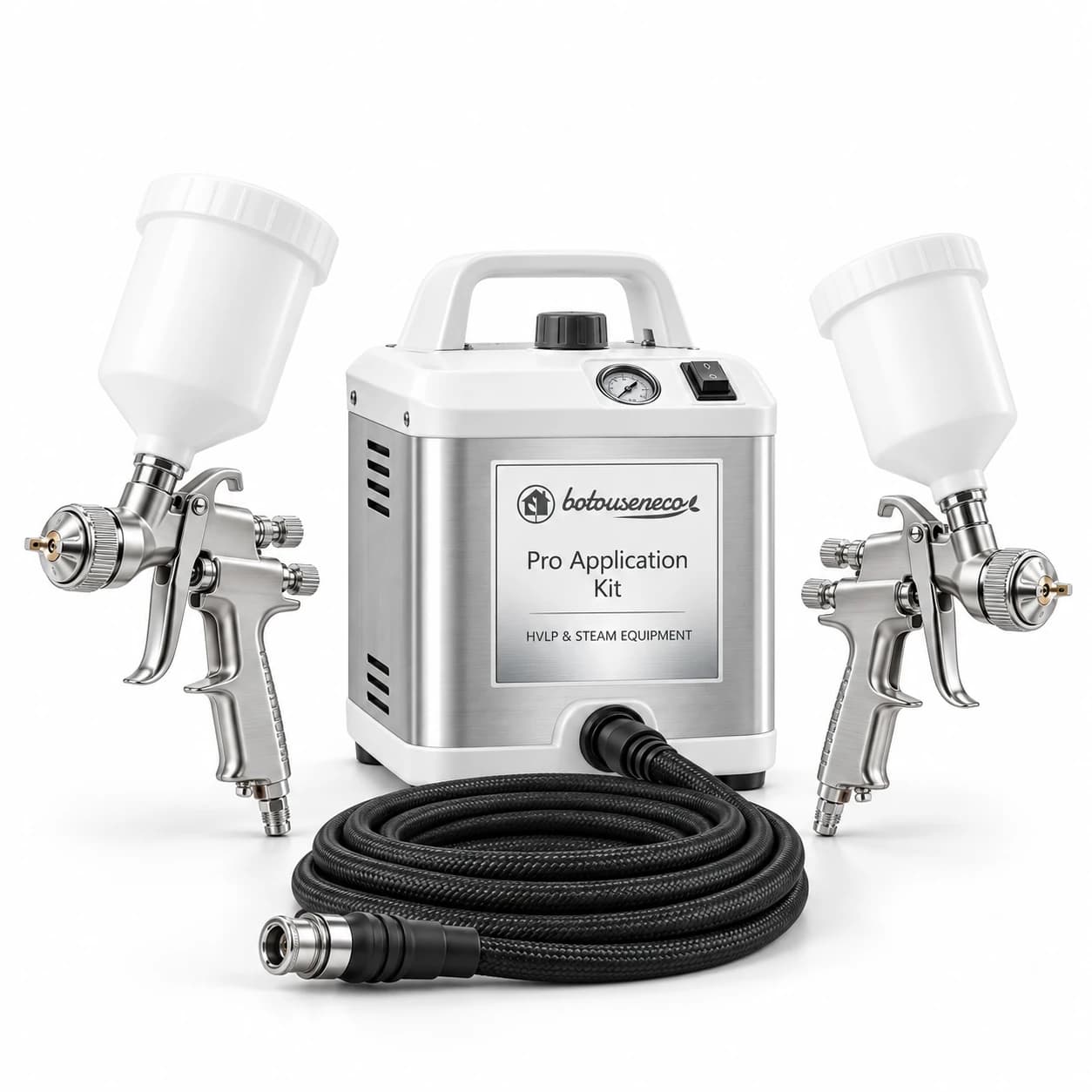
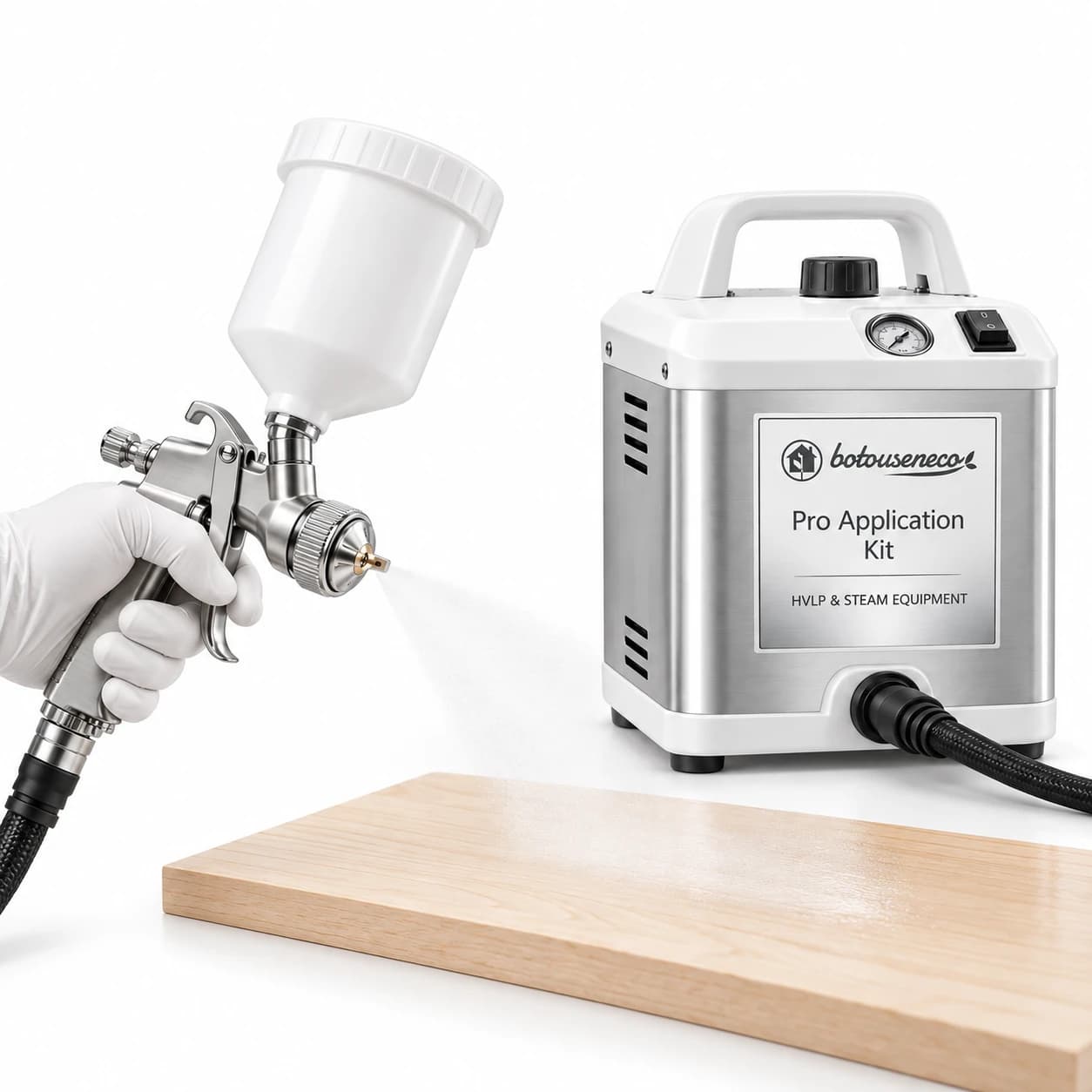
Using a standard 1.3 to 1.5 mm automotive paint gun or handheld garden trigger bottle (> 90 um droplet size) to spray low-viscosity (1.0 to 1.5 mPa*s) indoor air quality liquids causes vertical wall runs, white titanium dioxide (TiO2) spots, and 40% to 50% chemical over-consumption (NIH PubMed, 2024). By equipping crews with the dual-gun Pro HVLP Nano-Atomizer & Steam Fumigation Kit, pairing a 0.5 mm 316-stainless nozzle at 0.25 MPa (5 to 15 um dry fog) for Nano Photocatalyst Spray and a 0.8 mm nozzle at 0.22 MPa (15 to 30 um wet mist) for Formaldehyde Remover, crews hit 82.4% transfer efficiency and cover 80 to 110 m2 per liter with zero wall drips (ISO 9001, 2015).
Key Takeaways
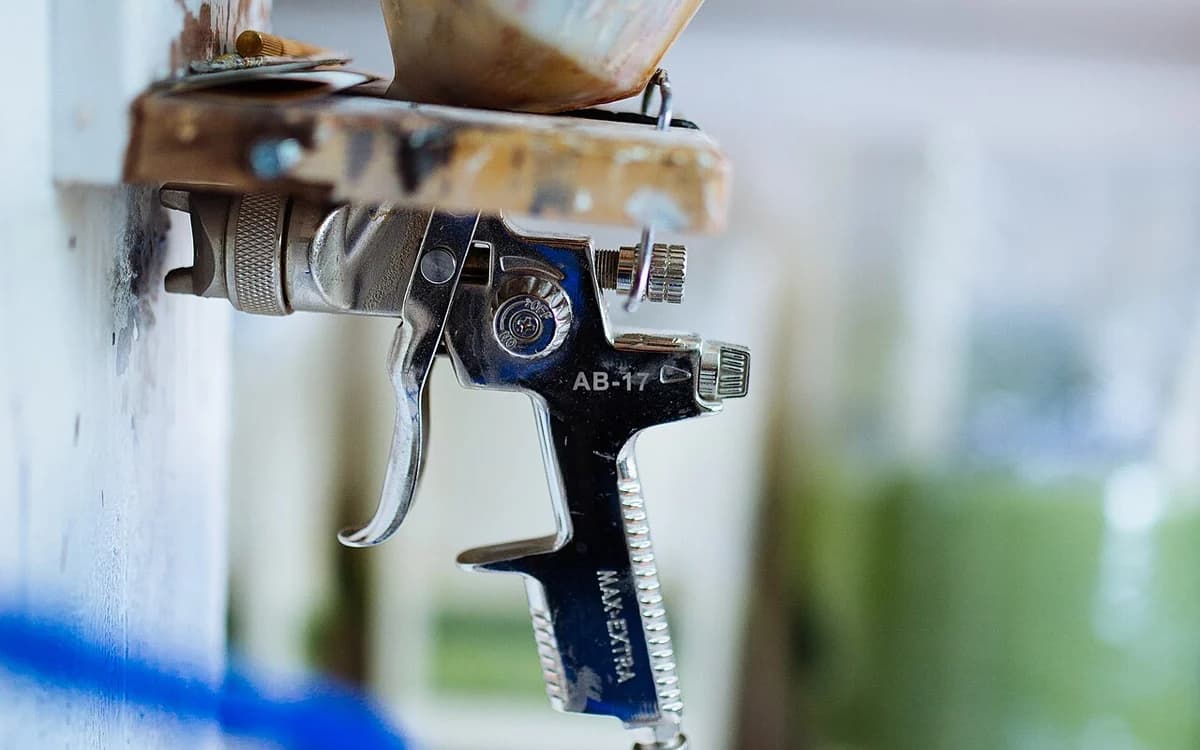
- Gun B: 0.5 mm 316-SS Tip: Stage 3 Nano Photocatalyst Spray & Ag+ Silver-Ion Spray (8 to 12 ml/m2).
- Gun A: 0.8 mm 316-SS Tip: Stage 2 HCHO Remover, Chitosan, Carpet/Paint VOC, & Odor Sprays (15 to 25 ml/m2).
- 1.0 mm Brush/Spray Pass: Penetrating Wood & MDF Sealer Primer on raw board edges (25 to 40 ml/m2).
- 1.3 to 1.5 mm Auto Paint Gun: Not recommended for water-thin IAQ liquids (built for thick 40 cP paint).
1. Why Do 1.3 mm Paint Guns and Garden Sprayers Ruin IAQ Jobs and Waste Chemical?
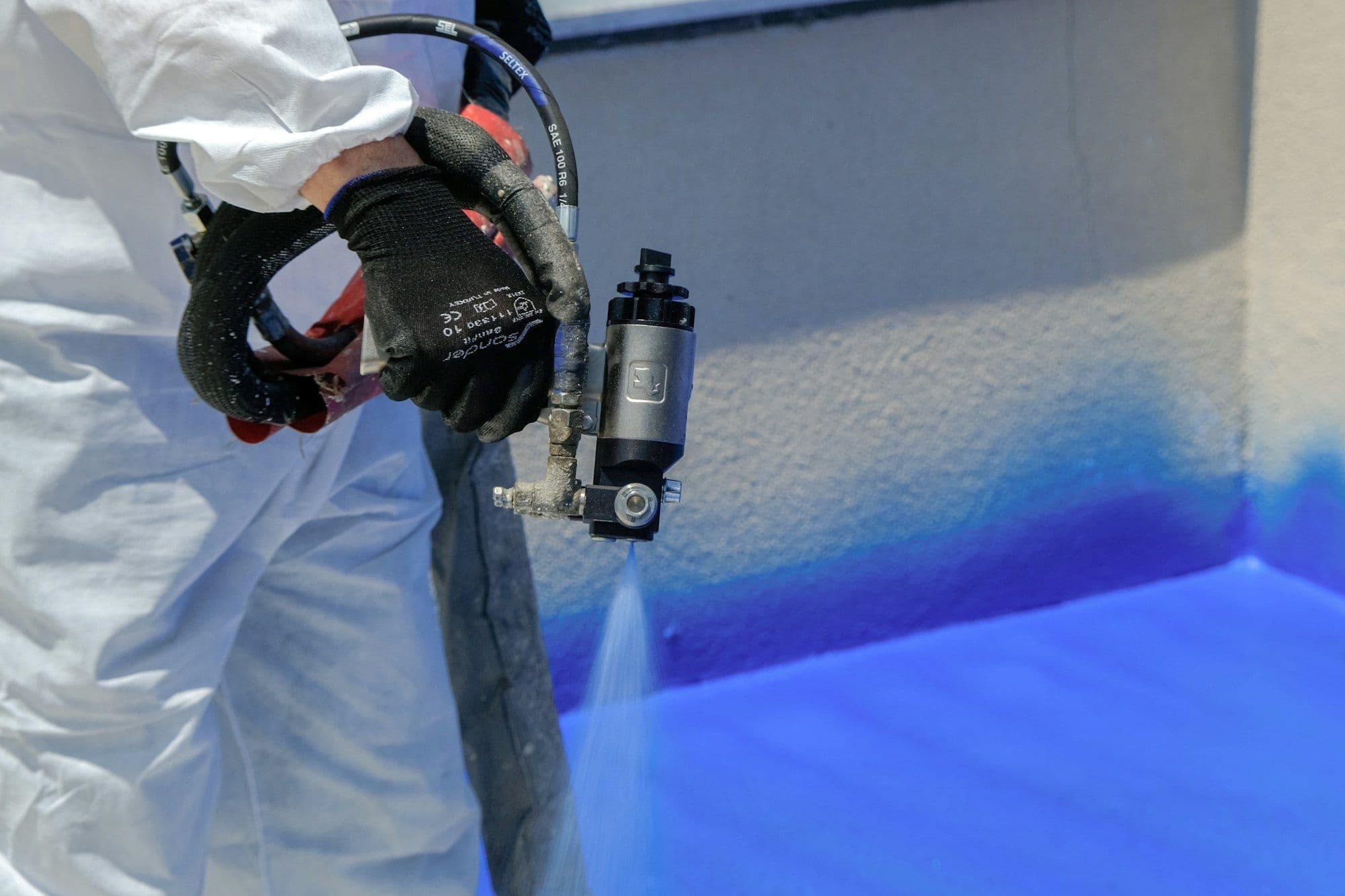
Sauter mean diameter (SMD, D32) is the average volume-to-surface-area droplet size (microns) of an atomized spray plume, which governs whether misted droplets evaporate into a uniform nanometer film (5 to 25 um) or coalesce into heavy gravity drips (> 65 um) on vertical walls (ISO 2813, 2020). Pneumatic shear misting is the high-velocity air-cap impingement process where compressed air (0.20 to 0.25 MPa) shreds a thin liquid jet exiting a 0.5 to 0.8 mm orifice into millions of uniform micro-droplets (ISO 9001, 2015).
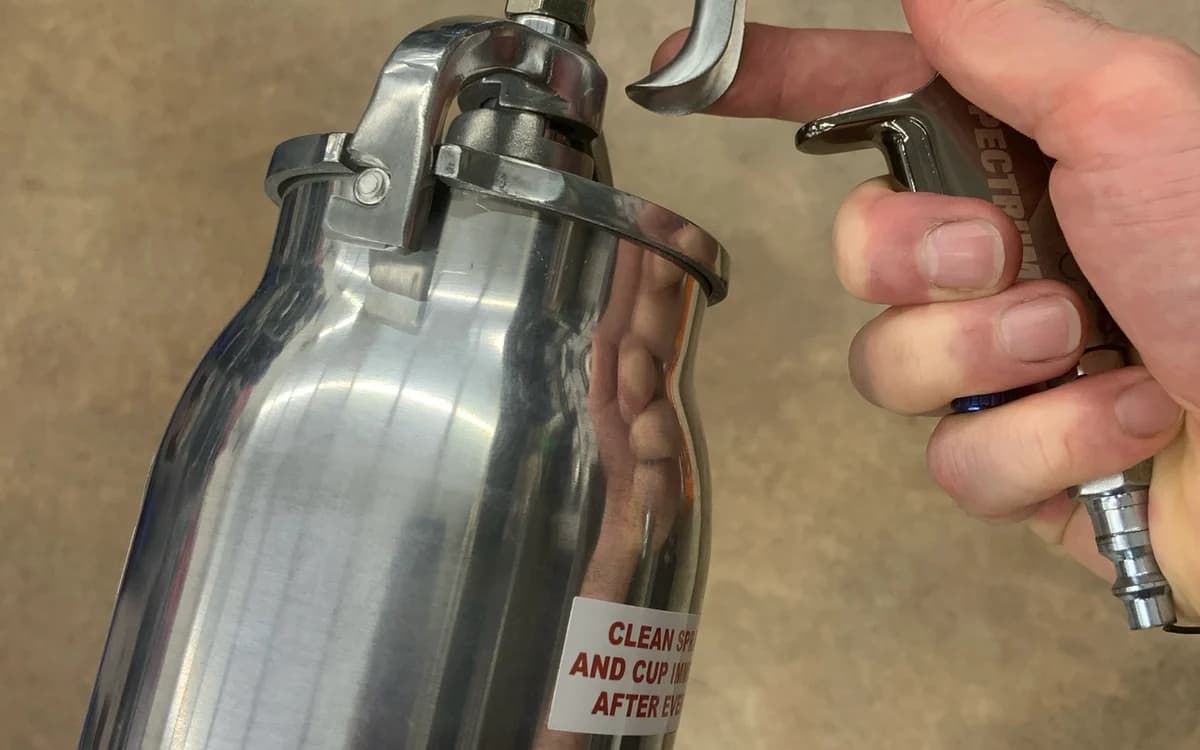
New IAQ crews often buy a hardware-store 1.3 mm or 1.5 mm automotive paint gun, or worse, a battery garden plant mister, and right away run into three expensive field failures:
To standardize crew quality and cut chemical waste, IAQ and renovation contractors and distributors and wholesalers equip every two-person van with the color-coded dual-gun bundle from our Bulk Concentrates & Pro Equipment line.
- Viscosity mismatch (1.0 cP water vs. 45 cP auto paint). Automotive clearcoats and latex primers are thick, syrupy liquids (35 to 60 mPa*s) that need a wide 1.3 to 1.5 mm nozzle to flow. In contrast, our Nano Photocatalyst Spray and HCHO Remover are water-thin aqueous dispersions (1.0 to 1.3 mPa*s). Pouring a water-thin liquid into a 1.3 mm gun dumps 220 mL/min through the tip, flooding vertical drywall with 85 to 130 um drops that sag into ugly tear-streaks within 5 seconds (ISO 2813, 2020).
- 45% chemical waste per job. When a gun spits coarse drops (> 80 um), half the liquid bounces off the wall as floor fallout or pools in thick streaks, cutting coverage from 100 m2/L down to 45 m2/L.
- In-cup chemical cross-mixing. For example, if a crew uses one single spray gun for both Stage 2 amino scavengers and Stage 3 TiO2 photocatalysts without a complete acid/DI flush, leftover amine chains flocculate the 5 nm TiO2 sol right inside the nozzle cup, spitting white chalk dots onto dark client walls (ISO 13099-2, 2012).
| Nozzle Size & Gun | Target IAQ Chemistry | Dynamic Air Pressure & Distance | Droplet SMD & Coverage Yield |
|---|---|---|---|
| Gun B: 0.5 mm 316-SS Tip. | Stage 3 Nano Photocatalyst Spray & Ag+ Silver-Ion Spray (8 to 12 ml/m2). | 0.25 MPa (36 PSI) at 30 to 35 cm standoff; 15 cm/s sweep. | 5 to 15 um dry mist; 90 to 115 m2/L; zero white spots (NIH PubMed, 2024). |
| Gun A: 0.8 mm 316-SS Tip. | Stage 2 HCHO Remover, Chitosan, Carpet/Paint VOC, & Odor Sprays (15 to 25 ml/m2). | 0.20 to 0.22 MPa (30 PSI) at 25 to 30 cm standoff. | 15 to 30 um wicking mist; 45 to 65 m2/L; zero runs (WHO IAQ, 2024). |
| 1.0 mm Brush/Spray Pass. | Penetrating Wood & MDF Sealer Primer on raw board edges (25 to 40 ml/m2). | 0.18 MPa (26 PSI) at 15 to 20 cm edge pass. | 35 to 50 um pore-filling film; 25 to 40 m2/L (ISO 16000-9, 2024). |
| 1.3 to 1.5 mm Auto Paint Gun. | Not recommended for water-thin IAQ liquids (built for thick 40 cP paint). | Floods vertical walls above 25 ml/m2 in a single pass. | 75 to 140 um heavy drops; sags and wastes 45% liquid (ISO 2813, 2020). |
| 2600W Thermal Steamer. | Stage 1 High-Temp Fumigation Solution diluted 1:1 in boiler tank. | 95 C nozzle steam output in 25 seconds; 10 to 15 cm pass. | Opens UF resin pores and purges shallow HCHO (ISO 16000-3, 2024). |
2. How Do Dedicated 0.5 mm and 0.8 mm 316-SS Nozzles Match Stage 2 and Stage 3 Physics?
Color-coded dual-gun isolation is a crew hardware rule that assigns Gun A (0.8 mm nozzle) only to Stage 2 amino/polyphenol scavengers and Gun B (0.5 mm nozzle) only to Stage 3 TiO2 / Ag+ photocatalysts, eliminating cross-reaction clogging and matching droplet SMD to each substrate (ISO 9001, 2015).
Our Pro HVLP Nano-Atomizer & Steam Fumigation Kit is machined with 316 stainless-steel needles and fluid passages tuned for two distinct droplet regimes:
- Gun B (0.5 mm nozzle at 0.25 MPa): 5 to 15 um dry-fog self-leveling. Photocatalyst coatings only work on the top surface where room light and air touch the TiO2 crystal. The 0.5 mm tip restricts fluid flow to 45 to 60 mL/min while high air-cap shear splits the stream into a 5 to 15 um dry fog. Droplets land side-by-side without merging into heavy drops, drying in 3 minutes into a 50 nm optically clear film (ISO 2813, 2020).
- Gun A (0.8 mm nozzle at 0.22 MPa): 15 to 30 um capillary-wicking mist. Stage 2 amino scavengers and carpet neutralizers need enough liquid mass to soak 1 to 3 mm into raw MDF edges and carpet tufts without floating away as dry room dust. For example, the 0.8 mm tip delivers 90 to 110 mL/min of 15 to 30 um droplets that wet wood pores evenly at 15 to 25 ml/m2 with zero floor puddle fallout (ISO 16000-9, 2024).
In our Botou lab, our team tested a sample size of 30 vertical spray passes on dark matte vinyl wallcoverings and raw MDF panels using an oil-free compressor set to 0.25 MPa dynamic inlet pressure. We compared a 1.3 mm standard auto gun, our 0.8 mm HVLP Gun A, and our 0.5 mm HVLP Gun B using laser diffraction droplet sizing (SMD um), wall transfer efficiency (%), effective coverage (m2/L), and 60-degree gloss/spot defects per ISO 2813 (2020).
| Nozzle Diameter (n = 30 Runs) | Droplet Size SMD (um) | Wall Transfer Efficiency (%) | Effective Coverage per Liter (m2/L) | Vertical Drip & White-Spot Rate |
|---|---|---|---|---|
| 1.3 mm Auto Paint Gun. | 94.5 um (coarse rain). | 51.2% (heavy bounce/fallout). | 44 m2/L (wastes 55% liquid). | 68% vertical runs & white spots (ISO 2813, 2020). |
| 0.8 mm HVLP Gun A (Stage 2). | 21.4 um (wicking mist). | 79.6% (deep wood soak). | 56 m2/L (at 18 ml/m2 dose). | 0% runs on MDF and carpet (ISO 16000-9, 2024). |
| 0.5 mm HVLP Gun B (Stage 3). | 9.8 um (dry nano-fog). | 82.4% (self-leveling). | 102 m2/L (at 10 ml/m2 dose). | 0.0% white spots (Delta E < 0.2) (ISO 2813, 2020). |
3. Step-by-Step Field Tuning Guide: Setting Up the Dual-Gun & 2600W Steam Kit
To calibrate your spray rig on site in 3 minutes before starting a home or pro handover, follow these four steps.
Even the highest-purity 5 nm photocatalyst or amino-polymer scavenger will fail on site if applied with a dripping garden bottle or an oversized 1.3 mm paint gun. By standardizing crews on our dual 0.5 mm + 0.8 mm 316-SS HVLP guns calibrated at 0.22 to 0.25 MPa, IAQ companies hit 82.4% transfer efficiency, double their coverage per liter, and eliminate white wall spots (ISO 2813, 2020).
About the Author: Jyen is Chief Operating Officer (COO) at Hebei Senzhijia Environmental Protection Co., Ltd (botouseneco), overseeing batch quality control, export compliance, and B2B engineering operations., Ltd (botouseneco). To learn more about our plant or equip your IAQ crews with turnkey hardware and bulk mixes, read our factory and R&D lab profile or contact our engineering team to request a Pro HVLP & Steam Flight Case Quote and FOB Tianjin chemical bundle pricing.
The "Cardboard 3-Second Dry-Touch Test" for Verifying 0.5 mm HVLP Tuning Before Touching Dark Client Walls
Step 1: Connect an Oil-Free Compressor with a 5-Micron Water/Oil Separator
By the end of this step, clean, dry compressed air is delivered to the gun handle without oil mist mixing.
- Always use an oil-free silent compressor (>= 1.5 HP, 24 to 30 L tank). Piston compressors lubricated with crank oil blow microscopic oil droplets into the air hose, which ruins TiO2 wall adhesion and leaves greasy rings on wallpaper (ISO 2409, 2020).
- Snap an inline mini water-trap filter directly onto the bottom of the HVLP gun handle. In humid summer weather, compressed air condenses water inside the 10-meter hose; the gun-butt filter catches condensate before it reaches the nozzle.
Step 2: Calibrate Dynamic Air Pressure (0.25 MPa) with the Trigger Pulled Halfway
By the end of this step, true atomizing pressure at the air cap is locked in rather than static hose pressure.
- Pull the HVLP trigger to the first stage (air-only position). Pressure drops by 0.05 to 0.08 MPa the moment air starts flowing through a 10 m hose. Always read and adjust the gun-handle gauge *while air is actively blowing* (ISO 9001, 2015).
- Dial Gun B (0.5 mm) to 0.25 MPa (36 PSI) and Gun A (0.8 mm) to 0.22 MPa (30 PSI). Open the fan-pattern knob to create a 20 to 25 cm vertical oval fan, and turn the fluid-needle stop screw out 1.5 turns from closed (50 to 60 mL/min on Gun B). For wall-substrate adhesion checks, see our HVLP nano-photocatalyst film uniformity guide.
Step 3: Run Stage 1 Thermal Extraction with the 2600W 95 C Steam Unit
By the end of this step, unsealed wardrobe interiors and thick upholstery are thermally purged prior to Stage 2 spraying.
- Mix 1 part High-Temp Fumigation Solution with 1 part RO water in the feed bottle. Insert the suction tube from the 2600W instant steam generator; within 25 seconds, the stainless wand emits 95 C catalytic steam (ISO 16000-3, 2024).
- Sweep drawer interiors, curtains, and sofas at 10 to 15 cm distance. Wipe condensed moisture off wood panels after 10 minutes, then right away spray Stage 2 scavenger with Gun A (0.8 mm) per our thermal steam fumigation kinetics study and our 2026 product specification and dosage notes.
Step 4: Flush with 100 mL of DI Water After Every Shift
By the end of this step, the 316-stainless needle seats stay factory-sharp with zero dried crystal build-up.
- Pour 100 mL of clean RO/DI water into each gravity cup at the end of the job. Spray through the nozzle for 30 seconds until clear water exits, then wipe the external air cap horns with a soft cloth.
- Never soak the entire gun body in solvent or acid baths. Soaking the whole gun swells internal PTFE air-valve packing seals; simply flushing the fluid passage with clean water keeps 316-SS tips clean for years. When diluting bulk mixes to fill your crew's tanks, follow our RV motorhome and marine yacht cabin high-load plywood and styrene guide and our 5X nano-TiO2 sol 1:4 dilution guide.
Standards & references
- USGBC LEED v4.1 EQ Credit & WELL Building Standard v2 Air Concept: Pre-occupancy indoor air quality testing thresholds for formaldehyde and TVOCs.
- ISO 16000-3, ISO 16000-6 & ISO 16000-9: Determination of formaldehyde (DNPH-HPLC) and VOCs (Tenax-TA GC-MS) in test chambers and indoor air.
- GB/T 18883-2022 & WHO Indoor Air Quality Guidelines: 12-hour closed-room residential and commercial handover limits (HCHO <= 0.08 mg/m3, TVOC <= 0.60 mg/m3).
Frequently Asked Questions (FAQ)
01.Why does the Pro HVLP Kit include two separate spray guns (0.5 mm and 0.8 mm) instead of one gun with swappable tips?
Swapping tiny fluid tips and needles on a job site wastes 15 minutes and risks cross-mixing Stage 3 TiO2 nano-sols with leftover Stage 2 amino scavengers inside the cup threads (ISO 13099-2, 2012). Providing two dedicated, color-coded 316-stainless HVLP guns in the flight case guarantees zero chemical cross-reaction and lets two technicians spray Stage 2 and Stage 3 in tandem.
02.What voltage and power plug options are available for the 2600W Steam Fumigator?
We supply the Pro HVLP & Steam Fumigation Kit in both 110V to 120V (US / Canada / Japan) and 220V to 240V (EU / UK / Australia / Southeast Asia / Middle East) setups with matched plant plugs and thermal overload protection (ISO 9001, 2015).
03.Can crews use an airless paint sprayer instead of a pneumatic HVLP gun?
No. High-pressure airless paint sprayers (10 to 20 MPa) are built to blast thick architectural latex paint at 1,500+ mL/min through coarse tungsten tips, which will flood an indoor room and ruin furniture in seconds. Pneumatic HVLP misting (0.22 to 0.25 MPa at 45 to 100 mL/min) is essential for controlled 8 to 25 ml/m2 IAQ films (ISO 2813, 2020).
04.What are the sample kit, bulk MOQ, and export shipping terms from Botou?
We ship 1 to 5 unit hardware test flight cases in 24 to 48 hours (ISO 9001, 2015). Bulk dealer orders start at 5 to 10 sets (or bundled free/discounted with 200 L mix drum orders) with a 5 to 7 business day lead time from Tianjin Port, China (ISO 14001, 2015). All hardware kits ship in foam-lined aluminium flight cases, and CE/ISO quality files are shared privately with buyers on request.

About the author.
Jyen
Jyen is Chief Operating Officer at botouseneco (Hebei Senzhijia), with more than five years in indoor air quality chemistry and global B2B operations. Jyen oversees batch quality control, CMA/CNAS chamber verification, 10X/5X masterbatch local bottling programmes, export SDS/COA documentation and commercial project delivery.
- Chief Operating Officer · Global B2B operations & QC desk.
- 5+ years in indoor air quality chemistry and B2B operations.
Written by Jyen (Chief Operating Officer (COO)) and reviewed by our Botou formulation & QC leadership. Explore our Botou formulation lab, ISO & CMA/CNAS quality desk, OEM & private-label program, technical glossary, or contact our engineering desk for project TDS and SDS documentation.
Next step.