Healthcare Cleanroom & NICU IAQ Control
Ultra-Sensitive Healthcare IAQ: Combining Zero-VOC Chitosan Surface Scavenging and KMnO4 Alumina Filtration in NICU and IVF Suites
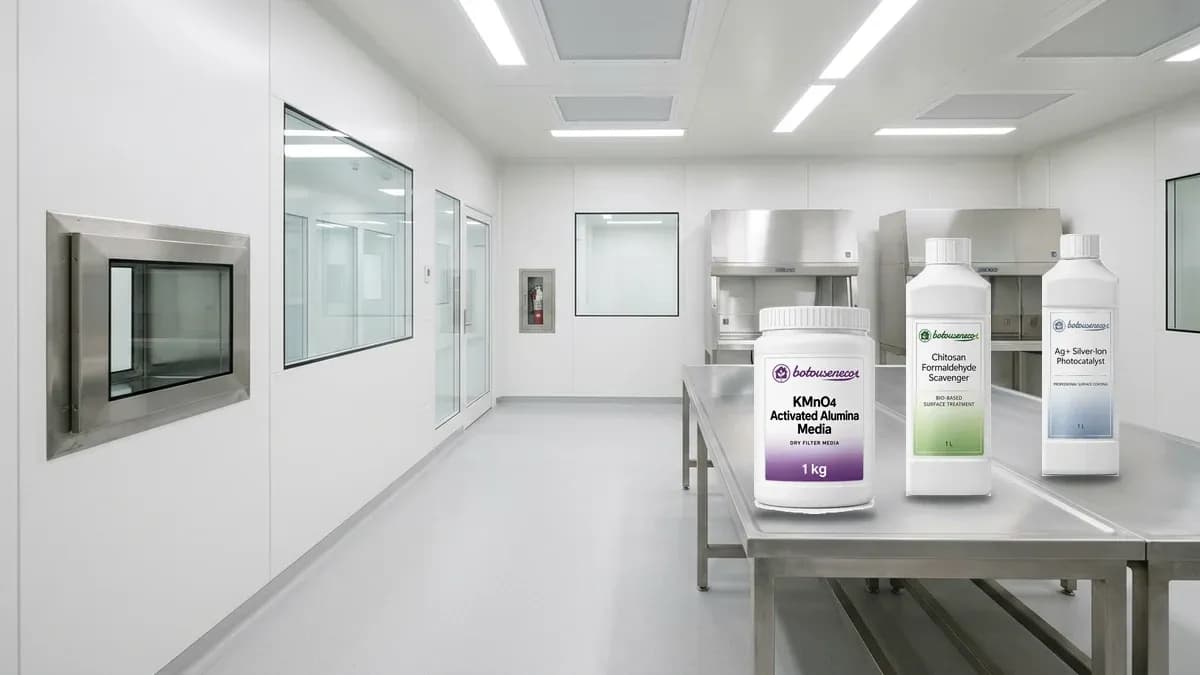
Standard hospital HEPA filters trap dust down to 0.3 microns yet pass trace formaldehyde, acrolein, and paint fumes straight into embryo labs and infant wards. Effective hospital NICU and cleanroom VOC control pairs three non-toxic defenses before opening. Coat outer millwork with zero-VOC Plant-Extract Chitosan Formaldehyde Scavenger (15-25 ml/m2, pH 6.0-7.0), pack central air beds with KMnO4 Activated Alumina Media (0.05-0.20 s EBCT), and shield dark plenums with Silver-Ion Antibacterial Photocatalyst Spray (150 ppm Ag+).
Key Takeaways
- Why HEPA Alone Fails IVF & NICU: H14 HEPA traps 99.995% of particles at MPPS (0.1-0.3 um, EN 1822) but passes trace formaldehyde, acrolein, and ethylene straight into embryo incubators and infant wards.
- Layer 1 Zero-VOC Surface Scavenging: Spray Plant-Extract Chitosan Formaldehyde Scavenger (pH 6.0-7.0, 15-25 ml/m2) on empty outer millwork and walls 48-72 h pre-admission; never spray inside incubators or medical devices.
- Layer 2 & 3 Dual-Media AHU + Dark Ag+ Shield: Run 50:50 upstream coconut carbon + downstream KMnO4 alumina (8/10/12 wt%, 0.05-0.20 s EBCT) ahead of terminal HEPA, and coat dark airlocks/plenums with 150 ppm Ag+ TiO2 (8-12 ml/m2).
- 600 m2 IVF + Level-III NICU Takeoff: 1,100 m2 millwork uses 1 x 25 L Chitosan (24.20 L); 7,200 m3/h AHU at 0.12 s EBCT uses 4 x 25 kg KMnO4 Alumina (96.0 kg, exact 100 kg MOQ) + 3 x 25 kg carbon; 350 m2 plenums use 1 x 5 L Ag+.
Why New Hospital Cleanrooms and IVF Suites Face Gas-Phase IAQ Risks
New hospital towers and rebuilt fertility clinics often pass ISO dust counts on day one yet still face clinical setbacks. Fresh floor coats, laminated nurse desks, caulk, and street exhaust leak trace gases into clean suites for months.
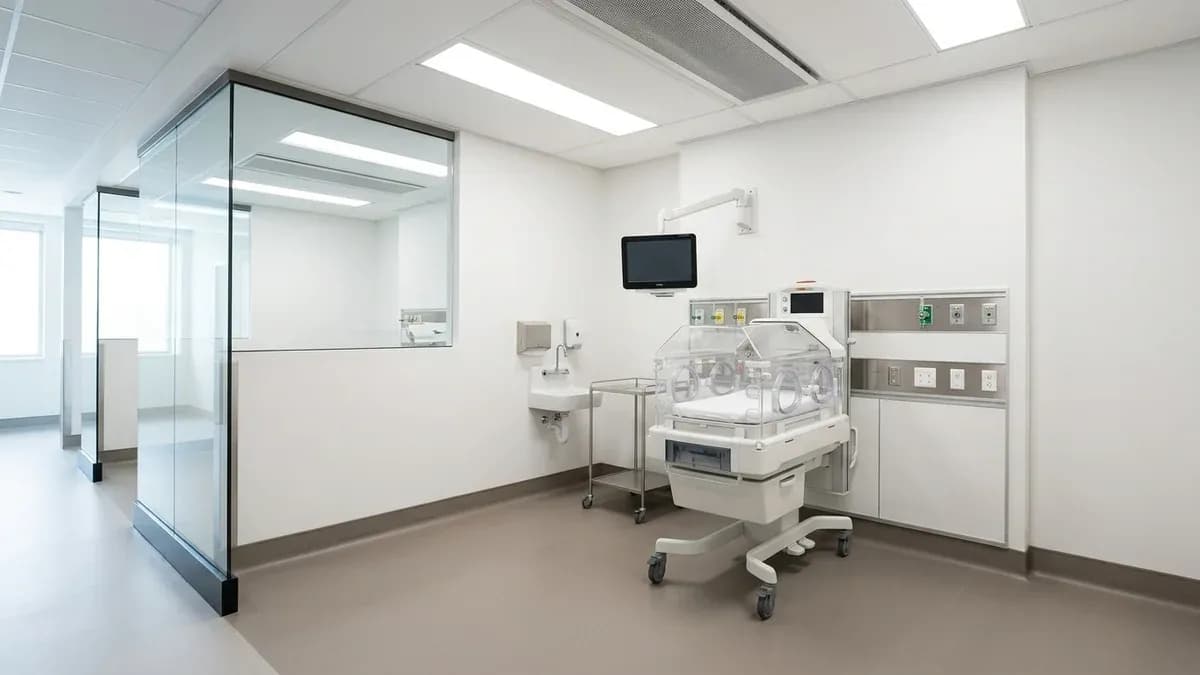
In a normal office, tiny aldehyde traces go unseen. Inside an in vitro fertilization (IVF) lab or a Level-III neonatal intensive care unit (NICU), those exact gases harm fragile embryos and premature newborn lungs.
| Healthcare Zone | Primary Chemical Hazard | Why Standard HEPA Alone Fails | Matched BotouSeneco System & Rate |
|---|---|---|---|
| NICU nursing cabinetry & trim | Formaldehyde (HCHO) from wood & glue | Fiberglass HEPA catches zero vapor | Plant-Extract Chitosan Scavenger (15-25 ml/m2, pH 6.0-7.0) |
| IVF embryology AHU & inline ducts | Trace aldehydes, ethylene, outdoor exhaust | Plain carbon dumps light HCHO fast | KMnO4 Alumina Media (50:50 bed, 0.05-0.20 s EBCT) |
| Scrub corridors & dark AHU plenums | Surface microbes & trace VOC haze | UV-only TiO2 stays idle in dark bays | Silver-Ion Photocatalyst Spray (8-12 ml/m2, 150 ppm Ag+) |
| Adjacent clinical & dental suites | Disinfectant cross-odors & paint fumes | Scented sprays add harsh terpenes | Chitosan Scavenger + KMnO4 / Carbon V-Banks |
Why IVF Embryos and NICU Newborns Fail Under Standard HEPA-Only Air
Chemical Air Filtration is the gas-phase removal of volatile organic compounds (VOCs), aldehydes, and olefins through solid reactive media rather than dust sieves. Standard H13 or H14 HEPA glass mats catch dust and germs down to 0.3 microns. Yet gas molecules like formaldehyde are roughly 1,000 times smaller and slip right through HEPA pleats.
Peer-reviewed clinical work shows how sharply trace vapors alter clinic outcomes.
- IVF Embryo Growth & Live Birth Gains. A 2017 study in the Journal of Assisted Reproduction and Genetics (PMC5533678) tracked 1,036 IVF cycles before and after air upgrades. After adding VOC beds, steel desks, low-VOC washes, and a scent ban, blastocyst growth rose near 18% (PMC5533678, 2017). Implantation, pregnancy, and live birth rates climbed roughly 11%, 10%, and 8% in the same study (PMC5533678, 2017).
- Dust-Only Rules Miss Toxic Gases. Reviews in Therapeutic Advances in Reproductive Health (PMC7882750, 2021), Journal of Assisted Reproduction and Genetics (PMC4531860, 2015), and Asian Journal of Andrology (PMC4955186, 2016) flag a key blind spot. Industrial dust rules ignore gas-phase VOCs, whereas paired dust-and-gas scrubbing protects embryo culture stability.
- Measured VOC Load in Hospital Newborns. A 2024 study in the Journal of Thoracic and Cardiovascular Surgery (PMC11261308) tested 150 daily urine samples from 10 hospitalized infants for 20 metabolites of 16 VOCs. Every sample held a median of 14 VOC markers (range 3 to 15), and infants breathing ward air showed higher acrolein, xylene, DMF, and 1,3-butadiene levels while safe infant thresholds remain unknown.
Why Synthetic Chemical Sprays and Ozone Generators Are Banned in Sensitive Clinical Wings
Hospital safety boards ban harsh remodeling sprays and ozone units inside maternity and fertility wings for three clear reasons.
- Solvent & Scent Drift. Many store sprays carry ethanol, glycol ethers, or plant fragrances that spike indoor TVOC readings and dissolve into embryo oil layers.
- Ozone Reaction Smoke. Ozone units react with wall paint and plastic tubes to create new formaldehyde and tiny aerosols that irritate infant lungs.
- Plain Charcoal Release. Raw carbon holds light formaldehyde weakly on its surface. When hospital supply air turns warm and humid, raw carbon dumps stored formaldehyde straight back into clean rooms.
| Air-Control Method | Formaldehyde & Acrolein Capture | Secondary VOC or Ozone Risk | Visual Media Life Signal | Fit for IVF & NICU Handover |
|---|---|---|---|---|
| H14 HEPA filter alone | Zero gas-phase capture | None | Pressure drop (dust only) | Needed for dust; misses VOCs |
| Plain coconut carbon | Weak; releases in humid air | Re-emits stored HCHO | None; needs lab assay | Poor alone for light aldehydes |
| Ozone or scented fogger | Forms new aldehydes | High; harms lungs & seals | None | Strictly banned in clinics |
| Chitosan + KMnO4 Alumina | Locked Schiff-base + redox | Zero solvent; zero ozone | Purple beads turn brown | Built for sensitive zones |
Three-Layer Zero-VOC Commissioning Protocol for NICU and IVF Suites
Safe clinical handover blocks aldehydes at solid wood surfaces while scrubbing trace gases inside central air handlers. Bio-Based Chitosan Formaldehyde Scavenging is the zero-solvent Schiff-base bond formed between marine glucosamine chains (-NH2) and surface aldehydes, locking free formaldehyde inside a clear bio-film. Permanganate Redox Scrubbing is the solid-state oxidation of polar aldehydes, ethylene, and acid gases inside porous alumina beads loaded with potassium permanganate (KMnO4), turning purple Mn7+ into brown manganese dioxide (MnO2).
For full solid-bed design specs across large buildings, read our pillar guide on gas-phase chemisorption media and slow-release air purification. Follow this three-layer handover plan built for schools, clinics, and healthcare facilities.
Layer 1: Zero-VOC Chitosan Surface Scavenging on External Millwork
Inside empty NICU bays, family rooms, and IVF hallway walls, treat wood cabinets, nurse chart desks, hatch trim, and fresh paint at least 48 to 72 hours before opening. As shown in the NIH PubChem Chitosan Reference, a 2019 Polymers paper (PMC6419068), and a 2026 RSC Advances review (PMC13421388), amine groups on chitosan bind gaseous formaldehyde through firm Schiff-base links.
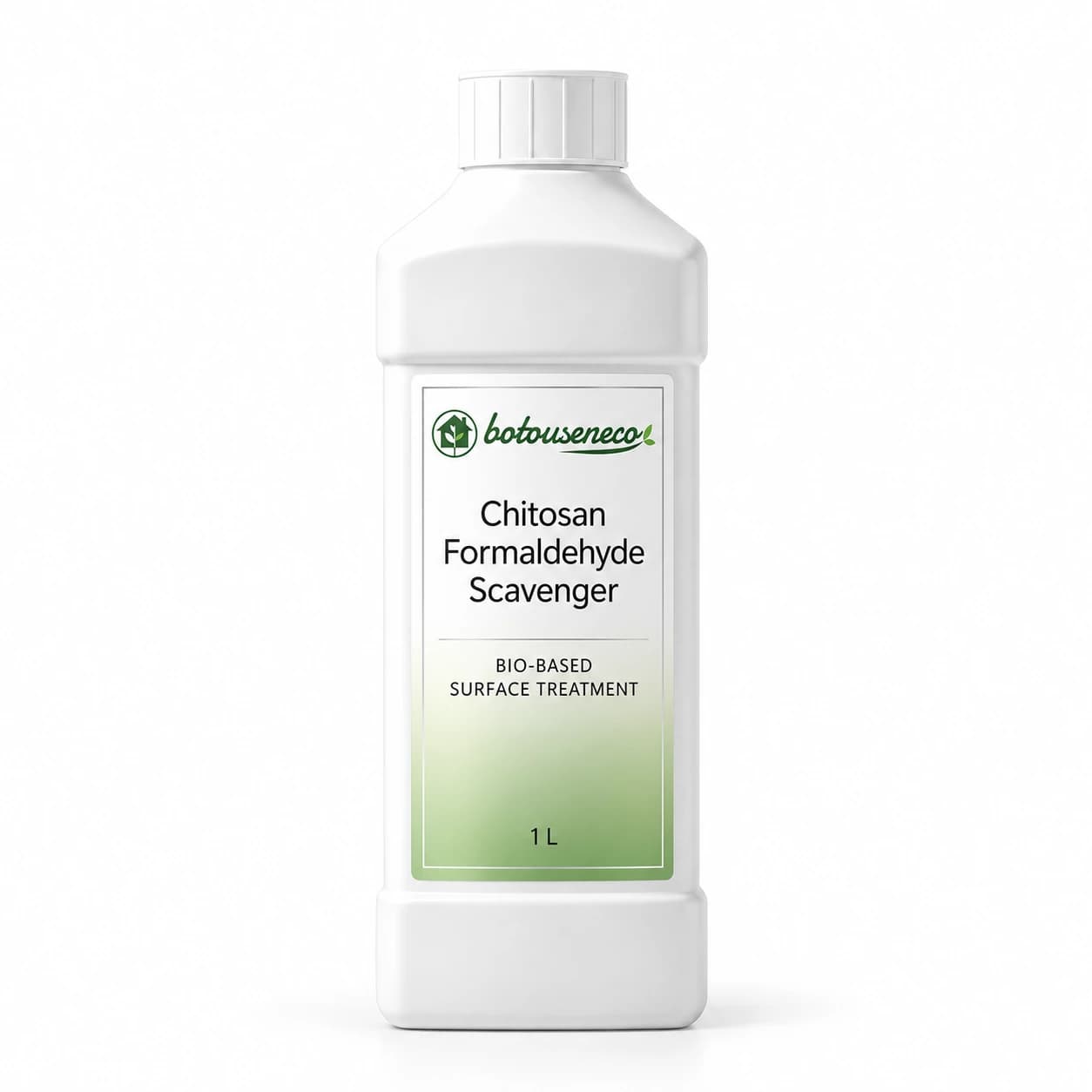
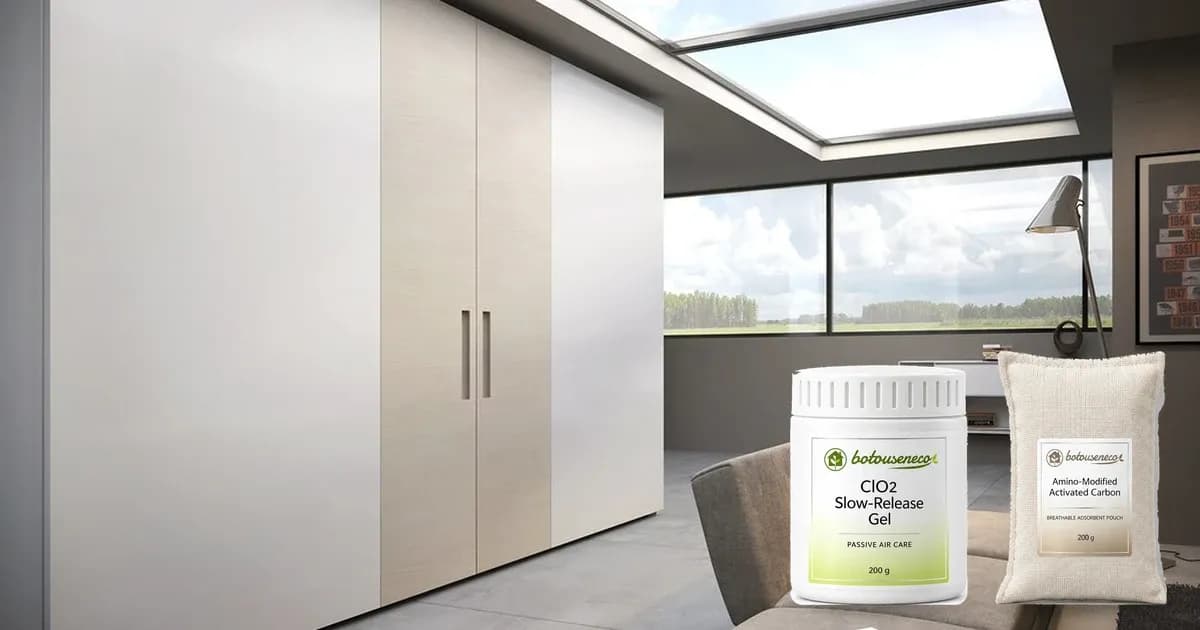
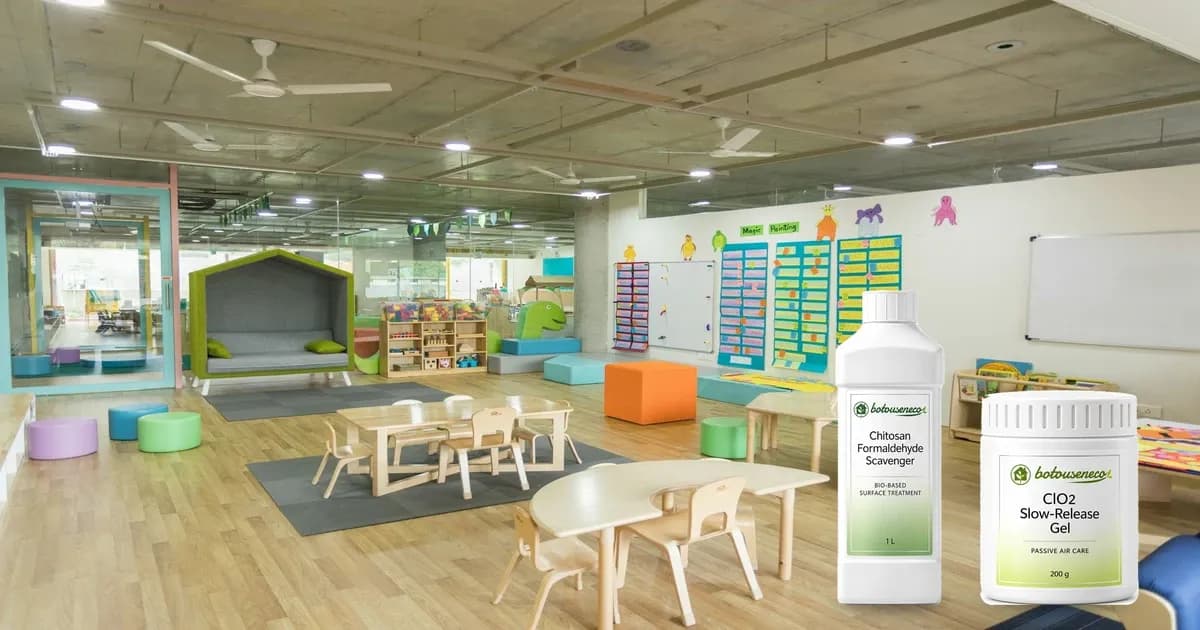
Spray ready-to-use Plant-Extract Chitosan Formaldehyde Scavenger (pH 6.0 to 7.0, high-deacetylation marine chitosan with green tea polyphenols) at 15 to 25 ml/m2 through a 0.5 to 0.8 mm HVLP gun. Acting as a mild neonatal intensive care formaldehyde spray for exterior cabinets, it holds zero alcohol, zero scent, and zero heavy metals while locking vapors tracked in the NIH PubChem Formaldehyde Profile. For matching child-safe wood care steps, see our guide on deacetylated chitosan formaldehyde scavengers for nurseries and kindergartens.
Layer 2: Dual-Media KMnO4 Activated Alumina and Carbon AHU Filtration
Every cubic meter of outdoor air and hallway return entering an IVF suite or NICU must pass chemical filter beds ahead of terminal HEPA frames. As detailed in the NIH PubChem Potassium Permanganate Profile and a 2023 Journal of Food Science and Technology review (PMC10933227), permanganate breaks reactive olefins and light aldehydes into inert salts and CO2.
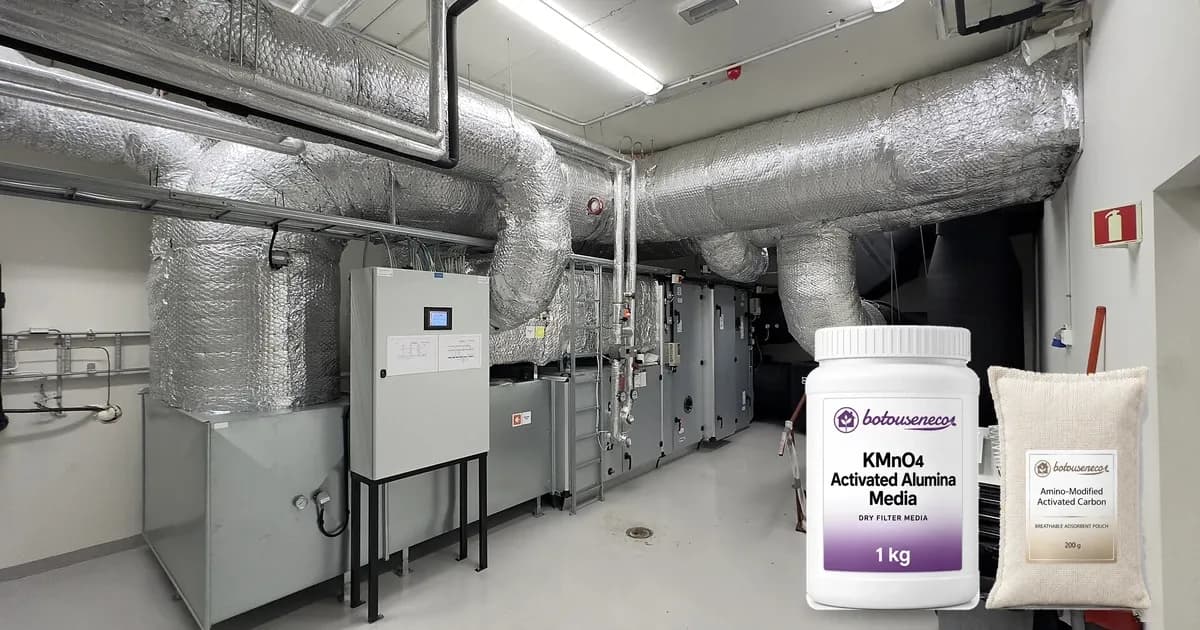
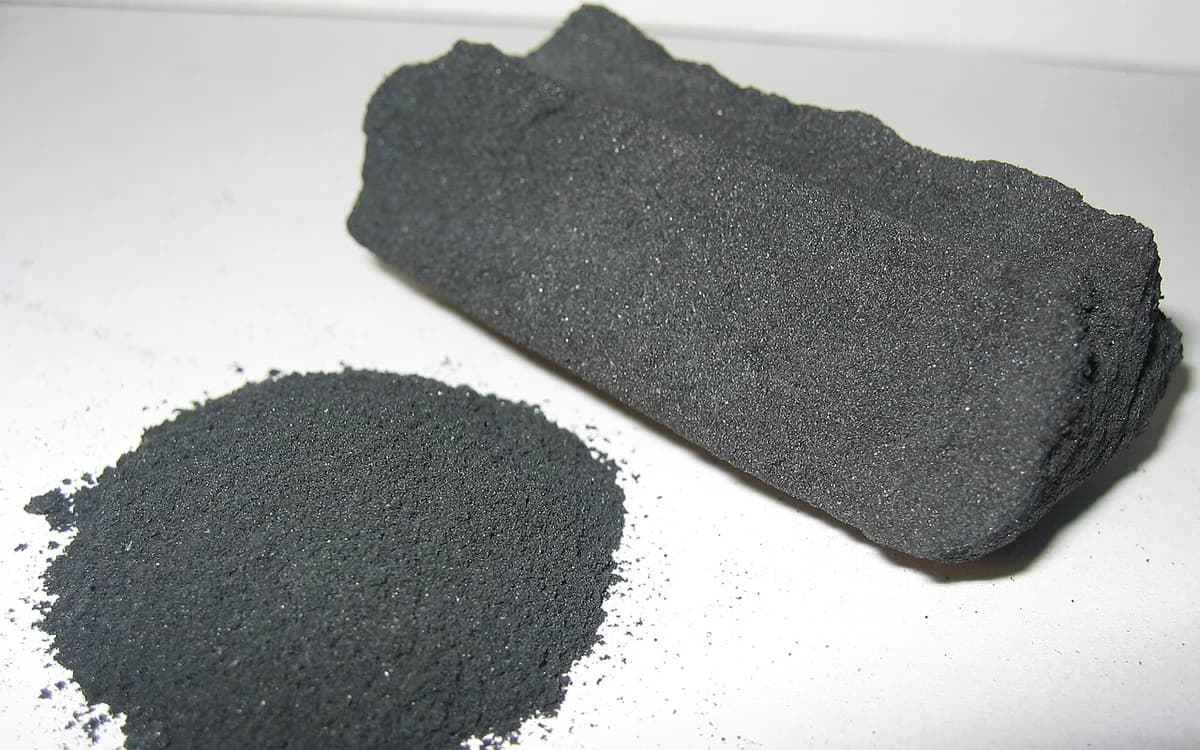
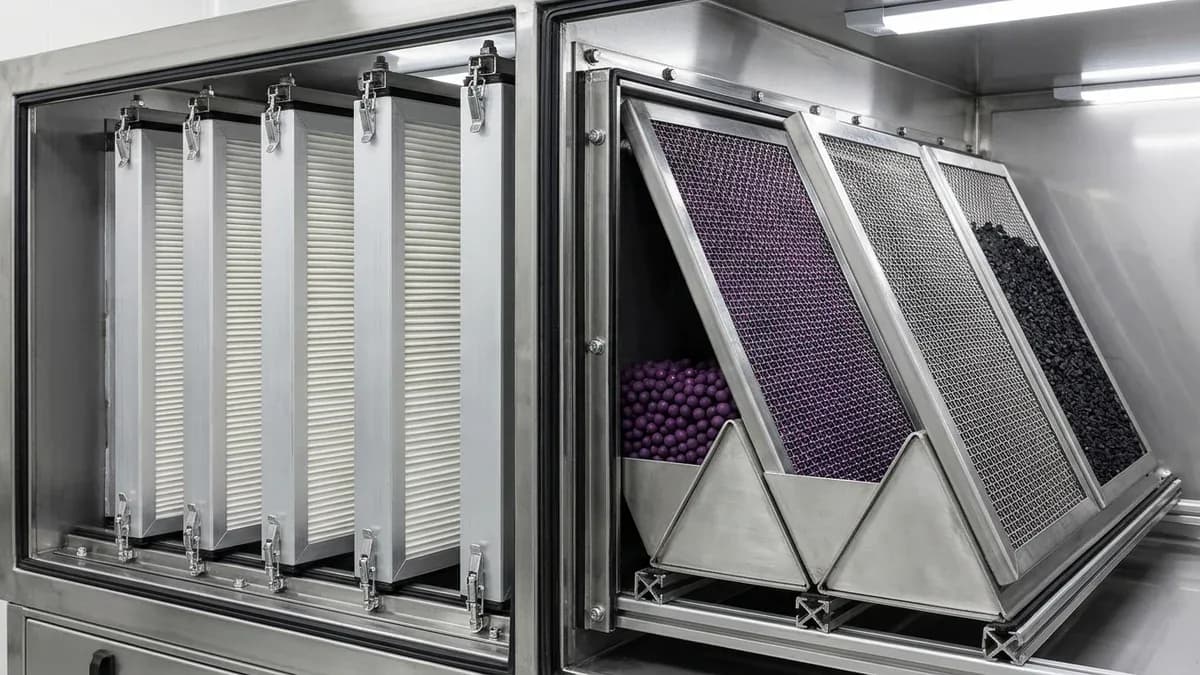
Fill cleanroom AHU V-bank trays with a 50:50 volumetric dual-media bed sized for 0.05 to 0.20 seconds Empty Bed Contact Time (EBCT). Place coconut carbon upstream to trap heavy aromatics like toluene and xylene. Place KMnO4 Activated Alumina Media (8, 10, or 12 wt percent loading per BotouSeneco media spec; 3 to 5 mm beads, BET >= 280 m2/g, crush >= 120 N) downstream as IVF lab aldehyde filtration media. That two-stage order keeps paint solvents from fouling purple Mn7+ pores early, saving oxidation life for formaldehyde, acetaldehyde, ethylene, and NOx.
Layer 3: Dark-Active Ag+ Shielding in Gowning Airlocks and AHU Plenums
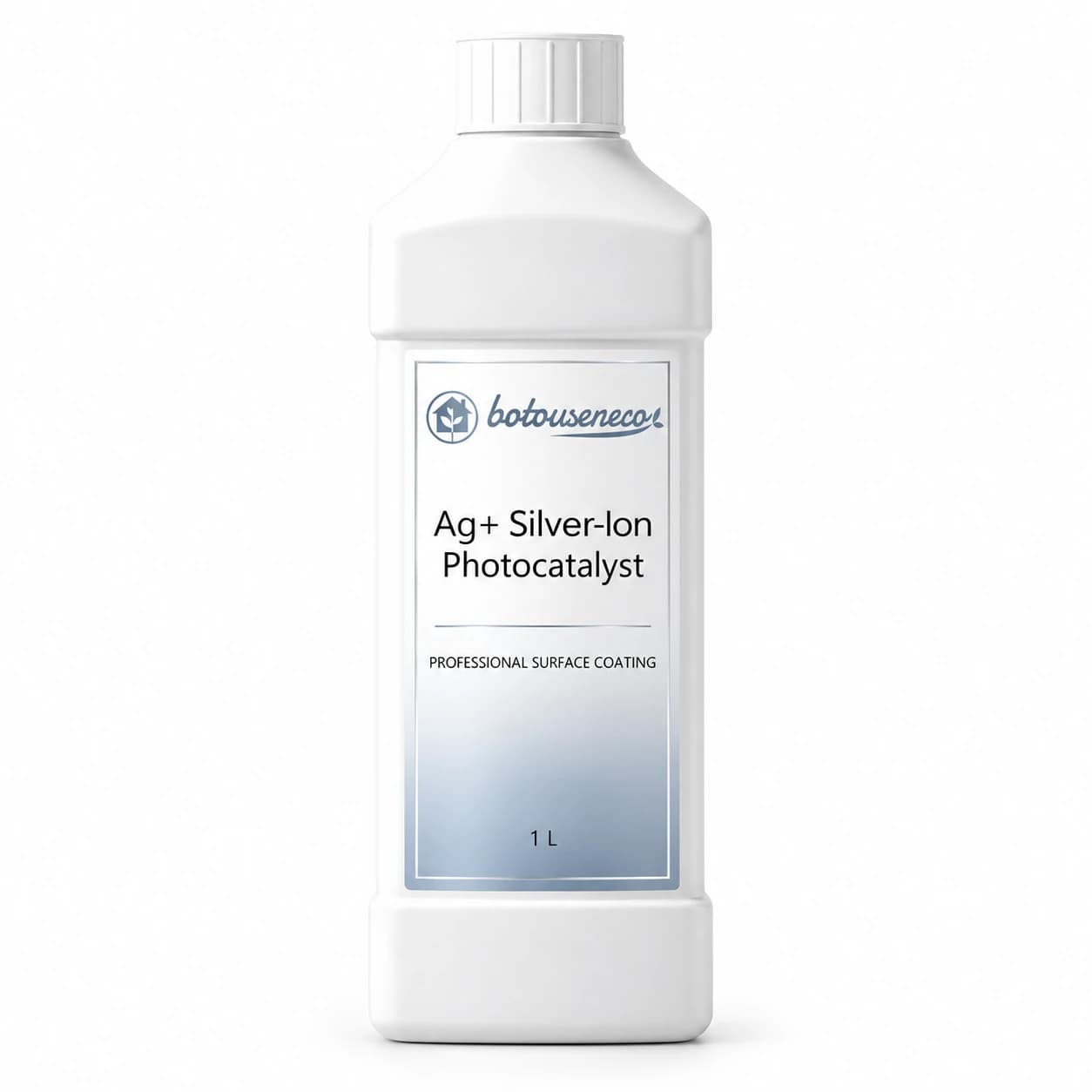
Outside direct cribs and embryo hoods, scrub halls, gowning airlocks, and dark AHU housings often hold damp air with little light. Wait until clean metal and wall surfaces dry completely before opening. Then coat corridor ceilings and plenum walls at 8 to 12 ml/m2 via a 0.5 mm HVLP gun using Silver-Ion Antibacterial Photocatalyst Spray (5 nm visible-light anatase TiO2 + 150 ppm chelated Ag+).
Because chelated silver ions stay active 24/7 in total darkness, airbox walls resist bacterial slime without venting harsh chemical fumes into patient air. For outpatient surgical rooms and dental clinics balancing wipe-downs with low-VOC care, read our guide on clinic and dental office IAQ and disinfection compatibility.
Test final room air before admitting patients or gametes against strict public limits. Check the CDC NIOSH Formaldehyde Pocket Guide (0.016 ppm 10-hour NIOSH REL TWA; 0.1 ppm 15-minute ceiling; 0.75 ppm 8-hour OSHA PEL TWA) and the WHO Guidelines for Indoor Air Quality: Selected Pollutants (0.1 mg/m3 30-min HCHO). Also review US EPA IAQ VOC guidance and China GB/T 18883-2022 (HCHO <= 0.08 mg/m3 1-hour average; TVOC <= 0.60 mg/m3 8-hour average).
Clinical Safety Boundaries: Zero Direct Spraying on Medical Devices
In our Botou lab and hospital handover audits, we enforce strict lines around medical gear. Never spray chitosan liquid or silver-ion coats inside baby incubators, heat warmers, embryo culture chambers, or steel laminar-flow workbenches.
Run all surface sprays only on room trim and outer cabinets while wards sit empty. Flush rooms with filtered air for 48 to 72 hours, then pass third-party photoionization detector (PID) or DNPH tube checks. Always mount terminal H13/H14 HEPA frames downstream of KMnO4 alumina beds so zero bead dust ever enters supply grilles.
BotouSeneco Cleanroom Zero-VOC Chitosan, KMnO4 Media and Ag+ Selector
Within our solid chemisorption media and clean-air product line, Hebei Senzhijia Environmental Protection Co., Ltd (BotouSeneco) manufactures all three handover systems. Learn more about us and our Botou plant, founded in 2015 in Cangzhou, Hebei, to supply bulk medical-grade zero-VOC chitosan scavenger liquids and high-crush alumina filter beads.
- 1. Plant-Extract Chitosan Formaldehyde Scavenger: Pure bio-based marine chitosan (high deacetylation, at least 95 percent per BotouSeneco QC spec) with green tea polyphenols at pH 6.0 to 7.0. Holds zero VOCs, zero alcohol, and zero scent; sprays at 15 to 25 ml/m2 via 0.5 to 0.8 mm HVLP onto outer cabinets and walls.
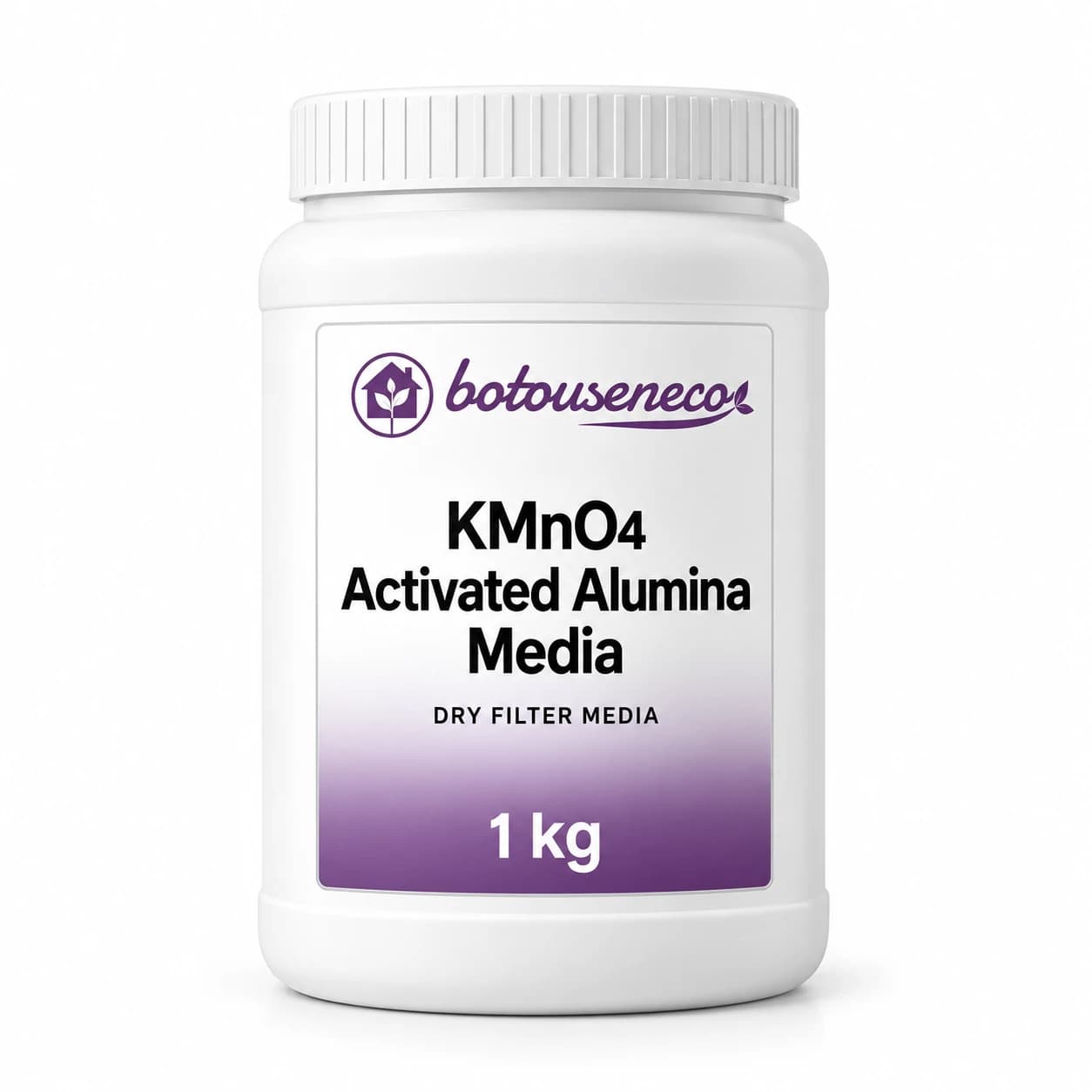
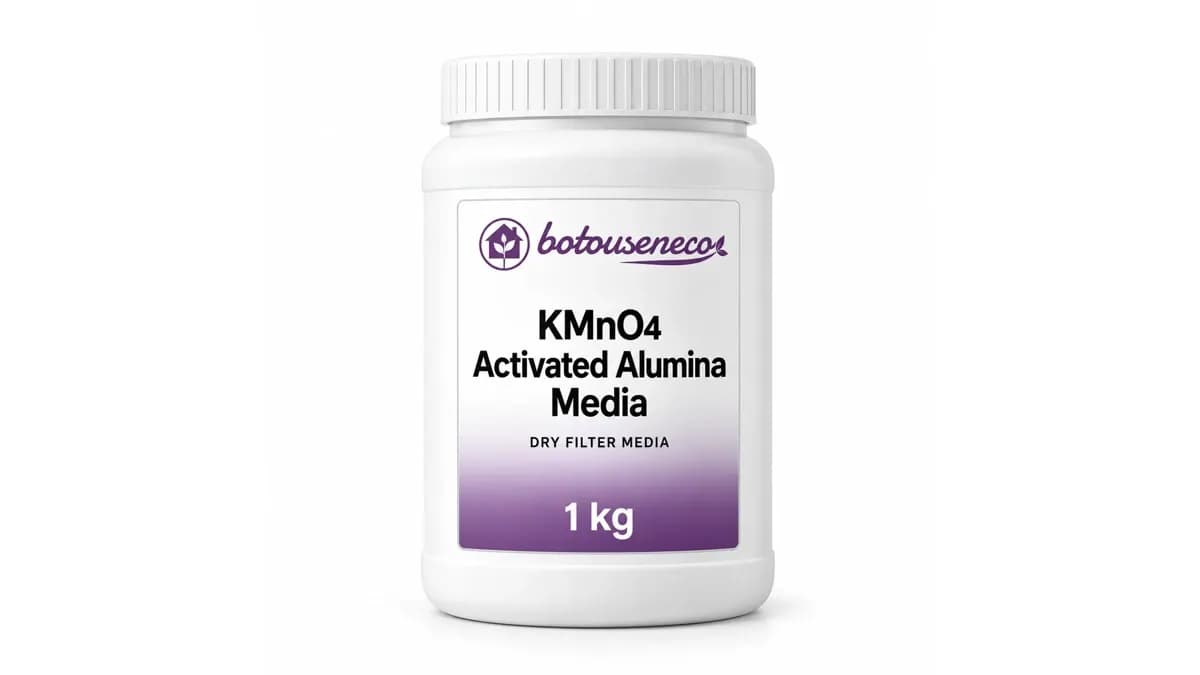
- 2. Potassium Permanganate (KMnO4) Activated Alumina Media: High-pore spherical gamma-Al2O3 (BET >= 280 m2/g, crush >= 120 N, bulk density 0.75 to 0.85 g/cm3) loaded at 8, 10, or 12 wt percent (+/- 0.5 wt percent) KMnO4 in 1.5 to 6 mm beads. Beads shift from bright purple to dark brown as oxidation capacity drops.
- 3. Silver-Ion Antibacterial Photocatalyst Spray: Clear 5 nm visible-light doped anatase TiO2 with 150 ppm chelated Ag+. Sprays at 8 to 12 ml/m2 (0.5 mm HVLP) onto dry cleanroom airlocks and dark AHU walls for 24/7 germ control.
Product Matrix, Quality Systems and Transparent SDS Section 14 Freight
Both Plant-Extract Chitosan Scavenger and Silver-Ion Photocatalyst Spray ship globally as Non-DG liquids under GHS Rev. 10 / ISO 11014 SDS packs. Because high-loading KMnO4 Activated Alumina is a solid oxidizer, sea and air freight follow GHS Rev. 10 SDS Section 14 rules confirmed in writing per loading grade and port. Every batch runs under our ISO 9001:2015 Quality Management System and ISO 14001:2015 Environmental Management System, backed by CMA / CNAS-accredited chamber checks per ISO 16000-9 and GB/T 18883-2022. Official copies and batch COAs are shared privately with B2B buyers on request; private-label OEM starts at 500 to 1,000 units (10 to 14 business days).
| Product / Supply Parameter | Active Chemistry & Core Spec | Clinical Cleanroom Zone | Dosage, MOQ & Packaging |
|---|---|---|---|
| Plant-Extract Chitosan Scavenger | High-deacetylation chitosan + polyphenols (pH 6.0-7.0) | NICU cabinets, chart desks, walls | 15-25 ml/m2 HVLP; Bulk 100 L |
| KMnO4 Activated Alumina Media | gamma-Al2O3 (>= 280 m2/g) + 8/10/12 wt pct KMnO4 | IVF & NICU central AHU V-banks | 0.05-0.20 s EBCT; Bulk 100 kg (25 kg drums) |
| Silver-Ion Photocatalyst Spray | 5 nm anatase TiO2 + 150 ppm chelated Ag+ | Gowning airlocks, dark AHU plenums | 8-12 ml/m2 (0.5 mm HVLP); 5 L / 25 L |
| Lead Time, Port & Export SDS | Liquids Non-DG; KMnO4 oxidizer per GHS Rev. 10 Sec. 14 | Air & sea via Tianjin Port (~180 km) | Samples 1-5 units (24-48 h); Bulk 5-7 d |
Worked Commissioning Takeoff: 180 m2 IVF Suite and 420 m2 Level-III NICU Wing
Hospital MEP teams bidding a maternity tower need exact drum and pail counts before handover. Consider a new 180 m2 IVF embryology suite plus an adjacent 420 m2 Level-III NICU wing (600 m2 total). The job covers 1,100 m2 of outer nurse millwork and painted drywall plus 350 m2 of dark gowning airlocks and AHU walls. Its dedicated cleanroom AHU moves 7,200 m3/h (2.00 m3/s, or 2,000 L/s) at a target 0.12 s EBCT.
- Layer 1 (Zero-VOC Surface Scavenging across 1,100 m2 Millwork & Walls). Spraying Plant-Extract Chitosan Formaldehyde Scavenger at 20 ml/m2 takes 22.00 L net. With a 1.10 HVLP transfer factor, total demand hits 24.20 L. Allocate 1 x 25 L pail (25 L, leaving 0.80 L touch-up spare), while 4-floor hospital rollouts scale to 4 x 25 L (100 L) to clear factory bulk liquid MOQ.
- Layer 2 (Dual-Media AHU Bed at 7,200 m3/h and 0.12 s EBCT). Total V-bank bed volume equals 2,000 L/s x 0.12 s = 240 L. A 50:50 split gives 120 L to 10 wt percent KMnO4 Activated Alumina (3 to 5 mm beads at 0.80 kg/L), or 96.0 kg net. Order 4 x 25 kg foil-lined drums (100 kg exact), leaving 4.0 kg top-off stock and clearing BotouSeneco's 100 kg solid MOQ cleanly. The upstream 120 L carbon bed (0.48 kg/L) takes 57.6 kg (3 x 25 kg sacks = 75 kg).
- Layer 3 (Dark-Active Plenum & Airlock Shield across 350 m2). Coating dry corridor ceilings and dark AHU walls with Silver-Ion Antibacterial Photocatalyst Spray at 10 ml/m2 takes 3.50 L net. Applying a 1.10 transfer factor equals 3.85 L, so order 1 x 5 L jerrycan (5 L, leaving 1.15 L spare for routine airlock touch-ups).
Request Cleanroom Media Samples and EBCT Sizing Calculations
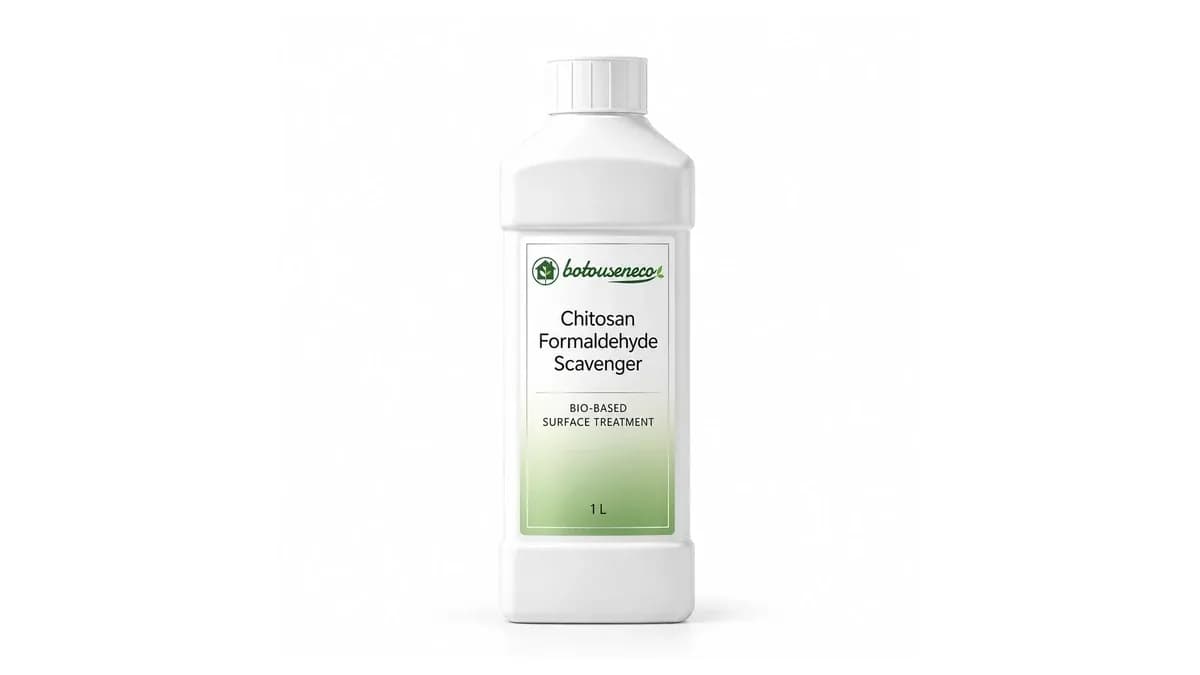
Protect IVF blastocyst outcomes and newborn airways before hospital handover with zero-VOC materials and chemical filtration. Contact our BotouSeneco engineering team with your cleanroom airflow (m3/h), cabinet area, and target EBCT. We ship 1 L chitosan trial bottles and 1 kg KMnO4 alumina lab jars within 24 to 48 hours with GHS Rev. 10 SDS packs. Our team also prepares a custom hospital NICU and cleanroom VOC control sizing sheet.
Standards & references
- Clinical IVF & NICU Air Studies: Journal of Assisted Reproduction and Genetics 2017 (PMC5533678) & 2015 (PMC4531860), Therapeutic Advances in Reproductive Health 2021 (PMC7882750), Asian Journal of Andrology 2016 (PMC4955186) & Journal of Thoracic and Cardiovascular Surgery 2024 (PMC11261308).
- Chitosan & KMnO4 Oxidation Research: Polymers 2019 (PMC6419068), RSC Advances 2026 (PMC13421388), Journal of Food Science and Technology 2023 (PMC10933227) & NIH PubChem Profiles (Chitosan, Formaldehyde, Potassium Permanganate).
- EN 1822 H14 MPPS (99.995% at 0.1-0.3 um), CDC NIOSH Formaldehyde Pocket Guide (npgd0293: 0.016 ppm 10-hr REL TWA, 0.1 ppm 15-min ceiling, 0.75 ppm 8-hr OSHA PEL TWA).
- WHO Guidelines for Indoor Air Quality: Selected Pollutants (0.1 mg/m3 30-min HCHO), US EPA IAQ VOC Guidance, China GB/T 18883-2022, UN GHS Rev. 10 SDS Section 14, ISO 9001:2015, ISO 14001:2015 & CMA / CNAS ISO 16000-9 Verification.
Frequently Asked Questions (FAQ)
01.Why can standard H14 HEPA filters not protect IVF embryos from indoor VOCs?
H14 HEPA filters trap 99.995% of airborne particles at MPPS (0.1 to 0.3 microns, EN 1822 H14 class), blocking dust and germs well. Yet gaseous aldehydes, ethylene, and paint solvents are single molecules roughly 1,000 times smaller than HEPA pores. They pass straight into incubators unless removed by KMnO4 alumina and carbon chemical beds.
02.Is Plant-Extract Chitosan Formaldehyde Scavenger safe for hospital NICU renovations?
Yes, when sprayed during empty pre-handover work on outer nurse cabinets, wall trim, and family bays 48 to 72 hours before patient admission. Made from high-deacetylation marine chitosan and green tea polyphenols at pH 6.0 to 7.0, it contains zero VOCs, zero alcohol, and zero scent. Never spray directly inside baby incubators or medical devices.
03.How do hospital facility engineers know when KMnO4 Activated Alumina media needs replacement?
Fresh KMnO4 gamma-alumina beads appear bright purple from active Mn7+ ions. As the bed oxidizes formaldehyde and acid gases into MnO2, beads darken to brown. Engineers pull 10 sample beads monthly from downstream trays and crush them in half; once 7 to 8 of 10 bead cores turn brown, schedule media changeout.
04.Why should IVF cleanroom AHUs pair activated carbon upstream of KMnO4 alumina?
Heavy non-polar vapors such as paint solvents, xylene, and alcohol-rub fumes coat wet alumina pores and waste KMnO4 early. Putting coconut carbon upstream traps heavy solvents first, sparing downstream KMnO4 alumina strictly for light polar aldehydes and ethylene.

About the author.
Loo
Loo is Senior Technical Writer and IAQ Research Editor at botouseneco (Hebei Senzhijia), translating laboratory chamber datasets, GB/T 18883 and ISO 16000 standards, and field application logs into clear step-by-step protocols for hospitality housekeeping teams, healthcare facilities, school campuses and renovation crews.
- Senior Technical Writer & IAQ Research Editor · Botou R&D documentation desk.
- Specialist in hospitality, healthcare and field remediation SOPs.
Written by Loo (Senior Technical Writer & IAQ Research Editor) and reviewed by our Botou formulation & QC leadership. Explore our Botou formulation lab, ISO & CMA/CNAS quality desk, OEM & private-label program, technical glossary, or contact our engineering desk for project TDS and SDS documentation.
Next step.