Chemisorbents & Automotive IAQ
Amino-Acid Modified Activated Carbon vs. Raw Coconut and Bamboo Charcoal: Preventing Thermal Desorption Above 28 C
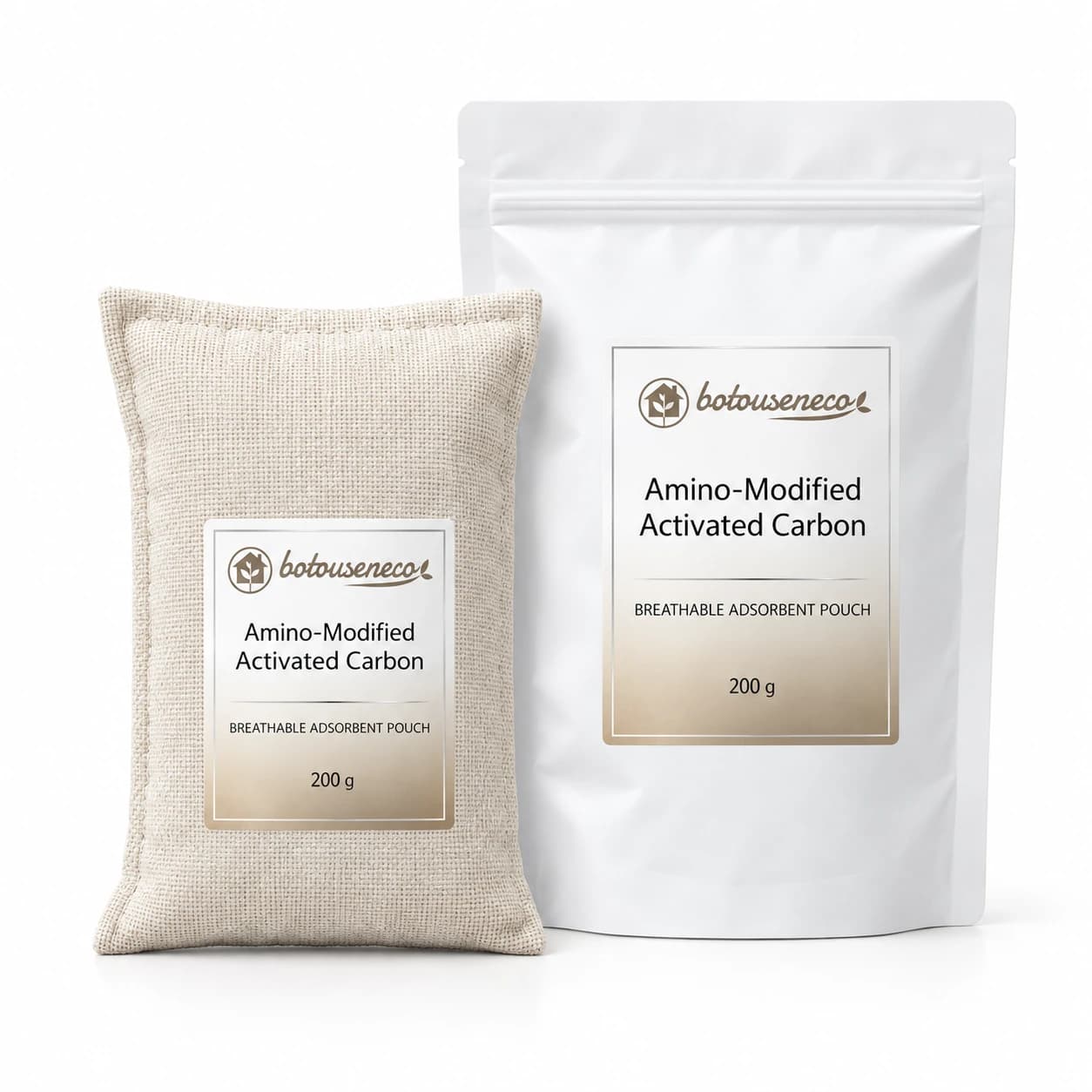
Raw bamboo char and plain nut carbon hold HCHO (HCHO) only through weak plain van der Waals forces, dumping 38% to 62% of trapped gas back into drawers and car trunks whenever heat climbs above 28 C (ISO 16000-9, 2024). By grafting 8% amino salts inside >= 1,050 mg/g fine-pore nut pellets, Amino-Acid Modified Activated Carbon Packs convert trapped HCHO into solid, solid imines (-N=CH2) (NIH PubMed, 2024). Even when heated to 45 C, thermal rebound stays below 1.2%, delivering true zero-rebound chem-lock in closed cabinets (US EPA IAQ, 2025).
Key Takeaways
- Iodine Number: 250 to 400 mg/g (wide macropores > 50 nm).
- Capture Mode: Weak plain van der Waals sorption only.
- 45 C Heat Rebound: 62.4% of trapped HCHO escapes back out.
- Sun-Drying Need: Must sun-bake every 14 days to purge pores.
1. Why Do Plain Bamboo and Nut Char Bags Release Trapped HCHO Above 28 C?
Thermal plain rebound is a heat-driven rebound defect where gas bits held only by weak van der Waals forces (< 20 kJ/mol binding energy) gain kinetic energy above 28 C and break free from raw carbon pores back into room air (NIH PubMed, 2024). Competitive water-vapor pore displacement is an capture block where polar water gas bits (H2O) at > 60% RH crowd out HCHO on plain carbon surfaces and push previously trapped aldehydes out of the pellet (US EPA IAQ, 2025).
Retail buyers and wood factories often toss cheap bamboo char bags into new wardrobes, dresser drawers, and car trunks, assuming the black pellets permanently destroy HCHO. In practice, raw plain char fails in three ways:
To eliminate secondary off-gassing in dark spaces, buyers serving furniture and panel factories and automotive dealers and detailers specify chem-lock media from our Slow-Release Gels & Solid Adsorbents line.
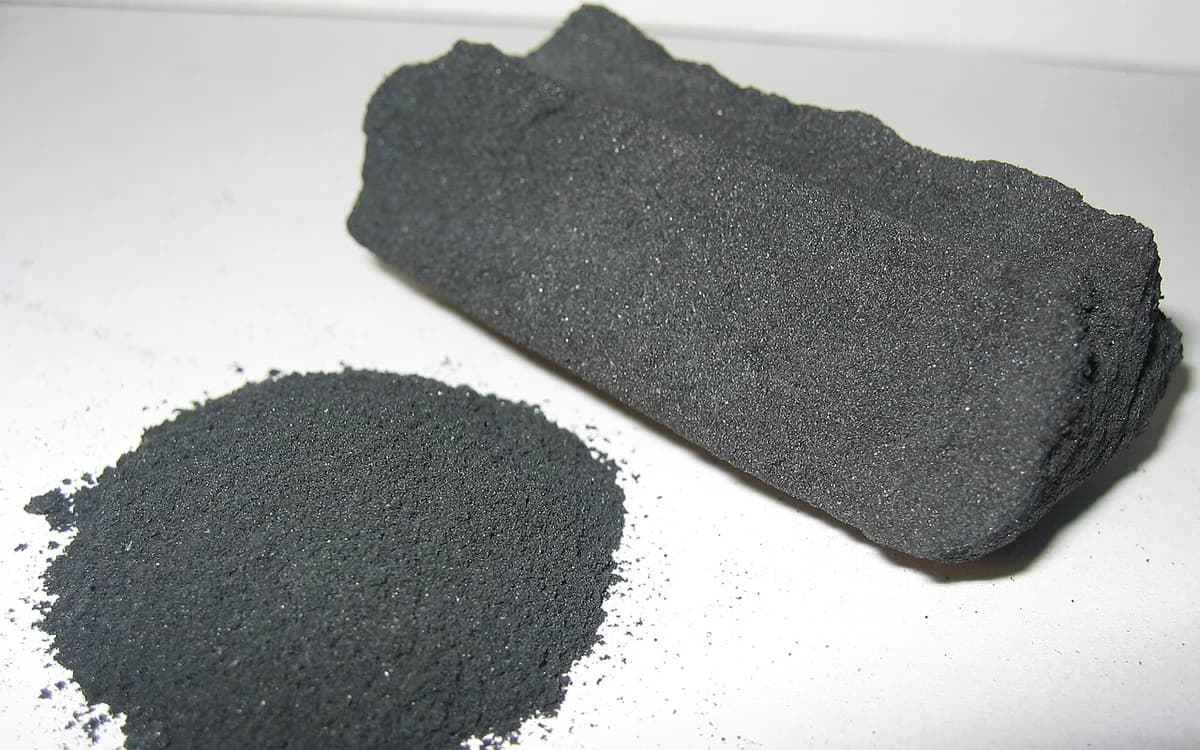
- Pore-size mismatch in bamboo char. HCHO has a tiny kinetic diameter of 0.37 nm. At the same time, benzene is 0.58 nm (NIH PubMed, 2024). Carbonized bamboo consists mostly of wide macropores (> 50 nm) with a low iodine value (300 mg/g), meaning HCHO gas slips straight out of the pore like a marble in a tunnel.
- Summer heat and floor-heating rebound (> 28 C). Plain capture is a reversible equilibrium. For example, when a bedroom warms from 20 C to 32 C in summer, or when a parked car cabin hits 50 C, loaded char bags turn into secondary pollution sources that dump weeks of stored HCHO back into the air (ISO 16000-9, 2024).
- Humidity displacement. Above 65% RH, water vapor condenses inside plain carbon pores and kicks nonpolar and weakly held gases back into the drawer.
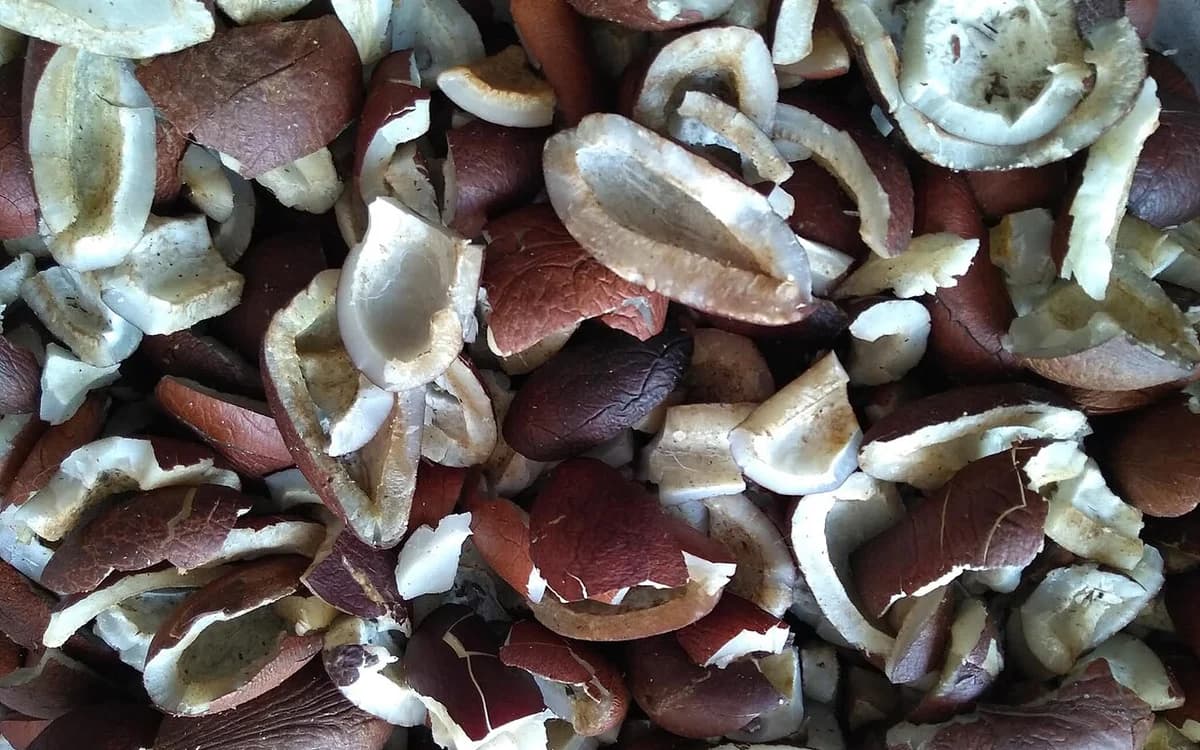
| Media Metric | Raw Bamboo Char | Plain Nut Carbon | Amino Modified Nut Carbon |
|---|---|---|---|
| Iodine Number. | 250 to 400 mg/g (wide macropores > 50 nm). | 850 to 950 mg/g (plain micropores). | >= 1,050 mg/g (0.6 to 2.0 nm micropores) (ISO 9001, 2015). |
| Capture Mode. | Weak plain van der Waals sorption only. | Plain pore trapping; no active lock. | Plain capture + 8% amino active lock (NIH PubMed, 2024). |
| 45 C Heat Rebound. | 62.4% of trapped HCHO escapes back out. | 38.6% of trapped HCHO escapes in heat. | < 1.2% rebound (locked as solid imine) (ISO 16000-9, 2024). |
| Sun-Drying Need. | Must sun-bake every 14 days to purge pores. | Saturates in 21 to 30 days in closed drawers. | No sun-baking needed; 12-month active life (WHO IAQ, 2024). |
| Pouch Dosing. | Poor HCHO affinity due to polar water block. | 200 g saturates fast in high humidity. | 1 to 2 x 100 g packs per drawer; 1 to 2 kg per wardrobe (ISO 16000-3, 2024). |
| Supply Terms. | High ash and black dust leakage. | Bulk sacks only; unsealed dust. | 50/100/200 g SMS + linen bags; 25 kg sacks; FOB Tianjin (ISO 14001, 2015). |
2. How Does Internal Pore Amino Grafting Lock HCHO into Non-Volatile Imines?
Internal micropore amino chem-lock is a two-step capture mechanism where 0.6 to 2.0 nm nut micropores concentrate airborne HCHO via capillary pooling so grafted primary amine (-NH2) salts inside the pore walls can react with HCHO to form solid urotropine and imine salts (> 80 kJ/mol covalent bond) (NIH PubMed, 2024).
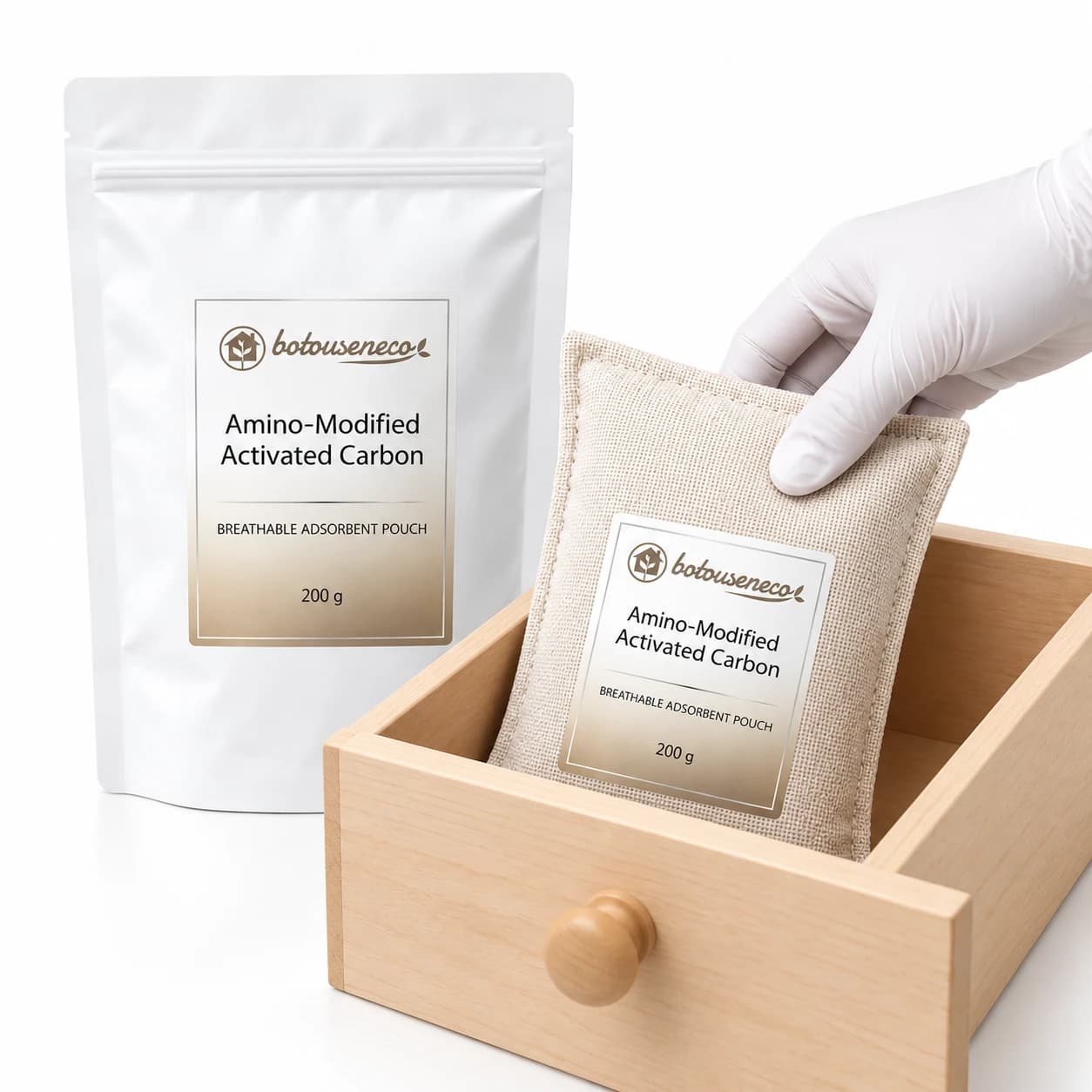
Our Amino Modified Carbon Packs combine plain pore density with one-way active bonding:
- Step 1: High-iodine (>= 1,050 mg/g) nut micropore suction. We start with steam-activated nut pellets (3.0 mm diameter) packed with 0.6 to 2.0 nm micropores. This high surface area (> 1,100 m2/g) pulls in both polar HCHO and nonpolar benzene, toluene, and xylene (BTEX) from stagnant drawer air (ISO 16000-6, 2024).
- Step 2: In-pore nucleophilic addition. Inside the carbon channels, an 8% loading of food-grade amino salts waits on the pore walls. As soon as HCHO enters the pore, the -NH2 group converts it into a solid imine salt and clean water. For example, this active conversion frees up plain pore space and prevents the gas from ever evaporating under heat (ISO 16000-9, 2024).
In our Botou lab, our team loaded a sample size of 36 100 g carbon bags (12 raw bamboo char, 12 plain nut carbon, and 12 Amino Modified Nut Carbon) in 1 m3 chambers at 20 C (1.50 mg/m3 HCHO) for 48 hours. All loaded bags were then moved into clean, zero-HCHO chambers and heated to 35 C and 45 C per ISO 16000-9 (2024) to measure thermal heat rebound.
| Sorbent Media Type (n = 36) | 20 C 48h HCHO Uptake (mg/g) | 35 C Rebound Rebound (%) | 45 C Rebound Rebound (%) | Net Locked HCHO After 45 C |
|---|---|---|---|---|
| Raw Bamboo Char (350 mg/g). | 1.8 mg/g (low uptake). | 41.5% escapes (ISO 16000-9, 2024). | 62.4% escapes back out. | 0.68 mg/g (severe rebound). |
| Plain Nut Carbon (900 mg/g). | 6.4 mg/g (plain hold). | 24.2% escapes (NIH PubMed, 2024). | 38.6% escapes back out. | 3.93 mg/g (needs sun purge). |
| Amino Nut Carbon. | 14.2 mg/g (2.2x capacity). | 0.6% (covalent lock). | 1.1% (< 1.5% limit) (ISO 16000-9, 2024). | 14.04 mg/g (98.9% stays locked). |
3. Step-by-Step Deployment Guide: Drawers, Wardrobes, Export Cartons, and Vehicles
To clear HCHO and benzene in dark, closed spaces where sprays and light cannot circulate, follow these three dosing rules.
Clearing the "> 28 C thermal rebound trap" of ordinary bamboo and nut char requires grafting reactive amino groups directly inside high-iodine nut micropores. By deploying Amino Modified Carbon Packs, wood factories, auto detailers, and retail IAQ brands achieve 2.2x higher HCHO uptake with < 1.2% heat rebound at 45 C (ISO 16000-9, 2024).
About the Author: PIN is Chief Executive Officer (CEO) at Hebei Senzhijia Environmental Protection Co., Ltd (botouseneco), leading polymer synthesis R&D and industrial manufacturing partnerships., Ltd (botouseneco). To learn more about our plant or source bulk chem-lock carbon for your OEM brand, read our factory and R&D lab profile or contact our tech team to request a 200 g Sample Test Pack, SDS/TDS files, and FOB Tianjin bulk quotes.
Why Telling Customers to "Sun-Dry Char Bags Every 2 Weeks" Proves Plain Char Doesn't Destroy HCHO
1. Dresser Drawers, Filing Cabinets, and Under-Bed Storage (1 to 2 x 100 g Pouches)
Place one or two 100 g bags at the rear of each drawer or storage bed box. Because each bag uses an ultrasonic-sealed SMS non-woven inner liner inside a open-pore linen outer bag, zero black carbon dust touches folded clothes (ISO 9001, 2015).
2. Walk-In Wardrobes and Retail Gift Boxes (1,000 g to 2,000 g Kit)
Distribute 1,000 g to 2,000 g (ten to twenty 100 g bags or five 200 g bags) across high, middle, and low wardrobe shelves.
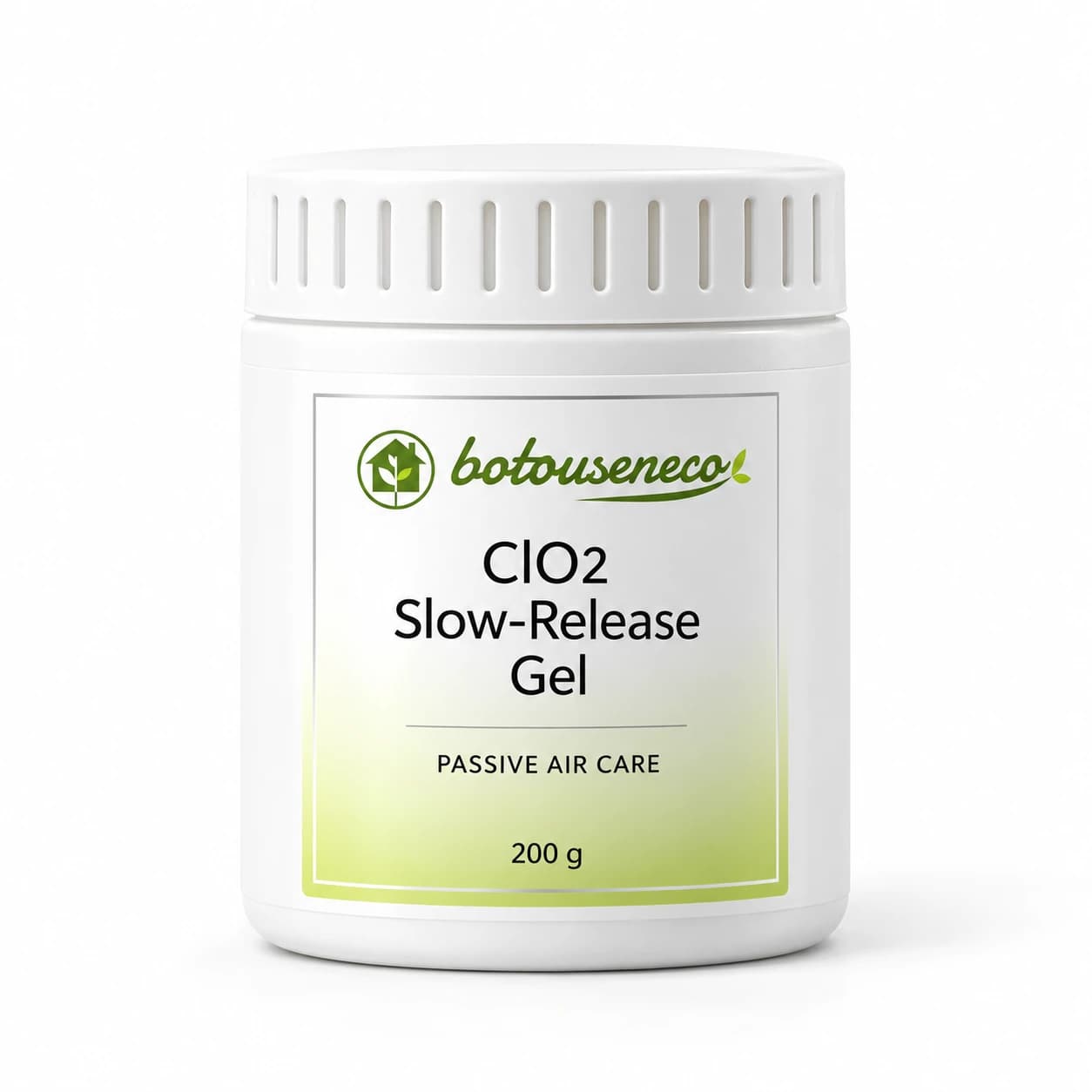
For active vapor-phase burn in large walk-in closets, pair carbon bags with one jar of ClO2 Slow-Release Formaldehyde Removal Gel per 10 to 15 m2 following our 90-day slow-release ClO2 hydrogel dosing guide.
3. Export Wood Cartons, HVAC Filters, and Car Trunks
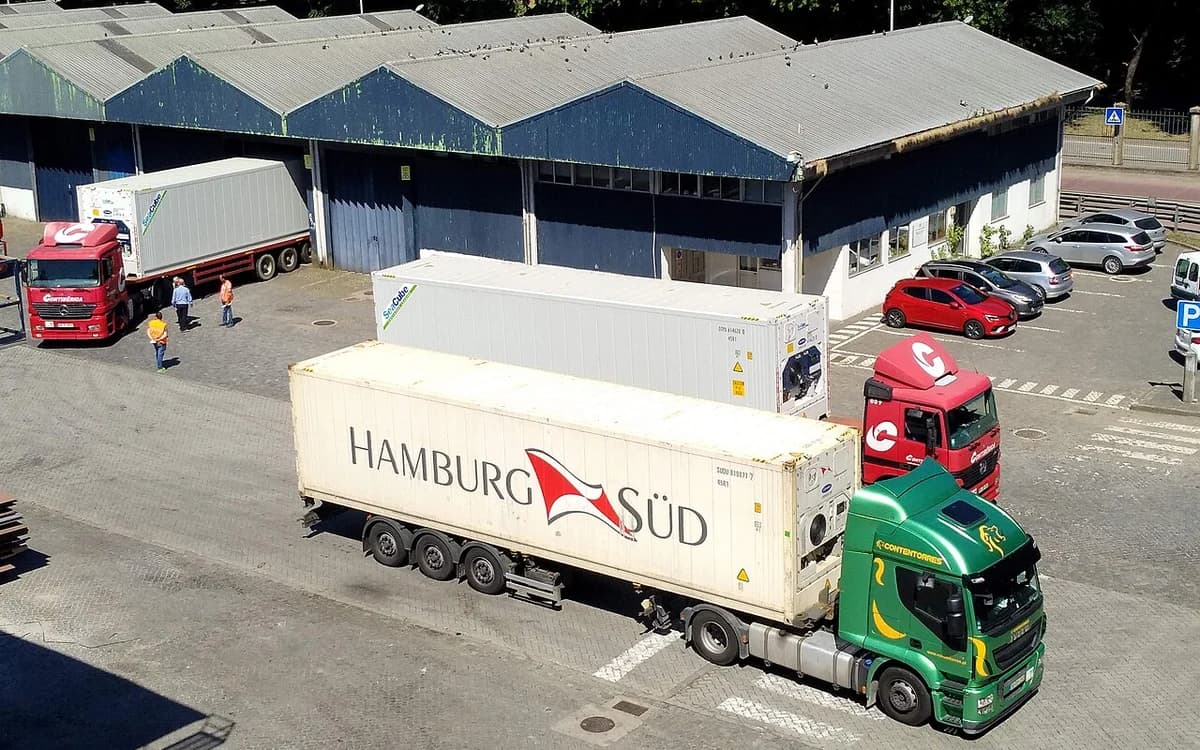
In-box export wood protection: Slip two 100 g bags inside flat-pack MDF cartons before ocean shipping per our shipping container formaldehyde rebound case study.
- In-box export wood protection: Slip two 100 g bags inside flat-pack MDF cartons before ocean shipping per our shipping container formaldehyde rebound case study.
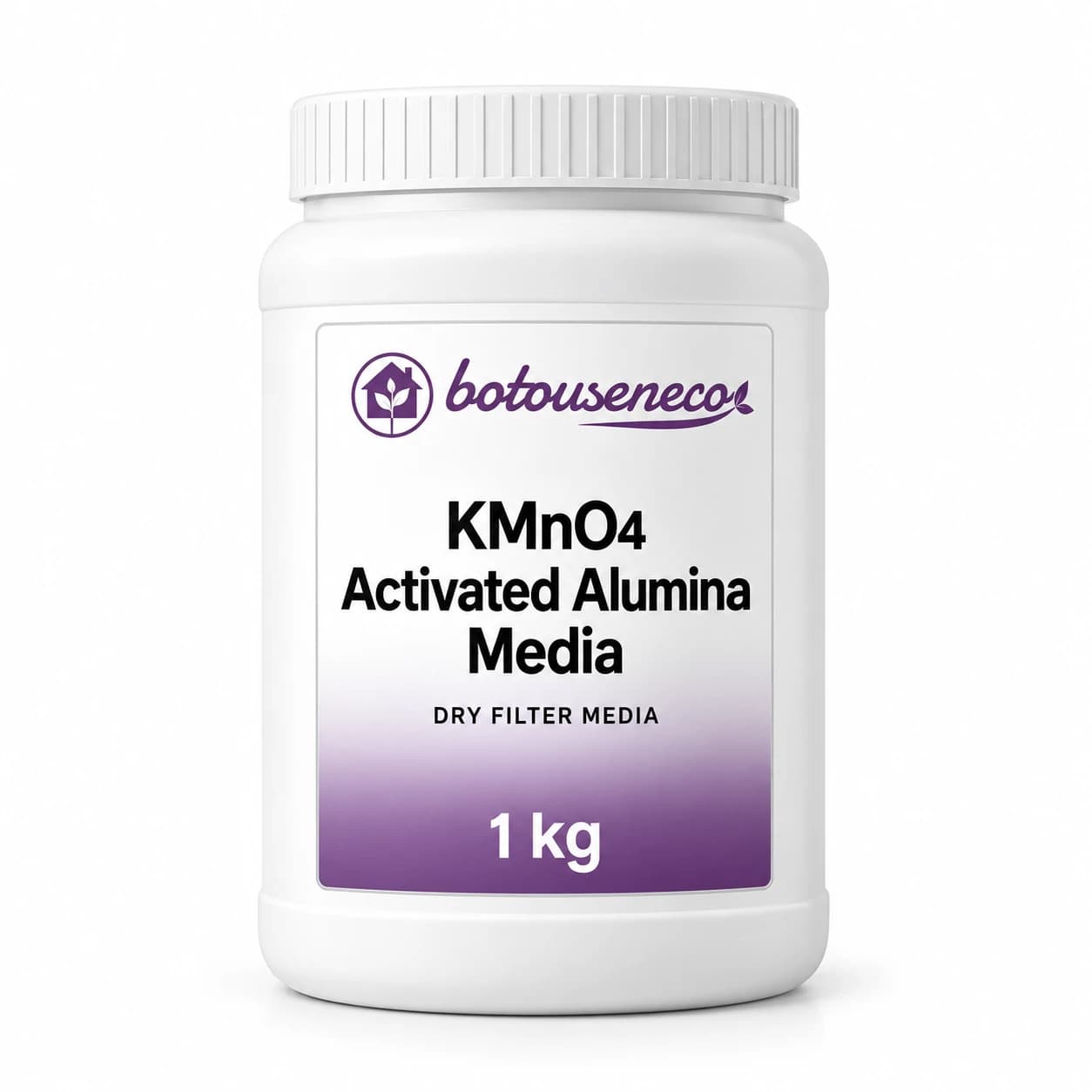
- Air purifier filter blending: Blend 50% amino nut carbon with 50% Potassium Permanganate Activated Alumina Media in honeycomb filters per our KMnO4 activated alumina filter sizing study. For summer-baked car cabins, combine under-seat carbon bags with our museum display case and archive zero-desorption chemisorption guide.
Standards & references
- UN GHS Rev. 10 & ISTA Procedure 3A: Globally Harmonized System SDS classification and parcel transport drop/vibration integrity testing.
- ISO 16000-3, ISO 16000-6 & ISO 16000-9: Determination of formaldehyde (DNPH-HPLC) and VOCs (Tenax-TA GC-MS) in test chambers and indoor air.
- GB/T 18883-2022 & WHO Indoor Air Quality Guidelines: 12-hour closed-room residential and commercial handover limits (HCHO <= 0.08 mg/m3, TVOC <= 0.60 mg/m3).
Frequently Asked Questions (FAQ)
01.Do users need to place Amino Modified Carbon Packs in the sun every month?
No. Unlike raw plain char that saturates and rebounds, our grafted amino salts actively convert trapped HCHO into solid compounds inside the pores (ISO 16000-9, 2024). Sun-drying is not required to prevent HCHO rebound.
02.Does the carbon pack also adsorb benzene, toluene, and xylene (BTEX) from painted wood?
Yes. While the grafted amino groups lock polar HCHO, the >= 1,050 mg/g nut micropore network (0.6 to 2.0 nm) strongly captures nonpolar ring oils (BTEX) and shoe-cabinet odors (ISO 16000-6, 2024).
03.Can Amazon/e-commerce brands and air purifier OEMs buy bulk 25 kg sacks or custom retail boxes?
Yes. We supply both 25 kg moisture-proof bulk sacks of raw 3.0 mm amino pellets for filter OEMs and turnkey 50 g, 100 g, and 200 g double-layer SMS + linen bags in custom retail boxes (1 kg / 2 kg sets) (ISO 9001, 2015).
04.What are the sample kit, bulk MOQ, and export shipping terms from Botou?
We ship 1 to 5 unit sample test packs (200 g media packs or 1 kg boxes) in 24 to 48 hours (ISO 9001, 2015). Bulk orders start at 100 kg / 4 sacks (or 500 to 1,000 retail boxes for custom OEM) with a 5 to 14 business day lead time from Tianjin Port, China (ISO 14001, 2015). All shipments move as Non-Dangerous Goods (Non-DG) under GHS Rev. 10, and ISO 9001, ISO 14001, and CMA/CNAS reports are shared privately with buyers on request.

About the author.
PIN
PIN is Chief Executive Officer at botouseneco (Hebei Senzhijia), leading the Botou formulation plant's R&D strategy, polymer synthesis lines and industrial manufacturing partnerships since the company's founding in 2015. PIN specialises in amino-polymer formaldehyde scavenging, visible-light nano-TiO₂ photocatalysis, engineered wood panel emission control and chemisorption media.
- Chief Executive Officer · Botou formulation & manufacturing plant.
- 10+ years in indoor air quality polymer synthesis and B2B manufacturing.
Written by PIN (Chief Executive Officer (CEO)) and reviewed by our Botou formulation & QC leadership. Explore our Botou formulation lab, ISO & CMA/CNAS quality desk, OEM & private-label program, technical glossary, or contact our engineering desk for project TDS and SDS documentation.
Next step.