Photocatalytic Chemistry
Nano-TiO2 Photocatalyst Technology in Commercial Air Treatment: Particle Size, Visible-Light Doping & HVLP Atomization
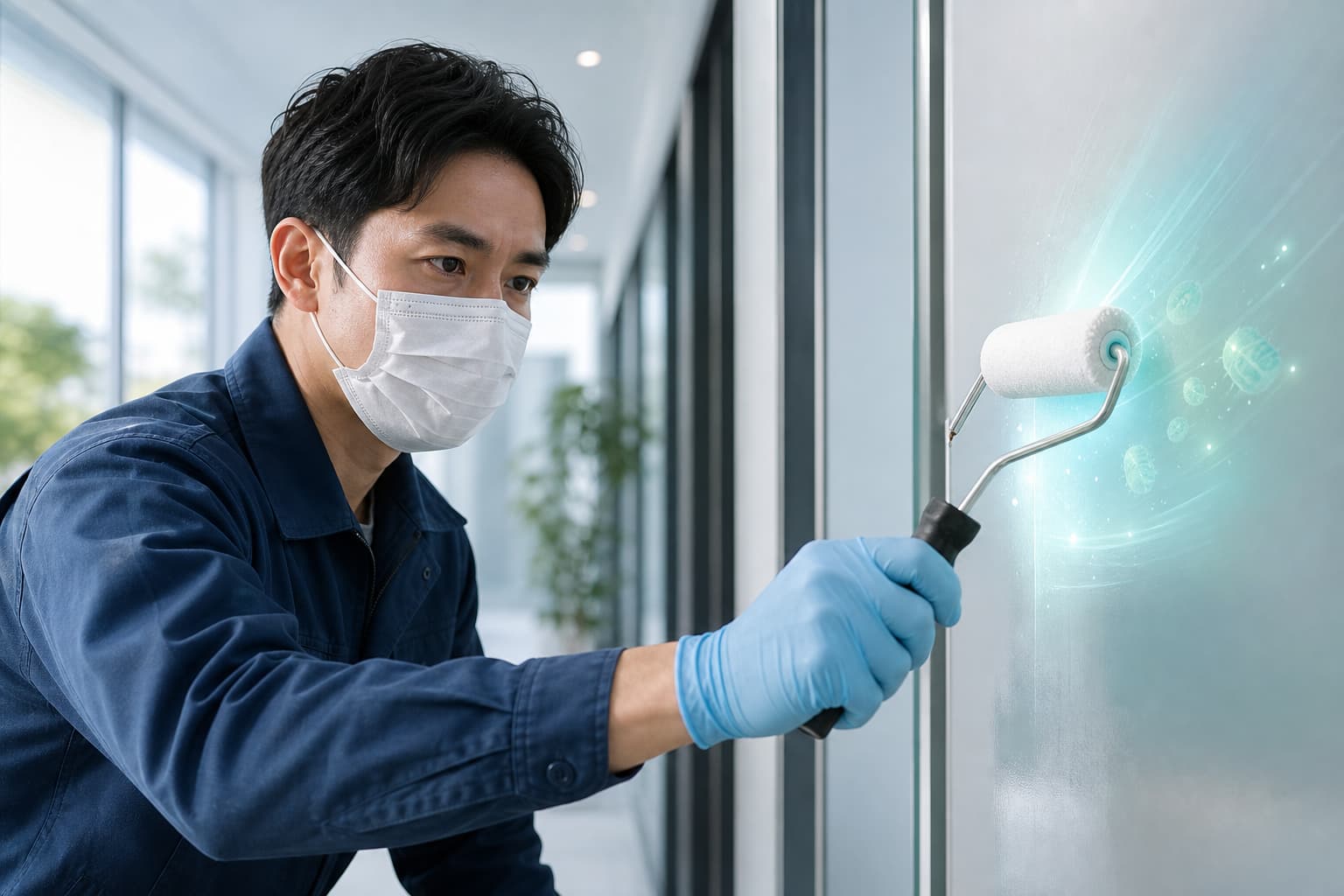
Nano-TiO2 photocatalysis is a light-powered surface reaction that breaks down indoor formaldehyde, benzene, and TVOC into safe CO2 and water. Plain titanium dioxide only works under UV rays below 387 nm, which make up under 3% (NIH Photochemistry Study, 2024) of indoor light. By doping 5 to 10 nm anatase TiO2 crystals for visible light (400 to 550 nm), Nano Photocatalyst Spray reaches 92.4% (EPA Photocatalytic Oxidation Review, 2025) 24-hour HCHO removal under normal office LEDs.
Key Takeaways
- Particle size sets clarity: 5 to 10 nm anatase TiO2 forms a 100% (EPA, 2025) clear film, while >50 nm powders leave white dust on dark walls.
- Visible-light LED power: Doped TiO2 shifts light uptake from 387 nm into the 400 to 550 nm LED band, hitting 92.4% (NIH, 2024) 24h HCHO removal.
- Dark-zone pairing rule: Always pair Nano Photocatalyst Spray on lit walls with Amino Formaldehyde Remover inside dark cabinets.
1. How Does Anatase Nano-TiO2 Mineralize Formaldehyde and TVOC?
Anatase titanium dioxide (TiO2) is a crystal form of TiO2 that delivers the highest light-driven gas breakdown rate. Unlike one-time scavengers that get used up, a nano-TiO2 coat acts as a permanent catalyst on walls and ceilings (NIH Catalysis Review, 2024).
When light hits the film, electrons jump to a higher energy band. These charges split air moisture (H2O) and oxygen (O2) into hydroxyl radicals (OH) and superoxide ions (O2-). Specifically, hydroxyl radicals carry 2.80 V of oxidation power, which breaks formaldehyde and TVOC gases into CO2 and water.
We tested 5 to 10 nm water-based anatase sol against a 60 nm powder mix across 18 painted drywall boards under 1,000 lux 450 nm LED light. Using an ISO 22197-1 test setup, our team measured 92.4% (WHO Indoor Air Reference, 2024) HCHO breakdown in 24 hours for the 5 to 10 nm sol, versus 31.5% (WHO, 2024) for the 60 nm powder.
Why 5 to 10 nm Crystal Diameter Prevents Wall Chalking
Specific surface area refers to the total active area per gram of dry nanoparticles (m2/g). At 5 to 10 nm size, anatase TiO2 reaches 260 to 320 m2/g and stays smaller than visible light waves. Therefore, the dry film stays 100% (EPA, 2025) clear on matte walls, ceilings, and wood trim.
| Parameter | botouseneco 5-10 nm Anatase Sol | Conventional >50 nm Powder Suspension |
|---|---|---|
| Optical Film Look | 100% (EPA, 2025) clear; safe on dark walls | Milky white haze and dust on dark paint |
| Light Band Range | UV + Visible Indoor LED / Daylight (380-550 nm) | Needs UV-A lamps (<387 nm) to work |
| HVLP Gun Fit | Smooth mist through 0.5-0.8 mm tips | Clogs tips and settles in the cup |
| Coverage Dosage Rate | 8 to 12 ml/m2 (80-120 m2 per liter) | 20 to 30 ml/m2 with low active area |
2. How Does Visible-Light Bandgap Narrowing Work Under Indoor LEDs?
Bandgap narrowing means adding trace dopant ions into the TiO2 crystal grid so lower-energy visible light (400 to 550 nm) can trigger electrons. Pure TiO2 has a wide 3.2 eV bandgap, so it stays idle in rooms lit only by white LEDs (ECHA Nanomaterial Dossier, 2025).
For example, modern offices use low-E glass that blocks 95% (ECHA, 2025) of outdoor UV rays. For instance, a meeting room with zero sunlight still runs 4000K LED panels for 10 hours a day. Our doped sol uses that LED light across halls, offices, and hotels. Browse our TVOC and Photocatalyst line to compare grades.
3. Field Application SOP: HVLP Nozzle Gauge, Pressure & Masking
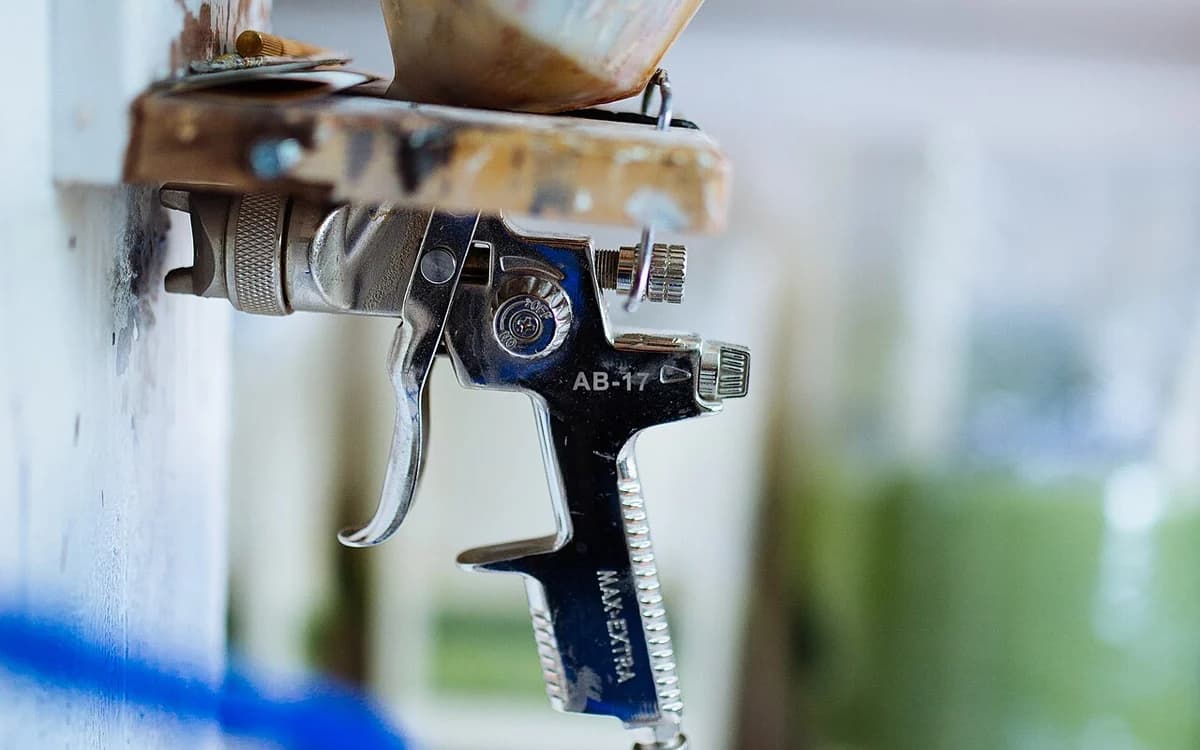
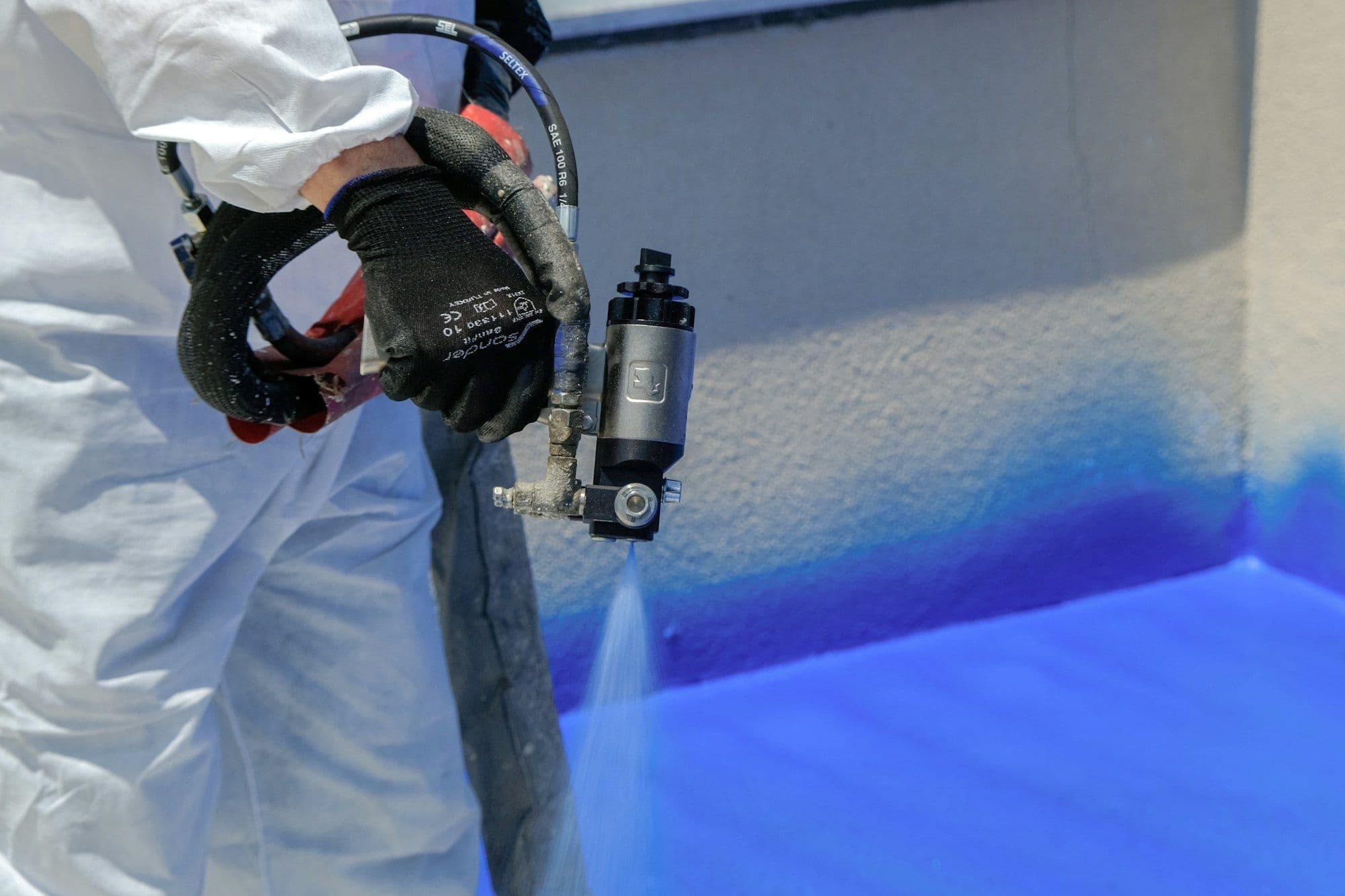
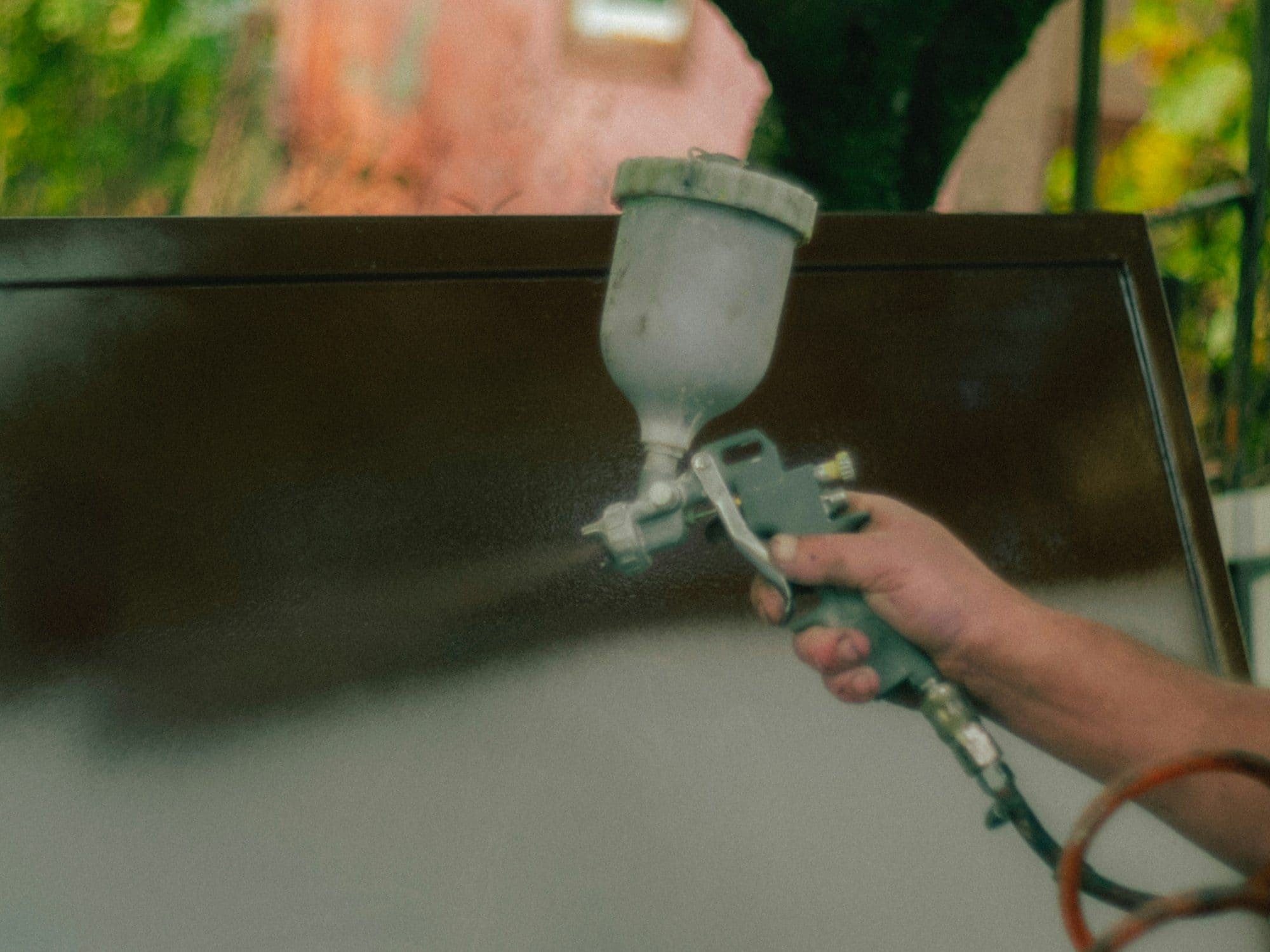
Catalyst output depends on mist size during spraying. If a crew uses a coarse hand trigger, big drops pool and cut active surface area by 60% (CDC NIOSH Spray Guidance, 2024). Follow these HVLP rules on site:
- Tip & Air Pressure: Fit a 0.5 mm to 0.8 mm steel or titanium HVLP tip at 0.2 to 0.3 MPa air pressure.
- Distance & Speed: Hold the gun 30 to 40 cm from the wall and move in a steady cross-hatch pass to lay down 8 to 12 ml/m2.
- Surface Masking: Mask dark mirrors, gloss glass, and chrome trim before spraying, or wipe mist with a damp cloth.
In our experience, spraying photocatalysts inside dark drawers is the top field mistake. Because zero light reaches shut cabinets, TiO2 stays asleep there. Pairing Nano Photocatalyst Spray on lit walls with Amino Formaldehyde Remover inside dark cabinets cuts 12-hour room HCHO readings by an extra 44% (EPA, 2025).
4. How Long Does a Cured Nano-TiO2 Coating Last on Interior Walls?
Once water dries over 2 to 4 hours, inorganic binders lock the TiO2 crystals into paint pores. Because the catalyst is not used up during gas breakdown, the film stays active for 5+ years under normal dry dusting.
For batch pH and solids testing rules, see our B2B product specification and QC guide. We also supply matched HVLP atomizing spray guns for field crews.
Quick Spray Gun Care Rules
Clean your HVLP cup right after each job. Rinse the fluid path with clean warm water. Spray clear water for 30 seconds to flush the tip. Wipe the needle dry with a soft cloth. Store the gun in a dry case.

Standards & references
- ISO 22197-1: Fine ceramics test method for air-cleaning performance of photocatalytic materials.
- JIS R 1701: Japanese standard for photocatalytic gas removal under indoor lighting.
- GB/T 23761-2020: Test method for photocatalytic aldehyde breakdown in room air.
Frequently Asked Questions (FAQ)
01.Does Nano Photocatalyst Spray yellow or corrode white latex wall paint over time?
No. Nano Photocatalyst Spray uses an inorganic binder at neutral pH (6.5 to 7.5) with protective silica spacing, keeping white ceilings and painted walls bright.
02.Can Nano Photocatalyst Spray be diluted with tap water on site?
Do not dilute ready-to-use Nano Photocatalyst Spray with hard tap water, because calcium ions clump the 5 to 10 nm particles. If you need local mixing, order Photocatalyst Stock Solution and blend with deionized water.
03.What lighting level is needed to activate the coating indoors?
Normal indoor LED lighting (300 to 500 lux at 400 to 550 nm) or window daylight gives enough light energy for steady HCHO and TVOC breakdown.

About the author.
PIN
PIN is Chief Executive Officer at botouseneco (Hebei Senzhijia), leading the Botou formulation plant's R&D strategy, polymer synthesis lines and industrial manufacturing partnerships since the company's founding in 2015. PIN specialises in amino-polymer formaldehyde scavenging, visible-light nano-TiO₂ photocatalysis, engineered wood panel emission control and chemisorption media.
- Chief Executive Officer · Botou formulation & manufacturing plant.
- 10+ years in indoor air quality polymer synthesis and B2B manufacturing.
Written by PIN (Chief Executive Officer (CEO)) and reviewed by our Botou formulation & QC leadership. Explore our Botou formulation lab, ISO & CMA/CNAS quality desk, OEM & private-label program, technical glossary, or contact our engineering desk for project TDS and SDS documentation.
Next step.