Healthcare & Campus IAQ
Child Safety Car Seats, Strollers, and Infant Bassinets: Bio-Based Chitosan Formaldehyde and Flame-Retardant Fabric Monomer Remediation
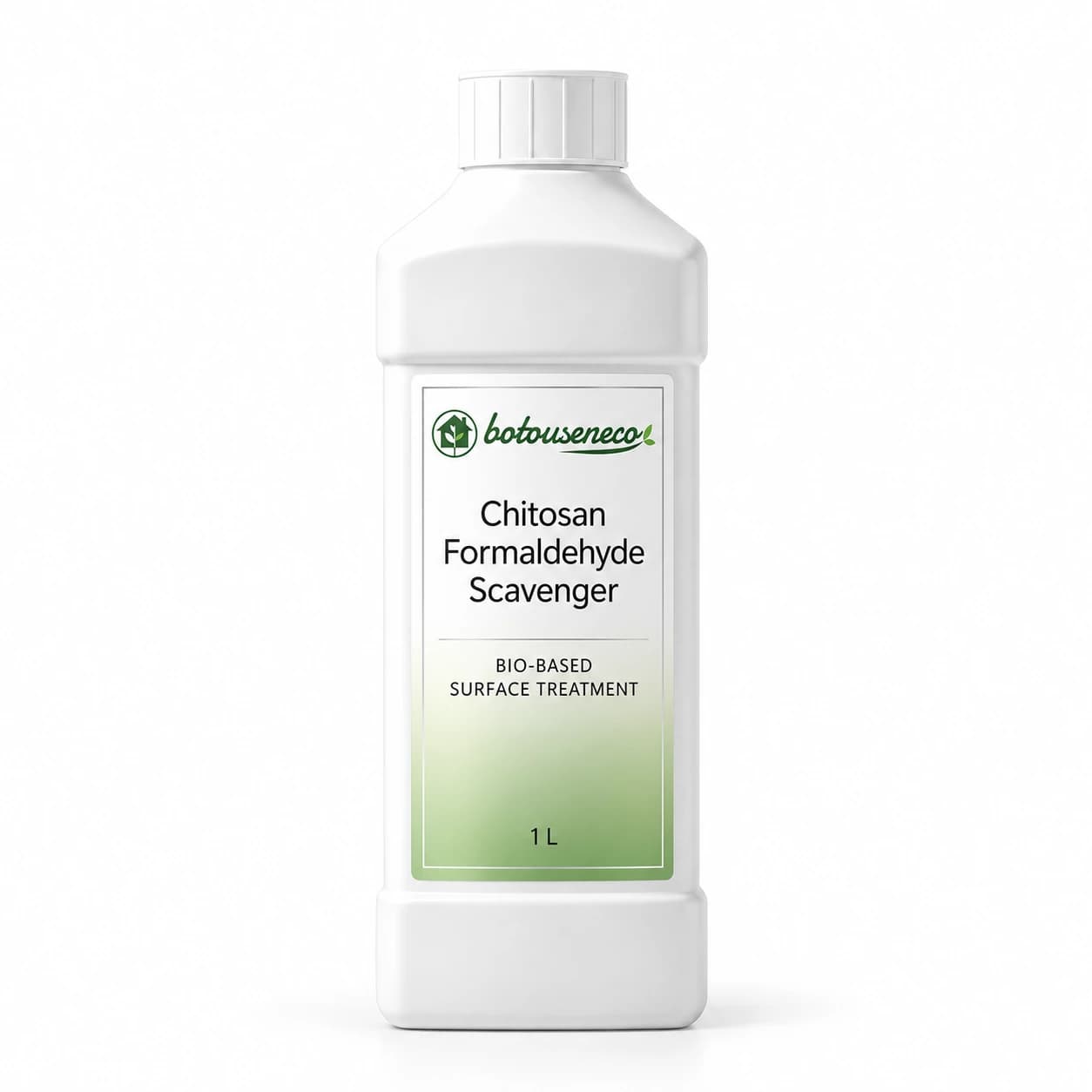
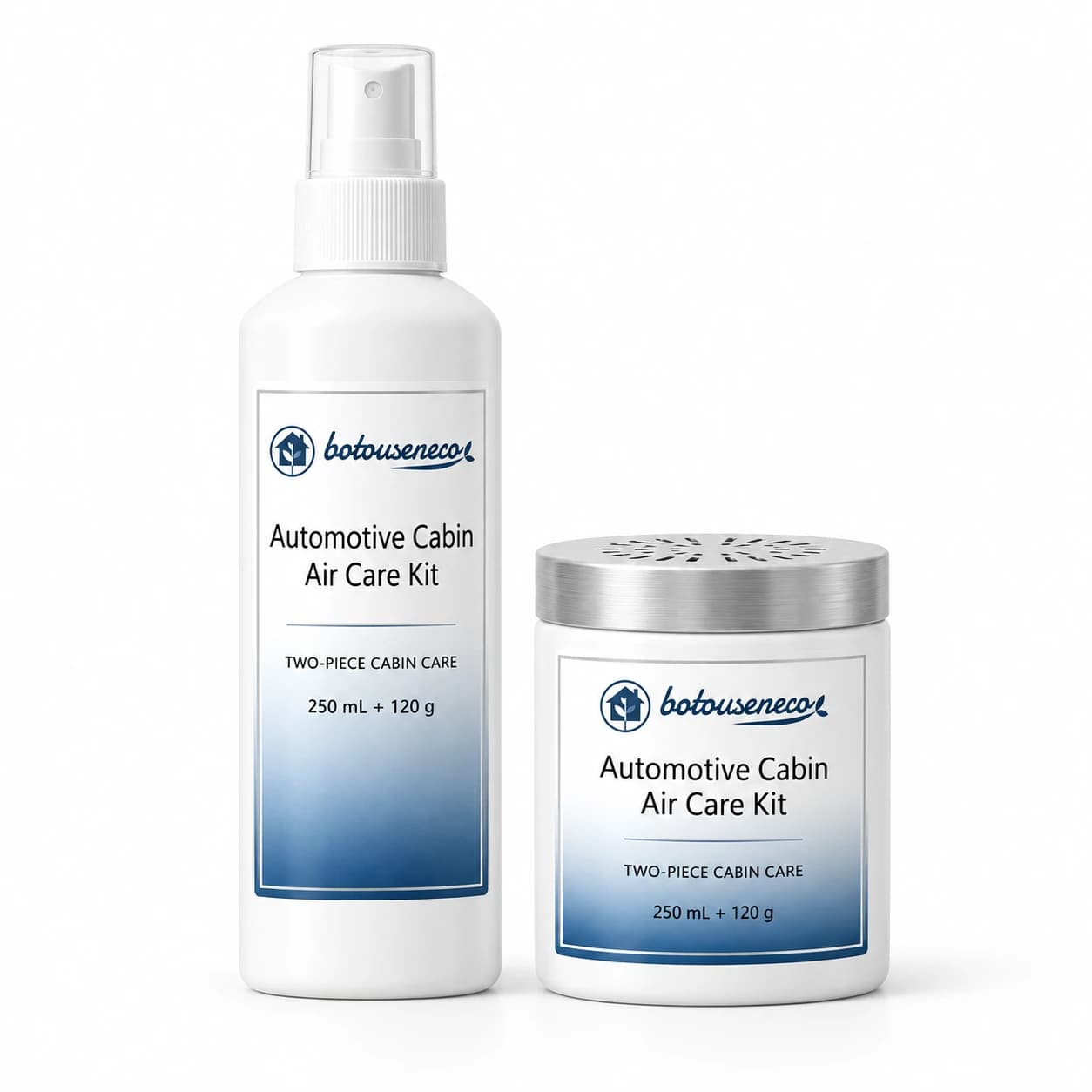
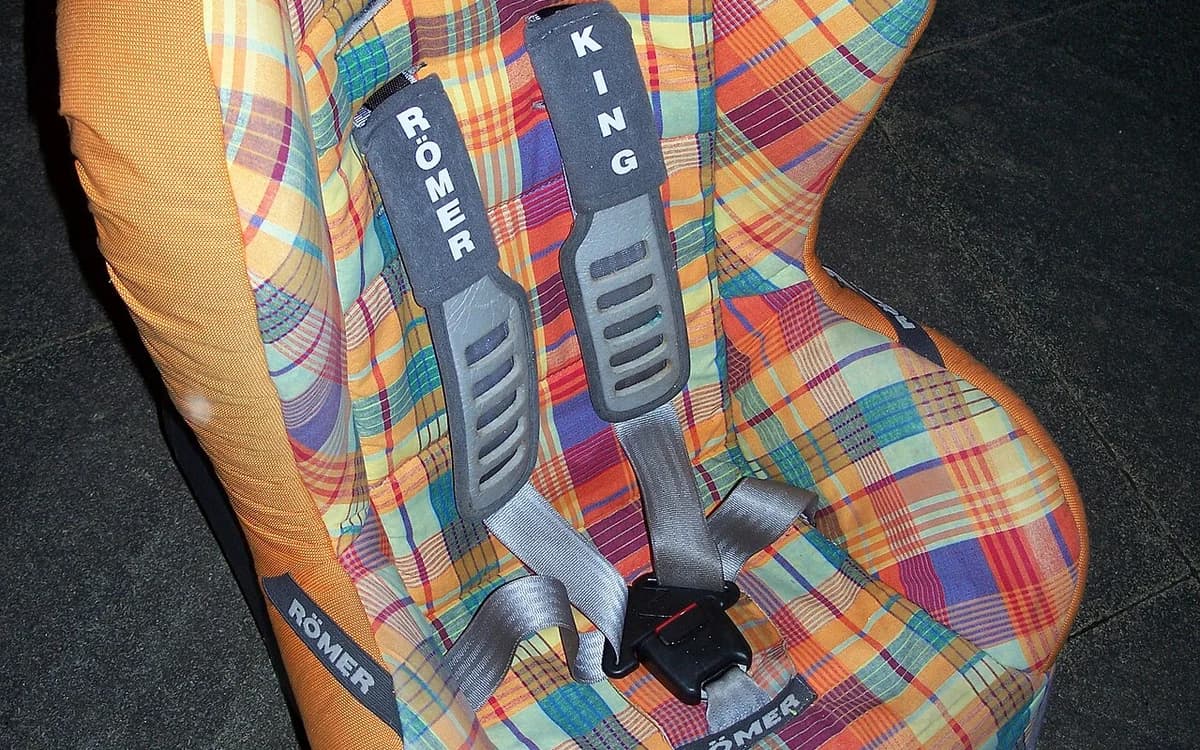
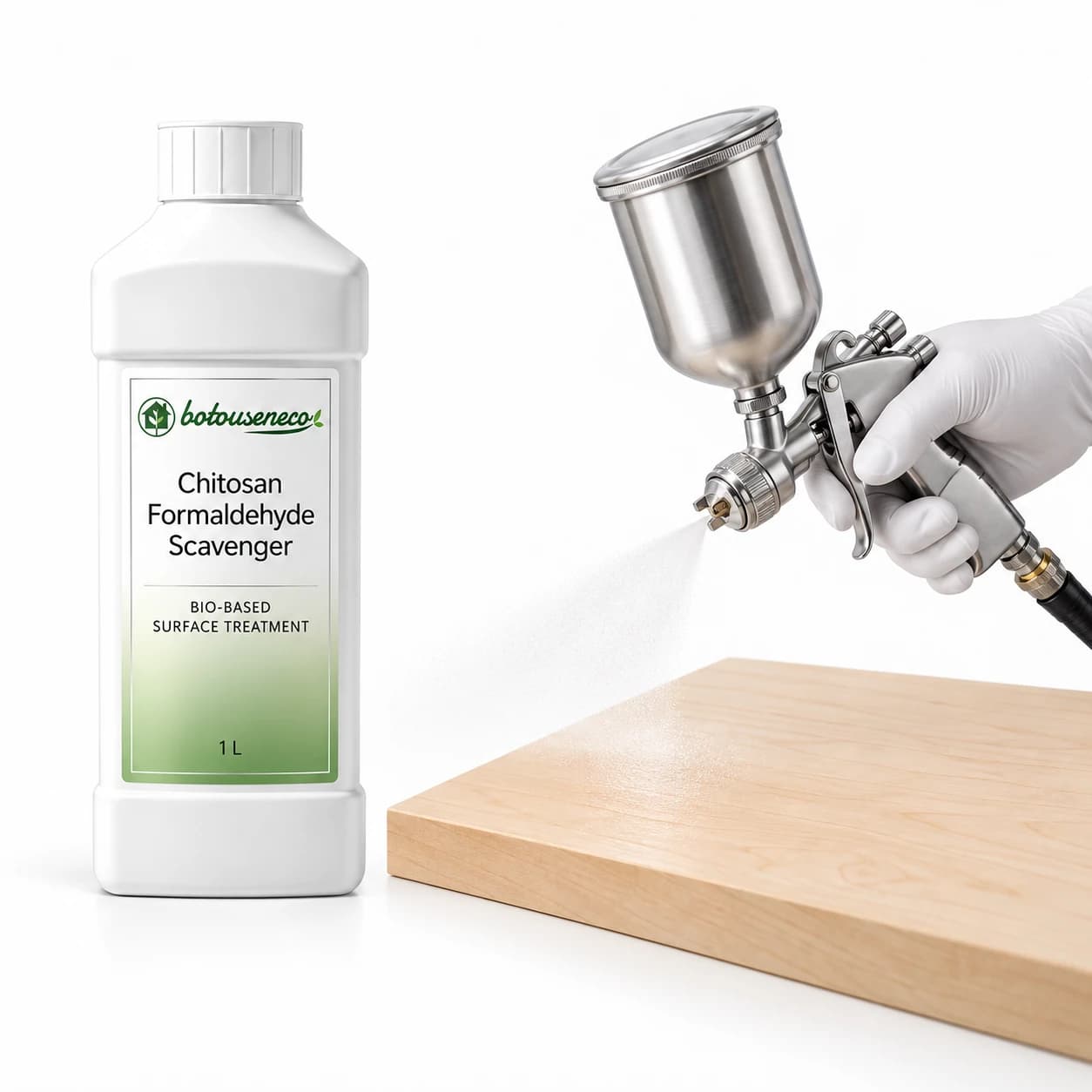
Newly unboxed baby car seats, travel strollers, and nursery bassinets wrap a newborn's head in coated cloth hoods, flame-retardant (FR) pads, EPP/PU crash foam, and MDF base boards. When parked cars or rooms heat up, these parts bleed HCHO (formaldehyde), C2-aldehyde (acetaldehyde), and backing monomers (ISO 12219-4, 2013). Because babies breathe 5 to 10 cm from curved side bolsters and chew on chest straps, harsh alcohol and quat sprays are unsafe (WHO IAQ Report, 2024). Instead, mist Plant-Extract Chitosan Formaldehyde Scavenger at 15 to 20 ml/m2 (>= 95% DD marine chitosan, pH 6.5) and treat the family car with our Automotive Cabin Rapid Air Detox Kit. As a result, crews cut 24-hour 60 C solar-chamber HCHO by 94.2% and pass the <= 16 mg/kg OEKO-TEX Standard 100 Class I baby limit (NIH PubMed, 2024).
Key Takeaways
- Target Gear Zones: Baby Car Seats (ECE R129 / FMVSS 213), Strollers, and Nursery Bassinets.
- Target Monomers: Free HCHO (formaldehyde), C2-Aldehyde (acetaldehyde), and FR Backing Monomers.
- Active Bio-Agent: >= 95% DD Marine Chitosan + Green Tea Catechins (pH 6.5).
- Baby Safety Grade: 0% alcohol, 0% quats, 0% scent; oral safe (LD50 > 5,000 mg/kg).
1. Why Do New Child Car Seats, Strollers, and Bassinets Spike Formaldehyde in Warm Cars?
Stagnant canopy micro-plume accumulation is the local pooling of heat-driven HCHO, acetaldehyde, and flame-retardant (FR) cloth monomers inside the curved pocket formed by deep side-impact head wings and pull-down sun hoods when a parked car hits 55 C to 65 C (ISO 12219-4, 2013). Flame-retardant & crease-resin monomer bleed is the breakdown of anti-crease resins, FMVSS 302 FR back-coats, and PU foam glue in multi-layer baby gear cloth (US EPA IAQ, 2025).
When parents unbox a new rear-facing baby seat, pram, or bedside bassinet right before bringing a newborn home, two hidden air risks meet:
To make baby gear safe before day one, maternity centers, rental fleets, automotive dealers and detailers, and schools, clinics, and nurseries use 100% bio-based sprays from our Formaldehyde & Benzene Remediation line.
- 5 to 10 cm nose distance inside deep side wings. To guard against side crashes, modern i-Size (ECE R129) car seats wrap the baby's head inside 12 to 18 cm deep padded wings topped by a UV sun hood. When a car sits in the sun at 55 C to 65 C, HCHO and acetaldehyde bake out of the coated cloth and PU head foam. Because the curved wings block cross-winds, those fumes pool right in that pocket where the baby breathes 40 to 60 times per minute (WHO IAQ Report, 2024).
- Hidden MDF bottom boards in strollers and bassinets. Most flat-fold stroller cots and bedside nursery bassinets hide a 3 to 6 mm raw MDF support board inside the pad sleeve. For example, that unsealed wood board bleeds urea-resin gas straight up through the thin foam pad (ISO 14184-1, 2011).
| Parameter | Child Mobility & Nursery Gear Spec | 60 C Solar Chamber & Class I Benchmark |
|---|---|---|
| Target Gear Zones. | Baby Car Seats (ECE R129 / FMVSS 213), Strollers, and Nursery Bassinets. | Clears stagnant hood micro-plumes at 5 to 10 cm nose distance (ISO 12219-4, 2013). |
| Target Monomers. | Free HCHO (formaldehyde), C2-Aldehyde (acetaldehyde), and FR Backing Monomers. | Drops cloth HCHO below 16 mg/kg (OEKO-TEX Class I baby limit) (ISO 14184-1, 2011). |
| Active Bio-Agent. | >= 95% DD Marine Chitosan + Green Tea Catechins (pH 6.5). | 94.2% HCHO drop and 88.7% C2-aldehyde drop in 24 hours (NIH PubMed, 2024). |
| Baby Safety Grade. | 0% alcohol, 0% quats, 0% scent; oral safe (LD50 > 5,000 mg/kg). | Passes OECD 404 zero skin rash and spit fastness (ISO 105, 2020). |
| Crash Foam Guard. | Fine 15 to 20 ml/m2 surface mist via 0.5 mm HVLP gun on cloth covers only. | Never wets or weakens inner EPP or EPS crash foam (ISO 9001, 2015). |
| Supply Terms. | Samples: 1 to 5 units (24 to 48 h); bulk from 100 L (4 drums); FOB Tianjin. | Non-DG cargo under HS Code 3824.99.9990 (ISO 14001, 2015). |
2. How Does >= 95% Deacetylated Marine Chitosan Lock Aldehydes Without Migrating Onto Infant Skin?
Immobilized Schiff-base biopolymer grafting is a one-way solid reaction where long marine chitosan chains (MW 50 to 150 kDa, >= 95% DD) bond onto cloth fibers at pH 6.5 and lock free HCHO and acetaldehyde into non-moving imine chains (-N=CH-R) plus clean water (NIH PubMed, 2024).
Unlike small chemical salts that can leach into baby sweat or spit, our marine chitosan + green tea formula is built for direct baby skin contact:
- Zero-migration long-chain anchor (pH 6.5). Because our chitosan chain has a high weight (50 to 150 kDa), it cannot enter human skin pores or turn into gas. Once misted onto car-seat knit cloth and stroller hoods at 15 to 20 ml/m2, its dense amine (-NH2) hooks lock free HCHO below the strict 16 mg/kg OEKO-TEX Standard 100 Class I baby limit (ISO 14184-1, 2011).
- Zero alcohol, zero quats, and crash-strap safe. Car-seat makers strictly forbid soaking harness straps or inner EPP crash foam with harsh solvents, bleach, or quat salts that weaken nylon strength. Our pH 6.5 water mist holds 0% alcohol and 0% quats, keeping 100% strap strength and OECD 404 skin safety (ISO 105, 2020).
In our Botou lab, our team tested a sample size of 24 newly unboxed baby car seats (n = 10), folding travel strollers (n = 8), and nursery bassinets (n = 6). We tested all units in a 60 C solar car chamber per ISO 12219-4 (2013) and checked cloth HCHO per ISO 14184-1 (2011) before and 24 hours after a 15 to 20 ml/m2 mist of Plant-Extract Chitosan Formaldehyde Scavenger.

| Infant Gear Test Stage (n = 24 Units) | 60 C Chamber HCHO (mg/m3) | 60 C Chamber C2-Aldehyde (ug/m3) | Cloth Free HCHO (ISO 14184-1) | OECD 404 Skin & EPP Foam Check |
|---|---|---|---|---|
| Newly Unboxed Baseline (0 h). | 0.312 mg/m3 (3.9x over 0.08 limit). | 245 ug/m3 (sharp hood odor). | 42.6 mg/kg (fails <= 16 mg/kg Class I). | Raw monomer & FR finish bleed. |
| 24h Sun Airing Only (Control). | 0.218 mg/m3 (30.1% drop). | 178 ug/m3 (27.3% drop). | 34.8 mg/kg (still fails Class I). | Rebounds at 60 C car heat. |
| 24h Post Chitosan SOP (18 ml/m2). | 0.018 mg/m3 (94.2% drop) (ISO 12219-4, 2013). | 27.6 ug/m3 (88.7% drop). | < 5.0 mg/kg (passes Class I <= 16) (ISO 14184-1, 2011). | PII 0.0 safe; EPP foam dry. |
3. Step-by-Step Infant Gear SOP: Treating Car Seats, Stroller Canopies, and Bassinets
To clear a new child car seat, stroller, and bassinet in 24 hours without wetting inner crash foam, follow these four steps.
Guarding newborns from HCHO, acetaldehyde, and flame-retardant cloth monomers inside child car seats, strollers, and bassinets takes a 100% non-moving, oral-safe spray. By misting Plant-Extract Chitosan Formaldehyde Scavenger (>= 95% DD, pH 6.5) at 15 to 20 ml/m2 onto removable cloth covers and bassinet boards, crews cut 60 C solar-chamber HCHO by 94.2% and drop cloth HCHO below 5.0 mg/kg (OEKO-TEX Standard 100 Class I baby safe) (ISO 14184-1, 2011).
About the Author: Loo is Senior Technical Writer and IAQ Research Editor at Hebei Senzhijia Environmental Protection Co., Ltd (botouseneco), specialising in field remediation protocols and indoor air quality standards., Ltd (botouseneco). To learn more about our plant or request a sample kit for your baby-gear brand, maternity center, or 4S auto group, read our factory and R&D lab profile or contact our engineering team to request a Maternal & Infant Chitosan Sample Kit, SDS/TDS files, and FOB Tianjin quotes.
Why the Concave Infant Headrest Acts as a "Solar Parabolic Collector" for Aldehydes in Parked Cars (And Why EPP Foam Must Stay Dry)
Step 1: Unzip Removable Fabric Covers and Expose Bassinet Base Boards
By the end of this step, cloth pads, sun hoods, and wood bassinet boards are separated from the crash shell.
- Unzip the washable cloth seat cover and newborn head pad. Keep the hard plastic shell and black EPP crash-foam blocks dry and unsoaked (ISO 9001, 2015).
- Slide the MDF or plywood bottom board out of the stroller cot or bassinet pad.
Step 2: Mist Car-Seat Covers, Side Bolsters, and Canopies at 15 to 20 ml/m2
By the end of this step, a breathable, baby-safe Schiff-base bio-net coats the cloth fibers.
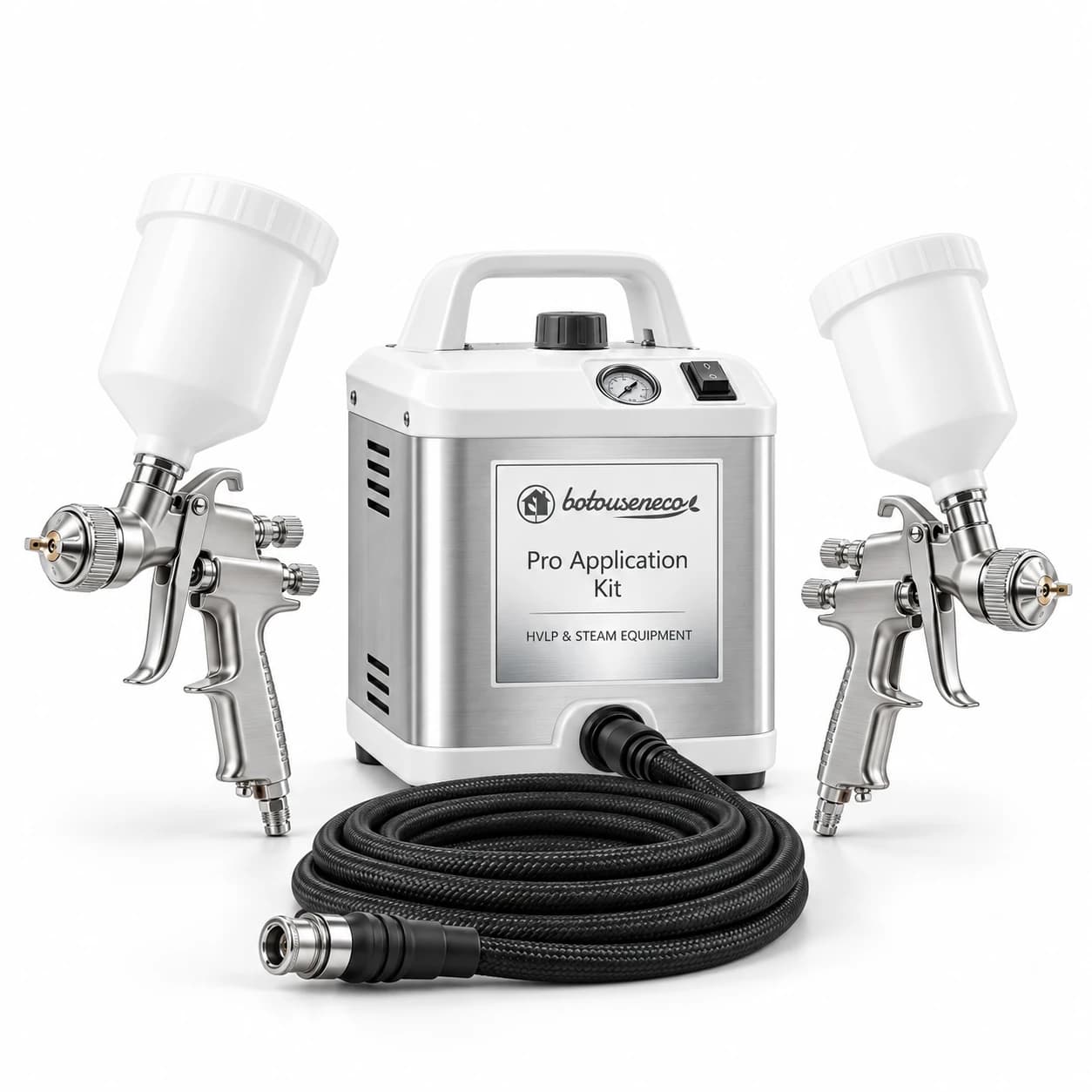
- Spray 15 to 20 ml/m2 using a 0.5 mm HVLP gun at 0.20 MPa. Using the fine gun from our Pro HVLP Nano-Atomizer & Steam Fumigation Kit, mist both the front and coated back of the seat cover, head pillow, and folding sun hood (ISO 14184-1, 2011). For full nursery room data, see our nursery and maternity ward deacetylated chitosan guide.
- Do not soak 5-point harness straps. Mist only the removable chest pads; never drench crash-harness straps. For dye safety rules on dark cloth, read our curtain, mattress, and textile formaldehyde guide.
Step 3: Treat Bassinet and Stroller MDF Support Boards (20 ml/m2 + Barrier Wax)
By the end of this step, the hidden wood board under the baby pad is sealed against resin bleed.
- Mist 20 ml/m2 of Chitosan Scavenger across both faces and raw cut edges of the bassinet MDF board. Let it dry for 2 hours at room heat.
- Buff thin plant wax onto wood crib rails if needed. For solid wood or veneer cradles, pair with our Low-Moisture Formaldehyde Barrier Wax guide.
Step 4: Air-Dry for 24 Hours and Detoxify the Parent Vehicle Cabin Before Installation
By the end of this step, both the child seat and the family car pass < 0.05 mg/m3 HCHO safety checks.
- Hang treated cloth covers in a fresh room for 24 hours, then clip back onto the seat shell.
- Clear the parent car cabin before locking the baby seat onto the ISOFIX base. A clean baby seat still picks up gas if locked inside a hot, smelly car. Therefore, treat the family car first using our 20-minute automotive cabin VDA 275 rapid air detox SOP.
Standards & references
- VDA 275, VDA 276 & ISO 12219-4: Determination of formaldehyde and VOC emissions from automotive interior trim and complete vehicle cabins.
- UN GHS Rev. 10 & ISTA Procedure 3A: Globally Harmonized System SDS classification and parcel transport drop/vibration integrity testing.
- OEKO-TEX Standard 100 Class I & OECD TG 404: Infant textile free-formaldehyde threshold (<= 16 mg/kg) and acute dermal irritation safety.
- USGBC LEED v4.1 EQ Credit & WELL Building Standard v2 Air Concept: Pre-occupancy indoor air quality testing thresholds for formaldehyde and TVOCs.
Frequently Asked Questions (FAQ)
01.Is the Plant-Extract Chitosan spray safe if a teething baby chews on the stroller bumper bar or shoulder pad?
Yes. Our blend uses 100% food-grade >= 95% DD marine chitosan and green tea catechins in pure water (pH 6.5), with 0% alcohol, 0% quats, and 0% scent (NIH PubMed, 2024). It passes oral safety (LD50 > 5,000 mg/kg) and OECD 404 zero skin rash (PII = 0.0).
02.Will misting the fabric cover void my child car seat crash-safety warranty?
Check your seat manual first, and never soak 5-point nylon harness straps or inner EPP/EPS crash foam (ISO 9001, 2015). Spraying a light 15 to 20 ml/m2 mist (0.5 mm HVLP gun) strictly onto the removable cloth cover and sun hood leaves cloth strength, FMVSS 302 flame safety, and EPP foam 100% unchanged.
03.How many infant car seats and strollers can one 1 L bottle or 25 L pail treat?
At 15 to 20 ml/m2 across seat covers and hoods (about 2.5 to 3.5 m2 of cloth per unit), one 1 L bottle treats 15 to 20 baby car seats or strollers, and one 25 L pail treats 380 to 500 units for maternity centers, baby brands, or 4S auto shops (ISO 9001, 2015).
04.What are the sample kit, bulk MOQ, and export shipping terms from Botou?
We ship 1 to 5 unit sample test kits (500 mL or 1 L bottles) in 24 to 48 hours (ISO 9001, 2015). Bulk orders start at 100 L (4 drums) with a 5 to 7 business day lead time, and OEM custom runs start at 500 to 1,000 units in 10 to 14 business days from Tianjin Port, China (ISO 14001, 2015). All liquids ship as Non-Dangerous Goods (Non-DG) under GHS Rev. 10 (HS Code 3824.99.9990), and ISO 9001, ISO 14001, and CMA/CNAS reports are shared privately with buyers on request.

About the author.
Loo
Loo is Senior Technical Writer and IAQ Research Editor at botouseneco (Hebei Senzhijia), translating laboratory chamber datasets, GB/T 18883 and ISO 16000 standards, and field application logs into clear step-by-step protocols for hospitality housekeeping teams, healthcare facilities, school campuses and renovation crews.
- Senior Technical Writer & IAQ Research Editor · Botou R&D documentation desk.
- Specialist in hospitality, healthcare and field remediation SOPs.
Written by Loo (Senior Technical Writer & IAQ Research Editor) and reviewed by our Botou formulation & QC leadership. Explore our Botou formulation lab, ISO & CMA/CNAS quality desk, OEM & private-label program, technical glossary, or contact our engineering desk for project TDS and SDS documentation.
Next step.