HVAC Hygiene & Coil Biofilm Control
Eliminating HVAC Dirty Sock Syndrome: No-Rinse Aluminum-Safe Biofilm Disruption and Geosmin/MVOC Neutralization on Fin Coils
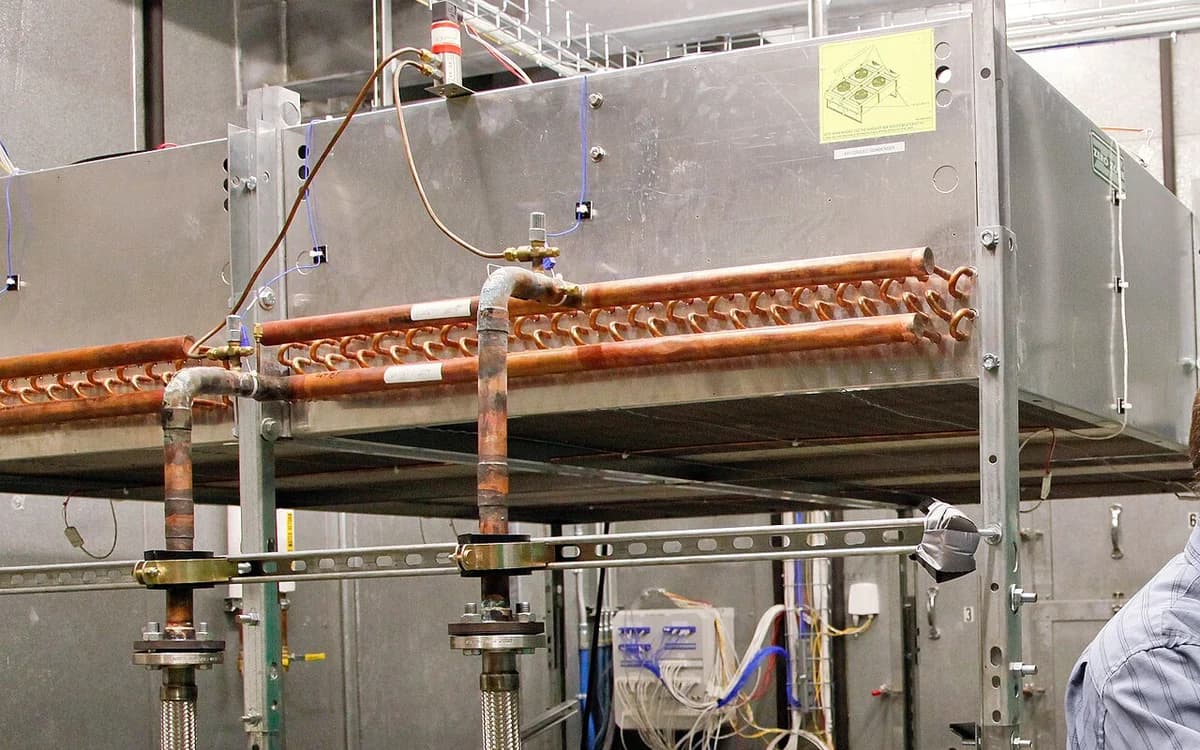
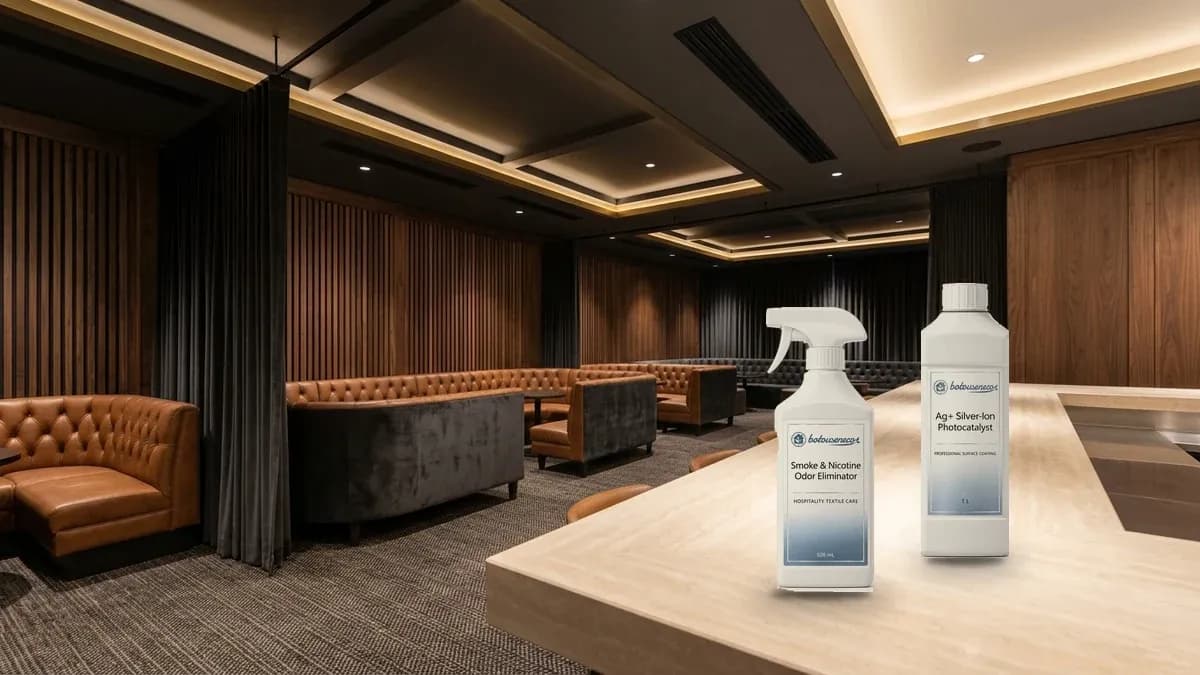
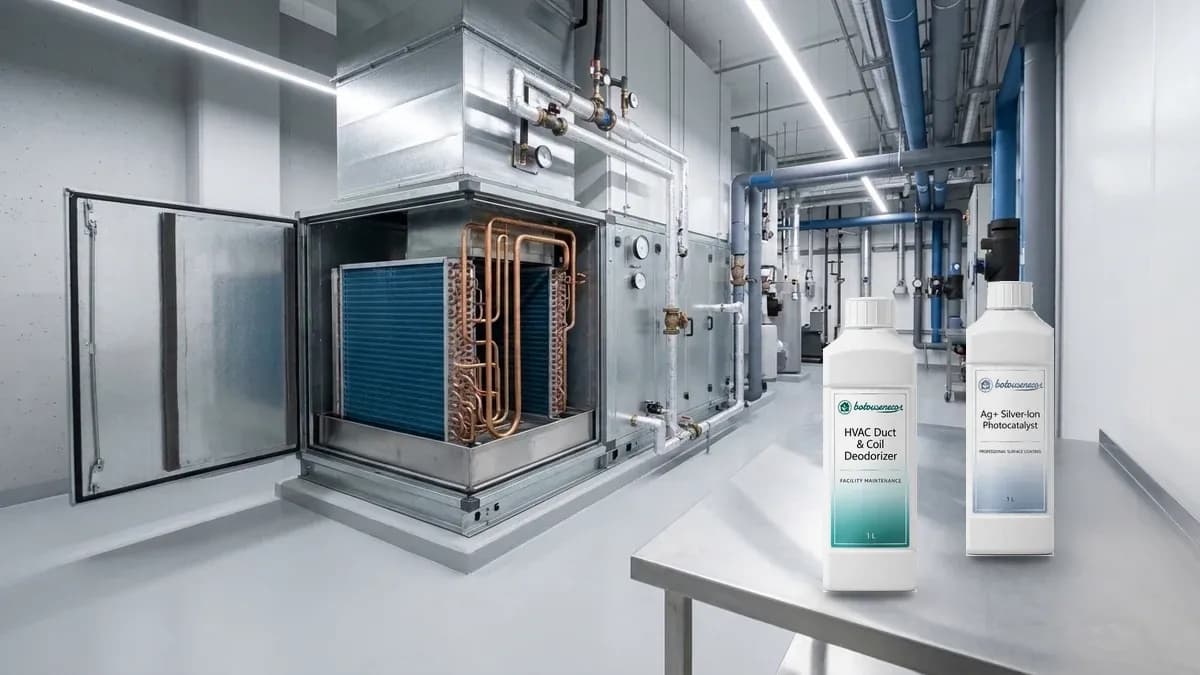
HVAC Dirty Sock Syndrome happens when damp aluminum evaporator fins grow bacterial and fungal biofilms. During heat-pump defrost or seasonal heating shifts, warm air flashes off earthy geosmin, 2-methylisoborneol (2-MIB), and sour fatty acids. Strong acid or alkaline coil foams pit thin fins and strip factory hydrophilic coatings. A reliable HVAC Dirty Sock Syndrome coil deodorizer uses neutral pH 7.0 HVAC Duct & Coil Disinfectant Deodorizer (20 to 30 ml/m2 coil spray; 5 to 8 ml/m3 duct fog). Normal condensate then flushes loosened slime cleanly, while Odor Eliminator and dark-active Silver-Ion Antibacterial Photocatalyst Spray (150 ppm Ag+) stop odor rebound.
Key Takeaways
- Root Cause of Dirty Sock Syndrome: Wet aluminum evaporator fins cultivate Actinobacteria and Cyanobacteria biofilms that release geosmin (5 ppt threshold) and 2-MIB during heat-pump defrost or seasonal heating mode shifts.
- Avoid Amphoteric Aluminum Corrosion: Strong alkali foams (pH 12+) strip blue hydrophilic fin coatings and acid brighteners (pH < 4) pit 0.10-0.15 mm aluminum fins; neutral pH 7.0 (6.8-7.4) passivated formulas self-flush safely via AC condensate.
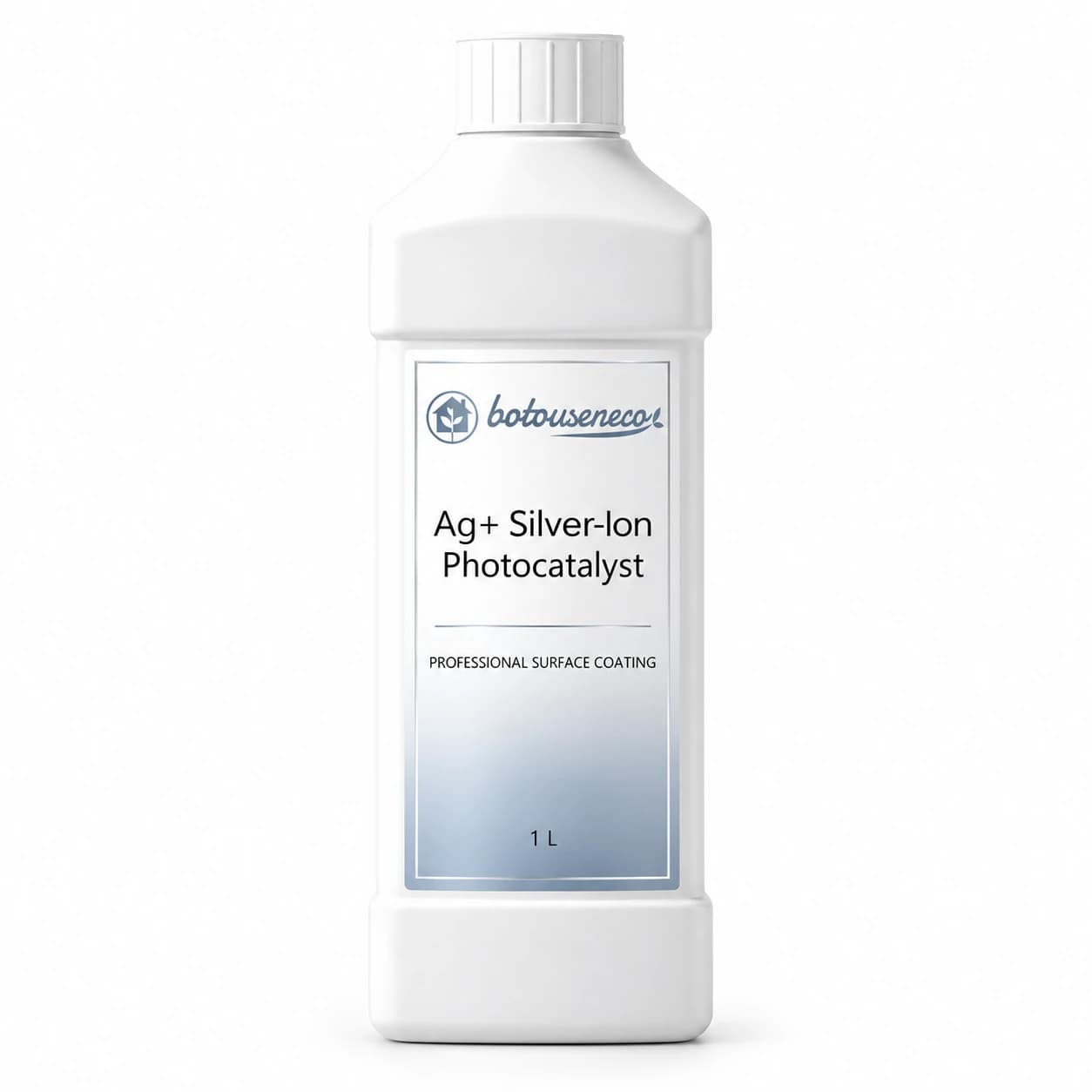
- Dark-Active Plenum Shield: Unlit AHU plenums and FCU boxes finish with Silver-Ion Antibacterial Photocatalyst Spray (5 nm TiO2 + 150 ppm Ag+, 8-12 ml/m2) for 24/7 dark-phase biofilm suppression.
- 200-Room Resort Takeoff (100 L Bulk MOQ): Zone 1 coils + ducts (24.75 L/cycle -> 2 x 25 L for 2 quarterly cycles) + Zone 2 dark plenums (6.60 L -> 1 x 25 L) + Zone 3 corridor air polish (23.10 L -> 1 x 25 L) total 4 x 25 L pails (100 L).
Why Commercial Heat Pumps and FCUs Blast Sour Odors During Mode Shifts
Facility engineers in hotels, hospitals, and commercial towers dread spring and autumn weather shifts. A heat pump or fan-coil unit (FCU) runs odor-free all summer, then suddenly blasts a sour smell through every vent when heating or defrost starts.
Replacing air filters or spraying perfume into return grilles never fixes the issue because the odor source lives on the wet heat exchanger. Stopping commercial heat-pump musty-smell callbacks requires stripping the microbial slime at neutral pH 7.0 (buffered within the pH 6.8 to 7.4 neutral range) without corroding aluminum fins or copper bends.
| HVAC Contamination Zone | Primary Malodor Compounds | Corrosion or Operational Risk | Matched BotouSeneco System & Rate |
|---|---|---|---|
| Wet evaporator fin coils | Geosmin, 2-MIB, short-chain acids | High with pH < 4 or pH > 11 foams | HVAC Duct & Coil Deodorizer (20-30 ml/m2, pH 7.0) |
| Supply & return ductwork | Musty MVOCs, stale condensate haze | Galvanized seam rust under wet acid | HVAC Duct & Coil Deodorizer (5-8 ml/m3 ULV fog) |
| Dark plenum & blower box | Biofilm regrowth in unlit airboxes | Plain UV TiO2 stays inactive inside | Silver-Ion Photocatalyst Spray (8-12 ml/m2, 150 ppm Ag+) |
| Affected hotel halls & suites | Diffused earthy or sour-sock air | Zero downtime needed for occupied floors | Odor Eliminator (Molecular) (5-10 ml/m3 ULV fog) |
Why Dirty Sock Syndrome Happens: Evaporator Coil Biofilm, Geosmin and 2-MIB
Dirty Sock Syndrome (DSS) is the sharp, sour, or earthy smell blown from AC and heat-pump vents when wet evaporator coil biofilms volatilize during heating, defrost, or fan-only drying cycles.
Cooling coils create a warm-season incubator. As room air crosses cold chilled-water or refrigerant fins below dew point, water condenses across tight metal gaps. Dust, skin flakes, lint, and cooking vapors stick to wet fins and feed microbial colonies inside a sticky biofilm.
Peer-reviewed sequencing shows which microbes dominate coil surfaces. A 2022 16S rRNA study in Microorganisms (PMC9697849) sampled coils, filters, fans, and outlets across 17 residential AC units. It found Proteobacteria, Firmicutes, Actinobacteria, Cyanobacteria, and Bacteroidetes as the five main phyla. A 2025 1.5-year study in Environmental Microbiome (PMC12403373) confirmed that wet surfaces, occupant load, and HVAC drains jointly drive indoor microbial growth.
Microbial Volatile Organic Compounds (MVOCs) are light alcohols, ketones, terpenes, and organic acids released by bacteria and fungi on damp surfaces, as shown in Science of the Total Environment (PMC6705605). Two terpenoids made by Actinobacteria and Cyanobacteria explain why even thin biofilms trigger loud guest complaints:
The WHO Guidelines for Indoor Air Quality: Dampness and Mould warn against damp air systems. A 2024 clinical review in Deutsches Arzteblatt International (PMC11381209) also links wet HVAC microbial growth to airway irritation and comfort complaints.
- Geosmin (trans-1,10-dimethyl-trans-9-decalol): Detailed in the NIH PubChem Geosmin Profile, geosmin emits a sharp wet-soil smell that humans detect down to roughly 5 parts per trillion (ppt).
- 2-Methylisoborneol (2-MIB): Listed in the NIH PubChem 2-Methylisoborneol Reference, 2-MIB creates a musty, camphor-like smell that spikes when warm heat-pump coils bake wet slime during defrost cycles.
Why Strong Acid and Alkaline Foams Corrode Coated Aluminum Fins
Amphoteric Aluminum Fin Corrosion is the rapid breakdown of aluminum's thin native oxide layer (Al2O3) when coil washes drop below pH 4.5 or rise above pH 8.5. Because aluminum reacts with both strong acids and strong alkalis, harsh foaming washes cause three costly failures:
Specifying a true no-rinse pH 7.0 aluminum-fin deodorizer with built-in corrosion passivators breaks up biofilm slime cleanly while keeping aluminum oxide and copper tubing completely intact. For broader multi-facility odor and bio-enzyme architecture, see our pillar guide on commercial odor control and bio-enzymatic molecular deodorization.
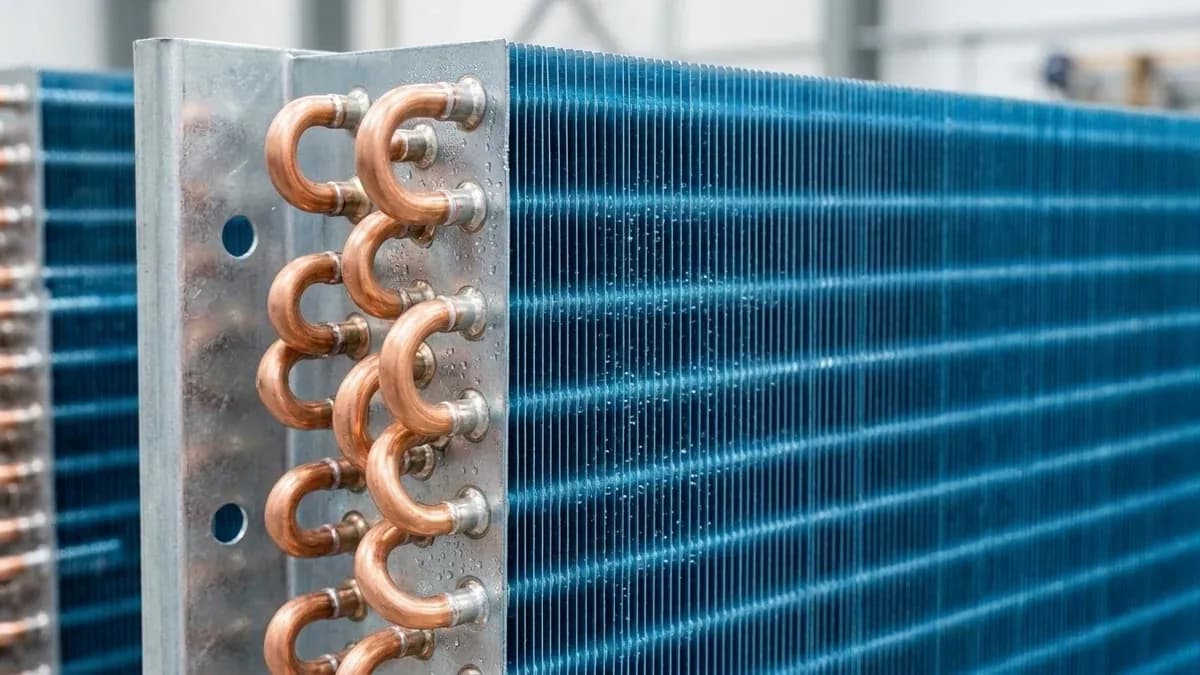
- Stripped Blue Hydrophilic Coatings: Modern hotel FCU and AHU coils wear thin blue coats so water sheets off fast. Caustic NaOH (pH 12-13) strips that coat on the first wash, leaving bare metal that holds more water and speeds slime return.
- White Oxide Powder & Clogged Drain Pans: Strong alkali creates bulky white aluminum hydroxide scale that washes down into pans and plugs narrow traps.
- Fin Pitting & Coil Leaks: Unrinsed hydrofluoric or phosphoric acid foams pit 0.10 to 0.15 mm aluminum fins and stress brazed copper bends, cutting coil life short.
| Coil Cleaner Chemistry | Typical Working pH | Effect on Hydrophilic Aluminum Fins | Rinse Requirement | MVOC Odor Control |
|---|---|---|---|---|
| Caustic alkali foam (NaOH) | pH 12.0 to 13.5 | Strips blue coat; creates white oxide scale | Heavy high-pressure rinse mandatory | Temporary wash; speeds regrowth |
| Acid brightener (HF/H3PO4) | pH 1.0 to 3.0 | Pits thin fins; risks fume hazard indoors | Heavy rinse + neutralization | Zero molecular MVOC chelation |
| Perfumed coil spray | pH 6.5 to 8.0 | Neutral to metal; leaves sticky scent oil | None | Masks smell 2 hours; feeds biofilm |
| BotouSeneco Neutral Coil Deodorizer | Neutral pH 7.0 (6.8-7.4) | Passivates aluminum & copper safely | No-rinse (condensate self-flush) | Disrupts slime + chelates geosmin |
How Do Maintenance Crews Run No-Rinse pH 7.0 Coil Biofilm Sanitation?
Guidance from the US EPA Air Duct Cleaning Guide and the US EPA Mold Remediation Portal emphasizes controlling moisture at the source and removing physical buildup before treating HVAC surfaces. Follow this four-stage engineering SOP tailored for hotel and hospitality engineering teams.
Stage 1: Lockout, Dry Brushing and Condensate Trap Check
Shut off power to the AHU or FCU at the service disconnect and lock out the breaker. Remove access panels, pull dirty pre-filters, and inspect the condensate drain pan for standing jelly slime or blocked P-traps.
Use a soft nylon fin brush and HEPA vacuum to pull dry lint matting straight off the entering-air face of the coil. Always brush parallel to the fins so soft aluminum edges never fold over. Check that the condensate drain line runs freely with a cup of clean water before applying any liquid cleaner.
Stage 2: Low-Pressure Neutral pH 7.0 Coil Biofilm Sanitation
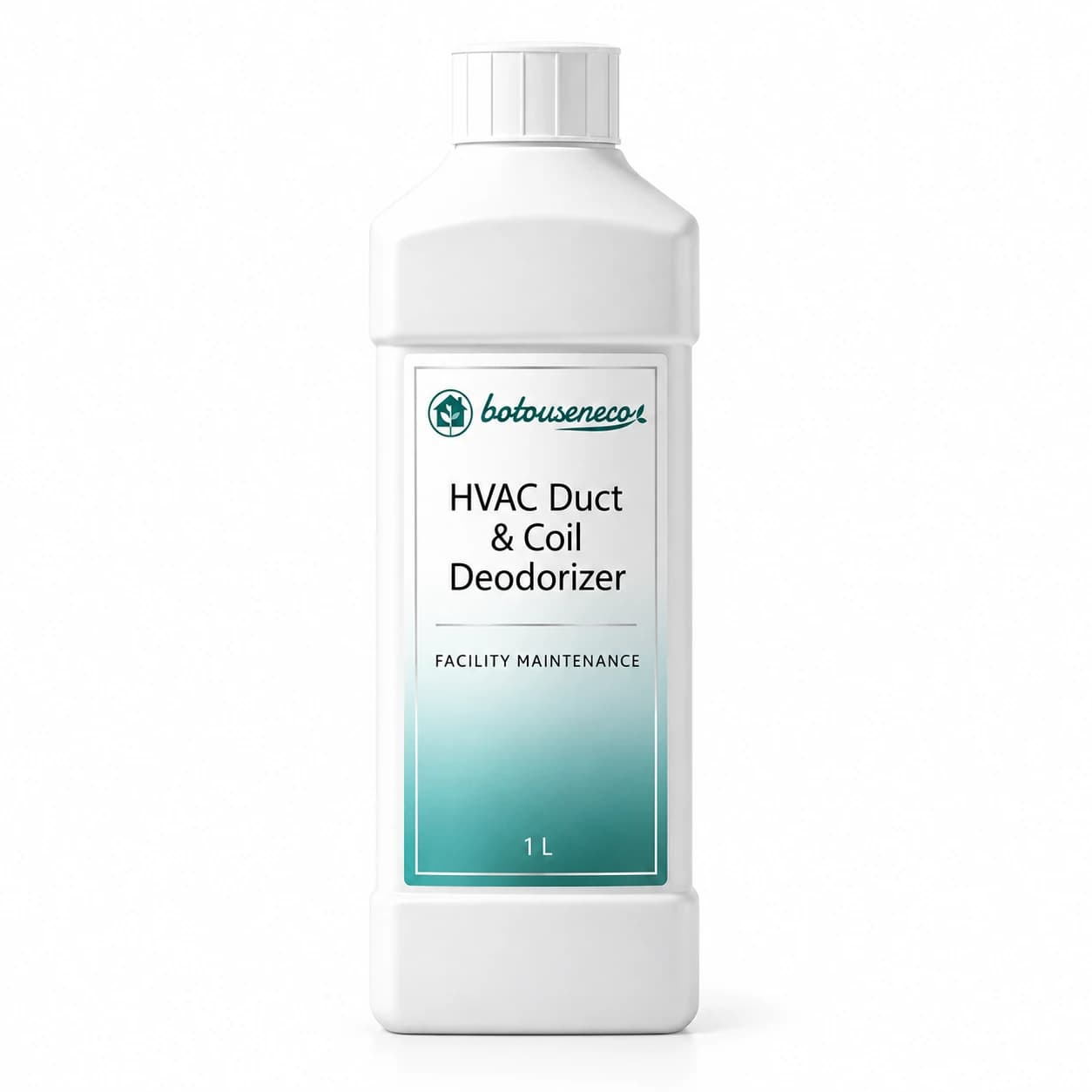
Pour ready-to-use HVAC Duct & Coil Disinfectant Deodorizer (pH 7.0, buffered 6.8 to 7.4) into a clean pump sprayer or low-pressure electric applicator. This neutral evaporator coil geosmin biofilm cleaner operates safely below 0.20 MPa (~30 psi) so high jet force never bends delicate fins.
Spray 20 to 30 ml/m2 evenly across the wettable coil face from top to bottom. Cationic biofilm disruptors then wick deep between fin rows and flow into the drain pan. Because the formula is buffered at neutral pH 7.0 with metal passivators, crews need zero garden-hose flushing. Let the liquid dwell 15 to 20 minutes while botanical chelators lock geosmin and 2-MIB molecules. Restart cooling so natural AC condensate flushes loosened biofilm cleanly down the drain. For full duct-network steps, read our SOP on HVAC fan-coil and ductwork non-corrosive MVOC disinfection.
Stage 3: Supply Duct ULV Fogging and Room Air Clearance
If musty air has already traveled through supply trunks into guest rooms, load a calibrated ULV cold fogger (20 to 50 micron dry mist). Run the AHU blower on fan-only mode with rooms unoccupied. Inject 5 to 8 ml/m3 of HVAC Duct & Coil Disinfectant Deodorizer downstream of the cooling coil to neutralize duct-wall MVOCs.
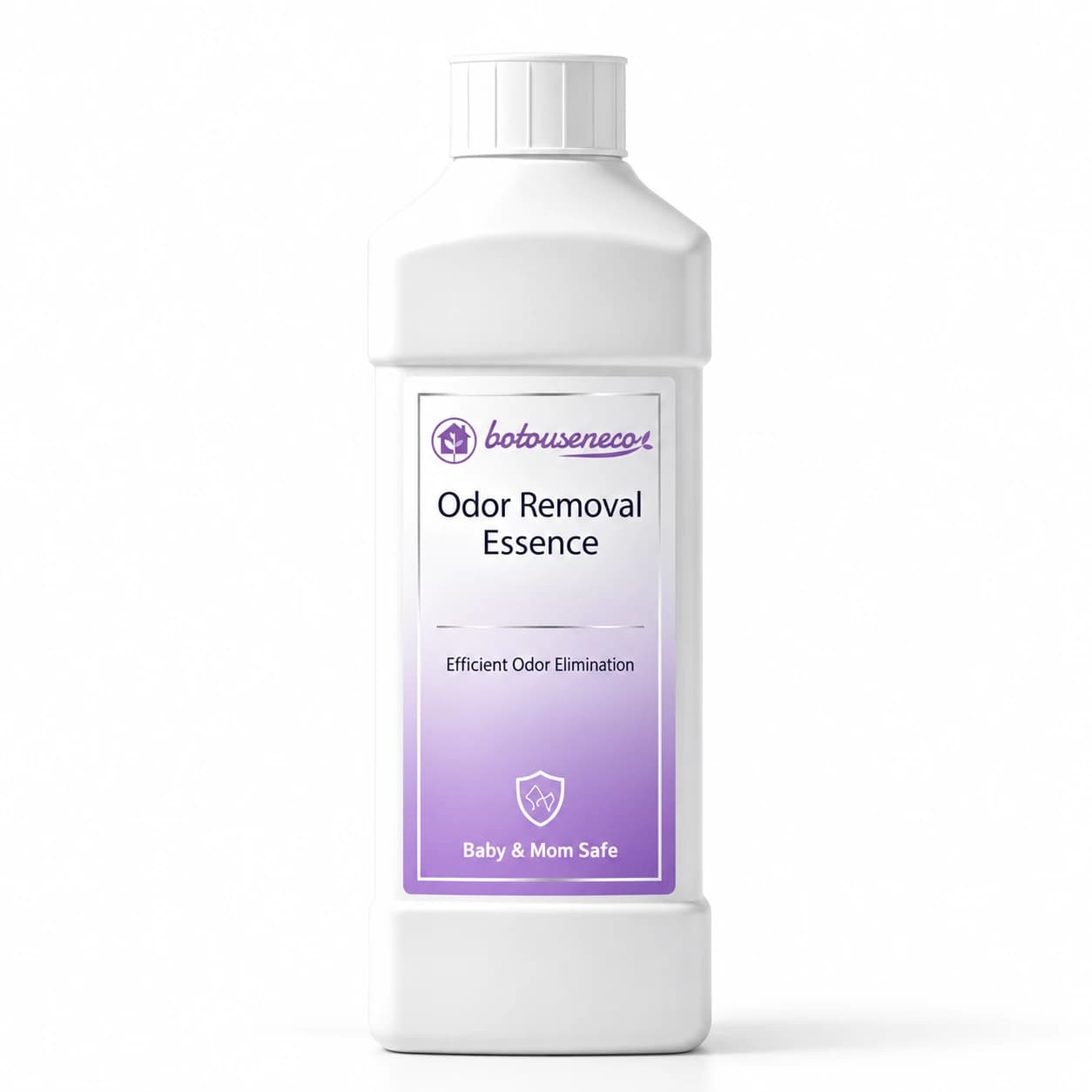
When corridors or banquet halls still hold sour-sock odor after coil sanitation, mist neutral Odor Eliminator (Molecular Grade) (pH 6.0 to 7.0) at 5 to 10 ml/m3 for 30-to-60-minute fragrance-free clearance. Verify post-treatment air quality against the WHO Guidelines for Indoor Air Quality: Selected Pollutants (0.1 mg/m3 30-min HCHO) and US EPA IAQ VOC guidance. For Asian projects, confirm China GB/T 18883-2022 limits (TVOC <= 0.60 mg/m3 8-hour average; HCHO <= 0.08 mg/m3 1-hour average).
Stage 4: Dark-Active Ag+ Plenum Shield to Prevent Seasonal Rebound
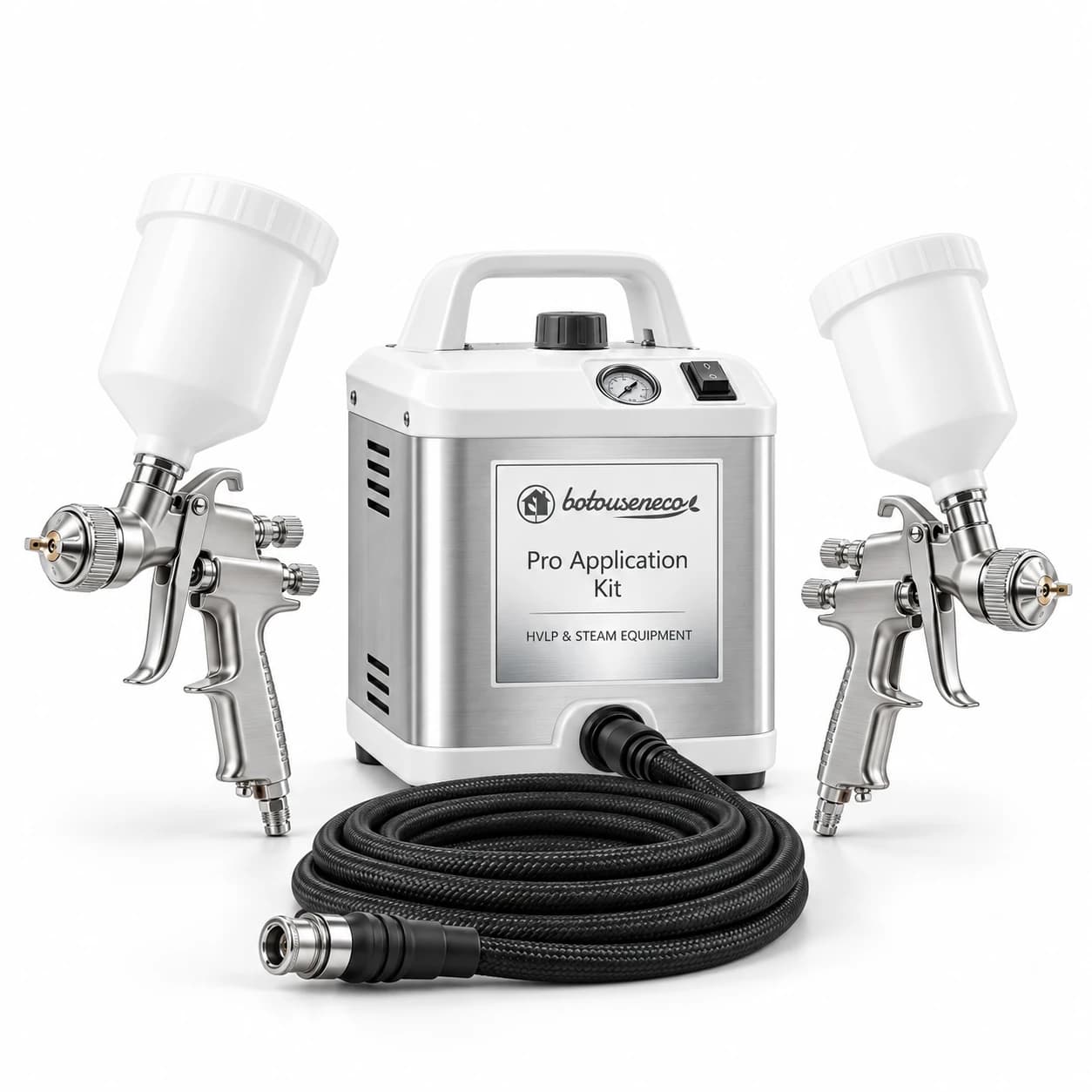
Inside unlit sheet-metal plenums, FCU blower scrolls, and return airboxes, ordinary UV-only TiO2 coatings stay idle in the dark. Wait until all cleaned plenum panels dry completely. Then apply Silver-Ion Antibacterial Photocatalyst Spray (5 nm anatase TiO2 + 150 ppm chelated Ag+) at 8 to 12 ml/m2 via a 0.5 mm HVLP gun onto metal interior walls, avoiding electrical junction boxes.
The 150 ppm Ag+ ionic barrier suppresses microbial colonization 24/7 inside dark, humid airboxes, extending clean-coil intervals through coastal monsoon seasons. Coastal properties battling high-RH room mustiness can combine coil sanitation with our guide on coastal tropical resort hotel FCU mold and Ag+ photocatalyst protection.
Engineering Scope Limits: When Mechanical Repair Must Precede Chemical Sanitation
In our Botou formulation lab and hotel engineering reviews, we set transparent boundaries on chemical coil care. Neutral pH 7.0 no-rinse sprays strip active biofilm and neutralize geosmin cleanly on accessible metal coils and smooth sheet-metal ducts. However, no spray can fix a flat, non-sloping condensate pan that holds standing water year-round.
If an AHU contains water-logged fiberglass internal duct lining colonized deep with mold, the US EPA Mold Remediation Portal advises removing and replacing wet porous insulation rather than trying to spray over it. Likewise, severely crushed fins or clogged condensate drains must be combed and cleared mechanically first so self-flushing condensate drains smoothly.
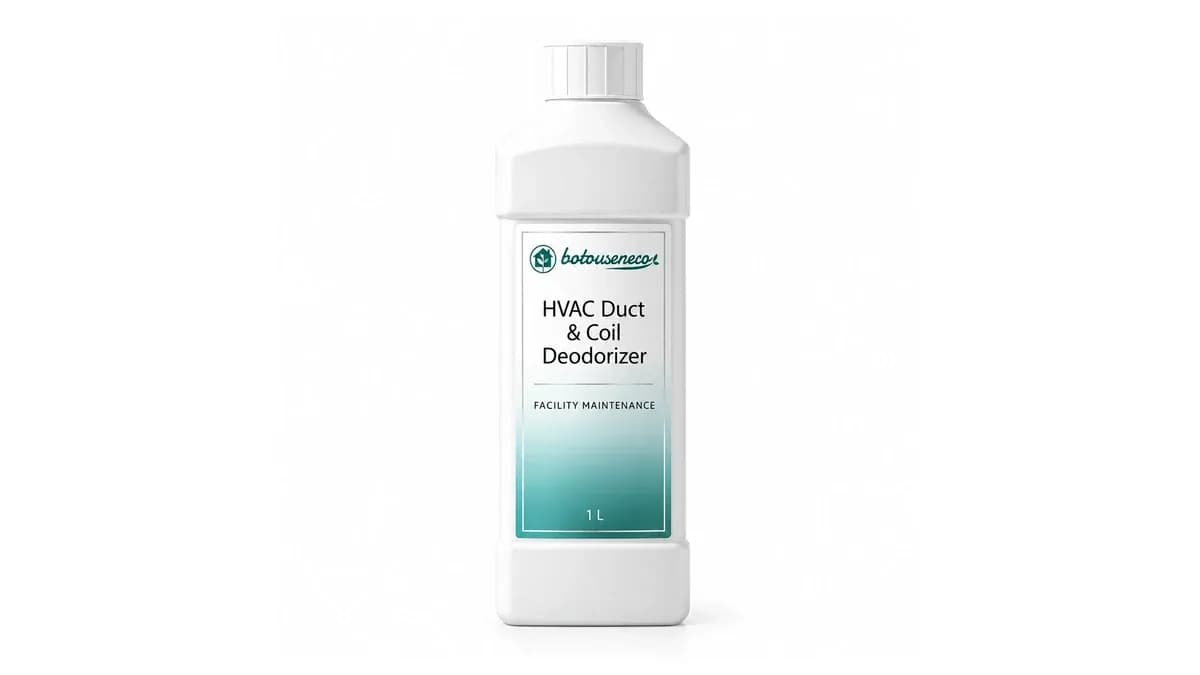
BotouSeneco HVAC Coil, Duct and Dark-Active Ag+ Product Selector
Within our bio-enzyme and commercial odor control product line, Hebei Senzhijia Environmental Protection Co., Ltd (BotouSeneco) builds three matched liquids for HVAC Dirty Sock Syndrome coil deodorization programs. Learn more about us and our Botou plant, founded in 2015 in Cangzhou, Hebei:
Every batch runs under our ISO 9001:2015 Quality Management System and ISO 14001:2015 Environmental Management System. Performance claims are backed by CMA / CNAS-accredited chamber verification per ISO 16000-9 and GB/T 18883-2022. Official certificate copies and third-party reports are shared privately with B2B buyers on request. Private-label OEM orders start at 500 to 1,000 units with a 10 to 14 business day lead time.
- 1. HVAC Duct & Coil Disinfectant Deodorizer: Neutral pH 7.0 (6.8 to 7.4 range) no-rinse blend with cationic biofilm disruptors, plant MVOC chelators, and aluminum/copper passivators. Spray 20 to 30 ml/m2 on coils and fog 5 to 8 ml/m3 in ducts so normal condensate flushes loosened slime cleanly.
- 2. Silver-Ion Antibacterial Photocatalyst Spray: Clear 5 nm visible-light doped anatase TiO2 paired with 150 ppm chelated Ag+. Applied at 8 to 12 ml/m2 (0.5 mm HVLP) onto dry plenum walls and FCU boxes, it runs 24/7 dark-phase germ control inside unlit ducts.
- 3. Odor Eliminator (Molecular Grade): Fragrance-free plant polyphenol and organic chelator liquid (pH 6.0 to 7.0). Applied at 8 to 15 ml/m2 on textiles or 5 to 10 ml/m3 ULV fog, it clears lingering sour-sock smells from halls and rooms within 30 to 60 minutes.
| Formulation / Parameter | Active Chemistry & pH | HVAC & Facility Target | Dosage & Packaging |
|---|---|---|---|
| HVAC Duct & Coil Deodorizer | Cationic biofilm lift + MVOC chelator + passivator (pH 7.0; 6.8-7.4 spec) | Evaporator fin coils, drain pans, ducts | 20-30 ml/m2 coil; 5-8 ml/m3 duct; 1 L-200 L |
| Silver-Ion Photocatalyst Spray | 5 nm anatase TiO2 + 150 ppm chelated Ag+ | Dark AHU plenums, FCU blower boxes | 8-12 ml/m2 (0.5 mm HVLP); clear; 1 L-200 L |
| Odor Eliminator (Molecular) | Fragrance-free plant polyphenols (pH 6.0-7.0) | Musty hotel halls, guest rooms, lobbies | 8-15 ml/m2 mist; 5-10 ml/m3 ULV; 1 L-200 L |
| BotouSeneco MOQ, SDS & Export | Non-DG GHS Rev. 10 / ISO 11014 SDS, REACH SVHC-free | Air & sea freight via Tianjin Port (~180 km) | Sample 1-5 units (24-48 h); Bulk 100 L (5-7 d) |
Worked Preventive Maintenance Takeoff: 200-Key Coastal Resort Hotel
Hotel chief engineers planning seasonal heat-pump and FCU coil care before spring and autumn mode shifts need exact pail counts. Consider a 200-room coastal resort hotel running 200 guest-room FCUs (0.35 m2 coil face each) and 12 central AHUs (4.5 m2 coil face each). The site also holds 2,400 m3 of main ducts, 600 m2 of dark plenum walls, and 3,000 m3 of musty corridor air:
Total engineering stock equals 100 L (4 x 25 L pails), clearing our 100 L factory bulk MOQ in a single pallet dispatch (5 to 7 business days). Because no-rinse pH 7.0 treatment eliminates messy pressure-wash tents, two HVAC technicians complete 25 to 30 guest-room FCUs per shift during daytime housekeeping windows.
Stop recurring HVAC musty-air guest complaints without risking corroded coils or costly room lockouts. Contact our Botou engineering team with your FCU and AHU unit counts, coil face dimensions, and seasonal humidity profile. We ship 1 L evaluation samples within 24 to 48 hours alongside GHS Rev. 10 SDS packs and build a custom HVAC Dirty Sock Syndrome coil deodorization schedule for your property.
- Zone 1 (Coil Banks 372 m2 Wettable Area + Ducts 2,400 m3): Total coil face equals 70 m2 (200 x 0.35) plus 54 m2 (12 x 4.5), or 124 m2. Multiplying by a 3.0x deep-row fin factor gives 372 m2. HVAC Duct & Coil Disinfectant Deodorizer at 25 ml/m2 (9.30 L) plus duct fog at 5.5 ml/m3 (13.20 L) equals 22.50 L net. Adding a 1.10 transfer factor brings single-cycle demand to 24.75 L (49.50 L across two cycles), so order 2 x 25 L pails (50 L, covering two full quarterly cycles cleanly).
- Zone 2 (Dark AHU Plenums & FCU Boxes 600 m2): Silver-Ion Antibacterial Photocatalyst Spray at 10 ml/m2 takes 6.00 L net. With a 1.10 transfer factor, demand hits 6.60 L, so order 1 x 25 L pail (25 L) for annual multi-wing re-coating.
- Zone 3 (Guest Corridors & Lobbies 3,000 m3): Odor Eliminator (Molecular Grade) at 7 ml/m3 ULV takes 21.00 L net. With a 1.10 transfer factor, demand hits 23.10 L, so order 1 x 25 L pail (25 L).
Standards & references
- WHO Guidelines for Indoor Air Quality: Dampness and Mould & Selected Pollutants (0.1 mg/m3 30-min HCHO) & China GB/T 18883-2022 (TVOC <= 0.60 mg/m3 8h avg; HCHO <= 0.08 mg/m3).
- Peer-Reviewed HVAC Microbiome & MVOC Studies: Microorganisms 2022 (PMC9697849), Environmental Microbiome 2025 (PMC12403373), Science of the Total Environment (PMC6705605) & Deutsches Arzteblatt International 2024 (PMC11381209).
- US EPA Air Duct Cleaning Guide, US EPA Mold Remediation Portal, US EPA IAQ VOC Guidance & NIH PubChem Profiles (Geosmin, 2-Methylisoborneol).
- UN GHS Rev. 10 / ISO 11014 Non-DG SDS, EU REACH SVHC-Free, ISO 9001:2015, ISO 14001:2015 & CMA / CNAS Chamber Verification (ISO 16000-9).
Frequently Asked Questions (FAQ)
01.Why does Dirty Sock Syndrome smell strongest when a heat pump switches from cooling to heating?
During summer cooling, wet aluminum fins grow bacteria and fungi inside a slimy biofilm. When the heat pump switches to heating or runs a defrost cycle, warm air heats that damp film and flashes trapped geosmin, 2-MIB, and sour organic acids into occupied rooms.
02.Does neutral pH 7.0 coil cleaner really work without water rinsing?
Yes. HVAC Duct & Coil Disinfectant Deodorizer uses cationic biofilm disruptors and neutral corrosion passivators buffered at neutral pH 7.0 (6.8 to 7.4 range). After 15 to 20 minutes of dwell time, switch the unit back into cooling mode. Natural condensate then rinses loosened biofilm safely down the drain pan with zero caustic residue.
03.Will pH 7.0 coil deodorizer damage blue hydrophilic fin coatings or copper U-bends?
No. Aluminum's protective oxide film stays stable near neutral pH 7.0, avoiding the amphoteric dissolution caused by pH 12+ alkali foams or strong acid brighteners. Built-in metal passivators protect blue hydrophilic aluminum fins, copper return bends, and galvanized drain pans alike.
04.How often should commercial hotels and hospitals sanitize evaporator coils to prevent biofilm return?
In humid coastal or tropical climates, spray HVAC Duct & Coil Disinfectant Deodorizer quarterly ahead of seasonal load shifts. Coat dry dark plenum walls once per year with Silver-Ion Antibacterial Photocatalyst Spray (150 ppm Ag+) to keep microbial counts suppressed 24/7.

About the author.
Loo
Loo is Senior Technical Writer and IAQ Research Editor at botouseneco (Hebei Senzhijia), translating laboratory chamber datasets, GB/T 18883 and ISO 16000 standards, and field application logs into clear step-by-step protocols for hospitality housekeeping teams, healthcare facilities, school campuses and renovation crews.
- Senior Technical Writer & IAQ Research Editor · Botou R&D documentation desk.
- Specialist in hospitality, healthcare and field remediation SOPs.
Written by Loo (Senior Technical Writer & IAQ Research Editor) and reviewed by our Botou formulation & QC leadership. Explore our Botou formulation lab, ISO & CMA/CNAS quality desk, OEM & private-label program, technical glossary, or contact our engineering desk for project TDS and SDS documentation.
Next step.