Industrial Gas-Phase Scrubbing & Corrosion Control
Municipal Lift Station, Biogas and Pulp Mill Control Room Scrubbers: Calculating KMnO4 Alumina Media Consumption per Kg of H2S and SO2
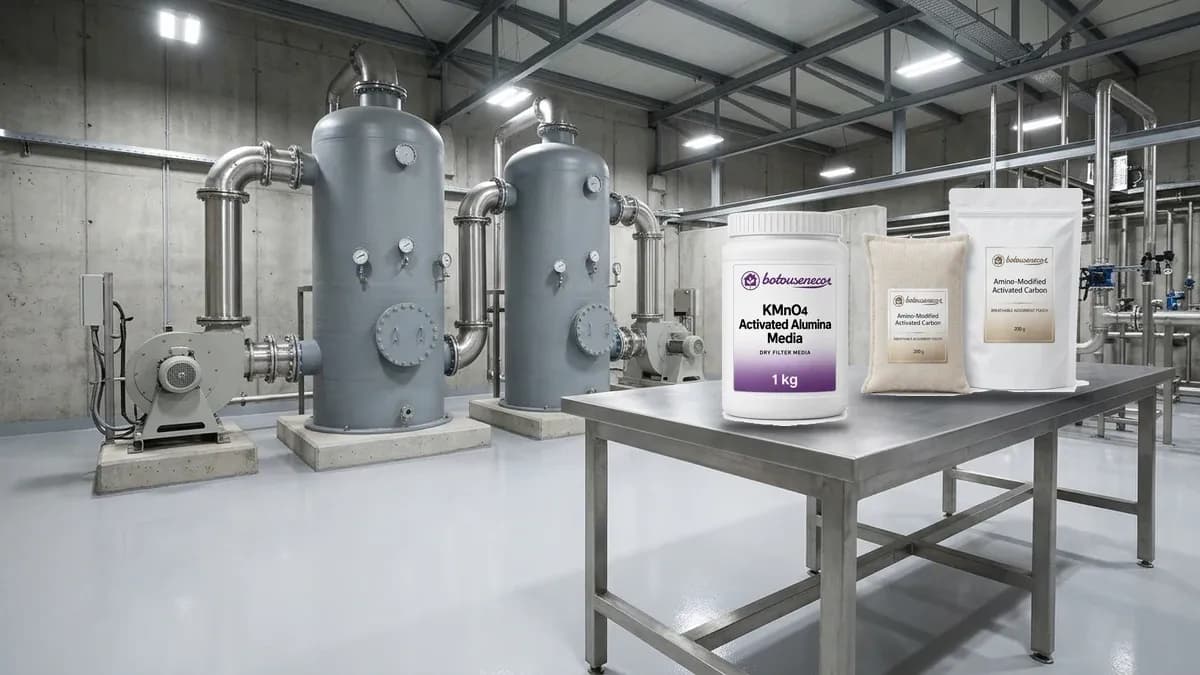
Hydrogen sulfide (H2S) and sulfur dioxide (SO2) from lift stations, biogas tanks, and pulp mills corrode copper circuit boards and spark odor fines. Reliable H2S and SO2 KMnO4 alumina scrubber sizing begins with exact redox math. Oxidizing 1 kg of H2S consumes 3.09 kg of pure KMnO4 (sulfur path) or 12.37 kg (full sulfate path), while 1 kg of SO2 takes 1.64 kg. Pairing high-crush KMnO4 Activated Alumina Media (>= 120 N) with Amino-Acid Modified Activated Carbon holds ANSI/ISA-71.04-2013 Class G1 rooms safely.
Key Takeaways
- Exact Redox Stoichiometry: Oxidizing 1 kg H2S takes 3.09 kg pure KMnO4 (sulfur baseline) to 12.37 kg (full sulfate ceiling), while 1 kg SO2 consumes 1.64 kg pure KMnO4.
- Practical 0.80 Utilization Benchmarks: At 0.80 bed utilization, 1 kg H2S requires 48.3 / 38.6 / 32.2 kg of 8 / 10 / 12 wt pct KMnO4 alumina media; 1 kg SO2 requires 25.6 / 20.5 / 17.1 kg.
- ANSI/ISA-71.04-2013 Class G1 Protection: Holding copper < 300 Angstroms/mo and silver < 200 Angstroms/mo (< 3 ppb H2S; < 10 ppb SO2) requires dual-stage upstream Amino-Modified Carbon + downstream >= 120 N KMnO4 Alumina.
- 1,800 m3/h Control Room Takeoff: At 100 ppb H2S + 100 ppb SO2 (2.20 kg H2S + 4.13 kg SO2/yr), baseline demand is 169.6 kg/yr of 10 wt pct media (7 x 25 kg drums), with 0.20 s EBCT fills of 80 kg alumina + 48 kg carbon.
Why Corrosive Sulfur Gases Threaten Utility Switchgear and Lift Stations
Municipal wastewater utilities, biogas operators, and kraft pulp mills share an expensive hidden enemy. Even at parts-per-billion levels that human noses barely notice, airborne sulfur gases creep into control rooms, eat immersion-silver solder pads, and trip variable frequency drives (VFDs) without warning.
Outside electrical rooms, raw lift-station vents and digester headspaces release sour H2S plumes that spark community complaints and corrosion across concrete wet wells. Choosing dry-bed oxidizer media by guesswork leads either to early breakthrough or crushed dust clogging blower impellers.
| Industrial Scrubber Application | Primary Corrosive Gases | Target Outlet Limit | Recommended BotouSeneco Media Layout |
|---|---|---|---|
| Wastewater & pulp control rooms | Ambient H2S, SO2, mercaptans | ISA 71.04 G1 (< 3 ppb H2S; < 10 ppb SO2) | Upstream Amino Carbon + 10 wt pct KMnO4 Alumina (0.20 s EBCT) |
| Municipal lift station exhaust | H2S, methyl mercaptan, fatty acids | Zero boundary odor complaints | Dry-bed 10-12 wt pct KMnO4 Alumina (0.15-0.20 s EBCT) |
| Biogas polish (post-iron-sponge) | Residual H2S trace (< 50 ppm) | Engine & boiler sulfur limit | High-loading 12 wt pct KMnO4 Alumina (strictly after bulk desulfurization) |
| MCC & electrical switchgear rooms | Acidic sulfur mist & coastal salt | Copper < 300 Angstroms/mo; Silver < 200 Angstroms/mo | Pressurized dual-stage Carbon + KMnO4 Alumina trays |
Why Lift Stations, Biogas Scrubbers and Pulp Control Rooms Require KMnO4 Media
Corrosive Sulfur Gas Attack is the rapid chemical tarnishing of copper busbars, silver PCB traces, and structural concrete when airborne hydrogen sulfide (H2S) and sulfur dioxide (SO2) react with trace surface moisture. Peer-reviewed environmental engineering work documents this exact degradation across sewer and biogas plants.
For electrical control rooms, human workplace limits are far too loose to save circuit boards. Under ANSI/ISA-71.04-2013 Class G1 (Mild), copper film growth must stay under 300 Angstroms per 30 days and silver under 200 Angstroms. That demands air below 3 ppb H2S and below 10 ppb SO2. Plain carbon alone fails to hold sub-10 ppb rooms during warm, humid summer swings.
- Sewer & Lift-Station Sulfide Corrosion. A 2025 study in Scientific Reports (PMC12216032) tracks how sewer microbes generate H2S and eat away concrete walls. Per the NIH PubChem Hydrogen Sulfide Profile and CDC NIOSH H2S Pocket Guide, H2S has a 10 ppm 10-minute REL ceiling. Its OSHA ceiling sits at 20 ppm (50 ppm 10-minute peak), with a 100 ppm IDLH danger limit.
- Biogas Digester Gas & Bed Limits. A 2023 Heliyon review (PMC10559078) shows how raw biogas carries H2S, ammonia, and siloxanes that ruin engines. Packed-bed work in PLOS One (PMC12755769, 2025) and PNAS (PMC164442) confirms that bed residence time and gas humidity control H2S capture.
- Low-Level SO2 & Acid Attack. As shown in ACS Omega (PMC10851388, 2024), NIH PubChem Sulfur Dioxide, and US EPA Sulfur Dioxide Basics, SO2 forms corrosive acid films on damp metal. The CDC NIOSH SO2 Pocket Guide sets a 2 ppm (5 mg/m3) 10-hour REL TWA and 5 ppm (13 mg/m3) 15-minute STEL (with a 5 ppm 8-hour OSHA PEL), while the WHO Global Air Quality Guidelines set tighter outdoor limits.
Why Wet Caustic Towers and Plain Carbon Struggle in Compact Dry Scrubbers
Utilities often weigh liquid caustic scrubbers, raw coconut carbon, and impregnated alumina beds. Reviews of industrial gas deodorization in Environmental Science and Pollution Research (PMC6469639) explain the core trade-offs clearly.
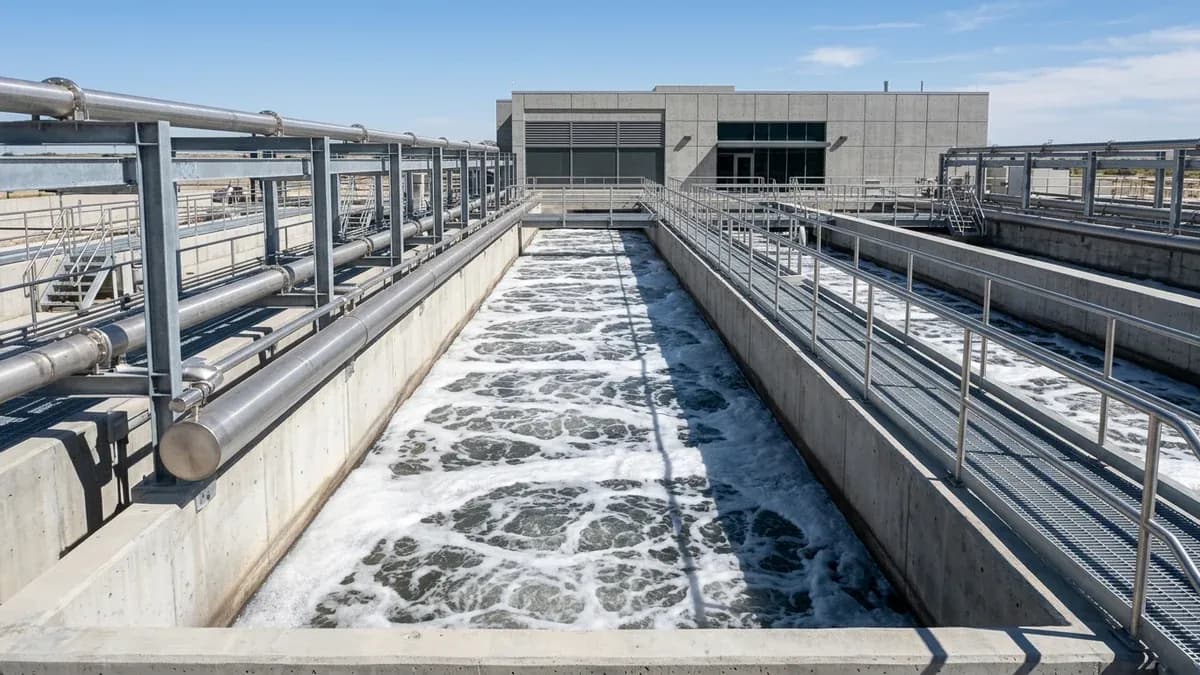
- Wet Caustic Scrubbers Need Pumps & Blowdown. Liquid NaOH towers work well at 500+ ppm raw sewer vents, yet they demand chemical storage tanks, pH probes, makeup water, and daily blowdown care. They are overkill for unmanned lift stations and control rooms.
- Plain Carbon Fires & Moisture Loss. Raw charcoal traps H2S weakly and can heat up dangerously under exothermic sulfur oxidation in warm, stagnant beds. Impregnated gamma-alumina is completely non-flammable ceramic.
- Weak Beads Powder Under Blower Vibration. Cheap low-crush alumina pellets (under 60 N crush strength) crumble inside high-velocity vertical vessels, spiking static pressure drop and dusting downstream coils.
| Scrubber Technology | H2S & SO2 Mechanism | Bed Flammability | Water & Blowdown Needs | Ideal Concentration Window |
|---|---|---|---|---|
| Wet caustic tower (NaOH/NaOCl) | Liquid acid-base + oxidation | Non-flammable liquid | High (pumps, tanks, drain) | High load (> 50 to 1,000 ppm) |
| Raw coconut activated carbon | Weak physisorption + trace catalytic | Exothermic bed fire risk | None (dry bed) | VOC polish only; weak on low SO2 |
| KMnO4 Activated Alumina | Irreversible redox (Mn7+ to MnO2) | 100 pct non-flammable ceramic | None (dry solid spheres) | Control rooms (< 5 ppm) & polish (< 50 ppm) |
| Dual-Stage Carbon + KMnO4 | VOC capture + sulfur redox lock | Controlled safe dry bed | None (modular V-banks) | ISA 71.04 G1 electrical & SCADA rooms |
Step-by-Step H2S and SO2 KMnO4 Alumina Scrubber Sizing Formula
Permanganate Redox Stoichiometry is the exact weight of solid potassium permanganate (KMnO4, 158.03 g/mol) needed to oxidize 1 kg of H2S (34.08 g/mol) or SO2 (64.07 g/mol) inside damp alumina pores. Per the NIH PubChem Potassium Permanganate Profile, purple Mn7+ turns into solid brown manganese dioxide (MnO2) with bond energy above 80 kJ/mol, locking sulfur permanently.
Three balanced chemical equations govern dry-bed scrubber math. Follow the four steps below to size annual scrubber media weight.
- 1. H2S Oxidation to Elemental Sulfur (Aerobic Baseline): In damp neutral pores, 3 H2S + 2 KMnO4 -> 3 S + 2 KOH + 2 MnO2 + 2 H2O. That ratio consumes (2 x 158.03) / (3 x 34.08) = 3.09 kg of pure KMnO4 per kg of H2S.
- 2. H2S Full Oxidation to Sulfate (Conservative Ceiling): Under full 8-electron oxidation, 3 H2S + 8 KMnO4 -> 3 K2SO4 + 2 KOH + 8 MnO2 + 2 H2O. That ceiling consumes (8 x 158.03) / (3 x 34.08) = 12.37 kg of pure KMnO4 per kg of H2S.
- 3. SO2 Oxidation to Sulfate: In damp pores, 3 SO2 + 2 KMnO4 + 2 H2O -> K2SO4 + 2 H2SO4 + 2 MnO2, buffered on alumina into neutral sulfates. That ratio consumes (2 x 158.03) / (3 x 64.07) = 1.64 kg of pure KMnO4 per kg of SO2.
- Step 1 (Convert ppm to mg/m3 at 25 C): Using molar volume 24.465 L/mol, 1 ppm H2S = 1.393 mg/m3 and 1 ppm SO2 = 2.619 mg/m3.
- Step 2 (Find Annual Gas Mass): Multiply airflow Q (m3/h) by gas level (mg/m3) and run hours (8,760 h/yr). Divide by 1,000,000 to get kg/yr of each gas.
- Step 3 (Compute Pure KMnO4 Need): Multiply annual H2S mass by 3.09 kg/kg (sulfur baseline) or 12.37 kg/kg (conservative sulfate ceiling). Add annual SO2 mass multiplied by 1.64 kg/kg.
- Step 4 (Divide by Usable Media Loading): For 10 wt pct KMnO4 Alumina run to a 0.80 bed use factor (0.10 x 0.80 = 0.080 kg usable KMnO4 per kg media), divide pure KMnO4 need by 0.080. For wider solid-bed engineering across buildings, see our pillar guide on gas-phase chemisorption media and solid air purification and our comparison of KMnO4 activated alumina vs. amino-modified carbon 50:50 filter beds.
Practical Capacity Benchmarks for Potassium Permanganate Media
Engineers checking potassium permanganate media H2S capacity must include a 0.80 bed use factor before breakthrough. Under the sulfur pathway (3.09 kg KMnO4 per kg H2S), 1 kg of H2S needs 48.3 kg of 8 wt pct media, 38.6 kg of 10 wt pct media, or 32.2 kg of 12 wt pct media. For SO2 (1.64 kg/kg), 1 kg of SO2 needs 25.6 kg (8 wt pct), 20.5 kg (10 wt pct), or 17.1 kg (12 wt pct).
In normal air streams (lift stations and control rooms with 21 vol pct oxygen), fresh MnO2 also aids air-oxygen H2S catalysis, often extending field bed life past anaerobic math. In oxygen-free raw biogas, never count air catalysis; size strictly by KMnO4 mass. For server racks facing sub-3 ppb rules, read our SOP on data center and server room ISA 71.04 G1 KMnO4 alumina scrubbing.
Engineering Scope Limits: When Bulk Desulfurization Must Precede Dry Alumina
In our Botou media lab and utility audits, we set hard chemical and mechanical boundaries on dry KMnO4 scrubbers. Never send raw anaerobic biogas carrying 500 to 5,000 ppm H2S straight into a KMnO4 activated alumina vessel. At 2,000 ppm H2S, dry permanganate media would burn through drums in days and generate unacceptable heat.
Always strip bulk biogas H2S down below 20 to 50 ppm first using biological desulfurization, iron-oxide sponge, or a wet scrubber, then use KMnO4 alumina strictly as a final zero-breakthrough polish bed. Likewise, keep relative humidity entering the bed between 30 percent and 85 percent RH without free liquid water droplets (install a mist eliminator upstream) so alumina spheres never flood or cake.
BotouSeneco KMnO4 Alumina and Amino-Carbon Scrubber Media Selector
Within our solid chemisorption media and clean-air product line, Hebei Senzhijia Environmental Protection Co., Ltd (BotouSeneco) manufactures dry-bed media for utilities, pulp control rooms, and sensitive institutional clean-air spaces. Learn more about us and our Botou plant, founded in 2015 in Cangzhou, Hebei.
For cold-chain ethylene and produce-storage sizing using the same high-crush alumina beads, compare our sizing guide on cold-chain container ethylene scrubber KMnO4 alumina calculation.
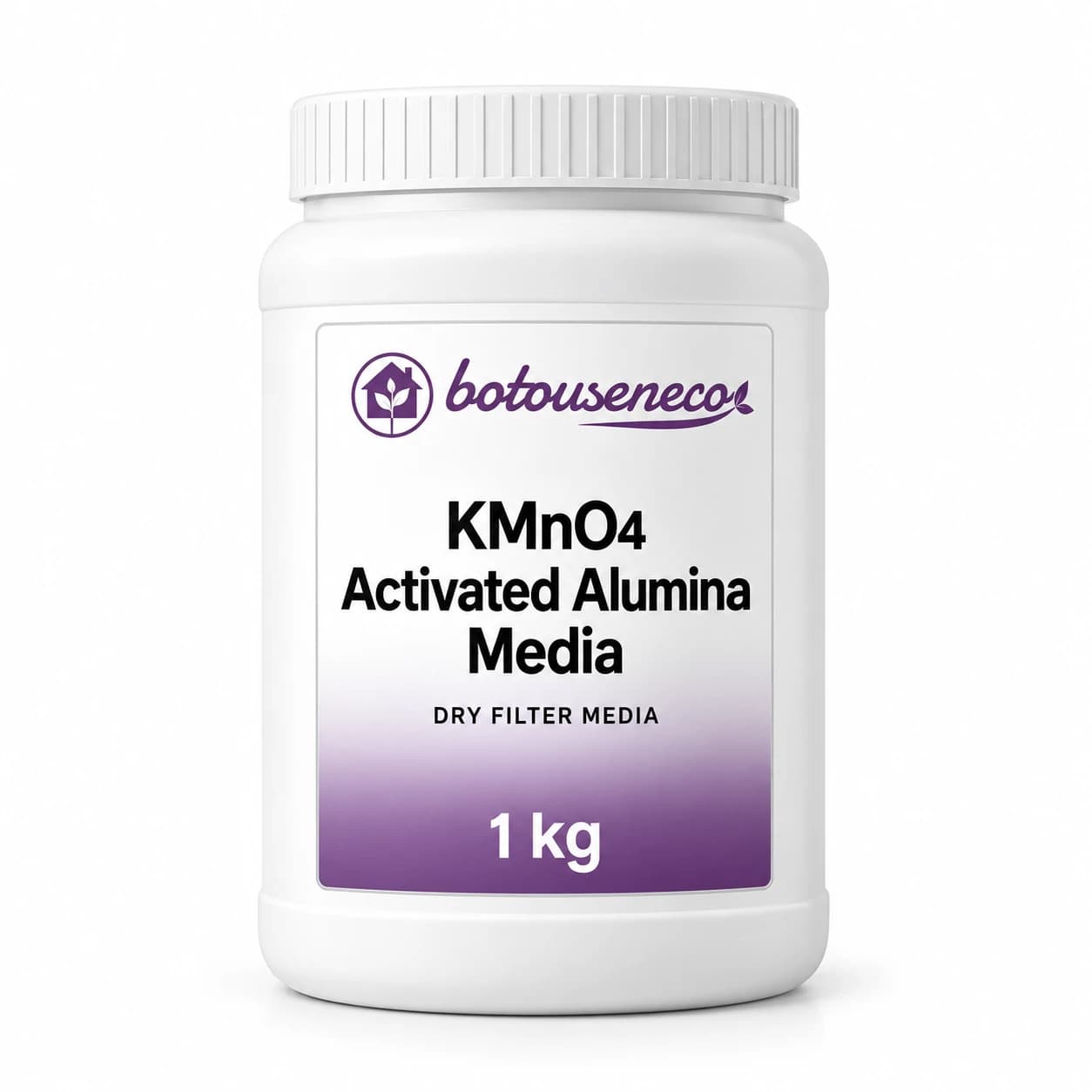
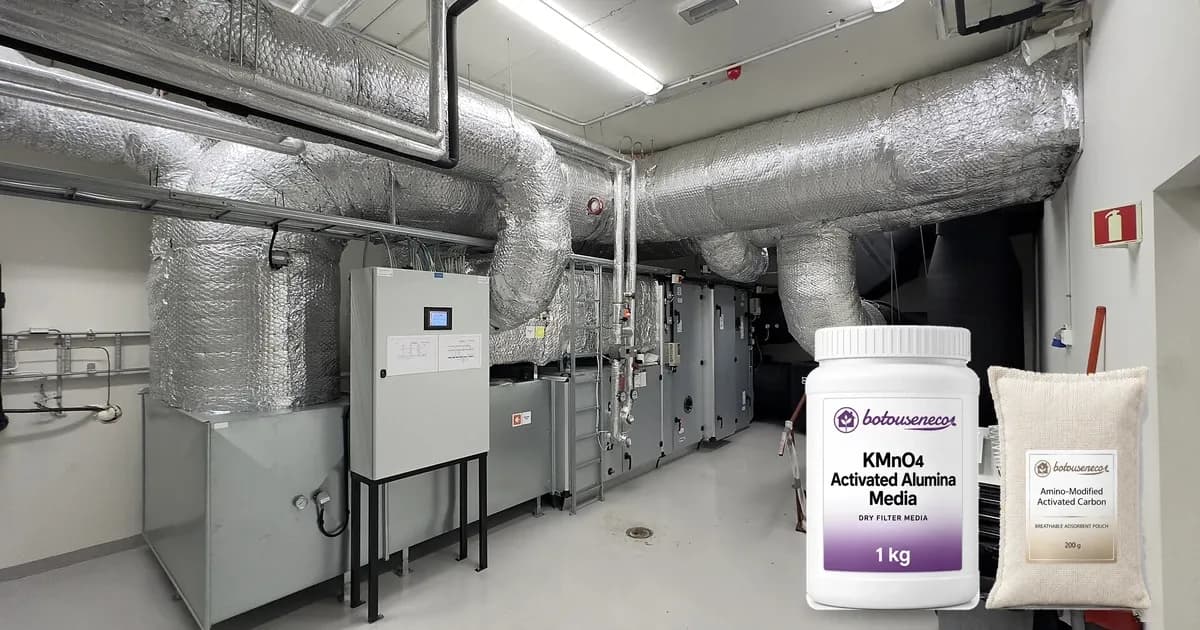
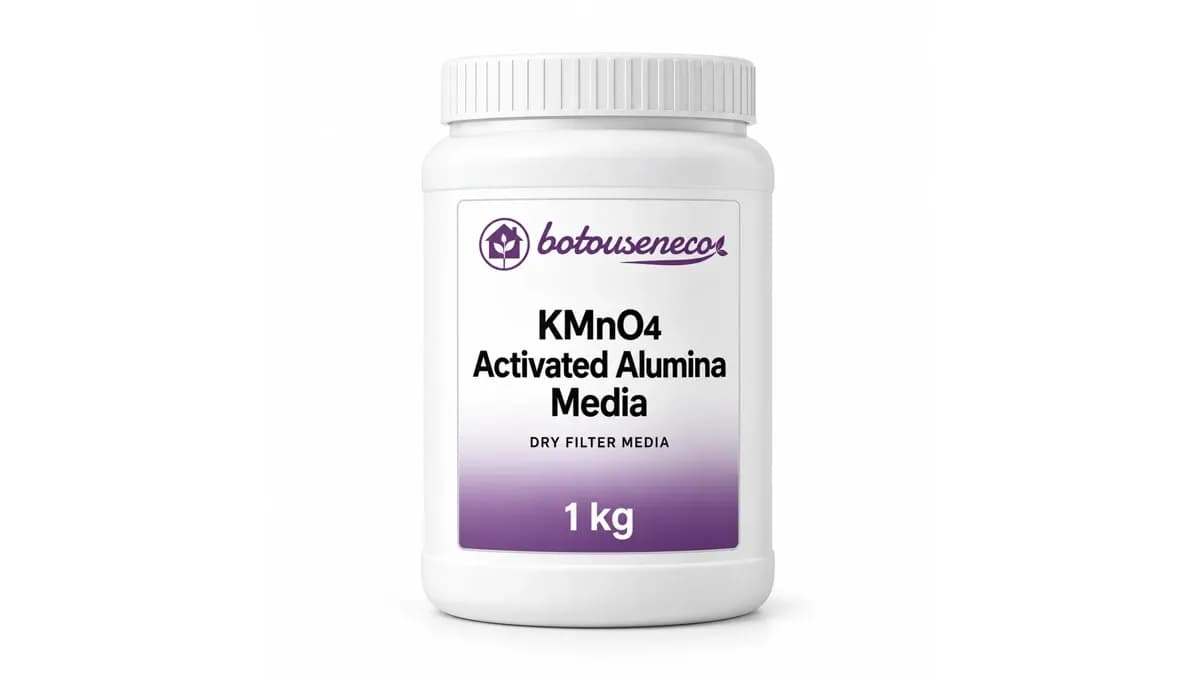
- 1. Potassium Permanganate (KMnO4) Activated Alumina Media: High-pore spherical gamma-Al2O3 (BET >= 280 m2/g, crush >= 120 N, bulk density 0.75 to 0.85 g/cm3, pore moisture 12 to 18 wt pct). Beads are vacuum-loaded at 8, 10, or 12 wt pct (+/- 0.5 wt pct) KMnO4 in 1.5 to 6 mm sizes (3 to 5 mm for V-banks). It serves as reliable control room ISA 71.04 G1 scrubber media with clear purple-to-brown life checks.
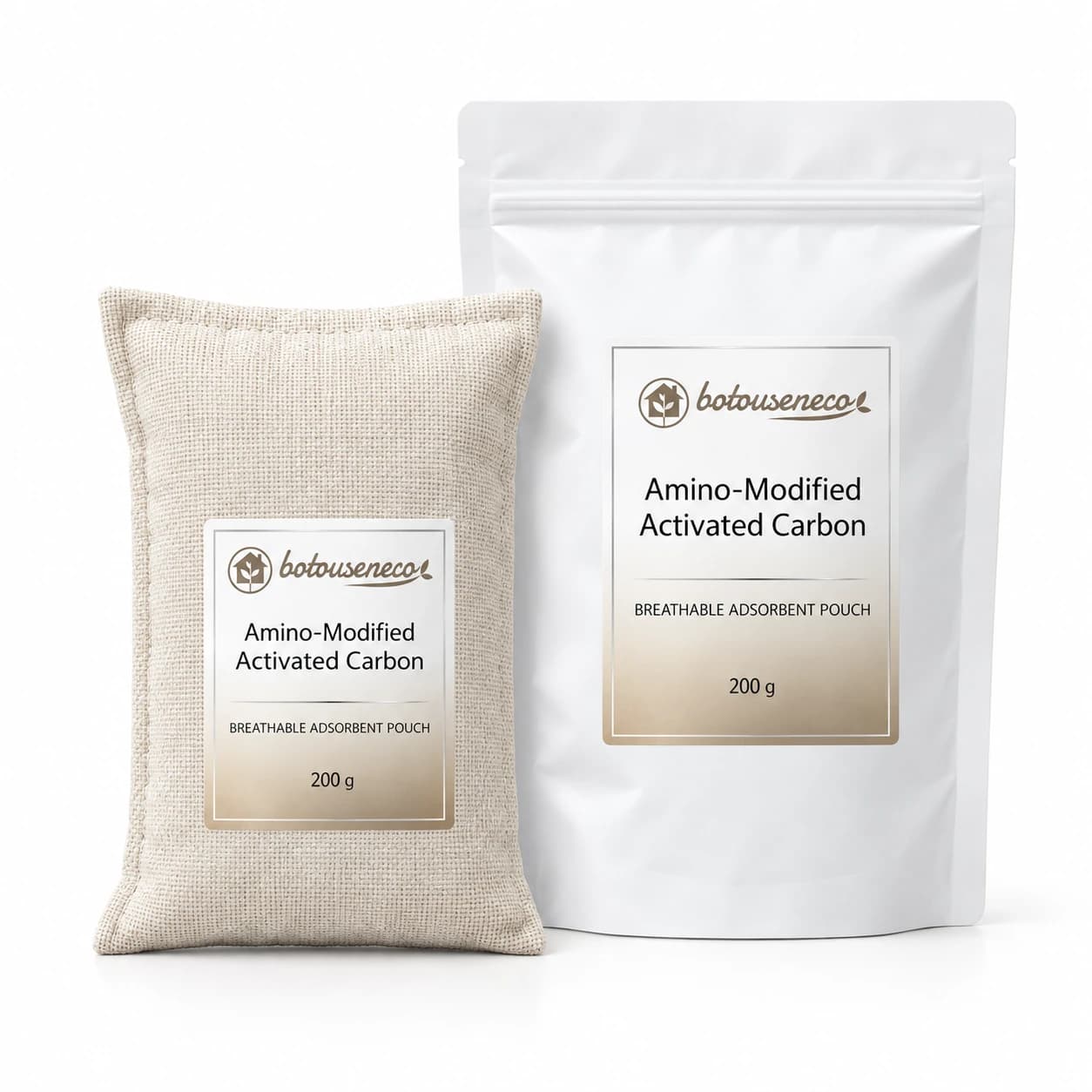
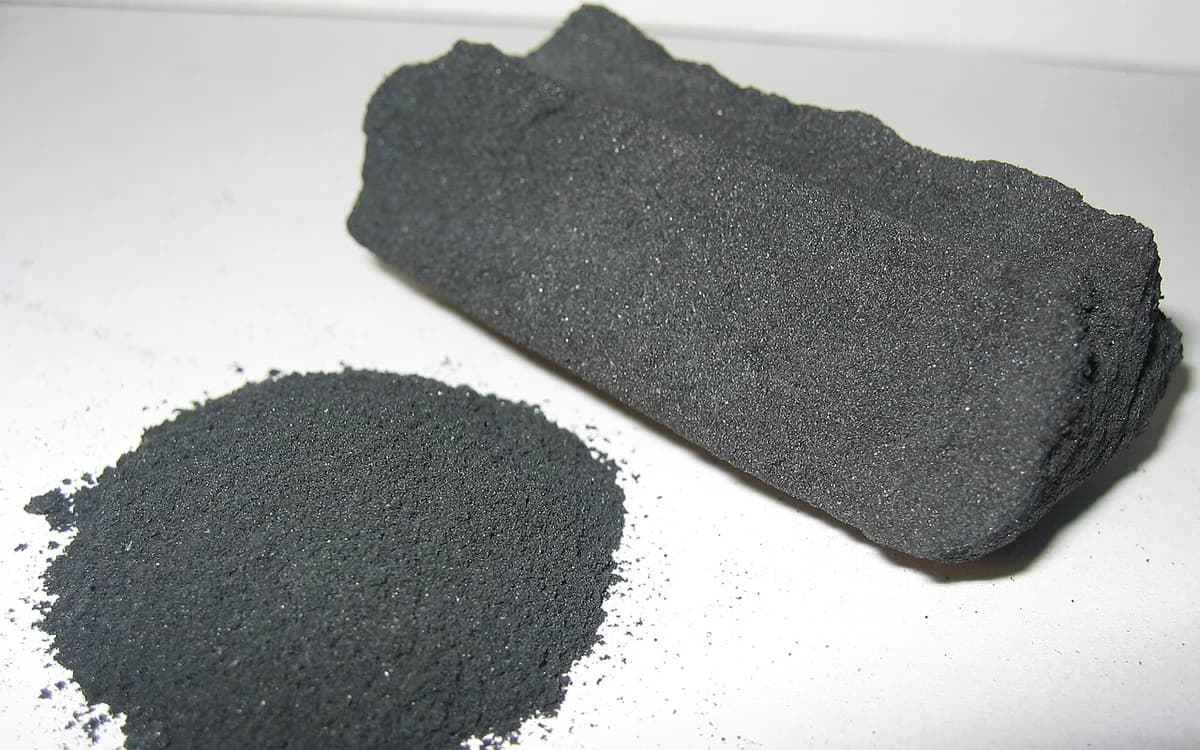
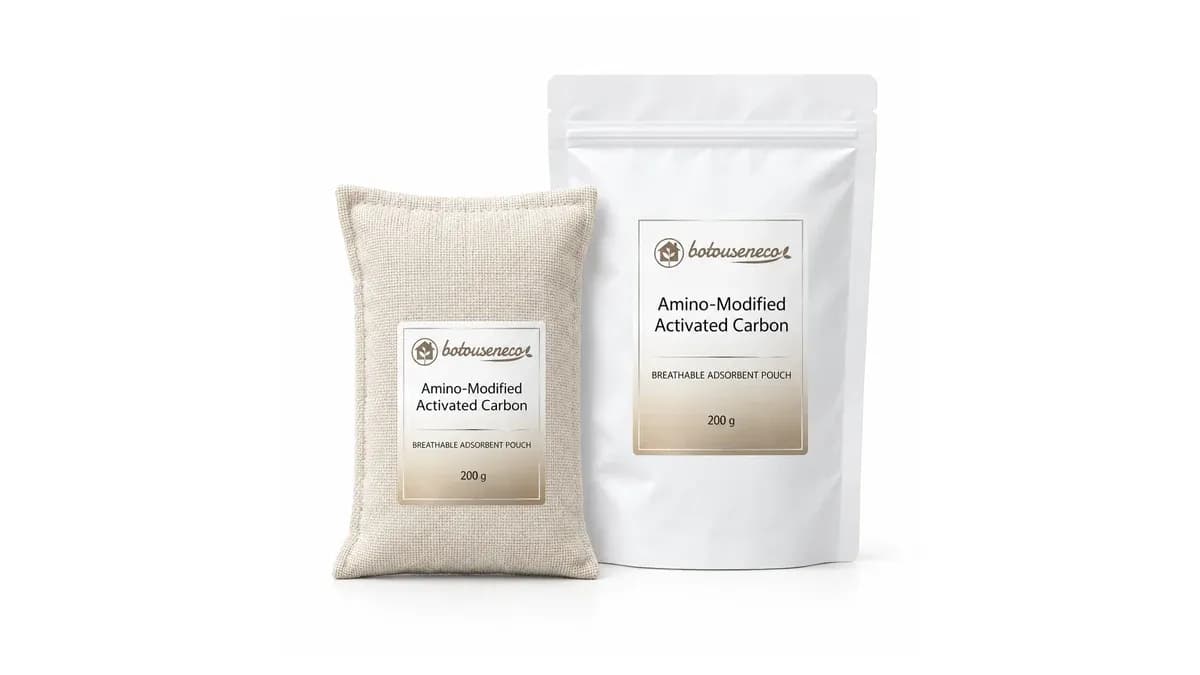
- 2. Amino-Acid Modified Activated Carbon Packs: Virgin coconut carbon (iodine >= 1,050 mg/g, CTC >= 65, bulk density 0.48 to 0.52 g/cm3, 4x8 or 8x16 mesh) loaded with 8 wt pct food-grade amino salts. Mounted upstream of KMnO4 alumina, it traps diesel fumes, mercaptans, and heavy VOCs before they foul oxidizer pores.
Media Spec Matrix, Dust Control and Transparent SDS Section 14 Freight
Amino-Acid Modified Activated Carbon ships globally as Non-DG cargo under GHS Rev. 10 / ISO 11014 SDS documents. Because high-loading KMnO4 Activated Alumina is a solid oxidizer, ocean and air shipments follow GHS Rev. 10 SDS Section 14 rules confirmed in writing per KMnO4 grade and destination port. Every lot is produced under our ISO 9001:2015 Quality Management System and ISO 14001:2015 Environmental Management System, backed by CMA / CNAS-accredited chamber verification per ISO 16000-9 and GB/T 18883-2022. Official certificate copies and batch COAs are shared privately with B2B buyers on request; private-label OEM starts at 500 to 1,000 units (10 to 14 business days).
| Media / Supply Parameter | Core Technical Spec | Target Scrubber Stage | Packaging, MOQ & Export |
|---|---|---|---|
| KMnO4 Activated Alumina | gamma-Al2O3 (>= 280 m2/g, >= 120 N); 8/10/12 wt pct KMnO4 | Control room G1 polish & H2S/SO2 beds | 25 kg foil-lined drums; 500-1,000 kg bags; MOQ 100 kg |
| Amino-Modified Carbon | Coconut carbon (Iodine >= 1,050 mg/g) + 8 wt pct amino salt | Upstream VOC & hydrocarbon pre-stage | 25 kg moisture-barrier sacks; MOQ 100 kg |
| Visual Spent Media Signal | Fresh purple (Mn7+) to dark brown (MnO2) core split | Monthly downstream port sampling | Zero gas-chromatograph lab delay |
| Lead Time & SDS Logistics | Carbon Non-DG; KMnO4 oxidizer per GHS Rev. 10 Sec. 14 | Tianjin Port (~180 km) sea & air freight | Samples 1-5 units (24-48 h); Bulk 5-7 business days |
Worked Scrubber Sizing: 1,800 m3/h Pulp Mill & Lift Station Control Room
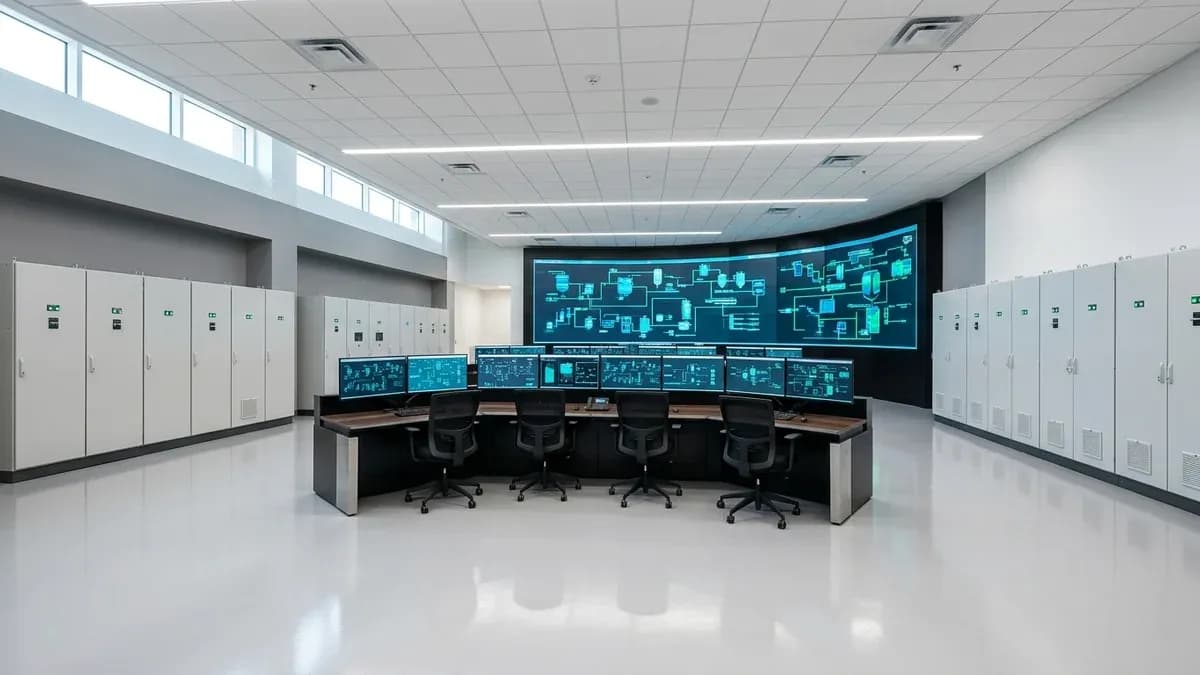
Empty Bed Contact Time (EBCT) is the gas residence time (filter bed volume divided by volumetric airflow) needed for sulfur molecules to diffuse into alumina pores and complete oxidation. Plant teams sizing a makeup-air scrubber for a 300 m2 control room next to a lift station or pulp mill need clear annual drum budgets. Consider a 1,800 m3/h (0.50 m3/s, or 500 L/s) dual-stage scrubber running 24/7 (8,760 h/yr, or 15,768,000 m3/yr). Inlet air carries 100 ppb (0.10 ppm) H2S and 100 ppb (0.10 ppm) SO2, while outlet air must hold ANSI/ISA-71.04-2013 Class G1 (< 3 ppb H2S; < 10 ppb SO2).
- Step 1 (Annual Gas Mass). At 25 C, 0.10 ppm H2S equals 0.1393 mg/m3 and 0.10 ppm SO2 equals 0.2619 mg/m3. Across 15,768,000 m3/yr, total annual challenge equals 2.20 kg/yr of H2S and 4.13 kg/yr of SO2.
- Step 2 (Annual KMnO4 Need & 10 wt pct Media Weight). Under the baseline sulfur pathway (2.20 x 3.09 = 6.80 kg KMnO4) plus SO2 oxidation (4.13 x 1.64 = 6.77 kg KMnO4), pure permanganate demand equals 13.57 kg/yr. Dividing by usable loading on 10 wt pct KMnO4 Alumina at a 0.80 use factor (0.080 kg/kg) gives 169.6 kg/yr of media (2.20 x 38.6 + 4.13 x 20.5 = 169.6 kg). Under a strict full-sulfate H2S ceiling (12.37 kg/kg), pure KMnO4 rises to 27.21 + 6.77 = 33.98 kg/yr, or 424.8 kg/yr (17 drums/yr).
- Step 3 (Vessel Fill at 0.20 s EBCT per Stage). Each stage holds 500 L/s x 0.20 s = 100 L of media. One fill of 10 wt pct KMnO4 Alumina (3 to 5 mm beads at 0.80 kg/L) weighs 80.0 kg, so two 6-month fills take 160.0 kg. Order 7 x 25 kg foil-lined drums (175 kg) for a full-year baseline budget, or 4 x 25 kg drums (100 kg) for startup fill plus 20 kg reserve (clearing BotouSeneco's 100 kg MOQ).
- Step 4 (Upstream Amino-Modified Carbon Stage). One 100 L fill of Amino-Modified Coconut Carbon (4x8 mesh at 0.48 kg/L) weighs 48.0 kg. Ordering 4 x 25 kg moisture-barrier sacks (100 kg) covers two 6-month fills cleanly while meeting the 100 kg factory MOQ.
Request Scrubber Media Samples and Custom H2S/SO2 Consumption Sheets
Protect PLC switchgear to ANSI/ISA-71.04 Class G1 and eliminate lift-station odor fines with high-crush alumina media sized by exact chemistry rather than guesswork. Contact our BotouSeneco engineering team with your scrubber airflow (m3/h), inlet H2S and SO2 ppm readings, and vessel dimensions. We dispatch 1 kg KMnO4 alumina and carbon lab evaluation packs within 24 to 48 hours alongside GHS Rev. 10 SDS documents and a tailored H2S and SO2 KMnO4 alumina scrubber sizing calculation sheet.
Standards & references
- ANSI/ISA-71.04-2013 Class G1 (Mild) Airborne Contaminant Reactivity Limits (< 300 Angstroms/30d Cu, < 200 Angstroms/30d Ag, < 3 ppb H2S, < 10 ppb SO2).
- Peer-Reviewed H2S, SO2 & Biogas Scrubbing Literature: Scientific Reports 2025 (PMC12216032), Heliyon 2023 (PMC10559078), PLOS One 2025 (PMC12755769), PNAS (PMC164442), ACS Omega 2024 (PMC10851388) & ESPR (PMC6469639).
- CDC NIOSH Pocket Guide (H2S npgd0337: 10 ppm 10-min ceiling, 20 ppm OSHA ceiling, 100 ppm IDLH; SO2 npgd0575: 2 ppm 10-hr REL TWA, 5 ppm 15-min STEL) & NIH PubChem Profiles (H2S, SO2, KMnO4).
- US EPA Sulfur Dioxide Basics, WHO Global Air Quality Guidelines, UN GHS Rev. 10 SDS Section 14, ISO 9001:2015, ISO 14001:2015 & CMA / CNAS ISO 16000-9 Verification.
Frequently Asked Questions (FAQ)
01.How does the spent permanganate purple-to-brown indicator work during routine scrubber checks?
Fresh KMnO4 alumina beads display bright purple throughout their core from active Mn7+ ions. As the spent permanganate purple-to-brown indicator reacts with H2S and SO2, insoluble brown manganese dioxide (MnO2) grows inward from the bead surface. Operators pull 10 beads monthly from downstream sample ports and crush them with pliers; once 7 to 8 of 10 bead cores turn completely brown, schedule bed changeout before breakthrough reaches control room electronics.
02.Why is >= 120 N bead crush strength critical inside vertical lift-station scrubbers?
Deep vertical media vessels place static weight and fan vibration on bottom bead layers. Weak alumina pellets below 60 N fracture into fine ceramic dust, plugging outlet screens, raising blower amps, and channeling uncleaned H2S gas straight past the bed. High-crush spherical gamma-alumina (>= 120 N) holds steady pressure drop across full 6-to-12-month service runs.
03.Can KMnO4 activated alumina handle 500 to 2,000 ppm raw biogas directly from an anaerobic digester?
No. Sending high-ppm raw anaerobic biogas directly into dry KMnO4 alumina exhausts media in days and risks thermal buildup. Always run bulk iron-sponge, biological, or wet caustic desulfurization first to drop H2S below 20 to 50 ppm, then use high-loading 12 wt pct KMnO4 alumina strictly for final polishing.
04.How should operators dispose of spent brown KMnO4 alumina beads after changeout?
Once permanganate (Mn7+) fully reduces into insoluble brown manganese dioxide (MnO2) and mineral sulfates on inert aluminum oxide, the spent oxidizer hazard drops sharply. Still, test a composite sample of spent media for residual unreacted oxidizer and follow local municipal landfill or industrial solid-waste rules before disposal.

About the author.
Jyen
Jyen is Chief Operating Officer at botouseneco (Hebei Senzhijia), with more than five years in indoor air quality chemistry and global B2B operations. Jyen oversees batch quality control, CMA/CNAS chamber verification, 10X/5X masterbatch local bottling programmes, export SDS/COA documentation and commercial project delivery.
- Chief Operating Officer · Global B2B operations & QC desk.
- 5+ years in indoor air quality chemistry and B2B operations.
Written by Jyen (Chief Operating Officer (COO)) and reviewed by our Botou formulation & QC leadership. Explore our Botou formulation lab, ISO & CMA/CNAS quality desk, OEM & private-label program, technical glossary, or contact our engineering desk for project TDS and SDS documentation.
Next step.