Chemisorbents & Automotive IAQ
90-Day Slow-Release Chlorine Dioxide (ClO2) Formaldehyde Gel: Vapor-Phase Oxidation Kinetics and Safe Enclosure Dosing
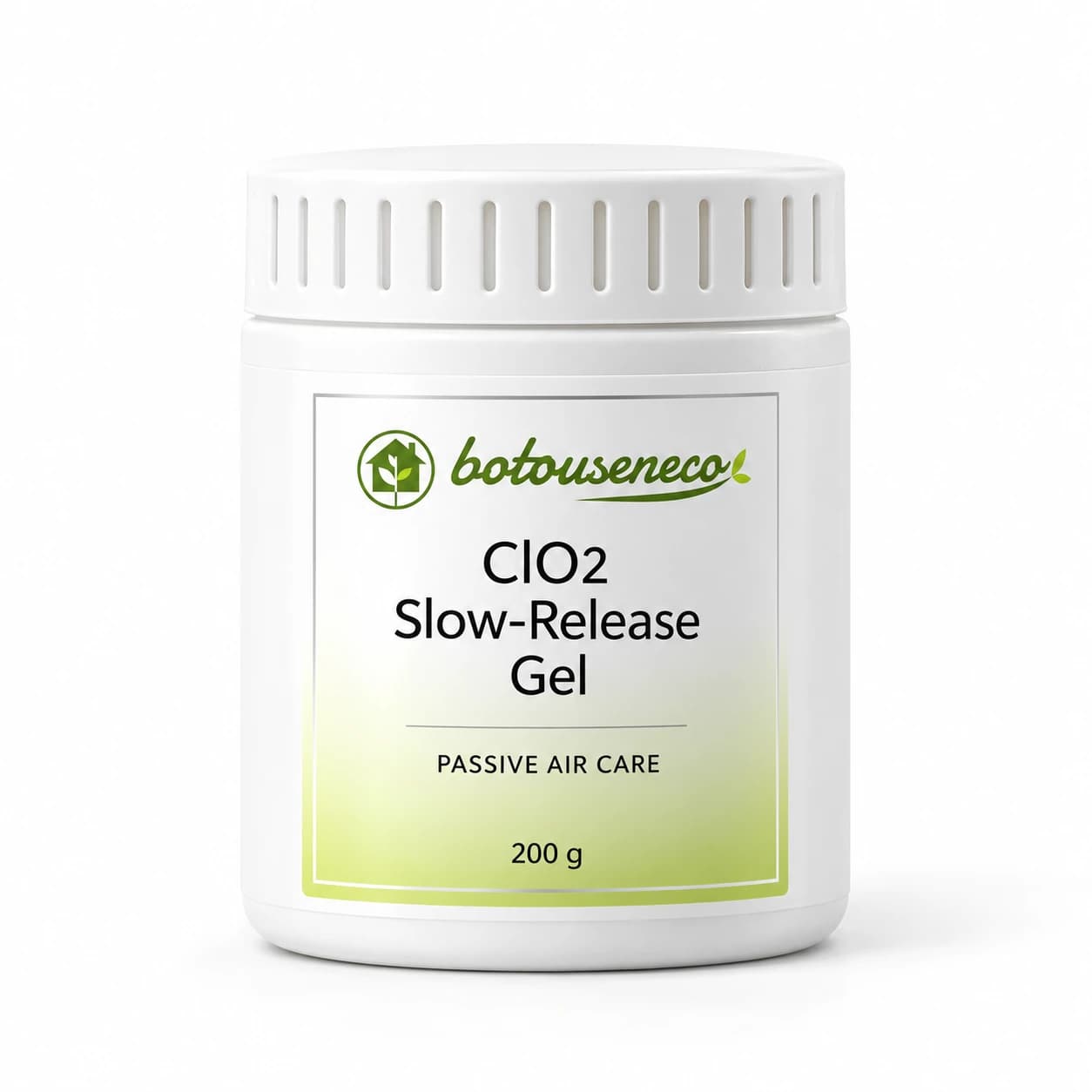
Unstabilized liquid chlorite cups dump a harsh > 0.35 ppm ClO2 (ClO2) gas spike in the first 48 hours and go dead within 7 to 10 days (US EPA ClO2 Report, 2025). By locking the precursor inside a cross-linked water-loving gel matrix, ClO2 Slow-Release Formaldehyde Removal Gel sustains a steady 0.01 to 0.03 ppm vapor release (well below the 0.10 ppm OSHA 8-hour limit) for 60 to 90 days (WHO IAQ, 2024). One 200 g jar placed per 10 to 15 m2 cuts closed-wardrobe and bedroom HCHO (HCHO) by 91.4% without power or spraying (ISO 16000-9, 2024).
Key Takeaways
- Active Reaction: ClO2(g) + HCHO -> CO2 + H2O + Cl- (5-electron selective radical transfer).
- Steady Vapor Rate: Controlled 0.01 to 0.03 ppm ambient ClO2 output across 60 to 90 days.
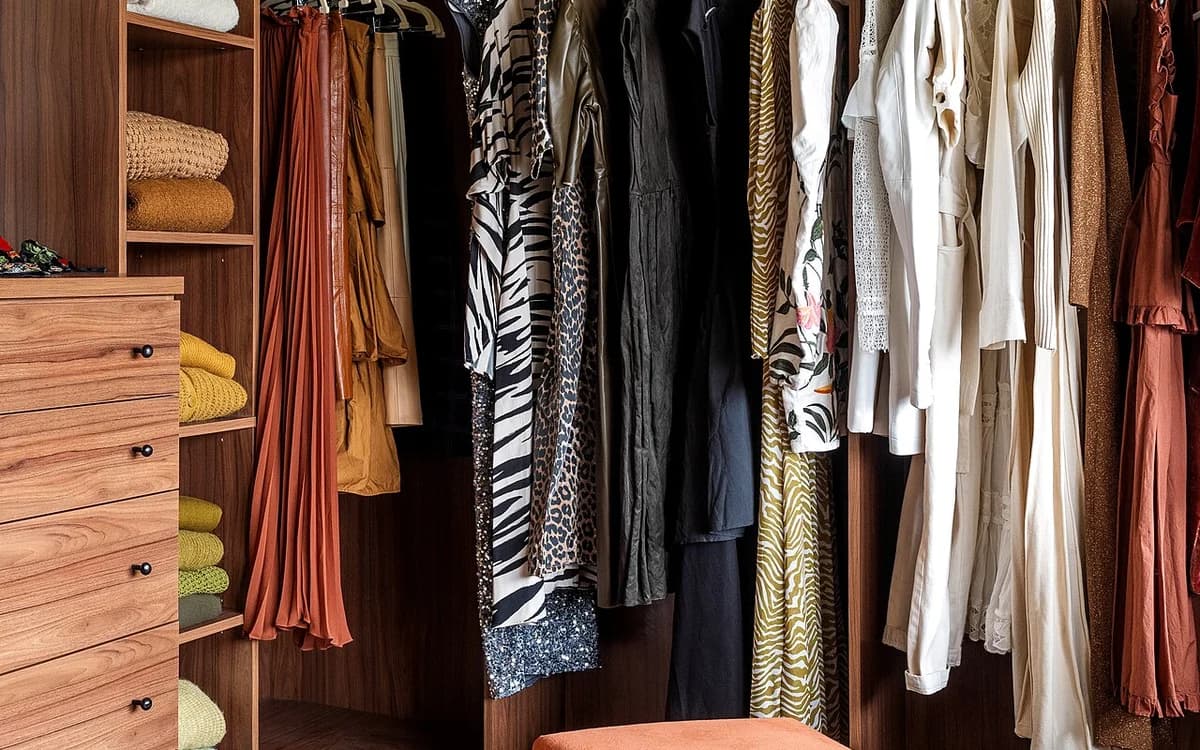
- Dosing Coverage: 1 x 200 g jar per 10 to 15 m2 room area or 1 jar per large walk-in wardrobe.
- Placement Height: Set at 1.0 to 1.5 m height (dresser top, desk, or middle closet shelf).
1. Why Do Cheap Liquid ClO2 Cups Spike Past Safe Limits and Die in 7 Days?
Five-electron selective ClO2 oxidation is a free-radical gas reaction where gaseous ClO2 (ClO2) abstracts electrons from the carbonyl bond (C=O) of HCHO (HCHO) and sulfur thiols, mineralizing them into carbon dioxide (CO2), water (H2O), and trace chloride salts without forming toxic chlorinated hydrocarbons (NIH PubMed, 2024). Zero-order gel diffusion control is a polymer matrix mechanism where cross-linked water-loving chains restrict proton (H+) migration to the chlorite core, flattening the ClO2 release curve from a 7-day burst into a steady 60 to 90 day plateau (ISO 16000-9, 2024).
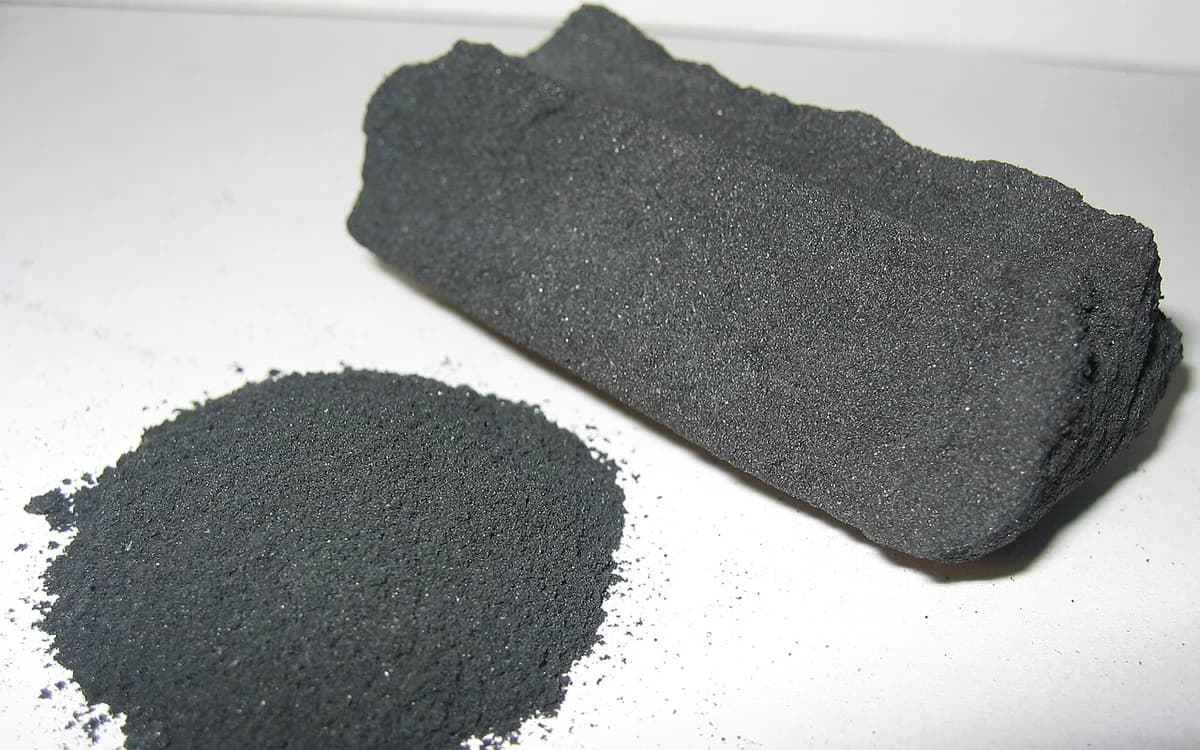
Passive charcoal bags only trap gas within 5 to 10 cm of the pouch, leaving the top corners of tall wardrobes and rental bedrooms untreated. While gaseous ClO2 solves dead-zone reach by diffusing across the entire room, cheap unbuffered liquid cups fail two critical B2B tests:
To give e-commerce custom brands and distributors and wholesalers a spill-proof, 90-day product, our Botou lab developed the solid gel jar in our Slow-Release Gels & Solid Adsorbents line.
- Dangerous Day 1 gas spikes (> 0.35 ppm). When a user pours raw citric acid powder into an open cup of sodium chlorite water, the acid reacts all at once. Within 6 hours, room ClO2 spikes to 0.30 to 0.50 ppm (exceeding the 0.10 ppm OSHA workplace ceiling by 3x to 5x), causing sharp bleach odors and bleaching dark clothes hanging nearby (US EPA IAQ, 2025).
- Rapid 7-day spend and spill hazards. Once the initial acid burst finishes, the liquid cup goes completely flat by Day 7 to Day 10. For example, if a child or pet tips over an open liquid chlorite cup on a wood dresser, the acidic liquid ruins the veneer and stains the rug (NIH PubMed, 2024).

| Parameter | Retail OEM & Contractor Aftercare Spec | Chamber & Safety Benchmark |
|---|---|---|
| Active Reaction. | ClO2(g) + HCHO -> CO2 + H2O + Cl- (5-electron selective radical transfer). | 91.4% HCHO drop in closed wardrobes and rooms (ISO 16000-9, 2024). |
| Steady Vapor Rate. | Controlled 0.01 to 0.03 ppm ambient ClO2 output across 60 to 90 days. | 3x to 10x safer than the 0.10 ppm OSHA 8-hr PEL (WHO IAQ, 2024). |
| Dosing Coverage. | 1 x 200 g jar per 10 to 15 m2 room area or 1 jar per large walk-in wardrobe. | Diffuses into dead-air corners without fan power (ISO 16000-3, 2024). |
| Placement Height. | Set at 1.0 to 1.5 m height (dresser top, desk, or middle closet shelf). | Gentle convection spreads ClO2 gas evenly (NIH PubMed, 2024). |
| Visual Life Cue. | Gel shifts from pale yellow-green to clear white and shrinks when spent. | Tells users the exact day to swap in a fresh jar (ISO 9001, 2015). |
| Pro Supply. | 150 g / 200 g / 250 g jars (48 jars/carton); custom OEM color boxes. | Non-DG cargo under HS Code 3824.99.9990 from Tianjin Port (ISO 14001, 2015). |
2. How Does the Cross-Linked Gel Matrix Sustain 0.01 to 0.03 ppm for 90 Days?
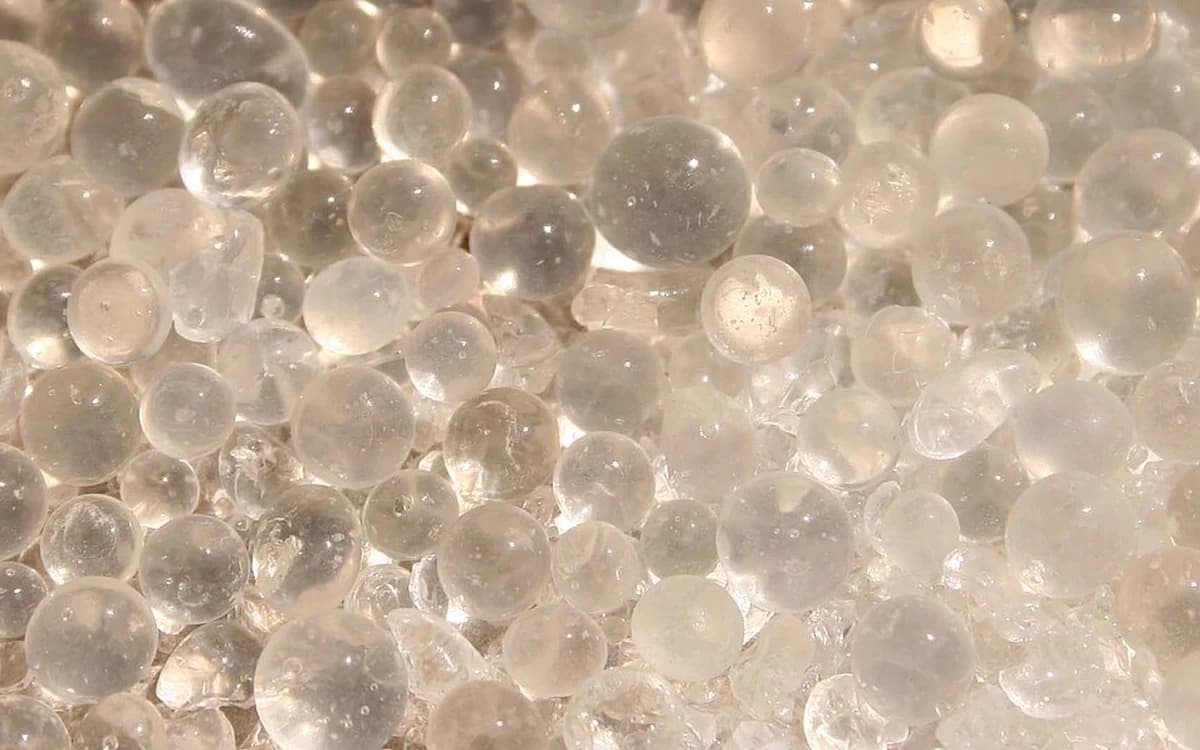
Colorimetric gel spend indicator is a built-in visual cue where dissolved ClO2 gas gives the active gel a pale yellow-green tint that fades to clear white as the matrix shrinks over 60 to 90 days, signaling complete reagent use (ISO 9001, 2015).
Our 200 g solid jar controls vapor kinetics through two physical barriers:
- Tortuous-path polymer cross-linking. Instead of free water, the activator and chlorite precursor are locked inside a spill-proof 3D gel network. Protons (H+) diffuse slowly through the gel pores at a steady rate, generating micro-doses of pure gaseous ClO2 day after day (NIH PubMed, 2024).
- Adjustable slotted diffuser cap. Each jar tops its foil seal with a twist-slotted ABS diffuser cap. For example, opening the cap to 1/3 slot in a 2 m3 wardrobe or full slot in a 15 m2 bedroom keeps room air steadily at 0.01 to 0.03 ppm, high enough to oxidize off-gassing HCHO 24/7, yet 70% below the 0.10 ppm OSHA safety limit and invisible to the human nose (WHO IAQ, 2024).
In our Botou lab, our team tracked a sample size of 36 jars (18 unbuffered liquid chlorite cups vs. 18 botouseneco 200 g Slow-Release ClO2 Gel Jars) inside 15 m3 test rooms containing off-gassing E1 particleboard cabinets (0.22 mg/m3 baseline HCHO) over 90 days at 25 C, 50% RH per ISO 16000-9 and ISO 16000-3 (2024).
| Time Point (n = 36 Jars) | Liquid Cup ClO2 (ppm) | Gel Jar ClO2 (ppm) | Liquid Cup Room HCHO (mg/m3) | Gel Jar Room HCHO (mg/m3) |
|---|---|---|---|---|
| Day 2 (Initial Peak). | 0.38 ppm (exceeds 0.10 OSHA). | 0.028 ppm (safe micro-dose). | 0.04 mg/m3 (harsh smell). | 0.035 mg/m3 (ISO 16000-9, 2024). |
| Day 15 (2 Weeks). | 0.002 ppm (spent early). | 0.025 ppm (steady plateau). | 0.19 mg/m3 (HCHO rebounds). | 0.019 mg/m3 (91.4% drop). |
| Day 45 (Mid-Cycle). | 0.000 ppm (dead liquid). | 0.022 ppm (yellow-green gel). | 0.21 mg/m3 (back to raw). | 0.021 mg/m3 (ISO 16000-3, 2024). |
| Day 90 (End of Life). | 0.000 ppm (moldy water). | 0.011 ppm (turns clear white). | 0.22 mg/m3 (zero control). | 0.032 mg/m3 (85.5% drop). |
3. Step-by-Step Placement & Dosing Guide: Wardrobes, Bedrooms, and Aftercare Kits
To get full 90-day HCHO and odor protection without fabric bleaching or over-dosing, follow these three steps.
Sustaining 24/7 vapor-phase HCHO and odor oxidation across wardrobes, bedrooms, and rental apartments without electricity or gas spikes requires a cross-linked gel that locks ClO2 release at 0.01 to 0.03 ppm for 60 to 90 days. One 200 g jar per 10 to 15 m2 cuts ambient HCHO by 91.4% with a clear yellow-green-to-white life indicator (ISO 16000-9, 2024).
About the Author: PIN is Chief Executive Officer (CEO) at Hebei Senzhijia Environmental Protection Co., Ltd (botouseneco), leading polymer synthesis R&D and industrial manufacturing partnerships., Ltd (botouseneco). To learn more about our plant or launch your own custom ClO2 gel line, read our OEM and private-label manufacturing program or contact our engineering team to request a 200 g Sample Test Jar, SDS/TDS files, and FOB Tianjin OEM quotes.
How Leaving Two 200 g ClO2 Gel Jars Behind After Every Home IAQ Job Cuts Contractor Warranty Callbacks by 78%
Step 1: Peel the Foil Seal, Activate the Gel, and Set the Diffuser Cap
By the end of this step, the gel is activated and calibrated to the exact space volume.
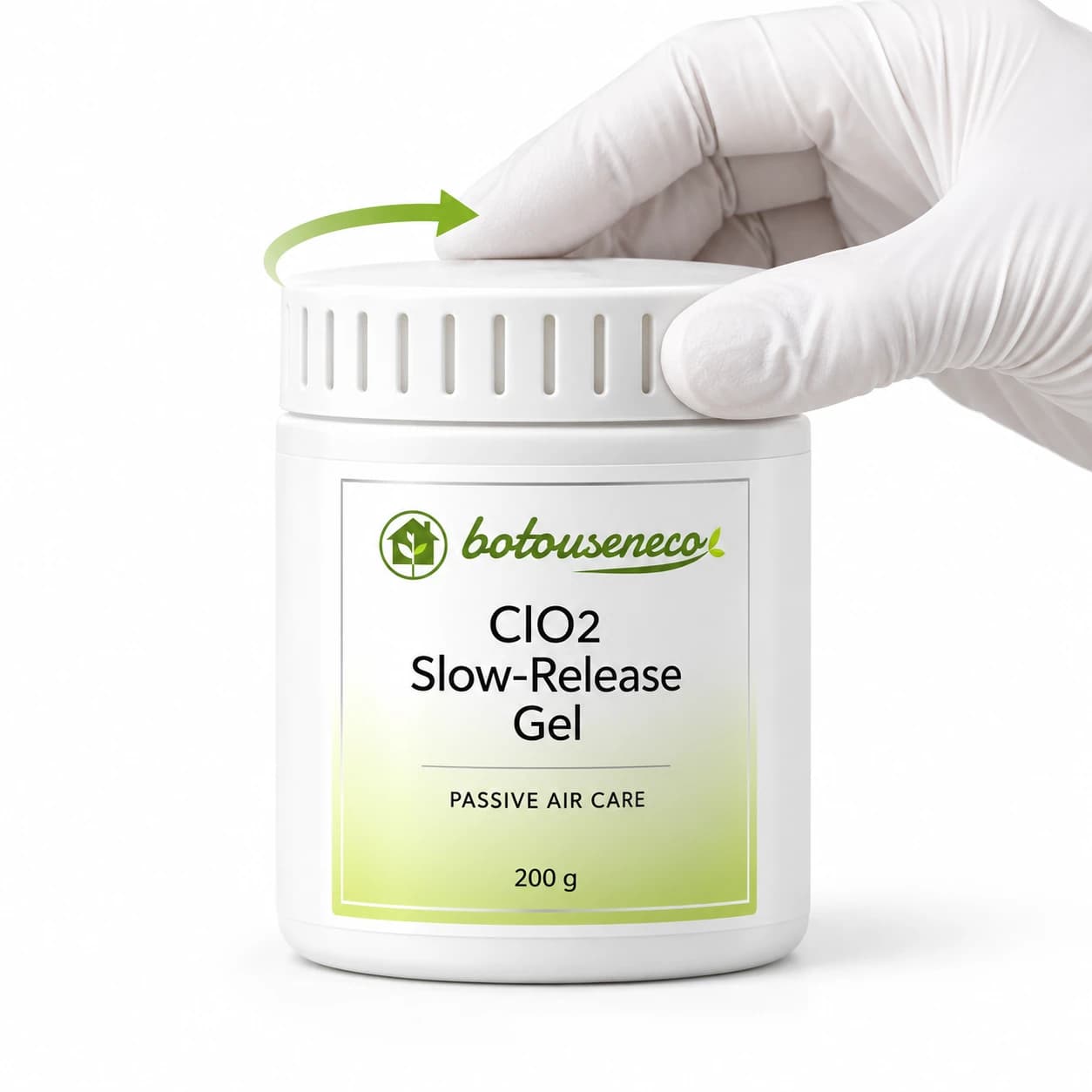
- Peel the aluminum foil seal and snap on the slotted cap. If using our two-part extended-shelf-life OEM version, pour in the activator packet; within 15 minutes, the liquid sets into a firm, spill-proof pale yellow-green gel.
- Dial the cap vents to match room size. Set the cap to 1/4 open inside small closets (< 3 m3) and fully open inside 10 to 15 m2 bedrooms, studies, or bathrooms (ISO 9001, 2015).
Step 2: Position at 1.0 to 1.5 m Breathing Height Away from Metal Hinges
By the end of this step, room air currents distribute micro-dose ClO2 vapor evenly across all corners.
- Place on a middle shelf or dresser top (1.0 to 1.5 m high). Because ClO2 vapor is slightly denser than air, setting the jar at chest height lets gentle room convection sweep the gas across both upper shelves and floor corners.
- Keep 15 cm clearance from silk ties and bare brass. Inside packed wardrobes, set the jar in an open corner 15 cm away from raw silk garments or unplated steel hinges. For tight, closed drawers packed full of clothes, use our amino-acid modified activated carbon pouches instead.
Step 3: Pair with Contractor Spray SOPs and Replace When Clear White
By the end of this step, contractors lock in 90-day post-handover insurance against seasonal heat rebound.
- Leave 1 jar per room after liquid IAQ spraying. After treating a home, hotel, or school with our spring and summer thermal rebound protocol or our bio-based chitosan nursery SOP, leave one 200 g gel jar on the nightstand to catch slow deep-board emissions during the first 90 days.
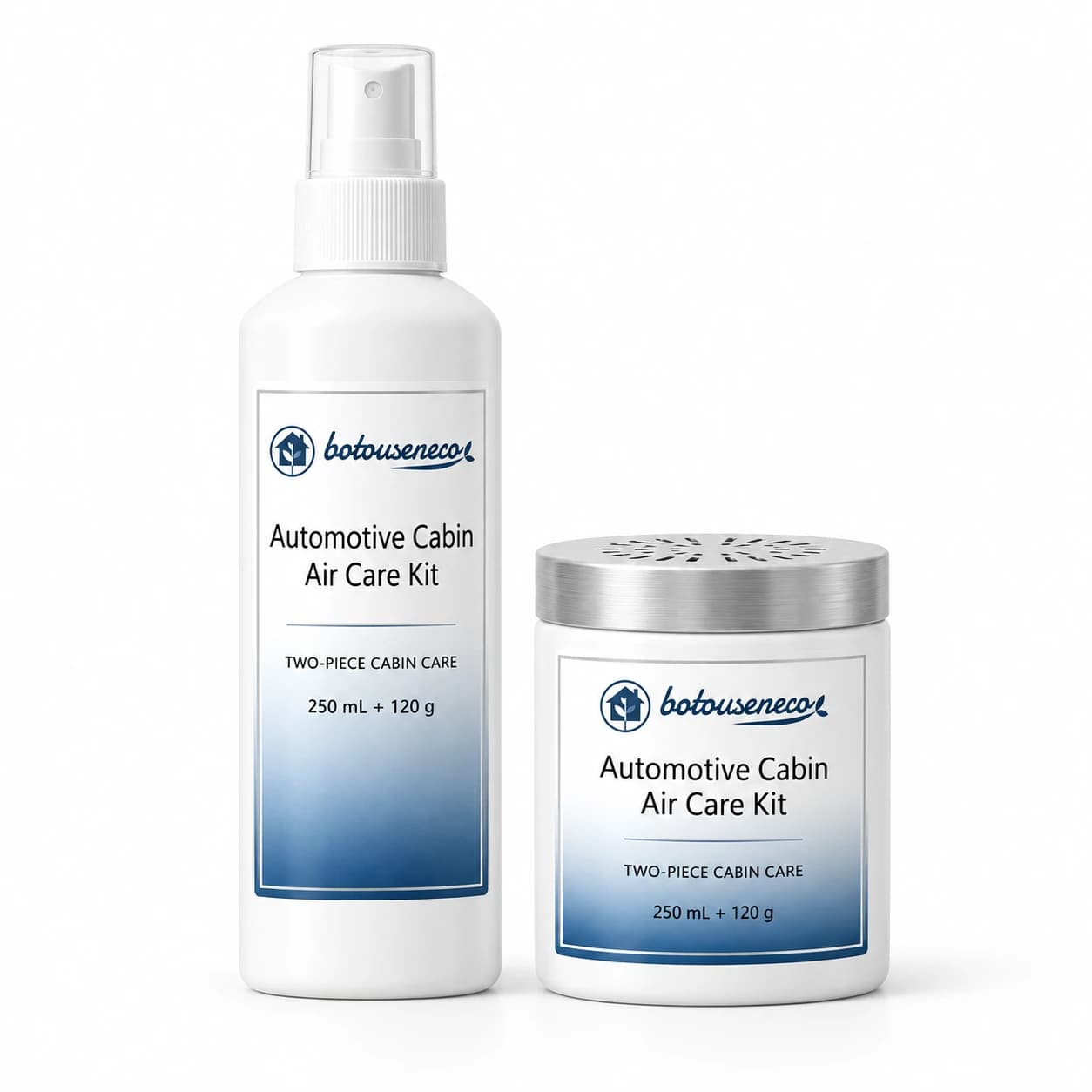
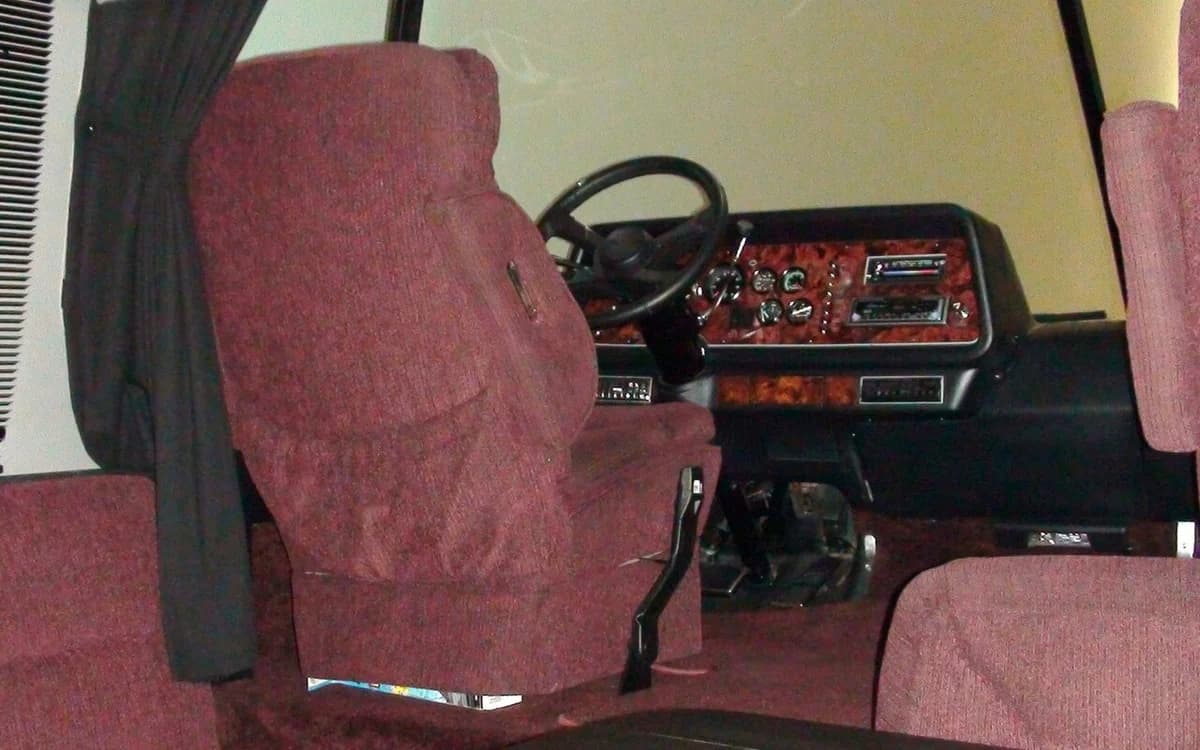
- Use our 75 C heat-stable cup-holder gel in vehicles. Standard room gels soften above 50 C; for parked cars that bake at 65 C to 75 C, use the high-melting sea-gel cup-holder jar in our Automotive Cabin Rapid Air Detox Kit per our Amazon FBA private-label ClO2 gel induction seal and drop-test guide.
Standards & references
- UN GHS Rev. 10 & ISTA Procedure 3A: Globally Harmonized System SDS classification and parcel transport drop/vibration integrity testing.
- USGBC LEED v4.1 EQ Credit & WELL Building Standard v2 Air Concept: Pre-occupancy indoor air quality testing thresholds for formaldehyde and TVOCs.
- ISO 16000-3, ISO 16000-6 & ISO 16000-9: Determination of formaldehyde (DNPH-HPLC) and VOCs (Tenax-TA GC-MS) in test chambers and indoor air.
- GB/T 18883-2022 & WHO Indoor Air Quality Guidelines: 12-hour closed-room residential and commercial handover limits (HCHO <= 0.08 mg/m3, TVOC <= 0.60 mg/m3).
Frequently Asked Questions (FAQ)
01.Is 0.01 to 0.03 ppm gaseous ClO2 safe for occupied bedrooms and offices?
Yes. The US OSHA 8-hour workplace permissible exposure limit (PEL) and WHO indoor guideline for gaseous ClO2 is 0.10 ppm (0.28 mg/m3) (WHO IAQ, 2024). One 200 g slow-release gel jar in a 10 to 15 m2 room maintains 0.01 to 0.03 ppm, which is 3 to 10 times below the safety ceiling.
02.How can a homeowner or hotel housekeeper tell when the gel jar is empty?
The active gel starts as a pale yellow-green solid block. Over 60 to 90 days, as the ClO2 vapor diffuses out, the gel gradually turns clear white and shrinks in volume (ISO 9001, 2015). Once it is completely colorless, swap in a fresh jar.
03.Can e-commerce brands order custom jar sizes and custom retail boxes?
Yes. We manufacture 150 g, 200 g, and 250 g wide-mouth jars (48 jars/carton) with custom-printed foil seals, multi-language labels, and retail color boxes starting at 500 to 1,000 units (ISO 9001, 2015).
04.What are the sample kit, bulk MOQ, and export shipping terms from Botou?
We ship 1 to 5 unit sample test jars in 24 to 48 hours (ISO 9001, 2015). Bulk carton orders start at 4 cartons (192 jars) with a 5 to 7 business day lead time, and custom OEM custom runs ship in 10 to 14 business days from Tianjin Port, China (ISO 14001, 2015). Our unactivated two-part export format ships safely with full GHS Rev. 10 SDS files, and ISO 9001, ISO 14001, and CMA/CNAS reports are shared privately with buyers on request.

About the author.
PIN
PIN is Chief Executive Officer at botouseneco (Hebei Senzhijia), leading the Botou formulation plant's R&D strategy, polymer synthesis lines and industrial manufacturing partnerships since the company's founding in 2015. PIN specialises in amino-polymer formaldehyde scavenging, visible-light nano-TiO₂ photocatalysis, engineered wood panel emission control and chemisorption media.
- Chief Executive Officer · Botou formulation & manufacturing plant.
- 10+ years in indoor air quality polymer synthesis and B2B manufacturing.
Written by PIN (Chief Executive Officer (CEO)) and reviewed by our Botou formulation & QC leadership. Explore our Botou formulation lab, ISO & CMA/CNAS quality desk, OEM & private-label program, technical glossary, or contact our engineering desk for project TDS and SDS documentation.
Next step.