Industrial Photocatalyst OEM Formulation
Industrial Formulator Guide to 5X Visible-Light Nano-TiO2 Sol (50,000 ppm): Dosing into Functional Paints, Textiles and HEPA Media
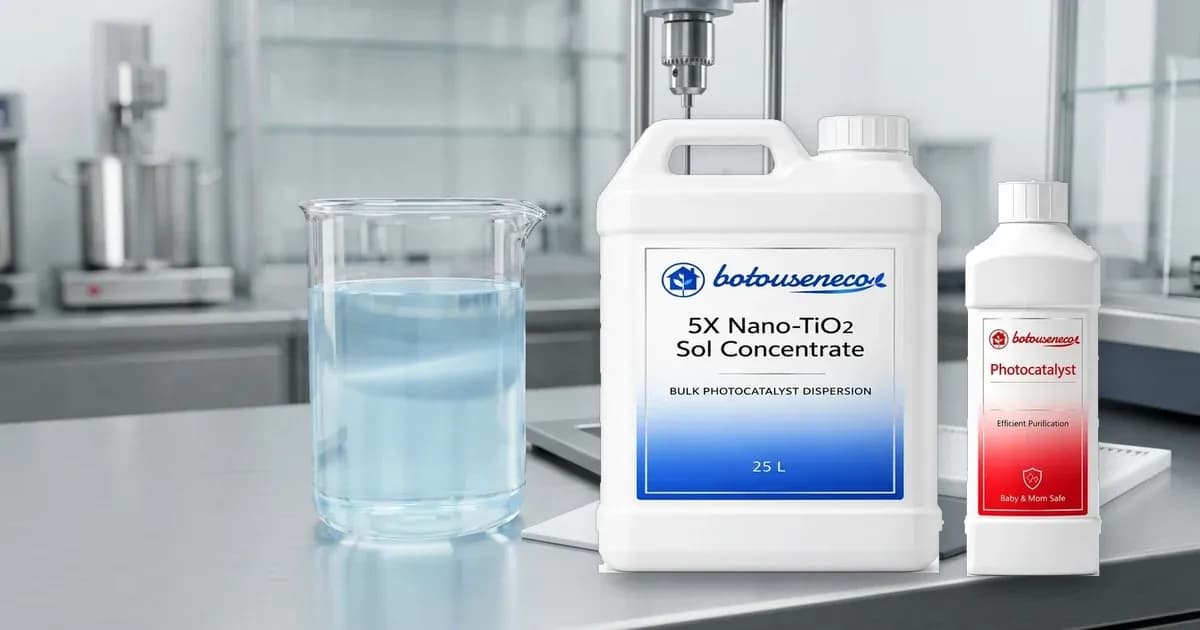
50,000 ppm (5.0% wt, Botou Technical Datasheet, 2026) visible-light nano-TiO2 sol is a neutral (pH 6.8 to 7.5), binder-free dispersion of 5 to 10 nm doped anatase crystals. Electrostatic Zeta charge (|Zeta| >= 30 mV) keeps particles suspended cleanly without thickeners. Industrial formulators add 2.0% to 5.0% wt during low-shear architectural paint let-down (40 to 80 RPM). Textile mills run 1:4 to 1:9 deionized water baths (< 20 uS/cm) for pad-dry-cure drapes. Air filter plants mist 6 to 10 ml/m2 onto pleated fiberglass HEPA media to activate 400 to 550 nm LED catalysis without chalking, yellowing, or airflow choke.
Key Takeaways
- 50,000 ppm Binder-Free Colloid (|Zeta| >= 30 mV): Neutral pH 6.8 to 7.5 hydrothermal 5 to 10 nm anatase sol stays stable for 18 months without dry powder grinding or yellowing acrylic binders.
- Low-Shear Paint Let-Down (2.0% to 5.0% wt): Charge cooled waterborne emulsions (< 35 C, pH 7.0 to 8.5) at 40 to 80 RPM into silicate or silicone-acrylic matte bases (PVC 55% to 72%) for Delta-E < 0.3 clarity.
- Zero-Binder Textile Pad-Dry-Cure (1:4 to 1:9 DI Bath): Dilute in < 20 uS/cm DI water at 70% to 80% pick-up and cure at 110 to 130 C (2 to 3 min) to preserve soft fabric hand feel and zero yellowing.
- Low Delta-P HEPA Mist (6 to 10 ml/m2): Atomize 1:4 diluted sol via ultrasonic or 0.5 mm HVLP nozzles onto fiberglass H13/H14 media and flash-dry at 80 to 105 C to keep airflow resistance rise under 3% to 5%.
Why Colloidal Stability and Zeta Potential Govern 50,000 ppm Nano-TiO2 Industrial Dosing
Colloidal nano-TiO2 sol formulation is the direct industrial incorporation of hydrothermally peptized, 5 to 10 nm doped anatase crystals into paints, textile baths, and air filter media. Supplied at 5.0% wt (50,000 ppm, Botou Technical Datasheet, 2026) in neutral deionized water (pH 6.8 to 7.5), it requires zero dry powder grinding.
Many coatings factories and filter mills first test dry fumed titanium dioxide powders (25 to 60 nm P25 grades) to cut raw material costs. Flame-synthesized dry powders fuse into hard 200 to 800 nm sinter clusters during cooling. Standard factory bead mills rarely break those fused necks cleanly in water. As a result, milled slurries settle hard inside storage drums and leave milky haze on dark tint bases. Coarse dry-powder coatings also need organic acrylic glue to stay adhered, which breaks down rapidly under surface hydroxyl radicals (OH).
In contrast, our Botou synthesis facility grows 5 to 10 nm doped anatase crystals (over 99% anatase crystal phase, Botou QC Spec, 2026) directly in pure water without dry calcination. Electrostatic surface repulsion (|Zeta| >= 30 mV at neutral pH 6.8 to 7.5) keeps every crystal suspended apart for 18 months with zero thickeners or corrosive acids.
Lattice doping narrows the crystal bandgap from 3.2 eV (387 nm UV) into the 400 to 550 nm visible blue-green band. Consequently, finished architectural walls, functional drapes, and HEPA pleats stay active under normal 4000K indoor LED lamps evaluated across the ISO 22197 Fine Ceramics Photocatalytic Air Purification Test Method (ISO 22197-1:2016) series.
Mandatory Colloidal Compatibility Gates Before Plant Scale-Up
Nanoparticle dispersion standards from the NIST National Institute of Standards and Technology Nanotechnology Program (2025) explain how dissolved ions shrink the electrostatic double layer around metal-oxide colloids. Formulators must pass five bench checks before charging a 1,000 L production vessel.
For example, if a wall-paint plant charges a 500 L dilution vessel with softened boiler water reading 85 uS/cm instead of deionized water, residual multivalent ions compress the electrostatic Zeta barrier. Within hours, the clear colloidal liquid thickens into soft white curds that settle in transfer pipes. Switching the makeup line to under 20 uS/cm double-pass RO/DI water maintains optical clarity across full production runs.
Read our dedicated mixing room guide on diluting 5X visible-light nano-TiO2 sol concentrate while preserving Zeta stability for dedicated pipework, tank material choices, and inline conductivity layouts.
| Incoming QC & Formulation Gate | Target Acceptance Window | Failure Trigger to Avoid | Practical Plant Test Method |
|---|---|---|---|
| Dilution Water Conductivity | < 20 uS/cm (TDS < 15 ppm) | Municipal tap water (150-400 ppm Ca2+ / Mg2+) | Inline calibrated conductivity probe before tank charge |
| Working Tank pH Window | pH 7.0 to 8.5 (Paint); 6.8 to 7.5 (Bath/HEPA) | Strong acids (< pH 5.5) or ammonia spikes (> pH 9.2) | Digital temperature-compensated pH electrode |
| Multivalent Cation Exposure | Zero added Ca2+, Mg2+, Al3+, or cationic softeners | Ionic double-layer compression causing instant white gel | 48-hour jar stability check in a 50 C lab oven |
| Agitation Shear Ceiling | 40 to 80 RPM paddle or propeller mixing | High-speed Cowles blades (1,500+ RPM) during pigment grind | Variable-frequency drive (VFD) tachometer setting |
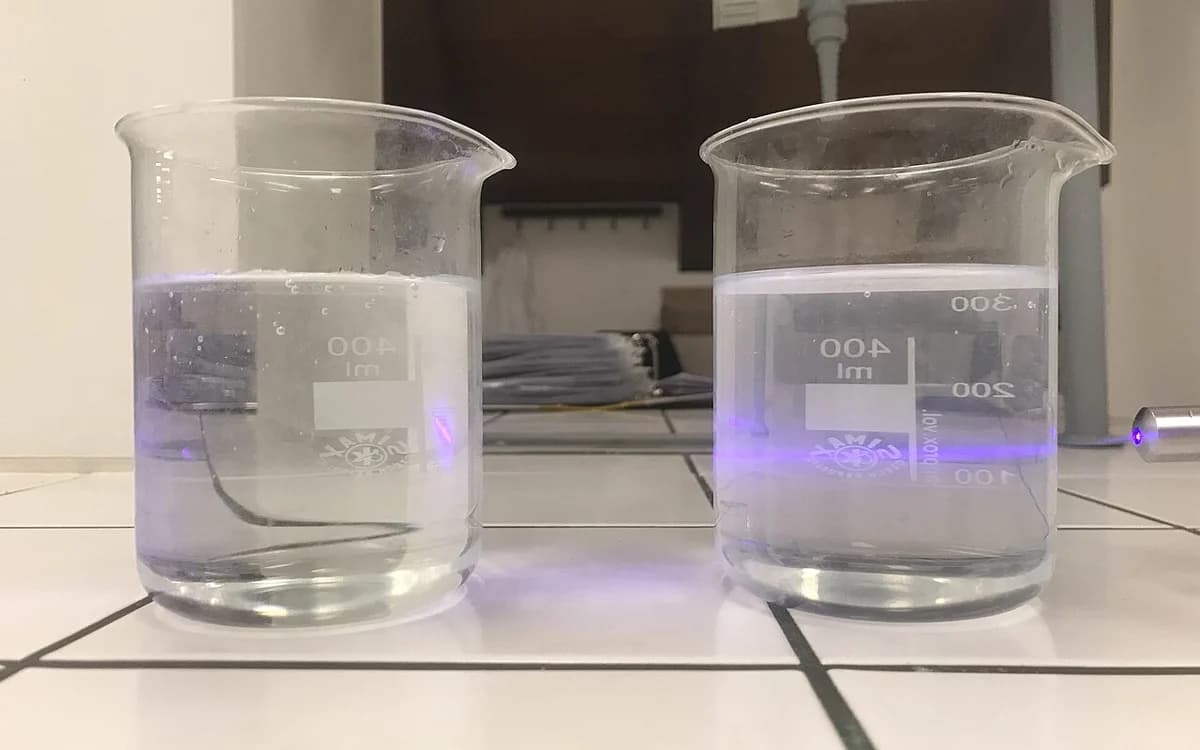
| Optical Dispersion Clarity | Translucent liquid with sky-blue Tyndall beam | Milky opaque white cloudiness showing hard flocculation | Side-entry 532 nm green laser pointer test in glass cup |
How Do Paint Factories Dose 5X Nano-TiO2 Sol Into Waterborne Emulsions Without Chalking?
Photocatalytic binder chalking is the oxidative breakdown of organic paint resins by surface hydroxyl radicals (OH, +2.80 V). It happens when photoactive anatase TiO2 sits inside low-mineral acrylic or vinyl-acetate films without matching resin chemistry and clean let-down order.
Architectural paint brands need anti-formaldehyde interior coatings that help buildings pass GB/T 18883-2022 (HCHO <= 0.08 mg/m3, TVOC <= 0.60 mg/m3) and European limits under European Chemicals Agency (ECHA) REACH Annex XVII Entry 77 (2026). Incorporating 50,000 ppm nano-TiO2 sol into waterborne interior paints runs smoothly on standard factory lines when chemists follow three strict process controls.
1. Charge Strictly in the Final Let-Down Tank, Never the Millbase
During pigment grinding, rutile titanium dioxide pigment (200 to 300 nm), calcium carbonate extenders, and anionic polyacrylate dispersants undergo 1,500 to 2,500 RPM high-shear dispersion and 55 C heat rise. Adding a 5 to 10 nm colloidal sol directly into that millbase causes rapid co-flocculation with raw calcium carbonate fines. That shock drives Krebs Unit (KU) paint viscosity out of specification within minutes.
Instead, finish the pigment grind first and let the batch cool below 35 C. Next, transfer the batch into the final let-down tank and check pH. Adjust batch pH into the 7.0 to 8.5 band with AMP-95 or a mild organic amine buffer rather than concentrated ammonia water. Finally, meter 2.0% to 5.0% wt (Botou Technical Datasheet, 2026) of 5X Visible-Light Nano-TiO2 Sol Concentrate under gentle 40 to 80 RPM paddle agitation for 10 to 15 minutes.
2. Match Resin Chemistry and Pigment Volume Concentration (PVC)
Peer-reviewed photoreactor evaluations in the Frontiers in Chemistry Photocatalytic Paint Evaluation Study (PMC7650231) (2020) demonstrate that modified anatase wall paints achieve 37% to 55% indoor acetaldehyde oxidation under indoor illumination, while binder stability and open film porosity govern long-term durability.
For instance, blending 3.0% wt 5X mother sol into a high-PVC matte silicone-acrylic wall base maintains smooth roller leveling and supports standard 50 C accelerated oven can-stability checks without viscosity drift. To combine immediate room-air aldehyde capture with continuous wall catalysis in one interior primer, study our dual-additive factory guide on architectural paint and primer production with 5X nano-TiO2 and amino scavenger additives.
- Radical-Resistant Binders (Preferred): Inorganic potassium silicate (mineral) paints, silicone-acrylic emulsions, and high-durability pure acrylic emulsions resist OH radical cleavage. Siloxane (Si-O-Si) linkages hold far higher bond dissociation energy (~452 kJ/mol) than standard carbon-carbon (C-C) backbones, stopping film yellowing and surface powdering.
- Resins to Avoid: Soft vinyl-acetate homopolymers (PVAc), styrene-butadiene latexes, and low-porosity high-gloss organic clearcoats degrade rapidly around active anatase crystals. Dense plastic gloss films also bury TiO2 beneath the paint skin where airborne aldehydes cannot reach catalytic sites.
- Porous Matte Film Window (PVC 55% to 72%, Botou Technical Datasheet, 2026): Matte wall paints formulated near critical pigment volume concentration (CPVC) leave open pores for room air and 450 nm LED light. Chamber checks under ISO 16000-9:2024 Building Product Emission Test Chamber Standard verify stable indoor performance. Dosing 1,000 to 2,500 ppm wet active anatase keeps optical clarity neutral with color shift under Delta-E 0.3.
Pad-Dry-Cure Textile Finishing: Anchoring Inorganic TiO2 Sols onto Curtains and Non-Wovens
Pad-dry-cure photocatalytic finishing is the continuous roll-to-roll textile process that bonds diluted 5 to 10 nm anatase TiO2 onto curtains, upholstery fabrics, or spunbond PET non-wovens. The web absorbs the bath, passes through squeeze rollers (70% to 80% wet pick-up, Botou Technical Datasheet, 2026), and cures at 110 to 130 C to anchor inorganic Ti-OH groups onto fibers.
Commercial hospitality chains, clinics, and residential drape mills increasingly specify self-deodorizing, mold-resistant fabrics that oxidize smoke odors and indoor aldehydes referenced in the World Health Organization (WHO) Indoor Air Quality Guidelines (2024). Because 5X mother sol contains zero organic acrylic binder, treated curtains retain natural soft drape hand feel and air permeability. White blackout fabrics also avoid thermal yellowing during stenter drying.
Roll-to-Roll Pad-Dry-Cure Process Parameters
- 1. Bath Makeup (1:4 to 1:9 in Pure DI Water): Charge a clean 316 stainless-steel or polypropylene padding trough with pure deionized water (< 20 uS/cm, < 15 ppm TDS). Mix 1 part 5X sol with 4 parts DI water (1.0% wt active TiO2) for heavy hotel smoke-control drapes. Use a 1:9 mix (0.5% wt active TiO2) for sheer curtains and acoustic PET felt panels.
- 2. Wet Pick-Up Control (70% to 80%, Botou Technical Datasheet, 2026): Calibrate hydraulic mangle roller nip pressure for steady wet pick-up. For example, running a 1.0% wt bath at 75% wet pick-up deposits 0.75% wt dry TiO2 on weight of fabric (OWF). That thin nanoscale film dries completely invisible on charcoal, navy, and black upholstery fabrics.
- 3. Thermal Condensation Cure (110 to 130 C for 2 to 3 Minutes): Pre-dry the padded fabric through a stenter frame at 100 C. Next, cure at 110 to 130 C for 2 to 3 minutes. Thermal dehydration links Ti-OH hydroxyl shells to cellulosic groups on cotton and viscose, or to polar sites on corona-treated polyester, supporting antimicrobial testing per ISO 20743 and AATCC 100.
- 4. Strict Softener and Water-Repellent Segregation: Never add cationic silicone softeners, quaternary ammonium antistats, or fluorocarbon C6 repellents into the TiO2 trough. Cationic auxiliaries crash neutral sol Zeta charge immediately inside the bath, while hydrophobic silicones block active catalyst faces. Complete softening in a prior rinse stage and run TiO2 as the dedicated final finish.
Coating Pleated Fiberglass HEPA Air Filter Media for Low Pressure-Drop Photocatalytic Reactors
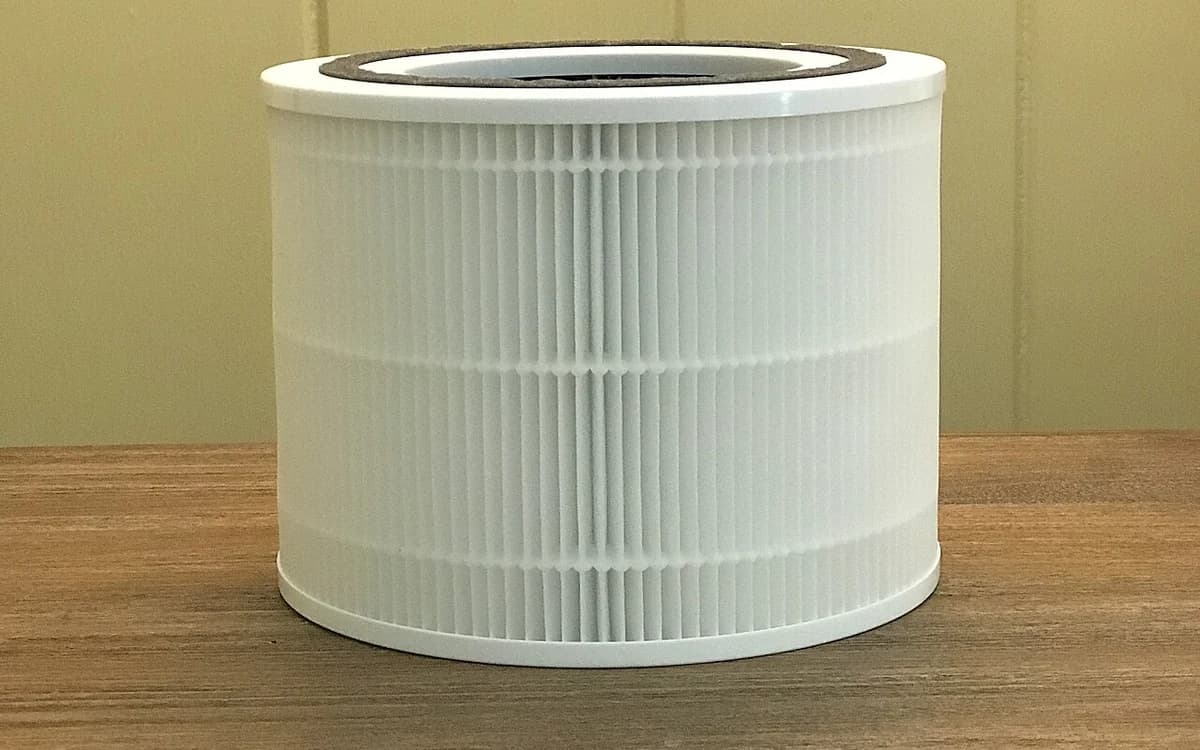
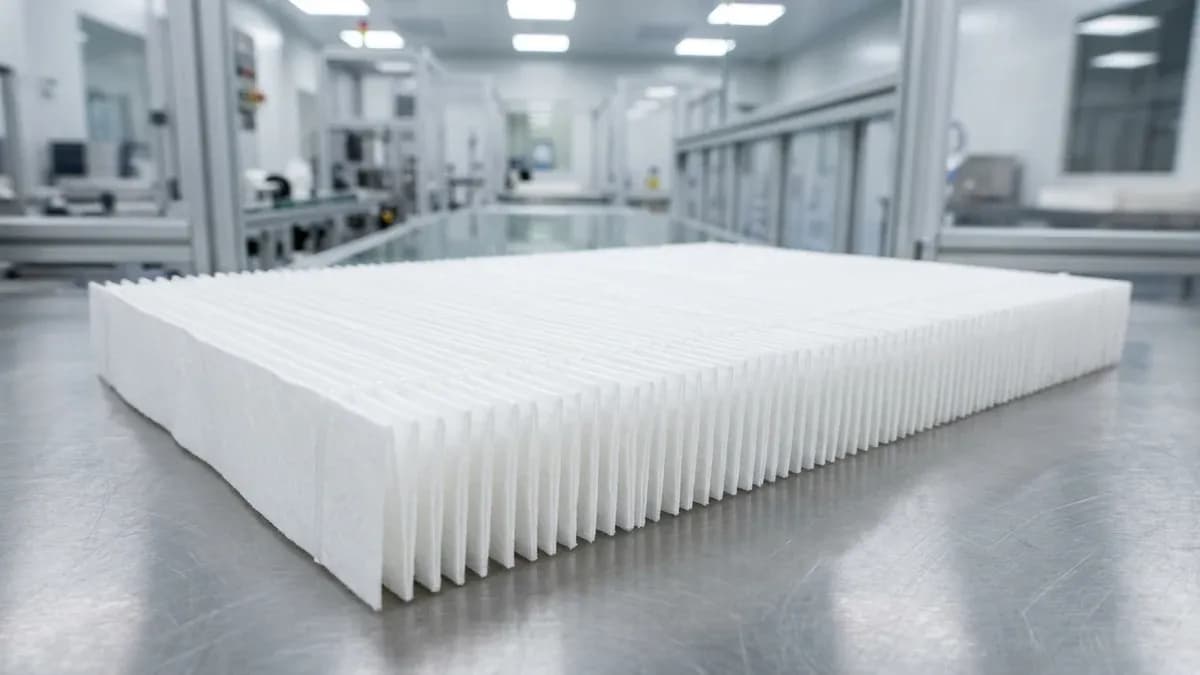
Photocatalytic HEPA reactor media is pleated glass-fiber or composite filtration paper carrying an ultrathin (under 50 nm) binder-free 5 to 10 nm anatase TiO2 film. Under internal 405 to 450 nm LED strips, it mineralizes trapped bio-aerosols and passing VOCs without clogging sub-micron filter pores.
Portable air purifier OEMs and commercial HVAC cartridge mills pair mechanical particle capture with visible-light gas oxidation, following indoor filtration concepts outlined in the US EPA Guide to Air Cleaners and Filtration Technologies (2025). However, improper wet coating destroys high-efficiency H13 or H14 filter paper quickly. Flooding the sheet bridges 0.3 micron fiber pores and pushes airflow pressure drop (Delta-P) sharply upward. Wetting electret-charged meltblown polypropylene (PP) also neutralizes electrostatic charge and collapses particle capture efficiency.
Precision Low-Add-On Spray Protocol for Air Filter Mills
Review higher-load dip/honeycomb coating configurations, reactor face-velocity ratios, and internal blue-LED spacing layouts in our dedicated engineering note on coating HEPA air filter media with 5X nano-TiO2 sol for photocatalytic reactors.
- Substrate Choice (Fiberglass HEPA & PET Scrims Over Raw Electret PP): Apply aqueous TiO2 coatings onto micro-glass fiber HEPA paper (H13/H14), PET spunbond upstream pre-filter scrims, or aluminum honeycomb pre-reactor screens facing the 405 to 450 nm LED array. Never dip-soak electret-charged meltblown PP sheets in water.
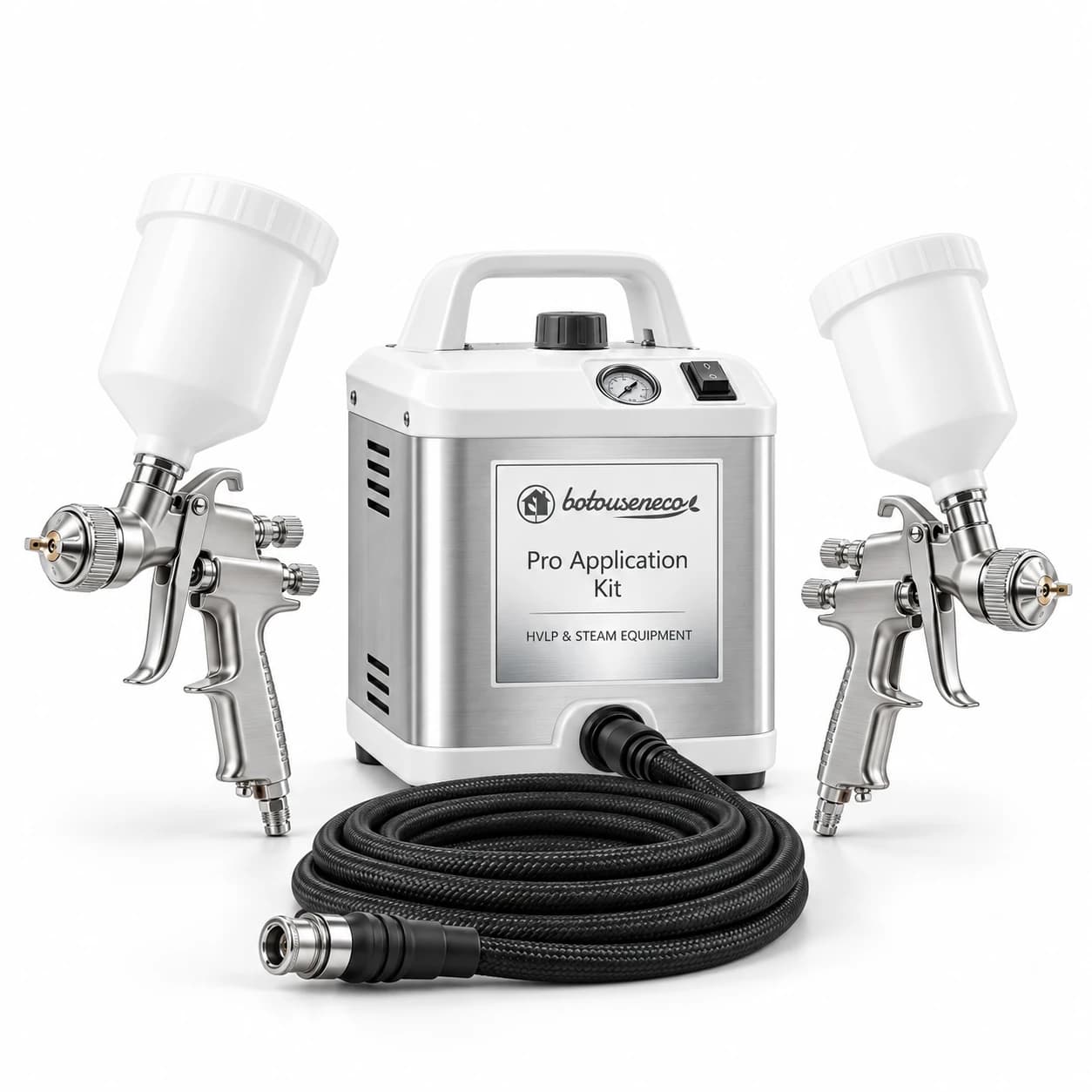
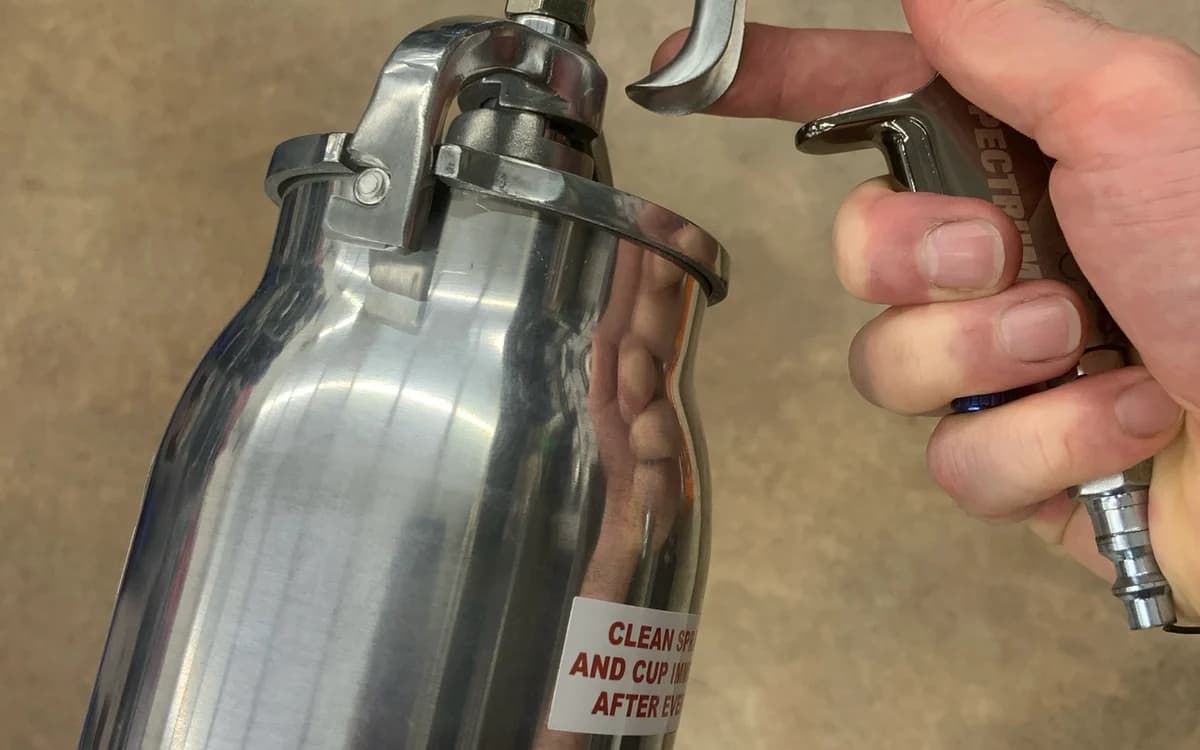
- Ultrasonic or 0.5 mm HVLP Dry Mist (6 to 10 ml/m2): Dilute 5X mother sol 1:4 with pure DI water (< 20 uS/cm) to 1.0% wt (10,000 ppm). Atomize through inline ultrasonic nozzles or 316 stainless 0.5 mm HVLP spray heads (0.20 to 0.30 MPa) held 25 to 35 cm over the flat web before pleating (compatible with our Pro HVLP Nano-Atomizer hardware). That micro-mist sets dry catalyst loading at 60 to 100 mg/m2 (0.06 to 0.10 g/m2).
- Airflow Resistance (Delta-P) Preservation: Binder-free 5 to 10 nm crystals bond directly onto single glass microfibers at under 50 nm thickness instead of forming resin webs across air gaps. Therefore, initial pressure-drop increase stays under 3% to 5% (Botou QC Spec, 2026) while preserving full H13 filtration efficiency (>= 99.95% at MPPS per EN 1822-1:2019 / ISO 29463, or >= 99.97% at 0.3 micron per US DOE HEPA standards).
- Inline Flash Drying (80 to 105 C): Dry the misted web through a low-velocity warm-air tunnel at 80 to 105 C for 60 to 90 seconds ahead of the rotary pleater. Proper flash drying keeps crisp pleat stiffness with zero wet tearing or adhesive bleed.
Selecting 5X Visible-Light Nano-TiO2 Sol, RTU Spray, and Ag+ Dark-Active Grades
Within our bulk concentrates and pro application equipment product line and regional B2B distributor and OEM formulation programs, industrial buyers match three neutral-pH colloidal SKUs to factory batch scale and indoor light levels.
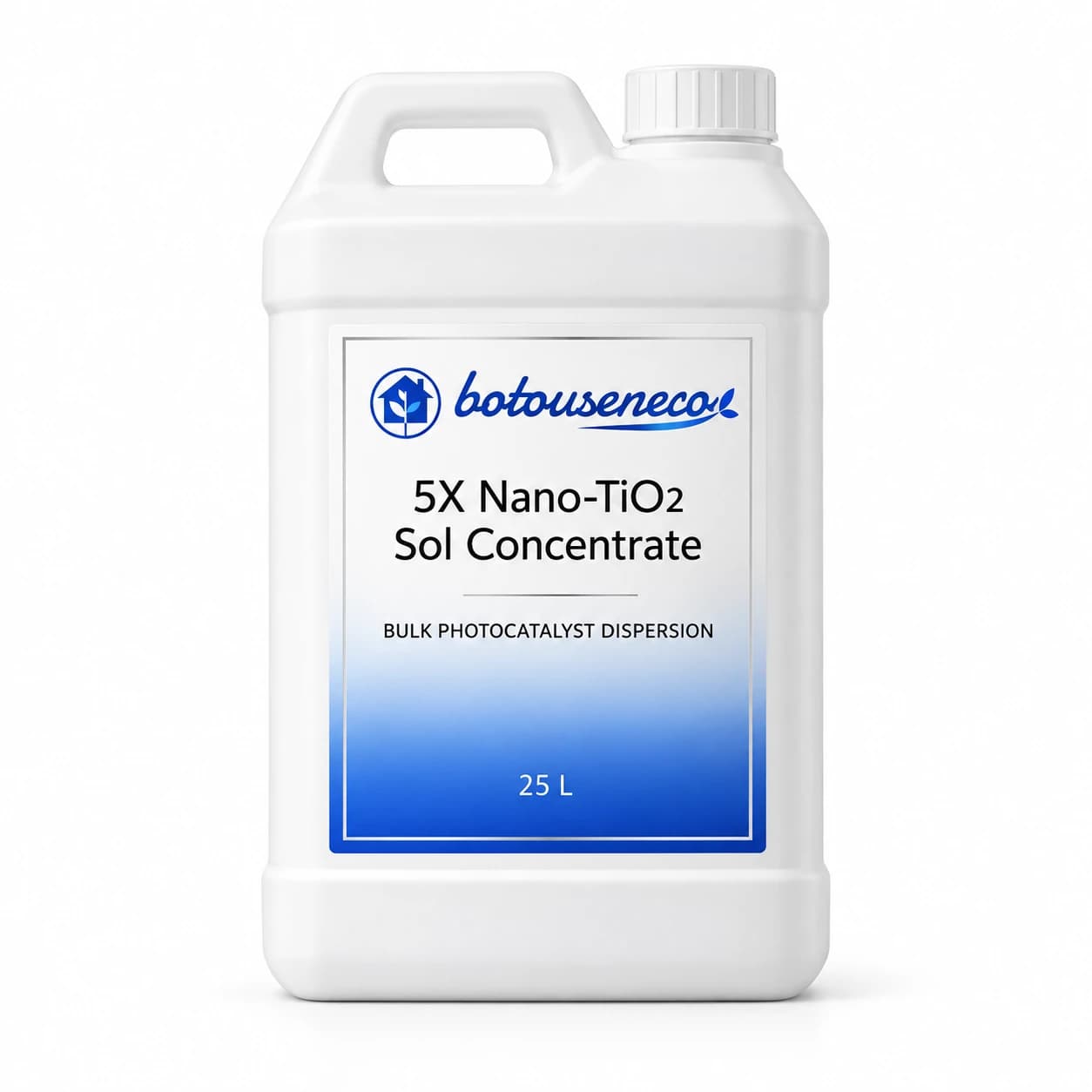
1. Primary Industrial Feedstock: 5X Visible-Light Nano-TiO2 Sol Concentrate (50,000 ppm)
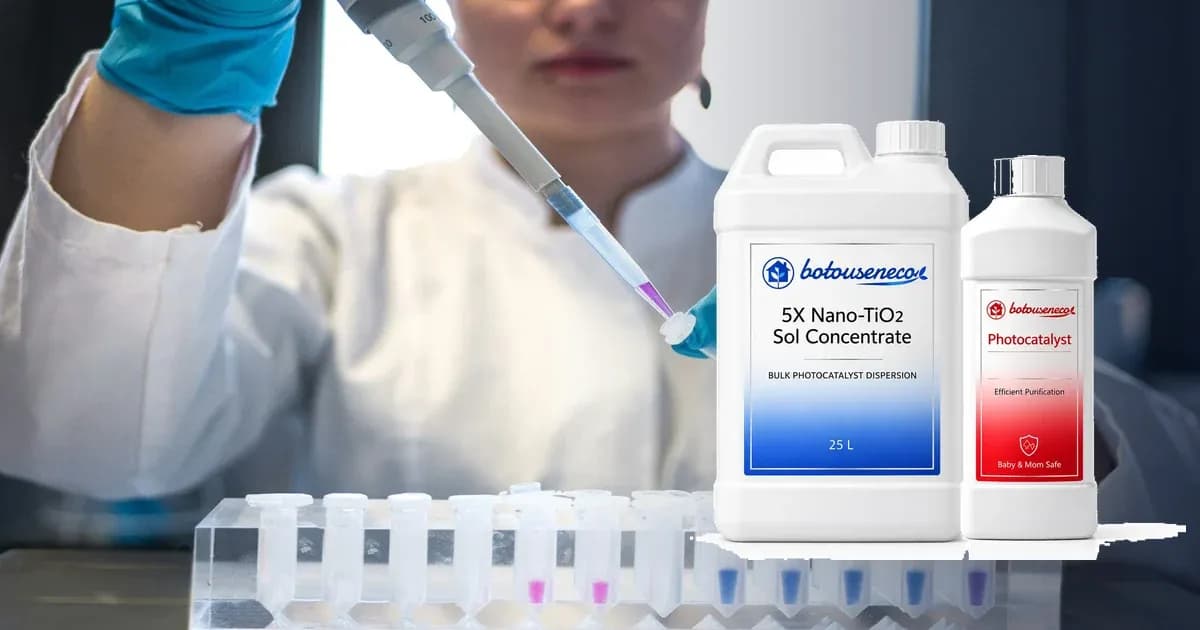
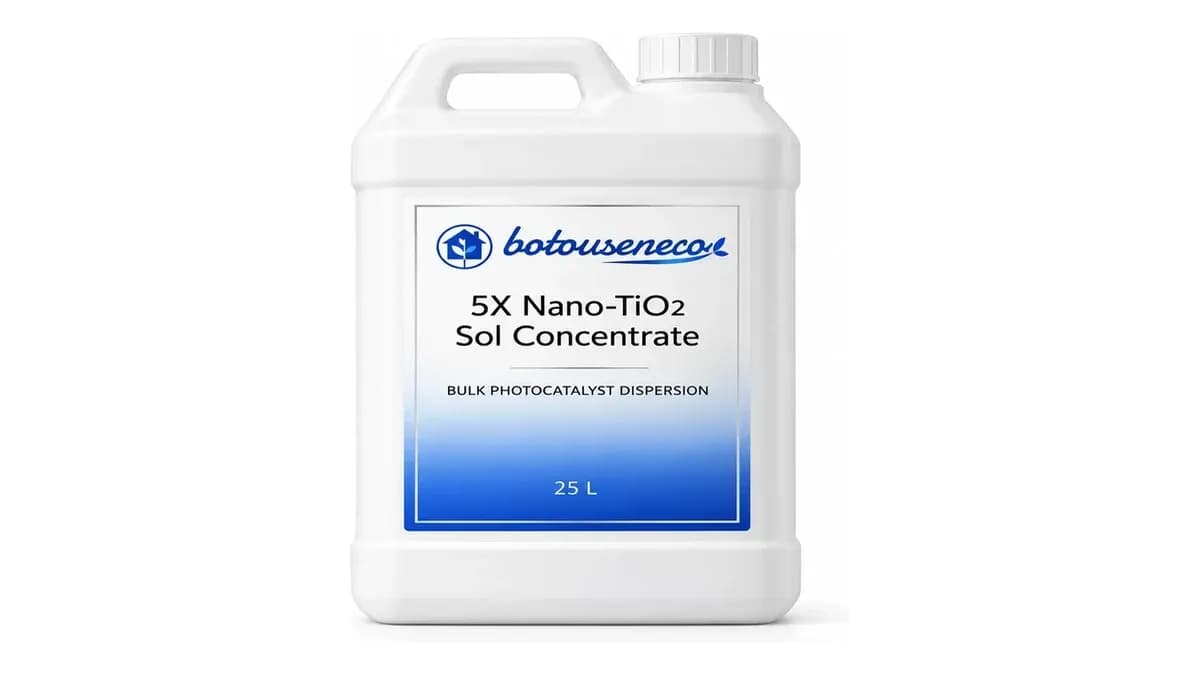
Core Specs: 5.0% wt (50,000 ppm, Botou Technical Datasheet, 2026) doped 5 to 10 nm anatase TiO2 colloidal sol (> 99% anatase crystal phase). It ships at neutral pH 6.8 to 7.5 with zero organic binder and 18-month stability in 20 L / 25 L HDPE carboys or 200 L lined drums.
Best Fit: Paint factories (2.0% to 5.0% wt let-down dosing), textile pad-dry-cure mills (1:4 to 1:9 DI baths), and HEPA filter OEMs (1:4 dry mist). Because diluting 1 part concentrate with 4 parts local DI water replaces four-fifths of the water weight, regional bottlers cut shipped liquid volume by 80% (1:4 volumetric ratio) versus ready-to-use drums. Review full specifications on our 5X Visible-Light Nano-TiO2 Sol Concentrate (50,000 ppm) product page.
2. R&D Bench Reference & Field Topcoat: Nano Photocatalyst Spray (10,000 ppm RTU)
Core Specs: Ready-to-spray 1.0% wt (10,000 ppm) doped 5 to 10 nm visible-light anatase sol (pH 6.5 to 7.5). Spray at 8 to 12 ml/m2 via HVLP (1 L covers 80 to 120 m2).
Best Fit: Paint labs running side-by-side ISO 22197 benchmark panels before scaling up to 5X bulk drums, as well as commercial contractors spraying post-handover walls. View container formats on our Nano Photocatalyst Spray page.
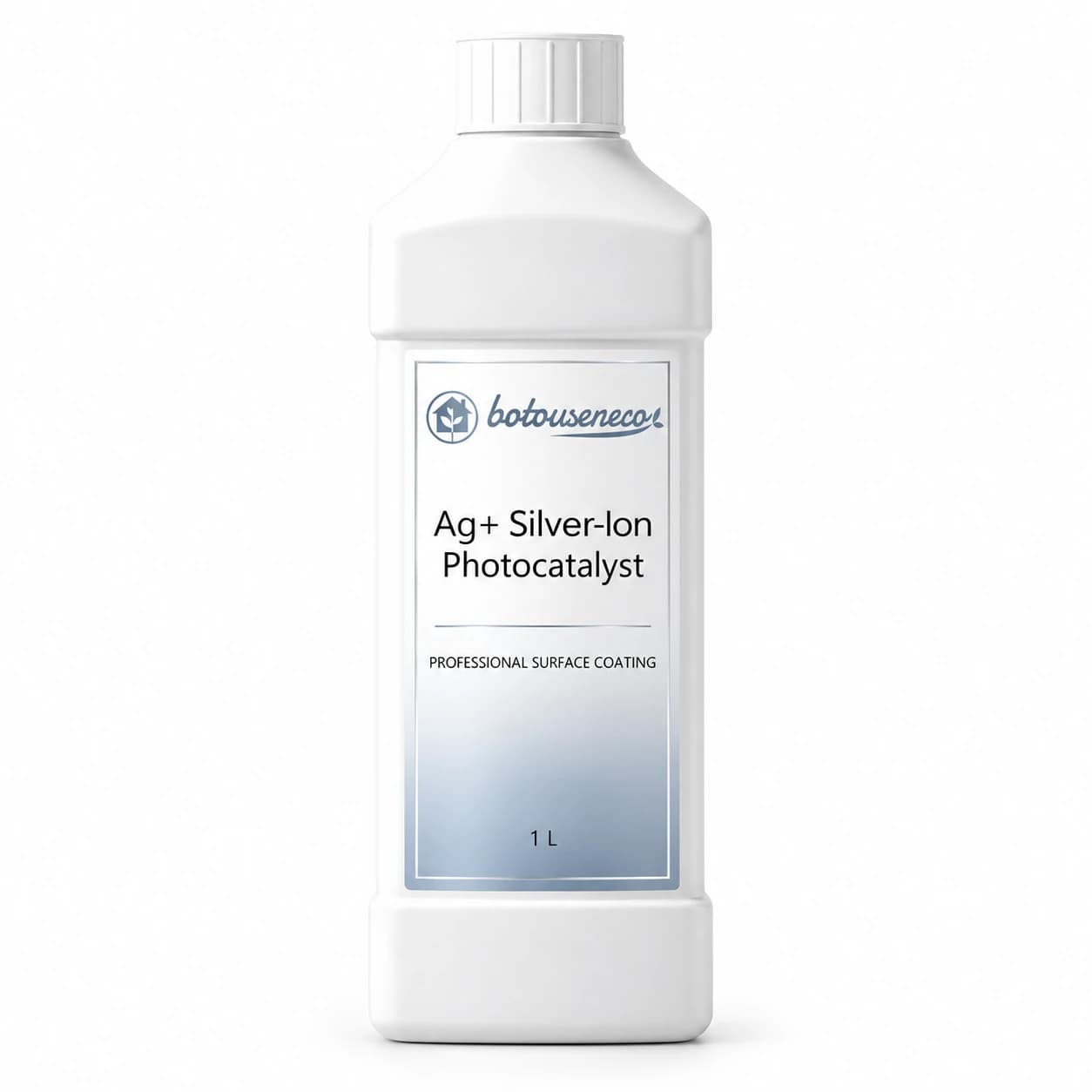
3. Dark-Phase & Healthcare Antimicrobial Upgrade: Silver-Ion Antibacterial Photocatalyst Spray (150 ppm Ag+)
Core Specs: 5 nm doped anatase TiO2 paired with 150 ppm chelated nano-silver (Ag+) (pH 6.5 to 7.5). It pairs 380 to 600 nm low-light catalysis with continuous 24-hour dark-phase antibacterial and anti-mold protection (99.9% germ reduction, Botou QC Spec, 2026).
Best Fit: Hospital privacy curtains, HVAC return-air filter scrims inside unlit metal plenums, and humid coastal hospitality fabrics needing non-staining microbial control when room lights switch off. Check data sheets on our Silver-Ion Antibacterial Photocatalyst Spray page.
| OEM Sector | 5X Sol Dosage (50,000 ppm) | Carrier Water & pH | Process & Cure Window | Standard & Risk Prevented |
|---|---|---|---|---|
| Architectural Wall Paints & Primers | 2.0% to 5.0% wt (1,000-2,500 ppm wet TiO2) | DI makeup water; batch pH 7.0-8.5 | Final let-down only (40-80 RPM, 10-15 min); ambient cure (20-25 C) | ISO 22197 series, ISO 16000-9:2024, GB/T 18883-2022; prevents flocculation & chalking |
| Curtains & Technical Non-Wovens | 1:4 to 1:9 bath (0.5%-1.0% wt TiO2; 70%-80% pick-up) | Pure DI (< 20 uS/cm, < 15 ppm TDS); pH 6.8-7.5 | Dedicated pad-dry-cure bath; dry 100 C, cure 110-130 C (2-3 min) | ISO 20743, AATCC 100, ISO 22197 series; avoids fabric stiffness & yellowing |
| Pleated Fiberglass & PET HEPA Media | 1:4 mix (1.0% wt TiO2) misted at 6-10 ml/m2 | Pure DI (< 20 uS/cm); zero organic binders | Ultrasonic or 0.5 mm HVLP dry mist (0.20-0.30 MPa); flash dry 80-105 C (60-90 s) | EN 1822-1:2019, ISO 29463, ISO 22197 series; prevents pore bridging & Delta-P spike |
Worked Industrial Batch Calculations: 1,000 kg Wall Paint and 10,000 m2 HEPA Runs
Clear mass-balance math lets plant engineers and purchasing managers calculate exact drum usage, active dry-film concentration, and unit coating cost before scheduling factory pilot trials.
Case A: 1,000 kg Functional Anti-Formaldehyde Matte Wall Paint Batch (45% Solids)
- Target Wet Let-Down Addition (3.0% wt of 5X Mother Sol): 1,000 kg wet paint x 0.030 = 30.0 kg (~28.8 L at SG 1.04) of 5X Visible-Light Nano-TiO2 Sol Concentrate (50,000 ppm).
- Active 5-10 nm Anatase Concentration in Wet Paint: (30.0 kg x 0.050 active TiO2) / 1,000 kg = 1.50 kg pure nano-anatase = 1,500 ppm (0.15% wt).
- Active Catalyst Concentration in Cured Dry Wall Film (450 kg Dry Solids): 1.50 kg / 450 kg dry film = 3,333 ppm (0.33% wt dry film).
- Drum Yield: One 200 L export drum (~208 kg) of 5X mother sol doses 6.93 metric tons of finished functional interior paint (~4,950 Liters at 1.40 kg/L paint density). That single drum covers roughly 30,000 m2 of commercial interior drywall at two coats.
Case B: 10,000 m2 Roll-to-Roll Fiberglass HEPA Media Coating Line
- Working Spray Bath Prep (1:4 Dilution to 1.0% wt / 10,000 ppm): Target upstream ultrasonic mist rate = 8 ml/m2. Total diluted spray volume = 10,000 m2 x 0.008 L/m2 = 80.0 Liters working bath.
- Mother Sol & DI Water Mass Balance: 5X mother sol required = 80.0 L / 5 = 16.0 Liters (less than one 20 L HDPE carboy). Pure DI makeup water (< 20 uS/cm) required = 64.0 Liters.
- Dry Catalyst Add-On Weight per Square Meter: 8 ml/m2 x 10 mg active TiO2/ml = 80 mg/m2 (0.08 g/m2) inorganic self-bonded 5 to 10 nm anatase, preserving sharp pleat folds and minimal airflow resistance.
Verified Botou Plant Supply Terms, OEM Formulation Support, and Non-DG Export Docs
Made in-house since 2015 by Hebei Senzhijia Environmental Protection Co., Ltd (botouseneco) in the Botou Industrial Zone, Cangzhou, Hebei, China, every batch passes strict dispatch checks. Our lab verifies laser Tyndall clarity, neutral pH, and solids before shipping. Learn more about us and our Botou hydrothermal nano-synthesis plant before booking a pilot drum.
- Sample Evaluation Kit (MOQ 1-5 units): 500 mL / 1 L test bottles of 5X mother sol, RTU spray, or Ag+ dark-active grade for lab drawdown cards, Zeta checks, and ISO 22197 pilot panels.
- Standard Bulk Supply (MOQ 100 L / 4 drums): Packed in 20 L / 25 L HDPE carboys or 200 L lined steel/HDPE export drums.
- OEM Private Label & Custom Concentration (MOQ 500-1,000 units): Custom runs with private drum labels or finished retail spray packaging.
- Lead Times & Port of Loading: Samples ship in 24-48 hours, bulk drums in 5-7 business days, and OEM runs in 10-14 business days. All cargo ships via Tianjin Port, China (about 180 km from our plant) as unrestricted Non-Dangerous Goods (Non-DG) backed by a 16-section GHS Rev. 10 / ISO 11014 SDS (EU REACH SVHC-free).
- Quality Systems & Private COA Policy: Production operates under ISO 9001:2015 Quality Management System and ISO 14001:2015 Environmental Management System controls, backed by CMA / CNAS-accredited chamber verification (ISO 16000-9 / GB/T 18883-2022). By company policy, certificate numbers and full lab scans stay private. Copies, Zeta/solids batch COAs, and technical dosing sheets are shared directly when you contact our B2B formulation engineering desk.
Standards & references
- ISO 22197 Series (ISO 22197-1:2016): Fine ceramics test method for air-purification performance of semiconducting photocatalytic materials.
- ISO 16000-9:2024 & GB/T 18883-2022: Building product emission test chamber verification and indoor formaldehyde (<= 0.08 mg/m3) / TVOC (<= 0.60 mg/m3) benchmarks.
- EN 1822-1:2019 & ISO 29463: High-efficiency particulate air (HEPA) filter testing (>= 99.95% MPPS for H13) and US DOE 0.3 micron criteria.
- EU REACH Annex XVII Entry 77 (ECHA, 2026) & World Health Organization (WHO) Indoor Air Quality Guidelines (2024).
- UN GHS Rev. 10 / ISO 11014 Non-DG SDS, ISO 9001:2015, ISO 14001:2015, ISO 20743, AATCC 100 & CMA/CNAS Chamber Verification.
Frequently Asked Questions (FAQ)
01.Can paint formulators add 5X Visible-Light Nano-TiO2 Sol Concentrate during the high-speed pigment grinding stage?
No. High-speed Cowles blades (1,500 to 2,500 RPM), grind heat above 50 C, and raw anionic dispersants disrupt the electrostatic Zeta layer of 5 to 10 nm colloidal sols and trigger viscosity spikes. Instead, meter 2.0% to 5.0% wt of 5X mother sol during the final low-shear let-down stage (40 to 80 RPM). Keep batch temperature below 35 C and pH between 7.0 and 8.5.
02.Why does diluting 5X Nano-TiO2 Sol with municipal tap water cause gelling or white flocculation in textile and filter baths?
Municipal tap water and hard well water carry dissolved divalent calcium (Ca2+) and magnesium (Mg2+) ions (150 to 400 ppm TDS). Those multivalent ions compress the electrostatic Zeta shell (|Zeta| >= 30 mV) keeping 5 to 10 nm crystals apart, forming white flocks that clog 0.5 mm HVLP nozzles and spot dark fabrics. Always dilute with pure deionized water verified under 20 uS/cm (TDS under 15 ppm).
03.Does spraying 1:4 diluted 5X Nano-TiO2 Sol increase airflow resistance across pleated HEPA filter media?
Mist fiberglass HEPA paper or PET upstream pre-filter scrims at 6 to 10 ml/m2 (0.06 to 0.10 g/m2 dry loading) through ultrasonic or 0.5 mm HVLP nozzles, then flash-dry at 80 to 105 C. The binder-free < 50 nm film coats fiber surfaces without bridging 0.3 micron pores. As a result, initial pressure-drop (Delta-P) rise stays below 3% to 5% (Botou QC Spec, 2026). Never dip-soak electret-charged meltblown PP sheets in water.
04.How can an industrial QC lab verify genuine 5-10 nm colloidal anatase sol upon drum receipt?
Run three rapid incoming checks. First, shine a 532 nm green laser pointer sideways through a clear glass beaker to confirm a crisp sky-blue Tyndall beam in a translucent liquid (opaque white milk signals agglomerated powder slurry). Second, verify neutral pH 6.8 to 7.5 with a calibrated electrode. Third, complete a 50 C 48-hour oven stability jar check with zero hard bottom sediment.

About the author.
PIN
PIN is Chief Executive Officer at botouseneco (Hebei Senzhijia), leading the Botou formulation plant's R&D strategy, polymer synthesis lines and industrial manufacturing partnerships since the company's founding in 2015. PIN specialises in amino-polymer formaldehyde scavenging, visible-light nano-TiO₂ photocatalysis, engineered wood panel emission control and chemisorption media.
- Chief Executive Officer · Botou formulation & manufacturing plant.
- 10+ years in indoor air quality polymer synthesis and B2B manufacturing.
Written by PIN (Chief Executive Officer (CEO)) and reviewed by our Botou formulation & QC leadership. Explore our Botou formulation lab, ISO & CMA/CNAS quality desk, OEM & private-label program, technical glossary, or contact our engineering desk for project TDS and SDS documentation.
Next step.