B2B Bottling & Export Compliance
Diluting 5X Visible-Light Nano-TiO2 Sol Concentrate (1:4): Preventing Colloidal Agglomeration and Preserving Zeta Potential
True 5 to 10 nm anatase titanium dioxide (TiO2) colloidal sols stay suspended in water through charge Zeta-potential repulsion (|Zeta| > 35 mV), which collapses instantly if diluted with hard tap water or high-electrolyte buffers (ISO 13099-2, 2012). By diluting 1 part 5X Visible-Light Nano-TiO2 Sol Concentrate (5.0% wt., 50,000 ppm) with 4 parts ultra-pure DI (DI) water (< 15 to 20 uS/cm at pH 6.5 to 7.5), overseas bottlers produce 100 L of 1.0% wt. Nano Photocatalyst Spray from a single 20 L drum (ISO 22197-1, 2016). Wet particle size stays locked at 6.8 to 8.5 nm (DLS) with > 95% optical light pass and zero bottom cake over 180 days (NIH PubMed, 2024).
Key Takeaways
- Dilution Ratio: 1 part 5X Mother Sol (5.0% wt.) + 4 parts DI water (1:4).
- DI Water Spec: DI (DI) or distilled water: < 15 to 20 uS/cm (TDS < 10 ppm).
- Zeta & pH Window: Target pH 6.5 to 7.5; Zeta potential -36 to -44 mV (stay away from pH 4.5 to 5.5 IEP).
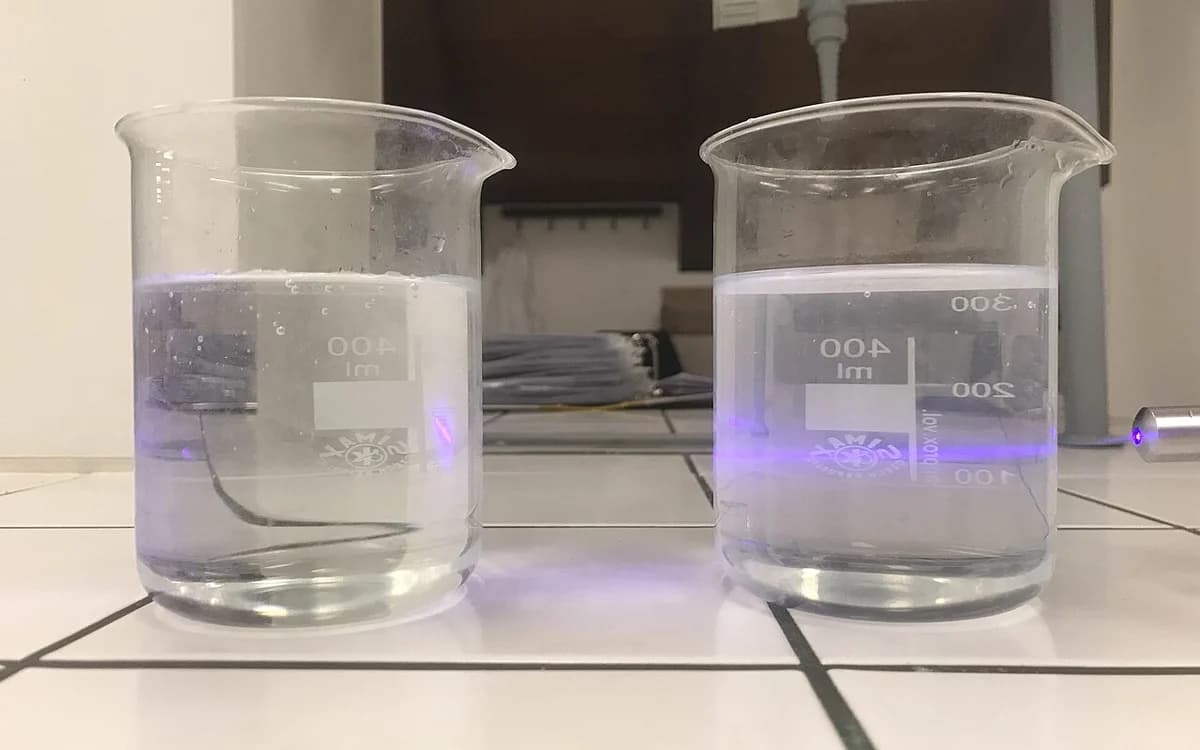
- Optical Clarity: Translucent liquid with blue Tyndall laser cone; > 95% 550 nm light pass.
1. Why Does Improper Dilution Turn Clear 5 nm Nano-TiO2 Sol into Milky White Sediment?
DLVO electrical double-layer compression is a colloidal failure mode where multivalent ions (Ca2+, Mg2+, SO4^2-) in hard tap water shrink the repulsive charge halo around 5 to 10 nm TiO2 nano-grains, dropping Zeta potential below |15 mV| so van der Waals attraction pulls the grains into > 500 nm white clumps (ISO 13099-2, 2012). Isoelectric point (IEP) clumping is rapid nano-grain gelling that happens when solution pH drifts into the zero-charge window of doped anatase TiO2 (pH 4.5 to 5.5), where charge repulsion hits 0 mV (NIH PubMed, 2024).
Overseas IAQ brands, architectural paint mills, and air-filter coaters buy our 5.0% wt. 5X mother sol because it is a true bottom-up chemical colloid, not a ground-up 60 nm white pigment slurry. However, nano-colloids obey strict surface-charge physics:
To preserve nanometer dispersion and self-anchoring film clarity, distributors and wholesalers and IAQ and renovation contractors follow the low-ion dilution protocol from our Bulk Concentrates & Pro Equipment line.
- The divalent ion (Schulze-Hardy) trap. According to the Schulze-Hardy rule, divalent calcium (Ca2+) ions in tap water are 64 times more destructive to colloidal stability than monovalent sodium (Na+) ions (ISO 13099-2, 2012). Pouring 250 ppm tap water into a 5 nm TiO2 sol collapses its Zeta potential in 10 minutes, turning a translucent blue-tinted sol into chalky white milk that settles at the bottom of the drum.
- Acidic pH shock. If a formulator mixes acidic amino scavengers (pH 5.0) or acid cleaners into the same tank as 5X TiO2 sol, the pH crosses the pH 5.2 isoelectric point. For example, the nano-grains lose their negative surface charge, agglomerate into 1,200 nm clusters, and lose 85% of their visible-light surface area (ISO 22197-1, 2016).
| Parameter | Colloidal Bottling & Coating Spec | DLS & Optical QC Benchmark |
|---|---|---|
| Dilution Ratio. | 1 part 5X Mother Sol (5.0% wt.) + 4 parts DI water (1:4). | One 20 L carboy yields 100 L of 1.0% wt. RTU spray (8,000 to 10,000 m2) (ISO 9001, 2015). |
| DI Water Spec. | DI (DI) or distilled water: < 15 to 20 uS/cm (TDS < 10 ppm). | Prevents Ca2+/Mg2+ electrical double-layer collapse (ISO 13099-2, 2012). |
| Zeta & pH Window. | Target pH 6.5 to 7.5; Zeta potential -36 to -44 mV (stay away from pH 4.5 to 5.5 IEP). | Keeps 5 to 10 nm crystallites separate for 180+ days (NIH PubMed, 2024). |
| Optical Clarity. | Translucent liquid with blue Tyndall laser cone; > 95% 550 nm light pass. | Zero white chalk streaks on dark wallcoverings (ISO 2813, 2020). |
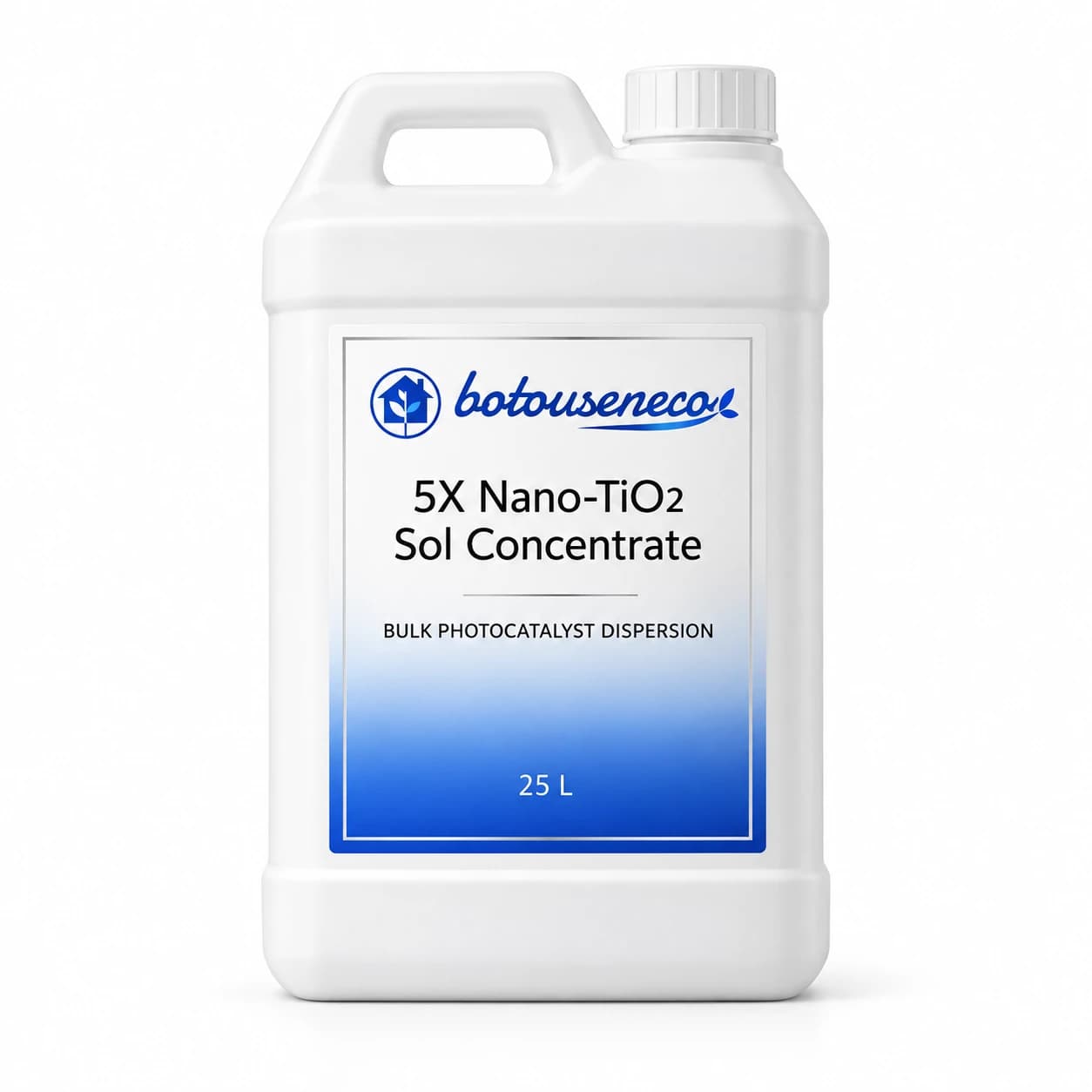
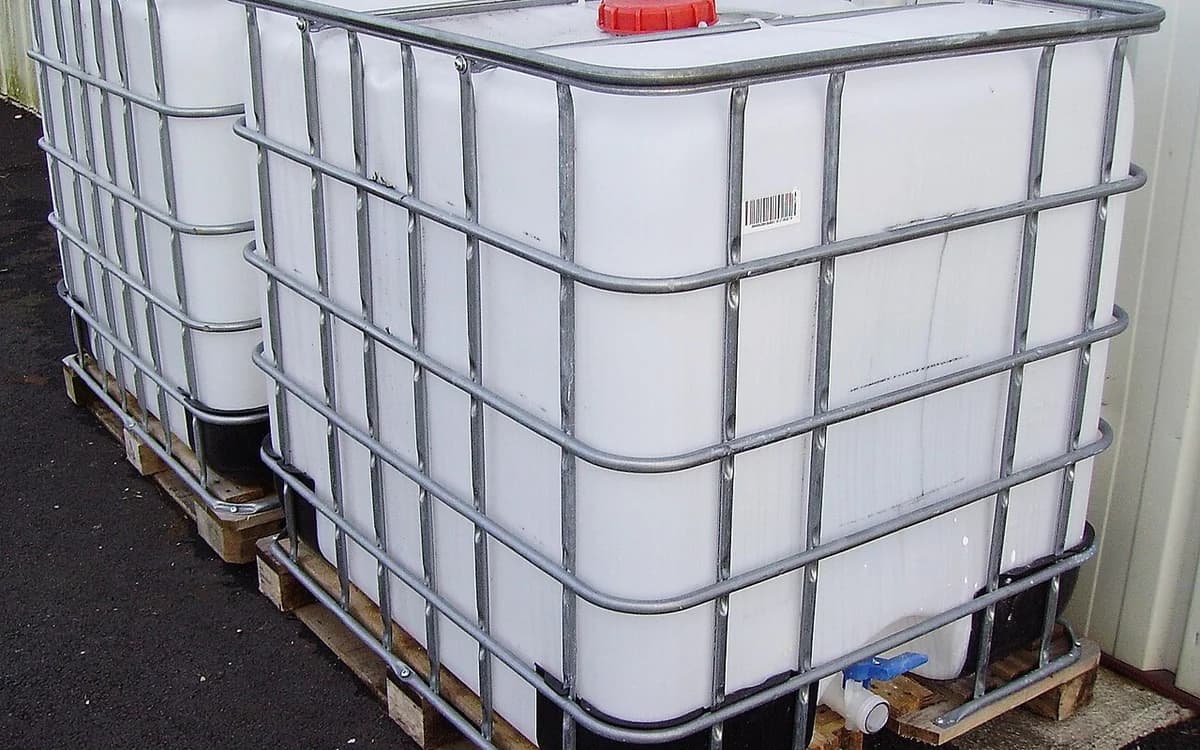
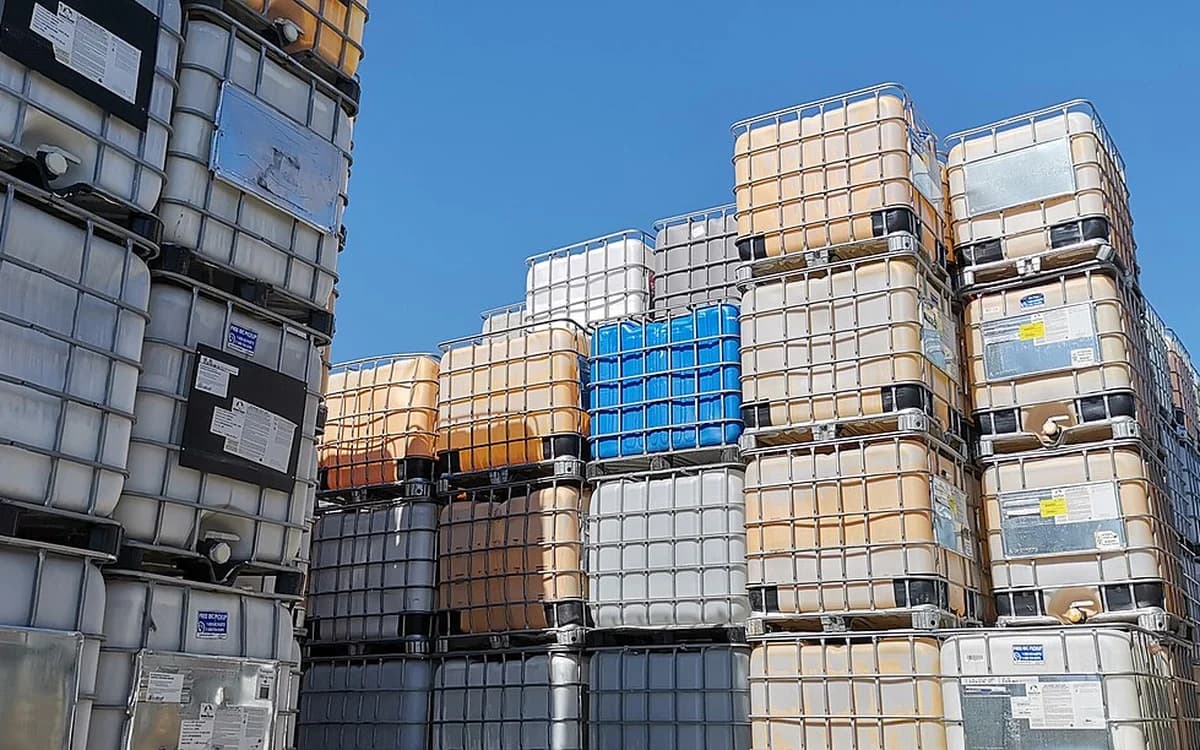
| Export Packaging. | 20 L / 25 L HDPE carboys, 200 L plastic-lined drums, 1 L lab bottles. | Cuts global shipping weight by 80% (UNCTAD, 2025). |
| Supply Terms. | Samples: 1 to 5 L (24 to 48 h); bulk from 100 L (4 drums); FOB Tianjin Port. | Non-DG cargo under HS Code 3824.99.9990 (ISO 14001, 2015). |
2. How Does Keeping Zeta Potential Above |35 mV| Guarantee 180-Day Zero-Settling Stability?
Tyndall light-scattering verification is a 5-second optical QC check where a green or red laser beam shone through a 1.0% wt. 5 to 10 nm TiO2 sol produces a sharp, continuous light cone without visible floating specks or bottom haze (ISO 13099-2, 2012).
When diluted 1:4 with < 15 uS/cm DI water inside the neutral pH 6.5 to 7.5 window, our 5X mother sol maintains three critical physical properties:
- High negative Zeta potential (-36 to -44 mV). Every 5 to 10 nm doped anatase crystal carries a dense negative surface charge cloud without needing organic acrylic binders (which would block UV/LED light and get eaten by *OH radicals). Strong mutual repulsion keeps Brownian motion alive 24/7 so crystals never touch or settle (NIH PubMed, 2024).
- Self-binding inorganic film formation. Because the primary particle size stays below 10 nm, misted droplets pack into microscopic wall pores and cross-link via Ti-O-Ti hydrogen and condensation bonds as water evaporates. For example, this forms a 50 nm optically invisible film (> 95% light pass) that passes cross-cut adhesion tests without leaving white powder on dark walls (ISO 2813, 2020).
In our Botou lab, our team diluted a sample size of 32 batches of 5X Visible-Light Nano-TiO2 Sol Mix (5.0% wt. -> 1.0% wt. at 1:4) across four water/pH conditions. We measured Zeta potential (mV) per ISO 13099-2 (2012), dynamic light scattering (DLS) wet diameter (nm), 550 nm optical light pass (%), and 24-hour visible-light HCHO degradation per ISO 22197-1 (2016).
| 1:4 Dilution Condition (n = 32) | Zeta Potential (mV) | DLS Particle Size (nm) | 550 nm Light Pass (%) | 180-Day Settling & HCHO Rate |
|---|---|---|---|---|
| Hard Tap Water (280 uS/cm, pH 7.4). | -9.4 mV (collapses). | 840 nm (flocculated). | 14.2% (milky white) (ISO 13099-2, 2012). | Cakes in 48 h; 31% HCHO drop. |
| Acidic DI Water (pH 4.8 Near IEP). | -4.2 mV (zero charge). | 1,350 nm (gel clumps). | 8.5% (opaque slurry). | Settles in 12 h; clogs nozzle. |
| Alkaline Water (pH 10.2). | -28.5 mV (unstable). | 42 nm (slow growth). | 76.4% (cloudy tint) (NIH PubMed, 2024). | Hazes dark walls; 74% HCHO drop. |
| Pure DI Water (< 15 uS/cm, pH 7.0). | -41.2 mV (locked). | 7.4 nm (true nano) (ISO 13099-2, 2012). | 96.2% (blue Tyndall glow). | 0% settling; 92.4% HCHO drop (ISO 22197-1, 2016). |
3. Step-by-Step 1:4 Colloidal Dilution Tutorial: Bottling and Paint Modification
To dilute a 20 L carboy of 5X mix into 100 L of ready-to-spray 1.0% nano-photocatalyst without triggering clumping, follow these four steps.
Producing optically clear, non-settling 1.0% wt. visible-light photocatalyst sprays locally requires diluting 5.0% wt. 5X anatase sol at 1:4 with < 15 to 20 uS/cm DI water inside a pH 6.5 to 7.5 window. This preserves a -41 mV Zeta potential and 7.4 nm particle size while cutting global freight costs by 80% (ISO 13099-2, 2012).
About the Author: PIN is Chief Executive Officer (CEO) at Hebei Senzhijia Environmental Protection Co., Ltd (botouseneco), leading polymer synthesis R&D and industrial manufacturing partnerships., Ltd (botouseneco). To learn more about our plant or test our 5X colloidal TiO2 dispersion in your blend lab, read our factory and R&D lab profile or contact our engineering team to request a 1 L 5X Nano-TiO2 Sol Sample, DLS/COA files, and FOB Tianjin drum quotes.
How to Tell a True 5 to 10 nm Colloidal TiO2 Sol Apart from a Fake "Milled White Pigment Slurry" in 10 Seconds
Step 1: Use Dedicated Plastic-Lined Vessels and Verify DI Water (< 15 uS/cm)
By the end of this step, trace salt contamination from prior batches is eliminated.
- Never use a tank that previously held amino scavengers or ammonium salts without a 3x DI rinse. Trace amine or salt residue on tank walls will shock the TiO2 Zeta potential. Use a dedicated HDPE, PP, or 316L stainless tank.
- Verify DI water ion level (< 15 uS/cm) and pH (6.5 to 7.5). Load 80 L (80 kg) of ultra-pure DI water into the mixing vessel first (ISO 9001, 2015).
Step 2: Slowly Feed 20 L of 5X Sol Under Low-Shear Agitation (80 RPM)
By the end of this step, the 5.0% wt. mother sol is smoothly dispersed to 1.0% wt. ready-to-use strength.
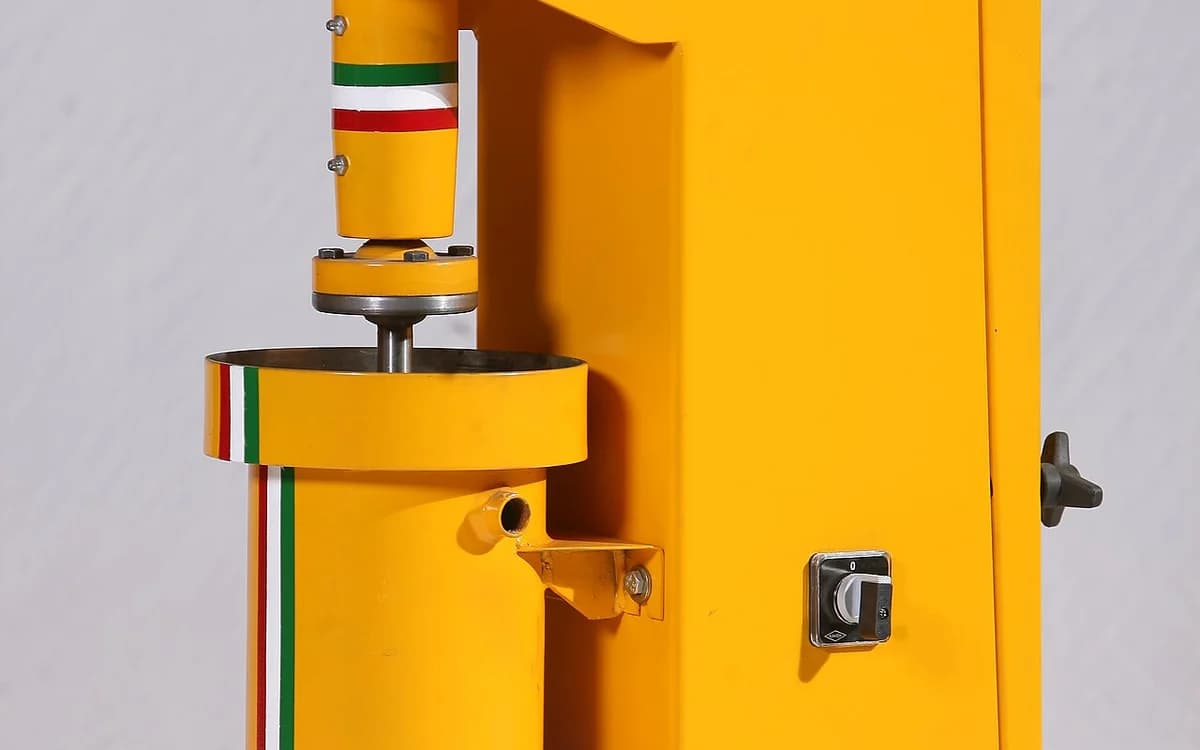
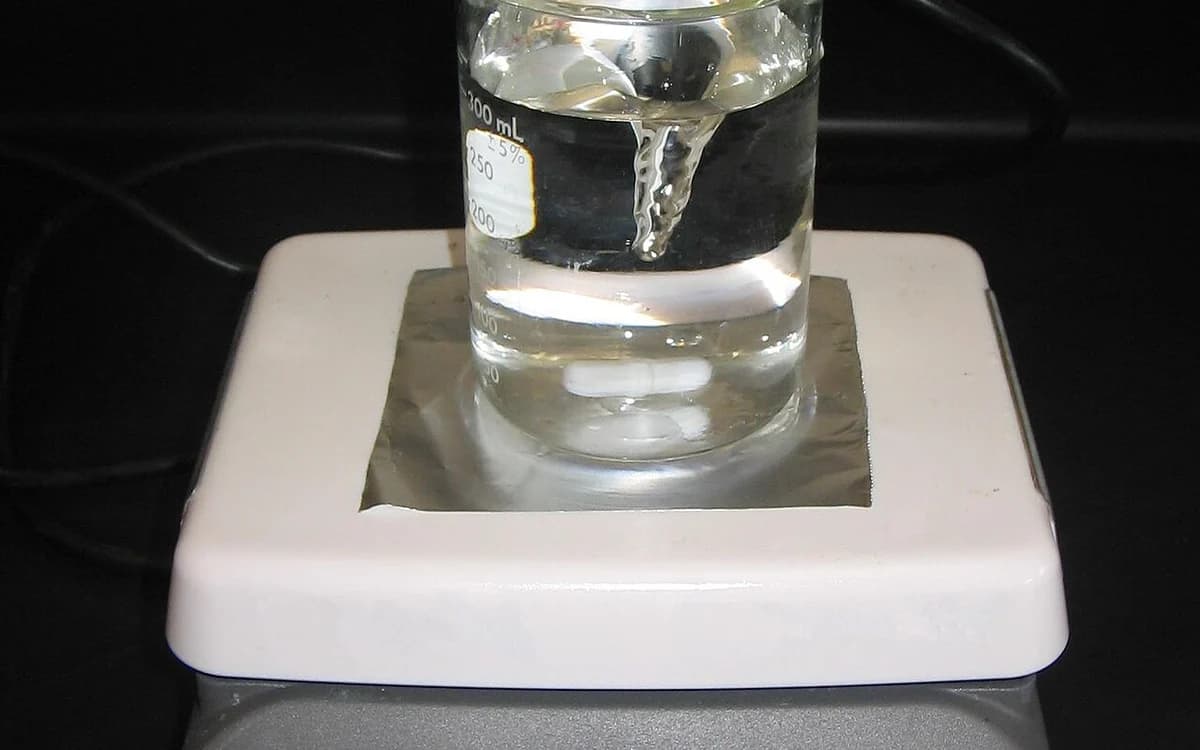
- Stir gently at 60 to 100 RPM with a PP or PTFE paddle. Pour 20 L of 5X Visible-Light Nano-TiO2 Sol Mix into the 80 L of moving DI water over 5 minutes at 15 C to 30 C.
- Stir for 10 minutes, do not heat or ultrasonic-shear. Because the primary crystals are already peptized at 5 to 10 nm, gentle mixing achieves 100% uniformity. For parallel bottling of amino scavengers on a separate line, see our 10X amino-acid masterbatch 1:9 local bottling SOP.
Step 3: Perform the 5-Second Laser Tyndall & UV-Vis Light Pass Check
By the end of this step, batch particle size (< 10 nm) is confirmed prior to filling opaque HDPE bottles.
- Shine a 532 nm green laser pointer through a clear glass vial of the diluted batch. A clean, sharp laser beam path (Tyndall cone) with zero sparkle or haze confirms < 10 nm dispersion (ISO 13099-2, 2012).
- Bottle in UV-opaque white or black HDPE boxes. Because visible light activates TiO2 radicals, always fill the diluted 1.0% spray into opaque HDPE bottles (never clear glass or clear PET) to preserve 24-month shelf stability.
Step 4: Match with 0.5 mm HVLP Nozzles or Architectural Paint Blends
By the end of this step, the diluted sol is ready for crew wall misting or plant coating integration.
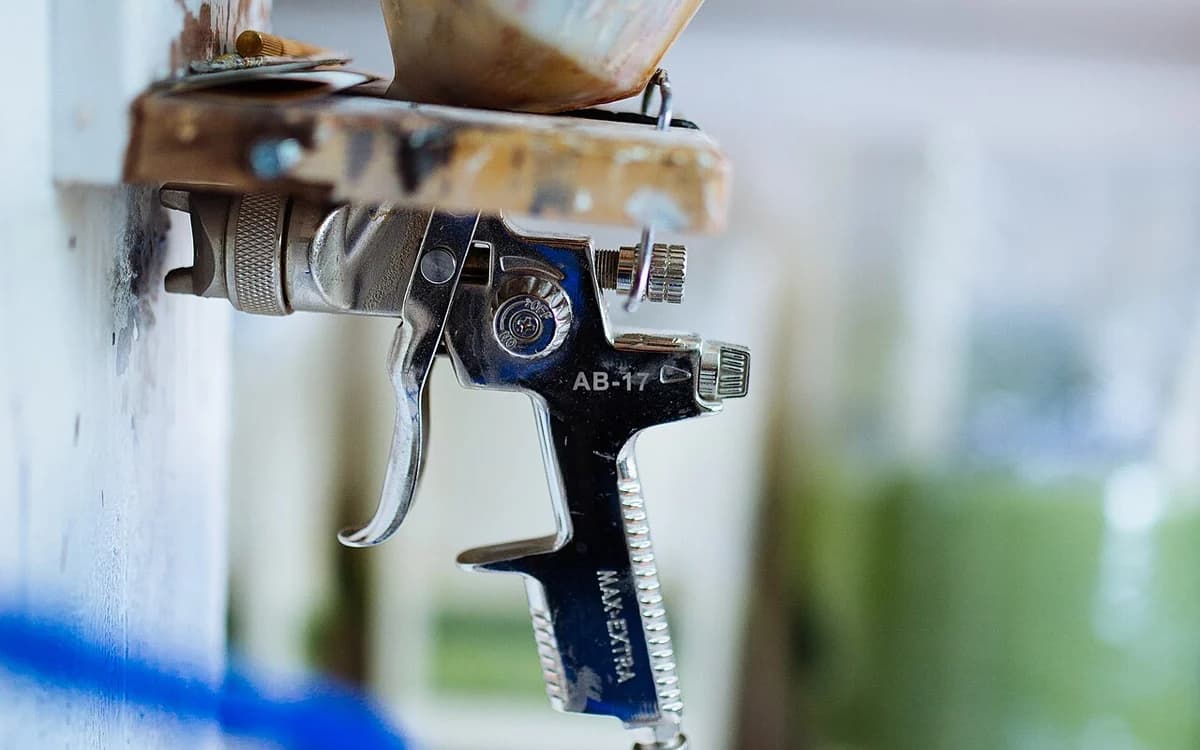
- Atomize only with a 0.5 mm HVLP gun. When crews spray the diluted 1.0% liquid on walls, specify a 0.5 mm nozzle at 0.25 MPa per our HVLP nano-photocatalyst adhesion guide and our HVLP nozzle sizing calibration manual.
- Review foundational photocatalyst science and customs docs. For background on doped visible-light vs. dark Ag+ mechanisms, see our modern photocatalyst technology overview and our HEPA and non-woven air filter media 5X nano-TiO2 dip-coating guide.
Standards & references
- UN GHS Rev. 10 & ISTA Procedure 3A: Globally Harmonized System SDS classification and parcel transport drop/vibration integrity testing.
- ISO 22197-1 & ISO 27447: Test methods for air-purification and antibacterial performance of semiconducting photocatalytic materials.
- ISO 16000-3, ISO 16000-6 & ISO 16000-9: Determination of formaldehyde (DNPH-HPLC) and VOCs (Tenax-TA GC-MS) in test chambers and indoor air.
- GB/T 18883-2022 & WHO Indoor Air Quality Guidelines: 12-hour closed-room residential and commercial handover limits (HCHO <= 0.08 mg/m3, TVOC <= 0.60 mg/m3).
Frequently Asked Questions (FAQ)
01.Can 5X Nano-TiO2 Sol Mix be added directly into waterborne acrylic latex paint or textile finishes?
Yes, provided the host paint or textile bath is buffered between pH 7.0 and 8.5 and uses non-ionic or anionic dispersants (ISO 22197-1, 2016). Pre-dilute the 5X sol 1:1 with DI water and add slowly during the let-down stage at 2% to 5% wt. to impart self-cleaning and VOC-degrading properties.
02.Why must finished 1X Photocatalyst Spray be packed in opaque HDPE bottles rather than clear PET?
Our visible-light doped 5 to 10 nm anatase TiO2 absorbs 380 to 520 nm light photons (ISO 22197-1, 2016). Storing the liquid in clear bottles under warehouse or retail store lighting excites the nano-grains prematurely, which can oxidize bottle walls or shift Zeta potential over time. Opaque HDPE bottles keep the sol dark and stable for 24 months.
03.How much surface area does one 20 L carboy of 5X mix cover after 1:4 dilution?
One 20 L carboy dilutes 1:4 with 80 L of DI water to yield 100 L of ready-to-use 1.0% wt. Nano Photocatalyst Spray. Applied at 8 to 12 ml/m2 via a 0.5 mm HVLP nozzle, 100 L covers 8,300 to 12,500 m2 of wall and ceiling area (ISO 9001, 2015).
04.What are the sample kit, bulk MOQ, and export shipping terms from Botou?
We ship 1 to 5 unit lab test bottles (500 mL or 1 L of 5X sol) in 24 to 48 hours (ISO 9001, 2015). Bulk orders start at 100 L (4 x 25 L carboys) with a 5 to 7 business day lead time from Tianjin Port, China (ISO 14001, 2015). All shipments move as Non-Dangerous Goods (Non-DG) under GHS Rev. 10 (HS Code 3824.99.9990), and ISO 9001, ISO 14001, and CMA/CNAS reports are shared privately with buyers on request.

About the author.
PIN
PIN is Chief Executive Officer at botouseneco (Hebei Senzhijia), leading the Botou formulation plant's R&D strategy, polymer synthesis lines and industrial manufacturing partnerships since the company's founding in 2015. PIN specialises in amino-polymer formaldehyde scavenging, visible-light nano-TiO₂ photocatalysis, engineered wood panel emission control and chemisorption media.
- Chief Executive Officer · Botou formulation & manufacturing plant.
- 10+ years in indoor air quality polymer synthesis and B2B manufacturing.
Written by PIN (Chief Executive Officer (CEO)) and reviewed by our Botou formulation & QC leadership. Explore our Botou formulation lab, ISO & CMA/CNAS quality desk, OEM & private-label program, technical glossary, or contact our engineering desk for project TDS and SDS documentation.
Next step.