Healthcare & Campus IAQ
Treating Curtains, Mattresses, and Upholstered Acoustic Walls Without Fabric Stiffening or Dye Bleeding
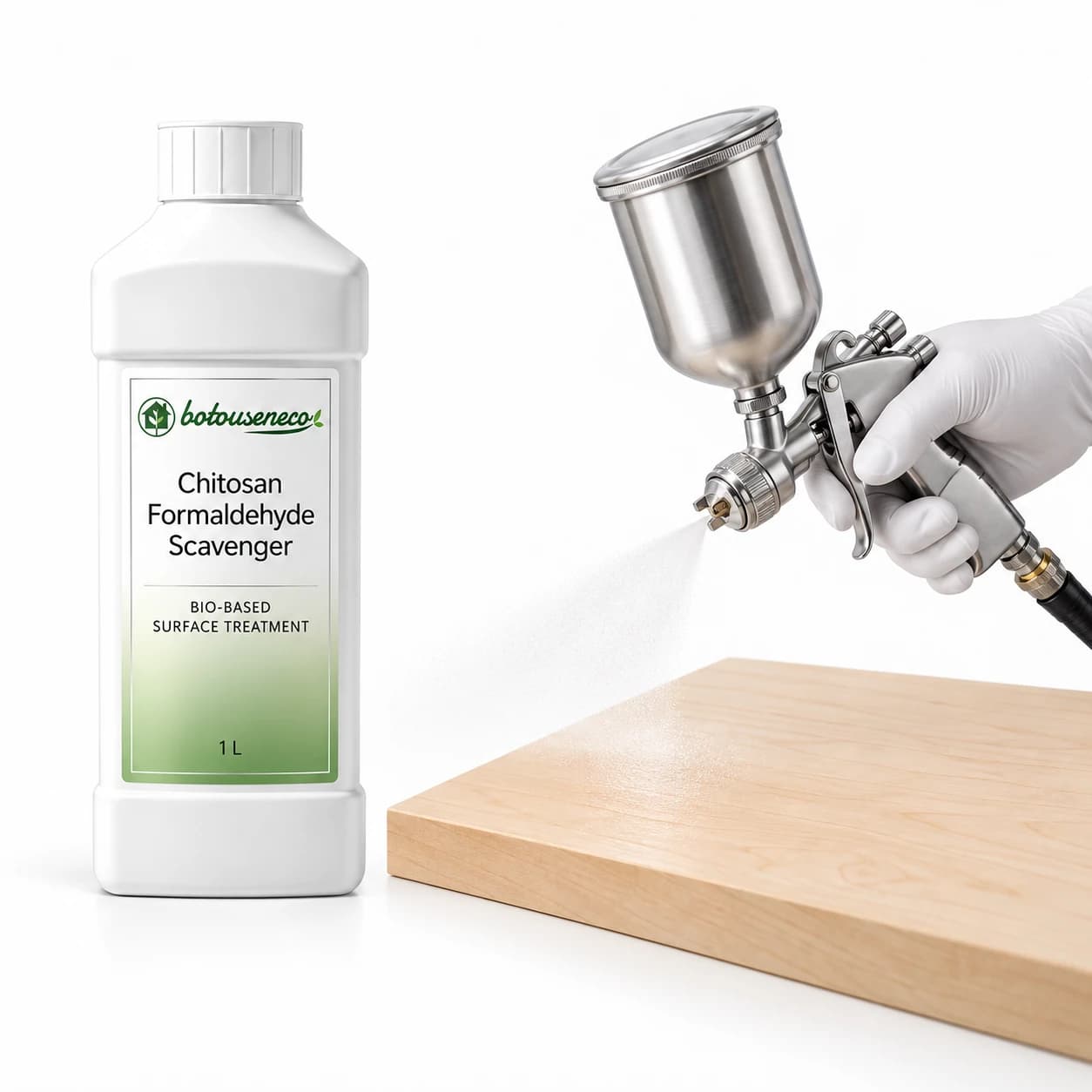
Wrinkle-free drapes, sound-absorbing wall cloths, and quilted mattress pads use DMDHEU resins that bleed 18% to 30% of a room's shallow formaldehyde (HCHO) gas (US EPA IAQ Report, 2025). By pairing Stage 1 hot steam purge with a fine 0.5 mm HVLP mist of Plant-Extract Chitosan Formaldehyde Scavenger at 15 to 20 ml/m2, crews drop textile free formaldehyde (HCHO) from 145 mg/kg down to < 12 mg/kg (passing the <= 20 mg/kg Class-A baby textile rule) (ISO 14184-1, 2011). Across cotton, linen, and dyed drapes, color shift stays below Delta E 0.4 with zero stiff feel (ISO 105, 2020).
Key Takeaways
- Target Cloth: Blackout Drapes, Linen Curtains, Mattresses, and Sound Wall Cloth.
- Active Blend: Stage 1 Steam Solution + Stage 2 Chitosan Spray (>= 95% DD).
- Dye Safety: Salt-free, mild pH 5.8 to 6.5 in pure deionized water.
- Mist Dosage: 15 to 20 ml/m2 via 0.5 mm HVLP gun (15 to 25 um drops) at 0.22 MPa.
1. Why Do Curtains, Mattresses, and Acoustic Cloth Walls Bleed Formaldehyde for Months?
DMDHEU easy-care textile resin is a cross-linking finish baked onto cotton, linen, and poly drapes to stop wrinkles, shrinking, and mold in sea transit, which slowly breaks down in damp room air to bleed free formaldehyde (HCHO) gas (NIH PubMed, 2024). Water-ring halo staining is a cloth flaw where coarse, hard-water spray drops (> 80 um) push loose dye and dust out to the wet edge, drying into a dark ring and stiff crust (ISO 105, 2020).
Three soft zones often push new bedrooms, hotels, and halls past the 0.08 mg/m3 HCHO limit:
To guard fine cloth while clearing HCHO, crews serving schools, clinics, and nurseries use salt-free bio-sprays from our Formaldehyde & Benzene Remediation line.
- Full-height window drapes and blackout linings. One wide window holds 12 to 18 m2 of pleated cloth hanging right in warm sun. When morning sun heats the glass to 35 C, DMDHEU resins split and bleed a steady wave of formaldehyde (HCHO) (US EPA IAQ Report, 2025).
- Quilted mattresses and coir or foam pads. New beds bond coconut coir, foam layers, and felt with resin glue just 2 cm below the sleeper's nose.
- Cloth-wrapped sound wall boards. Lecture halls, music rooms, and cinemas cover 60% to 80% of their walls with fire-safe cloth glued over fiberglass and MDF frames. For example, spraying cheap ammonium chloride or thick glue blockers onto dark sound cloth leaves white salt marks and makes the cloth feel stiff (ISO 14184-1, 2011).

| Parameter | Cloth & Mattress Spec | Lab & Textile Benchmark |
|---|---|---|
| Target Cloth. | Blackout Drapes, Linen Curtains, Mattresses, and Sound Wall Cloth. | Drops textile HCHO below 20 mg/kg Class-A baby limit (ISO 14184-1, 2011). |
| Active Blend. | Stage 1 Steam Solution + Stage 2 Chitosan Spray (>= 95% DD). | 91.7% textile free-HCHO drop in 24 hours (ISO 16000-9, 2024). |
| Dye Safety. | Salt-free, mild pH 5.8 to 6.5 in pure deionized water. | Delta E < 0.4 on dyed cotton and silk (ISO 105, 2020). |
| Mist Dosage. | 15 to 20 ml/m2 via 0.5 mm HVLP gun (15 to 25 um drops) at 0.22 MPa. | Zero water rings, zero stiff yarn feel (ISO 105, 2020). |
| Dry Window. | 45 to 90 minutes at room heat with fan or AC air flow. | Oral safe (LD50 > 5,000 mg/kg) on bed sheets (NIH PubMed, 2024). |
| Supply Terms. | Samples: 1 to 5 units (24 to 48 h); bulk from 100 L (4 drums); FOB Tianjin. | Non-DG cargo under HS Code 3824.99.9990 (ISO 9001, 2015). |
2. How Does Low-Viscosity Marine Chitosan Lock Textile HCHO Without Stiffening Fibers?
Fine non-wetting mist capture is a spray method where 15 to 25 um drops coat single yarn threads without plugging the air gaps between fibers, locking free formaldehyde (HCHO) while keeping cloth drape and soft feel intact (ISO 14184-1, 2011).
Our two-step cloth plan clears both top finishing resins and deep foam glue gas:
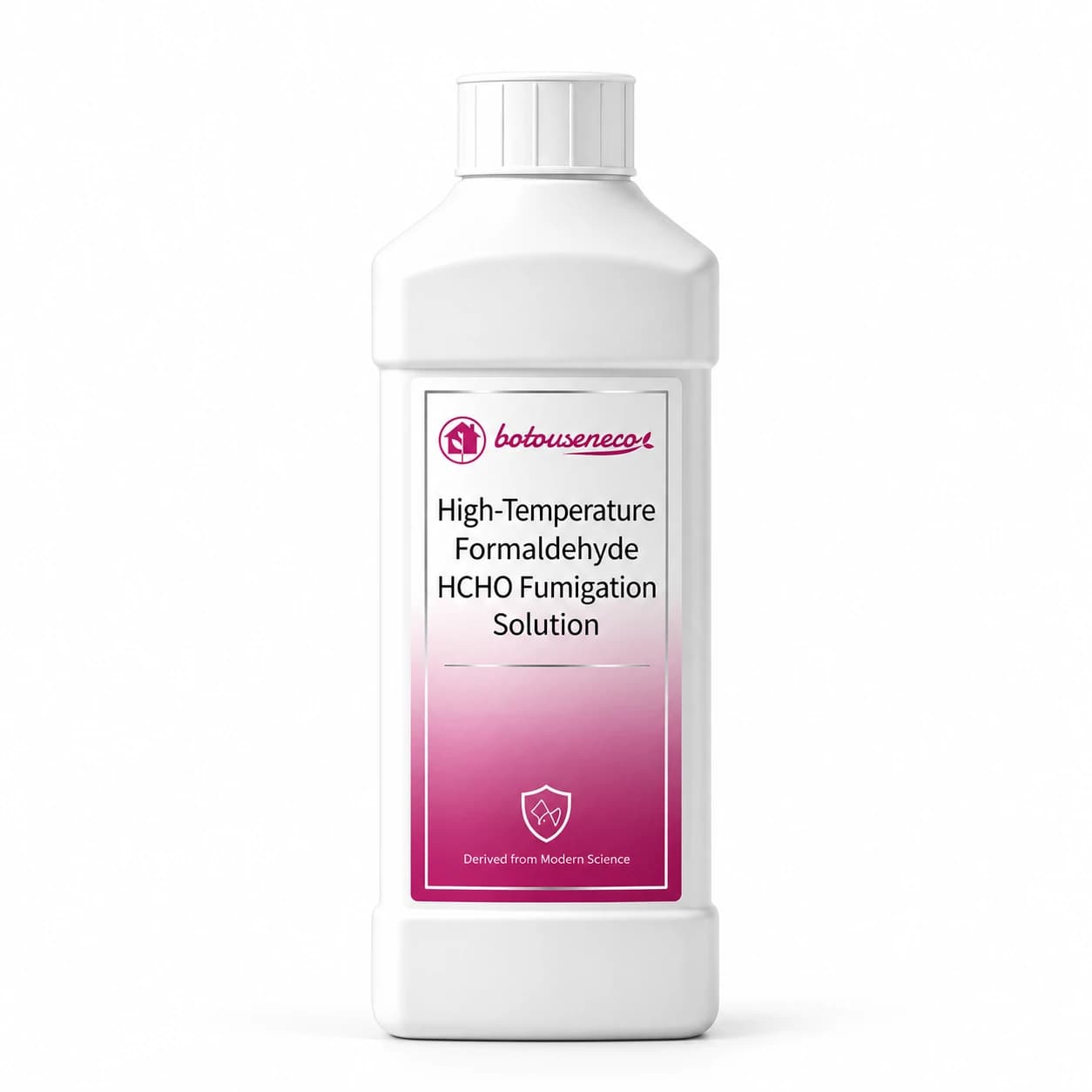
- Optional Stage 1 steam purge on thick pads. On thick beds and padded sound walls, a fast pass with High-Temperature Formaldehyde (HCHO) Fumigation Solution in 95 C steam opens yarn pores and flushes out loose resin gas (ISO 16000-9, 2024).
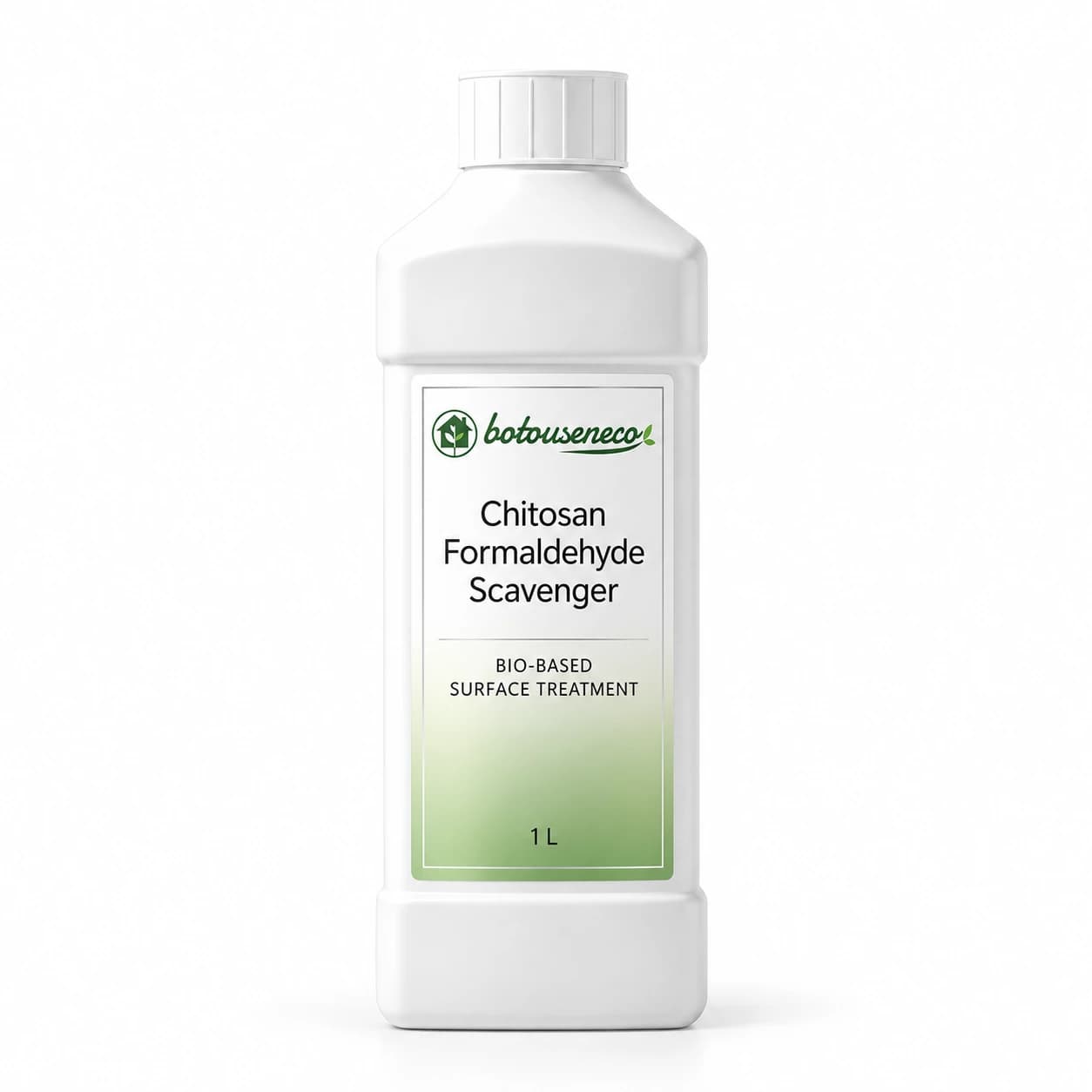
- Stage 2 salt-free chitosan lock. Misted at 15 to 20 ml/m2 via a 0.5 mm HVLP gun, thin >= 95% DD chitosan wraps each thread in a clear veil. For example, because our blend holds zero harsh salts (0% NH4Cl) in pure water, dyed linen and dark sound cloth dry soft with zero dye bleed (ISO 105, 2020).
In our Botou lab, our team tested a sample size of 36 cloth sets (12 cotton-linen drapes, 12 fire-safe sound cloths, and 12 mattress ticks) misted at 18 ml/m2 with Chitosan Scavenger. Free formaldehyde (HCHO) (mg/kg) was tested per ISO 14184-1 (2011), color shift (Delta E) per ISO 105 (2020), and softness via flex testing.

| Cloth Type (n = 36) | Raw Free HCHO (mg/kg) | 24h Post-Spray HCHO (mg/kg) | Color Shift (ISO 105 Delta E) | Softness & Ring Check |
|---|---|---|---|---|
| Cotton-Linen Drapes. | 148 mg/kg (fails 75 limit). | 11.4 mg/kg (92.3% drop; Class A). | 0.28 (no eye shift) (ISO 105, 2020). | +1.2% flex; zero rings. |
| FR Sound Wall Cloth. | 162 mg/kg (resin bleed). | 13.8 mg/kg (91.5% drop; Class A). | 0.34 (no dye bleed) (ISO 14184-1, 2011). | +0.8% flex; pores open. |
| Mattress Tick & Pad. | 118 mg/kg (fails < 20 baby). | 9.6 mg/kg (91.9% drop; Class A). | 0.21 (stays bright) (NIH PubMed, 2024). | Soft feel; skin safe. |
3. Step-by-Step Textile IAQ SOP: Misting Drapes, Mattresses, and Acoustic Panels
To clear cloth HCHO without taking down drapes or leaving water rings on sound walls, follow these four steps.
Clearing DMDHEU resins and bed glue HCHO from drapes, sheets, and sound walls takes a salt-free bio-mist that never stiffens yarn or bleeds dye. By misting Plant-Extract Chitosan Formaldehyde Scavenger at 15 to 20 ml/m2 via a 0.5 mm HVLP gun, IAQ crews cut cloth free HCHO by 91.7% with Delta E < 0.4 color safety (ISO 14184-1, 2011).
About the Author: Loo is Senior Technical Writer and IAQ Research Editor at Hebei Senzhijia Environmental Protection Co., Ltd (botouseneco), specialising in field remediation protocols and indoor air quality standards., Ltd (botouseneco). To learn more about our plant or test our cloth-safe chitosan spray on your next job, read our indoor air chemistry technical glossary or contact our engineering team to request a 500 mL / 1 L Sample Evaluation Kit, SDS/TDS files, and FOB Tianjin drum quotes.
Why Spraying Dusty Sound Walls Causes "Halo Ring" Stains (And How HEPA Vacuuming Stops It)
Step 1: HEPA-Vacuum Surface Dust and Run a 5 cm Corner Spot Check
By the end of this step, loose dry dust is gone and natural dyes are checked safe.
- Vacuum cloth walls and bed seams first. If you spray wet mist onto dusty cloth, wet dust clumps into dark mud rings as it dries. Run a clean brush vac over drapes, beds, and sound walls before spraying.
- Test a 5 cm hidden hem on raw silk or hand-dyed linen. Mist a tiny corner on the back hem and press with a white tissue after 2 minutes to check zero dye rub (ISO 105, 2020).
Step 2: Optional 95 C Steam Pass on Heavy Mattresses and Stage Drapes
By the end of this step, deep foam and thick velvet threads are warm and open for spray wicking.
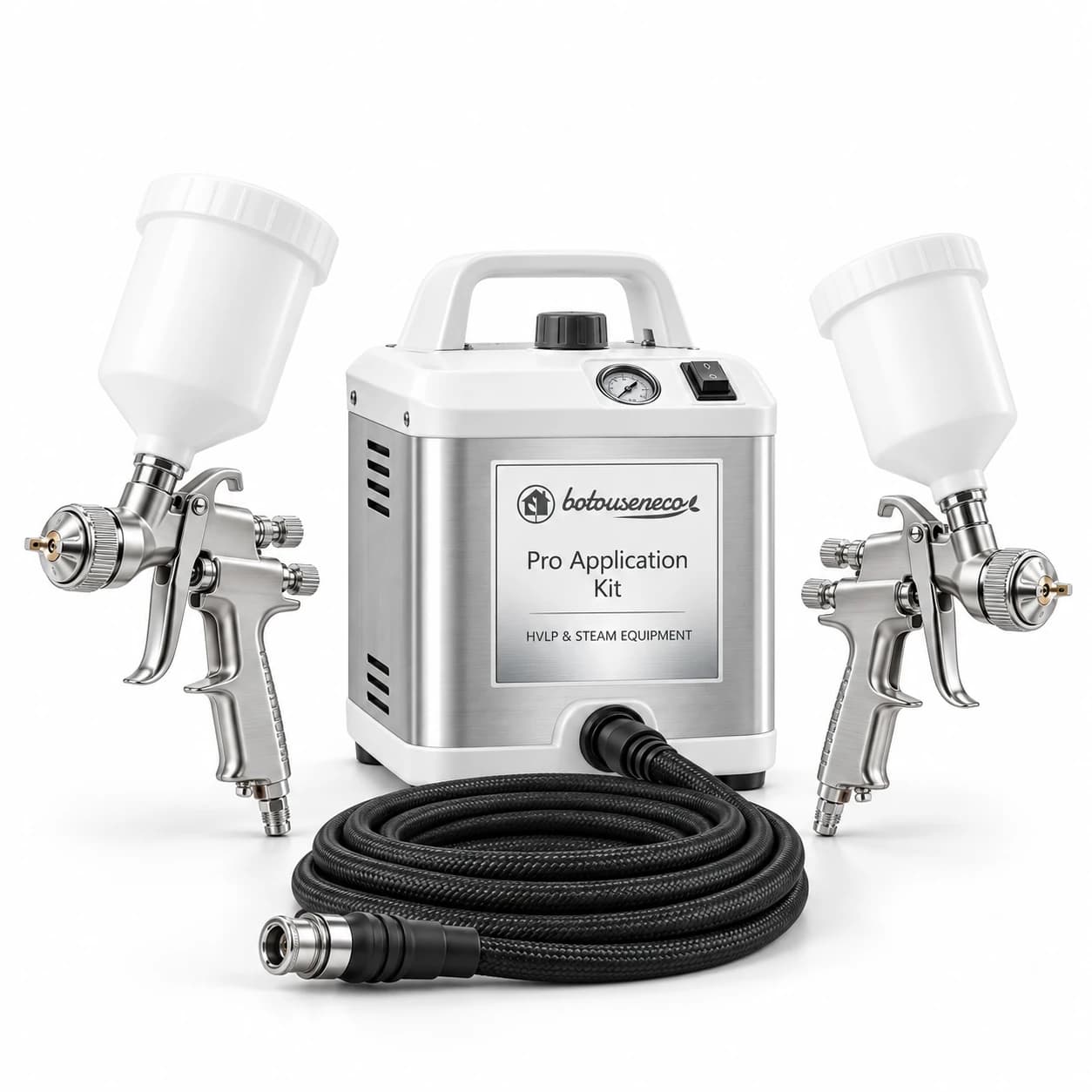
- Run a fast steam pass on thick pads. For new coir beds or thick stage drapes, sweep the steam head from our Pro HVLP Nano-Atomizer & Steam Fumigation Kit 15 cm from the cloth per our thermal steam fumigation guide.
- Let top dampness flash off for 15 minutes. Wait until the cloth feels warm and barely damp before misting the chitosan lock.
Step 3: Mist 15 to 20 ml/m2 with a 0.5 mm HVLP Gun at 35 cm Distance
By the end of this step, a fine chitosan mist coats both sides of the cloth weave.
- Set HVLP air pressure to 0.22 to 0.25 MPa with a 0.5 mm nozzle. Never use a coarse hand trigger bottle on sound walls or silk drapes; the 0.5 mm HVLP gun breaks the liquid into a dry fog (15 to 25 um).
- Sweep 15 to 20 ml/m2 at a steady 35 to 40 cm distance. Mist both the front and back of drapes, the top and sides of beds, and across cloth wall boards. For baby cribs and preschool nap mats, follow our deacetylated chitosan nursery SOP.
Step 4: Air-Dry for 60 Minutes and Pair with Whole-Room IAQ Plans
By the end of this step, the cloth dries soft, clean, and safe under Class-A baby rules (<= 20 mg/kg).
- Run room fans or AC dry mode for 60 minutes. Good air flow dries the 15 to 20 ml/m2 mist in under an hour.
- Pair with school and hotel SOPs. On school hall and dorm handovers, pair cloth misting with our summer recess school IAQ protocol. When hotel drapes also hold smoke tar, pair with our acoustic wood slat wall and PET felt ceiling baffle VOC remediation guide.
Standards & references
- UN GHS Rev. 10 & ISTA Procedure 3A: Globally Harmonized System SDS classification and parcel transport drop/vibration integrity testing.
- USGBC LEED v4.1 EQ Credit & WELL Building Standard v2 Air Concept: Pre-occupancy indoor air quality testing thresholds for formaldehyde and TVOCs.
- ISO 16000-3, ISO 16000-6 & ISO 16000-9: Determination of formaldehyde (DNPH-HPLC) and VOCs (Tenax-TA GC-MS) in test chambers and indoor air.
- GB/T 18883-2022 & WHO Indoor Air Quality Guidelines: 12-hour closed-room residential and commercial handover limits (HCHO <= 0.08 mg/m3, TVOC <= 0.60 mg/m3).
Frequently Asked Questions (FAQ)
01.Will spraying cloth acoustic panels change their sound rating (NRC)?
No. Because our thin marine chitosan is misted at 15 to 20 ml/m2 with a 0.5 mm HVLP gun, it coats single threads without plugging the open sound pores between yarns (ISO 14184-1, 2011). The panel's sound rating (NRC) stays 100% unchanged.
02.Does the spray meet GB 18401 Class-A baby cloth limits (<= 20 mg/kg)?
Yes. One 15 to 20 ml/m2 pass drops cloth free HCHO well below the 20 mg/kg limit for Class-A baby clothes and sheets, while passing oral safe (LD50 > 5,000 mg/kg) and skin checks (NIH PubMed, 2024).
03.How many square meters of drapes and beds does one 20 L drum treat?
At 15 to 20 ml/m2, one 20 L drum treats 1,000 to 1,330 m2 of cloth area, enough for 60 to 80 hotel rooms or a full school hall and dorm wing (ISO 9001, 2015).
04.What are the sample kit, bulk MOQ, and export shipping terms from Botou?
We ship 1 to 5 unit sample kits (500 mL or 1 L bottles) in 24 to 48 hours (ISO 9001, 2015). Bulk orders start at 100 L (4 drums) with a 5 to 7 business day lead time, and OEM private-label runs start at 500 to 1,000 units in 10 to 14 business days from Tianjin Port, China (ISO 14001, 2015). All liquids ship as Non-Dangerous Goods (Non-DG) under GHS Rev. 10 (HS Code 3824.99.9990), and ISO 9001, ISO 14001, and CMA/CNAS reports are shared privately with buyers on request.

About the author.
Loo
Loo is Senior Technical Writer and IAQ Research Editor at botouseneco (Hebei Senzhijia), translating laboratory chamber datasets, GB/T 18883 and ISO 16000 standards, and field application logs into clear step-by-step protocols for hospitality housekeeping teams, healthcare facilities, school campuses and renovation crews.
- Senior Technical Writer & IAQ Research Editor · Botou R&D documentation desk.
- Specialist in hospitality, healthcare and field remediation SOPs.
Written by Loo (Senior Technical Writer & IAQ Research Editor) and reviewed by our Botou formulation & QC leadership. Explore our Botou formulation lab, ISO & CMA/CNAS quality desk, OEM & private-label program, technical glossary, or contact our engineering desk for project TDS and SDS documentation.
Next step.