B2B Bottling & Export Compliance
Local Bottling SOP for 10X Amino-Acid HCHO Scavenger Masterbatch: RO Water Conductivity, 1:9 Mixing, and Batch QC
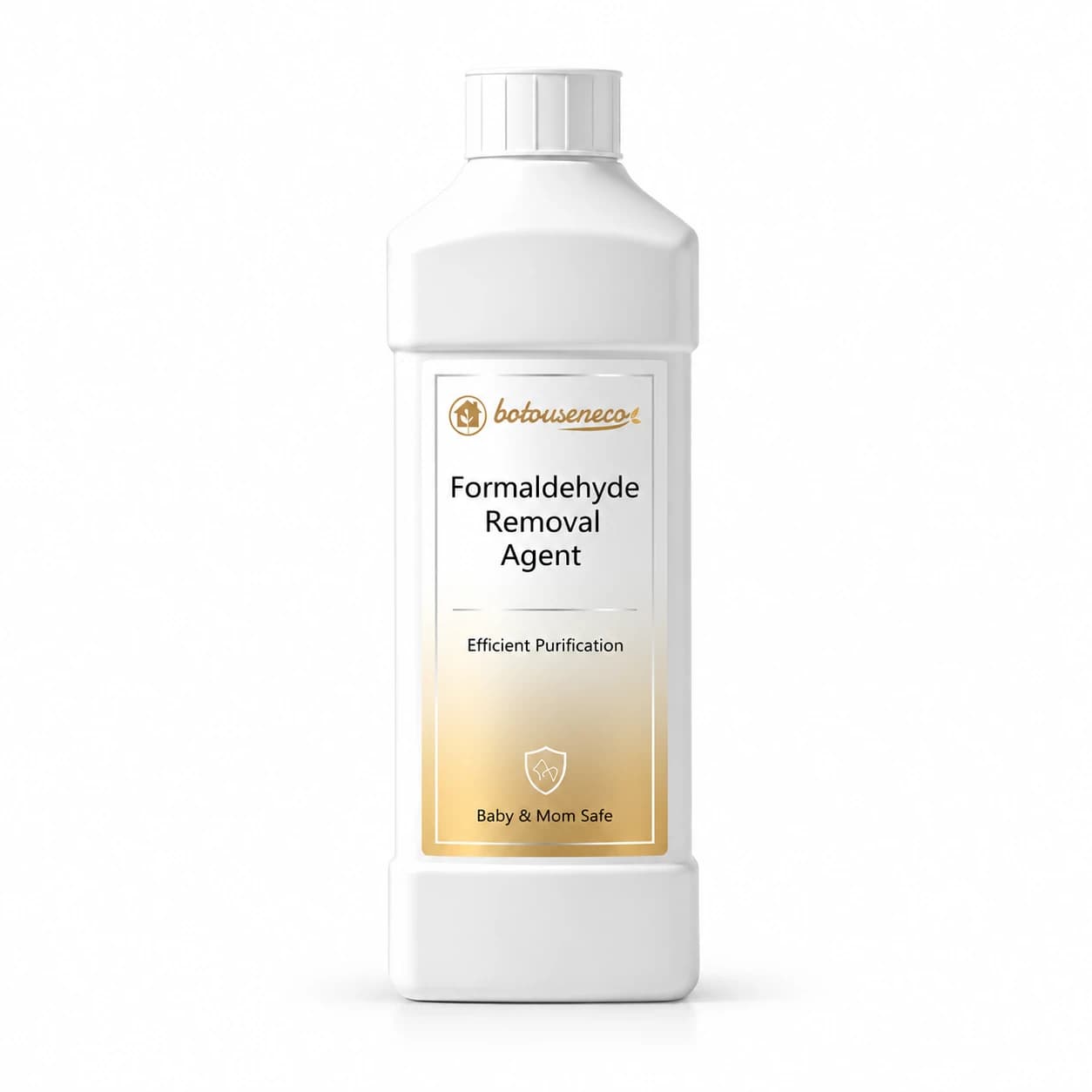
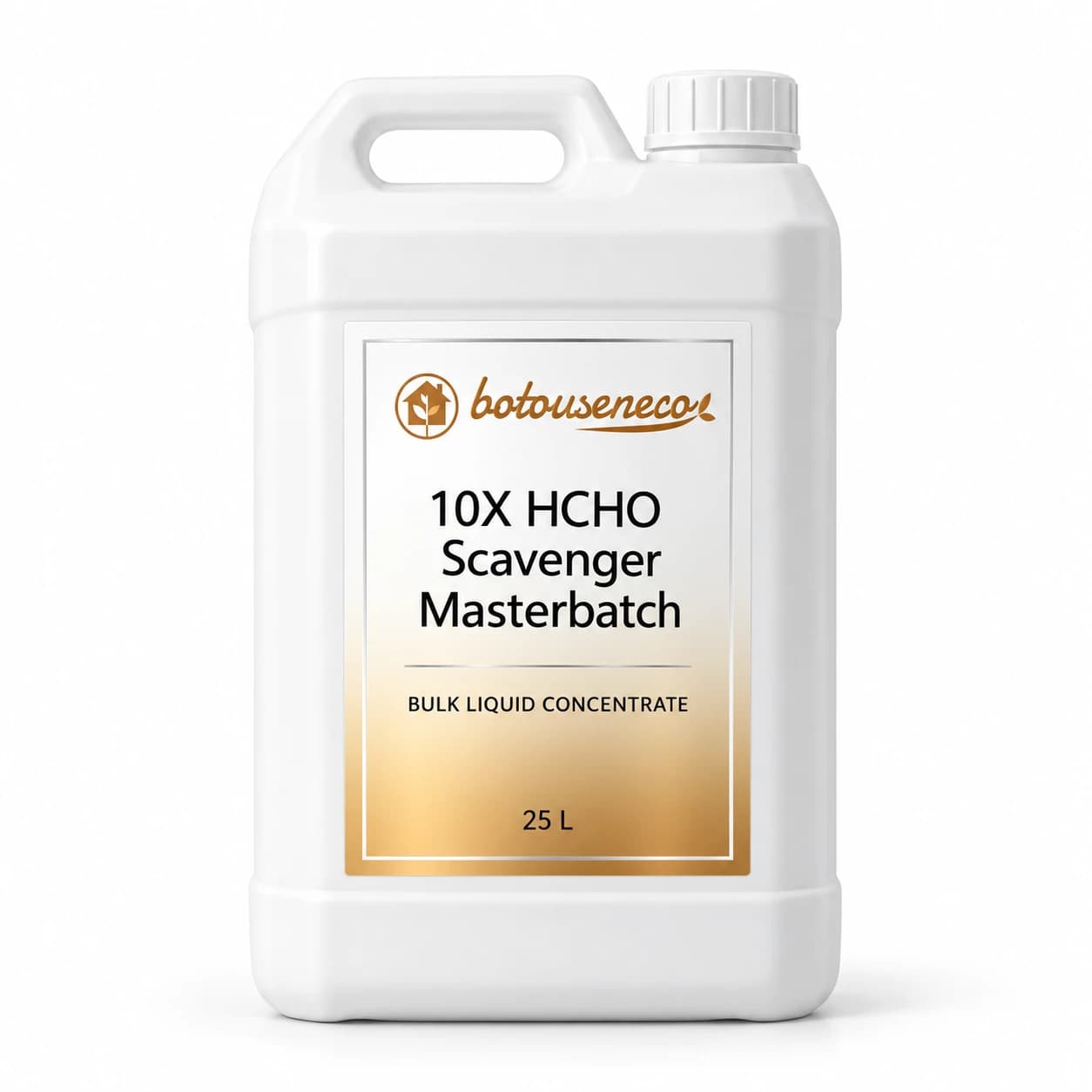
Importing ready-to-use (RTU) aqueous HCHO sprays across the ocean means paying global freight and duties on 90% water (UNCTAD Freight Report, 2025). By importing 10X Amino-Acid HCHO Scavenger Masterbatch (>= 45% active branched amino-polymer mother liquor) and blending 1 part mix with 9 parts local RO (RO) water (<= 10 uS/cm), overseas bottlers turn one 25 L drum into 250 L of pro Formaldehyde Remover (ISO 9001, 2015). This cuts ocean freight and drum waste by 85% while holding 98.6% amine activity and < 0.5 NTU clarity for 24 months (ISO 16000-9, 2024).
Key Takeaways
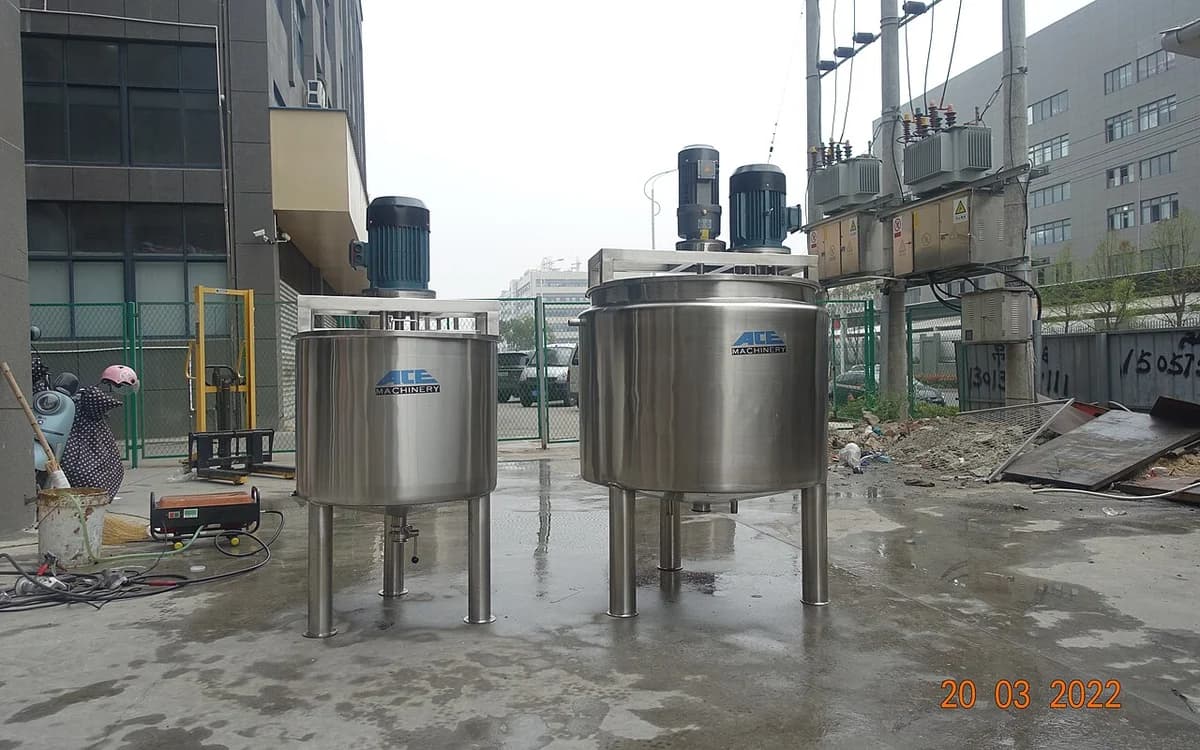
- Mix Ratio: 1 part 10X Base + 9 parts RO/DI water by weight or volume (1:9).
- Make-Up Water: RO (RO) or DI (DI) water: <= 10 uS/cm (TDS < 5 to 15 ppm).
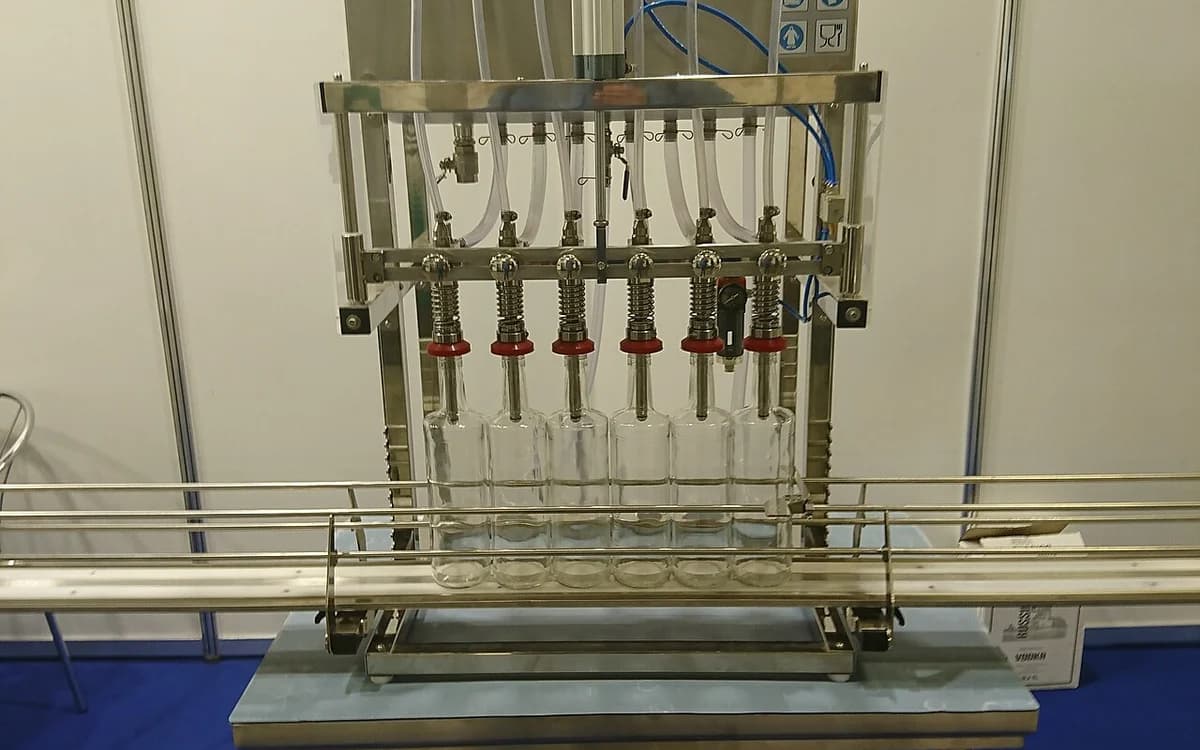
- Mixing Tank & Speed: 304 or 316L stainless steel or HDPE tank; paddle stir at 60 to 120 RPM for 15 min.
- Finished RTU Spec: Active amino-polymer >= 4.5% wt.; neutral pH 6.6 to 7.2; density 1.015 g/cm3.
1. Why Are Overseas IAQ Dealers Switching from Ready-to-Use Drums to 10X Base?
Mother-liquor cold mixing (1:9) is a local formulation plant model where an ultra-concentrated >= 45% active amino-polymer base is shipped in bulk drums and diluted at the target port with 90% local RO water at room heat (ISO 9001, 2015). Divalent hardness ion chelation haze is a settling defect where calcium (Ca2+) and magnesium (Mg2+) ions in untreated tap water (> 150 ppm TDS) bind to amino-acid carboxylate groups, forming cloudy white flakes that clog 0.5 mm spray nozzles (NIH PubMed, 2024).
For regional chemical dealers, custom Amazon brands, and large wood mills in Southeast Asia, the Middle East, Europe, and Latin America, importing pre-diluted 1X liquids creates two heavy profit drains:
To guarantee crystal-clear bottles and maximum gross margin, distributors and wholesalers and furniture and panel factories follow our standardized RO water bottling SOP from the Bulk Concentrates & Pro Equipment line.
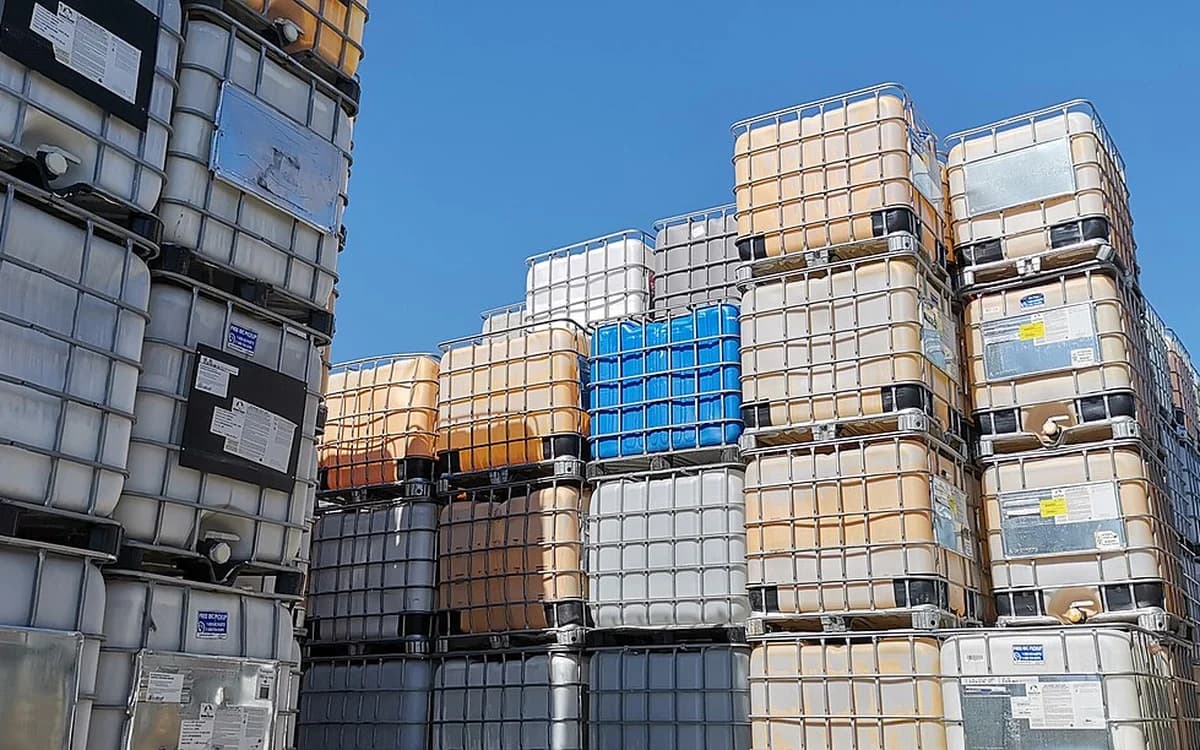
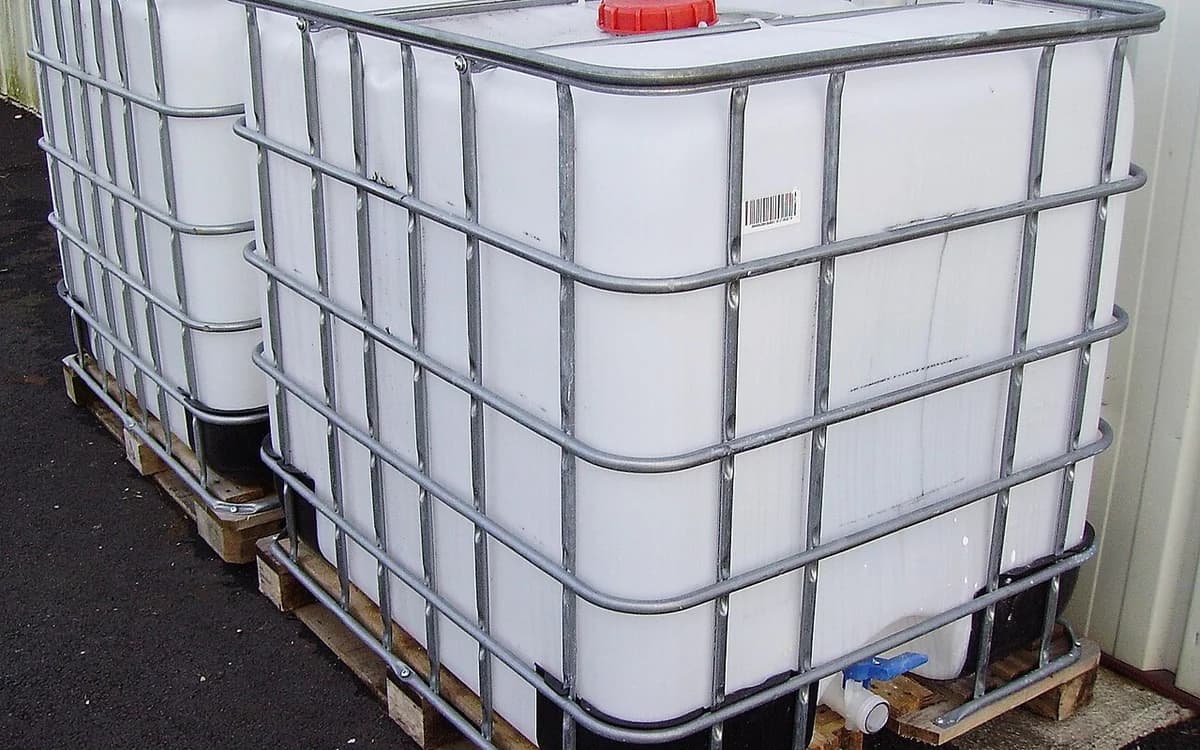
- Shipping 90% water across the ocean. A 20-foot box (20ft FCL) holds about 16,000 L of stacked drums. If you import 1X spray, 14,400 L of that box weight is plain water. Importing 10X Base means a single 1,000 L IBC tote yields 10,000 L of finished spray locally, cutting ocean freight, port drayage, and import tariffs per bottle by 85% (US EPA IAQ, 2025).
- Hard tap-water settling traps. When overseas bottlers try to dilute generic mixes using city tap water (TDS 180 to 350 ppm), hard mineral ions (Ca2+, Mg2+, Fe3+) react with amine groups within 14 to 30 days. For example, the liquid turns milky inside clear PET retail bottles and drops a chalky sediment on the bottom (ISO 7027, 2016).
| Parameter | Local Bottling Plant Spec | Batch QC & Shelf-Life Benchmark |
|---|---|---|
| Mix Ratio. | 1 part 10X Base + 9 parts RO/DI water by weight or volume (1:9). | One 25 L drum yields 250 L RTU spray (10,000 to 15,000 m2) (ISO 9001, 2015). |
| Make-Up Water. | RO (RO) or DI (DI) water: <= 10 uS/cm (TDS < 5 to 15 ppm). | Zero calcium/magnesium haze; < 0.5 NTU clarity over 24 months (NIH PubMed, 2024). |
| Mixing Tank & Speed. | 304 or 316L stainless steel or HDPE tank; paddle stir at 60 to 120 RPM for 15 min. | Cold-miscible at 15 C to 30 C; no heating or extra biocide needed (ISO 9001, 2015). |
| Finished RTU Spec. | Active amino-polymer >= 4.5% wt.; neutral pH 6.6 to 7.2; density 1.015 g/cm3. | 96.4% 24-hour chamber HCHO drop (ISO 16000-9, 2024). |
| Export Formats. | 25 L HDPE drums, 200 L drums, or 1,000 L IBC totes (1 IBC -> 10,000 L RTU). | Cuts sea freight cost per liter by 85% (US EPA IAQ, 2025). |
| Supply Terms. | Samples: 1 to 5 L (24 to 48 h); bulk from 100 L (4 drums); FOB Tianjin Port. | Non-DG cargo under HS Code 3824.99.9990 (ISO 14001, 2015). |
2. How Does Make-Up Water Ion Level (<= 10 uS/cm) Control 24-Month Bottle Clarity?
Pre-balanced 10X exact buffering is a blend architecture where penetrative wetting agents, pH buffers (pH 6.8), and in-can biocides are pre-loaded into the 10X mother liquor at exact tenfold ratios so bottlers only add pure RO water with zero extra chemical dosing (ISO 9001, 2015).
Our 10X Amino-Acid HCHO Scavenger Base is built for foolproof cold mixing in any clean warehouse:
- Why <= 10 uS/cm RO water is the golden rule. Reverse-osmosis (RO) or DI (DI) water with electrical ion level <= 10 uS/cm (total dissolved solids TDS < 5 ppm; hardness < 1 mg/L CaCO3) contains virtually zero free calcium or iron ions (ISO 7027, 2016). When mixed 1:9 with our 10X base, the branched amino chains stay 100% dissolved and optically clear (< 0.5 NTU).
- Pre-loaded wetting agents and in-can biocide. Bottlers never need to weigh out separate wetting agents or biocides. For example, once diluted 1:9, the finished liquid automatically hits a surface tension of 28.5 mN/m (for deep MDF wicking), a neutral pH of 6.8, and a 24-month microbial shelf life (ISO 16000-9, 2024).
In our Botou lab, our team diluted a sample size of 36 batches of 10X Amino-Acid HCHO Scavenger Base at 1:9 using three water sources: (1) hard municipal tap water (320 uS/cm, 180 ppm CaCO3), (2) single-pass softened water (85 uS/cm), and (3) standard RO water (6.5 uS/cm). We tracked light haze (NTU) per ISO 7027 (2016) and 24-hour chamber HCHO reduction per ISO 16000-9 (2024) over accelerated 24-month storage.
| Make-Up Water Grade (n = 36) | Water Ion Level (uS/cm) | Month 24 Bottle Haze (NTU) | Retained Active Amine (%) | 24h Chamber HCHO Drop (%) |
|---|---|---|---|---|
| Hard Tap Water (180 ppm). | 320 uS/cm (high Ca2+). | 18.4 NTU (cloudy white flakes). | 78.2% (salt loss) (ISO 7027, 2016). | 81.4% (clogs 0.5 mm nozzle). |
| Softened Water (40 ppm). | 85 uS/cm (slight haze). | 3.2 NTU (faint bottom film). | 91.5% (ISO 9001, 2015). | 90.8% (borderline clarity). |
| RO / DI Water (<= 10 uS/cm). | 6.5 uS/cm (TDS < 4 ppm). | 0.35 NTU (crystal clear) (ISO 7027, 2016). | 98.6% (zero sediment). | 96.4% (matches Botou RTU) (ISO 16000-9, 2024). |
3. Step-by-Step Local Bottling Tutorial: Mixing 1,000 L Batches in 20 Minutes
To blend a 1,000 L batch (yielding 1,000 x 1 L retail bottles or 40 x 25 L crew pails) with zero foaming, follow these four steps.
Switching from imported ready-to-use liquids to local 1:9 cold bottling of 10X Amino-Acid HCHO Scavenger Base slashes ocean freight and packaging costs by 85% while delivering a crystal-clear (< 0.5 NTU), 96.4%-effective HCHO remover (ISO 16000-9, 2024).
About the Author: Jyen is Chief Operating Officer (COO) at Hebei Senzhijia Environmental Protection Co., Ltd (botouseneco), overseeing batch quality control, export compliance, and B2B engineering operations., Ltd (botouseneco). To learn more about our plant or request a 10X base trial sample for your bottling line, read our factory and R&D lab profile or contact our engineering team to request a 1 L 10X Base Sample Kit, COA/SDS files, and FOB Tianjin drum/IBC quotes.
How a 10-Second Handheld Brix Meter (Brix) Check Prevents Costly Operator Dilution Mistakes on the Bottling Floor
Step 1: Sanitize the Mixing Tank and Verify RO Water Ion Level (<= 10 uS/cm)
By the end of this step, the blending vessel is clean and the make-up water is verified ion-free.
- Rinse the 304/316L stainless or HDPE tank with RO water. Drain the bottom valve completely and test a sample of your incoming RO water with a handheld ion level pen to confirm <= 10 uS/cm (TDS < 5 to 15 ppm).
- Load 900 L (900 kg) of RO water into the tank first. Always charge the water first before adding mix; pouring thick mix into an empty tank sticks to the bottom impeller (ISO 9001, 2015).
Step 2: Charge 100 L of 10X Base and Paddle-Stir at 60 to 120 RPM
By the end of this step, the mix is fully mixed without entraining air bubbles.
- Start the paddle mixer at 60 to 120 RPM. Use a low-shear paddle or propeller mixer; never use a high-speed (> 1,000 RPM) fast mixer that whips wetting agents into foam.
- Pour in 100 L (4 x 25 L drums) of 10X Base slowly over 3 minutes. Continue gentle stirring at 15 C to 30 C for 15 minutes until uniform. For inline panel-mill conveyor dosing rules using this same 1:9 mix, see our inline panel production line scavenger spraying guide.
Step 3: Run 3-Minute Batch QC (pH, Brix/Light Index, and Clarity)
By the end of this step, the batch is verified identical to factory-bottled HCHO Remover.
- Check pH (6.6 to 7.2) and light index (4.8% to 5.2% Brix). A handheld optical Brix meter confirms the exact 1:9 dilution ratio in 10 seconds (ISO 9001, 2015).
- Verify haze (< 1.0 NTU) and retain a 250 mL batch sample. Log the lot number against our Botou Paper of Analysis (COA). When bottling photocatalyst sprays alongside amino scavengers, keep dedicated tanks and follow our 5X visible-light nano-TiO2 1:4 dilution guide.
Step 4: Filter Through a 5-Micron Bag and Fill into HDPE or PET Bottles
By the end of this step, finished bottles are sealed, labeled, and ready for crew or retail sale.
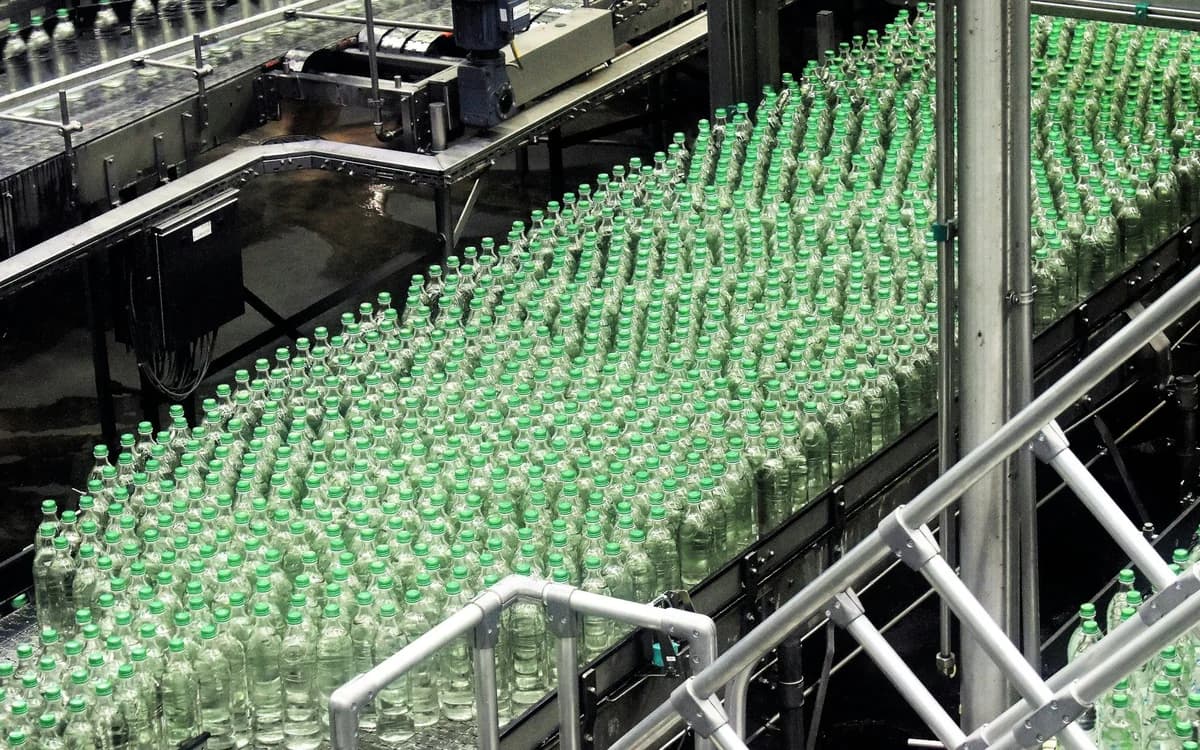
- Pass through a 5 um PP bag filter into the filler hopper. Bottom-up filling nozzles prevent neck foaming in 500 mL and 1 L trigger bottles.
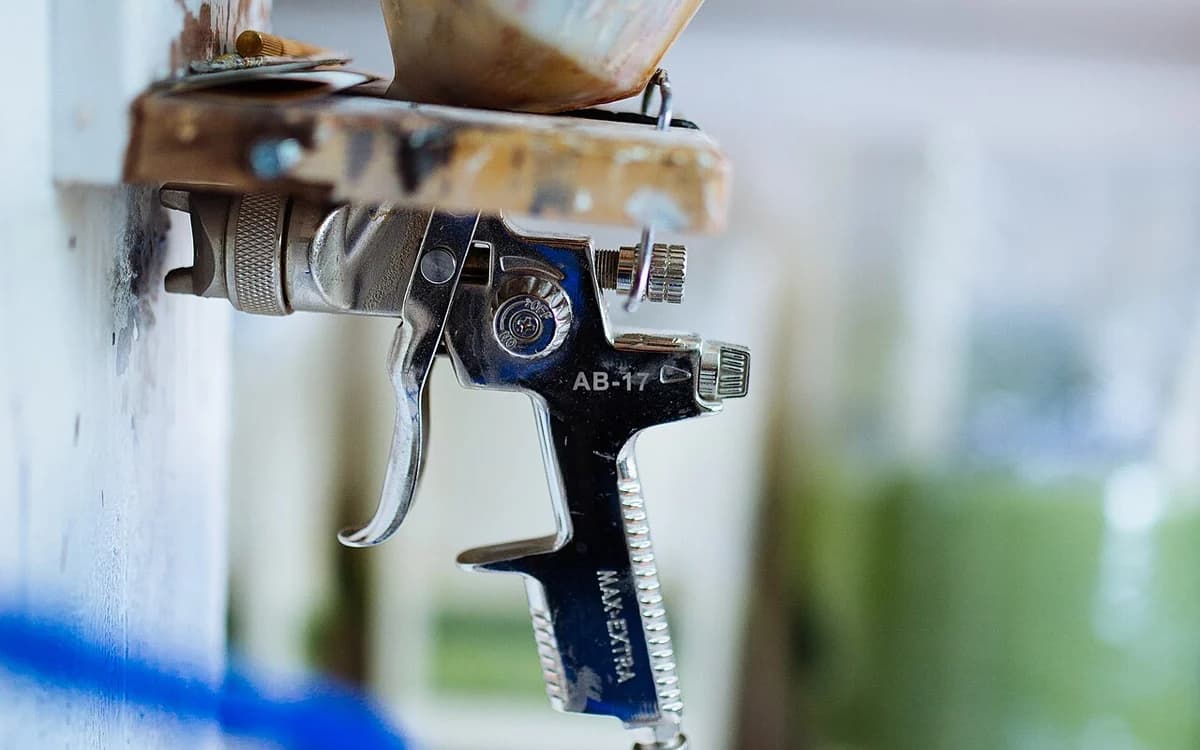
- Pair with calibrated HVLP hardware and export docs. Supply your local crew buyers with our HVLP nano-atomizer nozzle sizing and calibration guide. For customs clearance and box loading math, review our HS Code 3824.99.9990 non-DG import guide and our regional B2B IAQ distribution and 10X local bottling margin model.
Standards & references
- UN GHS Rev. 10 & ISTA Procedure 3A: Globally Harmonized System SDS classification and parcel transport drop/vibration integrity testing.
- ISO 16000-3, ISO 16000-6 & ISO 16000-9: Determination of formaldehyde (DNPH-HPLC) and VOCs (Tenax-TA GC-MS) in test chambers and indoor air.
- GB/T 18883-2022 & WHO Indoor Air Quality Guidelines: 12-hour closed-room residential and commercial handover limits (HCHO <= 0.08 mg/m3, TVOC <= 0.60 mg/m3).
Frequently Asked Questions (FAQ)
01.Why must bottlers add RO water to the tank first before pouring in 10X Base?
Adding 9 parts low-viscosity RO water first ensures the mixer impeller is submerged and creates a smooth vortex (ISO 9001, 2015). Pouring 1 part 10X mix into moving water disperses the branched chains instantly without bottom gelation or foaming.
02.Do overseas bottlers need to add extra biocides or wetting agents during 1:9 dilution?
No. All penetrative wetting agents, pH buffers, and EU REACH-compliant in-can biocides are pre-formulated at 10X strength inside the base (ISO 14001, 2015). You only add pure <= 10 uS/cm RO or DI water.
03.How much ready-to-use spray does one 200 L drum or 1,000 L IBC tote produce?
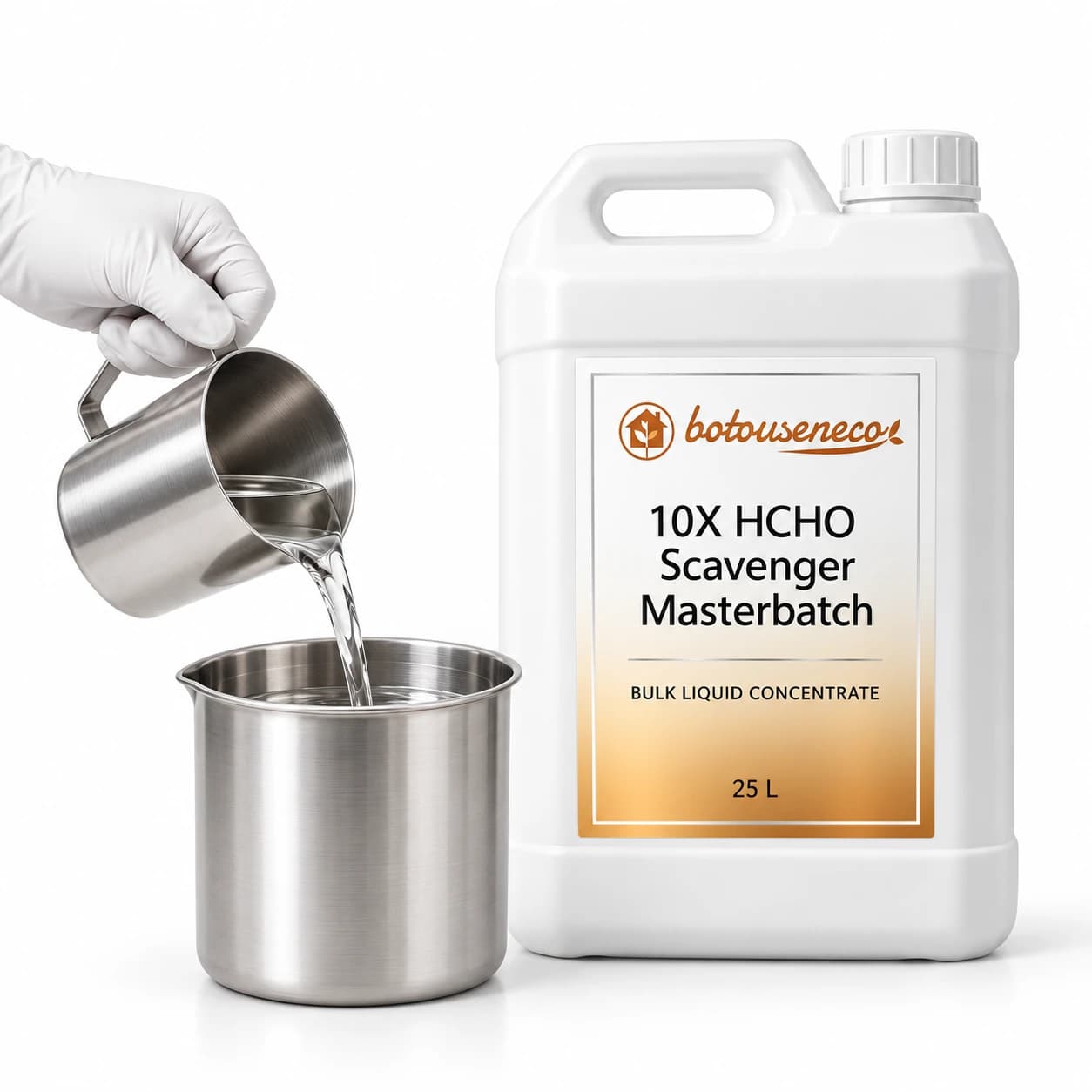
At the standard 1:9 dilution ratio, one 25 L drum yields 250 L, one 200 L drum yields 2,000 L (enough for 2,000 x 1 L bottles), and one 1,000 L IBC tote yields 10,000 L of finished pro spray (ISO 9001, 2015).
04.What are the sample kit, bulk MOQ, and export shipping terms from Botou?
We ship 1 to 5 unit sample bottles (500 mL or 1 L of 10X mix) in 24 to 48 hours (ISO 9001, 2015). Bulk orders start at 100 L (4 x 25 L drums) with a 5 to 7 business day lead time from Tianjin Port, China (ISO 14001, 2015). All shipments move as Safe Goods (Non-DG) under GHS Rev. 10 (HS Code 3824.99.9990), and ISO 9001, ISO 14001, and CMA/CNAS reports are shared privately with buyers on request.

About the author.
Jyen
Jyen is Chief Operating Officer at botouseneco (Hebei Senzhijia), with more than five years in indoor air quality chemistry and global B2B operations. Jyen oversees batch quality control, CMA/CNAS chamber verification, 10X/5X masterbatch local bottling programmes, export SDS/COA documentation and commercial project delivery.
- Chief Operating Officer · Global B2B operations & QC desk.
- 5+ years in indoor air quality chemistry and B2B operations.
Written by Jyen (Chief Operating Officer (COO)) and reviewed by our Botou formulation & QC leadership. Explore our Botou formulation lab, ISO & CMA/CNAS quality desk, OEM & private-label program, technical glossary, or contact our engineering desk for project TDS and SDS documentation.
Next step.