Automotive Cabin & Luxury Leather Care
Why Silicone Dressings and Alkaline Cleaners Crack Automotive Nappa Leather and Trap VOCs: The Case for pH 5.2 Lipophilic Aldehyde Balms
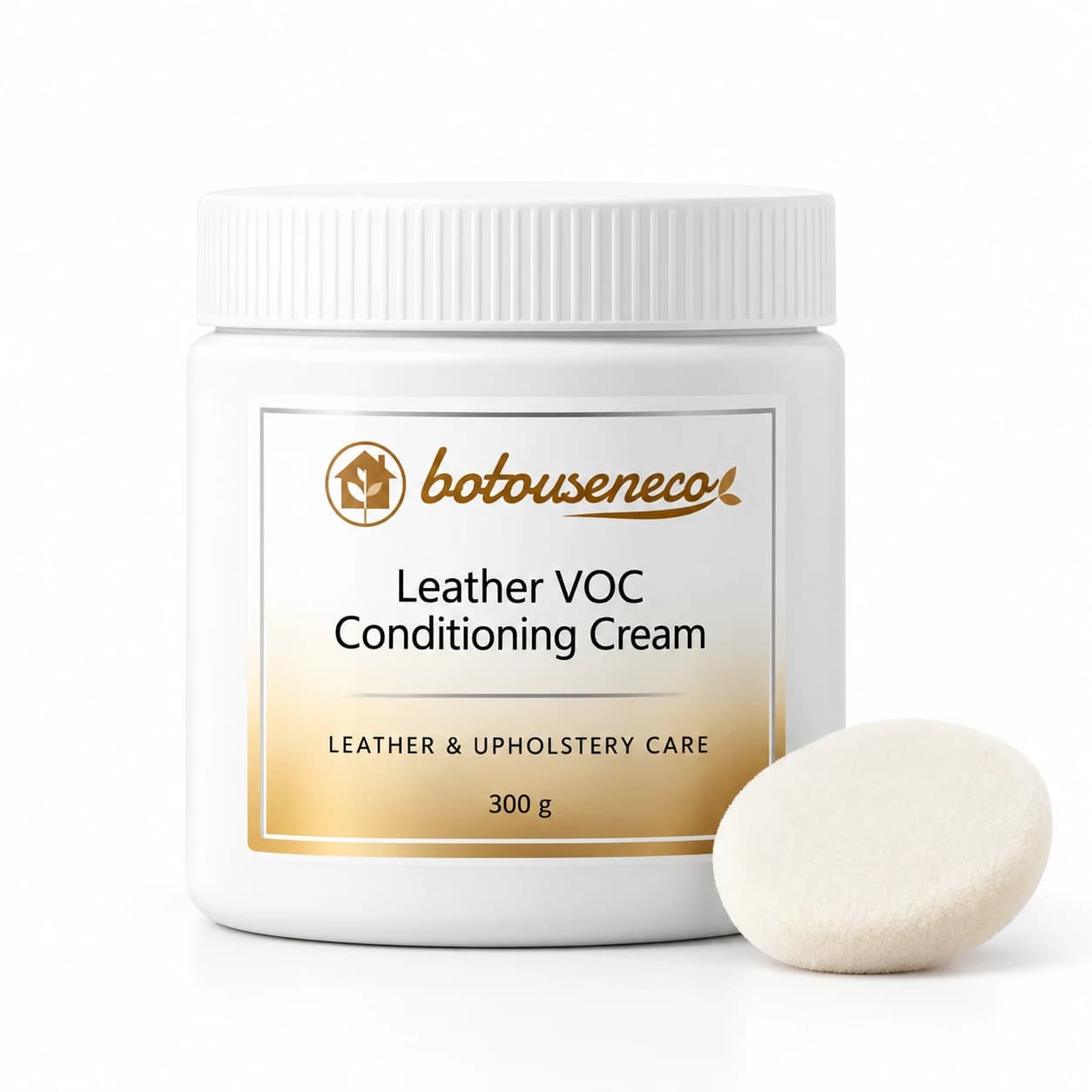
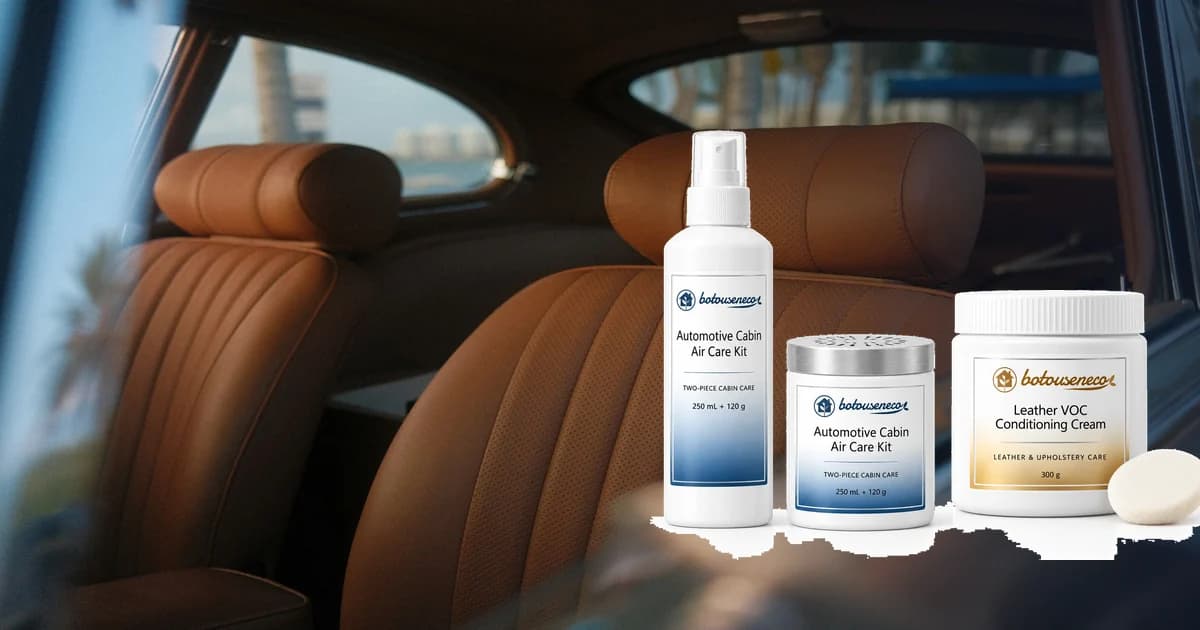
Silicone leather dressing vs. pH 5.2 VOC cream determines whether luxury automotive Nappa seats and hotel lobby sofas stay supple and odor-free or crack within 18 months. Alkaline interior cleaners (pH 9.5-11.5) strip natural fatliquor oils from cowhide collagen (isoelectric point pH 5.0-5.5). Meanwhile, PDMS silicone glazes seal glutaraldehyde, formaldehyde (HCHO), and dimethylformamide (DMF) under a greasy film that bursts out when seats heat to 65 C. Applying zero-silicone Luxury Leather & Upholstery VOC Conditioning Cream (pH 5.0-5.5, 8-12 g/m2) feeds dermis fibers with lanolin and jojoba esters while locking aldehydes and DMF inside beta-cyclodextrin cages.
Key Takeaways
- pH 5.0-5.5 Collagen Isoelectric Match: Prevents the fatliquor saponification and syntan resin hydrolysis triggered by pH 9.5-11.5 alkaline APC cleaners.
- Zero PDMS Silicone & Zero Windshield Fogging: Refined lanolin and jojoba esters nourish Nappa and vegan PU hides to an OEM satin-matte finish without volatile siloxane glass haze at 65 C.
- Dual Amine + Beta-Cyclodextrin Dermis Trap: Oil-miscible amines cross-link HCHO, acetaldehyde, and glutaraldehyde, while beta-cyclodextrin cages lock DMF and fatty hexanal odors.
- 0.8 mm Perforation-Safe & 6.25 Cars per 300 g Jar: Pad-transfer application at 8-12 g/m2 (48 g per 5-seat car, $1.40-$2.20 material cost) keeps ventilated seat pinholes 100% open.
Why Silicone Dressings and Alkaline Cleaners Crack Automotive Nappa Leather
Collagen isoelectric pH balance is the natural acidic window (pH 5.0 to 5.5) where tanned cowhide collagen fibrils keep maximum tensile strength, tight fiber cohesion, and stable ionic binding with sulfated fatliquor oils and syntan retanning agents.
Auto detailing chains, 4S dealership pre-delivery inspection (PDI) managers, and luxury hotel housekeeping directors often wonder why $4,000 Nappa leather seats or lobby sofas develop bolster cracks and sour chemical smells after routine cleaning. See the full cabin and upholstery care matrix in our pillar guide on automotive cabin VOC detox, leather aldehyde conditioning, and wood barrier wax.
The Two-Stage Chemical Failure of Alkaline Scrubbing + Silicone Glazing
In high-volume car washes and janitorial service, crews often scrub leather with diluted alkaline degreasers (pH 10+) and wipe on a shiny polydimethylsiloxane (PDMS) silicone dressing to make the hide look wet:
- Alkaline Saponification & Syntan Hydrolysis (above pH 8.5): When alkaline cleaner soaks through micro-cracks or stitching holes into the leather corium, hydroxide ions (OH-) push the hide far above its pH 5.2 isoelectric point. Collagen fibers swell and natural fatliquor oils wash out. Worse, phenolic and amino syntan retanning resins hydrolyze, releasing fresh formaldehyde (HCHO) and glutaraldehyde per leather emission studies indexed on NIH PubMed Leather Tanning Aldehyde Research (2024).
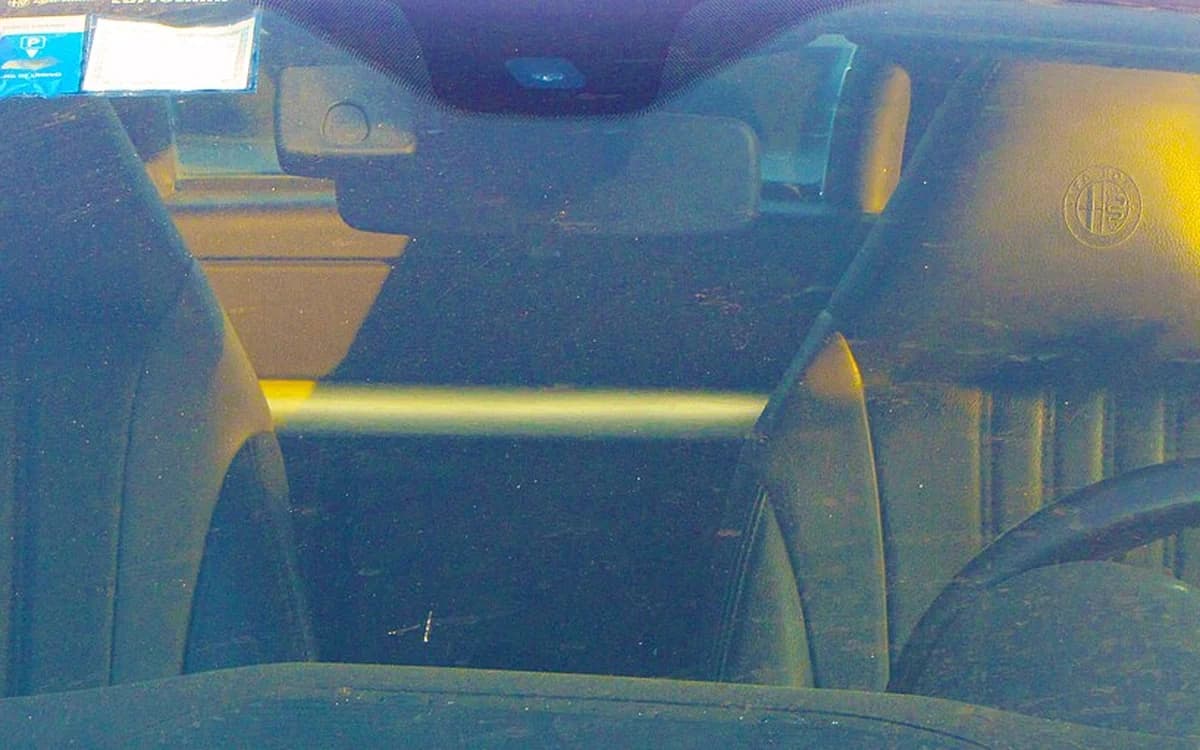
- Silicone Plasticizer Migration & Solar VOC Bursts (60 to 75 C): Applying PDMS silicone oil or petroleum dressings over that dried-out hide creates an airtight glaze. Silicone leaches flexible plasticizers out of the thin 15-micron waterborne polyurethane (PU) topcoat, causing bolster peeling. It also seals N,N-dimethylformamide (DMF, regulated under EU REACH Annex XVII DMF Restrictions (2026)) and aldehydes inside the cushion until summer sun bakes the cabin to 65 C, triggering a sharp VOC burst and greasy windshield fogging.
| Evaluation Metric | PDMS Silicone Dressing (Solvent / Emulsion) | Alkaline Interior Cleaner (pH 9.5-11.5) | botouseneco Leather VOC Cream (pH 5.0-5.5) |
|---|---|---|---|
| Collagen & Fatliquor Match | Dehydrating (Repels moisture; leaches PU plasticizers) | Destructive (Saponifies fatliquor oils; swells fibers) | Isoelectric Match (pH 5.0-5.5 lanolin + jojoba esters feed pores) |
| Action on Aldehydes (HCHO & Glutaraldehyde) | Traps & Delays (Seals gas under glaze; bursts out at 60-70 C) | Triggers Hydrolysis (High pH cleaves syntan resins into HCHO) | Irreversible Lock (Oil-miscible amines cross-link aldehydes in pores) |
| Action on DMF, Toluene & Hexanal | Adds Solvent VOCs (Petroleum distillates spike VDA 276 tests) | Fails (Water wash cannot extract hydrophobic DMF) | Supramolecular Capture (Beta-cyclodextrin cages lock DMF and hexanal) |
| Perforated Seat (0.8 mm Pinholes) Safety | Clogs Pinholes (Greasy silicone film attracts dust and blocks fans) | Wicks into Foam (Soaks PU foam; breeds musty odors) | Pin-Hole Safe Balm (8-12 g/m2 thin wipe buffs dry in 10 minutes) |
| Surface Finish & Wheel Grip | Greasy High Gloss (Slippery on wheels; causes windshield haze) | Chalky & Stiff (Leaves white rings and dry bolster creases) | OEM Factory Matte (Supple satin feel; zero dashboard fogging) |
Head-to-Head Comparison: Silicone Glaze vs. Alkaline Soap vs. pH 5.2 Lipophilic VOC Balm
Lipophilic dermis aldehyde scavenging is the carrier-assisted delivery of oil-miscible nucleophilic amine polymers and beta-cyclodextrin host-guest cages through hydrophobic leather topcoats using refined lanolin and jojoba esters buffered at pH 5.0 to 5.5.
Within our wood wax and luxury leather VOC care product line, we built our conditioning cream in our Botou laboratory to solve both mechanical fiber aging and multi-aldehyde off-gassing in one step.
Why Water-Based Room Sprays Bounce Off PU-Coated and Vegan Leather
- The Hydrophobic Barrier Problem: Over 90% (Botou Leather Lab, 2026) of automotive Nappa seats, executive chairs, and microfiber vegan hides carry a protective polyurethane (PU) or acrylic topcoat. Spraying a standard water-based formaldehyde remover onto leather causes beading and runoff without reaching the glutaraldehyde in the dermis or the DMF and toluene trapped in the PU adhesive layer.
- pH 5.0-5.5 Collagen Lock: Matches the exact acidity of vegetable- and wet-white-tanned leather, stopping alkaline fiber swelling and keeping stitching threads strong.
- Lanolin & Jojoba Ester Dermis Penetration: Mimics natural sheepskin and botanical wax esters (zero petroleum distillates, zero PDMS silicone), softening stiff bolster creases without leaving a slippery film on steering wheels.
- Dual Amine + Beta-Cyclodextrin VOC Trap: Oil-miscible amine groups lock formaldehyde (HCHO), acetaldehyde, and glutaraldehyde (profiled in CDC ATSDR Formaldehyde Profiles (2024) and World Health Organization (WHO) Indoor Air Quality Guidelines (2024)), while toroidal beta-cyclodextrin cavities trap sour hexanal and residual DMF solvent.
How Do Detailers and Sofa Plants Apply pH 5.2 Lipophilic VOC Cream on Perforated Nappa?
Perforation-safe shear-thinning application is the low-grammage (8 to 12 g/m2) pad-transfer method where a thixotropic conditioning balm wets the top grain around 0.8 to 1.2 mm laser-punched ventilation pinholes without plugging the air channels underneath.
Across our automotive dealership and detailing cabin programs, technicians follow a 15-minute non-clogging SOP for ventilated EV seats, luxury sedans, and hotel lobby furniture:
- Step 1 — Dry Vacuum & Mild pH-Neutral Wipe (Minute 0 to 3): Vacuum seat seams and perforation holes with a soft horsehair brush. Wipe surface dust with a lightly damp microfiber towel. Never use pH 10 APC or hot steam guns on Nappa hides.
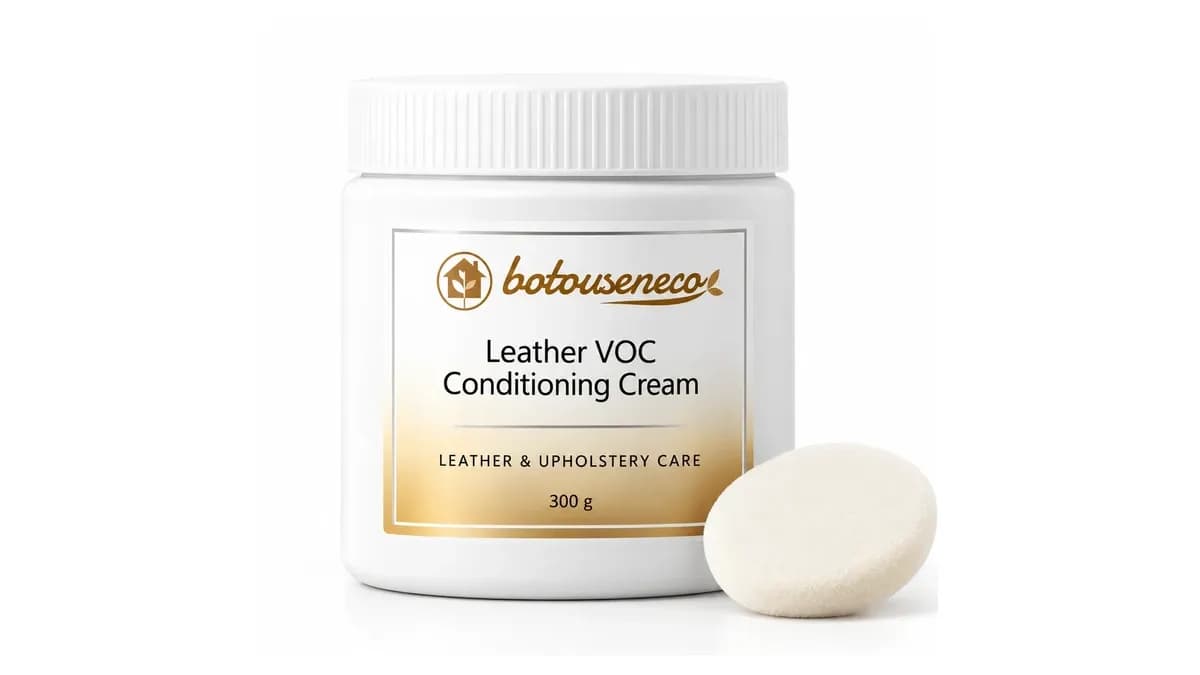
- Step 2 — Thin Applicator-Pad Transfer (8 to 12 g/m2, Minute 3 to 8): Dab 2 to 3 grams of Luxury Leather and Upholstery VOC Conditioning Cream onto a high-density foam applicator pad (never dump cream directly onto perforated leather). Work the balm into the sponge first, then glide across perforated seat centers, bolsters, dashboard leather, and steering wheels at 8 to 12 g/m2. One 300 g jar treats 25 to 35 m2 (5 to 7 full 5-seat SUV/sedan interiors or 8 to 10 three-seat hotel sofas). See Alcantara masking steps in perforated cooled Nappa leather and Alcantara suede VOC conditioning guide and hotel lobby sofa protocols in luxury hotel lobby and executive office leather sofa DMF and glutaraldehyde conditioning.
- Step 3 — 10-Minute Penetration Dwell & Matte Microfiber Buff (Minute 8 to 18): Let lanolin esters and amine scavengers soak into the grain for 10 minutes, then buff lightly with a clean dry microfiber towel to restore an OEM factory satin-matte finish.
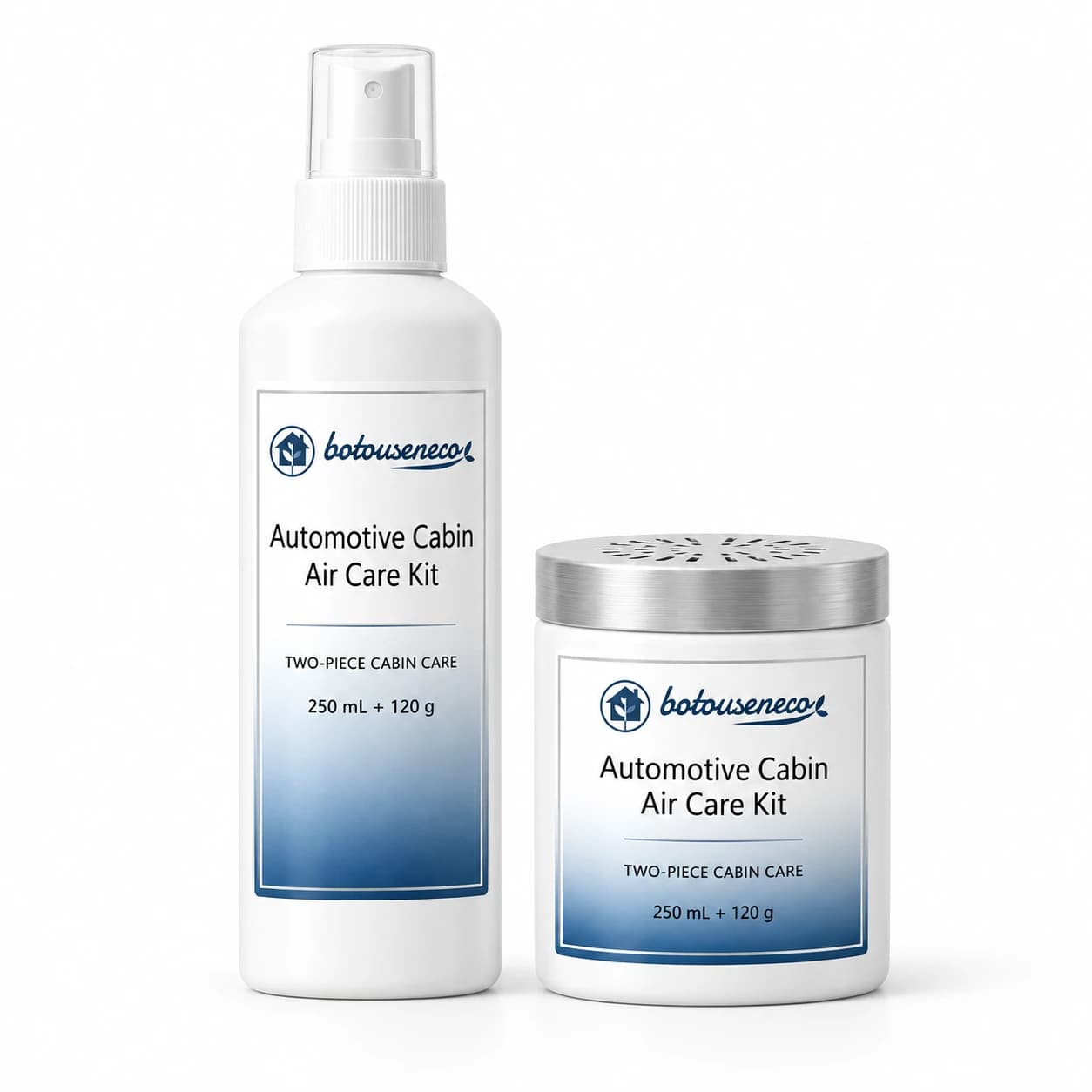
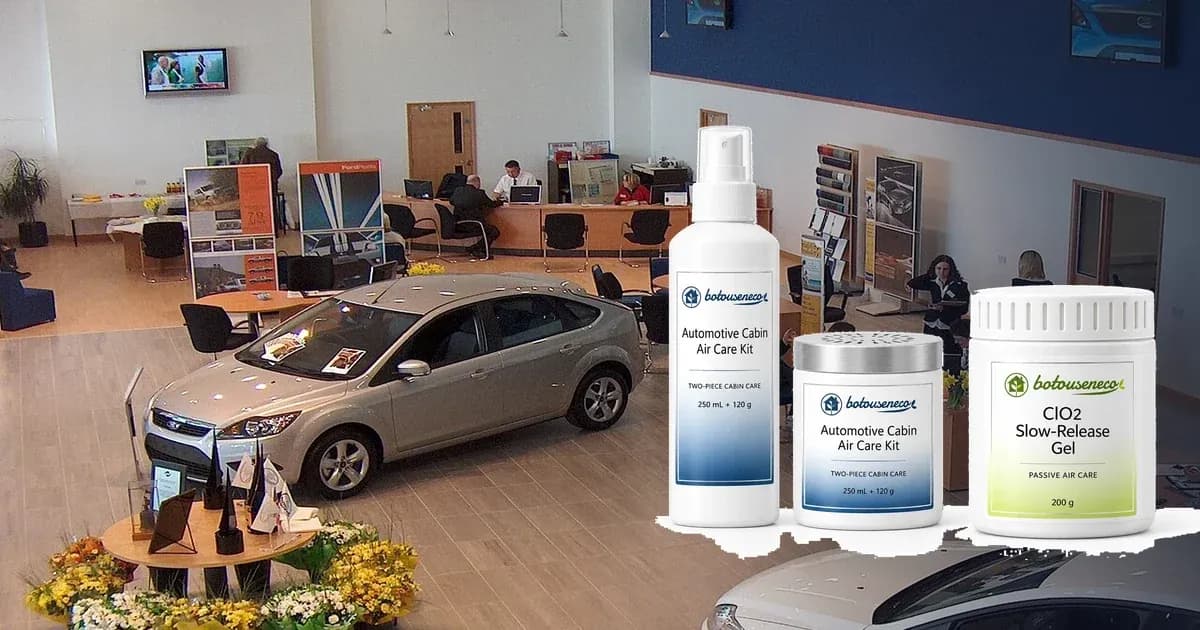
- Step 4 — Complete Cabin & Veneer Pairing: For full dealership pre-delivery air compliance, pair the leather balm with our 20-minute Automotive Cabin Rapid Air Detox Kit (see 4S auto dealership PDI 20-minute cabin air detox upsell) and buff open-pore wood trim with Formaldehyde Removal Care Wax (10-15 g/m2).
Worked Cost & Yield per Vehicle: 4S Dealership & Auto Detailing Studio Math
Consider the material cost and service margin for an auto detailing studio or 4S dealership PDI bay treating 50 luxury sedans or electric SUVs per month (average 4.8 m2 of leather upholstery per vehicle):
- Cream Dosage per 5-Seat Vehicle: 4.8 m2 x 10 g/m2 = 48 grams per car.
- Vehicles Treated per 300 g Jar: 300 g / 48 g = 6.25 vehicles per jar (8 jars needed for 50 cars/month, or 2.4 kg/month from a 5 kg bulk detailing pail).
- Direct Material Cost & Service Margin: At roughly $1.40 to $2.20 per 5-seat car, dealerships and detailing studios offer a $65 to $120 "Zero-Silicone Nappa VOC Detox & Conditioning Service" with over 95% (Botou Partner ROI Model, 2026) gross margin.
Verified Botou Factory Supply Terms, 300 g Retail Jars, and Bulk Detailing Pails
Manufactured since 2015 by Hebei Senzhijia Environmental Protection Co., Ltd (botouseneco) in the Botou Industrial Zone, Cangzhou, Hebei, China, our pH 5.2 leather VOC conditioning creams are batch-tested in our Botou quality lab per ISO 12219-1 Interior Air of Road Vehicles Standards (2024).
- Sample Evaluation Kit: 1-5 units (300 g jar + applicator sponge) for auto detailing chains, sofa factories, and OEM brand buyers.
- Standard Bulk Supply: From 100 kg (or 4 drums/pails) in 1 kg or 5 kg detailing shop pails or 20 kg furniture factory drums.
- OEM Private Label: From 500-1,000 units in custom 250 g / 300 g wide-mouth jars with applicator sponges, hot-stamped labels, and gift boxes.
- Lead Times & Port of Loading: Samples ship in 24-48 hours. Bulk pails ship in 5-7 business days, and OEM runs ship in 10-14 business days via Tianjin Port, China (about 180 km from our Botou plant) as Non-Dangerous Goods (Non-DG) under a 16-section GHS Rev. 10 SDS.
- Certifications & Private COA Policy: Produced under ISO 9001:2015 Quality Management System and ISO 14001:2015 Environmental Management System controls, backed by CMA / CNAS-accredited chamber verification (ISO 16000-9 / GB/T 18883-2022 / VDA 275). By company policy, certificate numbers and scans are not posted publicly. Private copies and batch COAs are shared directly when you contact our automotive and leather care OEM team.
Standards & references
- ISO 12219-1:2024 Interior Air of Road Vehicles — Whole Vehicle Test Chamber Specification and Fogging Control.
- EU REACH Annex XVII DMF & Aldehyde Restrictions (ECHA, 2026): N,N-dimethylformamide (DMF) and formaldehyde limits in coated textiles and leather.
- NIH PubMed Leather Tanning Aldehyde Research (2024): Isoelectric pH 5.0-5.5 collagen stability and syntan hydrolysis prevention.
- CDC ATSDR Formaldehyde Toxicological Profile (2024) & World Health Organization (WHO) Indoor Air Quality Guidelines (2024).
- ISO 9001:2015, ISO 14001:2015 & CMA/CNAS Chamber Verification (ISO 16000-9 / VDA 275 / GB/T 18883-2022).
Frequently Asked Questions (FAQ)
01.Why do silicone dashboard dressings cause windshield haze ("fogging") inside new cars?
Low-molecular-weight cyclic siloxanes and petroleum carrier solvents inside cheap silicone dressings evaporate when a parked car heats up to 60 to 75 C in the sun. Those volatile vapors condense onto the cooler inside glass of the front windshield, forming a greasy smear that glares at night. Luxury Leather and Upholstery VOC Conditioning Cream is 100% silicone-free and solvent-free, passing strict automotive glass fogging standards.
02.Will Luxury Leather VOC Conditioning Cream clog the 0.8 mm holes in cooled and ventilated car seats?
No, when applied with our foam applicator pad transfer method at 8 to 12 g/m2. Never squirt liquid or cream directly onto perforated seat inserts. Dabbing 2 to 3 g onto the sponge and wiping across the surface coats only the top grain bridges around each 0.8 mm pinhole, leaving the cooling air channels open.
03.Can this pH 5.2 cream be used on vegan PU leather (such as Tesla / EV seats) as well as real Nappa cowhide?
Yes. While its pH 5.0 to 5.5 buffer protects genuine Nappa and full-grain cowhide collagen, its lanolin and jojoba ester carrier and beta-cyclodextrin + amine scavengers work equally well on automotive polyurethane (PU) and silicone-free vegan hides. It extracts residual DMF, toluene, and plasticizer odors while keeping synthetic bolsters soft.
04.Does the cream leave a shiny, slippery finish on leather steering wheels?
No. After a 10-minute absorption dwell and a quick buff with a dry microfiber towel, the balm cures to a dry, non-slip OEM factory satin-matte finish. It restores natural leather grip on steering wheels, shift knobs, and seat bolsters without transferring onto business attire.

About the author.
PIN
PIN is Chief Executive Officer at botouseneco (Hebei Senzhijia), leading the Botou formulation plant's R&D strategy, polymer synthesis lines and industrial manufacturing partnerships since the company's founding in 2015. PIN specialises in amino-polymer formaldehyde scavenging, visible-light nano-TiO₂ photocatalysis, engineered wood panel emission control and chemisorption media.
- Chief Executive Officer · Botou formulation & manufacturing plant.
- 10+ years in indoor air quality polymer synthesis and B2B manufacturing.
Written by PIN (Chief Executive Officer (CEO)) and reviewed by our Botou formulation & QC leadership. Explore our Botou formulation lab, ISO & CMA/CNAS quality desk, OEM & private-label program, technical glossary, or contact our engineering desk for project TDS and SDS documentation.
Next step.