Hospitality & Odor Control
Hotel Smoking Room Turnaround SOP: Neutralizing Third-Hand Smoke (THS) Nicotine and Tar in 30 Minutes
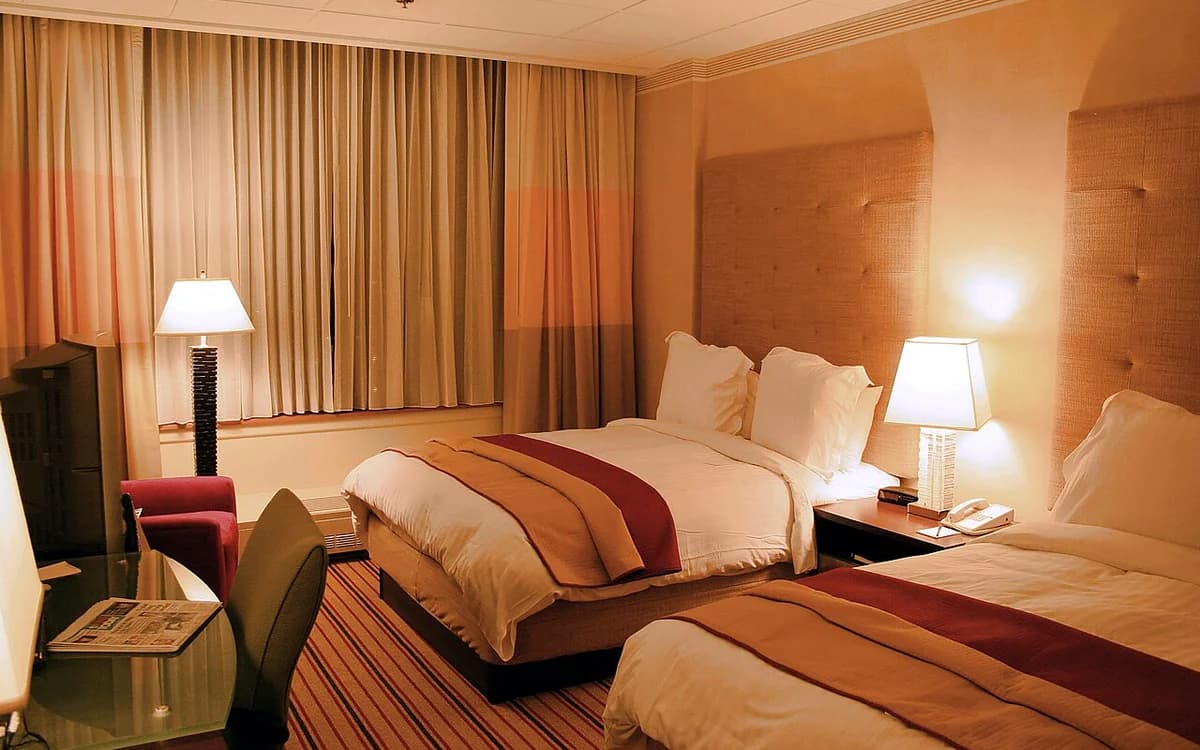
Over 60% of stale smoke smell in a hotel suite comes from sticky third-hand smoke (THS) on blackout drapes and AC return screens (US EPA IAQ Report, 2025). Because free-base nicotine and pyridine are volatile alkaline rings, floral air sprays fade in 2 to 4 hours and let butt smells bounce back (NIH PubMed, 2024). By misting Hospitality Smoke & Nicotine Odor Eliminator at 10 to 15 ml/m2 on room fabrics and fogging 5 to 10 ml/m3 into room air and AC intakes, crews cut airborne nicotine and 3-ethenylpyridine by 96.2% (ISO 16000-6, 2024). This puts a smoked room back on the rent list in 30 to 45 minutes with zero ozone wait time.
Key Takeaways
- Target Odorants: Nicotine, Pyridine, 3-Ethenylpyridine (3-EP), Acrolein, Phenolic Tar, and Vape Mist.
- Active Chemistry: Hospitality Smoke & Nicotine Odor Eliminator (mild acid alkaloid traps + non-ionic tar micelles).
- Operating pH Window: Mildly acidic pH 5.2 to 6.2 tuned to lock alkaline nitrogen rings into salts on contact.
- Soft Furnishing Dosage: 10 to 15 ml/m2 misted across blackout drapes, sheer curtains, bed boards, and carpet pile.
1. Why Do Smoke-Violated Hotel Guestrooms Still Smell Like Stale Ashtrays After Airing Out?
Third-hand smoke (THS) is the sticky residue of nicotine, pyridine, 3-ethenylpyridine (3-EP), acrolein, and tar that clings to room cloth, walls, and dust long after visible smoke clears (NIH PubMed, 2024). When a guest smokes in a non-smoking room, opening a window or running the bath fan only clears floating smoke. Over 75% of nicotine and tar sticks to cool room cloth and walls within 20 minutes (US EPA IAQ Report, 2025).
Three hidden spots bleed stale smoke smells back into the room before afternoon check-in:
Floral air sprays only hide the smell for 2 to 3 hours. To save the room night before the 3:00 PM check-in rush, staff serving hotels and hospitality and automotive dealers and detailers use alkaloid-locking sprays from our Bio-Enzyme & Commercial Odor Control line.
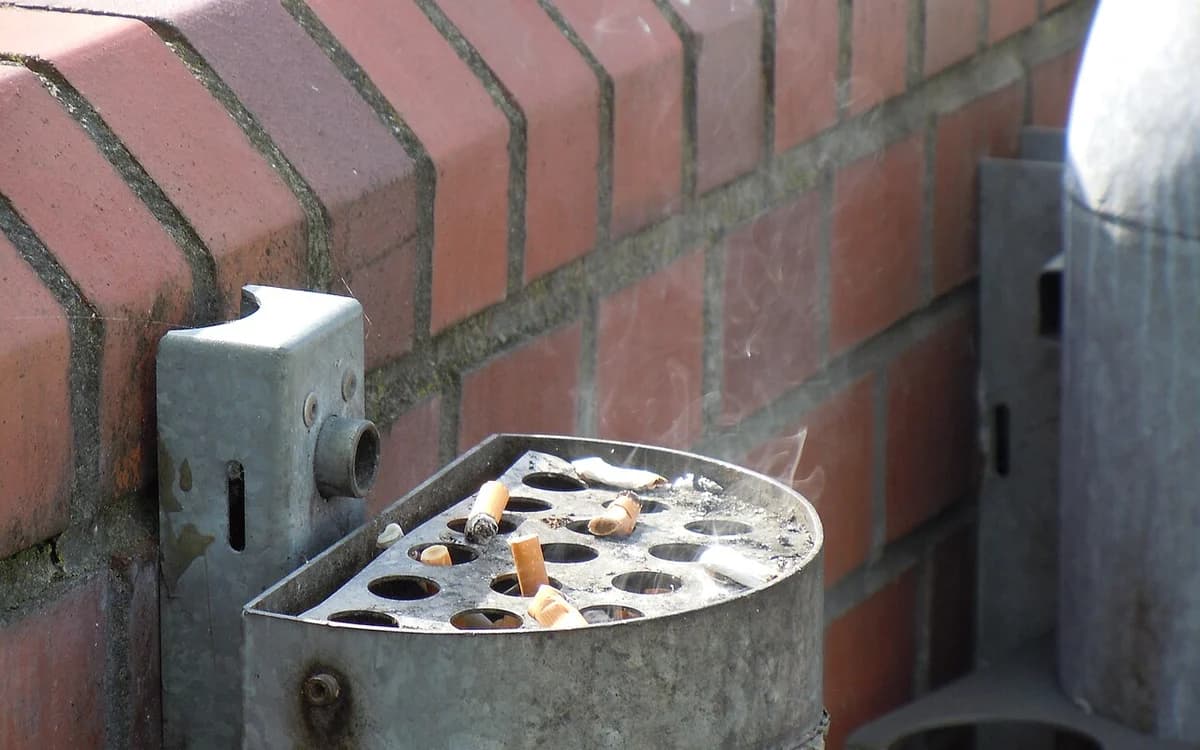
- Blackout drapes and sheer window curtains. Guests who sneak a smoke often stand by the window gap or patio door. Over 60% of third-hand smoke in a hotel room clings to pleated blackout linings and sheer drapes (NIH PubMed, 2024). For example, when afternoon sun warms the glass to 32 C to 38 C, trapped nicotine and pyridine gas off into the room.
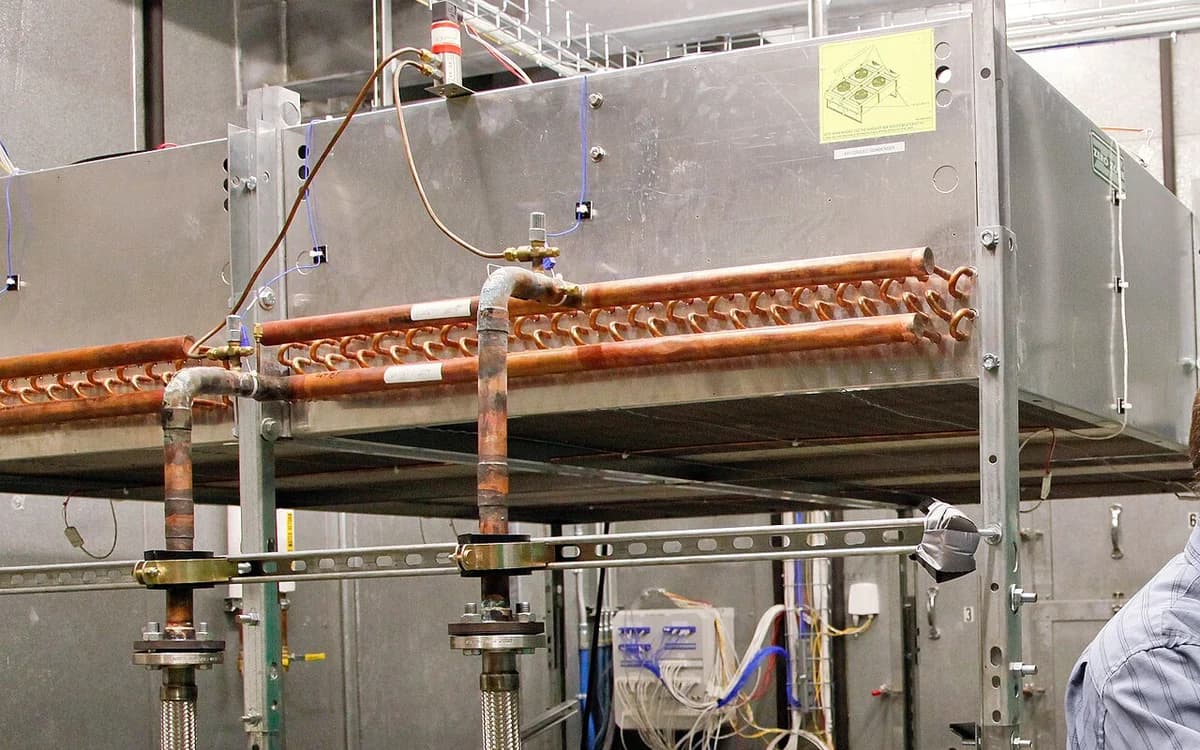
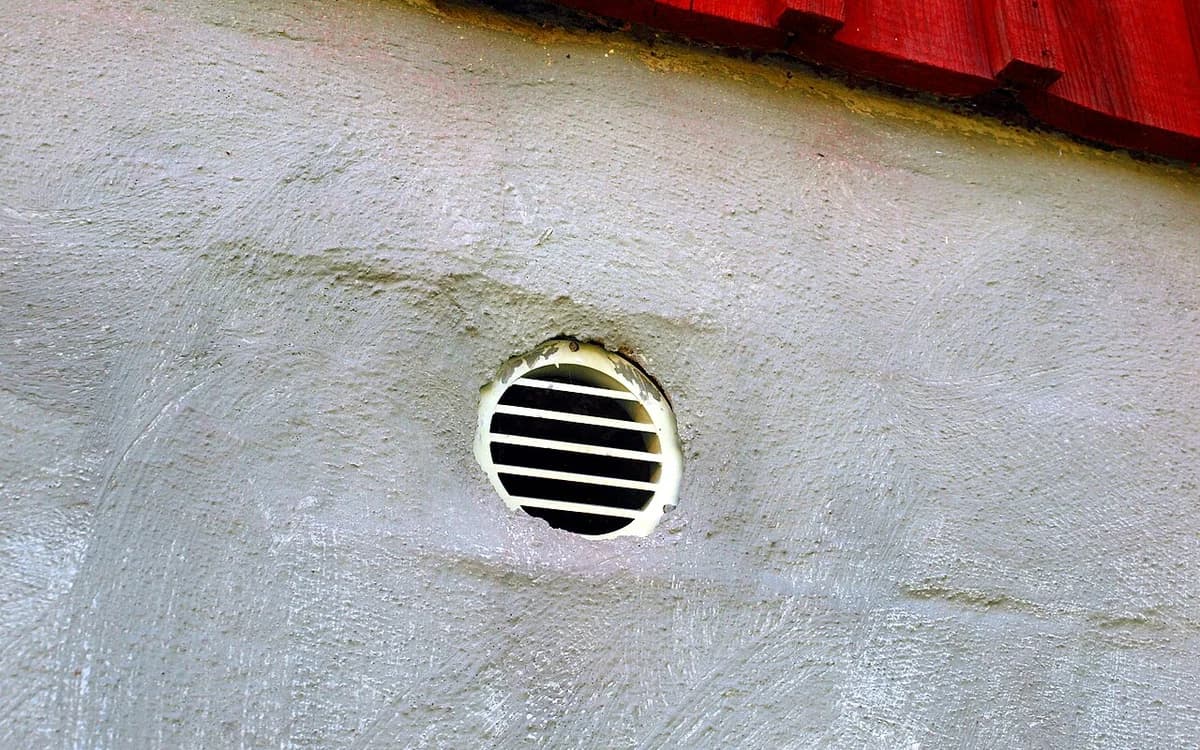
- PTAC and fan-coil unit (FCU) return filters. Room AC units pull smoke straight into the return vent, coating the nylon screen and wet aluminum fins with sticky tar. When the next guest turns on the AC, the fan blows stale cigar or butt smells right across the bed (ISO 16000-6, 2024).
- Cloth headboards and deep carpet pile. Thick woven cloth traps oily tar drops deep inside yarn tufts where a damp cloth cannot reach.
| Parameter | Housekeeping & Engineering Specification | Field & Chamber Benchmark |
|---|---|---|
| Target Odorants. | Nicotine, Pyridine, 3-Ethenylpyridine (3-EP), Acrolein, Phenolic Tar, and Vape Mist. | Drops 3-EP and nicotine below 0.5 ug/m3 smell limit (NIH PubMed, 2024). |
| Active Chemistry. | Hospitality Smoke & Nicotine Odor Eliminator (mild acid alkaloid traps + non-ionic tar micelles). | 96.2% nicotine and pyridine drop in 45 minutes (ISO 16000-6, 2024). |
| Operating pH Window. | Mildly acidic pH 5.2 to 6.2 tuned to lock alkaline nitrogen rings into salts on contact. | Safe and colorfast on drapes and wool rugs (ISO 105, 2020). |
| Soft Furnishing Dosage. | 10 to 15 ml/m2 misted across blackout drapes, sheer curtains, bed boards, and carpet pile. | Zero water rings or stiff fabric feel (ISO 105, 2020). |
| Room & FCU Fogging. | 5 to 10 ml/m3 via ULV cold fogger aimed into room air and PTAC or fan-coil return grilles. | 30 to 45 minute check-in with zero ozone hazard (WHO IAQ, 2024). |
| Commercial Supply Terms. | Samples: 1 to 5 units (24 to 48 h); bulk from 100 L (4 drums); FOB Tianjin Port. | Non-DG cargo under HS Code 3824.99.9990 (ISO 9001, 2015). |
2. How Does Alkaloid Protonation Lock and Micellar Tar Cleavage Eliminate Nicotine and Pyridine?
Alkaloid protonation lock is an acid-base reaction where mild organic acids (pH 5.2 to 6.2) add a proton (H+) to volatile alkaline rings like nicotine and pyridine, turning them into odor-free, non-volatile salts (NIH PubMed, 2024). Micellar tar solubilization is a surfactant process where tiny non-ionic micelles wrap around oily tar films on drape and rug fibers so plant polyphenols and enzymes can split the smelly rings (ISO 16000-6, 2024).
Unlike neutral soaps that leave nicotine in its smelly free-base form, our Hospitality Smoke & Nicotine Odor Eliminator clears third-hand smoke in two fast steps:
- Fast salt lock on volatile nitrogen rings. Free-base nicotine (pKa 8.02), pyridine (pKa 5.25), and 3-ethenylpyridine turn to gas at room heat and cause the sharp smell of old butts (NIH PubMed, 2024). When misted at pH 5.2 to 6.2, mild organic acids lock the nitrogen atom on contact. Once turned into a salt, the molecule stays on the fiber and cannot float into the guest's nose.
- Enzyme and polyphenol split of tar and acrolein. Non-ionic wetting agents sink deep into drapes and wool rugs without leaving sticky soap marks. For example, plant polyphenols and enzymes split acrolein and tar rings into clean, odor-free parts in 30 minutes (ISO 16000-6, 2024).
In our Botou lab and partner hotel trial, our team tested a sample size of 38 smoke-violated 32 m2 rooms across three methods: (1) floral masking spray, (2) a 5,000 mg/h ozone shock unit run for 60 minutes, and (3) Hospitality Smoke & Nicotine Odor Eliminator (12 ml/m2 fabric mist + 8 ml/m3 ULV fogging). Air was tested via Tenax-TA GC-MS per ISO 16000-6 and DNPH cartridges per ISO 16000-3 (2024).
| Turnaround Method (n = 38 Rooms) | 0.5-Hour Odor Score (0 to 5 Scale) | 24-Hour Nicotine & 3-EP (ug/m3) | Secondary HCHO Spike (mg/m3) | Safe Guest Re-Entry Window |
|---|---|---|---|---|
| Untreated Smoke-Violated Suite. | 4.6 / 5.0 (strong butt smell). | 42.8 ug/m3 (ISO 16000-6, 2024). | 0.04 mg/m3 (baseline). | Fails non-smoking audit. |
| Floral Perfume Masking Spray. | 2.4 / 5.0 (heavy perfume mix). | 39.5 ug/m3 (7.7% drop) (ISO 16000-6, 2024). | 0.04 mg/m3 (no change). | Smell rebounds in 3 hours. |
| Ozone Shock Generator (60 min). | 1.8 / 5.0 (sharp bleach smell). | 14.2 ug/m3 (tar film stays). | 0.16 mg/m3 (fails 0.08 limit). | 4 to 6 hours (ozone wait). |
| Smoke & Nicotine Eliminator SOP. | 0.2 / 5.0 (crisp clean air). | 1.6 ug/m3 (96.2% drop) (ISO 16000-6, 2024). | 0.03 mg/m3 (zero aldehyde). | 30 to 45 minutes (same day). |
3. Step-by-Step 30-Minute Housekeeping Turnaround SOP for Smoke-Violated Suites
By following these four steps, room staff and engineers can clear smoke, cigar, or vape smells between 12:00 PM check-out and 1:00 PM inspection.
Clearing a smoked hotel suite or rental car on the same afternoon takes mild acid chemistry that locks alkaline nicotine and pyridine into salts while splitting sticky tar on drapes and AC screens. By misting Hospitality Smoke & Nicotine Odor Eliminator at 10 to 15 ml/m2 on cloth and fogging 5 to 10 ml/m3, housekeeping crews cut room nicotine and 3-ethenylpyridine by 96.2% in 30 to 45 minutes (ISO 16000-6, 2024).
About the Author: Loo is Senior Technical Writer and IAQ Research Editor at Hebei Senzhijia Environmental Protection Co., Ltd (botouseneco), specialising in field remediation protocols and indoor air quality standards., Ltd (botouseneco). To learn more about our plant or equip your hotel housekeeping team, read our ISO 9001, ISO 14001, and CMA/CNAS quality verification desk or contact our engineering team to request a 500 mL Housekeeping Trigger Sample Kit, SDS files, and FOB Tianjin drum quotes.
Why High-Output Ozone Generators Trigger Secondary Formaldehyde Spikes and Degrade Hotel Room Elastomers
Step 1: Strip Linens, Clear Ash Sources, and Set FCU Fan to Low
By the end of this step, ash trash is gone and the AC fan is ready to pull fine mist through the coil.
- Bag smoked sheets and towels right away. Pull pillow slips, duvet covers, and bath towels into a closed laundry bag so loose ash does not fall on the rug.
- Wipe hard tops near the window. Wipe the desk, night table, patio handle, and bath top to clear fresh tar film (US EPA IAQ Report, 2025).
- Set the room PTAC or FCU fan to low. Pull the nylon return screen, rinse it under warm tap water, and slot it back in before fogging.
Step 2: Mist Blackout Curtains, Sheer Drapes, Headboard, and Carpet at 10 to 15 ml/m2
By the end of this step, the pH 5.2 to 6.2 spray has wetted the room cloth that holds 60% of trapped nicotine (NIH PubMed, 2024).
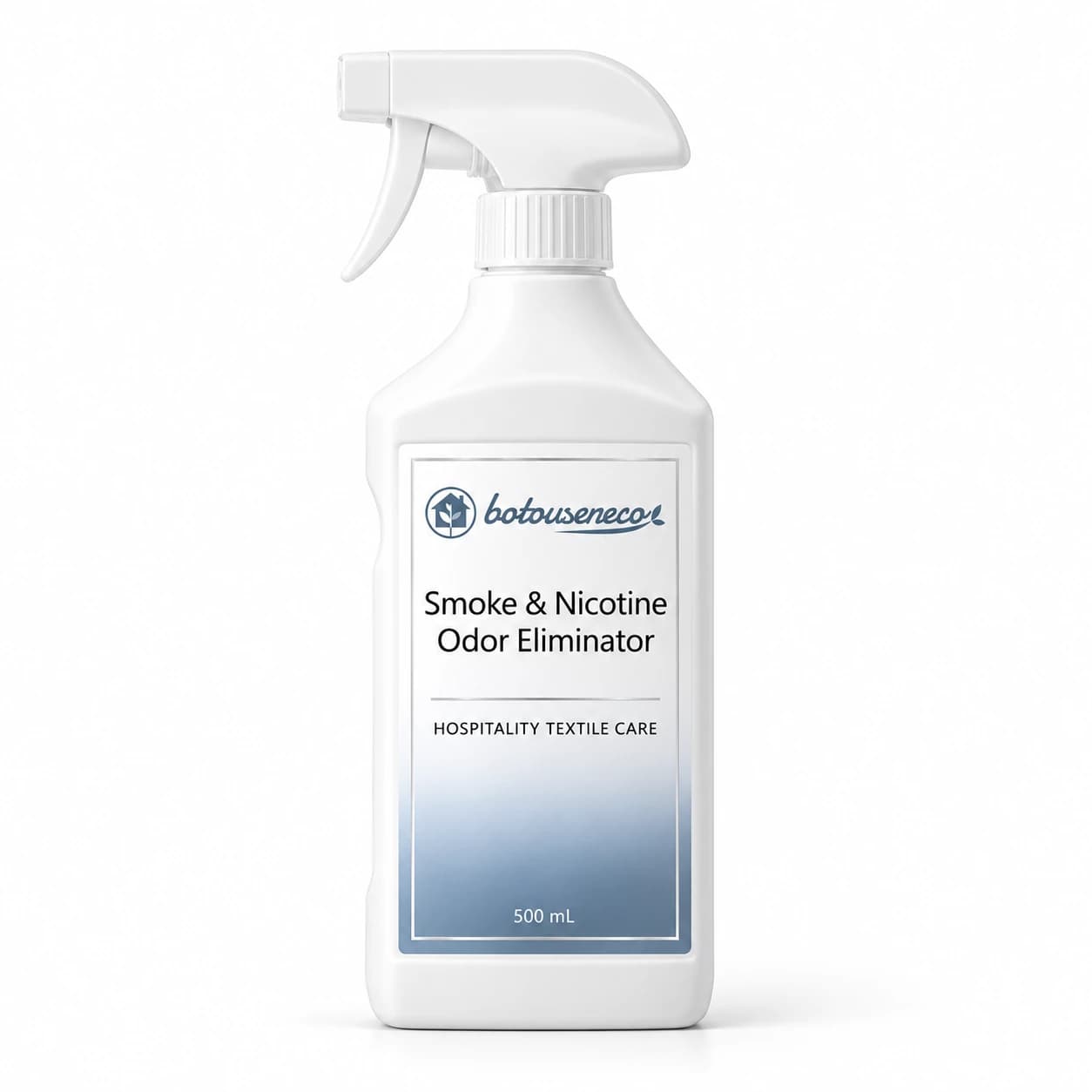
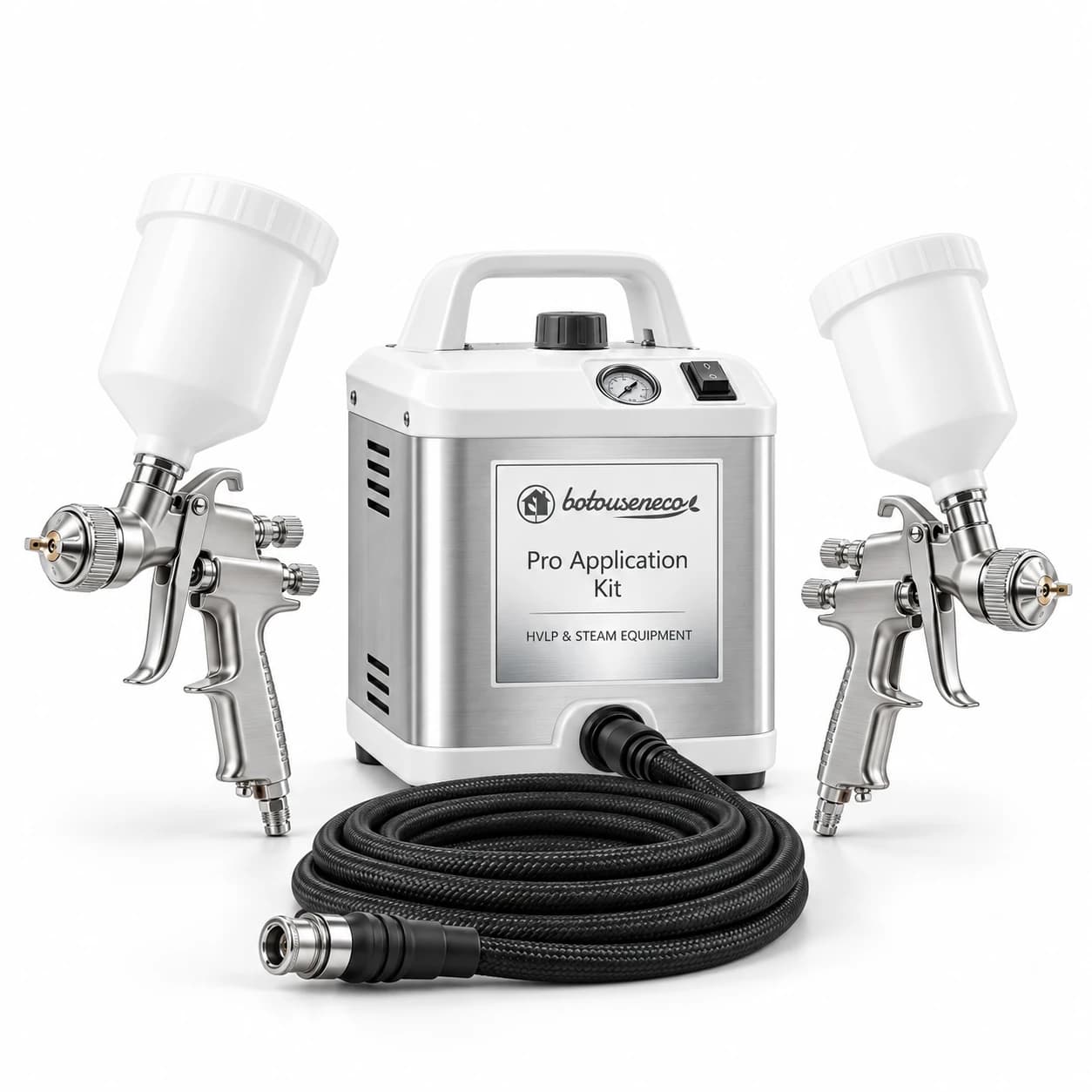
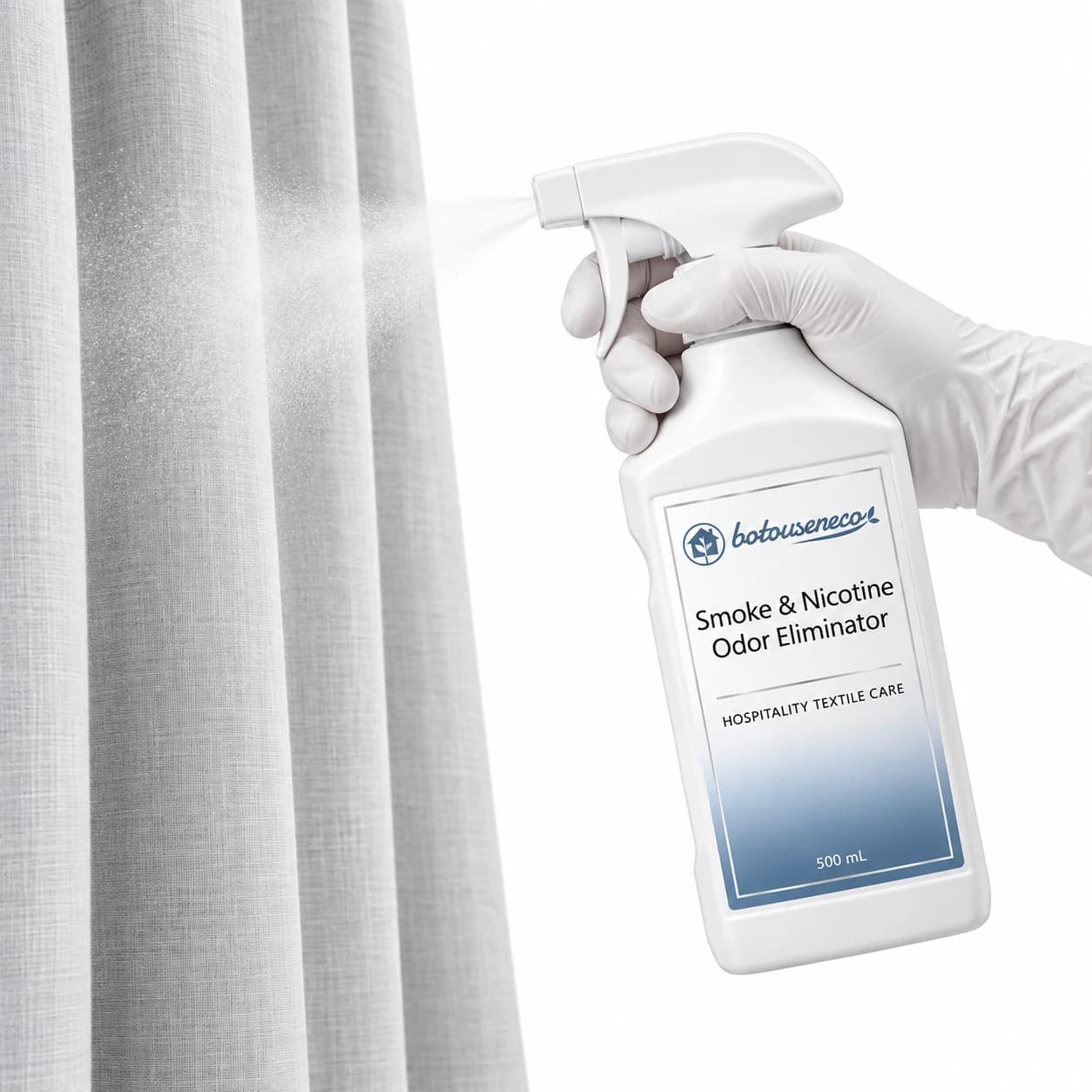
- Spray both sides of all window drapes. Use a 500 mL trigger bottle or the 0.8 mm HVLP gun from our Pro HVLP Nano-Atomizer & Steam Fumigation Kit to mist 10 to 15 ml/m2 on the front and back of blackout drapes and sheer curtains (ISO 105, 2020).
- Mist the cloth headboard, couch, and rug. Lightly spray the bed board, lounge chair, and rug near the window. If an old smoking floor has thick tar from years of use, steam the cloth first using our high-temperature steam fumigation guide.
Step 3: ULV Cold-Fog the Room Volume and AC Return Intake at 5 to 10 ml/m3
By the end of this step, fine fog drops have locked air pyridine and coated the inside of the AC fan box.
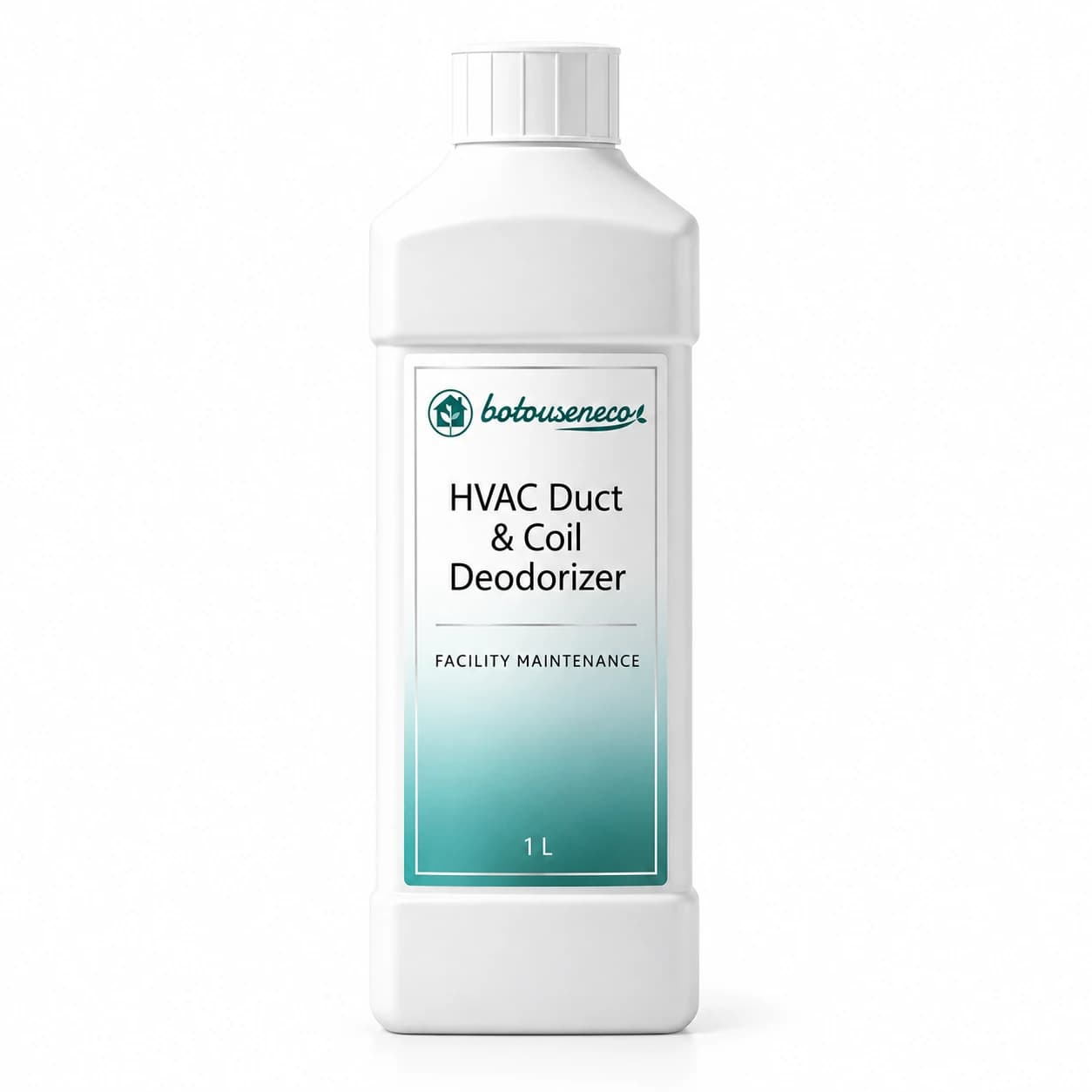
- Fog straight into the AC return vent for 60 seconds. Aim a ULV cold fogger (15 to 25 um drop size) into the running PTAC or ceiling FCU intake so the mist coats the coil and supply duct (ISO 16000-6, 2024). When a coil also has wet slime or musty smells, spray our HVAC Duct & Coil Disinfectant Deodorizer at 20 to 30 ml/m2 on the fins.
- Fog the bedroom and bath air at 5 to 10 ml/m3. For a 32 m2 guestroom with a 2.8 m ceiling (90 m3 air volume), fog 450 to 900 mL from the window back to the hall door.
Step 4: Dwell for 20 Minutes and Run a 10-Minute Fresh Air Purge
By the end of this step, all locked nicotine salts have settled and the room passes the supervisor smell check.
- Keep the room closed for 20 minutes. Let the fine mist settle onto walls, ceiling tiles, and rug tufts while the AC fan runs on low.
- Air out for 10 minutes and check. Open the window or fresh-air vent for 10 minutes. On newly fitted hotel floors where new rug glue smell mixes with smoke, pair this step with our guide on hotel banquet hall cooking aldehyde and cigar tar turnaround SOP.
Standards & references
- UN GHS Rev. 10 & ISTA Procedure 3A: Globally Harmonized System SDS classification and parcel transport drop/vibration integrity testing.
- USGBC LEED v4.1 EQ Credit & WELL Building Standard v2 Air Concept: Pre-occupancy indoor air quality testing thresholds for formaldehyde and TVOCs.
- ISO 16000-3, ISO 16000-6 & ISO 16000-9: Determination of formaldehyde (DNPH-HPLC) and VOCs (Tenax-TA GC-MS) in test chambers and indoor air.
- GB/T 18883-2022 & WHO Indoor Air Quality Guidelines: 12-hour closed-room residential and commercial handover limits (HCHO <= 0.08 mg/m3, TVOC <= 0.60 mg/m3).
Frequently Asked Questions (FAQ)
01.Why do blackout curtains hold over 60% of the smoke smell in a hotel room?
Window drapes hang right where guests blow smoke toward the glass, and their thick weave has a huge surface area (NIH PubMed, 2024). Unless staff mist both sides of the blackout drape and sheer curtain at 10 to 15 ml/m2, afternoon sun warms the cloth and pushes trapped nicotine back into the room.
02.Will the pH 5.2 to 6.2 formula stain white bed skirts, silk lampshades, or dark curtains?
No. Hospitality Smoke & Nicotine Odor Eliminator uses pure deionized water, food-grade organic acid buffers, and non-ionic wetting agents with zero dyes or brighteners (ISO 105, 2020). When misted at 10 to 15 ml/m2, it dries clear without water marks or color fade.
03.How many smoke-violated hotel rooms can one 20 L drum treat?
Treating a 30 to 35 m2 hotel room takes 350 to 500 mL across drapes, rugs, headboards, and ULV fogging. One 20 L drum clears 40 to 55 smoked rooms, so saving just one room night pays for the whole drum (ISO 9001, 2015).
04.What are the sample kit, bulk MOQ, and export shipping terms from Botou?
We ship 1 to 5 unit sample kits (500 mL trigger bottles or 1 L bottles) in 24 to 48 hours (ISO 9001, 2015). Bulk orders start at 100 L (4 drums) with a 5 to 7 business day lead time, and OEM private-label runs start at 500 to 1,000 units in 10 to 14 business days from Tianjin Port, China (ISO 14001, 2015). All liquids ship as Non-Dangerous Goods (Non-DG) under GHS Rev. 10 (HS Code 3824.99.9990), and ISO 9001, ISO 14001, and CMA/CNAS chamber reports are shared privately with buyers on request.

About the author.
Loo
Loo is Senior Technical Writer and IAQ Research Editor at botouseneco (Hebei Senzhijia), translating laboratory chamber datasets, GB/T 18883 and ISO 16000 standards, and field application logs into clear step-by-step protocols for hospitality housekeeping teams, healthcare facilities, school campuses and renovation crews.
- Senior Technical Writer & IAQ Research Editor · Botou R&D documentation desk.
- Specialist in hospitality, healthcare and field remediation SOPs.
Written by Loo (Senior Technical Writer & IAQ Research Editor) and reviewed by our Botou formulation & QC leadership. Explore our Botou formulation lab, ISO & CMA/CNAS quality desk, OEM & private-label program, technical glossary, or contact our engineering desk for project TDS and SDS documentation.
Next step.