TVOC & Commercial Flooring Abatement
Remediating 2-Ethylhexanol, Texanol and Phthalate TVOC Plumes from Newly Installed LVT, Sheet Vinyl and Commercial Epoxy Floors
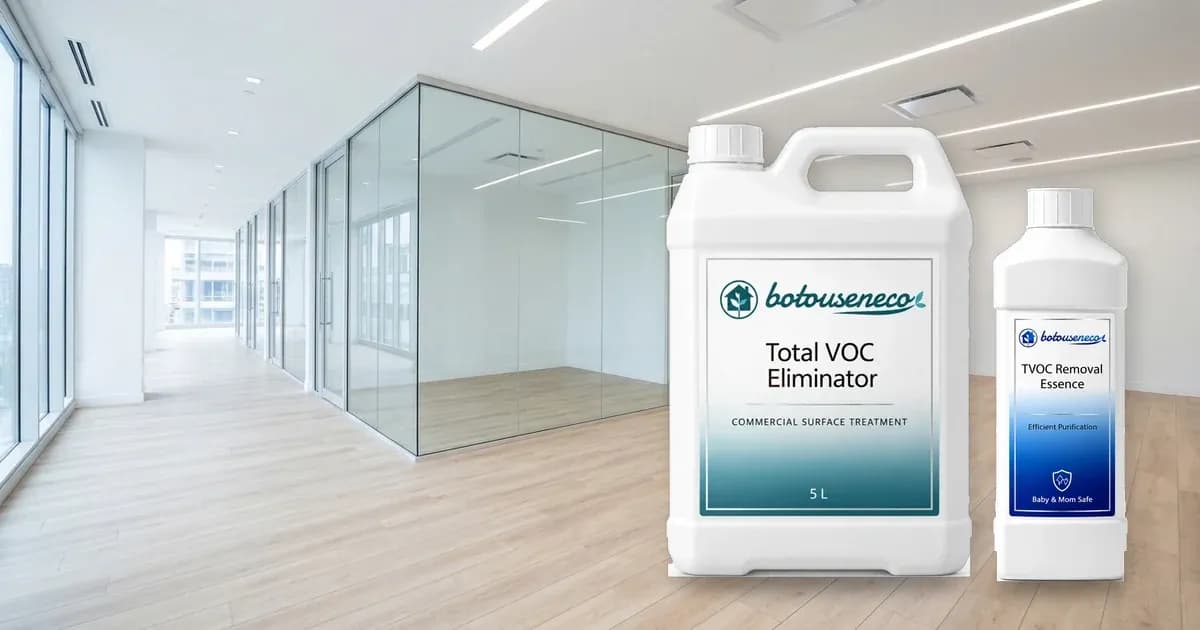
New luxury vinyl tile (LVT), sheet PVC, and commercial epoxy floors often trigger strong chemical odors and fail TVOC audits even when formaldehyde is near zero. The real culprits are oily semi-volatiles: 2-ethyl-1-hexanol (2-EH) from damp concrete glue breakdown, Texanol and TXIB esters, and benzyl alcohol plus amine blush from curing epoxy. Effective LVT and vinyl flooring TVOC odor removal begins with slab moisture checks and warm blush washing, followed by Total VOC Eliminator (15 to 25 ml/m2) on large floors or TVOC Eliminator (10 to 20 ml/m2) in compact rooms and a 24-hour fresh-air purge.
Key Takeaways
- Why Zero-HCHO Floors Still Fail Handover: Damp alkaline concrete hydrolyzes vinyl adhesives into 2-ethyl-1-hexanol (2-EH), while DEHP-free PVC vents TXIB/C9-alcohols and cured epoxy bleeds 205 C benzyl alcohol plus carbamate amine blush.
- Mandatory Pre-Spray Diagnostics: Check ASTM F2170 slab moisture (surface sprays cannot fix > 90% RH hydrostatic glue failure) and warm-water scrub (40-50 C) water-soluble epoxy amine blush before neutralizing.
- Zone-Matched Commercial Spray Rates: Mist Total VOC Eliminator (15-25 ml/m2, 1,000-1,600 m2/25 L) on > 1,000 m2 floors, TVOC Eliminator (10-20 ml/m2) in compact rooms, and Carpet & Paint VOC Neutralizer (10-15 ml/m2) on fresh Texanol latex walls.
- 2,000 m2 Clinic Takeoff (100 L Bulk MOQ): 2,000 m2 vinyl/epoxy floor (44.0 L -> 2 x 25 L) + 2,200 m2 latex corridors (29.04 L -> 2 x 25 L) total 4 x 25 L drums (100 L) in one 5-7 business day pallet shipment.
Chemical Anatomy of Flooring TVOC Plumes: 2-Ethylhexanol, Texanol, TXIB and Phthalates
Commercial builders often face a costly handover shock. A new clinic, office floor, or retail bay passes formaldehyde (HCHO) checks because no urea-resin wood boards sit on site. Yet during occupancy week, Tenax TA air sampling fails the LEED v4.1 and WELL v2 cap of 0.50 mg/m3 or the China GB/T 18883-2022 8-hour limit of 0.60 mg/m3 TVOC. Plain water-based formaldehyde sprays cannot clear these floor plumes because vinyl plasticizers, alcohol vapors, and epoxy solvents are oily, slow-drying organics.
Indoor levels of volatile organic compounds often run two to five times higher than outdoor air, per the US EPA Indoor Air Quality VOC Overview. Unlike fast paint thinners, floor chemicals fall into the high-boiling VOC and semi-volatile (SVOC) class outlined in the US EPA Technical Overview of Volatile Organic Compounds. Four chemical groups drive most commercial floor odor complaints.
2-Ethyl-1-Hexanol (2-EH) is a sharp, musty eight-carbon alcohol listed in the NIH PubChem 2-Ethylhexanol Profile. It forms when alkaline concrete pore water (pH above 10) breaks down acrylate floor glues or 2-ethylhexyl plasticizers under tight vinyl sheets, creating a lasting 2-ethylhexanol floor adhesive odor. A 2026 study in the Journal of Occupational Health (PMC13220336) reports that 2-EH triggers sick building symptoms, can bleed from damp floors for over 10 years, and caused airway and nasal lining swelling down to 0.5 ppm in chronic animal exposure testing.
Phthalate and Non-Phthalate PVC Plasticizers (DEHP, DiNP, DEHT, and TXIB) are oily ester agents mixed into flexible PVC sheets and tiles. A 2024 flow study in Environmental Science & Technology (PMC11500398) shows legacy DEHP in recycled PVC still exceeds Europe's 0.1 wt% limit, driving mills toward DiNP and DEHT. However, removing DEHP does not stop VOC release: a three-year Indoor Air concrete-slab study (PMC6856815) testing DEHP-free PVC floors at 75%, 85%, and 95% slab RH showed emissions spiked highest at 95% RH, with 2-EH coming from adhesive hydrolysis while DEHP-free vinyl released C9-alcohols across every RH level. Meanwhile, a PLoS One trial (PMC3389035) found N-methyl-2-pyrrolidone (NMP) and 2,2,4-trimethyl-1,3-pentanediol diisobutyrate (TXIB) led new PVC floor emissions.
Texanol (2,2,4-Trimethyl-1,3-Pentanediol Monoisobutyrate) is a slow-drying coalescing ester profiled in the NIH PubChem Texanol Reference added to waterborne acrylic floor sealers, primers, and latex wall paints. Because Texanol boils above 250 C, it vents slowly for 14 to 30 days and often dominates Tenax TA readings in painted corridors with new LVT. For coating-stack strategies that pair liquid neutralizers with permanent visible-light mineral topcoats, review our pillar guide on visible-light photocatalyst coatings and commercial TVOC abatement.
| Target Compound | Typical Flooring Source | Odor & Boiling Profile | Primary Detection Method | Remediation Mechanism |
|---|---|---|---|---|
| 2-Ethyl-1-hexanol (2-EH) | Wet-slab acrylic glue + DEHP/DEHT | Musty, sharp; high-boiling (~184 C) | Tenax TA TD-GC-MS (ISO 16000-6) | Slab moisture check + micellar oxidation |
| TXIB & C9-alcohols | New PVC sheet & DEHP-free LVT | Sweet plasticizer smell; semi-volatile | FLEC / 1 m3 chamber + TD-GC-MS | Polymeric chelation + surface wash |
| Texanol & acrylates | Acrylic floor primers & wall paints | Mild ester paint haze (> 250 C) | Tenax TA TD-GC-MS (ISO 16000-6) | Cyclodextrin capture + alkene cleavage |
| Benzyl alcohol & amines | Two-part epoxy resin + hardener | Fishy/ammoniacal or bitter almond | Surface pH wipe + Tenax TA GC-MS | Warm blush wash + catalytic neutralizer |
Epoxy Floor Amine Blush and Benzyl Alcohol Outgassing Diagnostics
Commercial epoxy flooring fails IAQ handovers through a different chemical pathway than glued PVC. Two-part epoxy systems cross-link a liquid bisphenol resin (Part A) with an aliphatic or cycloaliphatic amine hardener (Part B). Two persistent emission problems emerge when crews rush installation in cool, damp spaces.
Epoxy Amine Blush is a waxy, greasy layer of ammonium carbamate salts formed when unreacted amine hardener migrates to the curing surface and reacts with ambient water vapor and carbon dioxide (CO2). Blush develops rapidly when slab temperatures sit near the dew point, room humidity runs high, or temporary gas heaters pump extra moisture and CO2 into the work zone. Beyond ruining recoat adhesion, amine blush releases irritating volatile amines and a distinct fishy or stale-ammonia odor.
Benzyl Alcohol is a high-boiling aromatic alcohol listed in the NIH PubChem Benzyl Alcohol Profile widely added to zero-VOC or high-solids epoxy moisture barriers and flake coats as a non-reactive plasticizing diluent. Because benzyl alcohol boils at 205 C, much of it stays trapped inside the cured epoxy matrix during the first week and bleeds slowly into room air once HVAC warms the slab.
Never spray a liquid VOC neutralizer directly onto unwashed amine blush. Wash the cured epoxy floor first with warm water (40 to 50 C) and a clean neutral or mildly alkaline floor scrubber, rinse thoroughly with clean water, and wet-vac dry. Once the waxy carbamate film is gone, catalytic VOC sprays contact the micro-porous topcoat directly. If your facility also includes vulcanized black rubber gym zones, pair floor neutralization with our field guide on commercial gym rubber flooring benzothiazole and styrene odor neutralization.
- Water-Bead and Soap-Slick Check: Splash clean warm water onto several epoxy floor bays and rub with a gloved finger. A soapy, milky lather confirms water-soluble carbamate amine blush on the surface.
- Pencil and Thumbnail Hardness Check: Press firmly into an inconspicuous corner after the resin manufacturer's stated cure window (24 to 72 hours). Soft, dentable epoxy signals off-ratio mixing (Part A/B imbalance) rather than surface blush.
How Do Contractors Remediate LVT, Sheet Vinyl and Epoxy Floors Before Handover?
Water-only mopping fails on flooring TVOCs because 2-EH, TXIB, Texanol, and benzyl alcohol are hydrophobic organics that repel plain water. Conversely, harsh solvent degreasers attack PVC wear layers, dull factory urethane coatings, and add fresh aromatic VOCs to the room. Follow this four-stage industrial workflow developed for IAQ and commercial renovation contractors across offices, clinics, schools, and retail malls.
Stage 1: Moisture Audit, Thermal Check and Surface Prep
Begin by verifying that the concrete slab is not driving fresh glue decay. Under ASTM F2170 slab RH limits, standard vinyl adhesives allow up to 75% to 80% internal slab RH, while high-moisture LVT glues top out near 80% to 85% RH unless an epoxy vapor barrier sits below. If floor seams ooze glue, bubble, or curl, inspect slab moisture first. For dry, sound floors, damp-mop dust off LVT and sheet vinyl with clean water and a microfiber pad; on cured epoxy floors, complete the warm-water amine-blush scrub and dry the slab before spraying.
Stage 2: Zone-Matched Chemical Application (HVLP or ULV)
Shut off supply and return air units (AHUs) while spraying so mist settles onto floors rather than entering vents. Maintain room temperature between 18 C and 30 C for uniform drying:
- Large-Floorplate LVT, Sheet Vinyl & Epoxy (1,000 to 50,000+ m2): Fill a calibrated ULV fogger or 0.8 to 1.0 mm HVLP gun with Total VOC Eliminator and spray 15 to 25 ml/m2 in even passes 30 to 40 cm above the floor (1,000 to 1,600 m2 per 25 L drum).
- Compact Retail, Boutique Office or Clinic Rooms (under 1,000 m2): Fill a 0.5 to 0.8 mm HVLP gun with TVOC Eliminator (pH 6.5 to 7.5). Hold 30 to 40 cm from LVT, PVC seams, and coving, spraying 10 to 20 ml/m2 for a clear mist with zero slip risk.
- Adjacent Fresh Latex Drywall, Primers & Carpet Zones: Mist Carpet, Latex Paint & Wallpaper VOC Neutralizer at 10 to 15 ml/m2 on dry painted walls (12 to 24 hours post-coat) and 15 to 25 ml/m2 on nearby modular carpet tiles.
Stage 3: Closed Dwell Reaction and 24-Hour Outdoor Air Purge
Keep treated rooms closed with HVAC paused for 12 to 18 hours (overnight) so amphiphilic micelles wet non-polar plasticizer and alcohol molecules while polymeric chelators and micro-catalytic oxidizers convert volatile species into low-vapor-pressure, odorless compounds. Next, switch building AHUs to full outdoor-air intake (or deploy commercial axial blowers at >= 3 ACH) for 24 hours. Tight retail mall fit-outs running under compressed deadlines can adapt our checklist for retail store and mall kiosk 24-hour pre-opening TVOC and formaldehyde blitzes.
Stage 4: Closed-Room Pre-Conditioning, Tenax TA Audit & Engineering Scope Limits
After ventilation ends, confirm zero wet puddles or slippery film on vinyl or epoxy surfaces, then close rooms per target standard before ISO 16000-6 Tenax TA sampling. Check aromatic and aldehyde species against the World Health Organization Indoor Air Quality Guidelines (0.1 mg/m3 30-minute formaldehyde cap; no safe threshold for benzene).
Engineering Scope Limits: Surface VOC neutralizers treat volatiles migrating from cured vinyl wear layers, dried seam adhesives, and cross-linked epoxy films. However, no surface mist can halt active alkaline hydrolysis over a saturated concrete slab above 90% RH (ASTM F2170) with liquified adhesive, nor cure soft off-ratio Part A/B epoxy; those structural defects must be remediated mechanically with a moisture vapor barrier or floor grind/recoat before IAQ spraying.
- LEED v4.1 EQ & WELL v2 Air A01: Target TVOC <= 0.50 mg/m3 (500 ug/m3).
- China GB/T 18883-2022 (12-hour closed room): Target TVOC <= 0.60 mg/m3 (8-hour average), plus 1-hour averages for formaldehyde (<= 0.08 mg/m3), benzene (<= 0.03 mg/m3), toluene (<= 0.20 mg/m3), and xylenes (<= 0.20 mg/m3).
| Flooring System | Primary Off-Gassing VOCs | Root Emission Trigger | Recommended Botou System & Rate |
|---|---|---|---|
| Sheet PVC & glued LVT (> 1,000 m2) | 2-Ethyl-1-hexanol, TXIB, C9-alcohols | Alkaline slab moisture + plasticizer bleed | Total VOC Eliminator (15 to 25 ml/m2) |
| Boutique LVT / retail fit-out (< 1,000 m2) | TXIB, NMP, light ester haze | Fresh wear-layer & seam glue vapors | TVOC Eliminator (10 to 20 ml/m2) |
| Commercial 2-part epoxy floor | Benzyl alcohol, amine blush, xylene | High-RH curing + slow diluent escape | Scrub blush + Total VOC Eliminator (15 to 25 ml/m2) |
| Adjacent fresh latex walls & trim | Texanol, butyl acrylate, glycol ethers | Slow coalescent evaporation (14-30 d) | Carpet & Paint VOC Neutralizer (10 to 15 ml/m2) |
Botou Commercial Flooring TVOC Product Selector and B2B Supply Terms
Within our TVOC and photocatalytic coating product line, Hebei Senzhijia Environmental Protection Co., Ltd (botouseneco) manufactures three targeted liquids for LVT and vinyl flooring TVOC odor removal. Learn more about us and our Botou plant, founded in 2015 in Cangzhou, Hebei:
All formulations are produced under our ISO 9001:2015 Quality Management System and ISO 14001:2015 Environmental Management System, supported by CMA / CNAS-accredited chamber verification per ISO 16000-9 and GB/T 18883-2022. Official certificate copies and third-party chamber reports are shared privately with B2B buyers on request. Private-label OEM orders start at 500 to 1,000 units with a 10 to 14 business day turnaround.
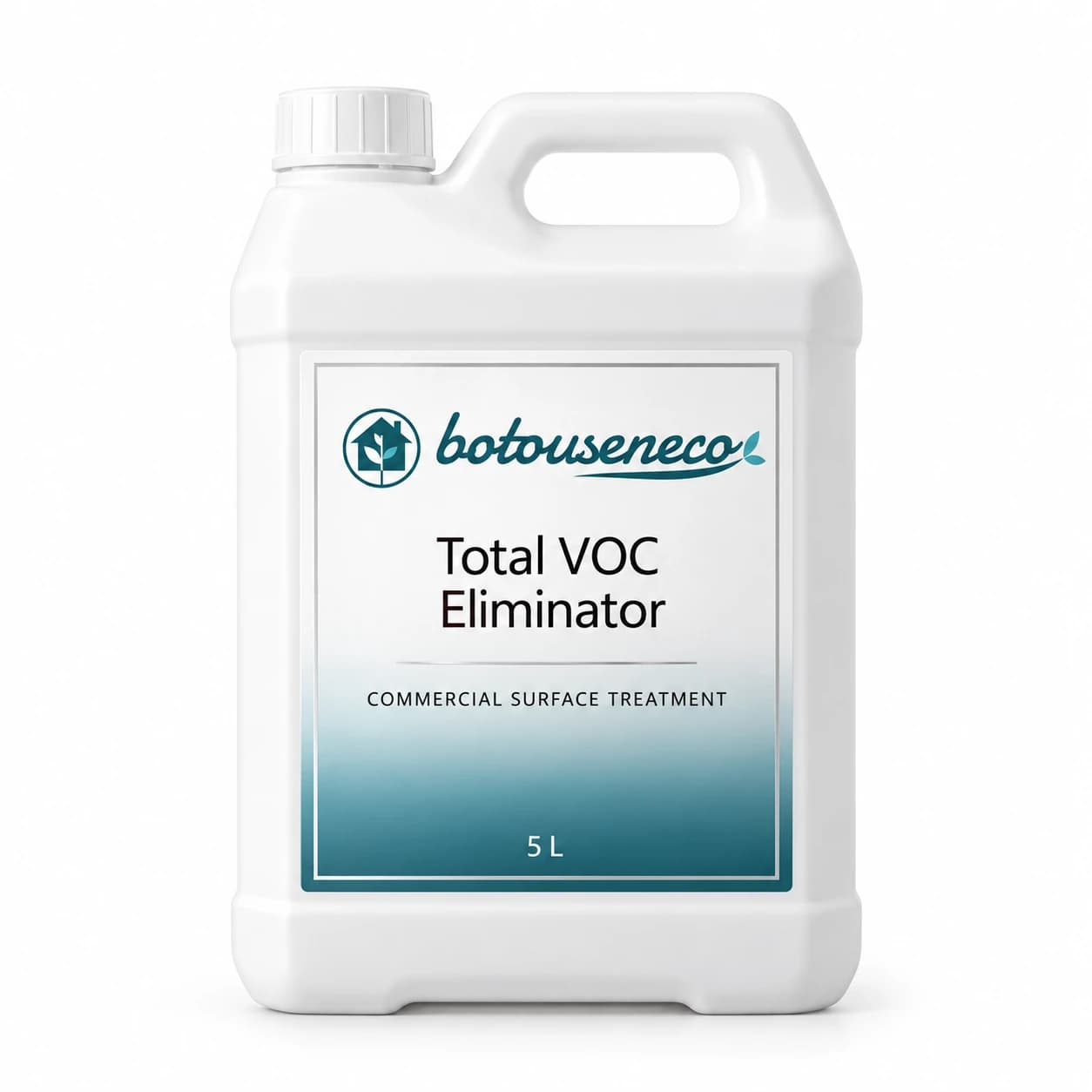
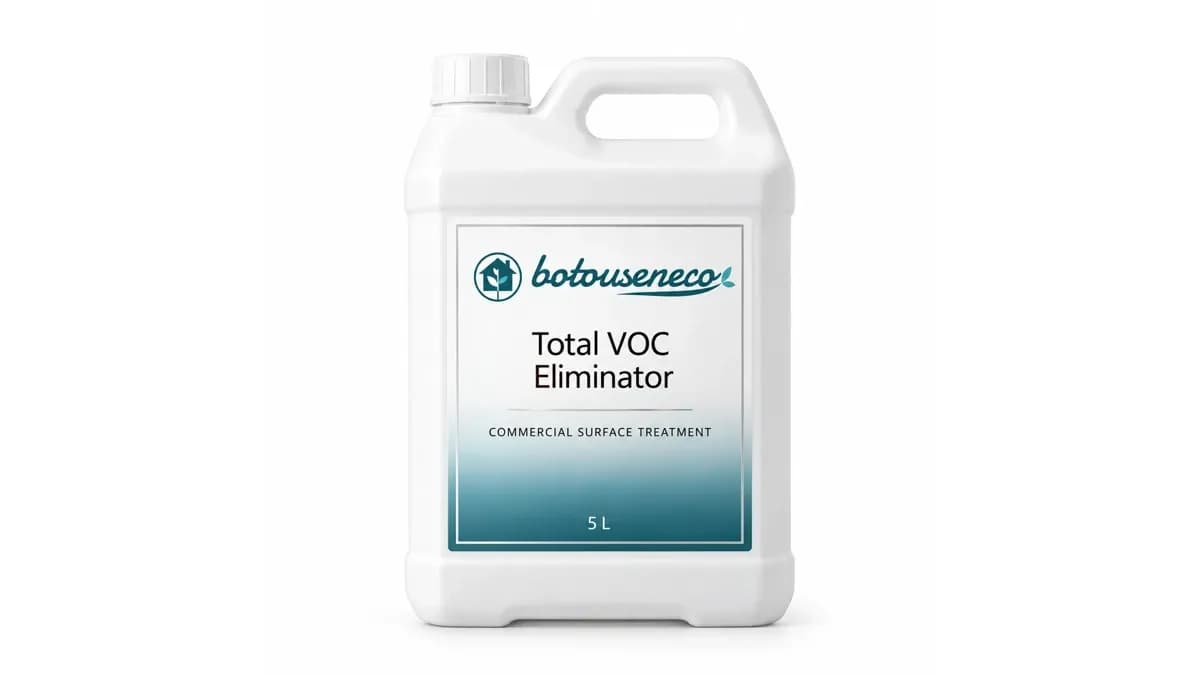
- 1. Total VOC Eliminator: Engineering-grade high-solids chelator and mild oxidizer (pH 6.5 to 7.5) built for 1,000 to 50,000+ m2 towers, clinics, hospitals, and schools. At 15 to 25 ml/m2 (1,000 to 1,600 m2 per 25 L drum), it clears 2-EH, TXIB, PVC plasticizer haze, and epoxy benzyl alcohol within 48 hours.
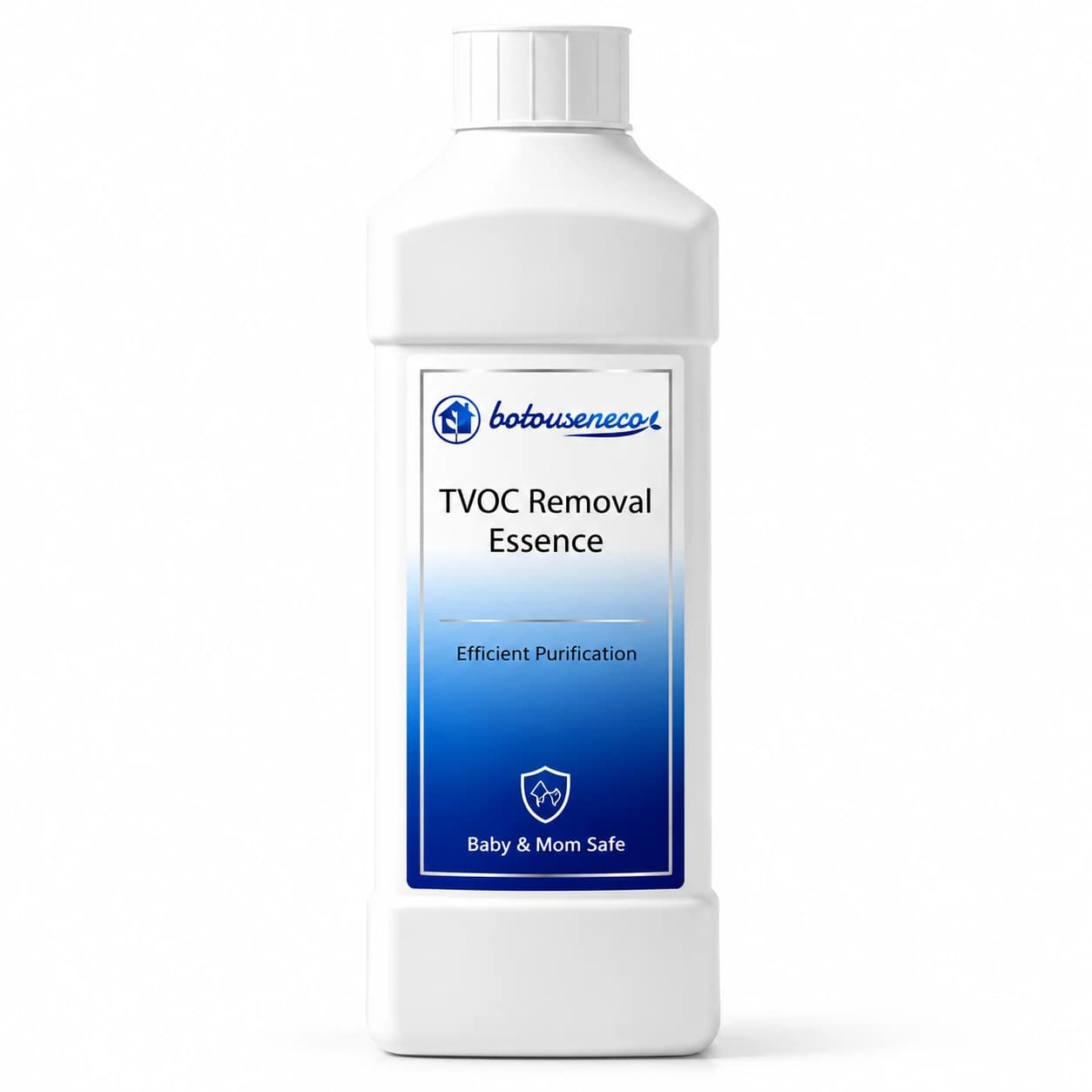
- 2. TVOC Eliminator: Neutral (pH 6.5 to 7.5) plant-terpene chelator and micelle blend for spaces under 1,000 m2 with Tenax TA levels of 0.65 to 1.20 mg/m3. Sprayed at 10 to 20 ml/m2 (0.5 to 0.8 mm HVLP gun, 30 to 40 cm), it dries crystal-clear with zero gloss change.
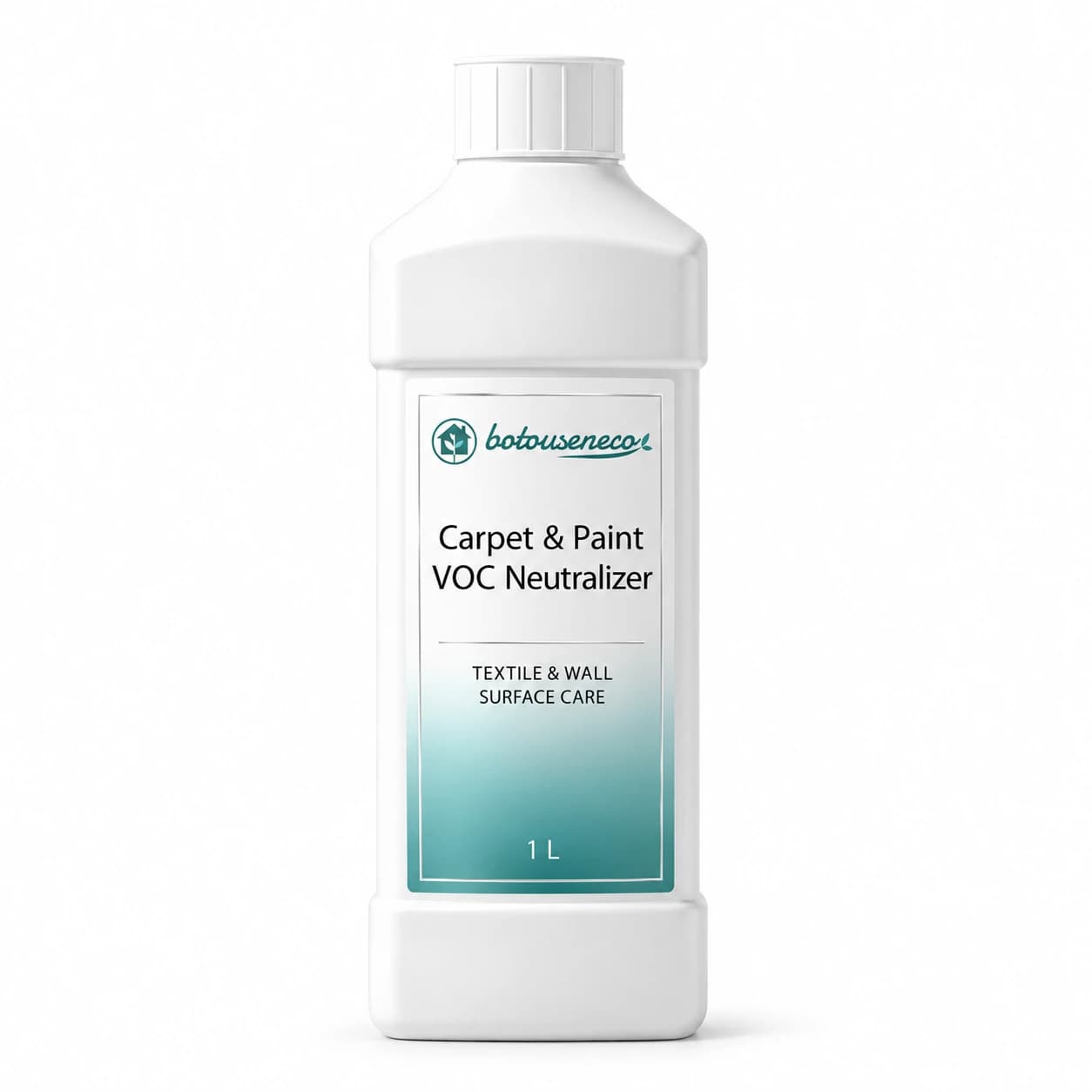
- 3. Carpet, Latex Paint & Wallpaper VOC Neutralizer: Modified beta-cyclodextrin polymer plus alkene cleavage catalysts (pH 6.5 to 7.2). Apply when new vinyl or epoxy bays share air ducts with freshly painted drywall (10 to 15 ml/m2) emitting Texanol, or with SBR-backed carpet tiles (15 to 25 ml/m2).
| Formulation / Term | Active Chemistry & pH | Target Flooring & Wall Scope | Commercial Supply Specs |
|---|---|---|---|
| Total VOC Eliminator | High-solids polymeric chelators + radical oxidizers (pH 6.5-7.5) | 1,000-50,000+ m2 LVT, sheet PVC, epoxy | 15-25 ml/m2; 5 L, 20 L, 25 L & 200 L drums |
| TVOC Eliminator | Plant terpene chelators + micelles (pH 6.5-7.5) | < 1,000 m2 retail, boutique offices, clinics | 10-20 ml/m2; 1 L, 5 L, 25 L & 200 L |
| Carpet & Paint VOC Neutralizer | Beta-cyclodextrin + alkene cleavage catalysts (pH 6.5-7.2) | Co-located latex drywall (Texanol) & carpets | 10-15 ml/m2 walls; 15-25 ml/m2 carpets |
| Botou MOQ, Logistics & SDS | Non-DG GHS Rev. 10 / ISO 11014 SDS, REACH SVHC-free | Air & sea freight via Tianjin Port (~180 km) | Sample 1-5 units (24-48 h); Bulk 100 L (5-7 d) |
Worked Commercial Takeoff: 2,000 m2 Clinic Floorplate Plus Latex Corridors
Estimators bidding a clinic or office handover need exact drum counts before sending crews. Consider a 2,000 m2 new outpatient clinic with 1,500 m2 of welded sheet PVC and glued LVT halls plus 500 m2 of clean flake epoxy exam rooms, paired with 2,200 m2 of fresh latex-painted walls releasing Texanol:
In total, the project needs 100 L (4 x 25 L drums), meeting our 100 L bulk MOQ in one pallet dispatch (5 to 7 business days). Two technicians with ULV and HVLP units spray all 4,200 m2 of floors and walls in one 4-hour evening shift, leaving 16 hours for closed dwell and 24 hours for fresh-air purge before ISO 16000-6 Tenax TA testing.
Do not let 2-ethylhexanol, Texanol, or epoxy benzyl alcohol stall a commercial floor handover. Contact our Botou engineering team with your floor type (LVT, sheet PVC, or epoxy), total square meterage, and baseline Tenax TA reading to receive 1 L evaluation kits within 24 to 48 hours, complete with GHS Rev. 10 SDS packs and a custom drum takeoff.
- Zone 1 (LVT, Sheet Vinyl & Cured Epoxy Floors = 2,000 m2): Applying Total VOC Eliminator at 20 ml/m2 (nominal mid-range rate within 15 to 25 ml/m2) takes 2,000 m2 x 0.020 L/m2 = 40.0 L net; multiplying by a 1.10 HVLP/ULV transfer factor yields 44.0 L -> order 2 x 25 L drums (50 L, keeping 6.0 L spare for seams).
- Zone 2 (Adjacent Fresh Latex Drywall & Coving = 2,200 m2): Applying Carpet, Latex Paint & Wallpaper VOC Neutralizer at 12 ml/m2 (within 10 to 15 ml/m2) takes 2,200 m2 x 0.012 L/m2 = 26.4 L net; multiplying by the 1.10 transfer factor yields 29.04 L -> order 2 x 25 L drums (50 L).
Standards & references
- ISO 16000-6 Tenax TA TD-GC-MS, LEED v4.1 EQ & WELL v2 Air A01 (TVOC <= 0.50 mg/m3) & China GB/T 18883-2022 (TVOC <= 0.60 mg/m3 8h avg).
- ASTM F2170 Concrete Slab Internal Relative Humidity Standard (75%-85% RH adhesive ceiling; > 90% RH vapor-barrier threshold).
- Peer-Reviewed Flooring Studies: Journal of Occupational Health 2026 (PMC13220336), ES&T 2024 (PMC11500398), Indoor Air (PMC6856815), and PLoS One (PMC3389035).
- US EPA Indoor Air Quality VOC Overviews, World Health Organization (WHO) IAQ Guidelines & NIH PubChem Profiles (2-EH, Texanol, Benzyl Alcohol).
- UN GHS Rev. 10 / ISO 11014 Non-DG SDS, EU REACH SVHC-Free, ISO 9001:2015, ISO 14001:2015 & CMA / CNAS Chamber Verification (ISO 16000-9).
Frequently Asked Questions (FAQ)
01.Why does a brand-new LVT or sheet vinyl floor smell chemical even with zero formaldehyde boards?
Vinyl floor odors rarely come from formaldehyde. Instead, new PVC and LVT systems release plasticizers like TXIB and C9-alcohols, carriers like NMP, and 2-ethyl-1-hexanol (2-EH) formed when wet concrete breaks down floor glue. Because these organics repel water, they need micellar and catalytic TVOC neutralizers rather than amino sprays.
02.Will spraying TVOC Eliminator or Total VOC Eliminator make commercial vinyl or epoxy floors slippery?
No, when crews stay within 10 to 20 ml/m2 (TVOC Eliminator) or 15 to 25 ml/m2 (Total VOC Eliminator) and let floors dry fully. Both waterborne sprays are oil-free, neutral, and dry clear, leaving zero wax or slick film on LVT wear layers or epoxy coats.
03.Should crews wash epoxy amine blush off before applying a VOC neutralizer?
Yes. Amine blush is a water-soluble waxy salt sitting right on top of the cured epoxy film. Scrub the floor first with warm water (40 to 50 C) and a neutral or mildly alkaline cleaner, then rinse and dry well. Afterward, mist Total VOC Eliminator to clear remaining benzyl alcohol and amine odors.
04.Can liquid TVOC treatment fix a vinyl floor laid over a wet concrete slab above 90% RH?
Surface sprays reduce indoor 2-EH and plasticizer odor briefly, yet they cannot stop ongoing alkali breakdown from a slab above 90% RH (ASTM F2170). When concrete moisture exceeds glue limits and causes soft adhesive or bubbles, crews must dry the slab and lay an epoxy vapor barrier first.

About the author.
Loo
Loo is Senior Technical Writer and IAQ Research Editor at botouseneco (Hebei Senzhijia), translating laboratory chamber datasets, GB/T 18883 and ISO 16000 standards, and field application logs into clear step-by-step protocols for hospitality housekeeping teams, healthcare facilities, school campuses and renovation crews.
- Senior Technical Writer & IAQ Research Editor · Botou R&D documentation desk.
- Specialist in hospitality, healthcare and field remediation SOPs.
Written by Loo (Senior Technical Writer & IAQ Research Editor) and reviewed by our Botou formulation & QC leadership. Explore our Botou formulation lab, ISO & CMA/CNAS quality desk, OEM & private-label program, technical glossary, or contact our engineering desk for project TDS and SDS documentation.
Next step.