Hospitality & Leather Surface Care
Conditioning Full-Grain and Top-Grain Leather Sofas in 5-Star Hotels and Executive Lounges: Locking Tannery Glutaraldehyde, Hexanal and DMF
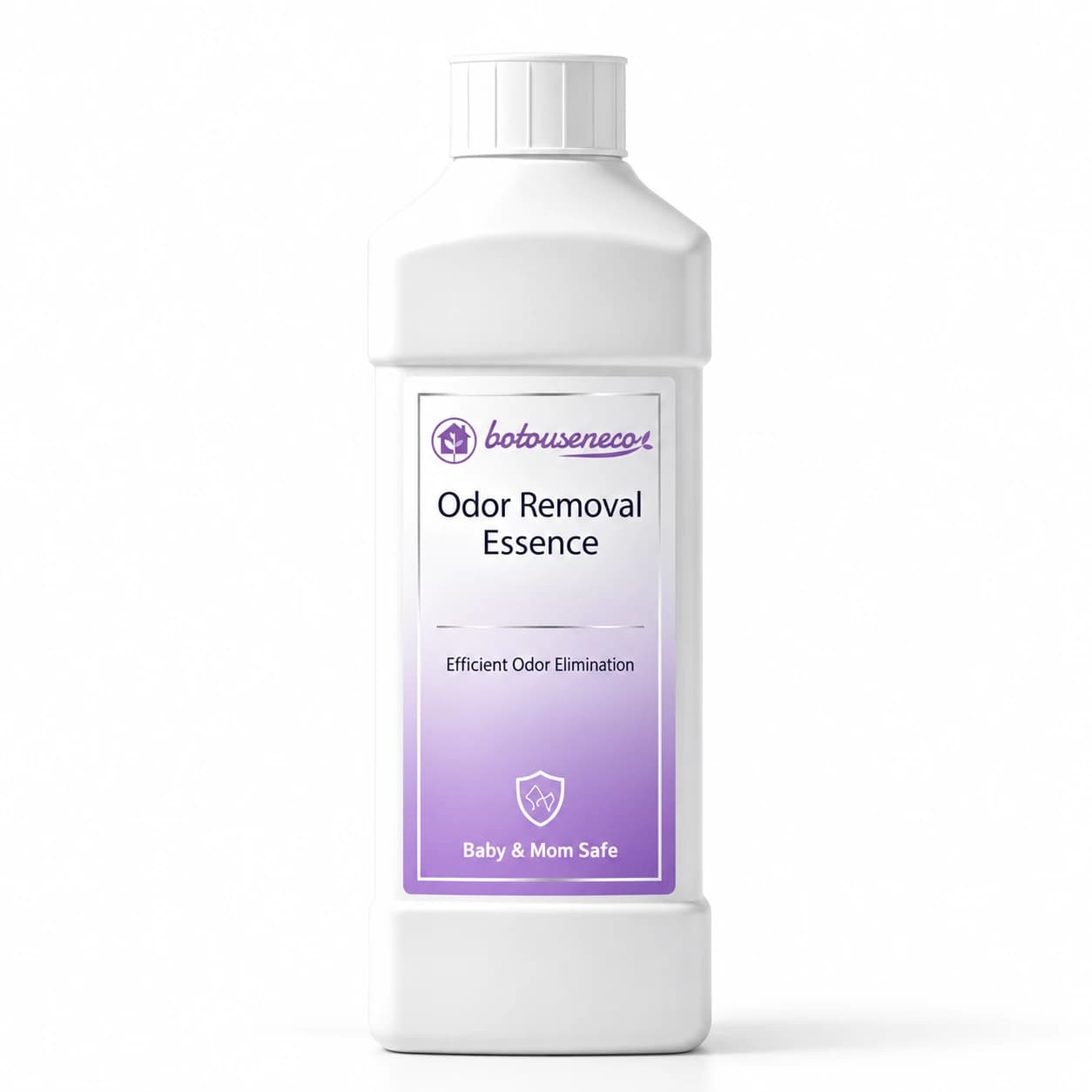
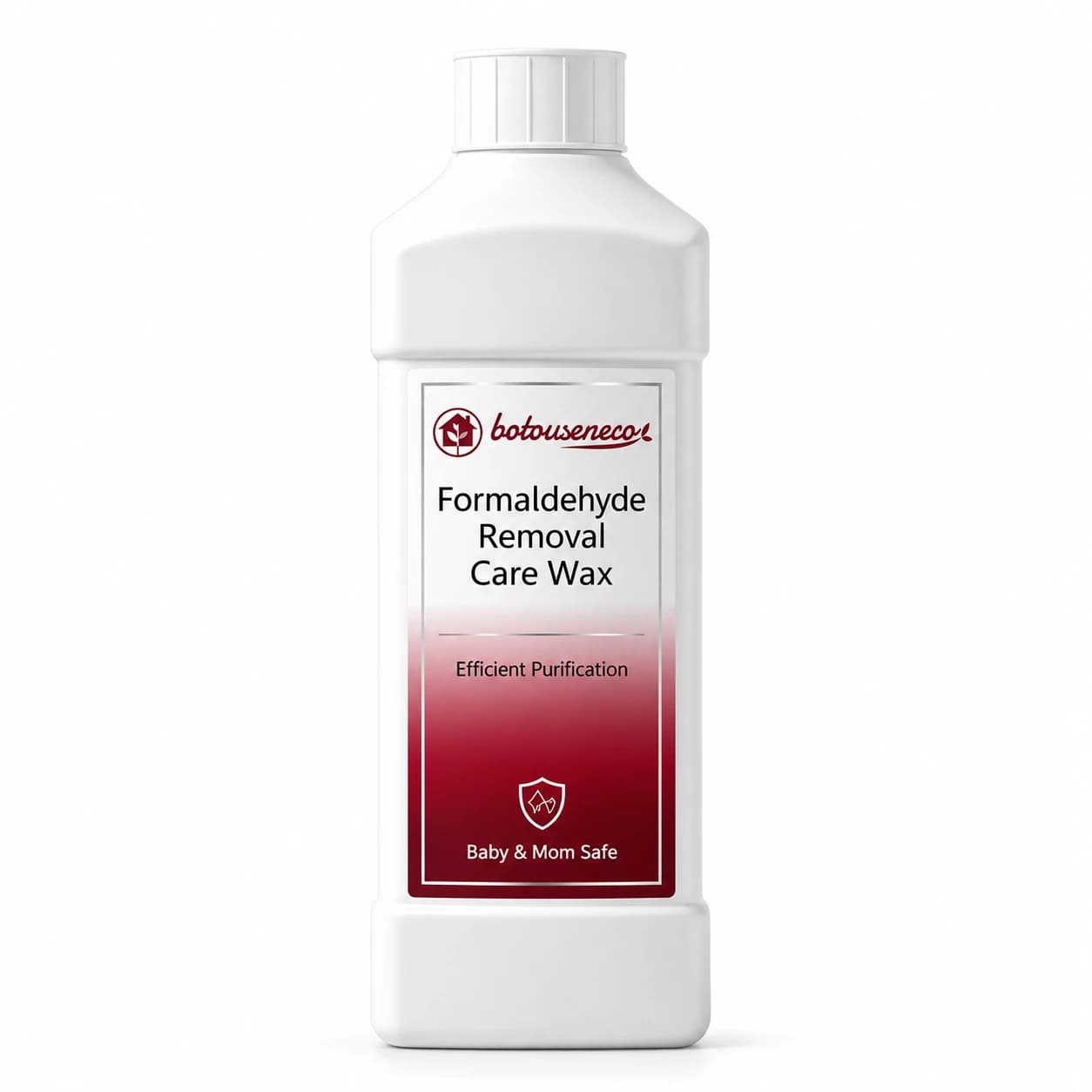
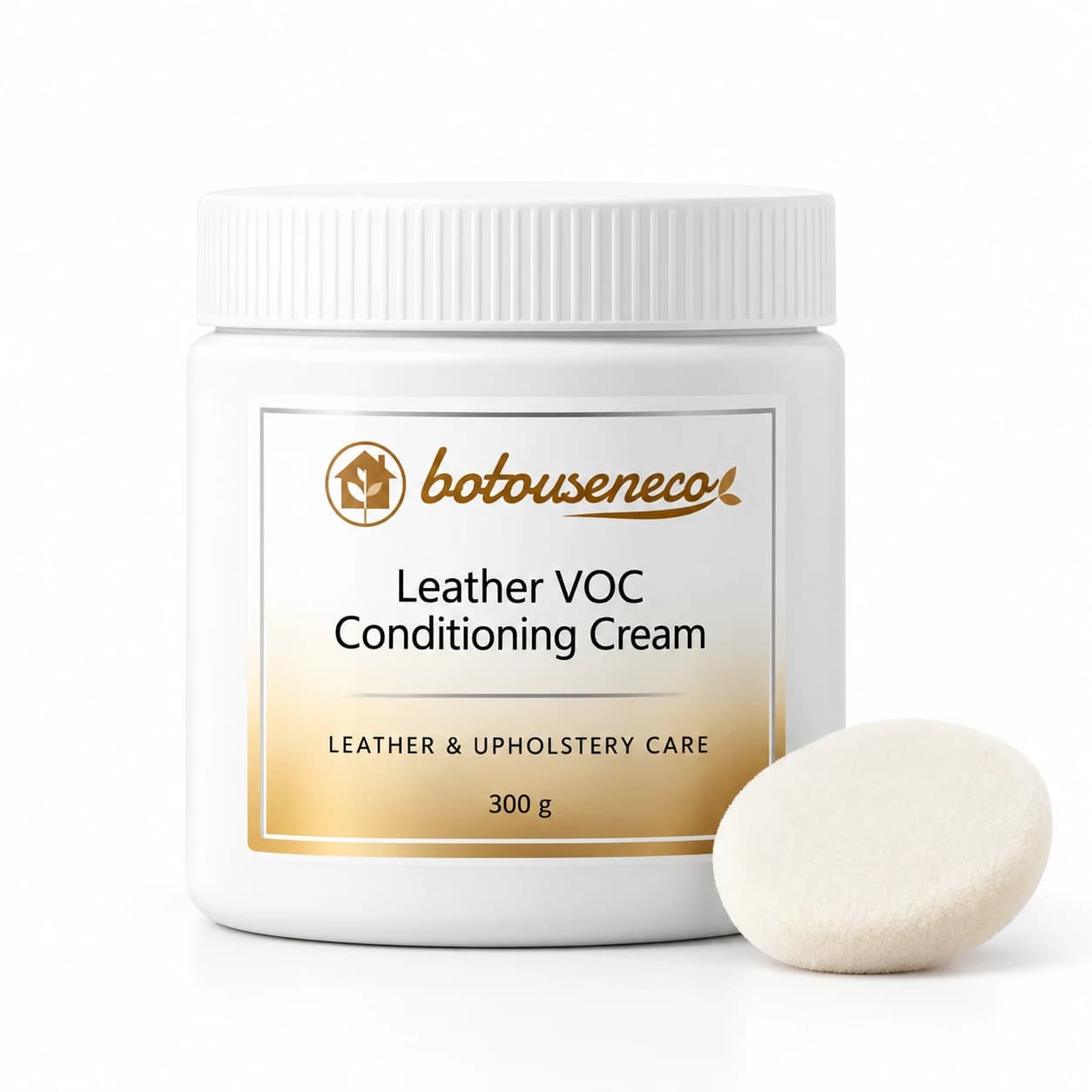
Commercial leather sofa VOC conditioning is the non-water care of full-grain, top-grain, and PU-coated hides using a pH 5.0-5.5 lanolin and jojoba balm. This balm locks tanning aldehydes and paint solvents without stripping natural hide oils. New hotel lobby sofas and boardroom chairs bleed formaldehyde, glutaraldehyde, hexanal, and DMF that push water sprays away. To pass GB/T 18883-2022 (<= 0.08 mg/m3 HCHO) and VDA 275 checks without closing VIP lounges, crews buff on 8 to 12 g/m2 of Luxury Leather VOC Cream, wipe wood frames with 10 to 15 g/m2 of Care Wax, and mist room fabrics with 8 to 15 ml/m2 of Éliminateur d'odeurs.

- Publié
- Mis à jour
- Temps de lecture
- 11 min.
Points clés à retenir
- Four-Plume Leather Source: Commercial hotel sofas emit wet-white glutaraldehyde and syntan HCHO, PU topcoat DMF/toluene, oxidized fatliquor hexanal, and concealed plywood frame HCHO.
- Isoelectric pH 5.0-5.5 Protection: Crème revitalisante COV pour cuir et tissus d'ameublement de luxe matches cowhide collagen pH (5.2), avoiding alkaline oil stripping and silicone glaze entrapment.
- 60-Minute Overnight Turnaround: Buffing 8 to 12 g/m2 of Leather VOC Cream (300 g jar = 25 to 35 m2), 10 to 15 g/m2 of Care Wax on timber frames, and ULV fogging Éliminateur d'odeurs (5 à 10ml/m3) clears VIP lounges with zero downtime.
- 50-Seat Lobby Sizing: Treating 15 three-seat sofas and 20 armchairs (161.5 m2 hide area) requires 1.62 kg of Leather VOC Cream, 540 g of Care Wax, and 4.8 L of Odor Eliminator.
1. Tannery Glutaraldehyde, DMF, and Lipid Hexanal Emission Sources in Commercial Leather
Tannery aldehyde retention is the unbound share of formaldehyde (HCHO) and glutaraldehyde (C5H8O2) cross-linkers trapped inside cowhide collagen fibers after wet-white tanning and oil fatliquoring. When five-star hotels, airport VIP lounges, and corporate offices unbox new leather sofas or executive chairs, facility teams often smell a sharp, sour chemical odor that lingers for months despite 24/7 HVAC airflow.
Leather emission papers indexed on NIH PubMed Leather Tanning Aldehyde and DMF Emission Research (2024) show that commercial upholstery hides release four distinct chemical plumes:
- 1. Syntan Formaldehyde and Wet-White Glutaraldehyde. To meet modern chrome-free hide specs, tanneries retan hides with modified glutaraldehyde and phenolic or melamine-formaldehyde syntans. In warm hotel lobbies (22-28 C), weak hemiacetal bonds break down and bleed free HCHO and sour glutaraldehyde gas.
- 2. Polyurethane Topcoat Dimethylformamide (DMF) and Toluene. Contract seating uses a tough polyurethane (PU) or nitro topcoat to resist wine spills and wear. Coaters thin those resins with dimethylformamide (DMF), toluene, and xylene. Under the European Chemicals Agency (ECHA) REACH Restriction Framework (2026), DMF is tightly capped in coated leather due to liver and skin risks.
- 3. Fatliquor Lipid Oxidation (Hexanal and Nonanal). Fish, neat-foot, and plant oils added during fatliquoring oxidize inside the hide over time. This lipid breakdown releases C6 to C9 aldehydes (hexanal, octanal, and nonanal) that smell like stale wax or rancid tallow.
- 4. Concealed Plywood Sofa Frame Off-Gassing. Under the top-grain leather skin, commercial sofa frames use 15-18 mm hardwood plywood and webbing glues that bleed urea-formaldehyde gas through stitch seams and zipper vents.

| Target Leather Pollutant | Chemical Formula & Boiling Point | Specific Leather Manufacturing Origin | Sensory Odor Profile | Regulatory / Industry Reference Cap |
|---|---|---|---|---|
| ฟอร์มาลดีไฮด์ | HCHO (-19.5 C) | Phenolic/amino syntan retanning & plywood internal frame | Sharp, irritating pickle smell | <= 0.08 mg/m3 (GB/T 18883-2022) / <= 0.10 mg/m3 (WHO IAQ, 2024) |
| Glutaraldehyde | CH2(CH2CHO)2 (187 C) | Chrome-free wet-white collagen cross-linking bath | Pungent, sour disinfectant odor | ISO 17226-1 leather HPLC check (<= 20-75 mg/kg hide) |
| Dimethylformamide (DMF) | (CH3)2NC(O)H (153 C) | Coagulated PU finish coat & synthetic leather backing | Fishy, amine-like solvent odor | EU REACH Annex XVII DMF cap (<= 3000 mg/kg in PU) |
| โทลูอีนและไซลีน (BTEX) | C7H8 / C8H10 (111-144 C) | Topcoat lacquer thinners and foam contact cement | Sweet, heavy paint-thinner smell | GB/T 18883-2022 Toluene <= 0.20 mg/m3 |
| Hexanal & Octanal | C6H12O / C8H16O (131-171 C) | Oxidation of unsaturated fatliquoring oils | Rancid tallow, stale crayon odor | VDA 275 / ISO 12219-2 sensory & GC-MS audit |
2. Why Alkaline Cleaners and Silicone Dressings Crack Hospitality Leather
Collagen isoelectric point (pI 5.0-5.5) is the natural mild acid band where tanned cowhide collagen fibers hold peak hydrogen-bond strength, tear resistance, and oil balance. When hotel staff or renovation crews try to clear new-sofa smells with room HCHO water sprays (pH 7.0-8.5), alkaline soaps (pH 9.0-11.0), or shiny silicone oils, they ruin expensive hides.
For a full matrix of how leather balms work alongside vehicle and wood care, see our pillar guide on automotive cabin VOC detox, leather aldehyde conditioning and wood barrier wax.
Three Material Failures Caused by Improper Leather Remediation
Avoid household or general renovation sprays on semi-aniline and top-grain contract seating:
- Water Rings on Semi-Aniline Hides: Plain water-based formaldehyde sprays have high surface tension and zero oil carriers. On top-grain leather, water drops bead up on the slick topcoat, soak unevenly into stitch holes, and dry into dark water rings.
- Alkaline Oil Stripping and Seam Cracks: According to chemical exposure notes in the CDC ATSDR Toxicological Profile for Formaldehyde (2024), shifting surface pH changes both polymer stability and gas release rates. Soaps above pH 8.0 strip out the natural oils that keep leather soft. Within 60 to 90 days of guest use, dry seat cushions stiffen and crack along piping seams.
- Silicone Oil Glaze Entrapment: Cheap furniture polishes use silicone oil (PDMS) to fake a quick shine. Silicone forms a slick plastic skin that clogs hide pores, traps DMF and glutaraldehyde inside the cushion, and rubs off onto guests suits.

3. Selecting B2B Formulations for Hospitality Leather, Wood Trim, and Ambient Lounge Air
Lipophilic cyclodextrin-amine co-delivery is a two-phase care system where lanolin and jojoba esters carry oil-miscible amine traps into leather pores to lock aldehydes (HCHO and glutaraldehyde), while beta-cyclodextrin cups trap nonpolar DMF, toluene, and hexanal smells.
To treat an executive lounge, hotel lobby, or sofa showroom without risking upholstery warranty claims, our surface care and functional wax product line and hotel and hospitality IAQ protocols pair four field-proven products.
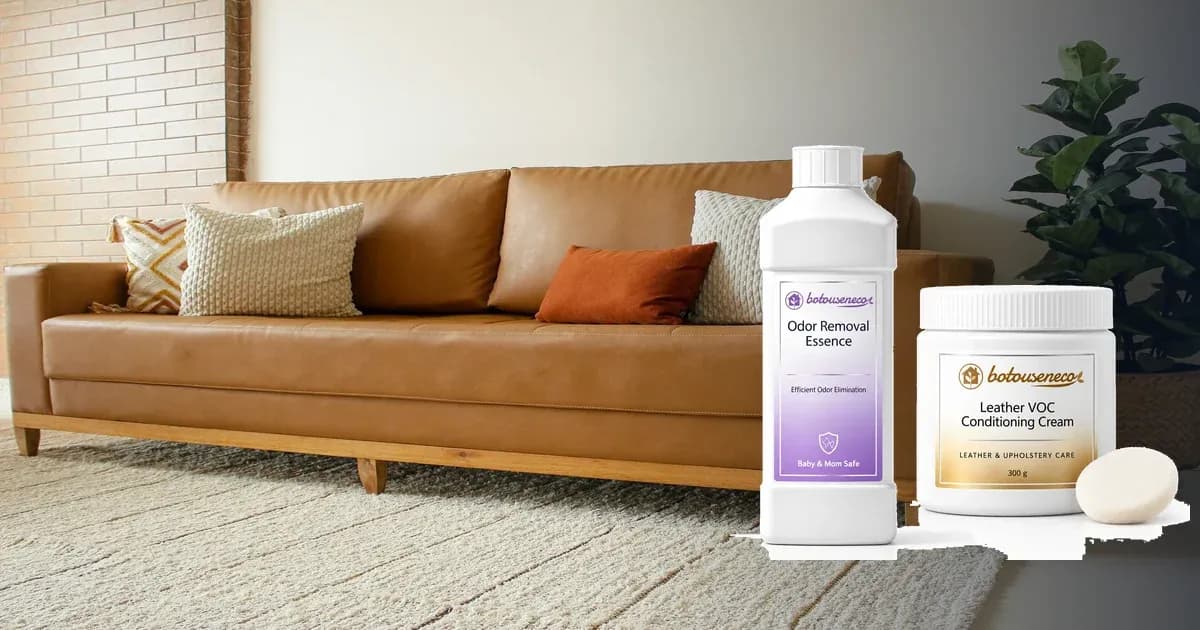
Primary Hide Treatment: Luxury Leather & Upholstery VOC Conditioning Cream
Engineered for full-grain leather, top-grain pigmented hides, semi-aniline sofas, executive chairs, padded headboards, and vegan PU seating (do not apply onto raw suede, nubuck, or Alcantara).
- Chemical Architecture: Built with pharmaceutical lanolin, jojoba esters, lipophilic aldehyde traps, and beta-cyclodextrin buffered at pH 5.0 to 5.5.
- Finish & Coverage: This 100% (Botou QC Spec, 2026) silicone-free ivory balm dries in 10 minutes to a soft factory satin-matte feel. At 8 to 12 g/m2, one 300 g jar treats 25 to 35 m2 of leather (about 5 to 7 three-seat lobby sofas). For detailed reaction chemistry, read our guide on removing hexanal, acetaldehyde and DMF with leather upholstery conditioning cream.
Exposed Timber & Veneer Frames: Formaldehyde Removal Care Wax
Built for exposed walnut, mahogany, or oak sofa legs, wood armrests, boardroom tables, and veneered lobby walls that need low-moisture care under US EPA TSCA Title VI Composite Wood Products Regulation (2025) rules.
- Application & Dosage: Wipe 10 to 15 g/m2 of แว๊กซ์ดูแลกำจัดฟอร์มาลดีไฮด์ onto finished wood with a soft pad and buff dry. Carnauba and beeswax seal tiny finish cracks while aldehyde traps lock surface HCHO with zero grain swell.
Ambient Room & Textile Clearance: Odor Eliminator
Formulated for wool lobby rugs, blackout curtains, fabric lounge chairs, and 3D room air.
- Application & Dosage: Mist เครื่องกำจัดกลิ่น (pH 6.0-7.0, fragrance-free plant polyphenol formula) at 8 to 15 ml/m2 onto fabrics or 5 ถึง 10 มล./ลบ.ม with a ULV cold fogger. It clears amines, sulfides, and new-room smells in 30 to 60 minutes.

| Hospitality Lounge Zone | Primary Pollutant & Odor Source | Formulation botouseneco spécifiée | Application Method & Tool | Taux de dosage standard | Surface & Air Acceptance Target |
|---|---|---|---|---|---|
| Full-Grain & Top-Grain Leather Cushions | Tannery glutaraldehyde, free HCHO, PU topcoat DMF, and lipid hexanal | [Luxury Leather & Upholstery VOC Conditioning Cream](/th/products/luxury-leather-upholstery-voc-conditioning-cream) | Soft pad wipe-on; 10-min soak + dry buff | 8-12 g/m2 (1 x 300 g jar covers 25-35 m2) | Isoelectric pH 5.0-5.5; zero silicone glaze |
| Exposed Hardwood Frames & Coffee Tables | UF/MUF frame joinery HCHO and veneer finish micro-emissions | [Cire de soin pour l'élimination du formaldéhyde](/th/products/formaldehyde-removal-care-wax) | Soft pad thin coat and dry buffing | 10-15 g/m2 on finished wood | Zero grain swell; breathable carnauba seal |
| Surrounding Lounge Rugs, Drapes & Air | Residual renovation amines, carpet odors, and concrete ammonia | [Odor Eliminator](/th/products/odor-eliminator) | ULV cold fogger (20-50 micron mist) or fabric spray | 8-15 ml/m2 on fabrics; 5-10 ml/m3 air | Neutral pH 6.0-7.0; 30-60 min odor clearance |
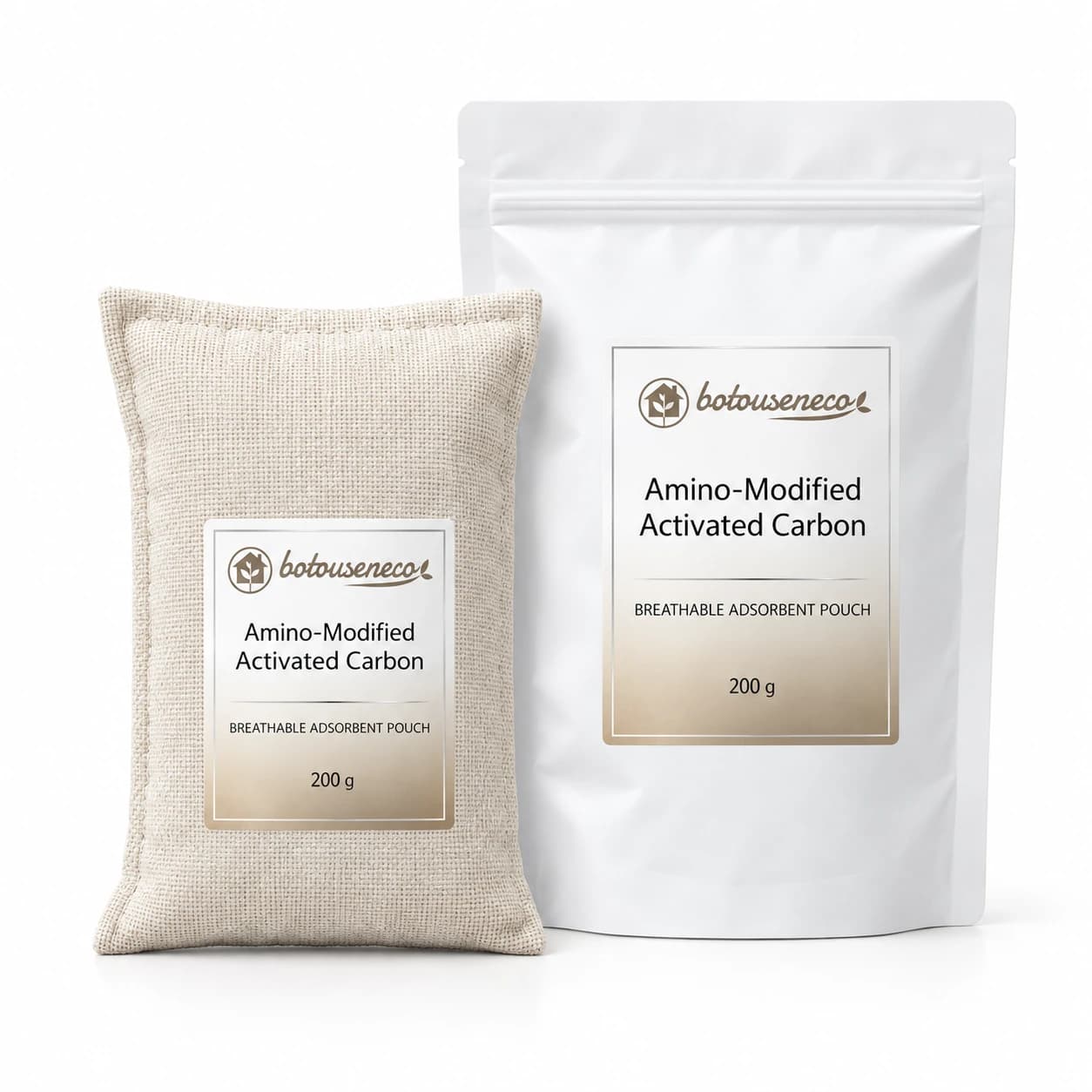
| Under-Sofa Cavity & Cushion Zippers | Dead-air formaldehyde and toluene inside plywood sofa bases | [Amino-Acid Modified Activated Carbon Packs](/th/products/amino-acid-modified-activated-carbon-packs) | Place breathable pouches inside zippered base frames | 2-4 x 100 g pouches per 3-seat sofa | >= 1050 mg/g iodine coconut carbon; zero heat rebound |
4. Step-by-Step 60-Minute Hotel Lobby & Executive Lounge Conditioning SOP
Hotel engineering teams and furniture installers can run this four-step SOP overnight. As a result, the lounge opens for morning guests with zero chemical smell and zero lost revenue.
- Step 1: Dry Seam Vacuuming & Base Carbon Placement (Minute 0-10). Vacuum dust and grit out of seat crevices, button tufts, and piping seams using a soft brush tip so grit never scratches the hide during buffing. Check the sofa tag to confirm top-grain, full-grain, or coated PU leather, and set aside any raw suede pillows. Unzip the bottom dust cloth of the sofa and drop two to four 100 g pouches of Amino-Acid Modified Activated Carbon (>= 1050 mg/g iodine coconut carbon with 8% amino salts, Botou QC Spec, 2026) into the plywood frame cavity.
- Step 2: Lipophilic Leather VOC Balm Massage (Minute 10-35). Put 3 to 4 grams of Luxury Leather and Upholstery VOC Conditioning Cream onto a soft sponge pad and rub it flat into the pad face. Wipe a thin, even coat (8 to 12 g/m2) across cushions, backrests, arms, and rear panels. For punched cooled desk chairs, rub the balm thin into the pad first so paste never enters the air holes; see our full pinhole guide in perforated cooled Nappa leather and Alcantara suede VOC conditioning.
- Step 3: 10-Minute Soak & Satin-Matte Dry Buffing (Minute 35-50). Wait 10 minutes at 20-26 C room heat so lanolin and jojoba esters carry the amine and cyclodextrin traps into the hide pores. Buff the whole sofa with a clean, dry microfiber towel to leave a dry, non-slick satin-matte finish. At the same time, wipe 10 to 15 g/m2 of แว๊กซ์ดูแลกำจัดฟอร์มาลดีไฮด์ onto wood sofa legs and coffee tables, then buff dry.
- Step 4: ULV Ambient Odor Fogging & Walkthrough Sign-Off (Minute 50-60). Run a ULV cold fogger with เครื่องกำจัดกลิ่น at 5 ถึง 10 มล./ลบ.ม across the lounge air and rug edges. Within 45 minutes, the room is ready for guests or ISO 16000-3 air checks.
Worked Dosing Example for a 50-Seat Hotel Lobby & VIP Lounge
Consider a new five-star hotel lobby and VIP lounge with 15 three-seat leather sofas (6.5 m2 hide area each = 97.5 m2) and 20 leather armchairs (3.2 m2 each = 64.0 m2). The room also holds 45 m2 of walnut tables and wall panels inside a 600 m3 air volume.
- Total Leather Area (A_leather): 97.5 + 64.0 = 161.5 m2.
- Leather VOC Cream Needed (10 g/m2 mean): 161.5 m2 x 10 g/m2 = 1,615 g (1.62 kg, covered by two 1 kg contractor tubs).
- Wood Care Wax Needed (12 g/m2 on 45 m2): 45 m2 x 12 g/m2 = 540 g (one 1 kg bottle).
- Odor Eliminator Volume (8 ml/m3 on 600 m3): 600 m3 x 8 ml/m3 = 4,800 ml (one 5 L jerrycan).
5. Verified B2B Supply Terms, Packaging Formats, and OEM Private Label from Botou
Made in-house since 2015 by Hebei Senzhijia Environmental Protection Co., Ltd (botouseneco) in Botou, Hebei, China, all leather balms, wood waxes, and odor neutralizers carry full batch tracking. Learn more about us and our Botou formulation plant before ordering a trial kit.
- B2B Packaging & Minimum Order Quantities (MOQ): Sample Evaluation Kit: 1-5 units (300 g leather balm jar with pad, 500 g / 1 kg wax bottle, or 1 L Odor Eliminator bottle) for hotel tests and sofa factory QC. Standard Bulk Supply: Orders start from 100 L / 100 kg (4 drums or pails) (Leather VOC Cream in 1 kg / 5 kg tubs, Care Wax in 5 kg / 20 kg pails, Odor Eliminator in 5 L / 25 L / 200 L drums). OEM Private Label: Custom brand runs start from 500-1,000 units with printed jars, sofa brand aftercare boxes, and hotel SOP cards.
- Production Lead Times & Port of Loading: Samples ship in 24-48 hours, standard bulk orders in 5-7 business days from our Botou warehouse, and custom OEM packaging in 10-14 business days after label approval. All cargo ships from Tianjin Port, China (about 180 km from our plant) as Non-Dangerous Goods (Non-DG) with a 16-section GHS Rev. 10 / ISO 11014 SDS.
- Quality Systems & Accredited Verification: Every batch runs under ระบบการจัดการคุณภาพ ISO 9001:2015 and ระบบการจัดการสิ่งแวดล้อม ISO 14001:2015 rules, backed by การตรวจสอบห้องเพาะเลี้ยงที่ได้รับการรับรองจาก CMA / CNAS (ISO 16000-9 / GB/T 18883-2022). By company policy, certificate numbers and full lab scans stay private; copies and batch COA sheets are sent straight to buyers when you contact our B2B hospitality and furniture care desk.
Standards & references
- GB/T 18883-2022 & WHO Indoor Air Quality Guidelines: 12-hour closed-room formaldehyde limit (<= 0.08 mg/m3) and toluene cap (<= 0.20 mg/m3) for commercial hospitality handovers.
- ISO 17226-1 & VDA 275: Chemical determination of formaldehyde and glutaraldehyde content in leather by HPLC and 60 C modified flask emission testing.
- EU REACH Annex XVII: Dimethylformamide (DMF <= 3000 mg/kg) restriction in polyurethane-coated leather and formaldehyde caps in furniture articles.
- US EPA TSCA Title VI (40 CFR Part 770): Composite wood formaldehyde emission limits for hardwood plywood internal sofa frames.
- UN GHS Rev. 10 / ISO 11014 & ISO 9001:2015 / ISO 14001:2015 : fiche de données de sécurité non-DG en 16 sections et normes de gestion de la qualité des lots COA.
Foire aux questions (FAQ)
01.Will Luxury Leather & Upholstery VOC Conditioning Cream stain white shirts or leave a sticky residue on hotel sofas?
No. Luxury Leather and Upholstery VOC Conditioning Cream is 100% (Botou QC Spec, 2026) free of silicone oils, paraffin grease, and dyes. Wiped on at 8 to 12 g/m2 and buffed dry after 10 minutes, it soaks cleanly into leather pores and leaves a dry satin-matte feel that never rubs off onto guest clothes.
02.How does Luxury Leather VOC Conditioning Cream remove both tannery aldehydes and PU finish DMF smells?
The balm uses a two-part carrier. Pure lanolin and jojoba esters wet slick PU topcoats and carry oil-soluble amine traps into the hide to lock ฟอร์มาลดีไฮด์ and glutaraldehyde into solid salts. Meanwhile, beta-cyclodextrin cups trap nonpolar DMF, toluene, and hexanal odor molecules.
03.Can hotel housekeeping teams use Luxury Leather VOC Conditioning Cream on vegan PU leather and vinyl booth seating?
Yes. Beyond real full-grain and top-grain cowhide, the pH 5.0-5.5 lanolin-cyclodextrin balm safely clears DMF, styrene, and plasticizer smells on synthetic PU vegan leather and restaurant vinyl booths without clouding the finish.
04.How often should 5-star hotels reapply Leather VOC Conditioning Cream after the initial handover detox?
One initial coat at 8 to 12 g/m2 permanently locks the factory surge of tanning aldehydes and paint solvents. To keep leather soft and prevent dry HVAC air from cracking cushions in busy hotel lobbies, staff can buff on a light 6 to 8 g/m2 care coat every 90 to 180 days.
À propos de l'auteur.
Toilettes
Loo est rédacteur technique principal et rédacteur de recherche sur la QAI chez botouseneco (Hebei Senzhijia), traduisant les ensembles de données de chambres de laboratoire, les normes GB/T 18883 et ISO 16000 et les journaux d'application sur le terrain en protocoles clairs, étape par étape, pour les équipes d'entretien ménager de l'hôtellerie, les établissements de santé, les campus scolaires et les équipes de rénovation.
- Rédacteur technique principal et éditeur de recherche sur la QAI · Bureau de documentation R&D de Botou.
- Spécialiste des SOP d’hôtellerie, de soins de santé et de remédiation sur le terrain.
Écrit par Toilettes (Rédacteur technique principal et rédacteur de recherche sur la QAI) and reviewed by our Botou formulation & QC leadership. Explore our Laboratoire de formulation Botou, ISO & CMA/CNAS quality desk, OEM & private-label program, glossaire technique, ou contactez notre bureau d'ingénierie pour la documentation TDS et SDS du projet.
Prochaine étape.