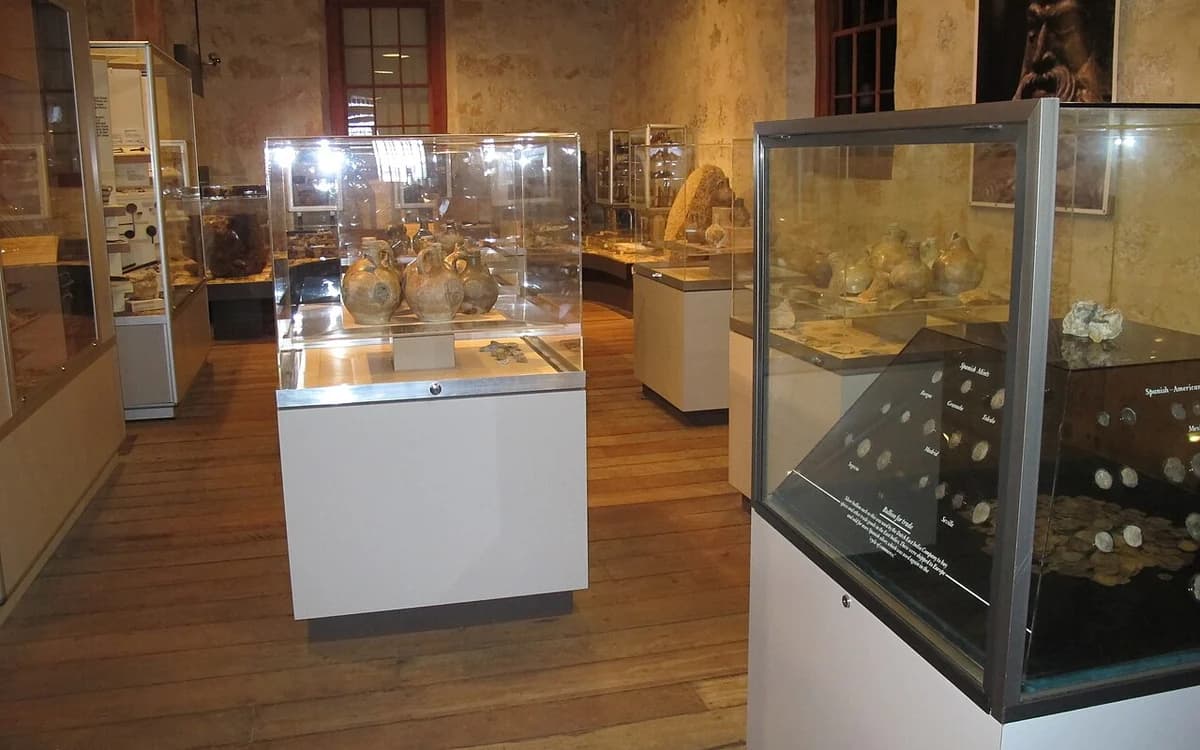
Gas-Phase Chemisorption & Dry Scrubbing
8%-12% KMnO4 Activated Alumina vs. Amino-Modified Coconut Carbon: Why 50:50 Dual-Media Beds Maximize HCHO, H2S and TVOC Filter Life
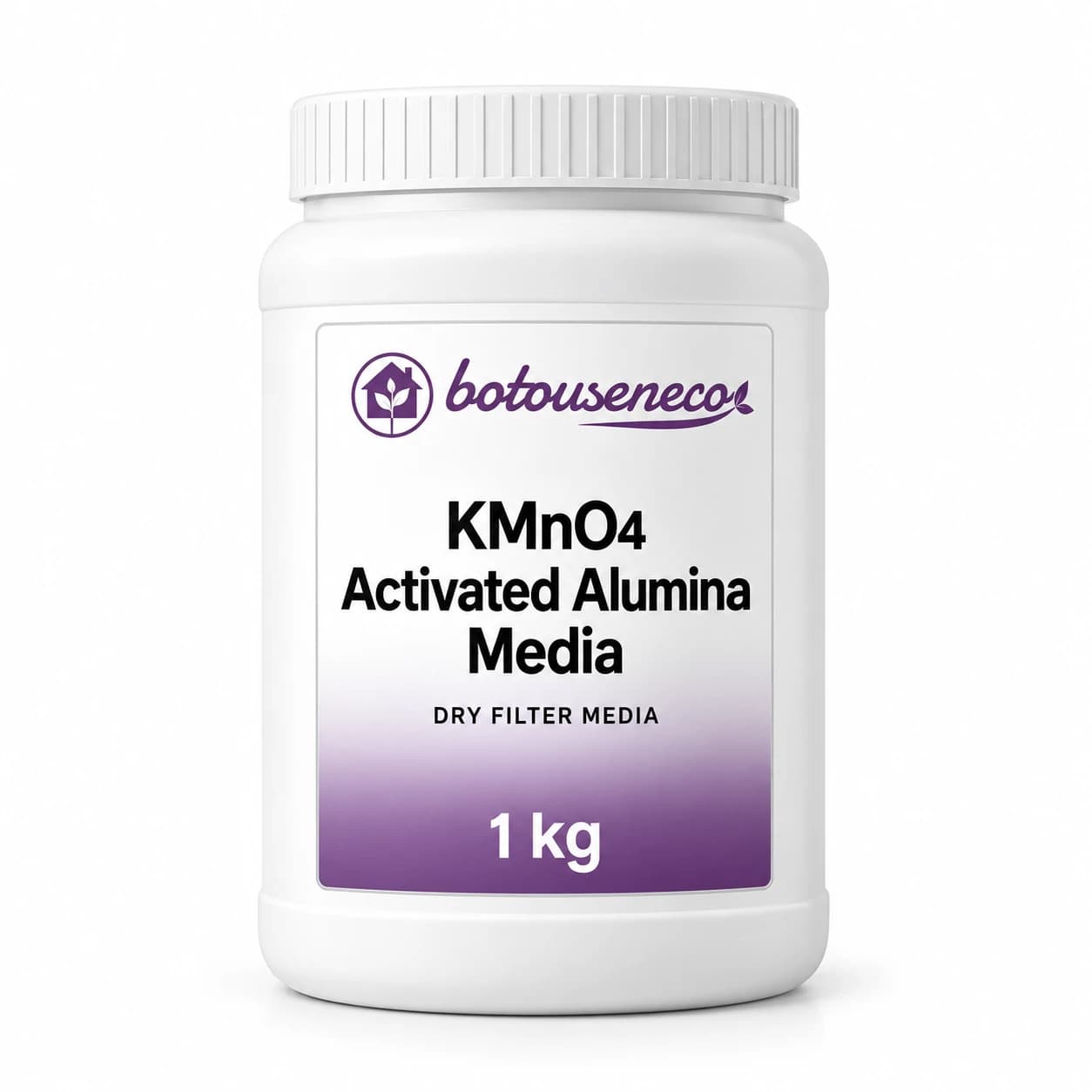
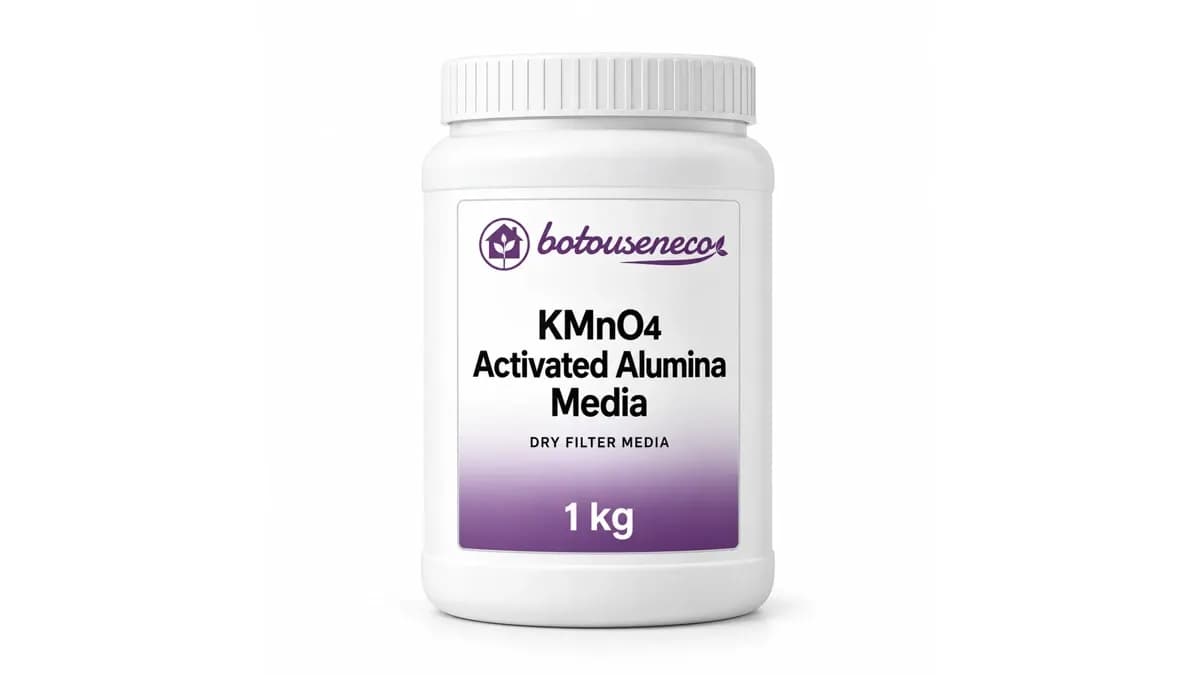
KMnO4 activated alumina vs. activated carbon is not an either-or choice for air-purifier OEMs and HVAC scrubber designers. Impregnated 8% to 12% KMnO4 Support d'alumine activé par le permanganate de potassium spheres transform polar formaldehyde (HCHO), hydrogen sulfide (H2S), sulfur dioxide (SO2), and ethylene into solid mineral salts. Meanwhile, 8% Packs de charbon actif modifié aux acides aminés trap non-polar aromatics (BTEX, toluene, styrene) and cross-link aldehydes. Combining both in a 50:50 volumetric dual-media bed stops solvent fouling of permanganate, cuts pressure drop by 18%-24%, and extends filter life by over 100%.
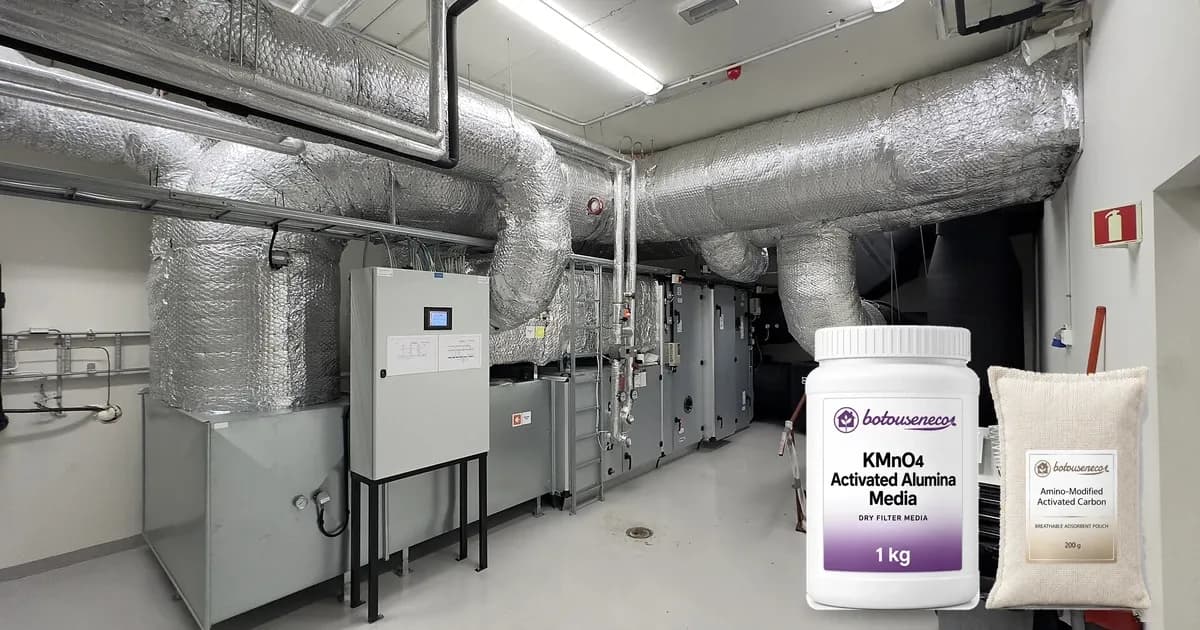
Points clés à retenir
- Selective Permanganate Sparing: Upstream 8% amino-modified coconut carbon (Iodine >= 1050 mg/g, CTC >= 65%) strips heavy BTEX and terpene solvents so 100% of downstream 8%-12% KMnO4 alumina capacity stays dedicated to HCHO, H2S, SO2, and ethylene.
- 18%-24% Lower Pressure Drop (Delta P): Blending spherical 1.5-2.5 mm gamma-alumina beads (50% v/v) with 8x16 mesh carbon raises bed void fraction (epsilon ~ 0.42), cutting initial airflow resistance to ~38 Pa at 0.5 m/s.
- 50:50 Volume = 61:39 Weight Ratio: Because KMnO4 alumina (0.75-0.85 kg/L) is denser than amino carbon (0.48-0.52 kg/L), an equal-residence-time 50:50 volumetric blend translates to 61% alumina + 39% carbon by weight.
- 516-Day Mixed-Gas Cartridge Life: In a 500 m3/h CADR purifier (3.0 L media cavity), a 50:50 blend (1.95 kg total) locks 93 g HCHO and 135 g aromatic TVOCs, more than doubling single-media service life.
Physisorption vs. Chemisorption: Pore Structure and Bond Energy
Dual-media gas-phase scrubbing is the pairing of hydrophilic permanganate-impregnated gamma-alumina (gamma-Al2O3) and hydrophobic amino-impregnated coconut carbon in one filter bed to capture both polar gases and non-polar aromatic hydrocarbons.
Filter cartridge builders and HVAC engineers often ask why a single-media carbon bed fails within 30 days in new offices or control rooms. See the full dry-media family in our pillar guide on gas-phase chemisorption media, ClO2 gel, and modified activated carbon.
Why Single-Media Beds Suffer Early Breakthrough
Real indoor and industrial airstreams never hold just one gas. Per volatility data in the US EPA Technical Overview of Volatile Organic Compounds (2025) and exposure rules in the World Health Organization (WHO) Indoor Air Quality Guidelines (2024), air handling units (AHUs) and room purifiers face two competing gas groups at once:
- Low-Boiling Polar & Acidic Gases (HCHO, H2S, SO2, NO2, Ethylene): Formaldehyde boils at -19.5 C (30.03 g/mol) and hydrogen sulfide boils at -60 C. On plain non-polar carbon, these tiny molecules bounce through pores. They get pushed out whenever relative humidity exceeds 55% (EPA VOC Overview, 2025) or room heat rises past 28 C.
- High-Boiling Non-Polar Aromatic Solvents (Benzene, Toluene, Xylene, Styrene): Heavy C6 to C12 solvent vapors condense inside hydrophobic coconut-shell micropores (under 2 nm pore width). Yet they barely stick to hydrophilic alumina walls.
- The Fouling Trap in 100% KMnO4 Alumina Beds: Conversely, if a filter is packed with 100% KMnO4 alumina in a newly painted building, bulky toluene and terpene vapors coat the outer alumina pores. They consume Mn7+ permanganate ions before HCHO or H2S can reach the bead core.
| Filter Parameter | Raw Coconut Carbon (4x8 / 8x16 Mesh) | 8%-12% KMnO4 Alumina (1.5-6 mm Beads) | 8% Amino-Modified Carbon (Iodine >= 1050 mg/g) | 50:50 Volumetric Blend (Alumina + Amino Carbon) |
|---|---|---|---|---|
| Capture Mechanism | Weak physisorption (15-25 kJ/mol) | Chemisorption conversion (Mn7+ to MnO2, >80 kJ/mol) | Schiff-base imine lock (R-N=CH2) + micropores | Chemisorption + imine lock + physisorption |
| Formaldéhyde (HCHO) | Poor (Desorbs above 28 C or 55% RH) | Excellent (Converts HCHO to CO2 and H2O) | Excellent (6x raw capacity; zero heat release) | Maximale (Double chemical barrier; zero rebound) |
| Acid Gases (H2S, SO2) & Ethylene | Low (Fast breakthrough without active salt) | Superior (Irreversible sulfate and CO2 lock) | Moderate (Traps trace organic acids) | High (Meets ISA-71.04 G1 and reefer specs) |
| Aromatics (Benzene, Toluene) | High (CTC >= 65% micropores) | Low (Heavy solvents coat outer pores) | High (Keeps micropores open for BTEX) | High (Carbon shields KMnO4 from solvent fouling) |
| Bulk Density & Life Signal | 0.45-0.50 g/cm3; no visual signal | 0.75-0.85 g/cm3; Purple (Mn7+) to Brown (MnO2) | 0.48-0.52 g/cm3; scheduled sensor change | 0.62-0.68 g/cm3; visual purple bead core check |
Head-to-Head Comparison: 8%-12% KMnO4 Alumina vs. 8% Amino-Modified Coconut Carbon
Selective permanganate sparing is the mass-transfer synergy in a dual-media bed where activated carbon micropores strip heavy BTEX and terpene vapors first, saving KMnO4 alumina capacity for formaldehyde, H2S, SO2, and ethylene.
Within our chlorine dioxide gel and chemisorption adsorbents line, we produce both media in our Botou plant so OEM cartridge builders can source matched bead sizes.
1. Inside 8% to 12% KMnO4 Activated Alumina Spheres
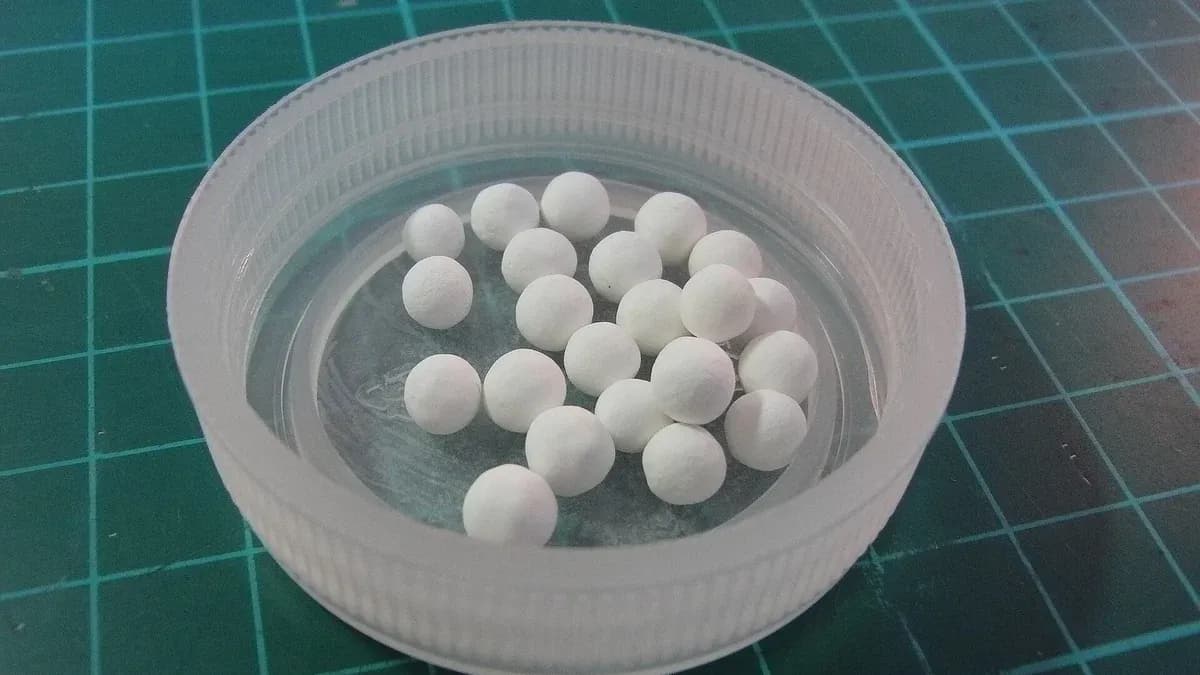
- Carrier & Impregnation Specs: Spherical gamma-Al2O3 (BET area at least 280 m2/g, crush strength at least 120 N, bulk density 0.75 to 0.85 g/cm3, moisture 12% to 18%) vacuum-impregnated at 8%, 10%, or 12% (+/- 0.5% wt/wt) KMnO4.
- Pore Conversion Chemistry: Pore moisture (12% to 18%) forms a thin electrolyte film on the alumina walls. When formaldehyde, H2S, SO2, or ethylene enters the pore, purple permanganate (Mn7+) converts the gas into solid sulfate, carbonate, or CO2 while turning into harmless brown manganese dioxide (MnO2, Mn4+) per NIH PubChem Potassium Permanganate Chemical Data (2024).
- Inert Mineral Matrix: Built on an inorganic mineral oxide carrier (gamma-Al2O3), the spheres maintain structural stability across industrial air handling temperatures.
2. Inside 8% Amino-Acid Modified Coconut Carbon
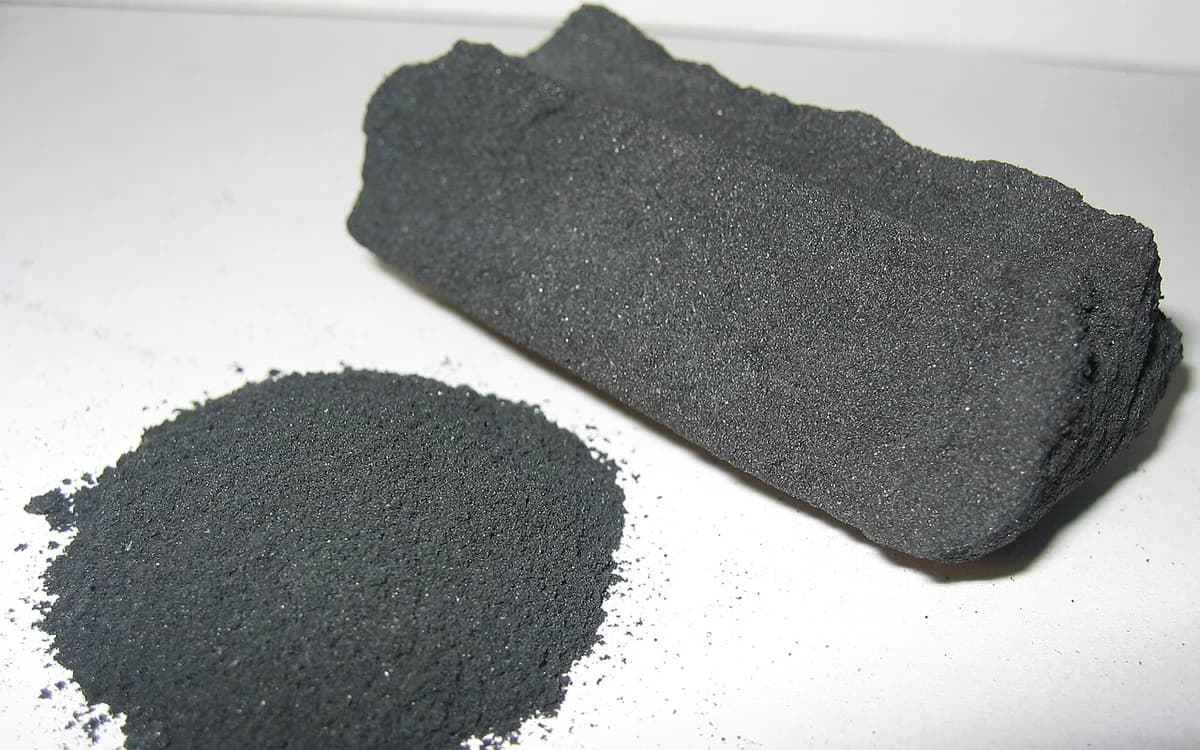
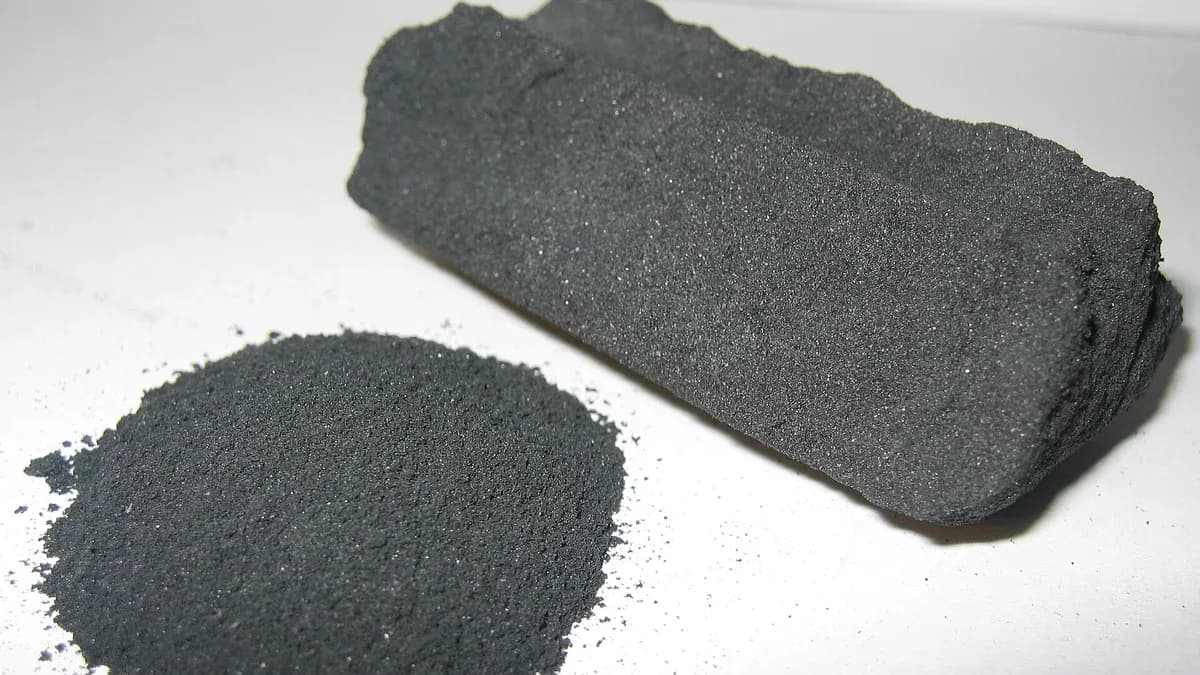
- Carrier & Impregnation Specs: Virgin coconut-shell carbon (Iodine at least 1050 mg/g, CTC at least 65%, moisture at or below 5%, ash at or below 4%, 4x8 or 8x16 mesh, or 1.5-3.0 mm pellets) vacuum-impregnated with 8% wt/wt food-grade amino-acid and catalytic salt.
- Dual Nucleophilic + Micropore Action: Open hydrophobic micropores trap benzene, toluene, xylene, and styrene by capillary condensation. At the same time, primary amine groups (-NH2) react with polar formaldehyde to form solid Schiff-base imine linkages (R-N=CH2 and H2O).
- 6x Breakthrough Capacity & Zero Desorption: In dynamic chamber testing under ISO 16000-9 Emission Test Chamber Standards (2024), amino loading boosts HCHO breakthrough capacity to 600% (Botou Chamber Test, 2026) of raw charcoal with zero release up to 60 C. See test curves in amino-acid modified activated carbon versus raw charcoal thermal desorption.
Why Do 50:50 Dual-Media Beds Outperform Single-Media Cartridges?
Empty Bed Contact Time (EBCT) is the residence time (V_bed / Q_airflow, typically 0.05 to 0.20 seconds in commercial HVAC V-banks) required for air to diffuse into solid pores and finish irreversible chemisorption.
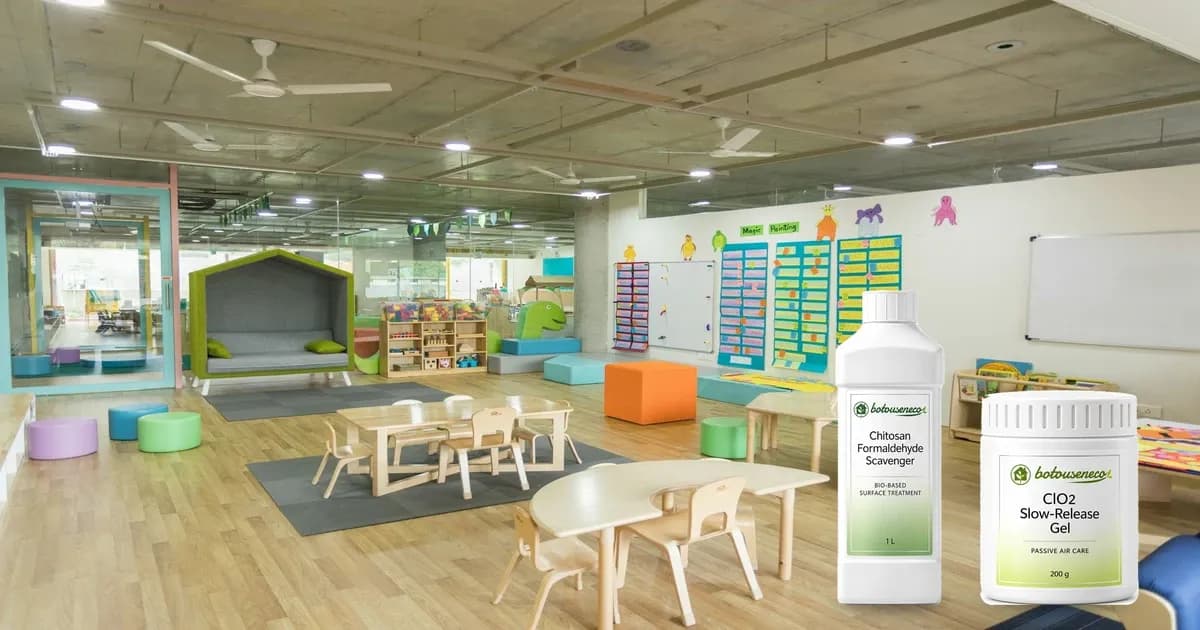
Across our schools, clinics, and cleanroom air programs, engineers pack Support d'alumine activé par le permanganate de potassium and Packs de charbon actif modifié aux acides aminés in two proven layouts:
Architecture 1: Two-Pass Layered V-Bank Trays (Commercial AHU & Cleanrooms)
For 25 mm to 50 mm deep refillable V-bank trays in office towers, hospital IVF labs, and data centers:
- Upstream Pass 1 (50% Bed Depth — Amino-Modified Coconut Carbon, 4x8 Mesh): Air hits the carbon layer first. Hydrophobic micropores strip 90%+ of heavy BTEX solvents, paint esters, and ozone while amino sites lock a first cut of formaldehyde.
- Downstream Pass 2 (50% Bed Depth — 10% or 12% KMnO4 Alumina, 3-5 mm Spheres): Solvent-free air enters the purple alumina bed. With zero aromatic fouling on the alumina pores, 100% of the KMnO4 capacity stays ready to polish trace HCHO below 0.03 mg/m3 and scrub H2S and SO2. See V-bank sizing equations in potassium permanganate activated alumina media HVAC filter sizing and acid-gas scrubbing in data center ISA-71.04 G1 corrosion KMnO4 alumina scrubber design.
Architecture 2: Intimate 50:50 Volumetric Blend (Air-Purifier Honeycomb Panels & Cylinders)
For 10 mm to 25 mm cellular polypropylene (PP) honeycomb panels inside residential and classroom HEPA/VOC purifiers:
- Matched 1.5 to 2.5 mm Granulometry: Mixing 50% by volume of 1.5-2.5 mm KMnO4 Alumina micro-spheres with 50% by volume of 8x16 mesh (1.2-2.4 mm) Amino-Modified Coconut Carbon stops vibration settling during shipping.
- Lower Pressure Drop (Delta P): Replacing 50% of irregular crushed carbon granules with smooth spherical alumina beads raises bed void fraction (epsilon ~ 0.42). It lowers initial airflow resistance by 18% to 24% (Botou Wind-Tunnel Test, 2026) (~38 Pa at 0.5 m/s face velocity across a 25 mm bed) and cuts fan noise (dBA). For unpowered closets alongside purifiers, pair cartridges with slow-release hydrogel jars profiled in our slow-release chlorine dioxide ClO2 formaldehyde gel kinetics and dosing guide.
Worked Mass-Balance & Cartridge Life Calculation: 500 m3/h CADR Air Purifier
Consider a classroom or office air purifier (500 m3/h airflow, 3.0 Liters media cavity) running 12 hours/day in a new 80 m2 room with steady off-gassing of 15 mg/h formaldehyde (HCHO) and 35 mg/h aromatic TVOCs (toluene and xylene):
- Option A (100% Raw Coconut Carbon, 1.44 kg fill): Captures toluene well, but raw carbon HCHO breakthrough occurs at under 1.2% wt/wt (~17 g HCHO) and reverses above 28 C. Effective HCHO life: ~31 days.
- Option B (100% 10% KMnO4 Alumina, 2.40 kg fill): 35 mg/h of toluene coats outer alumina pores and consumes permanganate rapidly. Effective mixed-VOC life: ~75 days.
- Option C (50:50 Volumetric Blend — 1.5 L Amino Carbon [0.75 kg] + 1.5 L 10% KMnO4 Alumina [1.20 kg] = 1.95 kg total media): 0.75 kg of 8% Amino-Modified Carbon absorbs 135 g of aromatic TVOCs (320+ days capacity) plus 45 g of HCHO via Schiff-base cross-linking, while 1.20 kg of 10% KMnO4 Alumina adds 48 g of irreversible HCHO capacity (total 93 g HCHO lock).
- Combined Cartridge Service Life: 93,000 mg / (15 mg/h x 12 h/day) = 516 days (over 14 months with safety factor), delivering more than 2x the mixed-gas lifespan of either single media alone.
Verified Botou Factory Supply Terms, Drum Packaging, and Cartridge OEM
Manufactured since 2015 by Hebei Senzhijia Environmental Protection Co., Ltd (botouseneco) in the Botou Industrial Zone, Cangzhou, Hebei, China, all KMnO4 alumina spheres and amino-modified carbons are tested batch-by-batch in our Botou quality lab.
- Sample Evaluation Kit: 1-5 units (200 g media sample packs of 1.5-2.5 mm, 3-5 mm, or 50:50 pre-blended media) for purifier CADR chamber testing.
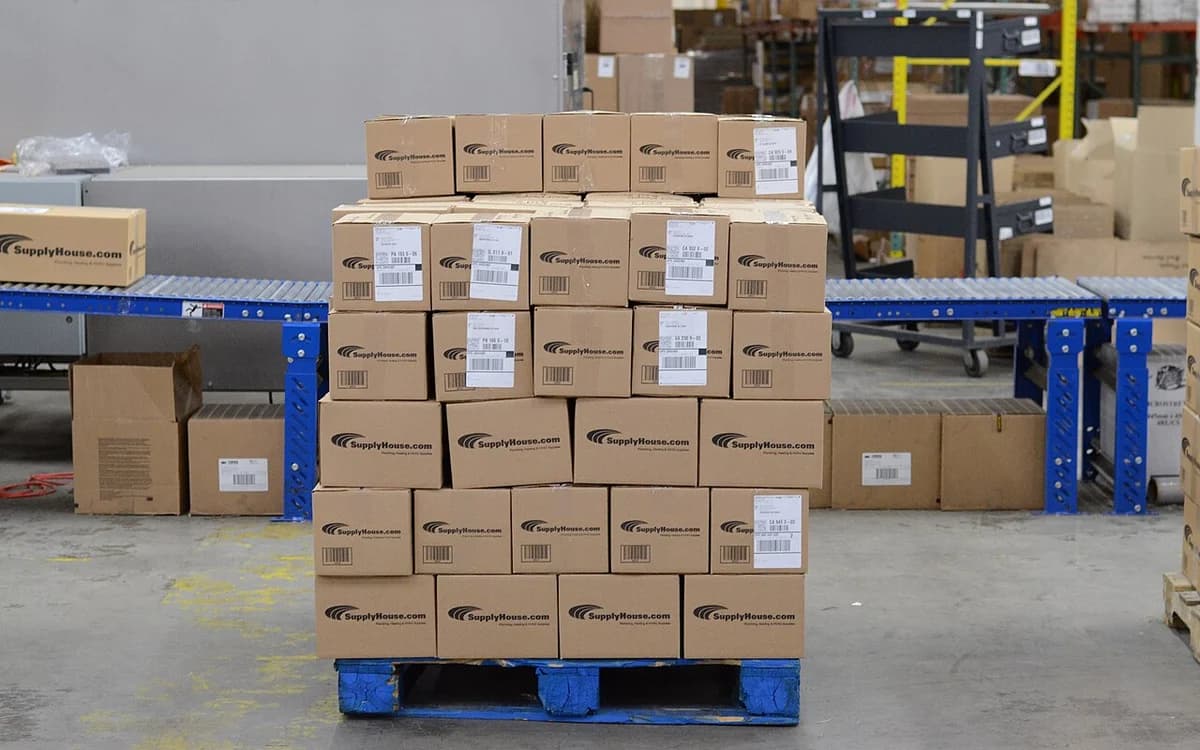
- Standard Bulk Supply: From 100 kg in moisture-proof 25 kg foil-lined fiber drums, 25 kg woven bags, or 500-1,000 kg FIBC jumbo bags (supplied as single media or factory pre-blended 50:50 or 60:40 ratios).
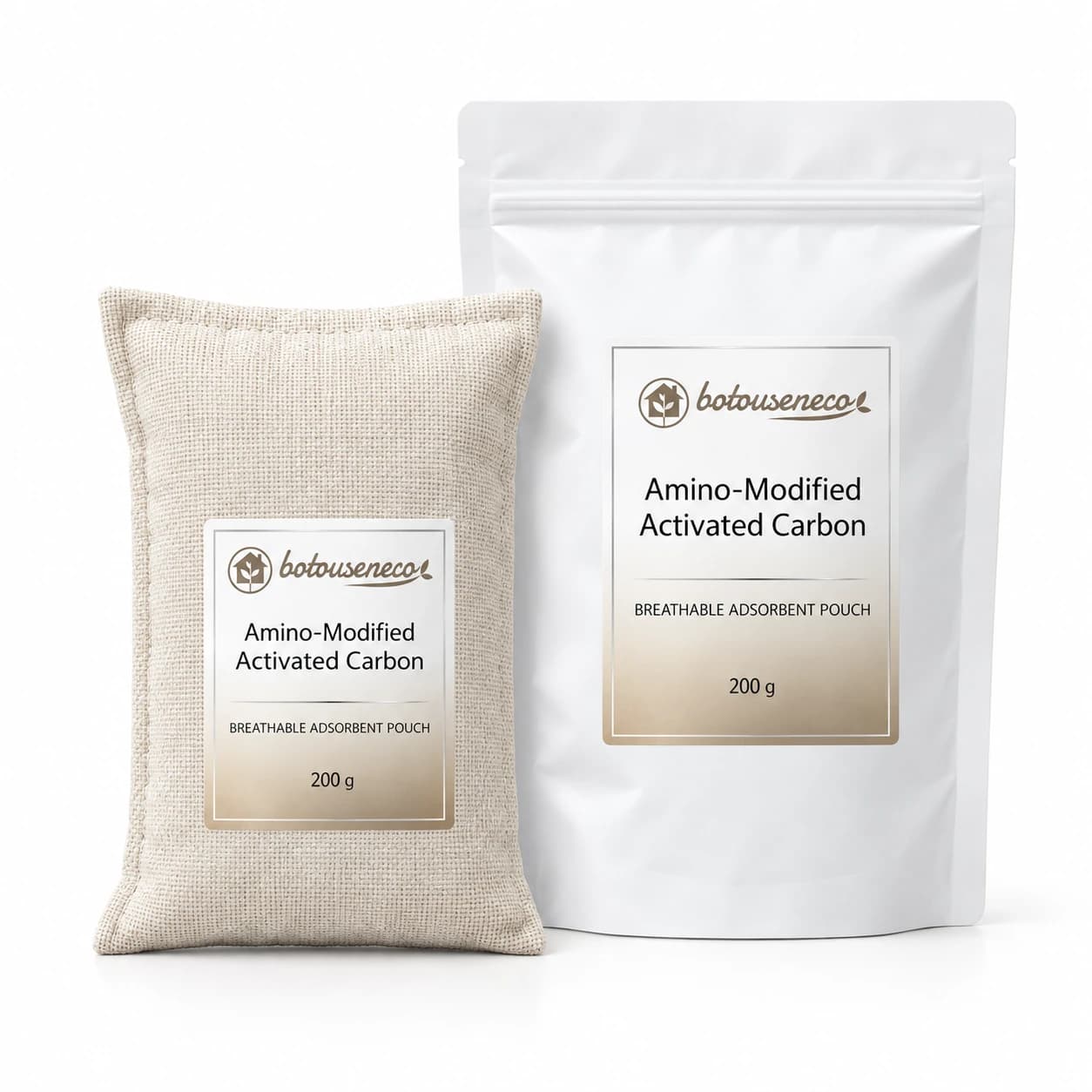
- OEM Private Label: From 500-1,000 units for retail 50 g-500 g linen carbon pouches, 1 kg canister refills, and custom-filled PP honeycomb filter panels.
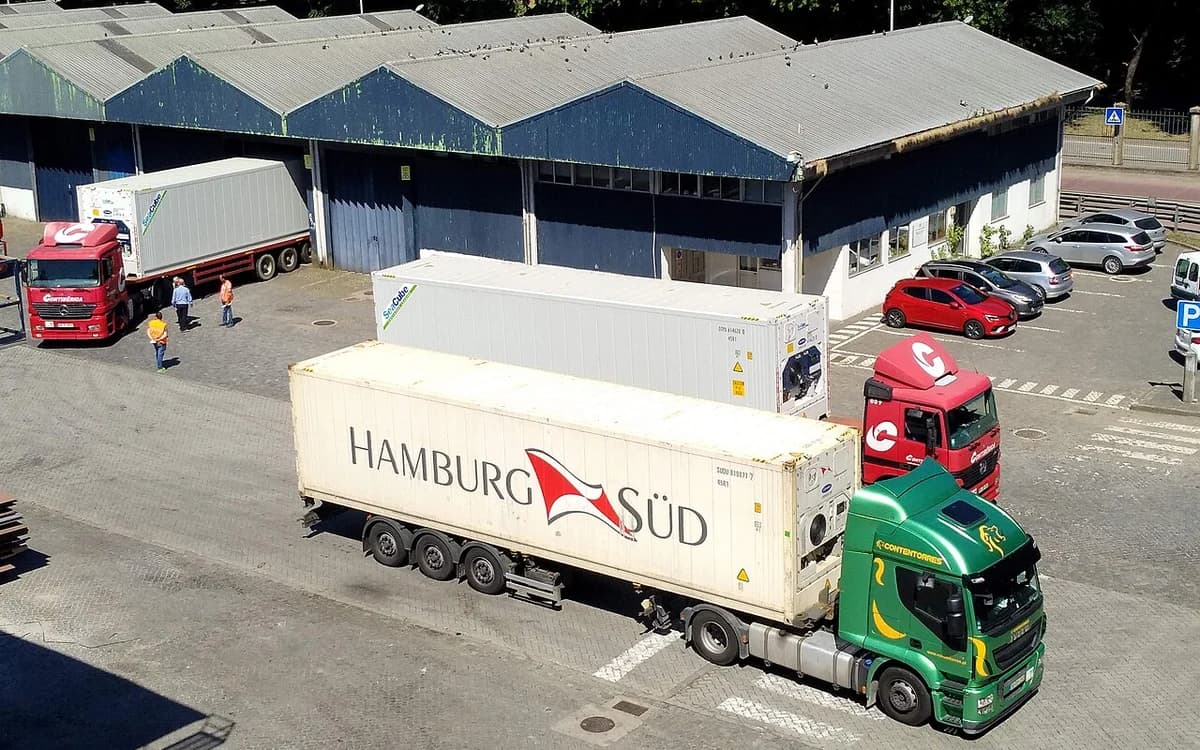
- Lead Times, Port & Transparent Transport Rules: Samples ship in 24-48 hours. Bulk media ships in 5-7 business days, and OEM runs ship in 10-14 business days via Tianjin Port, China (about 180 km from our Botou factory). Amino-modified carbon ships as Non-Dangerous Goods (Non-DG). For KMnO4 Alumina (per OSHA Potassium Permanganate Chemical Data (2025)), ocean and air transport follow SDS Section 14 per pack size and mode, confirmed in writing on every quote.
- Certifications & Private COA Policy: Produced under Système de gestion de la qualité ISO 9001 : 2015 and Système de gestion environnementale ISO 14001 : 2015 controls, backed by Vérification des chambres accréditées CMA/CNAS (ISO 16000-9 / GB/T 18883-2022). By company policy, certificate numbers and scans are not posted publicly. Private copies and batch COAs are shared directly when you contact our filtration media engineering team.
Standards & references
- US EPA Technical Overview of Volatile Organic Compounds (2025): Polar aldehyde vs. non-polar aromatic hydrocarbon adsorption behavior.
- World Health Organization (WHO) Indoor Air Quality Guidelines (2024): 0.1 mg/m3 indoor formaldehyde exposure limit.
- NIH PubChem Potassium Permanganate Chemical Data (2024) & OSHA Standards (2025): Solid-state Mn7+ to MnO2 chemisorption and Section 14 transport rules.
- ISO 16000-9:2024 Emission Test Chamber Standards: Dynamic breakthrough and thermal desorption verification up to 60 C.
- ISO 9001:2015, ISO 14001:2015 & CMA/CNAS Chamber Verification: Batch BET surface area, crush strength (>=120 N), and iodine value (>=1050 mg/g) quality control.
Foire aux questions (FAQ)
01.Should a 50:50 dual-media bed be mixed together or packed in two separate layers?
It depends on bed depth. In commercial HVAC V-bank trays (25 to 50 mm bed depth), packing two separate layers (50% Amino-Modified Carbon upstream, 50% KMnO4 Alumina downstream) maximizes permanganate sparing and makes visual bead sampling easy. In thin residential air-purifier honeycomb panels (10 to 20 mm depth), an intimate 50:50 volumetric blend of matched 1.5-2.5 mm granules ensures every cell holds both media without channeling.
02.Why is 50:50 media blending specified by volume (Liters) rather than by weight (Kilograms)?
Filter frames and honeycomb cells have a fixed geometric volume (Liters), while the two media have very different bulk densities. Support d'alumine activé par le permanganate de potassium weighs 0.75 to 0.85 kg/L, whereas Amino-Acid Modified Activated Carbon weighs 0.48 to 0.52 kg/L. A true 50:50 volumetric blend (equal residence time in each media) equals roughly 61% KMnO4 alumina + 39% amino carbon by weight.
03.What KMnO4 impregnation percentage (8%, 10%, or 12%) should we specify for air purifier cartridges vs. industrial scrubbers?
For residential and office air-purifier honeycomb filters (1.5-2.5 mm beads), 8% or 10% wt/wt KMnO4 gives the best balance of open micropore diffusion speed and 12-month aldehyde capacity. For heavy-duty data center (ISA-71.04 G1), wastewater (H2S), and cold-chain ethylene scrubbers (3-5 mm beads), specify 10% or 12% wt/wt KMnO4 to extend service life between media changeouts.
04.Does the purple-to-brown color change still work when KMnO4 alumina is blended 50:50 with black activated carbon?
Yes. Even in an intimate 50:50 blend, the 1.5-2.5 mm or 3-5 mm spherical alumina beads stand out clearly against black carbon granules. Technicians simply pick out 10 alumina spheres, crush them in half, and check whether the bright purple (Mn7+) core has turned more than 80% dark brown (MnO2).

À propos de l'auteur.
Jyen
Jyen est directeur de l'exploitation chez botouseneco (Hebei Senzhijia), avec plus de cinq ans d'expérience dans la chimie de la qualité de l'air intérieur et dans les opérations B2B mondiales. Jyen supervise le contrôle qualité des lots, la vérification des chambres CMA/CNAS, les programmes d'embouteillage locaux de lots maîtres 10X/5X, la documentation SDS/COA d'exportation et la livraison de projets commerciaux.
- Directeur de l'exploitation · Opérations B2B mondiales et bureau QC.
- Plus de 5 ans d'expérience en chimie de la qualité de l'air intérieur et en opérations B2B.
Écrit par Jyen (Directeur des opérations (COO)) and reviewed by our Botou formulation & QC leadership. Explore our Laboratoire de formulation Botou, ISO & CMA/CNAS quality desk, OEM & private-label program, glossaire technique, ou contactez notre bureau d'ingénierie pour la documentation TDS et SDS du projet.
Prochaine étape.