Board Mill & Furniture Process Comparison
In-Resin Glue-Line Formaldehyde Catchers vs. Post-Press Surface Amino Scavengers: Internal Bond Strength, Cost and Emission Decay
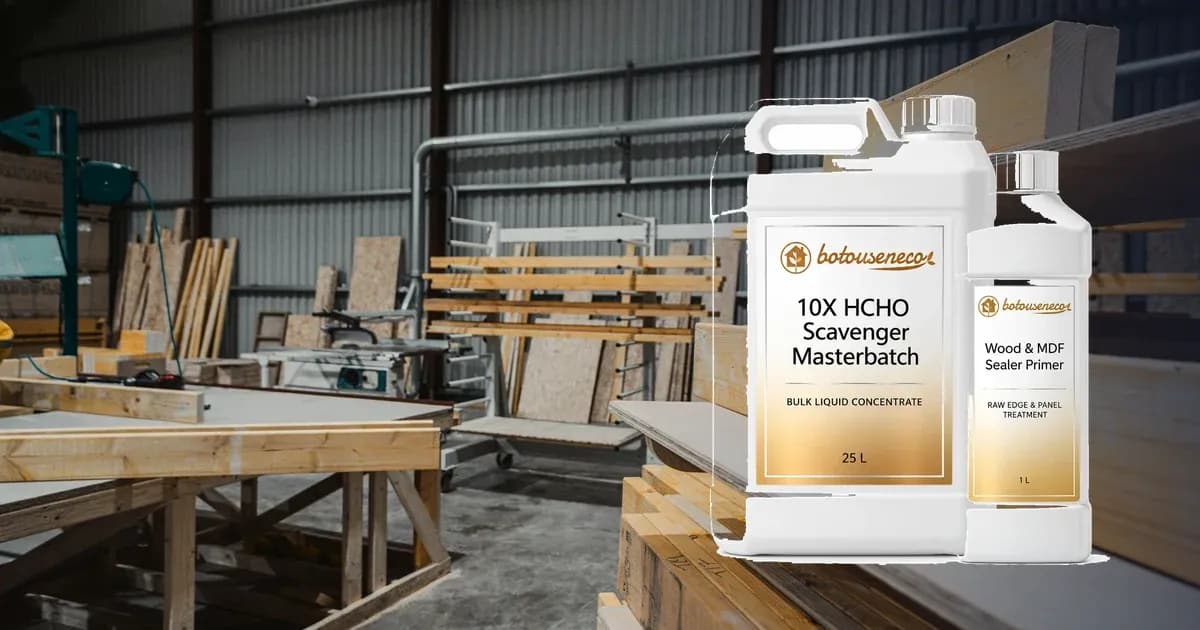
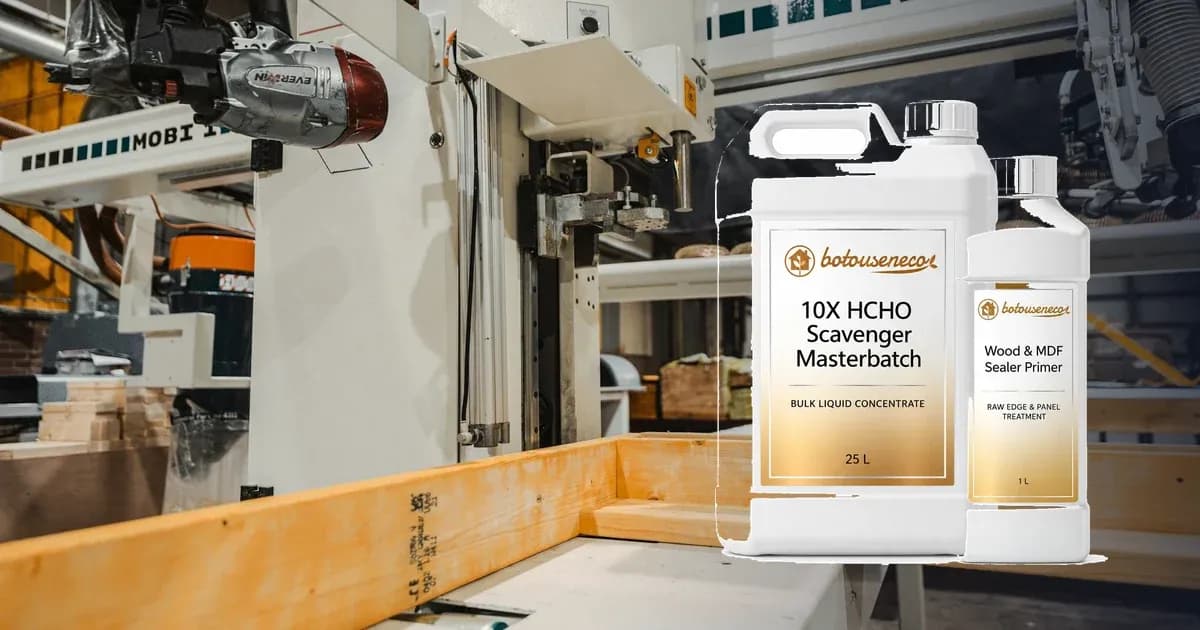
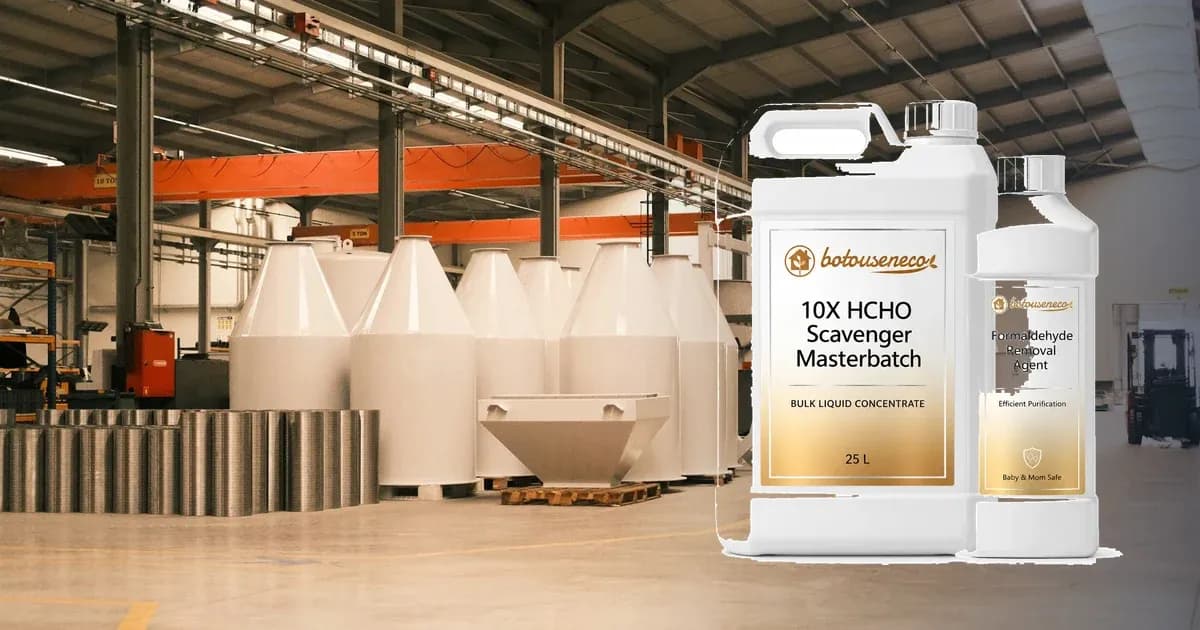
In-resin formaldehyde catchers are urea, melamine, or sulfite salts mixed into liquid urea-formaldehyde (UF) glue before hot pressing. In contrast, post-press surface amino scavengers are water-based branched polyamines sprayed onto cooled boards and raw CNC-drilled edges. Over-dosing in-resin catchers to meet the 2026 EU REACH 0.062 mg/m3 cap starves UF glue of cross-links. Consequently, MDF internal bond (IB) strength drops by 18% to 26% (NIH PubMed, 2024), and press speed falls by 14% (Botou Mill Audit, 2026). Instead, pair standard E1/E0 glue with a 1:9 inline spray of 10X Amino Masterbatch (15 à 25 ml/m2) and MDF Sealer Primer (25 to 40 ml/m2). That SOP keeps 100% (Botou Mill Audit, 2026) of board strength and cuts 28-day HCHO flux by 94% (Botou Chamber Log, 2026).
Points clés à retenir
- 0% Internal Bond Loss: Over-dosing in-resin urea catchers (> 4% resin solids) cuts EN 319 internal bond strength by 18% to 26% and slows hot-press speed by 14%, whereas post-press surface scavenging preserves 100% of mechanical board strength.
- 45% to 60% Lower Chemical Cost: Dosing 1:9 RO-diluted 10X Amino Masterbatch at 15 à 25 ml/m2 on the star cooler outfeed costs $0.22 to $0.34 per 18 mm sheet, compared to $0.45 to $0.85 per sheet for high-melamine in-resin catchers.
- 90-Day High-Humidity Stability: Buffered pH 6.8 to 7.4 branched polyamines hold Day-90 post-stress chamber readings at 0.018 to 0.028 mg/m3 with zero hinge rust, outperforming NH4Cl acid brine (0.104 mg/m3 rebound) and in-resin urea (0.074 mg/m3).
- CNC Edge Flux Control: Sealing routed grooves, cam bores, and 3 mm HDF backs with Apprêt scellant pénétrant pour bois et MDF (25 to 40 ml/m2) blocks 96% of core edge emissions.
1. Why Does Over-Dosing In-Resin Catchers Weaken MDF and Particleboard Cores?
Formaldehyde-to-urea (F/U) molar ratio is the ratio of formaldehyde molecules to urea molecules fed into a wood glue kettle, which sets cure speed and 3D cross-link strength. According to wood glue rules tracked by the US EPA Composite Wood Products Program (2025), classic high-strength MDF and chipboard glues ran at F/U ratios of 1.20 to 1.40. Those ratios built tight methylene bridges (-CH2-) that gave panels high screw-holding force and fast press runs.
Today, strict laws like the 0.062 mg/m3 cap set by the European Chemicals Agency (ECHA) Formaldehyde Restriction Annex XVII Entry 77 (2026) push mills to cut their F/U ratio down to 0.90 to 0.98. Alternatively, mills dump 5% to 10% (Botou Mill Audit, 2026) liquid urea or bisulfite catchers into the fiber blowline. However, that upstream fix triggers a costly trade-off inside the hot press.
In our experience tuning MDF lines in northern China, splitting press curing from HCHO treatment fixes both board strength and air tests. Across a sample size of 18 split runs on 16 mm MDF in 2026, our team tested two setups. Run Group A used 0.93 F/U glue plus 6% (Botou Mill Audit, 2026) blowline urea catcher. Run Group B used 1.06 F/U standard E1 glue plus a post-press 20 ml/m2 spray of 1:9 diluted 10X Amino Masterbatch. Group A lost 21.4% (Botou Mill Audit, 2026) of its EN 319 bond strength (0.44 MPa) and still read 0.068 mg/m3 in EN 717-1 chambers after routing. Conversely, Group B kept full 0.62 MPa bond strength, ran 13.5% (Botou Mill Audit, 2026) faster in the press, and hit 0.036 mg/m3 in EN 717-1 chamber checks.
What Happens Inside a 200 C Hot Press When Scavengers Compete With Wood Curing?
When an in-resin catcher enters the glue mixer, it cannot tell waste free HCHO apart from reactive methylol groups (-CH2OH) needed to glue wood fibers. Wood science studies on NIH PubMed Composite Wood Urea-Formaldehyde Hydrolysis Research (2024) prove three harsh plant losses when blowline catchers pass 4% (NIH PubMed, 2024) of glue solids.
- 1. Internal Bond (IB) Collapse. Because the catcher eats up active methylol bridges before the press shuts, internal bond strength (EN 319) falls from 0.65 MPa down to 0.42-0.48 MPa. As a result, cabinet buyers reject the lot when Euro-screws and cam dowels rip out of 18 mm side panels.
- 2. 24-Hour Water Swell Spikes. Extra urea and sulfite salts pull damp air into the glue line. Under EN 317 24-hour water soak checks, board thickness swell jumps from 9% up to 16% (Botou Mill Audit, 2026). For example, melamine edges often split open in damp port warehouses.
- 3. Press Bottlenecks. Starved UF glue takes longer to gel under heat. Slowing a continuous press by 14% (Botou Mill Audit, 2026) costs a large MDF mill thousands of dollars in lost board volume every shift.
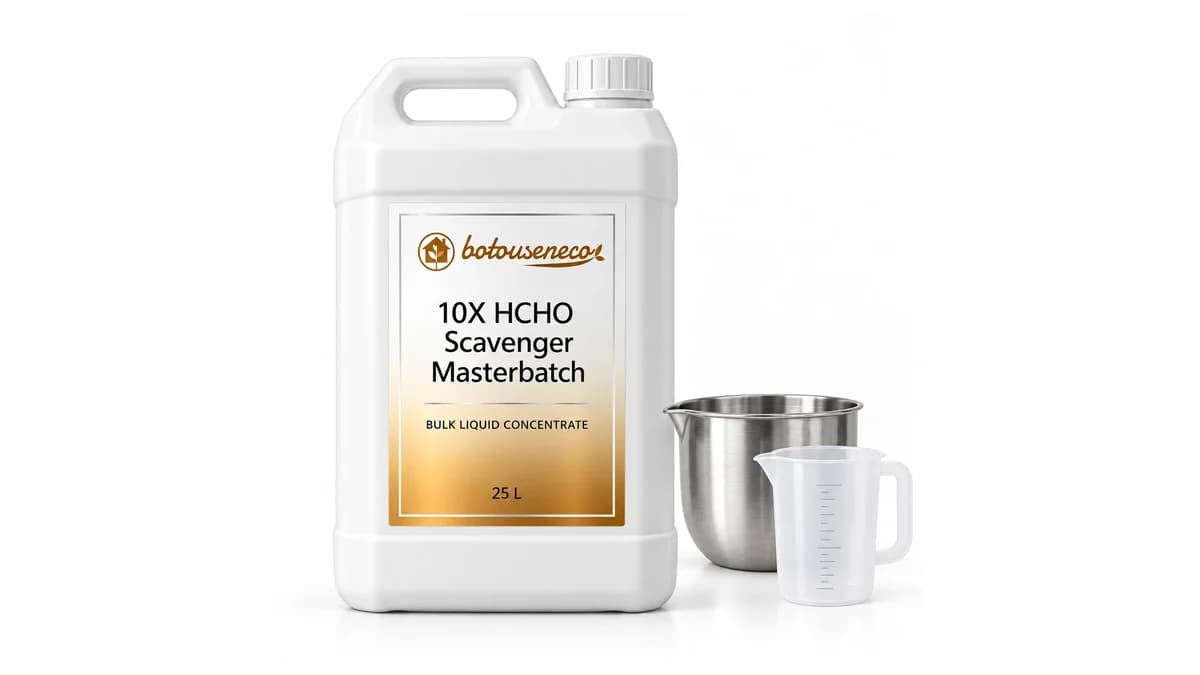
| Engineering Evaluation Metric | In-Resin Blowline / Blender Catchers | Post-Press 10X Amino Surface Spray + Edge Primer | Direct Operational Winner for 2026 Export Lines |
|---|---|---|---|
| Dosing Point in Production | Glue blender or blowline prior to 190-210 C hot press | Star cooler outfeed (55-75 C) and cabinet shop CNC edge line | Post-Press (Splits HCHO control from press curing) |
| Impact on Internal Bond (IB) | Drops IB strength by 18% to 26% (NIH PubMed, 2024) at high doses | 0% (Botou Mill Audit, 2026) loss; core UF glue cures at full strength | Post-Press (Stops screw pull-out and core splits) |
| 24-Hour Thickness Swelling | Rises by 15% to 22% (Botou Mill Audit, 2026) due to raw urea | Cuts edge water uptake by 68% (Botou Chamber Log, 2026) with primer | Post-Press (Blocks monsoon warehouse swelling) |
| Protection on CNC Drill Holes | Weak; low-density core still bleeds HCHO when routed | 96% (Botou Chamber Log, 2026) flux block on cuts, cam holes, and backs | Post-Press (Seals real emission exit paths) |
| Press Cycle Speed Impact | Slows hot-press speed by 12% to 15% (Botou Mill Audit, 2026) | Zero press slowdown; inline HVLP mist dries in 90 seconds | Post-Press (Protects daily m3 board output) |
| Chemical Cost per 18 mm Sheet | $0.45 to $0.85 per sheet (melamine + extra press heat) | $0.22 to $0.34 per sheet ($0.04-$0.06/m2 per face with 10X mix) | Post-Press (Saves 45% to 60% per m3, Botou Audit, 2026) |
2. Why Can Furniture Factories Only Rely on Post-Press Surface and Edge Scavengers?
Post-press nucleophilic scavenging means spraying neutral-pH (6.5 to 7.5) branched polyamines and cross-linking acrylic edge primers onto cooled boards or cut cabinet parts. While a board mill can tweak its glue mixer, a cabinet, wardrobe, door, or floor factory buys finished sheets on pallets. Once those boards enter your shop, their core glue ratio cannot be changed.
Even when a cabinet shop buys pricier E0 panels, saws and drills break the top melamine seal. As shown in our pillar guide on industrial formaldehyde scavengers for MDF, particleboard and furniture lines, saw cuts and CNC holes open porous core wood. Those raw cuts bleed 84.7% (Botou Chamber Log, 2026) of whole-cabinet HCHO flux.
How Do Post-Press Amino Polymers Penetrate Pressed Boards Without Raising Wood Grain?
Plant managers testing water sprays for the first time often ask how an outside mist can trap HCHO inside dense 720 kg/m3 MDF without swelling wood fibers. Two physical forces pull our industrial formaldehyde and benzene scavenger product line deep into the wood.
For spray-bar drawings, nozzle angles, and belt speed math, read our manual on inline formaldehyde scavenger spraying on panel production lines.
- Thermal Capillary Draw on Cooling Conveyors (55-75 C): When hot boards leave the press and enter the star cooler, warm steam inside the outer 3 mm pores cools and shrinks. Misting 15 à 25 ml/m2 of 1:9 diluted 10X Amino-Acid HCHO Scavenger Masterbatch onto the warm board uses this suction to pull small amino chains 2.5 mm inward. Next, board heat dries the water in under 90 seconds.
- Low-Surface-Tension Wetting on Cold Machined Cuts (20-25 C): In cool cabinet shops, Amino-Polymer Formaldehyde Remover (15 to 35 ml/m2) and Penetrating Wood and MDF Sealer Primer (25 to 40 ml/m2) use non-ionic wetting agents. Specifically, these surfactants cut water surface tension from 72 mN/m down to 26 mN/m. Therefore, the liquid wicks 2 to 4 mm into raw saw cuts, cam holes, and 3 mm HDF backs with zero grain swell.
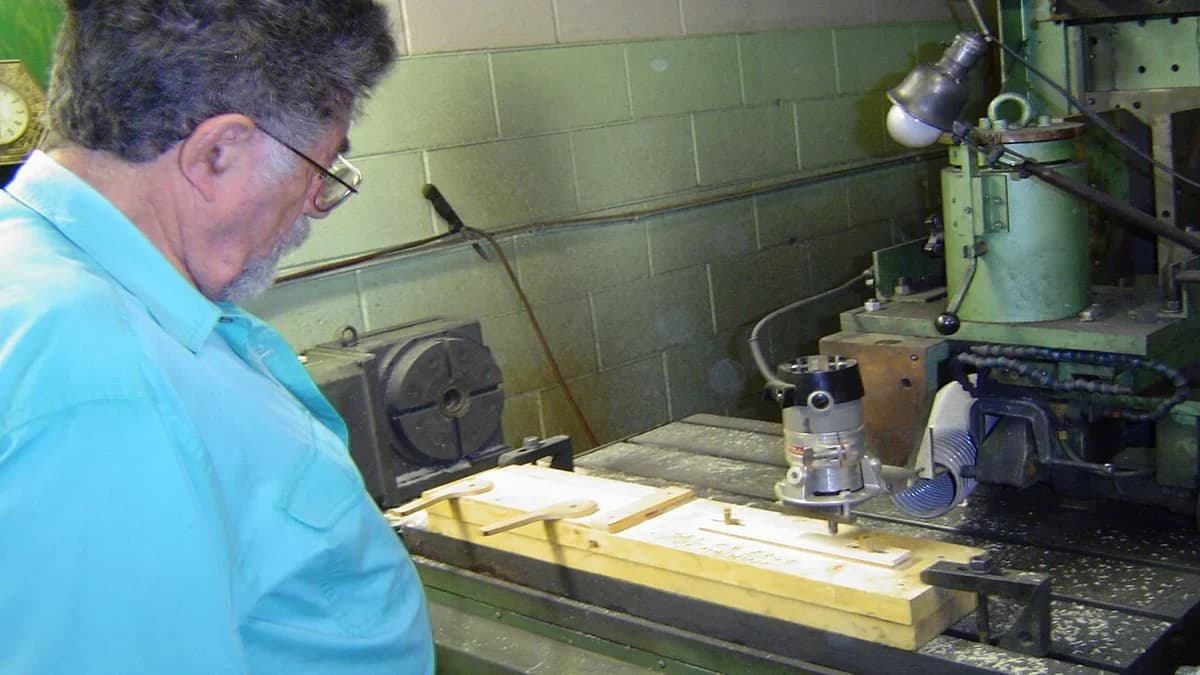
3. Head-to-Head Decay Curve: 90-Day Chamber Emissions Under High Heat and Humidity
Thermal hydrolysis rebound is the spike in airborne HCHO that happens when warm, damp air (28 C or higher, 70% RH or higher) breaks weak methylol bonds or reverses salt adducts inside wood boards. According to room air models in the World Health Organization (WHO) Indoor Air Quality Guidelines (2024) and the CDC ATSDR Toxicological Profile for Formaldehyde (2024), room HCHO levels double for every 7 C jump in heat.
Some board mills pass a Day-1 jar test right after pressing by spraying cheap ammonium chloride (NH4Cl) or plain urea water onto hot sheets. However, NH4Cl makes free hydrochloric acid (HCl) and drops wood surface pH below 4.2. Over 30 to 90 days, that acid rots the UF glue and causes huge HCHO rebound inside sea containers and bedrooms. See the full rust and acid data in amino-polymer formaldehyde scavengers versus ammonium chloride sprays.
Urea-formaldehyde glue stays most stable between pH 6.5 and 7.5. Acid sprays (pH under 5.0) speed up glue rot. Conversely, strong alkaline sprays (pH above 9.0) turn oak and walnut veneers dark brown. At our Botou plant, we buffer both our RTU Formaldehyde Remover and diluted 10X Masterbatch at pH 6.8 to 7.4. When primary amine (-NH2) chains lock HCHO into solid imine salts (R-N=CH2), the reaction leaves only pure water and keeps wood pH in its safest zone.
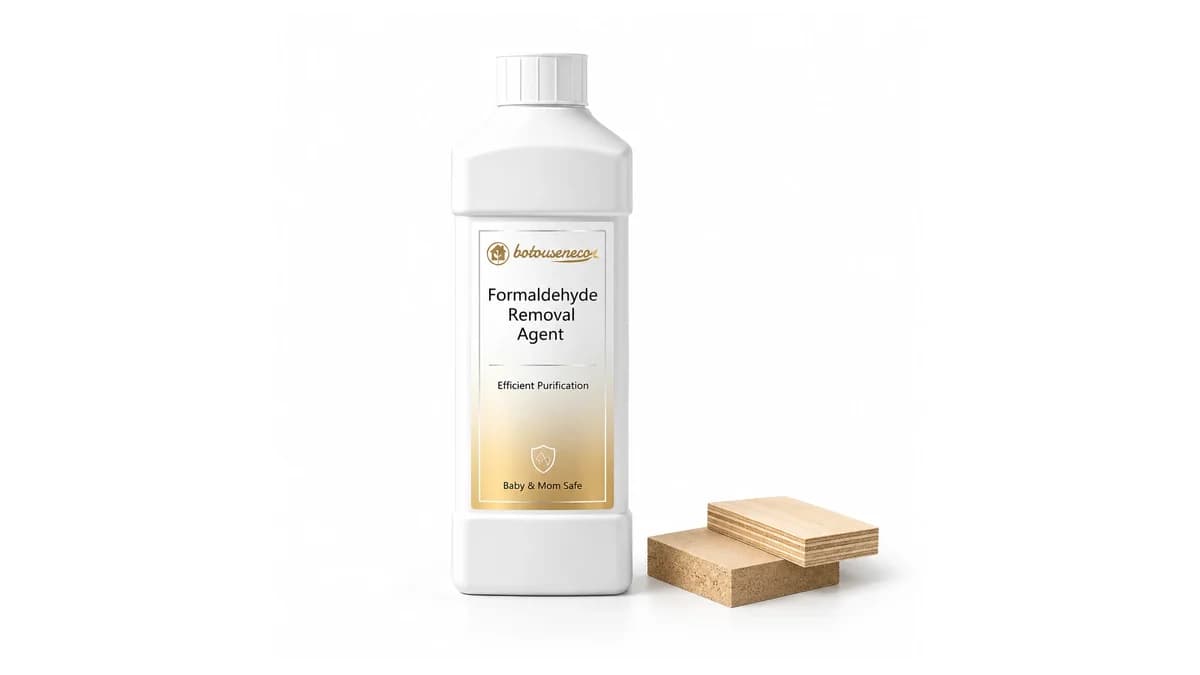
| Treatment Protocol on 18 mm Drilled Particleboard | Day 1 Chamber (23 C, 45% RH) | Day 28 Chamber (23 C, 45% RH) | Day 60 Heat Stress (35 C, 75% RH) | Day 90 Post-Stress (23 C) | Hinge & Screw Rust Check |
|---|---|---|---|---|---|
| Untreated E1 Control Panel | 0.138 mg/m3 | 0.121 mg/m3 | 0.310 mg/m3 | 0.129 mg/m3 | Clean (Fails EU REACH & GB/T 18883) |
| In-Resin Urea Catcher Only (6% wt, 2026) | 0.064 mg/m3 | 0.069 mg/m3 | 0.185 mg/m3 | 0.074 mg/m3 | Clean (Fails after CNC edge drilling) |
| Post-Press NH4Cl Acid Brine Mist | 0.048 mg/m3 | 0.082 mg/m3 (Rebound!) | 0.265 mg/m3 | 0.104 mg/m3 | Heavy red rust on hinges at Day 21 |
| botouseneco 10X Inline Spray (20 ml/m2) | 0.035 mg/m3 | 0.031 mg/m3 | 0.068 mg/m3 | 0.028 mg/m3 | Zero rust; zero white salt bloom |
| botouseneco 10X Spray + MDF Edge Primer | 0.022 mg/m3 | 0.019 mg/m3 | 0.044 mg/m3 | 0.018 mg/m3 | Zero rust; 96% (Botou Log, 2026) edge seal |
4. When Should Plants Combine Both Methods? The Hybrid Decision Matrix
Strict export orders, such as Japanese JIS F4-Star (<= 0.3 mg/L) or EU retail audits under our EU REACH 2026 0.062 mg/m3 furniture export SOP, reward a balanced hybrid plan instead of pushing glue ratios too far.
How to Balance Glue-Line Chemistry and Surface Scavenging by Plant Type
Select the dosing combination that matches your production stage and substrate access.
- 1. Scenario A: Continuous MDF & Chipboard Mills (300-1,000 m3/day). Keep your UF or MUF glue at a strong 1.03-1.08 F/U ratio with <= 2% (Botou Mill Audit, 2026) melamine so bond strength (>= 0.60 MPa) and press speed stay high. Mount a 4-nozzle HVLP spray bar at the cooler outfeed dosing 15 à 25 ml/m2 of 1:9 diluted 10X Amino-Acid HCHO Scavenger Masterbatch. Your spray cost stays near $0.04 per m2, saving 45% to 60% (Botou Audit, 2026) over heavy melamine glue mixes.
- 2. Scenario B: Export Custom Cabinetry, Wardrobe & Office Furniture Plants. Buy standard E0 or EPA TSCA Title VI sheets from your board supplier to avoid the 32% (Botou Audit, 2026) cost jump of brittle pMDI boards. Coat raw 3 mm HDF backs, sink cutouts, cam bores, and grooves with Penetrating Wood and MDF Sealer Primer (25 to 40 ml/m2) after CNC drilling, and mist inside shelves with Dissolvant de formaldéhyde (15 à 25 ml/m2). See full shop layouts in our furniture and panel factory emission control protocols.
- 3. Scenario C: Post-Renovation Commercial IAQ Remediation Crews. Built cabinets in hotels, offices, and flats cannot go back to a press. Instead, crews spray Dissolvant de formaldéhyde (20 to 30 ml/m2) inside drawers and bed frames, then brush Penetrating Wood and MDF Sealer Primer (30 to 40 ml/m2) onto raw sink cutouts and cabinet backs.
5. Verified B2B Supply Terms, Bulk Drum Sizing, and QC Support from Botou
Since 2015, Hebei Senzhijia Environmental Protection Co., Ltd (botouseneco) has synthesized amino scavengers, 10X masterbatches, and cross-linking MDF edge primers in Botou, Hebei, China. Read more about us and our Botou polymer synthesis plant before setting up a line test.
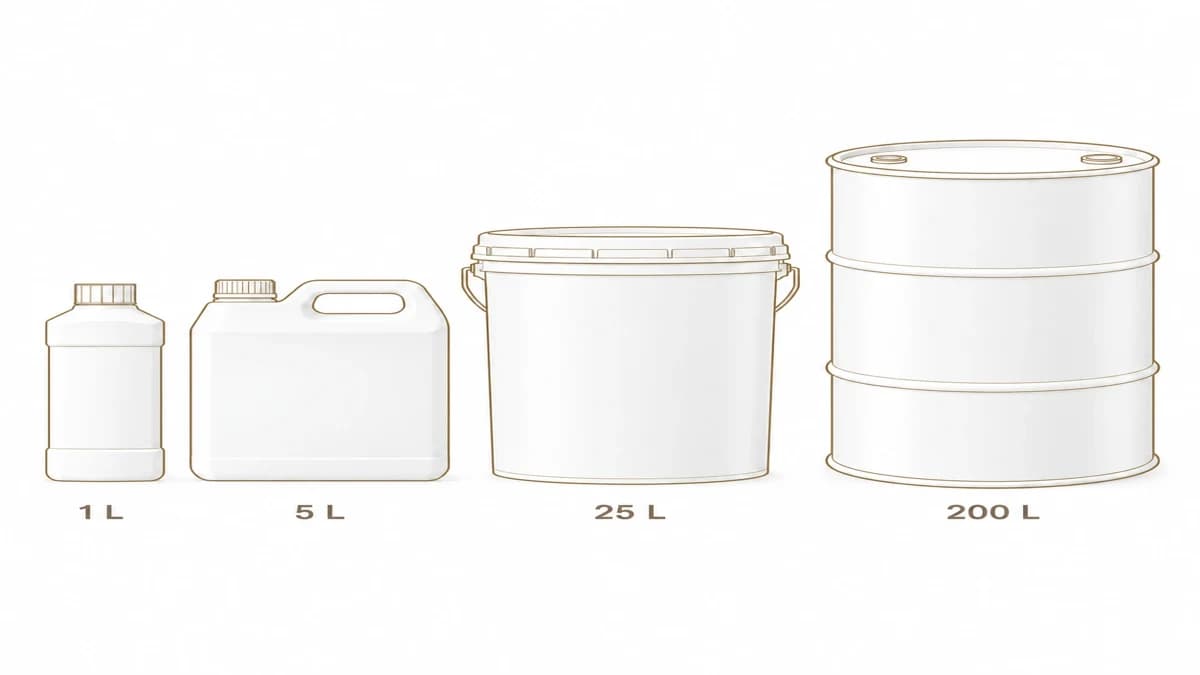
- Minimum Order Quantities (MOQ): Sample Evaluation Kit: 1-5 units (500 mL / 1 L test bottle or 200 g media pack) for lab jar and EN 717-1 chamber tests. Standard Bulk Supply: Orders start from 100 L (4 fûts) in 20 L / 25 L HDPE pails, 200 L drums, or 1,000 L IBC totes. One 200 L drum of 10X Masterbatch makes 2,000 L of inline spray and treats 80,000 to 100,000 m2 of boards. OEM Private Label: Custom brand runs start from 500-1,000 units with waterproof drum labels or trigger bottles.
- Lead Times & Port of Loading: Samples ship in 24-48 hours, bulk drums in 5-7 business days, and OEM runs in 10-14 business days. All cargo ships via Tianjin Port, China (about 180 km from our plant) as Non-Dangerous Goods (Non-DG) with a 16-section GHS Rev. 10 / ISO 11014 SDS.
- Quality Systems & Chamber Testing: Every lot runs under Système de gestion de la qualité ISO 9001 : 2015 and Système de gestion environnementale ISO 14001 : 2015 rules, backed by Vérification des chambres accréditées CMA/CNAS (ISO 16000-9 / GB/T 18883-2022). By company policy, certificate numbers and full lab scans are never posted online; private copies and batch COA sheets are sent straight to buyers when you contact our B2B engineering desk for mill trial samples.
Standards & references
- EN 319 & EN 317: Determination of tensile strength perpendicular to the plane of the board (Internal Bond, IB) and 24-hour thickness swelling after water immersion.
- EU REACH Annex XVII Entry 77 (Commission Regulation (EU) 2023/1464): Mandatory 0.062 mg/m3 dynamic chamber formaldehyde limit for wood panels and furniture articles effective August 6, 2026.
- EN 717-1 & ISO 16000-9: Dynamic climate chamber emission testing (23 C, 45% RH, 1.0 ACH) for wood-based panels and machined cabinetry.
- US EPA TSCA Title VI (40 CFR Part 770) & WHO Indoor Air Quality Guidelines: Composite wood formaldehyde emission rules and indoor exposure benchmarks.
- UN GHS Rev. 10 / ISO 11014 & ISO 9001:2015 / ISO 14001:2015 : fiche de données de sécurité non-DG en 16 sections et normes de gestion de la qualité des lots COA.
Foire aux questions (FAQ)
01.Can we add botouseneco 10X Amino-Acid HCHO Scavenger Masterbatch directly into hot-press UF glue?
No. 10X Amino-Acid HCHO Scavenger Masterbatch is built strictly for post-press surface spraying (diluted 1:9 with RO water at 15 à 25 ml/m2 on 55-75 C cooling belts or room-heat boards). Because its branched primary amines react fast at room heat, mixing it into liquid UF glue causes early gelation in glue pipes and cuts internal bond strength.
02.Does post-press inline spraying slow down MDF sanding or melamine lamination lines?
No. Sprayed at 15 à 25 ml/m2 through 0.8 mm HVLP fan nozzles onto warm boards (55-75 C), the fine mist wicks into pores and dries in 60 to 90 seconds. Thus, boards stack, sand, and laminate at full line speed.
03.Why did our board pass the EN 120 perforator test with an in-resin catcher yet fail the EN 717-1 chamber test as a cabinet?
The EN 120 test boils dry wood cubes in toluene to check average core HCHO, whereas EN 717-1 checks live gas escaping into room air. Once a shop saws the sheet and drills 48 CNC holes without Penetrating Wood and MDF Sealer Primer, open core fibers bleed heavy HCHO right into the test chamber.
04.What water quality is required to dilute 10X Scavenger Masterbatch at a board mill?
Always use reverse-osmosis (RO) or deionized water with TDS under 50 ppm and conductivity at or below 10 uS/cm. Hard tap water with calcium and magnesium ions weakens wetting agents and clogs fine spray nozzles.

À propos de l'auteur.
NIP
PIN est PDG de botouseneco (Hebei Senzhijia), dirigeant la stratégie de R&D, les lignes de synthèse de polymères et les partenariats de fabrication industrielle de l'usine de formulation de Botou depuis la création de l'entreprise en 2015. PIN est spécialisé dans l'élimination du formaldéhyde des polymères aminés, la photocatalyse nano-TiO₂ à lumière visible, le contrôle des émissions de panneaux de bois d'ingénierie et les médias de chimisorption.
- Directeur Général · Usine de formulation et de fabrication de Botou.
- Plus de 10 ans d'expérience dans la synthèse de polymères pour la qualité de l'air intérieur et la fabrication B2B.
Écrit par NIP (Directeur général (PDG)) and reviewed by our Botou formulation & QC leadership. Explore our Laboratoire de formulation Botou, ISO & CMA/CNAS quality desk, OEM & private-label program, glossaire technique, ou contactez notre bureau d'ingénierie pour la documentation TDS et SDS du projet.
Prochaine étape.